

Welding school prices vary because programs use different calendars, include different supplies, and lead to different credentials. A short public-college certificate may cost far less than a private career-school program, while housing can cost more than tuition. The best comparison is the full price after grants, not the advertised tuition alone.
Quick Answer
Welding school can cost from a few thousand dollars at a public community or technical college to about $15,000–$20,000 or more at a private career school. Your real total also includes tools, protective gear, books, testing, transportation, and living expenses. Compare each school’s net price, not tuition alone.
Key Takeaways
- There is no reliable single national average for welding-only programs; cost depends on school type, location, program length, residency, and what the school includes.
- For context, 2024–25 average in-district tuition and required fees were $4,231 at public two-year institutions, while private for-profit schools lasting less than two years averaged $16,516 across all fields of study.
- Tools, books, protective equipment, testing, transportation, and housing can materially increase the total.
- AWS Certified Welder testing is performance-based, and the test facility sets its own exam price.
- Federal aid, scholarships, GI Bill benefits, and paid apprenticeships may reduce out-of-pocket cost, but eligibility varies.
Average Tuition and Program Lengths for Welding School

A practical tuition budget is roughly $4,000 to $20,000 or more, but that is a planning range rather than a national welding-only average. Public community and technical colleges often sit near the lower end for in-district students. Private career schools commonly sit higher.
The most useful national benchmark comes from the National Center for Education Statistics. For 2024–25, average tuition and required fees across all programs were $4,231 for in-district students at public two-year institutions, $17,054 at private for-profit two-year institutions, and $16,516 at private for-profit institutions lasting less than two years. These are sector averages, not welding-program quotes.
The school’s published total program cost and your estimated net price are more useful than a broad national tuition range.
Program names are not standardized. One school may call a one-term course a certificate, while another certificate may run for several terms. A diploma often focuses on job-ready shop skills. An associate degree generally takes about two academic years of full-time study and adds general education courses. A four-year welding engineering or welding technology degree is a separate path and is not normally required for entry-level production welding.
Note: Compare clock hours, credit hours, lab time, completion time, and included certifications. The words “certificate” and “diploma” alone do not tell you how much hands-on training you will receive.

This daily devotional helps parents pray purposefully for their children through a full year of Scripture readings, reflections, and guided prayer prompts. Written to encourage faithful family discipleship, it offers practical, biblically grounded support for parents who want to shape their prayers around God's Word. A foreword by Sinclair B. Ferguson adds trusted theological insight and encouragement.

This interactive sentence building set helps children practice early reading, writing, and grammar through hands-on play. Color-coded word cards, photo cards, and punctuation pieces make it easy to build simple sentences while reinforcing capitalization, parts of speech, and sentence structure. It is a versatile learning tool for homeschool and classroom use, with included game ideas and teaching suggestions to support multiple skill levels.

These colorful answer buzzers turn lessons, review games, and family activities into lively game-show style challenges that boost participation and make learning more interactive. Each buzzer has a distinct sound to clearly identify who buzzed in first, while the durable, palm-sized design makes them easy for kids and adults to use in classrooms, homeschools, and group settings.
Types of Institutions and What They Cost
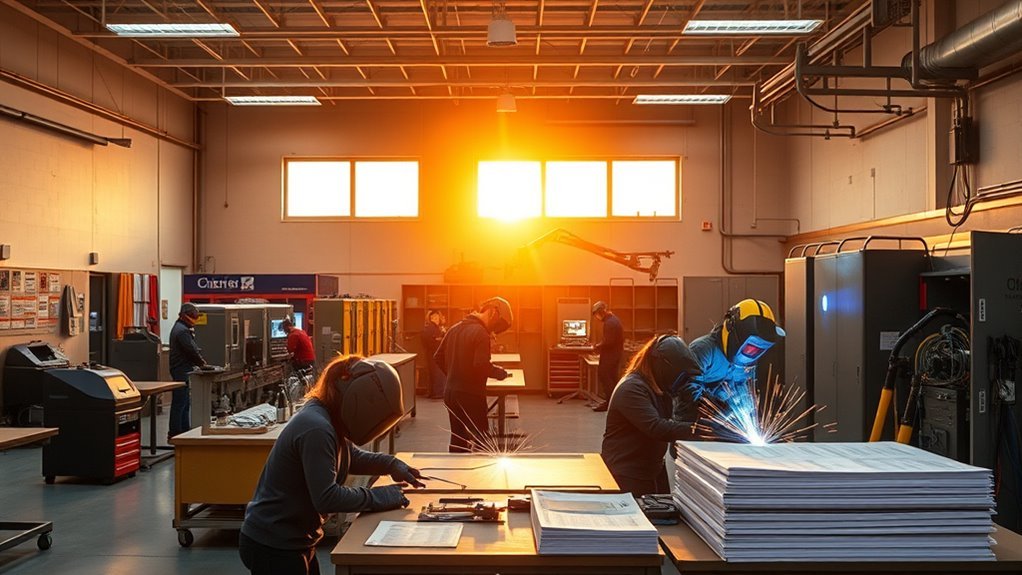
Welding training is available through public technical colleges, community colleges, private career schools, employer programs, unions, and registered apprenticeships. The cheapest option is not always the best value. Compare how much supervised booth time, blueprint reading, fabrication, cutting, metallurgy, and certification preparation each program provides.
Trade School Costs
Private welding and career schools usually offer concentrated schedules designed for faster entry into the workforce. Tuition can be higher than at a public college, but the program may include more weekly shop hours or a shorter calendar.
Ask for a written list showing tuition, registration fees, tool kits, books, consumables, lab fees, certification testing, retest charges, and graduation fees. Also ask whether the quoted price covers the entire program or only one academic period.
Community College Pricing
Community and technical colleges are often the lower-cost route for in-district students. They may offer a short certificate, a longer diploma, and an associate degree at the same campus. Residency rules matter: the 2024–25 NCES average was $4,231 for in-district tuition and required fees at public two-year institutions, compared with $9,041 for out-of-state students.
Class size, booth access, and lab hours vary by school. Ask how many students share each workstation, whether open-lab practice is available, and whether required classes are offered every term.
| Training Route | Typical Time | Cost Guidance |
|---|---|---|
| Short course or continuing education | Days to one term | Priced by course or contact hour; may not provide complete job preparation |
| Public college certificate or diploma | One term to about one year, sometimes longer | Use the school’s program total; public two-year in-district tuition averaged $4,231 in 2024–25 across all programs |
| Private career-school program | Several months to about one year, sometimes longer | Private for-profit schools lasting less than two years averaged $16,516 in tuition and required fees in 2024–25 across all programs |
| Associate degree | About two academic years full time | Multiply annual tuition by the expected years, then add books, fees, transport, and living costs |
| Registered apprenticeship | Multi-year work-and-training program | Paid employment with classroom instruction; employee costs vary by sponsor |
| Bachelor’s degree in welding engineering or technology | About four years full time | A different career track; compare the institution’s full cost of attendance rather than welding-school certificate prices |
Apprenticeship and Employer Training
A Registered Apprenticeship combines paid work, structured on-the-job learning, classroom instruction, mentorship, progressive wage increases, and an industry-recognized credential. Openings depend on local employers and sponsors, and some programs prefer applicants who already completed basic welding training.
Additional Expenses: Tools, Gear, and Living Costs

Tuition is only one part of the bill. Ask each school for its official cost of attendance and a program-specific supply list. The total may include books, a helmet, gloves, safety glasses, fire-resistant clothing, boots, hand tools, consumables, lab fees, certification tests, transportation, and housing.
Tools and Safety Gear
Do not buy equipment from a generic online checklist before the school confirms its requirements. Some programs include a tool kit in tuition; others require students to purchase approved items separately. The NCES 2024–25 average allowance for books and supplies at public two-year institutions was $1,487 across all programs, but a welding student’s actual amount may be lower or higher.
Warning: Welding exposes students to fumes, intense light, hot metal, electrical hazards, and burns. Buy PPE that meets the school’s specifications and follow its ventilation and safety rules. Review OSHA’s welding hazard guidance before shop work.
Housing and Living Expenses
Living costs can exceed tuition. For 2024–25, public two-year institutions reported average food and housing allowances of $8,575 for students living on campus and $12,575 for students living off campus without family. These national figures are not welding-specific and will not match every city or student.
Include rent, food, utilities, fuel or transit, parking, childcare, and lost work hours in your budget. A nearby program with slightly higher tuition can cost less overall if it lets you live at home and keep your job.
Hidden Fees to Check
- Application, registration, technology, and graduation fees
- Lab, material, gas, rod, wire, plate, and metal charges
- Tool kits, uniforms, boots, and replacement PPE
- Books, codebooks, online access codes, and software
- Certification application, test, retest, and travel costs
- Background checks, drug screening, physical exams, or insurance when required
- Parking, commuting, housing deposits, and childcare
Pro Tip: Request a line-item program cost sheet and financial-aid estimate in writing. Then compare the same categories across every school.
Certification, Licensing, and Testing Fees
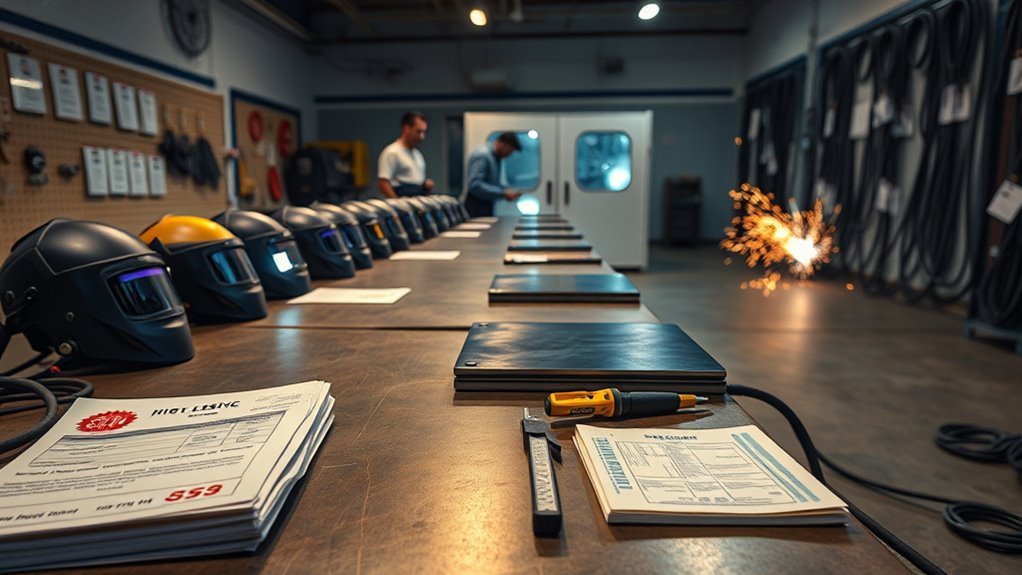
A school certificate and a welder performance certification are not the same thing. A school certificate shows that you completed a curriculum. A performance qualification shows that you produced an acceptable weld using a defined process, position, material, procedure, or code.
The AWS Certified Welder program requires a hands-on test at an AWS Accredited Testing Facility. The facility sets the exam price. Under the AWS price list effective January 1, 2026, the Certified Welder application fee is $70 and annual certification maintenance is $105; the testing facility’s charge is separate.
Testing costs therefore cannot be reduced to a universal $300–$550 figure. Ask which tests are included in tuition, which welding procedure you will test on, what a retest costs, whether travel is required, and how certification continuity is maintained.
Licensing is also different from certification. The Bureau of Labor Statistics notes that licensing requirements vary by state and locality. Check the government agency that regulates the specific job or contractor activity where you plan to work.
Financial Aid, Scholarships, and Payment Options
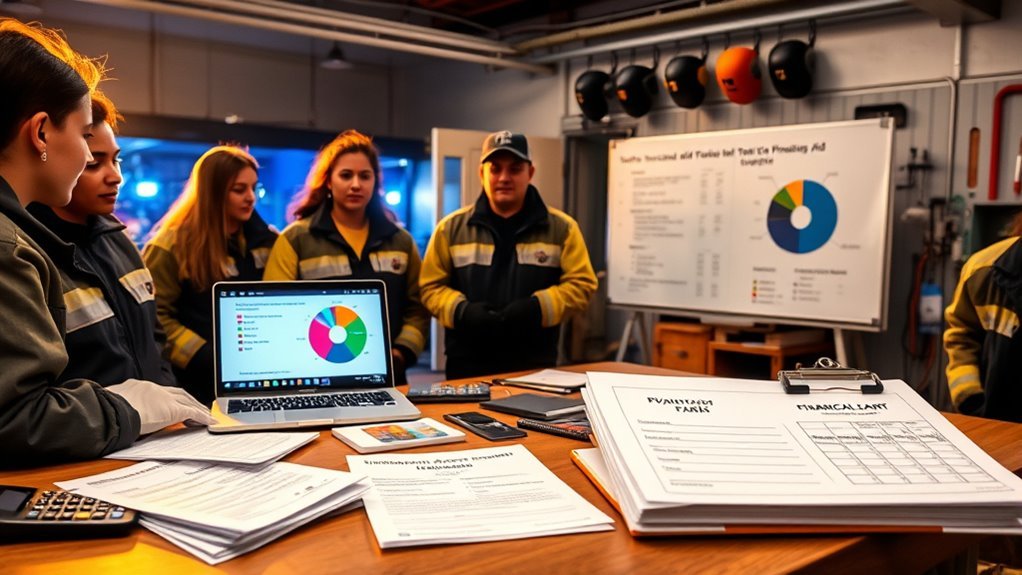
Federal grants, work-study, and loans may be available when both the student and the school or program meet federal eligibility rules. Submit the FAFSA early and confirm eligibility with the school’s financial-aid office before enrolling.
Use the U.S. Department of Education’s Net Price Calculator Center to estimate what students with similar circumstances paid after grants and scholarships. Also confirm accreditation in the Department of Education’s accredited institution and program database.
Students may also qualify for school grants, state workforce funding, employer tuition help, union training, or AWS Foundation scholarships. Veterans and eligible family members should verify that a program is approved through the VA’s GI Bill Comparison Tool.
Payment plans vary. Do not assume a plan is interest-free or fee-free. Read the enrollment agreement, payment schedule, late-fee terms, refund policy, and withdrawal policy before signing.

This hardcover cookbook offers fast, approachable recipes designed for busy days and low-energy nights. Caroline Chambers focuses on simple, flavorful meals that help you get dinner on the table without overthinking it. It's a practical pick for home cooks who want quick weeknight inspiration and minimal-fuss cooking.

Stay organized with a durable 1-subject notebook set designed for school, note-taking, and digital study support. The college ruled pages resist ink bleed, tear out cleanly, and work with the Five Star Study App to create flashcards and sync notes to Google Drive. Tough pockets, a water-resistant cover, and Spiral Lock wire help protect your work throughout the year.

Ticonderoga wood-cased pencils deliver smooth, reliable writing with an exclusive #2 graphite formula that produces consistent, bold lines. Made with premium wood for easy sharpening and minimal breakage, these pre-sharpened pencils also feature a latex-free eraser that removes marks cleanly. Trusted by teachers and suitable for kids, they offer dependable performance for school, office, and everyday writing tasks.
How to Compare Welding Schools Before Enrolling
Use the same checklist for every program:
- Verify the credential. Confirm whether you earn a school certificate, diploma, degree, industry certification, or a combination.
- Compare total program cost. Include every required fee, supply, test, and living expense.
- Check hands-on hours. Ask how much supervised booth and fabrication time you receive.
- Review the curriculum. Look for the processes and skills local employers request, such as SMAW, GMAW, GTAW, FCAW, cutting, blueprint reading, fit-up, and inspection basics.
- Confirm instructor and facility quality. Tour the shop, inspect equipment, and ask how often machines are available.
- Verify outcomes. Request completion, placement, and starting-wage data, including how the school defines and measures each number.
- Read cancellation terms. Know how refunds work if you withdraw or the school closes.
- Talk to employers. Ask local fabrication shops, contractors, unions, and apprenticeship sponsors which programs they recruit from.
Evaluating Return on Investment and Career Outcomes

The latest national figures from the Bureau of Labor Statistics show a median annual wage of $51,000 in May 2024 for welders, cutters, solderers, and brazers. Employment is projected to grow 2% from 2024 to 2034, with about 45,600 openings per year on average, mostly from workers leaving the occupation.
Those figures do not guarantee a starting salary. Pay varies by location, industry, skill, shift, overtime, union coverage, travel, and experience. Compare the program’s net cost with realistic entry-level wages in your area, not the national median alone.
A simple return-on-investment check is:
Net training cost = tuition and fees + supplies + testing + added living costs − grants and scholarships.
Then compare that amount with the difference between your likely post-training earnings and what you could earn without the program. Include loan interest, time out of work, benefits, and the chance that completion or job placement may take longer than expected.
Frequently Asked Questions
Can I work while attending welding school?
Often, yes. Evening, weekend, and part-time schedules can make work possible, but welding labs require attendance and physical focus. Check the exact lab schedule and leave enough time for sleep, commuting, study, and safe shop performance.
Are online welding classes legitimate?
Online courses can teach theory, safety, symbols, codes, and inspection concepts. They cannot replace supervised hands-on practice for a beginner. AWS Certified Welder status requires a performance test at an Accredited Testing Facility, not an online-only exam.
Do schools provide job-placement assistance?
Some do, but services and results vary. Ask for the school’s written placement definition, reporting period, number of graduates counted, employers that hired recent students, and whether the advertised rate was independently verified.
Is prior experience required to enroll?
Many entry-level programs accept beginners, although admissions rules vary. A high school diploma, GED, placement test, minimum age, safety orientation, or physical requirements may apply. AWS does not require formal education or experience for its Certified Welder test, but you must pass the hands-on performance test.
Are apprenticeships included in welding-school tuition?
Usually not. A registered apprenticeship is generally a separate paid job-and-training program sponsored by an employer, union, or other organization. Some colleges provide the related classroom instruction or award credit for it.
Is welding school required to become a welder?
Not always. The Bureau of Labor Statistics says welders typically need a high school diploma or equivalent plus technical and on-the-job training. Some people enter through an apprenticeship, military training, high school technical education, or employer training.
Can FAFSA help pay for welding school?
It can when you meet federal eligibility rules and enroll in an eligible program at a participating school. Completing the FAFSA does not guarantee aid or make every short course eligible, so confirm the program’s status with the financial-aid office.
Conclusion
Welding school can be an affordable route into a skilled trade, but only when you compare the full cost and the likely local outcome. For example, if a nine-month program lists $7,500 in tuition and $800 in required gear, a $3,000 grant would reduce those direct costs to $5,300 before testing, transportation, and living expenses. That calculation is more useful than assuming a $22-per-hour job or rapid payback is guaranteed.
Compare program hours, shop access, credentials, employer relationships, aid eligibility, refund terms, and local starting wages. A shorter certificate may suit fast entry into production work, while an associate degree may provide broader technical and general education.
Sources
- National Center for Education Statistics, IPEDS 2024–25 cost table — tuition, books and supplies, and food and housing benchmarks by institution type.
- U.S. Department of Education Net Price Calculator Center — estimating cost after grants and scholarships.
- U.S. Bureau of Labor Statistics: Welders, Cutters, Solderers, and Brazers — training routes, licensing variability, wages, and employment outlook.
- American Welding Society Certified Welder Program and AWS Program Price List — testing process, facility pricing, application fees, and certification maintenance.
- Federal Student Aid: FAFSA — applying for federal grants, work-study, and loans at eligible schools and programs.
- Apprenticeship.gov Career Seekers — paid registered apprenticeship structure and benefits.

These Stanley MaxSteel straight aviation snips are built for clean, controlled cutting through sheet metal and other tough materials. Serrated cutting edges help prevent slippage for more accurate results, while the double pivot action delivers increased cutting power with less effort. Designed for dependable performance, they are a practical choice for metalworking, HVAC tasks, and general workshop use.

BIC Cristal Xtra Smooth Blue Ball Pens deliver dependable everyday writing with a medium 1.0mm point and fluid Easy-Glide System Ink. Designed to create clear, dark lines, these pens are ideal for notes, lists, journaling, schoolwork, and office tasks. The convenient 10-count pack offers reliable performance for home, work, or classroom use.

Coghlan's Magnetic Bear Bell helps alert bears and other wildlife to your presence while hiking, walking, or exploring outdoors. The built-in magnetic silencer lets you quiet the bell when it is not needed, and the hook-and-loop closure makes it easy to attach to clothing, boots, hats, packs, or pet collars. It is a simple safety accessory designed to add peace of mind on the trail.
