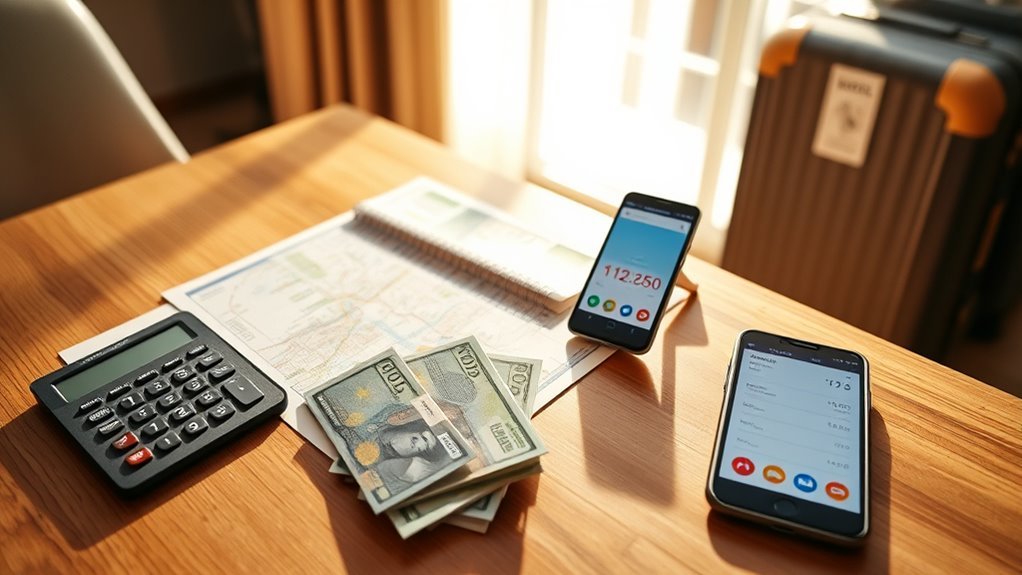
Hotel costs can take a large share of a vacation budget, but there is no official percentage that fits every trip. A practical starting target is 25% to 35% of your total trip budget. Raise or lower that range based on destination, trip length, season, location, and the amenities that can save money elsewhere.
Quick Answer
Start by assigning about 25% to 35% of your vacation budget to lodging. Use a lower share for road trips, inexpensive destinations, or stays with free parking and breakfast. Use a higher share for major cities, resorts, peak dates, or trips where the hotel is a central part of the experience.
Key Takeaways
- The often-repeated 31% figure is a survey result about lodging as a cost concern, not proof that every traveler spends 31% of a vacation budget on hotels.
- Budget the final stay total, including taxes, parking, optional extras, and transportation from the hotel.
- A cheaper room can cost more overall if it requires a rental car, long rideshares, paid parking, or extra meals.
- National hotel forecasts describe the industry, but your dates, destination, and local events matter more than a national average.
- Travel rewards help only when their value exceeds fees and you avoid carrying an interest-bearing balance.
At a Glance
| Time Required | 15–30 minutes for a first budget |
| Difficulty | Easy |
| Tools Needed | Trip dates, total budget, map, hotel comparison sites, and the hotel’s cancellation terms |
| Cost | Free to plan; start with 25%–35% of the trip budget for lodging |
Travel Budgets in 2026: Hotel Allocations

Hotels remain a common choice in 2026. In a January 2026 survey of 1,000 U.S. adults, IPX1031 reported that 80% planned to stay in a hotel at least once, while 71% said they were actively budgeting for travel.
That same survey listed lodging as the top cost concern for 31% of respondents. It did not say hotel accommodations account for exactly 31% of every vacation budget. Your own lodging share can be far lower or higher.
Use a hotel percentage as a starting point, not a spending rule. The right number is the one that covers your full stay without crowding out transportation, food, activities, insurance, and an emergency cushion.
These planning ranges can help you make a first estimate:
- 15%–25%: road trips, low-cost destinations, hostels, shared rooms, or trips where lodging is mainly a place to sleep.
- 25%–35%: a balanced starting range for many city breaks and domestic vacations.
- 35%–50%: resorts, expensive cities, peak events, luxury stays, or trips where the property is a major attraction.
Note: These are budgeting ranges, not national spending averages. Families, solo travelers, groups, and international visitors can have very different cost structures.
Determining Your Hotel Budget: Key Strategies for 2026
Build the hotel budget from the total trip cost rather than choosing a room first and fitting everything else around it. This protects money for transportation, meals, activities, travel insurance, and unexpected expenses.
Assessing Overall Travel Costs
Start with your maximum affordable trip budget. Then subtract the costs that are fixed or hard to change, such as airfare, train tickets, event admission, passports, visas, and prepaid tours.
Use this formula for the lodging portion:
Total lodging cost = room total for all nights + taxes + parking + optional extras + local transportation caused by the hotel’s location
The room total shown early in a search may not equal the final amount. Since May 12, 2025, the Federal Trade Commission’s fee rule has required covered short-term lodging sellers to display the total price with mandatory fees upfront. Taxes and optional services may still appear separately before payment.
Allocating Funds Strategically
- Set the full trip limit. Use money already available rather than an amount you hope to repay later.
- Reserve the essentials. Account for transportation, food, insurance, activities, and an emergency buffer.
- Choose a starting hotel percentage. Use 25%–35%, then adjust for your destination and priorities.
- Convert the total into a nightly ceiling. Divide the lodging budget by the number of nights.
- Compare complete trip costs. Add parking, breakfast, transit, rideshares, and cancellation risk before choosing.
Sample Hotel Budget Calculations
| Total Trip Budget | 25% for Lodging | 35% for Lodging |
| $1,500 | $375 | $525 |
| $3,000 | $750 | $1,050 |
| $5,000 | $1,250 | $1,750 |
For example, a $3,000 trip with a 30% lodging target gives you $900 for the entire stay. On a four-night trip, that is a starting ceiling of $225 per night, including the costs you can estimate before booking.
Key Factors Affecting Your Hotel Budget Decisions
The nightly rate is only one part of the decision. Review these factors before increasing or cutting the hotel share:
- Location: A central hotel may reduce rideshare, rental-car, fuel, toll, and parking costs.
- Trip purpose: A resort vacation can justify a larger lodging share than a sightseeing trip spent mostly outside.
- Season and events: Holidays, conventions, concerts, school breaks, and major sports events can raise local prices sharply.
- Length of stay: Weekly rates, extended-stay hotels, and apartments with kitchens may improve the total cost on longer trips.
- Group size: A suite or vacation rental may cost more per night but less per person.
- Included amenities: Breakfast, parking, laundry, a kitchen, airport transfers, and lounge access can replace other expenses.
- Cancellation terms: A slightly higher refundable rate may be worth the protection when plans are uncertain.
- Accessibility and safety needs: A suitable location and room setup should not be sacrificed just to meet a percentage.
Pro Tip: Compare the cost of the entire day, not just the room. A $30 higher nightly rate can still save money if it includes breakfast and parking or removes two rideshare trips.
Hotel Costs in 2026: What Travelers Should Expect
National hotel data gives useful context, but it cannot predict a specific booking. Local demand, room type, weekday patterns, and events can move your price far more than a national annual change.
Hotel Pricing Trends
After stronger-than-expected performance early in the year, CoStar and Tourism Economics raised their 2026 U.S. RevPAR growth forecast to 2.8% on June 1, 2026. RevPAR measures hotel revenue per available room; it is an industry measure, not the percentage your personal budget should assign to lodging.
The updated forecast replaced earlier, weaker projections. That matters because claims that 2026 RevPAR would remain flat or that rates would rise only 1% were based on older forecasts.
Occupancy Rate Insights
CoStar reported U.S. hotel occupancy of 64.9% in April 2026, with average daily rate up 2.8% from April 2025. These national figures hide major differences among cities and dates. A destination hosting a large event can be expensive even when the national market appears stable.
Budgeting for Hotel Stays
Use market forecasts to understand direction, but build your budget from live prices for your exact dates. Check at least three comparable properties in the same area and compare the same room type, cancellation policy, occupancy, and included services.
A January 2026 consumer survey found an average planned spring-break spend of $2,138 among the 19% of respondents planning a spring-break trip. That figure describes one survey and one travel period; it should not be treated as a universal vacation budget.
How Economic Pressures Will Affect Your Hotel Spending

Affordability is shaping 2026 travel decisions. The IPX1031 survey found that 61% of respondents wanted to travel more but said they could not afford to do so. Separately, Deloitte’s 2026 Summer Travel Survey found that 45% of 4,003 surveyed Americans planned a summer vacation with paid lodging, the lowest share in six years.
These findings do not mean all travelers are spending less. Deloitte also found that many people who were still traveling planned to protect or increase their trip budgets. The result is a split market: some travelers stay home, while others spend more on trips they consider worthwhile.
Warning: Do not use a rewards card to justify a hotel you cannot otherwise afford. The Consumer Financial Protection Bureau explains that avoiding purchase interest generally requires paying the balance in full by the due date when a grace period applies.
If prices exceed your limit, reduce the trip length, change dates, choose a nearby neighborhood, use points already earned, or select a property with amenities that replace other spending. Avoid cutting the emergency buffer to afford a room.
Luxury vs. Budget: Trends in Hotel Preferences
Hotel value depends on what the rate replaces and how much time you will spend at the property. A budget hotel is not automatically the cheapest trip choice, and a luxury hotel is not automatically wasteful.
- Budget hotels work well when you need a clean, safe room and will spend most of the day elsewhere.
- Midscale hotels can offer the best balance when breakfast, parking, a refrigerator, or laundry reduces other costs.
- Luxury hotels and resorts make more sense when the property, service, spa, beach, pool, club lounge, or included activities are central to the vacation.
Travelers in 2026 are also placing more weight on comfort, trust, and meaningful experiences. Hilton’s 2026 trends research, based on more than 14,000 travelers across 14 countries, found strong interest in familiar brands, comfort, connection, and intentional trips. Because Hilton sponsored the research, treat it as useful consumer insight rather than a neutral market benchmark.
Maximizing Your Hotel Budget for 2026 Travels
- Compare the same stay. Match dates, room type, guest count, bed type, cancellation terms, and included services.
- Use the final payment amount. Review taxes, mandatory fees, parking, deposits, and optional charges before booking.
- Check the map. Estimate daily transport costs and travel time from each hotel.
- Test nearby dates. Moving a trip by one or two days can avoid a convention, concert, holiday, or weekend premium.
- Reserve a refundable option when plans are uncertain. Recheck the same dates later and cancel only within the stated deadline.
- Ask the hotel about direct-booking value. A direct rate may include parking, breakfast, an upgrade, or easier changes even when the price is similar.
- Use loyalty points carefully. Compare the cash price with the number of points required and any resort or parking charges that remain.
- Use AI as a research assistant, not the booking record. Confirm live price, availability, room rules, and cancellation terms on the seller’s current checkout page.
Hidden Hotel Costs to Include
Even with stronger upfront price rules, the room total may not cover every trip expense. Check for:
- State and local lodging taxes
- Parking, valet, tolls, fuel, rideshares, and public transit
- Breakfast, bottled water, minibar items, and room service
- Pet fees, extra-person charges, cribs, and rollaway beds
- Early check-in, late checkout, luggage storage, and airport transfers
- Wi-Fi or business-center charges where not included
- Security deposits or temporary card holds
- Optional spa, beach, golf, or activity charges
Note: A refundable security hold is not the same as a fee, but it can reduce the available balance on a debit or credit card during the trip. Ask the property about the amount and release timing.
When to Book and When to Recheck
There is no reliable universal “best day” to book every hotel. Prices change with demand, inventory, events, and the property’s revenue strategy.
A practical approach is to book a suitable refundable rate once your dates are firm enough, record the cancellation deadline, and recheck the same stay periodically. Do not assume a last-minute rate will be cheaper. Waiting can be costly when room supply is tight or a local event is approaching.
Before switching reservations, confirm that the new offer has the same room, guest count, cancellation policy, taxes, fees, and included benefits. Then cancel the old booking only after the replacement is confirmed.
Frequently Asked Questions
What percentage of a vacation budget should go to a hotel?
A practical starting range is 25% to 35% of the full trip budget. Use less for inexpensive destinations or basic lodging and more for resorts, major cities, peak events, or trips where the hotel is part of the experience.
Is spending 40% of a travel budget on lodging too much?
Not necessarily. It can be reasonable for an expensive city, resort, short luxury trip, or property that includes meals and activities. It is too much when it leaves too little for transportation, food, required activities, insurance, or emergencies.
Is $20,000 enough to travel the world?
It can be enough for a carefully planned, limited world trip, especially with slower travel, lower-cost regions, economy transportation, and modest lodging. It may not cover a long trip built around expensive cities, frequent flights, private tours, or luxury hotels. Define the route and duration before deciding.
What does a 20% annual travel budget mean?
It means setting aside 20% of the income or discretionary money you have chosen as the budgeting base for travel. The base must be stated clearly. Twenty percent of gross income, take-home pay, and discretionary income produce very different amounts.
Is a refundable hotel rate worth paying more for?
It can be when flights, work schedules, health, weather, or other plans may change. Compare the price difference with the amount you could lose on a nonrefundable booking, and read the exact cancellation deadline in the property’s local time.
Does a cheaper hotel outside the city center always save money?
No. Add the cost and time of transit, rideshares, parking, fuel, and missed convenience. A more expensive central hotel can have a lower total trip cost when it removes daily transportation expenses.
Conclusion
For many trips, assigning 25% to 35% of the vacation budget to lodging is a useful first estimate, not a fixed rule. Build the number from the final stay cost, location, included amenities, transportation, cancellation risk, and the experience you want. The best hotel budget leaves enough money for the rest of the trip and does not depend on high-interest debt.
Sources
- IPX1031 Travel Forecast 2026 — 2026 U.S. consumer survey on hotel use, budgeting, affordability, and spring-break spending.
- CoStar U.S. Hotel Forecast Assumptions, Q2 2026 — updated U.S. hotel demand and RevPAR outlook.
- CoStar U.S. Hotel Performance for April 2026 — occupancy, ADR, and RevPAR data.
- Deloitte 2026 Summer Travel Survey — paid-lodging intent, affordability pressure, and traveler spending behavior.
- Federal Trade Commission Rule on Unfair or Deceptive Fees — upfront total-price requirements for covered short-term lodging.
- Consumer Financial Protection Bureau: Credit Card Grace Periods — when paying in full can avoid purchase interest.