Published: October 25, 2024 · Last updated: September 8, 2026
Affiliate disclosure: We may earn from qualifying purchases at no extra cost to you.
Source check: The Knot, Zola, Minted, Paperless Post, and current USPS pricing were rechecked September 8, 2026.
Wedding invitation cost in 2026 ranges from free digital delivery to several thousand dollars for fully custom stationery. The strongest national benchmark is The Knot’s 2026 Real Weddings Study: couples spent an average of $220 on wedding invitations including RSVP cards and $510 on wedding stationery overall. Zola gives a common $400 to $600 budget for a standard invitation suite for a 100-guest wedding and estimates that about 75 to 80 invitations are needed because couples and families often share one mailing address. Your actual total depends on the number of mailed households, paper, print method, inserts, envelopes, design work, shipping, and postage.
Quick Answer
In 2026, The Knot reports average spending of $220 on wedding invitations including RSVP cards and $510 on wedding stationery overall. Zola gives a common $400 to $600 budget for a standard invitation suite for a 100-guest wedding, which typically needs about 75 to 80 mailed invitations. Digital options can be free or priced per recipient, while fully custom stationery can cost several thousand dollars. Current U.S. stamped-letter postage starts at $0.82 for up to 1 ounce.
Key Takeaways
- Count invitations by household, not by guest. Zola uses about 75 to 80 invitations as a planning estimate for 100 guests, but your actual number depends on the number of mailing addresses.
- The Knot’s 2026 study reports an average of $220 for invitations, including RSVP cards, and $510 for a full wedding stationery package.
- Paper, printing, inserts, envelope upgrades, addressing, assembly, shipping, rush service, and postage can all raise the total.
- As of July 12, 2026, a U.S. stamped one-ounce letter costs $0.82, and nonmachinable letters may require an additional $0.49 surcharge.
- Ordering samples, weighing one fully assembled invitation, and buying 10% to 15% extra copies can prevent costly mistakes.
What Counts as Wedding Invitation Stationery?

Wedding invitations give guests the date, time, location, dress code, RSVP instructions, and other details they need. An invitation suite is the coordinated packet mailed to a household, while wedding stationery is broader and can also include save-the-dates, menus, programs, signage, place cards, and thank-you notes. That distinction matters when comparing a quote with a survey average.
Why the Invitation Count Matters
Invitation quantity is one of the biggest cost drivers because couples and families who share an address usually receive one envelope. Counting mailing households before requesting quotes prevents you from comparing prices for more cards than you actually need. Printed or digital RSVPs then help track attendance, seating, meals, transportation, and other guest needs.
Types of Wedding Cards
Style affects the look of an invitation, but format, paper, printing, and finishing usually have a larger effect on price. Common styles include:
- Traditional wedding cards: Formal wording, classic typography, borders, crests, or cultural motifs.
- Modern wedding cards: Clean layouts, simple fonts, bold color, or minimal artwork.
- Vintage wedding cards: Period-inspired type, illustrations, deckled edges, or antique-style details.
- Destination wedding cards: Maps, travel information, itineraries, or location-based artwork.
- Eco-friendly wedding cards: Recycled paper, tree-free stock, plantable paper, digital delivery, or fewer printed inserts.
Note: One invitation usually goes to a couple, family, or household, not to every individual guest. Confirm the number of mailing addresses before comparing quotes.
How Much Do Wedding Invitations Cost in 2026?
There is no single wedding invitation price because the quoted products are not identical. A card-only print quote, a mailed invitation suite, and a full wedding-stationery budget measure different things. Compare the scope before comparing the number.
The Knot’s 2026 Real Weddings Study, based on 10,474 U.S. couples married in 2025, reports an average of $220 for wedding invitations, including RSVP cards, and $510 for wedding stationery overall. Zola’s 2026 invitation cost guide gives a common planning range of about $400 to $600 for a standard invitation suite for a 100-guest wedding. Minted’s current 2026 guide says Minted couples spend about $480 on wedding invitations, showing how a platform-specific customer average can differ from a national survey.
| 2026 Benchmark | Amount | What It Measures |
|---|---|---|
| The Knot average invitations | $220 | Wedding invitations including RSVP cards |
| The Knot average wedding stationery | $510 | Invitation suite plus additional wedding paper |
| Zola standard suite, 100-guest wedding | $400 to $600 | A common complete-suite planning budget |
| Minted customer average | $480 | Average invitation spending among Minted couples |
Do not treat these figures as interchangeable. The $220 figure is a national average for invitations including RSVP cards, the $510 figure covers broader stationery spending, and the Zola and Minted figures use different customer and package definitions.
Budget rule: Price invitations by mailed household, not by total guests. Zola uses roughly 75 to 80 invitations for a 100-guest wedding as a planning estimate, but the safest method is to count your actual mailing addresses before comparing vendor quotes.
This page focuses on the all-in wedding invitation budget: cards, suite pieces, upgrades, and postage. If you only need printer pricing by method, paper, and quantity, use our wedding card printing cost guide. This page covers total budgeting; the printing guide isolates print method, paper, and quantity so you can compare printer quotes without mixing them with postage and suite extras.
A realistic budget must include the complete mailed suite, not only the price shown for the main invitation card.
Typical Cost by Format
| Format | Practical Planning Range | Usually Includes |
|---|---|---|
| Digital invitation | Free to paid per-recipient pricing; varies by platform and features | Digital design, delivery, event page, and RSVP tools; premium features vary |
| DIY or print-at-home card | About $1 to $4 each before labor and postage | Template, paper, ink or local printing, and basic envelope |
| Basic printed invitation | About $2 to $5 each before add-ons | Flat-printed invitation and a standard envelope |
| Printed invitation suite | About $4 to $12 per mailed household | Invitation, RSVP or details card, and envelopes; inclusions vary |
| Premium or specialty suite | About $8 to $25 or more per suite | Foil, letterpress, thick stock, special shapes, liners, or multiple inserts |
| Fully custom or bespoke stationery | Often several thousand dollars total | Original art, design consultation, specialty printing, assembly, and premium materials |
Method note: These are editorial planning ranges synthesized from the current source set and are not national survey averages. Quantity, location, promotions, shipping, taxes, paper, printing method, and included services can change the final quote.
Example Budgets by Number of Invitations
The examples below apply the planning ranges in the table above to the number of physical invitations mailed, not the number of guests. They are arithmetic examples, not vendor quotes, and they exclude postage, taxes, shipping, and rush charges.
| Invitations Mailed | Basic Printed Cards | Printed Suites | Premium Suites |
|---|---|---|---|
| 50 | $100 to $250 | $200 to $600 | $400 to $1,250+ |
| 75 | $150 to $375 | $300 to $900 | $600 to $1,875+ |
| 100 | $200 to $500 | $400 to $1,200 | $800 to $2,500+ |
What Affects the Cost of Wedding Invitations?
Wedding card prices rise when the order uses more material, requires more production steps, includes more pieces, or needs more hands-on design and assembly.
Materials Used
The paper or material affects both the appearance and the mailing weight. Common options include:
- Standard paper: Usually the lowest-cost choice, but it may feel thin.
- Cardstock: A common middle-ground option with better structure and durability.
- Recycled paper: Available at both budget and premium prices, depending on weight and finish.
- Specialty paper: Cotton, linen, pearlescent, handmade, deckled-edge, or plantable stock generally costs more.
- Vellum or translucent overlays: Add another printed or assembled layer.
- Acrylic, wood, fabric, or metal: Premium materials that may also create higher postage or parcel costs.
Design Complexity
Simple template edits usually cost less than original artwork, custom calligraphy, venue illustrations, crests, maps, or multilingual layouts. Color count has little effect on many digital-print orders, but it can increase costs for processes that require separate plates, dies, or foil runs.
Common design cost drivers include:
- Original illustrations or monograms
- Multiple proof rounds or major revisions
- Several languages or complex cultural wording
- Die-cut shapes, layered pieces, pockets, or wraps
- Separate production passes for letterpress, engraving, or foil
Quantity and Guest Count
Vendors often reduce the unit price as quantity increases, but setup fees can make small orders expensive. Start with the number of mailing addresses, then add about 10% to 15% for addressing mistakes, late guest additions, vendor photographs, and keepsakes. Zola recommends this extra-copy range in its 2026 cost guide.
Number of Pieces in the Suite
A main invitation costs less than a full suite. Common additions include an RSVP card, RSVP envelope, details card, reception card, map, itinerary, belly band, envelope liner, and outer mailing envelope. A wedding website or QR code can replace some inserts and reduce printing and postage.
Design Service and Labor
Ready-made templates are usually cheapest. Semi-custom designs allow limited changes to an existing design. Fully custom stationery includes original creative work, consultations, proofs, production management, and sometimes hand assembly. The Knot’s 2026 guide cites professional custom invitations plus enclosure cards at about $4,000 to $7,000 for 100 guests; one stationer quoted full custom suites at $6,000 to $8,000+, while another reported custom-suite clients spending about $7,500 to $15,000. These are high-end professional benchmarks, not typical online-template prices.
How Does Printing Method Change Wedding Invitation Cost?
The printing method changes the texture, detail, production time, and cost of wedding cards.
Digital Printing
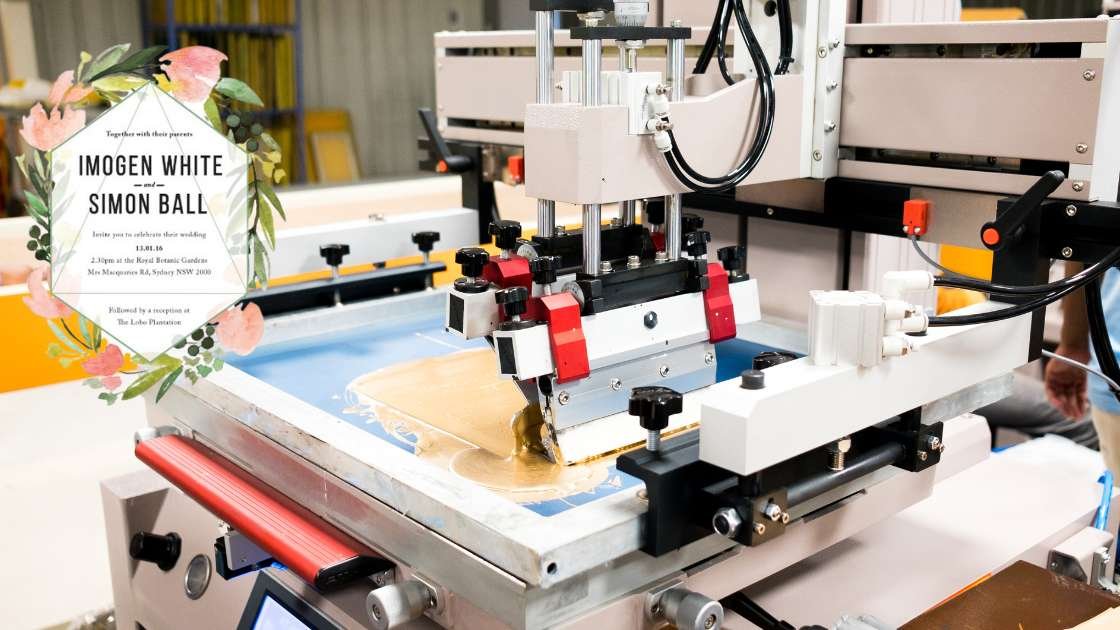
Digital printing places the design directly onto paper without a separate printing plate. It supports photographs, gradients, and many colors at a relatively low setup cost. This makes it practical for short runs, fast production, and budget-focused orders.
| Cost level | Low to moderate |
|---|---|
| Turnaround | Usually faster than plate-based specialty printing |
| Best for | Full-color art, photographs, small quantities, and tight budgets |
Letterpress Printing

Letterpress printing presses an inked plate into thick paper, leaving a visible and tactile impression. The plate setup, skilled production, heavier stock, and separate run for each ink color make it more expensive than flat digital printing.
| Cost level | High |
|---|---|
| Turnaround | Longer because plates, setup, drying, and finishing may be required |
| Best for | Simple designs, premium paper, and a tactile luxury finish |
Foil Stamping, Embossing, and Engraving
- Foil stamping: Uses heat and a die to apply metallic or pigmented foil.
- Embossing or debossing: Creates a raised or recessed design without necessarily adding ink.
- Engraving: Produces crisp, raised ink through a specialized plate and press process.
- Thermography: Uses resin powder and heat to create raised lettering at a lower price than engraving in many cases.
Combining two or more specialty processes can raise the price quickly because each process adds setup, materials, labor, and production time.
How Much Does Customization Add?
Customization can range from changing names and colors in a template to commissioning an original suite created for one wedding.
Personalized Designs
Common personalized features include the couple’s names, wedding date, venue, colors, cultural symbols, monogram, custom wording, map, or illustration. A template with text and color changes is usually affordable. Original artwork, extensive revisions, and exclusive design rights cost more.
- Unique artwork: Venue drawings, portraits, pets, landscapes, or hand-painted motifs.
- Custom typography: Hand lettering, calligraphy, or a custom monogram.
- Special motifs: Crests, religious symbols, cultural patterns, or family emblems.
Handmade Elements
Hand calligraphy, pressed flowers, painted details, ribbon tying, wax seals, deckled edges, and hand assembly add time to every invitation. Because labor varies widely by artist and project, ask for a total written quote rather than relying on a generic per-card estimate.
| Handmade Element | Main Cost Driver |
|---|---|
| Calligraphy | Number of envelopes or lines, ink color, and addressing style |
| Pressed flowers | Sourcing, placement, adhesive, and hand assembly |
| Hand-painted details | Complexity, drying time, and number of pieces |
| Wax seals and ribbon | Materials, assembly time, thickness, and possible postage surcharge |
Additional Features
Small upgrades can create a polished invitation, but several upgrades together may cost more than the main card.
Embellishments
- Foil stamping: Adds a reflective metallic or colored finish.
- Embossing: Creates raised texture on the paper.
- Ribbons and wraps: Add color, texture, and assembly time.
- Wax or sticker seals: Add a formal finishing detail.
- Envelope liners: Add a printed layer inside the envelope.
- Die-cut shapes: Require specialized cutting and may affect mail processing.
Envelope Quality
Many printed invitations include a basic envelope, but premium options are often extra.
| Envelope Upgrade | What It Adds | Cost Impact |
|---|---|---|
| Lined envelopes | Decorative paper inside the flap and body | Moderate |
| Custom envelopes | Matching color, shape, printing, or artwork | Moderate to high |
| Premium paper | Thicker or specialty stock | Moderate to high |
| Printed addressing | Guest and return addresses printed by the vendor | Low to moderate; sometimes included |
Hidden Costs to Include
- Design fees, proofs, and extra revision rounds
- RSVP cards, details cards, maps, and reception inserts
- Guest addressing, return addressing, and calligraphy
- Assembly, stuffing, sealing, and envelope liners
- Shipping, taxes, rush production, and replacement reprints
- Outer-envelope postage and return postage for mailed RSVP cards
- Extra copies for mistakes, late additions, photos, and keepsakes
How Much Is Wedding Invitation Postage in 2026?
Postage depends on the assembled invitation’s weight, dimensions, thickness, rigidity, and shape. The current U.S. retail rates below took effect on July 12, 2026, according to USPS Notice 123.
| Mail Type | Current U.S. Retail Price |
|---|---|
| Domestic stamped letter, up to 1 ounce | $0.82 |
| Domestic stamped letter, up to 2 ounces | $1.11 |
| Domestic stamped letter, up to 3 ounces | $1.40 |
| Nonmachinable surcharge | Add $0.49 when applicable |
| First-Class Mail International letter, up to 1 ounce | $1.75 |
Square, rigid, unusually shaped, or unevenly thick invitations may be nonmachinable or may qualify as a flat or parcel. A physical RSVP card can also require a return stamp for each household.
Pro Tip: Fully assemble one invitation with every insert, seal it, and take it to a USPS counter before buying stamps for the full order. This confirms the correct weight and whether a nonmachinable surcharge applies.
Wedding Invitation Cost by Budget Level
Wedding card prices range from free digital delivery to high-end custom suites costing thousands. The most useful comparison is the total cost per addressed household, including cards, envelopes, upgrades, delivery, and postage.
Budget-Friendly Options
| Option | Typical Planning Range | Best Way to Control Cost |
|---|---|---|
| Simple printed cards | About $2 to $5 each | Choose a standard 5-by-7-inch format, flat digital printing, and a basic envelope |
| DIY cards | About $1 to $4 each before labor | Use one card, print in bulk, and test paper and ink before the full run |
| Digital invitations | Free to paid per-recipient pricing; varies by platform and features | Limit premium design elements and use built-in RSVP tracking |
| Hybrid invitations | Varies | Mail the main card and move RSVP, maps, and travel details online |
Luxury Invitations
Luxury invitations may use letterpress, foil, engraving, handmade paper, acrylic, custom artwork, multiple inserts, hand calligraphy, or boxed presentation. A premium online suite may cost $8 to $25 or more per mailed household. Fully bespoke work can cost several thousand dollars for the project. The Knot’s 2026 guide cites professional custom invitation and enclosure-card projects around $4,000 to $7,000 for about 100 guests; quoted full custom-suite budgets from individual stationers on the same page range from $6,000 to $8,000+ and, for another studio, about $7,500 to $15,000.
| Luxury Feature | Why It Costs More |
|---|---|
| Laser-cut designs | Specialized cutting, delicate stock, and extra assembly |
| Handmade cards | Artist time, one-by-one finishing, and limited production capacity |
| Boxed invitations | Boxes, inserts, padding, assembly, and parcel-level shipping or postage |
| Custom artwork and calligraphy | Original creative work, revisions, and skilled labor |
How Can You Save Money on Wedding Invitations?
You can lower the total without making the invitation look cheap. Focus on the features guests will notice most, and simplify the rest.
DIY Invitations
DIY invitations can save money when you already have design tools, a suitable printer, and enough time. They can become expensive if you need to buy a printer, specialty ink, a paper cutter, replacement paper, or several test runs.
- Use a tested template: Choose a design with correct bleed, margins, and trim size.
- Compare home and local printing: A copy shop may cost less than buying ink and heavy paper.
- Use standard sizes: Standard rectangular invitations are easier to print, envelope, and mail.
- Print a proof first: Check spelling, color, trim, QR codes, dates, and venue details.
- Count your time: Cutting, assembling, addressing, and sealing dozens of invitations can take many hours.
Bulk Orders
Many vendors lower the unit price at higher quantities, but the discount structure differs. Compare complete quotes at the exact quantities you may need, such as 75, 85, and 100 invitations.
| Quote Item | What to Check |
|---|---|
| Unit price | Does the price drop at the next quantity tier? |
| Setup or design fee | Is it charged once or per printed piece? |
| Included pieces | Are envelopes, RSVP cards, details cards, liners, and addressing included? |
| Shipping and tax | What is the delivered total, not only the advertised subtotal? |
| Extra copies | Would ordering extras now cost less than a small reprint later? |
More Ways to Reduce the Total
- Send one invitation per household instead of one per guest.
- Use a wedding website for RSVP, travel details, maps, and registry links.
- Choose flat digital printing instead of letterpress, foil, or engraving.
- Use a standard rectangular envelope to reduce the risk of a surcharge.
- Skip envelope liners, pockets, multiple inserts, and heavy embellishments.
- Order early to avoid rush fees and expensive expedited shipping.
- Use printed guest addressing when it is included at no extra charge.
- Request a sample before placing the full order.
When Should You Order and Mail Wedding Invitations?
Timing affects cost because late orders can trigger rush production or expedited shipping. The Knot’s current invitation timeline, updated July 14, 2026, recommends mailing standard wedding invitations about six to eight weeks before the wedding. Paper RSVPs are better suited to the earlier side of that window because the response must travel back through the mail.
Order early enough to allow time for proofing, production, shipping, addressing, assembly, and a correction or reprint if something is wrong. Custom and specialty printing can require more lead time than standard digital printing, so use the vendor’s production estimate rather than assuming every method follows the same schedule.
How to Build an Accurate Wedding Card Budget
- Count mailing households. Group couples and families who will receive one envelope.
- Add extra copies. Increase the quantity by about 10% to 15%.
- Choose the suite pieces. Decide whether you need only an invitation or also RSVP and details cards.
- Get comparable quotes. Ask vendors to price the same quantity, paper, print method, envelopes, and services.
- Add delivery costs. Include shipping, tax, outer-envelope postage, and RSVP return postage.
- Allow for changes. Keep a small buffer for corrections, late additions, and reprints.
A simple formula is: (number of invitations × complete cost per suite) + postage + shipping + tax + design or assembly fees.
Worked Budget Example
If you mail 80 invitation suites that cost $6 each, the stationery subtotal is $480. If each sealed envelope qualifies as a 1-ounce machinable U.S. letter, postage adds $65.60 at the current $0.82 rate, for a $545.60 subtotal before shipping and tax. If the same 80 envelopes require the $0.49 nonmachinable surcharge, add another $39.20. Always have one finished envelope checked before buying postage for the full order.
Frequently Asked Questions
How much do wedding cards cost?
Digital wedding invitations can be free or use paid per-recipient pricing, depending on the platform and features. Basic printed invitations often cost about $2 to $5 each, while printed suites commonly cost about $4 to $12 per mailed household. Premium and fully custom work can cost much more.
Are custom wedding cards expensive?
They can be. Semi-custom invitations use an existing design and usually cost less. Fully custom stationery includes original design, proofs, specialty production, and skilled labor, so the total can reach several thousand dollars.
What affects the cost of wedding cards?
The main factors are quantity, paper, printing method, number of inserts, envelope upgrades, artwork, revisions, hand assembly, shipping, rush service, and postage.
Is it cheaper to make wedding cards?
DIY cards can cost less when you already own the tools and use a simple design. Include paper, ink, envelopes, trimming mistakes, test prints, and your time before deciding that home printing is cheaper.
Can I save money on wedding cards?
Yes. Send one invitation per household, choose a standard rectangular size, use digital printing, move RSVP and travel details online, remove heavy embellishments, compare quantity tiers, and order early.
How much do luxury wedding cards cost?
Premium online suites may cost about $8 to $25 or more per mailed household. Fully custom stationery with original art, letterpress, foil, handmade paper, calligraphy, and assembly can cost several thousand dollars in total.
Do online wedding cards cost less?
Online template-based printed cards usually cost less than fully custom stationery because the base design already exists. However, paper upgrades, foil, special shapes, inserts, and rush delivery can still raise the price.
Are digital wedding invitations cheaper?
Usually. Digital invitations remove paper, printing, envelopes, and postage. Some services are free, while others charge per recipient, by feature, or through a subscription, so compare the total cost for your actual guest list.
What is the average price for 100 wedding cards?
For 100 actual printed invitations, a practical budget is about $200 to $500 for basic cards or $400 to $1,200 for multi-piece printed suites, before postage. For a 100-guest wedding, Zola uses about 75 to 80 invitations as a planning estimate and gives a common complete-suite budget of about $400 to $600, but your actual invitation count should come from your mailing-address list.
Do wedding card costs include envelopes?
Many vendors include a basic outer envelope, but policies vary. Lined envelopes, colored envelopes, guest addressing, return addressing, RSVP envelopes, and extra envelopes may cost more. Confirm every included item in writing.
How many wedding invitations do I need for 100 guests?
Zola uses about 75 to 80 invitations as a planning estimate for a 100-guest wedding because couples and families who share an address usually receive one invitation. Count your actual mailing households first, then add about 10% to 15% extra copies for mistakes, late additions, and keepsakes.
How much does it cost to mail wedding invitations in 2026?
As of September 8, 2026, USPS charges $0.82 for a stamped domestic letter up to 1 ounce, $1.11 up to 2 ounces, and $1.40 up to 3 ounces. A qualifying nonmachinable letter adds $0.49. Weigh and measure one fully assembled invitation before buying stamps for the full order.
When should I send wedding invitations?
The Knot’s current guidance recommends mailing standard wedding invitations about six to eight weeks before the wedding. If you use paper RSVPs, mailing closer to eight weeks gives guests more time to receive and return the response cards.
Conclusion
Wedding invitation costs are easiest to control when every quote covers the same package. Start with mailing households, not guest count. Then choose the pieces you actually need, compare like-for-like quotes, add shipping and postage, and order a small extra-copy buffer. Before paying for the full run, approve a proof and have one finished envelope weighed and checked for machinability. The current benchmarks show why scope matters: an average invitation spend, a standard 100-guest suite, and a fully custom stationery project are three different budget categories.
Sources
- USPS Notice 123, effective July 12, 2026 — current domestic and international letter postage and the nonmachinable surcharge.
- The Knot: Average Cost of Wedding Invitations, updated April 30, 2026 — average invitation and stationery spending, guest-count data, and custom stationery benchmarks.
- Zola: How Much Do Wedding Invitations Cost, updated February 19, 2026 — standard-suite budgets, invitations needed for 100 guests, extra-copy guidance, and hidden costs.
- Minted: Wedding Invitation Cost Guide for 2026 — examples of how paper, printing methods, and suite details change price.
- Paperless Post Pricing — current per-event and subscription pricing structure for digital invitations and guest-management features.
- The Knot: When to Send Wedding Invitations, updated July 14, 2026 — current six-to-eight-week mailing guidance and timing notes for paper RSVPs.