

You usually pay far less for a senior fishing license than a standard adult permit. Eligibility, prices, and rules vary by state and sometimes by county. Most states target residents 65 and up. They require government ID to prove age and residency. States offer reduced annual fees, occasional free days, or lifetime options. Fees often range from about $10 to $35 annually. Lifetime buys cost much more up front. Keep reading to see state-by-state differences and purchase tips.
Quick Answer
- Seniors 65+ often get discounted or free fishing licenses in most states, with proof of age and residency required.
- Annual fees typically range from $10–$35, lower than standard adult rates; some states waive fees entirely.
- In Texas, residents 65+ pay $12 for freshwater, $17 for saltwater, or $22 for all-water packages.
- Lifetime options, like Texas’s $1,000 fishing package, can save money long-term but require upfront payment.
- Buy online, at retail locations, or check for bundles and promotions to save more.
Who Qualifies for Senior Fishing License Discounts
Who qualifies for senior fishing license discounts depends on state rules. Most programs target residents aged 65 and older. They require proof of age and residency.
For example, Texas offers reduced freshwater and saltwater licenses to residents born on or after January 1, 1931. Other states may set different cutoff dates. Some offer full fee waivers. Others extend discounts to slightly younger age brackets.
Evaluate senior eligibility criteria against each state’s statutory definitions and administrative rules. Terms like “resident” and qualifying birthdate vary. Check specific fishing license requirements for documentation. This typically means a government-issued ID showing date of birth and proof of residency.
Because some jurisdictions waive fees entirely, verify whether renewable or lifetime options apply. When applying or renewing, ask licensing agents about temporary promotions. Look into reciprocal agreements or veteran exceptions. These could affect your cost and compliance.
Maintain copies of required documents. This expedites verification. It reduces the risk of noncompliance with local regulations.
How Senior License Pricing Varies by State

State agencies set fishing-license rules independently. You see wide variation in senior pricing and eligibility. Those differences directly affect access and budgeting for retirees.
When you compare states, note three core policy models. These include reduced-rate annual licenses, free licenses for qualifying seniors, and specialty reduced packages.
Fee structures reflect these models. Some states set nominal annual senior fees as low as $10–$20. Others adopt higher but still discounted rates. A few eliminate fees entirely for residents meeting age or residency criteria.
Evaluate how each state’s fee structures align with broader objectives. These include promoting outdoor recreation and easing fixed-income burdens.
For practical budgeting, check state fish-and-wildlife agency sites for current rates. Look at seasonal promotions and bundled options. By comparing eligibility rules, exact fees, and package contents across states, you can identify the most cost-effective jurisdictions. You can also advocate for policy changes where senior access remains constrained.
For more on fishing licenses, see this Take Me Fishing resource.
Products Worth Considering

Senior Fishing Licenses in Other States
California offers seniors 65+ a reduced annual license for about $8. Florida provides free licenses to residents 65 and older. Minnesota charges $5 for those 65+. New York has a $5 annual fee for seniors 70 and up. These examples show how states differ in age cutoffs and discounts.
Texas Senior Fishing License Eligibility and Rates

Moving from how states structure senior pricing generally to a concrete example, Texas offers explicit age-based reductions and package options. These shape affordability for older anglers.
Residents 65 and older qualify for a reduced freshwater license priced at $12 per year. Policy documents frame it as an age-based concession to lower-cost access.
If you were born on or after January 1, 1931, you can also obtain a senior saltwater license for $17 annually.
Texas provides a senior all-water package for $22 valid through August 31. This further lowers barriers for seasonal participation.
Eligible individuals may upgrade to a reduced-rate Super Combo License. It bundles hunting, fishing, and five endorsements. This supports broader outdoor engagement.
These targeted discounts advance senior fishing benefits. They make recreation affordable. They sustain fishing community engagement through continued participation in licensing programs and bundled options that simplify compliance and expand opportunity.
Check the Texas Parks and Wildlife Department website for the latest details.
Products Worth Considering


😎 PERSONALIZED TEXAS REPLICA PLATE ~ This is the colorful mountains and star Texas license plate. Please note this tag has the text, "REPLICA" in the lower righthand corner. Choose from regular or blackout style!

😎 PERSONALIZED TEXAS REPLICA PLATE ~ 1990 to 1995 Personalized Texas Replica License Plate. Please note this tag has the text, "REPLICA" in the lower righthand corner.
Where to Buy a Senior Fishing License
You can obtain a senior fishing license through authorized retail locations or directly online via state wildlife agency portals. Compare both channels for availability and fees.
When buying in person at sporting goods stores or bait shops, carry valid ID proving your age. This satisfies regulatory requirements.
If your state offers online fee waivers or promotions for those over 65, the agency website will list eligibility criteria. It will note any supporting documentation needed.
Products Worth Considering

Enough to Use: you will receive 6 pieces of fishing license holders, and 6 pieces of safety pins, abundant in quantity, enough for you to choose and replace, can meet your different needs; You can also share them with your friends

Enough to Use: you will receive 6 pieces of fishing license holders, and 6 pieces of safety pins, abundant in quantity, enough for you to choose and replace, can meet your different needs; You can also share them with your friends

Enough to Use: you will receive 6 pieces of fishing license holders, and 6 pieces of safety pins, abundant in quantity, enough for you to choose and replace, can meet your different needs; You can also share them with your friends
Authorized Retail Locations
Many states authorize a network of retail outlets. These include sporting goods stores, bait and tackle shops, and some outdoor outfitters. There, you can buy a senior fishing license in person. This provides an alternative to online state wildlife portals.
When you visit these locations, expect staff to verify identification proving age. They reference local regulations that affect license types, seasons, and gear restrictions related to fishing gear.
Policy-wise, retailers act as authorized agents. They collect fees and sometimes service charges. Request a clear breakdown of costs.
Ask about state-specific senior discounts or promotions at the point of sale. This guarantees affordability.
Keep receipts. Confirm that the retailer transmits license information to the wildlife agency. This avoids compliance issues.
Online Purchase Options
State wildlife agency websites now let you buy senior fishing licenses online. Still, provide proof of age and meet state-specific identity requirements before your application gets approved.
Evaluate online registration benefits objectively. These include faster processing, reduced travel, and access to senior-specific discounts or promotions. Some states publish these only online.
When you use agency portals, expect a digital verification process. It may require uploaded ID, selfie matching, or database checks. These steps enforce eligibility and reduce fraud.
If you prefer immediacy, retail outlets like sporting goods stores and bait shops remain authorized. They let you get a license on the spot.
Compare state procedures, required documents, and fee structures. Choose the most efficient, compliant purchase method.
Lifetime Versus Annual Senior License: Cost Comparison

Compare the $1,000 Texas lifetime fishing license against the roughly $12–$22 annual fee. This quantifies when a one-time purchase outperforms recurring payments.
Calculate the break-even age (about 65+ for a senior starting now). Factor historical increases that affect the lifetime option’s value.
Weigh reduced senior fees and the convenience of avoiding future renewals and price hikes. Do this when modeling long-term cost.
Products Worth Considering

😎 PERSONALIZED TEXAS REPLICA PLATE ~This is the Texas Lone Star Replica License Plate. Please note this tag has the text, "REPLICA" in the lower righthand corner. Choose from the regular style or the blackout version!

Add a touch of humor and flair to your car with this funny "Weekend Hooker" front license plate. Perfect for the bass fishing enthusiast, this custom car tag is a great gift for men, especially for dads, husbands, or any fishing fanatic. Whether you're an outdoorsman or just enjoy a good laugh, this novelty license plate is sure to bring a smile to your face and enhance your fishing-themed car decor. Let your personality shine on the road with this fun and unique accessory.

Customize It - Create the perfect personal gift and novelty item by choosing from a huge selection of backgrounds to customize your very own custom sign. Easy customization for high durability product.
Lifetime Cost Analysis
When you compare the $1,000 lifetime fishing license for Texas residents to the typical $12–$22 annual permit, the break-even horizon sits at roughly 45–80 years.
The purchase only makes strict financial sense for anglers who expect to fish long-term. Or those who value insurance against future fee inflation.
Weigh lifetime license benefits within a disciplined financial planning framework. Assess expected remaining years of active fishing. Consider likelihood of fee increases. Think about alternative uses of $1,000–$1,800.
The price jump from lower past rates to current shifts the calculus. Early buyers saw implicit annualized returns, but that advantage diminishes as price rises.
Compare this hedge against inflation to projected market returns and your personal discount rate. Do this before committing to a lifetime purchase.
Annual Expense Breakdown
Across scenarios, comparing the $1,000 Texas lifetime fishing license to a roughly $12 resident senior (or $58 non-resident) permit hinges on years of continued use. At $12 per year the break-even sits near 83 years. Treat the lifetime purchase as a long-horizon cost hedge rather than an immediate savings.
Evaluate expected fishing frequency, health trajectory, and mobility when deciding. If you fish rarely or live where states waive or discount senior fees, annual permits often dominate.
For frequent anglers, the lifetime option captures senior angler benefits. It eliminates renewal friction. It locks current rates against future fishing license trends.
Policy planners note that reduced resident fees in Texas both broaden participation and shift fiscal timing. This moves from recurring revenue to upfront collections.
Special Endorsements and Tags for Older Anglers
Fewer fees apply to many seniors. Still, review available endorsements and tags. They determine where and how you can fish. They can affect overall cost and access.
You need specific endorsements, commonly saltwater or freshwater. These let you lawfully fish certain waters. Adding them to a reduced-rate senior license incurs additional fees that vary by state.
Analyze eligibility criteria closely. Texas and similar states offer senior freshwater packages with targeted savings. Some states waive fees entirely for qualifying older residents.
Assess how endorsements align with your intended fishing style. Different tags regulate gear, species, or locations. They can influence compliance and trip planning.
Factor in opportunities from community fishing events and local organizations. These may provide discounted or sponsored tags. They can expand access without altering license status.
From a policy perspective, document which endorsements are mandatory for your target waters. Compare incremental costs. Prioritize purchases that support preferred senior fishing techniques and legal access.
Savings Strategies: Bundles, Promotions, and Group Discounts
When planning your senior fishing budget, evaluate bundle license packages like combo permits. These consolidate endorsements and lower per-item costs.
Time purchases to seasonal promotions and online-only discounts. This captures the best rates without forfeiting required tags.
Coordinate group or club applications to access collective rates. Look at community-run promotions. These reduce individual fees and expand program benefits.
Products Worth Considering

【MATERIAL】: oFloral License plate frame is made from premium quality aluminum, which can provide long-lasting protection from corroding, rusting and aging, durability for long lasting usage.Personalized Car Frame Can Perfect to Put on Your Front of Car or for Decorative Purposes Around the House Like in Your Bedroom, Garage, Basement, Ect.

FISHING LICENSE HOLDER W/ZIP CLOSURE

【MATERIAL】: oFloral License plate frame is made from premium quality aluminum, which can provide long-lasting protection from corroding, rusting and aging, durability for long lasting usage.Personalized Car Frame Can Perfect to Put on Your Front of Car or for Decorative Purposes Around the House Like in Your Bedroom, Garage, Basement, Ect.
Bundle License Packages
One practical way to lower your costs is to buy bundle license packages. These combine hunting and fishing privileges, endorsements, or all-water access into a single discounted fee.
Evaluate bundle benefits and package options based on coverage, cost savings, and senior fee reductions.
Analyze eligibility, included endorsements, and whether an All-Water add-on meets your activity needs. Consider group channels that further reduce per-person costs.
- Super Combo License: combines hunting, fishing, endorsements; up to $18 savings
- All-Water package: single fee for freshwater and saltwater access
- Senior reduced fees: apply to fishing license components
- Club group discounts: additional savings via local angler organizations
- One-day complimentary permits: tactical short-term cost avoidance
Assess policy details and calculate net savings before purchase.
Seasonal Promotions Timing
Many states time senior license discounts and special offers to coincide with season openings and fishing events. Map promotional calendars against your planned outings to capture the best savings. This works especially when combining bundle packages or group purchases.
Analyze seasonal trends to identify windows when states introduce fee waivers for residents 65+. Look for complimentary one-day permits via community programs. Check reduced-rate bundled endorsements covering freshwater and saltwater.
Track official wildlife agency announcements and event calendars. Prioritize outings during peak promotional periods.
From a policy and budgeting perspective, document eligibility deadlines, application procedures, and any blackout dates.
That disciplined approach guarantees you exploit temporal promotions efficiently. It reduces the risk of missing limited-time, cost-saving opportunities.
Group and Club Discounts
Many states and local organizations offer group and club discounts. These can cut senior licensing costs substantially. Evaluate membership options and collective-purchase policies before buying a license.
Assess formal policies and measurable community benefits when considering clubs or programs. Joining angler clubs often yields group engagement that lowers per-person fees. It fosters coordinated access to promotions.
Community programs may include one-day permits or waived fees tied to workshops. Analyze eligibility rules, renewal timing, and any documentation required to qualify for senior rates. Ask about tournament discounts and exclusive promotions at point of sale to maximize savings.
Consider these practical avenues:
- Club membership discounts
- Collective-purchase license plans
- Workshop-linked complimentary permits
- Senior tournament fee reductions
- Policy eligibility and renewal rules
Proof of Age and Documentation Requirements

When you apply for a senior fishing license, state agencies require clear proof that you’re 65 or older. This is typically a valid driver’s license or state-issued ID showing your birthdate. They enforce age-based fee reductions or waivers this way.
Treat age verification as a compliance step. Confirm which documentation types the issuing agency accepts (driver’s license, state ID, passport). Check whether photocopies or digital images are allowed. Policy varies by state. Inspect the wildlife agency’s published list and acceptable formats before applying.
Present ID at a licensing office or upload it through an authorized online portal. Agencies may cross-check residency status to determine reduced or waived fees.
Keep originals available for in-person verification. Secure digital files for online submissions. If you lack standard ID, contact the agency about alternative proofs (birth certificate). Ask about any notarization requirements.
Document-handling procedures affect processing time and eligibility. Plan accordingly to avoid denials or delays.
Programs and Events That Offer Free or Discounted Senior Fishing Days
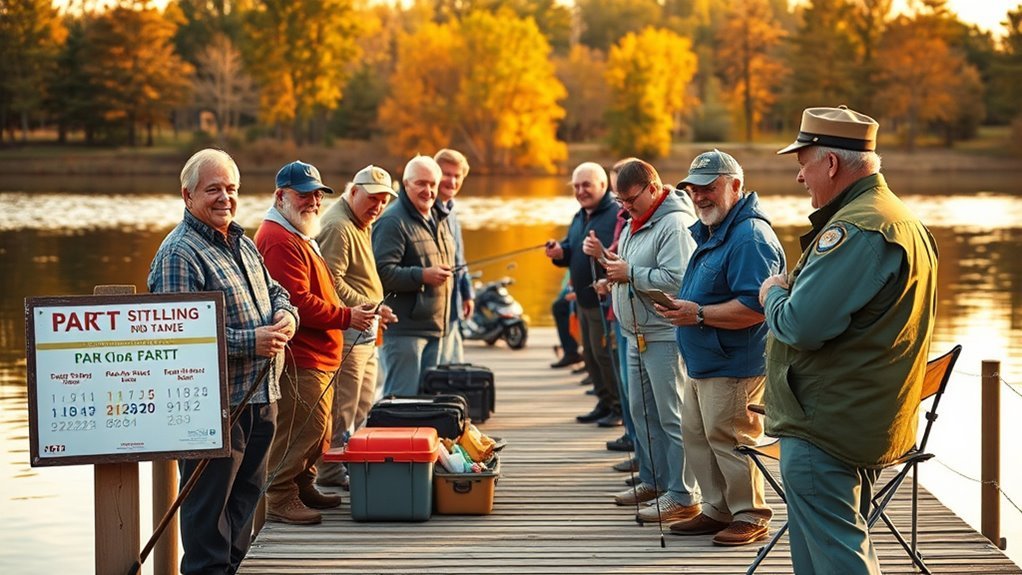
If you’re looking to maximize access while minimizing cost, states and local organizations often schedule dedicated senior fishing days. They offer targeted programs that either waive fees or provide discounted one-day permits to residents 65 and older.
Policy rationales focus on public health and lifelong recreation. Agencies track participation to justify budget allocations and grant funding. Community engagement is a stated objective. Events measure social outcomes alongside permit uptake.
- State-run free-senior fishing days that waive licenses to boost participation.
- Community programs offering complimentary one-day permits and outreach.
- Local tournaments with reduced entry fees to incentivize senior competitors.
- Fishing club promotions that include free workshops and gear demonstrations.
- Jurisdictions that permanently waive license fees for residents over 65.
Consult state fish-and-game calendars and local organizations for schedules and eligibility rules. Program frequency, documentation requirements, and fiscal impact assessments vary by jurisdiction.
Tips for Maximizing Value From a Senior Fishing License
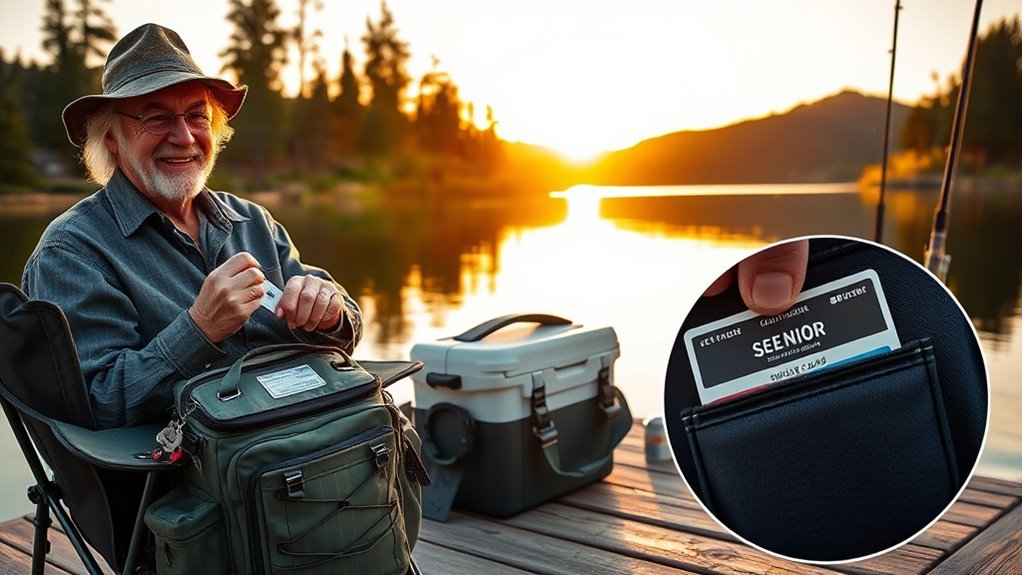
State programs and local partnerships vary. Approach a senior fishing license strategically to maximize its value. Confirm your eligibility and residency rules. Compare fee waivers or reduced-rate options across state and county agencies. Document the exact ID and proof-of-age required for online or in-person purchases.
Start by auditing available discounts. Many states, including Texas, reduce fees at 65. Then calendar renewal dates and promotional windows for one-day permits or tournament entry reductions. This way you don’t miss cost-saving opportunities.
Join local angler clubs to access group-rate licenses and exclusive promotions on gear and fishing trips. Clubs often share vetted gear recommendations and practical fishing techniques for local waters.
When buying online, verify the portal accepts your proof-of-age. Look for bundle offers that combine licenses with instructional events.
Ask officials about unadvertised senior perks at point of sale. Document responses. Keep receipts and digital confirmations to support future claims or appeals.
Frequently Asked Questions
Do Seniors Get Refunds if They Move to a Different State Mid-Season?
Usually you won’t get a refund if you move mid-season. Check specific refund policies and state regulations. Eligibility varies. Documentation requirements differ. Agencies often treat licenses as nonrefundable once issued.
Are There Reduced Fees for Low-Income or Veteran Seniors?
Yes, many states offer low income discounts and veteran benefits for seniors. Check residency rules and required documentation (income proof, DD214). Look at application processes. Note any limits or renewal waivers to confirm eligibility and fee reductions.
Do Nonresident Senior Discounts Exist for Visiting Anglers?
Yes, about 18% of states offer nonresident senior discounts. Check senior residency requirements and state specific regulations closely. Eligibility, documentation, reciprocity, and fee structures vary by jurisdiction and policy.
Can Discounted Licenses Be Gifted to Elderly Family Members?
You generally can’t transfer gifted licenses. Most states prohibit gifted licenses and limit family gifting. Buy separate reduced-rate permits for elderly relatives. Or follow specific agency procedures for exceptions and documented transfer policies.
Are There Special Boat or Pier Permits Included for Seniors?
No, you generally won’t get automatic boat permits or pier permits with senior license discounts. Agencies treat them as separate fees. Apply or pay separately. Review local policy, exemptions, and eligibility paperwork carefully.
Conclusion
Weigh costs like a careful angler weighing a catch. Compare state rates, lifetime versus annual fees, and eligibility rules to land the best deal. Track bundles, promotions, and free senior days as tactical currents that can cut costs. Keep documentation ready and verify Texas-specific rules if you fish there. By treating pricing as policy data and fishing options as variables, you’ll make a precise, cost-effective choice that nets long-term value.
