

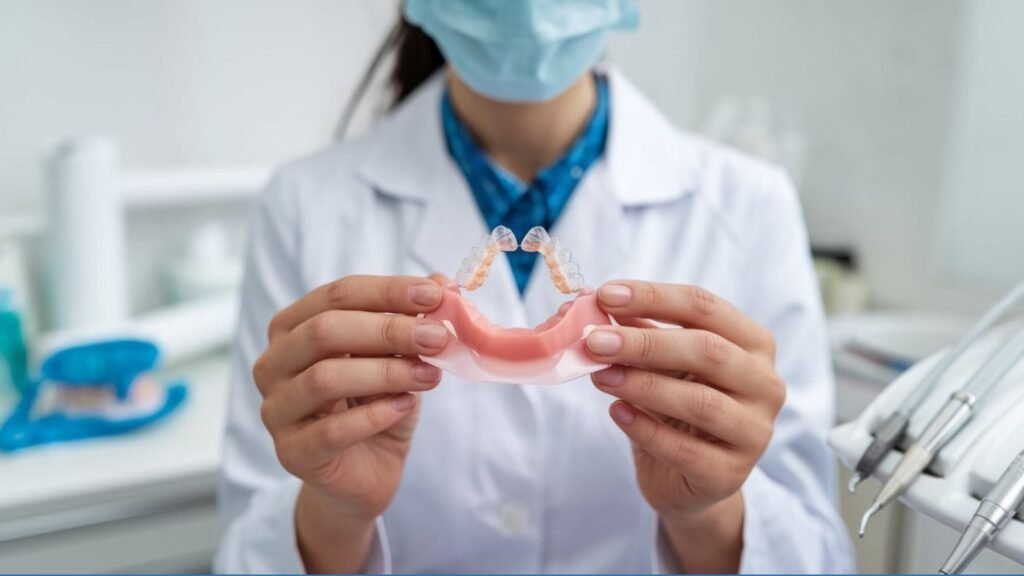
Retainer replacement in the U.S. commonly costs about $100 to $600 per arch in 2026, depending on the retainer type, provider, location, and whether new records or lab work are needed. Current provider-published estimates commonly place clear plastic retainers around $100 to $300 per arch, Hawley retainers around $150 to $350 per arch, and full fixed or bonded-retainer replacement around $250 to $600 per arch. These are planning ranges, not an official national fee schedule.
Last updated: September 7, 2026. U.S. cost ranges, retainer guidance, and insurance information were rechecked against current orthodontic sources.
One arch means either your upper teeth or your lower teeth. If you need both arches replaced, your total can be higher. However, do not simply double every advertised price because some providers sell pairs or multiple retainers as a package.
There is no single nationwide replacement-retainer price. Published prices vary by practice, retainer design, scans or impressions, laboratory work, and what the quoted package includes. Current dental cost guides also show substantial variation among providers, so ask for a written quote before ordering. See the replacement-retainer cost overview for additional context.
Quick Answer
For 2026 budgeting, use these U.S. planning ranges:
| Retainer type | Typical replacement planning range | How it is commonly priced |
|---|---|---|
| Clear plastic / Essix | $100 to $300 | Per arch |
| Hawley | $150 to $350 | Per arch |
| Fixed / bonded (“permanent”) | $250 to $600 for full replacement | Usually per arch; a smaller repair or rebond may be different |
| Branded multi-retainer clear systems | Varies by provider and package | May include multiple retainers rather than one appliance |
- Ask whether the quote covers one arch or both arches.
- Ask whether scans or impressions, laboratory work, fitting, and follow-up adjustments are included.
- A bonded-retainer repair may not cost the same as replacing the complete wire.
- The first set of retainers is often included with orthodontic treatment, but a later replacement may be charged separately.
- Insurance coverage varies by plan, so verify benefits before assuming a replacement is covered.

This hardcover cookbook offers fast, approachable recipes designed for busy days and low-energy nights. Caroline Chambers focuses on simple, flavorful meals that help you get dinner on the table without overthinking it. It's a practical pick for home cooks who want quick weeknight inspiration and minimal-fuss cooking.

This bestselling Christian devotional by Rick Warren helps readers explore life’s meaning through practical, faith-centered guidance. With thoughtful daily reflections and scripture-based insights, it encourages spiritual growth, purpose, and a deeper relationship with God. Its approachable format makes it a trusted choice for personal devotion or group study.

Q-tips Original Cotton Swabs are a versatile everyday essential for home, beauty, and first aid tasks. Made with 100% cotton and soft tips at both ends, they provide gentle care for sensitive skin while helping with makeup touch-ups, small cleaning jobs, and hard-to-reach spaces. Their trusted quality and recyclable packaging guidance make them a practical choice for daily use.
What Retainers Do After Orthodontic Treatment
Retainers are custom dental appliances used after braces or clear-aligner treatment. They help hold teeth in their corrected positions and reduce orthodontic relapse as the tissues around the teeth adapt.
The American Association of Orthodontists explains that teeth continue to change position throughout life. Retainer wear therefore remains an important part of maintaining orthodontic results.
Why Retainers Matter
Teeth can move after active orthodontic treatment ends. Your orthodontist will prescribe the type of retainer and wear schedule that best fits your case. The AAO notes that many patients continue some level of retainer wear for life to preserve their alignment.
What Types of Retainers Can Be Replaced?
The three common categories are:
- Hawley retainers: Removable appliances made with an acrylic or hard-plastic base and metal wire. They are durable and can often be adjusted professionally.
- Clear plastic retainers: Thin removable trays, commonly called clear or Essix-style retainers. They are discreet but can crack, warp, wear, or loosen over time.
- Fixed or bonded retainers: A wire bonded behind the teeth. They are sometimes called permanent retainers, but the wire or bonding can still fail and require professional repair or replacement.
The American Association of Orthodontists’ retainer guide explains the differences between removable, clear, Hawley, and fixed retainers.
What Affects Retainer Replacement Cost?
The appliance itself is only one part of the price. When comparing quotes, check the following factors.
Material Used

Material affects laboratory work and durability, but material alone does not determine the final fee. Clear thermoplastic, acrylic-and-wire Hawley designs, and bonded wires require different fabrication and fitting processes.
Type of Retainer
A simple removable retainer and a complete bonded-retainer replacement are different procedures. A bonded retainer may also need only a small rebond or repair rather than a completely new wire, so ask the provider which service the quote covers.
One Arch or Both Arches
Many orthodontic offices quote retainers per arch. A $200 quote for one upper retainer is not automatically a $200 quote for both upper and lower retainers. Ask how many arches and how many physical retainers are included.
Scans, Impressions, and Existing Records
Your provider may need a new digital scan or dental impression before making the replacement. If your original orthodontist still has usable records, a new set of records may not always be necessary. Office policies vary, so ask whether records and fitting are included in the advertised price.
Geographic Location and Provider
Orthodontic fees vary among practices and locations. Instead of relying on a national “average,” compare written quotes that include the same number of arches, scans, appliances, laboratory work, and follow-up services.
How Much Does Each Type of Replacement Retainer Cost?
Use the ranges below for planning rather than as guaranteed quotes. Your orthodontist or dentist must give you the exact fee for your case.
Hawley Retainers

Hawley retainers use an acrylic or hard-plastic base with a metal wire. Current U.S. provider-published estimates commonly put replacement around $150 to $350 per arch. Prices can fall outside that range depending on the laboratory, design, provider, and whether other services are included.
A damaged Hawley retainer may sometimes be repairable or adjustable rather than fully replaced. Have the appliance examined before assuming you need a completely new one.
Essix or Clear Plastic Retainers

Clear plastic or Essix-style retainers commonly cost about $100 to $300 per arch in current provider-published estimates. They fit over the teeth like a thin clear tray.
Do not compare a one-retainer quote with a multi-retainer package without checking the details. Some clear-retainer programs sell multiple copies together, which can make the upfront price look much higher even though more than one appliance is included.
Fixed or Bonded Retainers

A complete fixed or bonded-retainer replacement commonly falls around $250 to $600 per arch in current provider-published estimates. The wire is bonded behind the teeth and cannot be replaced at home.
If only one bonding point has failed, the provider may be able to repair or rebond the existing wire instead of replacing the whole retainer. Ask whether your quote is for a repair, removal, rebond, or complete replacement.
What About Vivera and Other Multi-Retainer Packages?
Some branded clear-retainer systems are sold as packages containing several retainers. Package sizes and provider fees vary, so compare the number of retainers, number of arches, and included services rather than comparing total prices alone.
Does Insurance Cover Retainer Replacement?
Coverage varies widely. The American Association of Orthodontists notes that the first set of retainers is often included in the overall orthodontic treatment fee, while replacement retainers may involve a separate fee. Insurance coverage depends on the individual plan.
Coverage Questions to Ask
Before ordering a replacement, ask your dental insurer:
- Is a replacement retainer covered after loss, breakage, or normal wear?
- Is the benefit subject to an orthodontic lifetime maximum?
- Does coverage differ between in-network and out-of-network providers?
- Do you need a pre-treatment estimate or other documentation before the appliance is made?
Delta Dental’s general orthodontic guidance also notes that retainer benefits and limitations depend on the individual plan. Review your own policy rather than assuming replacement coverage based on another patient’s benefits.
Out-of-pocket Expenses
If insurance does not cover the replacement, ask the provider for a written total that identifies the appliance, number of arches, scans or impressions, lab work, fitting, and follow-up services. That gives you a meaningful figure to compare with another office.
How Can You Save Money on a Replacement Retainer?
A cheaper advertised appliance is not necessarily a cheaper complete replacement. Focus on the services you actually need.

Die With Zero offers a fresh perspective on personal finance by encouraging readers to use money intentionally to create memorable life experiences instead of simply accumulating wealth. Written by Bill Perkins, this book combines practical guidance with a motivating philosophy to help readers align spending, saving, and life goals for a more fulfilling future.

This self-help book offers practical guidance for breaking free from overthinking, emotional chaos, and self-sabotage. Written by Daniel Chidiac, it helps readers build stronger self-awareness, emotional resilience, and healthier mental habits. A valuable read for anyone looking to regain control of their thoughts and responses.

ProDen PlaqueOff Powder is a natural seaweed-based dental care supplement designed to support healthier teeth and gums in dogs. It helps reduce plaque and tartar buildup, freshen breath, and promote better oral hygiene without the need for brushing. Made without additives, flavors, or artificial ingredients, it offers a simple, low-maintenance way to support daily pet dental care.
Check Your Dental Insurance
Ask your insurer about orthodontic benefits before the retainer is made. If coverage is available, confirm whether using an in-network provider changes your out-of-pocket cost.
Ask Your Original Orthodontist About Existing Records
Your original orthodontic office may still have models, impressions, or digital scans. Ask whether those records are usable for a replacement and whether using them changes the fee.
Ask Whether You Need Repair or Full Replacement
A loose bond on a fixed retainer or an adjustable Hawley appliance may require a different service from complete replacement. An examination can clarify which option is appropriate.
Compare Like-for-Like Quotes
Make sure every quote covers the same number of arches and appliances. Also ask whether scans, lab work, fitting, and adjustments are included. This prevents a low advertised appliance price from turning into a higher final bill.
DIY or Online Replacement vs. Professional Replacement
Some services offer remotely ordered removable retainers using at-home impressions or existing digital records. That can be different from replacing a retainer after your tooth position has changed.
When DIY or Remote Replacement Needs Extra Caution
Contact a dentist or orthodontist rather than relying only on an unsupervised replacement if:
- Your old retainer no longer seats fully.
- The retainer causes persistent pain.
- Your teeth or bite appear to have shifted.
- Your clear retainer is visibly warped.
- A fixed or bonded retainer has broken or come loose.
- You are unsure whether you need a retainer or active orthodontic treatment.
The AAO recommends consulting an orthodontist when a retainer is damaged or no longer fits as it once did.
Benefits of Professional Evaluation
A dentist or orthodontist can examine your current tooth position, determine whether the appliance should be repaired or replaced, take a scan or impression when needed, and check the fit of the finished retainer.
If your teeth have noticeably shifted, a replacement made to the current position is not the same thing as active orthodontic treatment designed to move teeth. Do not force a warped or painful retainer over shifted teeth without professional advice.
Tip: If the retainer still fits normally and you simply need another copy, ask your provider whether existing records can be reused before paying for new records.
What Other Costs Should You Ask About?
Two offices can advertise similar retainer prices but include different services. Ask for the total rather than comparing the appliance price alone.
Dental Appointments

Your dentist or orthodontist may need to check the current position of your teeth before ordering a replacement. Ask whether the examination and any required scan or impression are included in the quoted retainer price or billed separately.
Follow-up Adjustments
Some practices include an initial fit check or adjustment, while others may charge separately. Ask what follow-up care is included and how long any replacement or fit policy lasts.
Repair, Removal, and Rebonding
Fixed retainers can involve several different services. A single loose bonding point, a broken wire, removal of an old retainer, and installation of a completely new bonded retainer are not necessarily the same procedure. Ask exactly what your quoted fee covers.
What Should You Do If Your Retainer Is Lost or Broken?
If you lose your removable retainer or discover that it is broken, contact your orthodontist or dentist promptly. Teeth can continue to change position after orthodontic treatment, and your provider can tell you whether a replacement should be made from existing records or whether a new scan or impression is necessary.
If the retainer is warped, does not seat fully, causes persistent pain, or your bite appears different, do not force it into place. The AAO recommends professional evaluation when a retainer is damaged or no longer fits properly.
Frequently Asked Questions About Retainer Replacement Cost
How Much Does It Cost to Replace a Retainer?
A replacement retainer commonly costs about $100 to $600 per arch in the U.S. Clear plastic retainers are often near the lower end, while complete fixed or bonded-retainer replacement can cost more. Provider, location, records, lab work, and package size all affect the final quote.
Is Retainer Replacement Cost Per Arch or for Both Arches?
Many providers quote retainers per arch. One arch means either the upper teeth or the lower teeth. If you need both, the total can be higher, although some practices offer pair or multi-retainer packages.
Does Insurance Cover Retainer Replacement Costs?
Coverage depends on the dental plan. The first post-treatment retainers are often included with orthodontic treatment, while later replacements may be a separate expense. Check your plan’s orthodontic benefits, limitations, lifetime maximum, and provider-network rules before ordering.
How Often Should Retainers Be Replaced?
There is no single replacement schedule for every retainer. Clear retainers commonly wear sooner than Hawley retainers, while bonded retainers may remain in place for many years but can require repair. Replace or have the appliance checked when it cracks, warps, breaks, becomes loose, or no longer fits correctly.
What Should I Do If I Lose or Break My Retainer?
Contact your orthodontist or dentist promptly. If the retainer is damaged, warped, painful, or no longer fits, do not force it into place. Your provider can determine whether you need a repair, a replacement made from existing records, a new scan, or another orthodontic assessment.
What Factors Influence Retainer Replacement Cost?
The main factors are retainer type, number of arches, repair versus full replacement, scans or impressions, laboratory work, geographic location, provider fees, and whether the quote covers one appliance or a multi-retainer package.
Conclusion
For 2026 budgeting, expect many replacement retainers to fall between about $100 and $600 per arch. Clear retainers generally sit toward the lower end of current published ranges, while complete bonded-retainer replacement often costs more.
Your next step is to ask for a written quote that states the retainer type, number of arches, number of appliances, scans or impressions, lab work, fitting, and follow-up care. If your retainer is lost, broken, painful, or no longer fits, contact your dentist or orthodontist promptly rather than forcing the appliance into place.

This practical guide brings together traditional skills and self-sufficiency knowledge in one accessible reference. It helps readers learn time-tested home, craft, and survival techniques with clear guidance suited for beginners and hobbyists alike. Ideal for anyone interested in homesteading, DIY living, or preserving old-fashioned know-how.

OGX Extra Strength Damage Remedy + Coconut Miracle Hair Oil helps hydrate dry, coarse hair while smoothing frizz and flyaways for a silky finish. This nourishing leave-in treatment blends coconut oil, vanilla bean extract, and tiare essence to add softness, shine, and a pleasant scent. It is paraben-free and designed to support a restorative hair care routine for medium to coarse hair types.

Lobe Wonder earring support patches help lift and stabilize earrings for a more comfortable, secure fit throughout the day. Designed to reduce drooping, hide enlarged holes, and ease pressure on earlobes, these clear, hypoallergenic patches work with all earring styles and sizes. They are latex-free, easy to apply, residue-free to remove, and made in the USA for dependable everyday wear.
