

If you live in California at least six months (or are on active military duty), you’ll pay $62.90 for a 365‑day resident sport fishing license, effective from purchase date and including handling/application fees; one‑day and two‑day options cost about $20.52 and $31.58 respectively, and a ten‑day nonresident option is $62.90. Reduced or free licenses apply for eligible veterans, seniors on SSI/CAPI, and certified disabled individuals, and extra validations/report cards may add fees — more specifics follow.
Who Needs a California Resident Sport Fishing License
Who needs a California resident sport fishing license? You do if you’re 16 or older and plan to take fish or other aquatic life in California waters.
This fishing regulations overview clarifies that residents are defined by resident eligibility requirements: living in California for at least six months or being on active military duty.
The license requirement is mandatory for individuals 16+; children under 16 are exempt from the license but must carry species-specific report cards when required.
Fishing from public piers is a limited exception: you won’t need a license, yet all catch limits, seasons, and gear restrictions still apply.
The standard resident sport fishing license fee applies to those meeting eligibility and age criteria.
Carry proof of residency or military status as needed for enforcement. Noncompliance risks citations and forfeiture of catch.
For operational planning, treat the 16+ age threshold and residency duration as binding inputs when determining who must obtain the resident sport fishing license.
Resident 365-Day Sport Fishing License Fees and What’s Included

Every California resident aged 16 or older who buys a 365-day sport fishing license pays $62.90, which is effective for one year from the purchase date and authorizes legal take of specified aquatic species subject to season, gear, and catch limits.
California residents 16+ pay $62.90 for a 365‑day sport fishing license—valid one year and subject to seasons, gear, and limits
You get clear license benefits: statewide authorization to fish freshwater and marine waters per applicable fishing regulations, and a single continuous validity period that avoids renewals within that year.
Fee composition typically includes a 5% handling fee plus a 3% nonrefundable application fee embedded in the total.
Note that the base license doesn’t automatically cover every activity; additional validations or report cards are required for some ocean fisheries or species-specific programs.
When you purchase, confirm the effective dates, retained fees, and any extra endorsements needed for your intended gear or target species.
Use official channels to verify current regulatory closures, season dates, and harvest limits to guarantee compliant take and full utilization of the license benefits.
Products Worth Considering

LPG Apparel Co. A Lobo Lures Company . Big Game Sport Fishing Vanity Front License Plate Tag | Made in the USA. Our plates feature famous marine artists sublimated on premium...
Short-Term Licenses and When to Choose Them
Need a license just for a day or a weekend? You can buy a one-day sport fishing license for $20.52 or a two-day license for $31.58.
These short-term options deliver measurable short term benefits: lower upfront cost, minimal paperwork, and exemption from the Ocean Enhancement Validation, so you can fish ocean waters without extra endorsements.
Choose the one-day when you need a single outing; pick the two-day for consecutive-day weekend trips—price per day drops from $20.52 to $15.79 with the two-day, improving cost-efficiency for short stays.
Non-residents can access a ten-day license at $62.90 when visiting for an extended trip; that’s $6.29 per day, useful for multi-day itineraries.
Short-term licenses are available to residents and non-residents, giving you fishing flexibility without annual commitment.
Use them when frequency is low, travel plans vary, or when you need a quick, regulatory-compliant option for targeted angling excursions.
Products Worth Considering


Product Material: Our license plate frame is made of premium quality aluminum, which ensures that the plate frame will never wear out. Corrosion resistant, Personalized Car Frame Can Perfect to Put on Your Front of Car,Decorate your car to make it look more beautiful and unique.

Enough to Use: you will receive 6 pieces of fishing license holders, and 6 pieces of safety pins, abundant in quantity, enough for you to choose and replace, can meet your different needs; You can also share them with your friends
Reduced-Fee and Free License Options for Residents

You may qualify for reduced-fee or free resident licenses if you meet specific criteria—examples include a Disabled Veteran or Recovering Service Member status at $10.29, low-income seniors 65+ on SSI/CAPI at $9.79, or documented severe disabilities that waive fees.
To apply, you’ll complete the designated application and submit required proof (disability rating, benefit statement, or medical documentation) for review.
All approvals are limited to California residents who meet the California Department of Fish and Wildlife’s eligibility rules.
Products Worth Considering

PREMIUM QUALITY: Crafted from high-grade materials, our License Plate is built to withstand the elements and maintain its vibrant appearance over time. It is resistant to fading, cracking, and peeling, ensuring long-lasting performance.
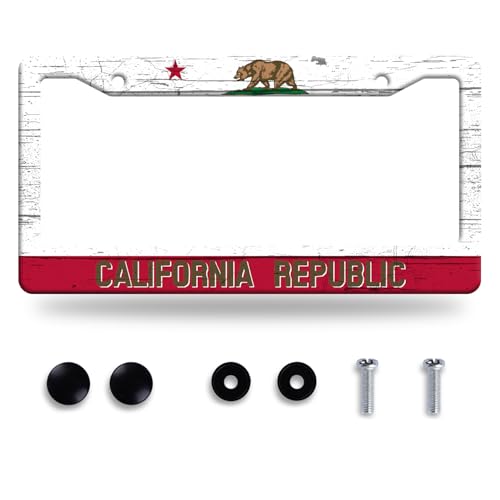
Product Material:made of Stainless steel. Personalized Car Frame Can Perfect to Put on Your Front of Car,Decorate your car to make it look more beautiful and unique,just wipe with a damp cloth

CUSTOMIZE NOW – Select te finish, choose the size and add your personalized text. NOT embossed
Reduced-Fee Eligibility Criteria
1 key pathway to reduced-cost or free resident fishing licenses is meeting specific eligibility criteria tied to veteran status, disability, age, income support, or active medical treatment.
You qualify for veteran benefits if you’re an honorably discharged veteran with a service-connected disability rating ≥50%; that reduced-fee license is $10.29.
Recovering service members undergoing documented medical treatment can also get the $10.29 reduced fee with commanding officer or physician verification.
Low-income seniors (65+) receiving SSI or CAPI are eligible for a $9.79 reduced-fee license under senior discounts.
Individuals with certified disabilities such as blindness or severe physical impairments may receive free sport fishing licenses upon submission of required certifications.
All reduced/free issuances require an application review and formal qualification before issuance.
How To Apply
To apply for a reduced-fee or free resident sport fishing license, gather required documentation and submit the completed application online or at a California Department of Fish and Wildlife (CDFW) license agent; expect a 15-business-day review period.
You’ll follow a structured application process: select Reduced-Fee or Free, complete the designated form, and attach eligibility verification.
For reduced-fee ($9.79) applicants, supply proof of SSI/CAPI or a VA letter confirming ≥50% disability. For free licenses, provide certified documentation for qualifying disabilities (including vision-related criteria).
You can submit initial applications or renewals online or in-person at CDFW license agents. Track processing timelines and retain copies of verification documents; CDFW may request additional evidence during review to validate eligibility.
Required Validations and Report Cards for Specific Species
You’ll need specific validations and report cards for certain fisheries, each with a distinct fee and scope.
For example, Ocean Enhancement Validation (south of Point Arguello) is $7.05, Second Rod Validation (inland two-rod use) is $19.70, and Recreational Crab Trap Validation is $2.98.
Sturgeon and Steelhead take require annual report cards per person at $11.06 and $9.98 respectively.
Required Report Cards
When targeting species like steelhead, sturgeon, salmon in specified North Coast rivers, or spiny lobster, you must obtain and return the required report cards and validations so agencies can track take and compliance. You’ll follow species regulations: report card importance is high because each card supplies mandatory effort and take data. Sturgeon cards are free for catch-and-release only, but anyone taking sturgeon needs one annually. North Coast Salmon cards cost $8.90 and are required in designated rivers. Spiny Lobster cards must be returned by the deadline to avoid non-return fees. Children under 16 must also obtain required cards where specified.
| Species | Fee | Return Requirement |
|---|---|---|
| Steelhead | Varies | Mandatory |
| Sturgeon | $0 (CR only) | Annual |
| Salmon | $8.90 | River-specific |
Necessary Validations
Although specific licenses let you fish legally, several validations and report cards are required for certain waters and species and carry fixed fees you must buy and return as specified.
You’ll choose necessary validations options based on location and gear: Ocean Enhancement Validation (required south of Point Arguello) costs $7.05; Second Rod Validation (two rods in inland waters) costs $19.70; Recreational Crab Trap Validation (for crab traps) costs $2.98.
Species-specific report cards are separate: Sturgeon Fishing Report Card is mandatory, $11.06, one per person annually; Steelhead Report Card is mandatory for inland steelhead, $9.98.
Recordkeeping and timely returns are enforced. Track purchases and retain receipts to demonstrate compliance with necessary validations costs and regulations.
How and Where to Buy or Renew Your License
If you need to buy or renew a California fishing license, do it online via the California Department of Fish and Wildlife (CDFW) website or at an authorized sales agent (sporting goods stores, bait shops, or CDFW offices); have your previous license information and any proof of reduced-fee eligibility ready. You’ll follow a standard Renewal Process online or at License Agents: authenticate, select term/type, provide eligibility proof if applicable, and submit payment.
| Step | Channel |
|---|---|
| 1 | CDFW website |
| 2 | Sporting goods stores |
| 3 | Bait shops |
| 4 | CDFW offices |
| 5 | Authorized license agents |
Payments at CDFW offices accept checks, money orders, Visa/Mastercard debit/credit; cash is not accepted. Bring previous license data for faster processing. Reduced-fee applicants must present documentation during purchase or renewal. The workflow minimizes processing time and guarantees compliance with validation requirements. If you need a replacement, note it’s handled online or at offices for a nominal fee (covered elsewhere).
Products Worth Considering

USA, License, plate, Vintage, tag, lot, set, plates, number, wall, decor, art, bar, restaurant, design, gift, cool, nice, american, america, hawaii, alaska, california, texas
CALIFORNIA STATE FLAG DESIGN: Features a textured, raised California flag design for an authentic, high-end look and feel.

Durable Material, Built to Last: Crafted from high-purity aluminum with a UV-protective film, it resists sun exposure, rain, fading, and rust. The tough material stays rigid and undamaged through daily use, maintaining a sleek appearance for years.
Replacing Lost Licenses and Obtaining Duplicates

Because lost or damaged fishing credentials disrupt your legal ability to fish, you should promptly request duplicates through CDFW’s online portal or at sales offices where required, paying the statutory replacement fees:
Because lost or damaged credentials prevent legal fishing, promptly request CDFW duplicates and pay required replacement fees.
$14.04 for a duplicate sport fishing license,
$3.81 per lost validation (e.g., Second‑Rod or Ocean Enhancement),
$2.98 for Recreational Crab Trap validations, and
$18.28 for Sturgeon Fishing Report Cards (the latter available only at sales offices).
You’ll use duplicate licenses to restore proof of entitlement; order the $14.04 duplicate online for most licenses or at agents if you prefer in-person processing.
For lost validation items, request validation replacements individually and pay $3.81 per Second‑Rod or Ocean Enhancement validation, $2.98 for each Crab Trap validation.
Sturgeon report cards are restricted to CDFW sales offices and cost $18.28.
Don’t heat-laminate credentials; discoloration is acceptable if text and signature remain legible.
Retain confirmation receipts and carry the valid credential while fishing to demonstrate compliance.
Products Worth Considering

FISHING LICENSE HOLDER W/ZIP CLOSURE

【MATERIAL】: oFloral License plate frame is made from premium quality aluminum, which can provide long-lasting protection from corroding, rusting and aging, durability for long lasting usage.Personalized Car Frame Can Perfect to Put on Your Front of Car or for Decorative Purposes Around the House Like in Your Bedroom, Garage, Basement, Ect.

Add a touch of humor and flair to your car with this funny "Weekend Hooker" front license plate. Perfect for the bass fishing enthusiast, this custom car tag is a great gift for men, especially for dads, husbands, or any fishing fanatic. Whether you're an outdoorsman or just enjoy a good laugh, this novelty license plate is sure to bring a smile to your face and enhance your fishing-themed car decor. Let your personality shine on the road with this fun and unique accessory.
Reporting Harvests, Deadlines, and Penalties

When you finish a take, immediately log harvests through the Online License Service by selecting HARVEST REPORTING and following species-specific prompts and deadlines; failure to meet those deadlines can trigger statutory late or non‑return fees.
You must complete harvest submission for each species per the system schedule — deadlines vary by species and by report card type. For spiny lobster, return the harvest report card by January 31 to avoid a late reporting fee; non-return incurs a statutory non-return fee.
For sturgeon, submit the annual Sturgeon Fishing Report Card as required. Even anglers under 16 who must purchase specific report cards are subject to reporting and penalty implications.
Track deadlines on your account, retain confirmation receipts, and reconcile reported quantities with physical take. Noncompliance generates administrative penalties and may affect future licensing privileges.
Follow the Online License Service workflow precisely to minimize errors, audits, and financial sanctions tied to late or missing harvest reports.
Frequently Asked Questions
Do Fishing Licenses Vary by County Within California?
No, California fishing licenses are statewide, but you’ll encounter county fishing regulations and occasional license fee differences for specific permits or validations; check the California Department of Fish and Wildlife for precise, up-to-date fee and rule data.
Can Nonresidents Buy the Same Online Options as Residents?
Yes — nonresident options match resident online purchasing availability; you’ll access identical online platforms, different fee structures, and distinct validation rules, so you’ll select nonresident products, complete verification, pay higher rates, and receive digital licenses instantly.
Are Boat Launch Fees Included With the Fishing License?
No, boat launch fees aren’t included with the fishing license; you’ll pay separate launch charges. Check boat launch regulations and itemized fishing permit costs—agencies list fees per ramp, vessel size, and permit type in their technical schedules.
Is a Separate License Needed for Surf Fishing Competitions?
Yes — you’ll usually need a separate permit; statutes and surf fishing regulations define competition licensing requirements precisely. Check jurisdictional guidance, event permits, and species-specific rules to guarantee compliance with bag limits, seasons, and reporting.
Do Seasonal Fish Closures Affect License Validity?
Yes — seasonal closures don’t void your license; they alter when and what you can catch. Check seasonal regulations and any fishing license extensions for affected species or areas, because compliance windows and permitted methods change accordingly.
Conclusion
You now know who needs a California resident fishing license, your options, validations, and reporting duties. Note: over 1.1 million resident 365-day licenses were sold last year, showing strong local participation and stable revenue for fisheries management. Keep validations and report cards current, choose short-term or reduced-fee options when appropriate, and buy or renew through official channels. Missing deadlines or harvest reports can trigger fines — replace lost licenses promptly to stay compliant.
