

You’ll pay $34 for a standard annual Tennessee resident fishing license, with cheaper alternatives if you only need short-term or limited local access. Juniors (13–15) get a $9 Hunt/Fish/Trap pass, county-of-residence permits run about $10, one-day options start near $6.50–$11.50, and lifetime or senior permanent licenses are available at higher or reduced rates respectively. Bring proof of residency or age when applying online or in person, and keep going to see full fees and rules.
Who Needs a Tennessee Fishing License

If you’re 13 or older and fishing in Tennessee’s public waters, you generally need a fishing license—residents under 16 and certain military personnel on leave are exempt. You must carry a valid license while fishing; failing to do so can result in fines up to $500.
Under Tennessee fishing regulations, residents born before March 1, 1926, may fish without a license if they provide proof of age and residency. Landowners fishing on their own private property also don’t need a license, so you won’t need one when you’re on land you own and fish its waters.
Tennessee residents born before March 1, 1926, and landowners fishing on their own property are exempt from a license.
Specific license exemptions cover active-duty military members who show proof of duty status and Tennessee residency; verify acceptable documentation before you fish. You should confirm your status and carry required papers to avoid penalties.
Follow posted rules and keep your proof accessible to comply with state enforcement and remain within legal fishing regulations.
Resident License Types and What They Cover
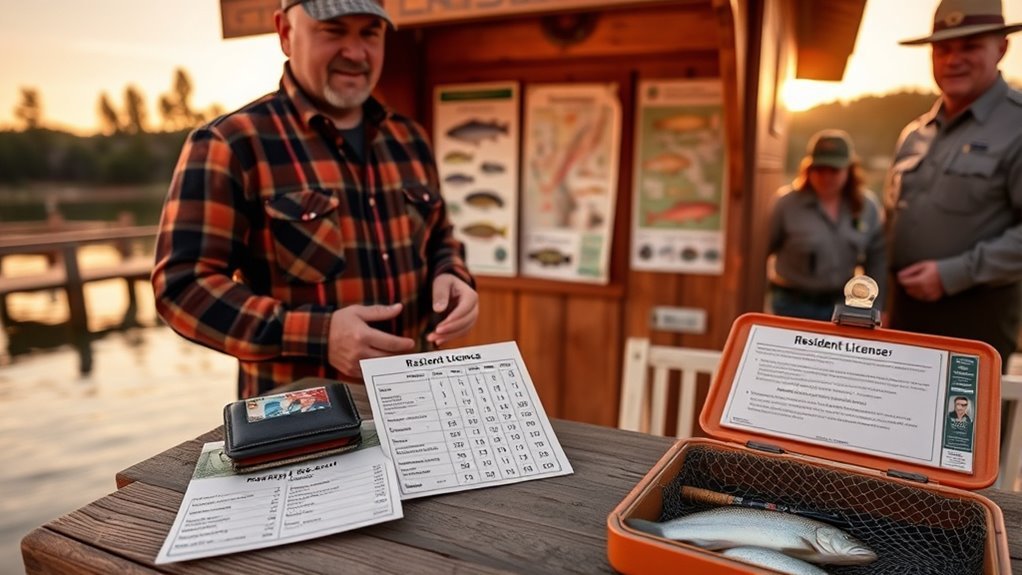
Now that you know who needs a Tennessee fishing license and the documentation rules, let’s look at the resident license options and what each covers.
You’ll pick a license based on age, scope, and desired license benefits for fishing opportunities and hunting.
- Junior Hunt/Fish/Trap (ages 13–15): For $9 annually, you get hunting and fishing privileges without extra supplemental licenses — straightforward coverage while you learn.
- Combo Hunt/Fish (ages 16–64): At $33 per year, you get small game hunting plus fishing, a compact option if you want both activities.
- County of Residence Fishing License: For $10, you can fish within your home county (excludes trout), a low-cost choice if you stick local.
- Senior & Annual Sportsman Licenses: Seniors (65+) pay $49 for full hunting and fishing privileges; the Annual Sportsman at $165 covers all hunting, trapping, and fishing without additional permits.
Each option clarifies scope so you’ll understand the practical benefits and available fishing opportunities.
Annual Resident Fishing License Pricing Breakdown
Anyone planning to fish Tennessee’s public waters year-round will want the annual resident fishing license, which costs $34 and lets you fish all public waters throughout the year without extra permits.
You’ll find that license pricing comparisons favor the $34 annual for regular anglers: it’s a low-cost, full-season option versus niche alternatives.
If you’re 13–15, the junior hunt, fish, and trap license is $10, which you’ll prefer only if you qualify.
Residents 65 and older get a senior fishing license at a reduced $49 fee, and the county of residence license costs $10 but limits you to local waters.
For broad coverage, the annual sportsman license at $165 covers all hunting, trapping, and fishing without additional permits and can be cost-effective if you pursue multiple activities.
Weigh these choices against how often and where you fish; understanding fishing license benefits and clear license pricing comparisons helps you pick the most practical, economical option.
Products Worth Considering

TENNESSEE STATE FLAG DESIGN: Features a textured, raised Tennessee flag design for an authentic, high-end look and feel.

TENNESSEE ORANGE TRI-STAR - Iconic three-star emblem on vibrant orange background | Perfect for Tennessee fans and Smoky Mountain enthusiasts | Adds state pride & bold personality to any vehicle

Tennessee black & silver "T" license plate. Features the TN Vols "POWER T" centered with a brushed metal finish. CLASSY!
One-Day and Short-Term Resident Options

If you only need a day on the water, you can buy a one-day resident fishing license for $6.50 (basic) or $11.50 for trout.
If you’re 13–15, the $9 Junior Hunt/Fish/Trap annual lets you fish without extra permits, and residents who only fish locally can choose the $10 County-of-Residence license (note bait and area restrictions).
Next we’ll compare when these short-term options make more sense than an annual or the $165 Annual Sportsman pass.
Products Worth Considering

Personalize with any name or text. Item is custom printed for you. Simple to order, just click on the customize now button and enter the name or text that you want printed on your custom keychain.

This Largemouth Bass fishing license plate features a black background with silver design elements. Choose with our without the American flag faded into the background!

TENNESSEE MOUNTAINS GREYSCALE DESIGN - Beautiful "TENNESSEE MOUNTAINS" license plate featuring greyscale TN state flag emblem with mountain design. Perfect car decor for Tennessee residents, TN state pride enthusiasts, and anyone celebrating Tennessee heritage with mountain imagery representing volunteer state spirit and Tennessee pride. Note: Colors may vary slightly from images due to display settings.
One-Day Fishing Fees
When you need short-term or one-day access to Tennessee waters, the state keeps options simple and affordable: a standard one-day fishing license—whether for non-trout species only or for all species—costs $11, while residents aged 13–15 can get an annual Junior Hunt/Fish/Trap license for $9, and county-resident anglers can buy a County of Residence (No Trout) license for $10 to fish within their home county.
- One-day (no trout) or all-species one-day: $11 — ideal when you want a single outing without committing to a season license.
- County of Residence (No Trout): $10 — restricts you to your home county.
- Junior Hunt/Fish/Trap (13–15): $9 annually.
- Non-resident short options: 3-day $20, 10-day $30.
Follow fishing regulations and support conservation efforts when you buy short-term access.
Junior Short-Term Options
Although Tennessee offers full-season junior licenses, short-term options give young anglers flexible, low-cost access to public waters: you can choose affordable one-day or junior short-term permits that promote youth engagement and deliver clear fishing benefits.
If you’re 13–15, the Junior Hunt/Fish/Trap license is $9 annually and covers fishing without extra permits. For single outings, a resident one-day fishing license costs $6.50 for basic species or $11.50 for trout; junior anglers also have a one-day option at $11 for no-trout or all-species access.
Tennessee residents 13 and older must carry a valid license to fish public waters, so these short-term choices let you try fishing, learn regulations, and enjoy outdoor recreation without committing to a full-season fee.
County-Only Licenses
Because county-only and short-term licenses target local and occasional anglers, they give you low-cost, flexible access to Tennessee waters without a full-season commitment.
You can choose the County of Residence Fishing License (No Trout) for $10 if you plan to fish only in your county, supporting county conservation and local fishing efforts.
One-day options offer short visits without a full license.
- County license: $10, county-only, valid until Feb 28/29, supports county conservation.
- One-day basic: $6.50, single-day access statewide? (check local rules).
- One-day trout: $11.50, includes trout for short trips.
- Exemptions: under-13s and military on leave don’t need a license.
Confirm season end dates and county restrictions before you go.
Lifetime and Reduced-Fee Resident Licenses

If you plan to fish long-term, lifetime and reduced-fee resident licenses give you cost-effective options that suit different ages and circumstances.
You’ll find clear lifetime license benefits: fees scale by age—$320 for infants and adopted children under 13, up to $1,976 for adults—so you can decide when a one-time purchase makes financial sense.
A Lifetime Sportsman License remains valid even if you move out of state, protecting your investment and supporting long-term commitment to fishing.
Reduced fee options address specific needs: residents 65 and over can buy a Permanent Senior Citizen Hunt/Fish/Trap License for only $49, and qualifying veterans certified as disabled by the VA pay just $10 for a Resident Disability License.
These choices let you match cost to circumstance—young families get affordable lifetime access, seniors lock in minimal lifelong costs, and disabled residents receive near-free access—so you can plan purchases that fit your budget and fishing goals.
Products Worth Considering

Premium Quality: Our rugged license holder is made from durable water-resistant synthetic leather, ready for harsh hunting and fishing conditions. Soft to the touch and more comfortable to wear than the typical hard plastic feel of cheaper options. This license holder is made to last

The size of the license plate frame is: 12.3" x 6.3" , it fits all standard size US and Canada vehicle license plates.the stylish design frame fits ly on your car license plate.
ALUMINUM FRAME: This License Plate Frame is crafted from high-quality aluminum that is resistant to corrosion, rust, and harsh weather conditions. Its rugged reliability design ensures a long lifespan, making it capable of withstanding car washes and extreme weather, providing you with a reliable and stylish solution for your vehicle.
Special Permits and Supplemental Fees to Know

When you plan outings beyond basic fishing or hunting, you’ll need several special permits and supplemental fees that cover specific species, methods, and locations.
You’ll encounter a mix of special fishing permits and supplemental fishing fees depending on target species or water. Know the common costs so you can buy what’s required.
- Waterfowl: a waterfowl license is $37 and required to hunt ducks and geese.
- Big game: gun, archery, and muzzleloader big game licenses are each $33 and must be added to your basic hunting license.
- Trout: an annual trout supplemental license costs $21 and must be purchased alongside another fishing license to fish trout legally.
- Reservoir & county options: South Holston Reservoir supplemental fishing license is $20 for the Virginia portion; a County of Residence (No Trout) fishing license is $10 with bait restrictions for local county fishing.
Buy the correct permit before you go — penalties for missing supplemental fishing fees can be steep.
Products Worth Considering

Product Material: Our license plate frame is made of premium quality aluminum, which ensures that the plate frame will never wear out. Corrosion resistant, Personalized Car Frame Can Perfect to Put on Your Front of Car,Decorate your car to make it look more beautiful and unique.


【MATERIAL】: oFloral License plate frame is made from premium quality aluminum, which can provide long-lasting protection from corroding, rusting and aging, durability for long lasting usage.Personalized Car Frame Can Perfect to Put on Your Front of Car or for Decorative Purposes Around the House Like in Your Bedroom, Garage, Basement, Ect.
Eligibility Proof and How to Apply

To qualify for a Tennessee resident fishing license, you’ll need proof of residency such as a valid Tennessee driver’s license, state ID, voter registration, or a rental contract.
Military members (and their children) and students enrolled in Tennessee schools for six months have special exceptions, and nonresidents born in Tennessee may be eligible for a Native Tennessean license.
You can apply online, at TWRA regional offices, or through authorized vendors for a quick, convenient process.
Residency Documents Required
Proof of Tennessee residency is required to get a resident fishing license, and you’ll usually show a valid Tennessee driver’s license or state ID as primary evidence.
For residency verification, you’ll present required documents that clearly tie you to a Tennessee address. If you don’t drive, gather two secondary documents to prove residency before applying.
- Valid Tennessee driver’s license or state ID (primary).
- Voter registration card, utility bill, or rental/lease contract (use two if you’re a non-driver).
- Birth records for Native Tennesseans seeking specific licenses (follow application guidance).
- Official school enrollment or other government correspondence when applicable.
Bring originals or certified copies to the license office or complete the online process as instructed.
Military and Student Exceptions
Need guidance on special cases? You qualify for military benefits or student rights if you meet TN rules. Active-duty military and their children get resident licenses with proof of active duty. Students enrolled in Tennessee schools six months qualify with student-status verification. Non-drivers must add two residency documents (rental contract, voter registration). For applicants born before March 1, 1926, show age and residency for free licensing.
| Eligibility Type | Required Proof |
|---|---|
| Military personnel/children | Active-duty ID or orders |
| Students (≥6 months) | Enrollment verification |
| Non-drivers | Two residency documents |
| Seniors (pre-3/1/1926) | Proof of age + residency |
You can apply at TWRA regional offices or present documents when applying; keep paperwork current and clear.
How to Apply Online
Now that you know which special categories qualify for resident licensing, you can complete the application online through the TWRA website.
You’ll print your license immediately after purchase, but first gather eligibility proof to avoid delays. Follow these online application tips to move quickly and claim fishing license benefits.
- Have your Tennessee driver’s license or state ID ready — enter the number exactly as shown.
- If you don’t drive, upload residency documents (voter registration, rental contract) when prompted.
- Military members, their children, and students enrolled six months qualify — select the appropriate category and upload supporting proof.
- Nonresident Native Tennesseans can choose the Native Tennessean option to apply without standard nonresident requirements.
Where to Buy and Manage Your License
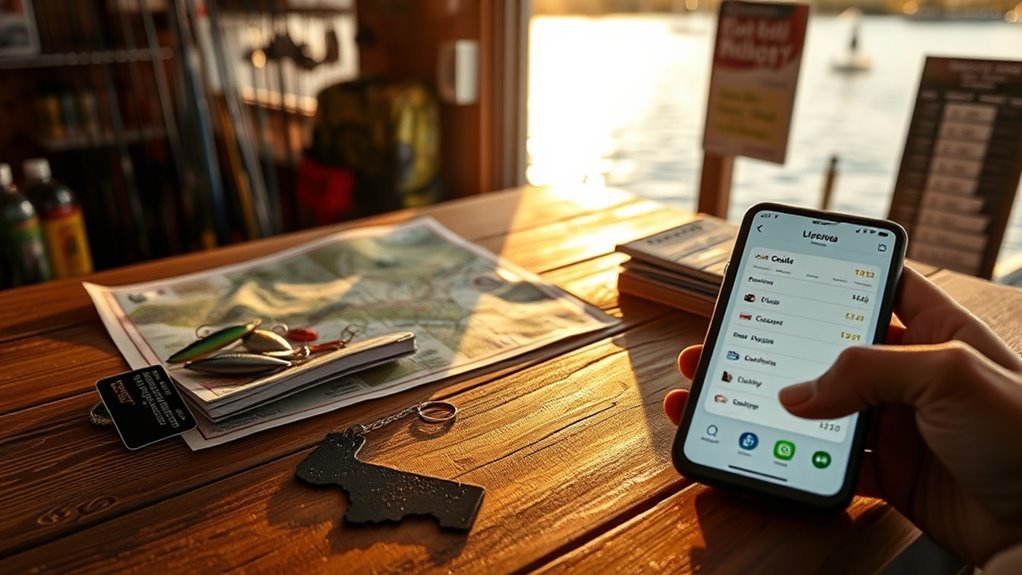
When you’re ready to fish, you can buy a Tennessee license online at the TWRA website and print it instantly, or pick one up in person at TWRA regional offices, sporting goods stores, or Walmart; you can also call the TWRA licensing helpline to order by phone with a credit or debit card.
For clear license management, create a free TWRA online account — it centralizes purchasing options, renewals, personal information updates, and permit access. Once logged in, you can renew quickly, print additional copies, or check permit details before you head out.
If you prefer in-person help, staff at regional offices and retail outlets can guide purchases and answer questions on requirements. Phone ordering suits last-minute needs when you can’t access a computer.
Keep your account credentials secure and update contact information after any change to guarantee receipts and confirmations reach you. Using the TWRA account streamlines record-keeping and reduces the chance of fishing without a valid, accessible license.
Products Worth Considering


Rules, Regulations, and Responsible Angling
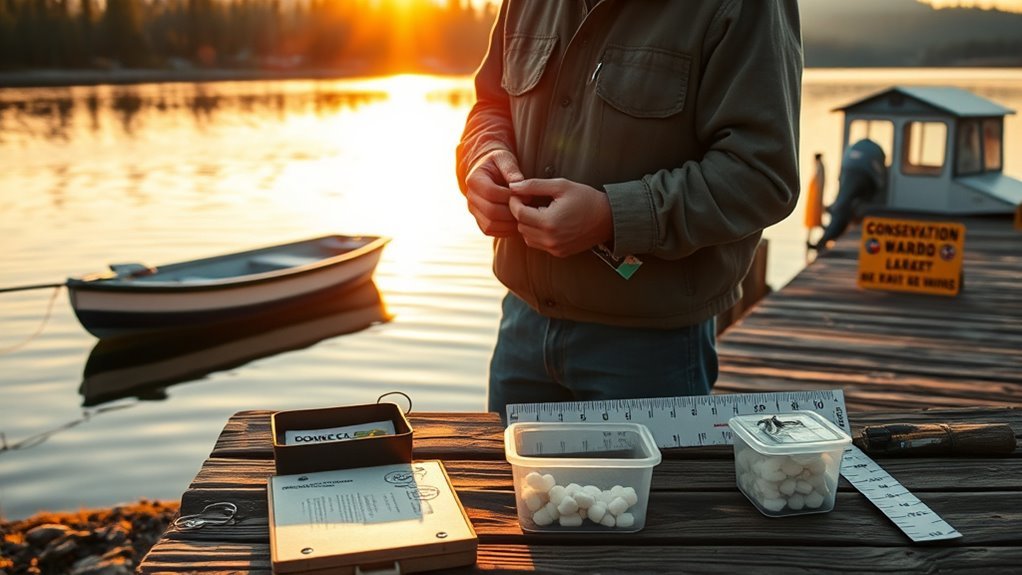
Because Tennessee’s waters are managed to protect fish and anglers alike, you must carry a valid license if you’re 16 or older and follow size, bag, seasonal, bait, and gear limits that vary by species and location.
You’ll face fines up to $500 for violations, so check regulations before you fish. Apply fishing ethics and conservation practices: use proper handling, limit harvests, and respect seasonal closures that protect spawning fish.
- Know limits: confirm size and bag limits for target species and water body.
- Observe seasons: avoid closed areas and dates to prevent spawning disturbance.
- Use legal bait/gear: follow restrictions to reduce bycatch and habitat damage.
- Practice catch-and-release: handle fish carefully, use barbless hooks, and minimize air exposure.
You’re responsible for staying current with rules, reporting violations, and adopting conservation practices that sustain fisheries for future anglers.
Frequently Asked Questions
Do Boat Owners Need a Separate License for Fishing From Their Boat?
Yes — you typically need a fishing license to fish from a boat, and sometimes a separate vessel permit. You’ll follow boat fishing regulations and choose correct fishing license types, so check state rules before heading out.
Can Non-Resident Family Members Use My Resident License Temporarily?
No — you can’t let non-resident family members use your resident license for temporary fishing; licenses are personal. Treat your permit like a key: it represents legal identity, not transferable access, so each person needs proper credentials.
Are Fishing License Costs Tax-Deductible for Income Tax Purposes?
No, you generally can’t deduct personal fishing license costs on your income tax return; they’re nondeductible personal expenses unless they’re ordinary and necessary fishing expenses directly tied to a business or trade, in which case documentation’s required.
Does Purchasing Online Require Printing a Physical License Copy?
Yes — you don’t always need to print a physical copy; online license purchases often provide digital access you can show on your phone, but some jurisdictions still require a paper copy, so check local rules before heading out.
Are There Discounts for Veterans Beyond Senior Reduced Fees?
Yes — you can get veteran discounts in many states; you’ll often qualify for reduced or free fishing benefits if you show proof of service, but eligibility, application steps, and required documentation vary by state, so check locally.
Conclusion
So you’ve seen all the resident fishing license options, rates and rules—shocking how a bit of paperwork can make you legal and not a local outlaw, right? Use the right ID, pick the term that fits your plans, and remember those specialty permits aren’t optional extras if you want to keep your catch. Buy online or at a vendor, carry proof, and fish responsibly—because nobody wants a citation ruining a perfect sunrise cast.
