
If you live in Alabama and are 16–64, you’ll need a resident sport fishing license for public waters; it costs $17 for the 2025–2026 year and is valid through August 31, 2026. Seniors 65+ are exempt, and there are low-cost options for disabled anglers ($3.50, with a $3.45 rate for 100% disability) plus special cases for military and certain students. Buy online or from local agents and keep your proof on hand to stay compliant and support conservation—more details follow.
Who Needs a Resident Fishing License in Alabama
If you live in Alabama and your age is between 16 and 64, you must hold a sport fishing license to fish in public waters; residents 65 and older are exempt.
You’ll need to comply with fishing regulations that tie licensing to age and declared domicile. To qualify for resident privileges, you must meet residency requirements by declaring Alabama as your sole place of residence; nonresidents and dual-residence claimants aren’t eligible for resident rates.
Licensing depends on age and declared domicile — claim Alabama as your sole residence to qualify for resident rates.
Military personnel on leave from Alabama are exempt from license purchase, but you should carry proof of status to confirm the exemption during enforcement encounters.
If you’re a non-resident college student aged 17 to 23 attending school in Alabama, you may secure a residency exception for a discounted license; you’ll need documentation verifying student status and temporary residence.
Follow these rules to guarantee lawful angling, support conservation funding, and reduce enforcement risk while fishing public waters.
Resident License Types and Prices for 2025–2026
For the 2025–2026 season, Alabama offers a limited set of resident fishing licenses tailored to typical angling needs and conservation funding: the standard Sport Fishing License (freshwater) is $17.00 for residents aged 16–64; residents 65 and older are exempt; a Public Fishing Lakes Daily License is $7.65 for single-day use at designated lakes; an annual Disabled Fishing License (freshwater and saltwater) is $3.50 with required proof of disability; and the All Access Fishing Package, bundling broader privileges for the season, is $57.05.
You’ll select the license that matches your intended water type, trip frequency, and regulatory responsibilities. Each option specifies explicit license benefits—authorized waters, bag and size limits, and reporting requirements—so you comply with fishing regulations and support population management.
The All Access Package consolidates privileges to reduce administrative complexity if you fish diverse habitats. Consult the official agency for exact permit boundaries and documentation requirements before purchase to guarantee legal compliance and to maximize conservation outcomes.
Products Worth Considering

✅FULL SIZE 6.00" x 12.00" x 032 Thk HIGH-QUALITY ALUMINUM MATERIAL - Crafted from top-grade aircraft aluminum, this custom license plate resists rust and corrosion, ensuring it withstands harsh weather, Will maintain its appearance for years to come.

LASER PINK /SIL A TAG

Black LASER cut tag
Discounts, Exemptions, and Special Disabled Rates
Having reviewed the resident license options, you should next consider exemptions and reduced-fee provisions that alter who must buy a permit and at what cost.
Alabama provides targeted discounted licenses and exemptions to support access while maintaining regulatory integrity. If you’re 65 or older and can present proof of age and residency, you’re exempt from purchase; carry documentation to verify exemption during enforcement checks.
Alabama offers targeted exemptions and discounts—seniors with proof of age and residency are exempt from license purchase.
Military personnel on leave from Alabama are also exempt; retain military orders or ID as evidence.
For disabled anglers, certification of permanent disability lets you buy a Disabled Fishing License for $3.50, valid for freshwater and saltwater. If you have a 100% disability determination, you qualify for a specially discounted fishing license at $3.45.
Non-resident college students aged 17–23 may meet a residency exception allowing purchase of discounted licenses; review institution and residency documentation requirements.
Confirm eligibility criteria before applying to guarantee compliance and to support conservation through accurate permit accounting.
Products Worth Considering
Black Acrylic Plate With Vinyl Graphic Decal

College Team Pride - Represent your alma mater with this uniquely designed license plate tag from Decorvo

Where and How to Purchase Your Resident License
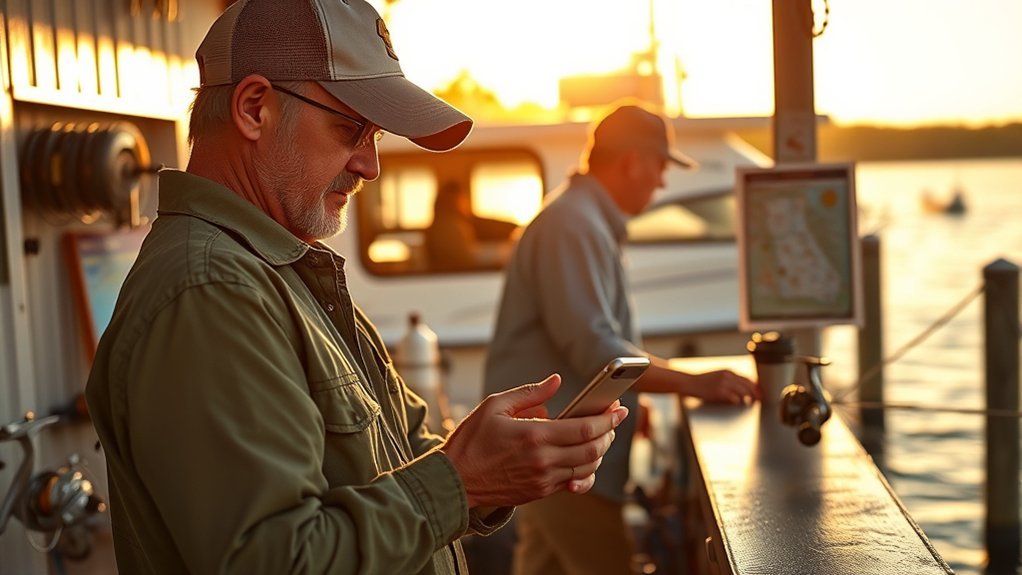
When preparing to fish in Alabama, you’ll purchase your resident license online through Outdoor Alabama or in person at local license agents, district offices, and probate offices; carry the physical or digital license while fishing to avoid fines. Use online purchasing for rapid issuance and recordkeeping; visit local agents when you need assistance or printed documentation. Sport Fishing (Freshwater) costs $17 for ages 16–64; seniors 65+ are exempt. Daily public lake permits cost $7.65. Note additional fees may apply for residents of FL, LA, and MS.
| Purchase Method | Typical Use | Notes |
|---|---|---|
| Outdoor Alabama (online) | Rapid issuance, digital record | Best for trip planning |
| Local agents | In-person help, printed copy | Useful if you lack internet |
| District/Probate offices | Official transactions | Required for some exemptions |
Keep your license accessible while fishing. Your compliance supports conservation funding, enforcement, and sustainable fishery management.
Products Worth Considering


ROLL TIDE Alabama Embossed aluminum license plate in team colors
Rules, Validity, and Penalties for Resident Anglers
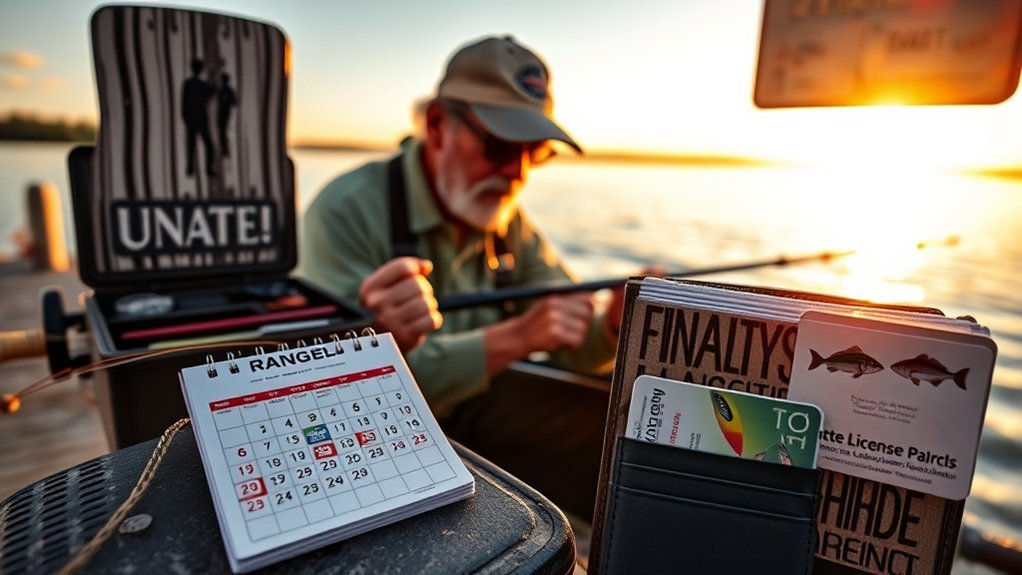
Although you’re required to carry a valid Sport Fishing (Freshwater) license if you’re 16–64, the state allows senior residents (65+) to fish without one provided they present proof of age and residency. Licenses cost $17 for the 2025–2026 season and are valid through August 31, 2026.
If you’re 16–64, carry a $17 Sport Fishing license; seniors 65+ may fish license-free with age and residency proof through Aug 31, 2026.
You must possess the license while fishing; Alabama’s fishing regulations overview emphasizes visible proof to expedite compliance checks. Licenses are valid from purchase until August 31 and may be renewed online, at county probate offices, or certified retailers.
License enforcement policies impose fines of $10–$25 per offense for fishing without a valid license; repeat violations may prompt administrative follow-up. Maintain documentation and adhere to season, bag, and gear limits to support conservation objectives.
- A compact wallet card showing name, DOB, and expiration.
- A smartphone screenshot of the online license confirmation.
- A proof-of-residency document for senior exemption verification.
Follow rules precisely to preserve resources and avoid penalties.
Frequently Asked Questions
Can I Fish on Private Lakes With a Resident License?
Yes — you can fish private lakes if you have landowner permission; your resident license doesn’t override private lake regulations. You should confirm fishing rights clarification, follow access rules, and comply with species, bag, and conservation requirements.
Are Bait Shops Required to Verify My Residency?
“Measure twice, cut once.” You aren’t always checked; bait shop regulations vary, and sellers may require residency verification per state rules. You should carry ID and be prepared to prove residency to comply with conservation enforcement.
Does the License Cover Saltwater Fishing From Shore?
Yes — your resident saltwater license covers shore fishing, but you’ll need to follow shore fishing regulations and species-specific bag, size, and season limits for saltwater species, plus gear restrictions and protected-area closures.
Can I Transfer My License to Another Person?
No, you can’t transfer your license to another person; license transfer policies prohibit reassignment, and you’ll need residency verification requirements met for any newly issued license. You’re responsible for compliance, record accuracy, and conservation regulations.
Is an Electronic Copy of My License Acceptable Enforcement Proof?
Yes — you can present an electronic license validation; enforcement accepts digital fishing permits displayed on mobile devices, provided the file is legible, untampered, and accessible for officers during inspection to verify licensing and conservation compliance.
Conclusion
You’re responsible for following Alabama’s resident fishing-license rules to protect fish stocks and avoid fines. Buy the correct 2025–2026 license—matching your age, disability status, or exemption—and carry it while fishing. Think “many hands make light work”: small, lawful actions by anglers preserve healthy fisheries for everyone. Check official purchase channels, note season dates and penalties, and prioritize conservation-minded practices like catch limits and proper handling to sustain populations and habitats.
