
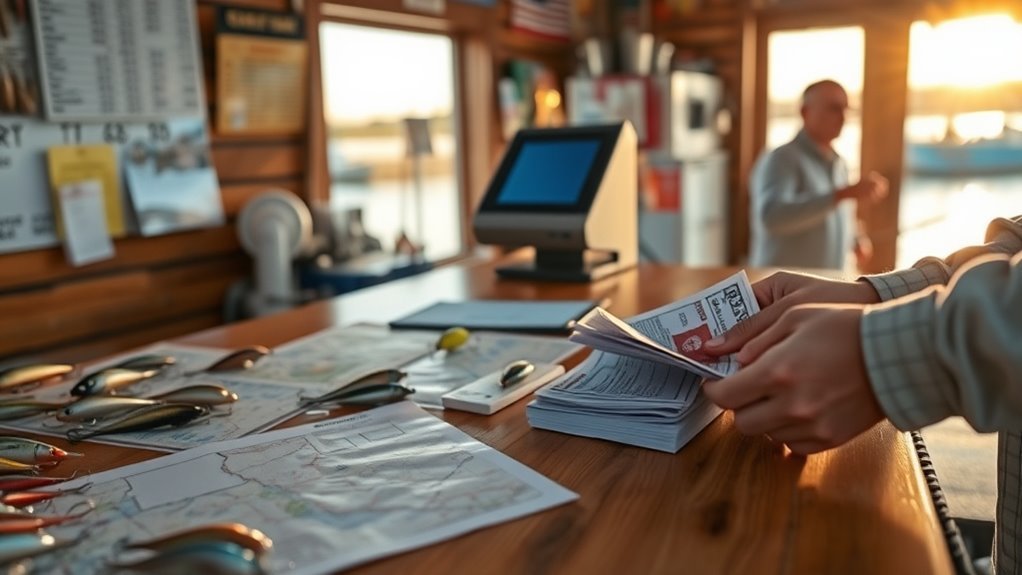
If you’re 16 or older visiting California to fish, you’ll pay $169.82 for a 365‑day nonresident sportfishing license; short‑term options are $20.52 (1‑day), $31.58 (2‑day) and $62.90 (10‑day). Some species require extra validations or report cards (e.g., ocean enhancement, sturgeon, spiny lobster) and you must carry your license while fishing. Reduced‑fee or free licenses exist for qualifying veterans, seniors or disabled applicants. Continue for specifics on purchases, replacements and reporting deadlines.
Who Needs a Sportfishing License in California

Who needs a sportfishing license in California? You do if you’re 16 or older and intend to fish in California waters, regardless of residency; state fishing regulations mandate a valid sport fishing license for all anglers aged 16+.
If you’re a non-resident 16 or older, you must buy the Nonresident Sport Fishing License (currently $169.82). Note that children under 16 are exempt from licensing, though they must obtain species-specific report cards when required.
The state also maintains explicit license exemptions: fishing from public ocean piers doesn’t require a license, and designated annual free fishing days temporarily waive license requirements for everyone, including non-residents.
These exemptions are narrow and codified to balance access with resource management. You should confirm dates and pier status before fishing, since regulations and exemptions can change.
Carry proof of age and license where applicable to comply with enforcement procedures and avoid citations.
Annual Nonresident Sport Fishing License Fee and What It Covers
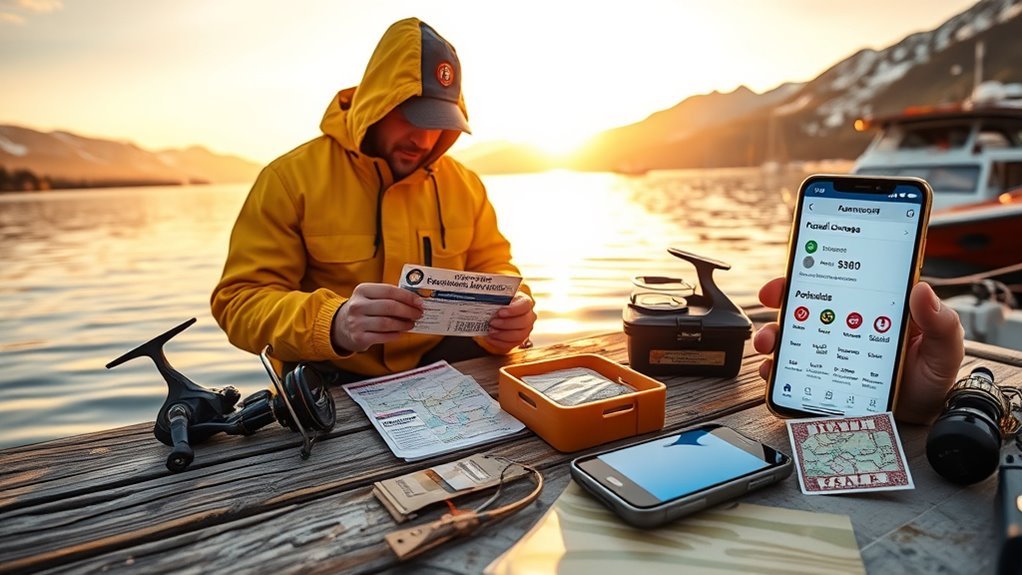
If you’re a non-resident aged 16 or older planning to fish in California, the annual Nonresident Sport Fishing License costs $169.82 and is valid for 365 days from the purchase date.
You get year-round access to fish for multiple species across California waters; that access and the license benefits are tied to compliance with state fishing regulations. Carrying the license while fishing is mandatory; enforcement stops non-compliant activity and supports resource management.
Fee revenues are allocated to conservation and fishery management programs—stock assessments, habitat restoration, enforcement, and angler education—so your purchase directly funds sustaining fish populations and ecosystems.
The single-fee, 365-day term provides administrative simplicity and predictable funding for policy implementation. Before you fish, confirm species-specific rules and seasonal closures to remain within fishing regulations.
A single annual fee simplifies administration and ensures steady funding—check species rules and seasonal closures before fishing.
Retain proof of purchase and familiarize yourself with local regulations to avoid citations and to support long-term resource objectives.
Products Worth Considering

PREMIUM QUALITY: Crafted from high-grade materials, our License Plate is built to withstand the elements and maintain its vibrant appearance over time. It is resistant to fading, cracking, and peeling, ensuring long-lasting performance.

Durable Material, Built to Last: Crafted from high-purity aluminum with a UV-protective film, it resists sun exposure, rain, fading, and rust. The tough material stays rigid and undamaged through daily use, maintaining a sleek appearance for years.

Includes Size, Weight, Location, Food Quality, And Coloring.
Short-Term License Options for Visitor Anglers
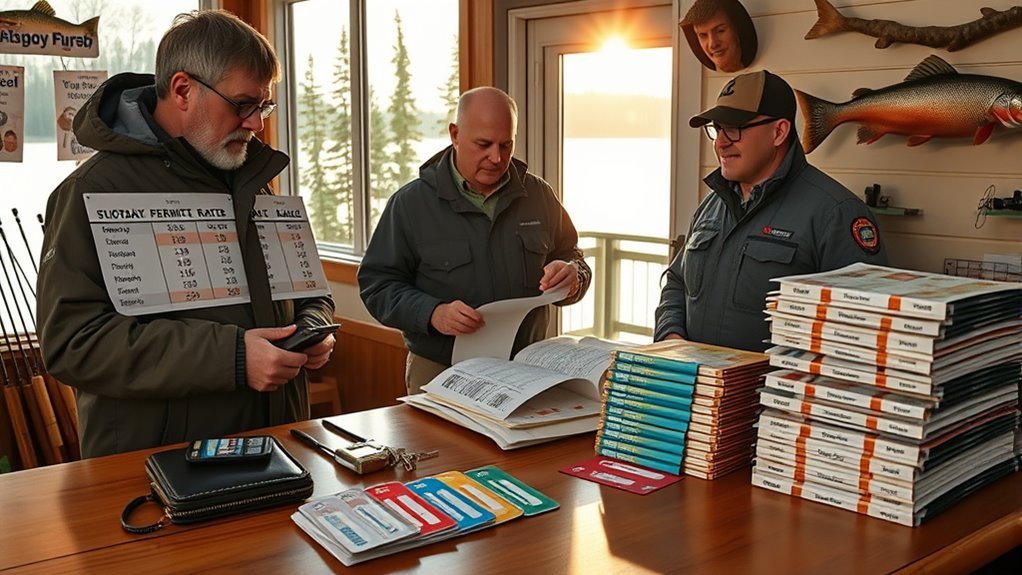
Many visitors prefer short-term nonresident fishing licenses when they only need occasional access; California offers one-day ($20.52), two-day ($31.58), and ten-day ($62.90) options that cover consecutive-day fishing without the Ocean Enhancement Validation fee.
If you’re a visitor angler, these short term licenses let you align cost with trip length: $20.52 for a single day, $31.58 for two consecutive days, or $62.90 for ten consecutive days.
Policy-wise, that price differentiation reduces barriers for short stays and targets transient demand without requiring an annual commitment.
You’ll find administration is streamlined—each license explicitly states its consecutive-day validity—so enforcement and compliance checks focus on date stamps rather than species validations.
From a budget perspective, compare trip duration to per-day cost; the ten-day license lowers average daily expense when you’ll fish multiple days.
These short term licenses are optimized for visitor angler behavior, balancing revenue generation and access while avoiding additional Ocean Enhancement fees.
Products Worth Considering

EASY & FUN TO CUSTOMIZE: Click "Customize Now" to add your personalization to your mini Calfironia state plate!
CALIFORNIA STATE FLAG DESIGN: Features a textured, raised California flag design for an authentic, high-end look and feel.

【MATERIAL】: oFloral License plate frame is made from premium quality aluminum, which can provide long-lasting protection from corroding, rusting and aging, durability for long lasting usage.Personalized Car Frame Can Perfect to Put on Your Front of Car or for Decorative Purposes Around the House Like in Your Bedroom, Garage, Basement, Ect.
Required Validations and Species Report Cards for Nonresidents
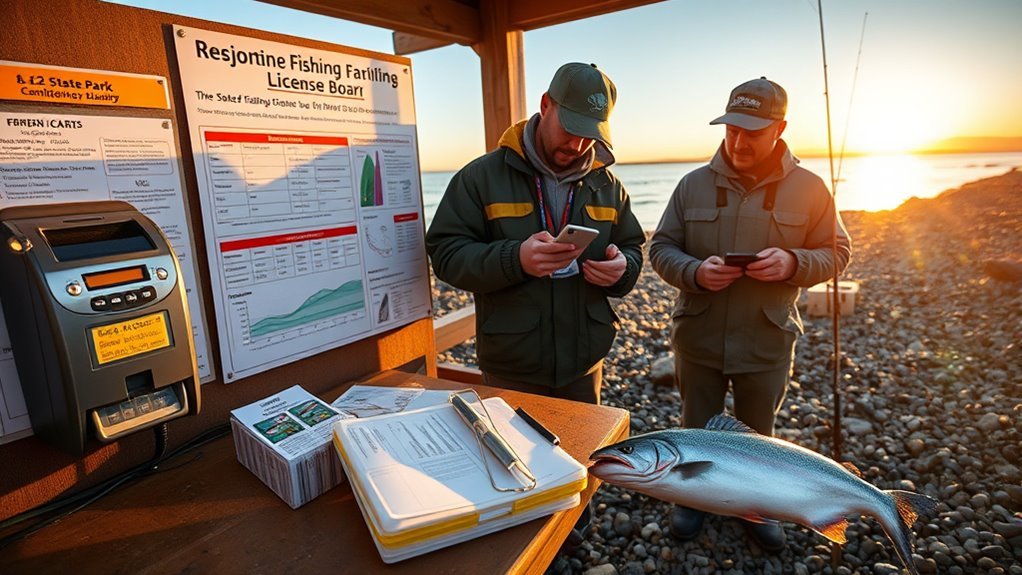
Because nonresident anglers face species- and area-specific reporting and validation requirements, you’ll need to budget for several add-on fees beyond a base fishing license.
You must buy species report cards for Steelhead, Spiny Lobster, and Sturgeon regardless of license status; the North Coast Salmon Report Card is required for certain river systems and costs $8.90.
An Ocean Enhancement Validation is required for ocean fishing south of Point Arguello ($7.05), and a Recreational Crab Trap Validation is required if you use crab traps ($2.98).
These items are regulatory, not optional, and noncompliance can trigger penalties.
Follow validation requirements precisely: obtain the correct card or validation before fishing the targeted species or area.
Get the right card or validation first — don’t fish a species or area without proper, prior authorization.
Observe report card deadlines to avoid non-return fees—most species cards are due by January 31, while Spiny Lobster returns are due by April 30.
Keep receipts and documentation; agencies base enforcement and compliance records on timely returns and proper validations.
Reduced‑Fee and Free License Options for Eligible Individuals
You qualify for reduced or free nonresident sport fishing permissions if you’re a disabled veteran, recovering service member, low‑income senior, or someone with a qualifying disability (children under 16 remain exempt from licenses but may need species report cards).
To apply you’ll need documented proof of status (disability verification, income proof, veteran records) and can purchase reduced licenses through CDFW or agents at $9.79–$10.29, or request a free license where eligible.
Expect up to 15 business days for application processing and keep required report cards for specific species.
Who Qualifies
If you meet specific disability, veteran, age, income, or tribal criteria, you can access reduced‑fee or free non‑resident fishing licenses under established program rules.
The qualifying criteria and eligibility requirements specify: honorably discharged veterans with a ≥50% service‑connected disability pay about $10.29; recovering service members in active medical treatment may obtain the $10.29 reduced fee with renewals allowed until recovery; low‑income seniors may qualify for a reduced fee near $9.79; low‑income Native Americans and people certified blind or with verified severe physical disabilities receive free licenses.
Documentation is required for each status, and agency review can take up to 15 business days. You should verify your status against the program’s published eligibility requirements before applying.
Application Requirements
When applying for a reduced‑fee or free non‑resident fishing license, follow the program’s documented submission and verification steps so your eligibility can be confirmed within the 15‑business‑day review window.
You’ll complete the application process and supply required documentation specific to your category: Veterans Administration records or a VA verification letter for disabled veterans and recovering service members (reduced fee $9.79), certification of low‑income Native American status or qualifying disability for free licenses, and age documentation or report cards for children under 16 where species rules require them.
Applications are reviewed against policy criteria; missing or incomplete documents will delay or deny approval.
Track submission dates and retain copies of all materials to support timely adjudication under the stated processing timeframe.
How To Obtain
Having confirmed eligibility and submitted required documents under the application requirements, you can begin the actual procurement steps for reduced‑fee or free non‑resident fishing licenses.
Follow agency procedures: select appropriate license types, attach verification per eligibility criteria, and choose fee-exempt or reduced-fee processing. Processing typically takes about 15 business days.
- Complete the online or paper application, include verification (e.g., VA letter for disabled veterans, commanding officer/medical verification for recovering service members), and indicate desired license types and fee status.
- For free licenses (blindness, severe physical impairment), submit medical documentation showing qualifying condition; agency reviews and approves based on eligibility criteria.
- Pay required reduced fee (~$10.29 in California) when applicable; await confirmation and issuance.
Where and How to Purchase or Replace a License
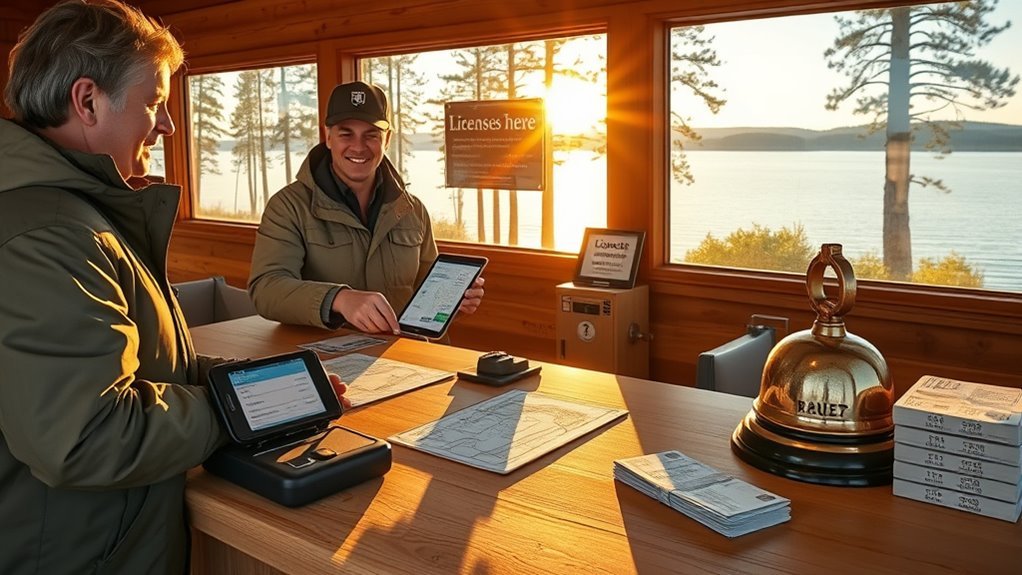
You can buy a non‑resident fishing license online through the CDFW website or from authorized agents and CDFW sales offices; the annual license is $169.82 and the ten‑day option is $62.90.
Payments accepted include Visa/Mastercard, checks, or money orders (CDFW offices don’t accept cash).
If you lose your license, you can obtain a duplicate online or at CDFW offices for a small fee, but you must have your license in immediate possession while fishing to avoid penalties.
Products Worth Considering

CUSTOMIZE NOW – Select te finish, choose the size and add your personalized text. NOT embossed

USA, License, plate, Vintage, tag, lot, set, plates, number, wall, decor, art, bar, restaurant, design, gift, cool, nice, american, america, hawaii, alaska, california, texas
Buy Online or Agents
Although you can buy a non-resident sport fishing license instantly online via the California Department of Fish and Wildlife (CDFW) website and print it immediately, in-person purchases remain widely available through authorized license agents—sporting goods stores, bait shops, grocery stores—and at CDFW license sales offices (note: CDFW offices don’t accept cash).
You’ll appreciate the online convenience for immediate ten-day ($62.90), two-day ($31.58) or one-day ($20.52) options; records update in real time for enforcement and compliance checks.
If you prefer face-to-face transactions, use authorized agents or CDFW offices; agents accept typical retail payments, while CDFW offices require card, check, or money order.
Follow agency policy: carry your printed or digital license while fishing and present it on request.
- Online convenience: instant purchase, print, and real-time record.
- Authorized agents: retail locations statewide.
- CDFW offices: non-cash policy, official sales.
Replace Lost License
If your non-resident Sport Fishing License is lost, you can get a duplicate quickly online through the California Department of Fish and Wildlife (CDFW) website or in person at licensed agents and CDFW offices for a small replacement fee.
You’ll use the same online portal where non-resident licenses ($169.82 for a one-year term) are issued; the duplicate fee prevents repurchasing a full license.
CDFW policy requires non-cash payments at offices (checks, money orders, debit/credit), while licensed agents may accept cash—confirm locally.
Keep your license secure and don’t heat-laminate it, as lamination can damage and invalidate the card.
For compliance, carry the duplicate while angling and record purchase details for verification.
Reporting Harvests, Rules, and Penalties for Anglers
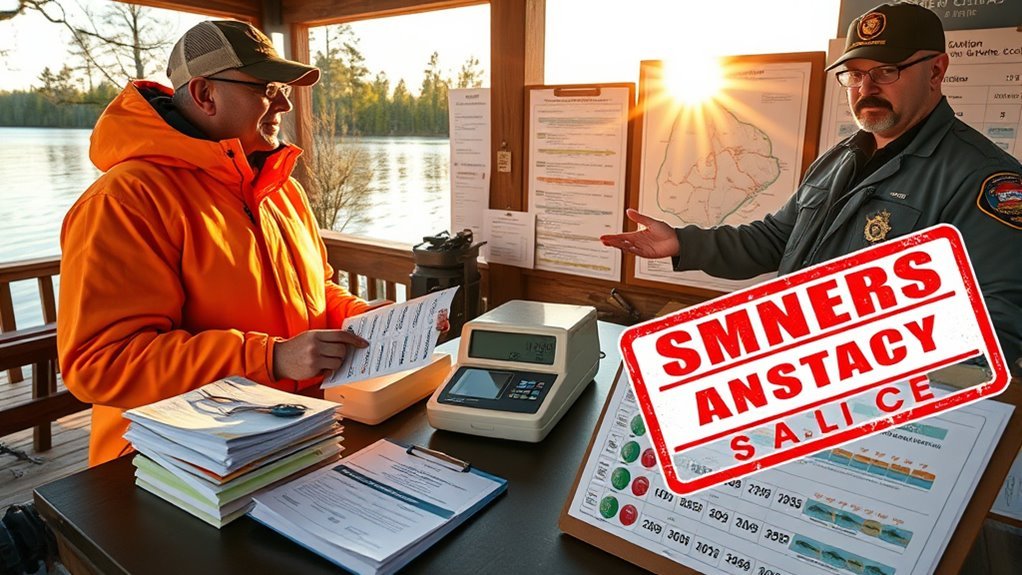
While fishing rules vary by species and location, non-resident anglers must report harvests for certain species (for example, steelhead and sturgeon) on the required report cards and comply with all applicable bag limits and size restrictions even when no license is required for pier fishing.
You’re required to complete specific report cards (sturgeon by January 31; spiny lobster by April 30) and return them on time; failure to return a spiny lobster card can trigger a non-return fee.
Harvest reporting is mandatory for listed species regardless of license exemptions. Fishing penalties are enforced for violations — including fishing without a valid license or not complying with report card rules — with fines starting at $1,000.
You must maintain records and follow limits to avoid enforcement action.
Summary actions:
- Submit required report cards by stated deadlines (Jan 31, Apr 30).
- Observe bag limits and size restrictions even if exempt from a license.
- Understand fines and non-return fees tied to noncompliance.
Frequently Asked Questions
Can I Transfer My Nonresident License to Someone Else?
No, you can’t transfer your nonresident license to someone else; license transfer policies typically prohibit reassignment, and nonresident license restrictions make them nontransferable. Check your state’s regulatory agency for precise, data-driven policy exceptions or penalties.
Are Refunds Available if I Cancel My Trip?
Think of your license like a booked ferry: you’ll usually get no refund unless stated. You should review the refund policy and cancellation fees; agencies publish clear, data-driven rules, so check specific dates, exceptions, and procedures.
Do Licenses Cover Charter Boat Captains or Crew?
No — charter boat captains and crew typically need specific endorsements; you’ll follow charter regulations and meet crew requirements separate from angler licenses. Check state policy for required permits, commercial licenses, and documentation.
Are There Discounts for Military Veterans Visiting California?
Yes — you’re eligible for military discounts; California provides veteran benefits like reduced or free fishing licenses for qualifying veterans and active-duty personnel, subject to documentation and residency rules, so check official Fish and Wildlife policy details.
Does the License Allow Fishing in Tidal and Inland Waters Equally?
Yes — you can fish both tidal zones and inland waters with the same license, but you’ll need to follow specific fishing regulations for each area, including species, seasons, gear limits, and any local restrictions or zone-specific permits.
Conclusion
You’re responsible for buying the right California sportfishing license before you fish; the annual nonresident fee covers statewide angling privileges while short‑term options meet brief visits. Validate required stamps and species report cards, explore reduced or free licenses if you qualify, and use official vendors or online services to purchase or replace permits. Report harvests accurately, follow regulations, and note penalties—compliance protects resources and avoids fines, a clear rule that keeps fisheries sustainable.
