
California does not sell a standard three-day fishing license. The closest short-term choices are a one-day sport fishing license for $21.09, a two-day sport fishing license for $32.40, and a ten-day nonresident sport fishing license for $64.54 under CDFW’s 2026 fee schedule. The best three-day option depends on whether your fishing days are consecutive, your residency status, and whether you may fish again within the next 365 days.
Quick Answer
California has no true three-day fishing license. For three consecutive fishing days in 2026, combine a two-day license and a one-day license for $53.49. For three nonconsecutive days, three one-day licenses cost $63.27. Residents should compare either total with the $64.54 365-day license.
Key Takeaways
- California offers one-day and two-day short-term licenses for residents and nonresidents, plus a ten-day license for nonresidents only.
- The 2026 fees are $21.09 for one day, $32.40 for two consecutive days, and $64.54 for ten consecutive days for a nonresident.
- A two-day plus one-day license costs $53.49; three separate one-day licenses cost $63.27.
- One-day and two-day licenses do not require an Ocean Enhancement Validation, but report cards and other validations may still apply.
- Licenses can be displayed in the official CDFW License App, but screenshots are invalid and required report cards must generally be carried physically.
At a Glance
| Best For | Short California fishing trips, weekend visits, and occasional anglers |
| Short-Term Options | One day ($21.09), two consecutive days ($32.40), or ten consecutive days for nonresidents ($64.54) |
| Three-Day Cost | $53.49 when at least two days are consecutive; $63.27 for three separate one-day licenses |
| Who Usually Needs One | Most anglers age 16 or older who fish away from qualifying public ocean piers or designated Free Fishing Days |
| Extra Requirements | Species report cards, Second Rod Validation, Recreational Crab Trap Validation, Ocean Enhancement Validation for some licenses, and local fishing rules |
Who Needs a Short-Term Sport Fishing License in California
Anyone 16 or older generally needs a valid California sport fishing license when taking or attempting to take fish, mollusks, crustaceans, invertebrates, amphibians, or reptiles in California inland or ocean waters. A short-term license provides the same basic sport-fishing authority for a limited date range instead of 365 days.
Short-term licenses work well for occasional anglers, California residents who fish only once or twice a year, nonresident vacationers, charter customers, and travelers making a brief fishing stop. Both residents and nonresidents can buy the one-day and two-day licenses. Only nonresidents can buy the ten-day license.
A license does not override fishing regulations. You must still follow season dates, bag and possession limits, minimum and maximum sizes, legal gear rules, fishing-hour restrictions, marine protected area rules, emergency closures, and species-specific reporting requirements. Before heading out, check current California fishing regulations [VERIFY: confirm internal target URL] to ensure full compliance.
The most common license exception applies when recreationally fishing from a qualifying public pier in ocean or bay waters. CDFW defines a public pier narrowly: it must be publicly owned, connected to shore, freely accessible, and built or functioning primarily for fishing. Some qualifying jetties and breakwaters also count, but beaches, rocks, boats, private docks, seawalls, and many harbor structures do not.
Warning: A license exemption does not remove other rules. Public-pier anglers and people fishing on Free Fishing Days may still need a physical species report card and must obey all bag, size, season, gear, and closure rules.
Types and Durations of Short-Term Fishing Passes
California’s short-term sport fishing choices are a one-day license, a two-day license, and a ten-day nonresident license. The dates matter because each license has a different validity rule.
- One-day sport fishing license: Valid for one specified calendar day and available to residents and nonresidents.
- Two-day sport fishing license: Valid for two consecutive calendar days and available to residents and nonresidents.
- Ten-day nonresident sport fishing license: Valid for ten consecutive calendar days and available only to nonresidents.
All three licenses provide basic sport fishing privileges, but extra requirements depend on the water, target species, and gear. A short-term license does not automatically include a Second Rod Validation, Recreational Crab Trap Validation, or species report card.
Products Worth Considering
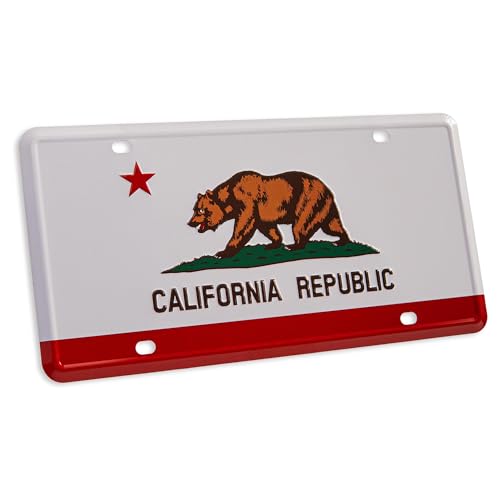
CALIFORNIA STATE FLAG DESIGN: Features a textured, raised California flag design for an authentic, high-end look and feel.

FISHING LICENSE HOLDER W/ZIP CLOSURE

【MATERIAL】: oFloral License plate frame is made from premium quality aluminum, which can provide long-lasting protection from corroding, rusting and aging, durability for long lasting usage.Personalized Car Frame Can Perfect to Put on Your Front of Car or for Decorative Purposes Around the House Like in Your Bedroom, Garage, Basement, Ect.
A Multi-Day Fishing Permit Is Not a Three-Day License
CDFW also uses the term Multi-Day Fishing Permit, but this is not a personal short-term fishing license. It is a vessel permit for qualifying continuous offshore trips lasting more than one calendar day. It can authorize up to three daily bag and possession limits for certain saltwater species, depending on trip length.
The vessel owner or operator must apply at least 48 hours before departure and meet specific offshore-trip conditions. Each angler still needs the sport fishing license, report cards, and validations that normally apply.
Note: Do not buy or request a Multi-Day Fishing Permit when you only need three days of personal fishing access. For ordinary shore, lake, river, pier, charter, or day-boat fishing, choose from the one-day, two-day, ten-day nonresident, or 365-day sport fishing licenses.
Current 2026 Fees for Short-Term California Fishing Licenses
California does not offer a standard three-day sport fishing license. The official 2026 short-term fees [VERIFY: confirm 2026 CDFW fee schedule prior to purchase] are:
- One-day sport fishing license: $21.09
- Two-day sport fishing license: $32.40
- Ten-day nonresident sport fishing license: $64.54
For three consecutive fishing days, a two-day license plus a one-day license costs $53.49. If none of your fishing days are consecutive, three one-day licenses cost $63.27. California residents should compare either amount with the 365-day resident license at $64.54. Nonresidents whose three fishing days fit within one ten-day period can compare $63.27 for three one-day licenses with the $64.54 ten-day license.
Three separate one-day licenses cost only $1.27 less than a resident 365-day license or a ten-day nonresident license in 2026.
The 2026 nonresident 365-day sport fishing license costs $174.14. Fees can change each year, so confirm the current amount and selected start date on the official CDFW licensing page before checkout.
Note: CDFW states that fishing license, validation, and report-card purchases are nonrefundable. Check the date, residency status, license type, and required add-ons before paying.
Products Worth Considering

Bone fish license plate featuring a fish skeleton in silver accents across the center.

【MATERIAL】: oFloral License plate frame is made from premium quality aluminum, which can provide long-lasting protection from corroding, rusting and aging, durability for long lasting usage.Personalized Car Frame Can Perfect to Put on Your Front of Car or for Decorative Purposes Around the House Like in Your Bedroom, Garage, Basement, Ect.

Perfect Dimensions: This decorative license plate measures 6 inches by 12 inches, designed specifically to fit the front of your vehicle as a vanity plate that adds personality and style to your car's appearance
What to Buy if You Need Exactly Three Days
The cheapest legal choice depends on whether at least two fishing days are consecutive. It also matters whether you are a resident and whether all nonresident fishing days fall inside one ten-day period.
| Trip Situation | Likely Best Choice | 2026 Cost and Reason |
|---|---|---|
| Fishing only one day | One-day license | $21.09; lowest upfront cost for one outing |
| Fishing two consecutive days | Two-day license | $32.40; cheaper than two one-day licenses at $42.18 |
| Fishing three consecutive days | Two-day license plus one-day license | $53.49; the lowest standard three-day combination |
| Fishing three nonconsecutive days with no back-to-back pair | Three one-day licenses | $63.27; compare with a $64.54 resident 365-day license or ten-day nonresident license |
| Resident who may fish again within 365 days | Compare with resident 365-day license | $64.54; only $11.05 more than the consecutive three-day combination |
| Nonresident with several fishing days inside one ten-day period | Ten-day nonresident license | $64.54; adds flexibility for up to ten consecutive days |
Decision Framework: How to Choose Your Combination
Follow this 3-step decision flow before checking out:
1. Are your dates back-to-back? If Day 1 and Day 2 are consecutive, buy a 2-Day License ($32.40) + 1-Day License ($21.09) = $53.49.
2. Are your dates split? If fishing Friday, Sunday, and Tuesday (no consecutive pair), buy 3 individual 1-Day Licenses = $63.27.
3. Check the annual threshold: If you are a CA resident paying $53.49 or $63.27, adding $1.27 to $11.05 upgrades you to a full 365-day annual license ($64.54). Nonresidents fishing 3+ days across a week should opt for the 10-Day Nonresident license ($64.54).
Products Worth Considering

Durable Material: Car license plate is crafted from high-quality ETP (electrolytic tinplate) with 2 layers of clear epoxy lacquer coating making the car tag water-proof, rust-proof, and weather-resistant

【Material】Our License Plate Frame Is Made Of Stainless Steel, Strong And Durable.

【MATERIAL】: oFloral License plate frame is made from premium quality aluminum, which can provide long-lasting protection from corroding, rusting and aging, durability for long lasting usage.Personalized Car Frame Can Perfect to Put on Your Front of Car or for Decorative Purposes Around the House Like in Your Bedroom, Garage, Basement, Ect.
Purchasing Options: Online, Agents, and CDFW Offices
You can buy a California short-term fishing license through CDFW’s online license system, an authorized license agent, or a CDFW license sales office. CDFW offices and regional license counters do not accept cash; accepted payment methods can include checks, money orders, and qualifying Visa or Mastercard debit or credit cards.
- Online: Choose the correct short-term license and start date. CDFW’s online-sales FAQ says a working printer is required to print the short-term license at the end of the transaction.
- Authorized license agent: Bait shops, sporting-goods stores, marinas, and other participating retailers can issue licenses and add-ons in person.
- CDFW license sales office: Useful for documentation questions, special eligibility programs, and transactions that require agency review.
Using the CDFW License App
The official CDFW License App can display one-day, two-day, ten-day, and 365-day sport fishing licenses, along with several validations. If your phone can display the active license through the app, you do not also need to carry the paper license.
The app stores eligible licenses for display without cellular or Wi-Fi service. However, a photo, PDF, email image, or screenshot is not a valid electronic license. The license must be displayed through the official app.
Warning: Physical report cards are different from electronic licenses. Proof of report-card purchase in the app does not replace the required physical report card. Also carry paper proof if you are concerned about a dead battery or damaged phone.
Pro Tip: For a guided trip or charter, ask the operator which license, report card, validation, and species rules apply before checkout.
Validations and Report Cards Required With Short-Term Licenses
A short-term license provides basic sport fishing authority, but it does not cover every species, location, or gear type. Check the exact water and target species before buying add-ons.
Which Validations Apply
- Ocean Enhancement Validation: Costs $7.30 in 2026 [VERIFY: confirm 2026 CDFW fee schedule prior to purchase] and is generally required when fishing in ocean waters south of Point Arguello where a fishing license is required. It is not required with a one-day or two-day sport fishing license. A ten-day nonresident or 365-day license holder may need it.
- Second Rod Validation: Costs $20.26 in 2026 [VERIFY: confirm 2026 CDFW fee schedule prior to purchase] and allows two rods or lines in inland waters where two-rod fishing is permitted. It does not override waters restricted to artificial lures, barbless hooks, or one rod.
- Recreational Crab Trap Validation: Costs $2.98 in 2026 [VERIFY: confirm 2026 CDFW fee schedule prior to purchase] for anglers using qualifying crab traps. It is not required for hoop nets or crab loop traps. Beginning January 1, 2026, anglers using crab traps from a commercial passenger fishing vessel are no longer required to possess this validation.
Report Cards to Check
Report-card requirements apply to anyone fishing for the covered species, even when that person does not otherwise need a sport fishing license. This includes children under 16, public-pier anglers, and people fishing on a Free Fishing Day. Required cards generally must be in your immediate physical possession.
| Report Card | 2026 Fee or Status | When It Applies |
|---|---|---|
| Sturgeon Fishing Report Card | $8.13 for the 2026–27 season; scheduled for sale August 15, 2026 | Required when fishing for white sturgeon. The fishery is catch-and-release only, with a season from October 1 through June 30. |
| North Coast Salmon Report Card | $9.21 | Required when taking salmon in the Smith River System or Klamath-Trinity River System. |
| Steelhead Report Card | $10.29 | Required when taking steelhead in inland waters. |
| Spiny Lobster Report Card | $12.70 | Required for anyone taking or attempting to take spiny lobster. Late or missing reporting can trigger a non-return fee the next season. |
| Abalone Report Card | Not available; fishery closed | Do not plan abalone take based on old rules or old report-card information. |
Current sturgeon alert: As of July 28, 2026, the white sturgeon fishing season is closed and is scheduled to reopen October 1. Holders of a 2025–26 season report card must report it by July 31, 2026, even if they did not fish or caught nothing.
Each report card has its own recording, return, and online-reporting deadlines. Follow the instructions printed on the card and the current CDFW species page rather than assuming all cards use the same deadline.
Exemptions: Public Piers, Free Fishing Days, and Special Cases
Several situations may allow fishing without buying a short-term license, but every exemption is limited.
- Qualifying public ocean piers: A sport fishing license is generally not required while fishing from a qualifying public pier in ocean or bay waters. All other fishing rules apply. Public-pier anglers are generally limited to two rods and lines, handlines, or specified crab-taking appliances per person. Check our full list of qualifying California ocean piers [VERIFY: confirm internal target URL].
- Free Fishing Days: California’s 2026 Free Fishing Days are Saturday, July 4, and Saturday, September 5. As of July 28, the remaining 2026 Free Fishing Day is September 5. Bag limits, size limits, gear rules, fishing hours, stream closures, and report-card requirements remain in effect.
- Children under 16: A child under 16 does not need a California sport fishing license but MUST still possess a physical report card for covered species (sturgeon, steelhead, salmon, spiny lobster).
- Free or reduced-fee license programs: Eligible anglers may qualify for a 365-day free or reduced-fee sport fishing license after meeting CDFW documentation requirements.
The public-pier exemption ends when you leave the qualifying structure. For example, walking onto the beach to land a fish can require a valid license even when the fish was hooked from the pier. Check CDFW’s public pier map and definitions before relying on the exemption.
Reduced-Fee and Free Sport Fishing License Eligibility
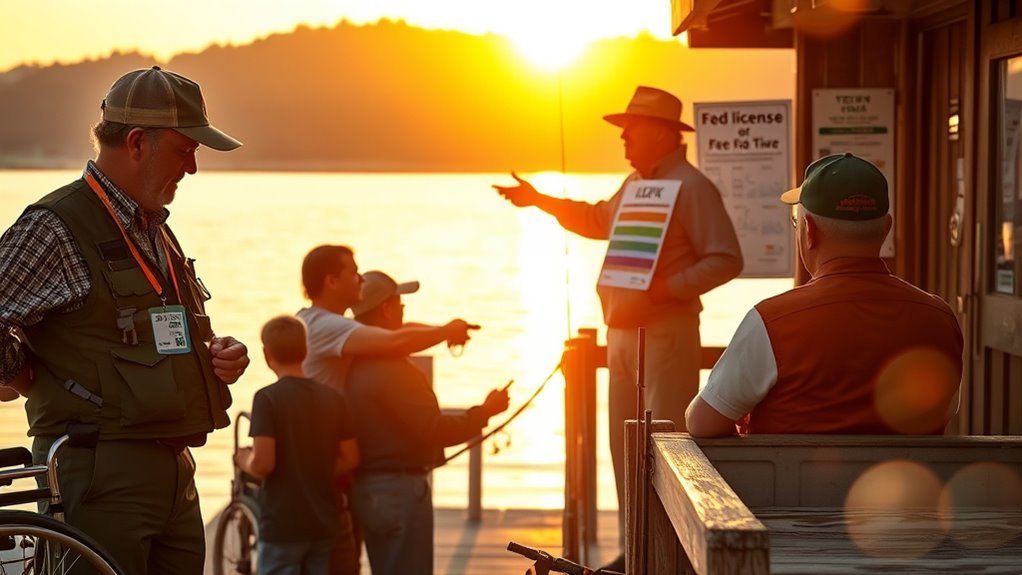
California’s reduced-fee and free fishing licenses are 365-day sport fishing licenses, not special one-day or two-day passes. They may be a better choice than short-term licenses for eligible anglers.
- Disabled veteran: Available to an honorably discharged veteran with a service-connected disability rating of 50% or greater. The 2026 fee is $10.04 at CDFW offices or $10.54 through license agents after prequalification.
- Recovering service member: Available to a qualifying recovering member of the U.S. military. The 2026 fee is $10.04 at CDFW offices or $10.54 through license agents after prequalification.
- Low-income senior: Available for qualifying California residents age 65 or older who receive SSI or CAPI benefits. The 2026 fee is $10.04, and annual verification is required.
- Free licenses: Available to qualifying low-income Native American California residents and to certain people who are blind, developmentally disabled, or severely mobility impaired.
First-time applications may require a VA letter, military medical or command verification, SSI or CAPI proof, physician certification, regional-center certification, or tribal documentation. CDFW says free-license applications can require up to 15 business days for review, so do not leave first-time qualification until the day of your trip.
Extra validations and species report cards are generally not included for free with these licenses and may still need to be purchased at the regular fee.
Common Mistakes to Avoid Before You Fish
- Searching for a license that does not exist: California has no standard three-day sport fishing license.
- Forgetting that the two-day license is consecutive: It cannot cover two isolated dates separated by a day or more.
- Confusing a Multi-Day Fishing Permit with a personal license: The permit applies to qualifying offshore vessel trips and does not replace an angler’s license.
- Choosing the wrong start date: Short-term licenses are tied to the date or date range selected during purchase.
- Using a screenshot as electronic proof: Screenshots are invalid; display the license through the official CDFW License App.
- Leaving a physical report card at home: Electronic proof of purchase does not replace the required card.
- Assuming the pier exemption applies everywhere: Beaches, boats, rocks, private docks, and many harbor structures still require a license.
- Ignoring species and local rules: Closures, marine protected areas, gear restrictions, and report-card rules can apply even with a valid license.
- Expecting a refund or upgrade credit: CDFW states that fishing license purchases are nonrefundable.
Frequently Asked Questions
Does California have a three-day fishing license?
No. California offers one-day and two-day licenses for residents and nonresidents, plus a ten-day license for nonresidents. For three consecutive fishing days, combine a two-day license with a one-day license.
How much does three days of fishing cost in California in 2026?
A two-day license plus a one-day license costs $53.49 when at least two days are consecutive. Three separate one-day licenses cost $63.27 when no two fishing days are back-to-back.
What are California’s Free Fishing Days in 2026?
The 2026 Free Fishing Days are Saturday, July 4, and Saturday, September 5. The July date has passed as of this update. All other regulations, including report-card requirements, remain in effect.
Can I upgrade a short-term fishing license to a 365-day license later?
CDFW does not list a standard upgrade credit for a short-term license. Because fishing license purchases are nonrefundable, compare the full cost before buying and purchase a 365-day license separately if you later need one.
Are refunds available for unused short-term licenses?
No. CDFW states that fishing license fees cannot be refunded because the license is considered valid and in use from the time of purchase.
Do short-term licenses cover shellfish or only finfish?
A California sport fishing license can authorize taking fish, mollusks, crustaceans, and other covered aquatic animals, but species, season, area, gear, report-card, and health-advisory rules still apply. Check the exact rules before taking crab, lobster, clams, mussels, or other shellfish.
Can I show an electronic fishing license during an enforcement check?
Yes, when the active license is displayed through the official CDFW License App. Screenshots and ordinary photos are not valid. Physical species report cards must still be carried when required.
Can foreign visitors buy a short-term California fishing license?
Yes. A foreign visitor can buy a nonresident one-day, two-day, or ten-day sport fishing license through an authorized sales channel, subject to the identification information required to create or retrieve a CDFW customer record.
Do I need a license if I fish only from a California public pier?
A sport fishing license is generally not required on a qualifying public pier in ocean or bay waters. The structure must meet CDFW’s definition, and all bag, size, season, gear, rod, and report-card rules still apply.
Is a Multi-Day Fishing Permit the same as a multi-day license?
No. A Multi-Day Fishing Permit is a vessel document for qualifying continuous offshore trips and expanded possession limits. It does not replace each angler’s required sport fishing license, validations, or report cards.
Final Checklist for Your 3-Day California Trip
California does not sell a standard three-day fishing license. For three consecutive fishing days, the lowest-cost combination is a two-day license plus a one-day license for $53.49 in 2026. For three isolated dates, three one-day licenses cost $63.27. That makes the $64.54 resident 365-day license or ten-day nonresident license worth comparing before checkout.
Confirm your fishing dates, residency status, location, target species, and gear before buying. Then check current closures, report cards, and validations. Display an electronic license only through the official CDFW License App, and carry any required physical report card.
Sources
- California Department of Fish and Wildlife — Sport Fishing Licenses and Report Cards — 2026 fees, license durations, validations, report cards, refunds, and reduced-fee programs
- California Department of Fish and Wildlife — CDFW License App — electronic license display, offline access, screenshot restrictions, and physical report-card rules
- California Department of Fish and Wildlife — California Beach Fishing — public-pier definition, exemptions, and pier gear limits
- California Department of Fish and Wildlife — Free Fishing Days — 2026 dates and rules that remain in force
- California Department of Fish and Wildlife — Sturgeon Report Card — current season, closure, catch-and-release status, and reporting deadline
- California Department of Fish and Wildlife — Multi-Day Fishing Permits — vessel permit purpose and requirements
