
California anglers age 16 or older generally need a sport fishing license before attempting to take fish or other covered aquatic wildlife. The price depends on residency and license duration, while certain species, fishing areas, and gear require additional validations or report cards. The fees and rules below were reviewed against California Department of Fish and Wildlife information available on July 28, 2026.
Quick Answer
In 2026, California’s 365-day sport fishing license costs $64.54 for residents and $174.14 for nonresidents age 16 or older. It is valid for 365 days from purchase. Short-term licenses start at $21.09, and extra validations or report cards may be required for certain waters, gear, or species.
Key Takeaways
- The 2026 resident 365-day license is $64.54; the nonresident license is $174.14.
- One-day, two-day, and ten-day nonresident licenses are available for shorter trips.
- People under 16 usually do not need a sport fishing license, but required report cards can still apply.
- A qualifying public ocean pier may be license-free, but seasons, size limits, bag limits, gear rules, and report-card requirements remain in effect.
- Eligible licenses and validations can be displayed in the CDFW License App, but physical report cards must still be carried.
Who Needs a Sport Fishing License in California?
Under California Fish and Game Code Section 7145, a person age 16 or older generally needs a valid sport fishing license when taking or attempting to take fish, reptiles, or amphibians for a noncommercial purpose.
CDFW’s licensing rules also cover attempts to take mollusks, crustaceans, and other aquatic invertebrates. The requirement applies whether you fish from shore, a privately owned boat, a rental boat, or a charter vessel. Hiring a fishing guide does not normally provide a personal license exemption.
For licensing purposes, California generally treats a person as a resident after that person has lived continuously in the state for at least six months immediately before applying. Active-duty members of the United States Armed Forces and people enrolled in the Job Corps may also qualify as residents under the state definition.
Common situations in which a sport fishing license is not required include:
- Anglers under age 16: A regular sport fishing license is not required, although report cards are still required when targeting certain species.
- Qualifying public ocean piers: Recreational fishing from a qualifying public pier in ocean or bay waters is license-free. The structure must meet California’s legal definition of a public fishing pier.
- Free Fishing Days: California’s 2026 Free Fishing Days are Saturday, July 4, and Saturday, September 5.
- Certain private ponds: A landowner or invited guest may qualify for an exemption when fishing without compensation in a qualifying offstream lake or pond wholly enclosed by the owner’s property.
A public-pier exemption does not automatically apply to every dock, seawall, promenade, jetty, or breakwater. CDFW explains the qualifying structures on its California Beach Fishing page.
Warning: Fishing without a license does not remove other requirements. Size limits, bag limits, seasons, closures, marine protected areas, gear restrictions, fishing hours, and required report cards still apply.

This daily devotional helps parents pray purposefully for their children through a full year of Scripture readings, reflections, and guided prayer prompts. Written to encourage faithful family discipleship, it offers practical, biblically grounded support for parents who want to shape their prayers around God's Word. A foreword by Sinclair B. Ferguson adds trusted theological insight and encouragement.

This hardcover edition by Eric Metaxas offers a compelling look at the origins of the United States during the Colonial Period. It blends historical narrative with engaging storytelling, making it appealing for readers interested in American history, early nation-building, and the ideas that shaped the country. A strong choice for history enthusiasts, students, and anyone exploring the foundations of the nation.

These Business Source open-ring rubber bands are designed for easy one-handed use, making everyday bundling and organization more efficient. They offer a firm, reliable stretch with quality construction that meets or exceeds federal specifications, and their sustainable design supports practical office and industrial use. The compact box format makes them convenient to store and keep on hand for fast access.
Cost of the Annual Fishing License for Residents and Nonresidents
The following prices come from the official CDFW 2026 sport fishing fee schedule.
| License | 2026 fee | Validity | Who can buy it |
|---|---|---|---|
| Resident sport fishing | $64.54 | 365 days from purchase | Qualifying California residents age 16+ |
| Nonresident sport fishing | $174.14 | 365 days from purchase | Nonresidents age 16+ |
| One-day sport fishing | $21.09 | One specified day | Residents and nonresidents |
| Two-day sport fishing | $32.40 | Two consecutive days | Residents and nonresidents |
| Ten-day nonresident sport fishing | $64.54 | Ten consecutive days | Nonresidents only |
Resident License Pricing
A qualifying California resident age 16 or older pays $64.54 for a 365-day sport fishing license in 2026. Because it remains valid for a full 365 days from its purchase date, an angler does not lose part of the license period by buying it later in the calendar year.
The annual resident license costs slightly more than three one-day licenses. It can therefore be the better value for a resident expecting to fish four or more separate days during the following 12 months.
Nonresident License Fees
A nonresident 365-day sport fishing license costs $174.14. Visitors who will fish only briefly can instead consider the one-day license at $21.09, the two-day license at $32.40, or the ten-day nonresident license at $64.54.
The ten-day license is valid for ten consecutive days, not one year. A visitor planning several trips spread across different months should compare the combined short-term cost with the annual nonresident fee.
Note: One-day and two-day sport fishing licenses are exempt from the Ocean Enhancement Validation requirement. Other species-specific report cards and regulations can still apply.
Discounts for Eligibility
California offers reduced-fee and free licenses to certain qualified applicants. Eligibility is based on specific documentation, not simply age, veteran status, or the presence of a disability. First-time applicants may need CDFW approval before purchasing the reduced or free entitlement.
California residents can also purchase lifetime fishing licenses. The 2026 prices are:
- Ages 0–9: $709.00
- Ages 10–39: $1,160.25
- Ages 40–61: $1,045.00
- Ages 62 and older: $709.00
- Lifetime Fishing Privilege Package: $478.75 in addition to the lifetime license
A lifetime license does not mean that every report card or fishing privilege is automatically included forever. Lifetime holders must claim or renew their annual entitlement, and report cards retain their own seasons and reporting requirements.
Validity Period of the Annual Fishing License
A California resident or nonresident annual sport fishing license is valid for 365 days from its purchase date. For example, a license bought on July 28, 2026, remains valid through July 27, 2027.
License Duration Explained
The 365-day period applies to annual sport fishing licenses and to the Second Rod, Ocean Enhancement, and Recreational Crab Trap validations. It does not make every report card valid for 365 days.
Steelhead, salmon, sturgeon, and spiny lobster report cards follow species-specific seasons and reporting periods. Buying one late in its season does not extend that card for a full year.
Sport fishing licenses, validations, and report cards are generally nonrefundable once issued. Check the dates and selected items carefully before completing a purchase.
Renewal Process Overview
You can buy a new license online, by telephone, through an authorized license agent, or at a participating CDFW license sales office. CDFW also offers auto-renewal for eligible fishing items through its online licensing system.
Customers enrolled in auto-renewal receive advance email notices. Review the mailing address, payment method, selected validations, report cards, and any applicable nonreporting fee before the renewal is processed.
Pro Tip: Add your customer record to the official CDFW License App. Eligible licenses and validations can be displayed on a mobile device instead of carrying the paper entitlement.
Reduced-Fee Fishing Licenses for Eligible Individuals
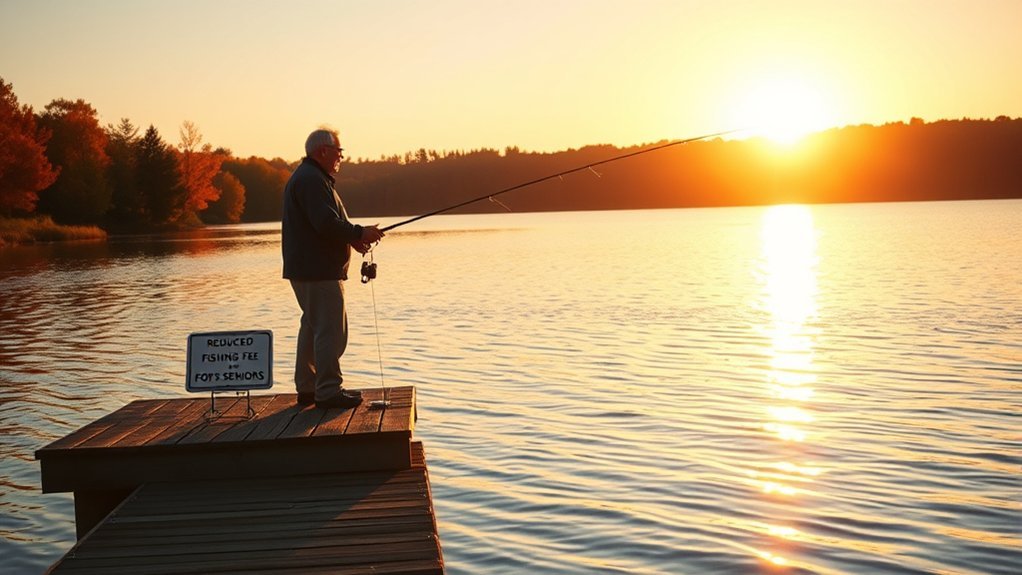
Reduced-fee and free sport fishing licenses help qualified applicants access California fishing opportunities. The official criteria are narrower than broad labels such as “senior,” “veteran,” or “disabled.”
| License category | 2026 fee | Main qualification |
|---|---|---|
| Disabled veteran | $10.04 at CDFW offices; $10.54 through license agents | Honorably discharged resident or nonresident veteran with a service-connected disability rating of at least 50% |
| Recovering service member | $10.04 at CDFW offices; $10.54 through license agents | Qualifying member of the Armed Forces, National Guard, or Reserve receiving outpatient treatment, recuperation, or therapy for a serious service-related injury or illness |
| Low-income senior | $10.04 at a CDFW license sales office | California resident age 65+ who receives SSI or CAPI benefits and provides annual verification |
| Free disability-based license | No fee | A person meeting CDFW’s specific blindness, developmental-disability, or permanent mobility-impairment criteria |
| Low-income Native American license | No fee | A California resident who meets CDFW’s tribal-documentation and financial-eligibility requirements |
Disabled veterans must generally provide a Department of Veterans Affairs letter showing honorable discharge and the required service-connected disability rating. Recovering service members need a verification letter from a commanding officer or military doctor.
First-time free-license applicants must submit the appropriate certification. CDFW advises allowing up to 15 business days for review and processing. After approval, later renewals may be available online, from an agent, or through a CDFW office, depending on the license category.
See CDFW’s free and reduced-fee license instructions before applying. Extra validations and report cards normally remain full price even when the underlying license is reduced or free.
Additional Fees Associated With Fishing Licenses
The annual license covers the basic privilege to fish, but it does not include every area, gear option, or report-card species. Your final cost depends on where, how, and what you plan to fish for.
Handling and Application Fees
CDFW states that most published fees include a 5% license-agent handling fee and a 3% nonrefundable application fee. Do not automatically add another 8% to the prices in the official fee table.
The exact checkout total can vary by item and sales channel. Review the order before paying, especially when buying multiple validations or report cards.
Duplicate License Costs
The 2026 duplicate sport fishing license fee is $14.30. A replacement Second Rod or Ocean Enhancement Validation costs $3.81, while a duplicate Recreational Crab Trap Validation costs $2.98.
Duplicate licenses can generally be purchased online, from an authorized agent, or at a CDFW license sales office. Replacement procedures for report cards differ. A duplicate sturgeon report card, for example, requires an affidavit and must be obtained through a CDFW license sales office.
Using the CDFW License App can reduce the risk of being unable to display an eligible license or validation. However, the app’s proof of report-card purchase does not replace the required physical report card.
Validation and Report Card Fees
| Item | 2026 fee | When it is required |
|---|---|---|
| Ocean Enhancement Validation | $7.30 | Fishing in ocean waters south of Point Arguello, except under a one-day or two-day sport fishing license |
| Second Rod Validation | $20.26 | Using two rods or lines in eligible inland waters; not valid where artificial-lure or barbless-hook rules prohibit two rods |
| Recreational Crab Trap Validation | $2.98 | Taking crabs with qualifying crab traps; not required for hoop nets or crab loop traps |
| North Coast Salmon Report Card | $9.21 | Taking salmon in the Smith River System or Klamath-Trinity River System |
| Steelhead Report Card | $10.29 | Taking steelhead in inland waters |
| Spiny Lobster Report Card | $12.70 | Taking spiny lobster, including where a regular fishing license is exempt |
| 2026–2027 Sturgeon Fishing Report Card | $8.13 | Fishing for sturgeon; listed for sale beginning August 15, 2026 |
| Abalone Report Card | Not available | The recreational abalone fishery is currently closed |
Beginning January 1, 2026, anglers using crab traps from a Commercial Passenger Fishing Vessel are no longer required to possess the Recreational Crab Trap Validation. Other crab-trap regulations and vessel requirements still apply.
How to Purchase a Fishing License
Purchasing a California sport fishing license is straightforward once you know your residency, fishing dates, target species, and planned fishing area.
- Choose the license duration. Select a 365-day, one-day, two-day, or ten-day nonresident license based on your trip schedule.
- Confirm residency. Use the resident license only when you meet California’s legal residency definition.
- Create or retrieve your CDFW customer record. Your record includes a GO ID used for purchases, renewals, and harvest reporting.
- Add required items. Review whether you need an Ocean Enhancement, Second Rod, or Recreational Crab Trap Validation, or a species report card.
- Complete the purchase. Buy through CDFW’s online system, an authorized sales agent, the telephone sales service, or a participating CDFW office.
- Carry valid proof. Display eligible licenses in the CDFW License App or carry the paper document. Keep every required physical report card in your immediate possession.
- Review the current regulations. Check the rules for the exact water, date, species, and fishing method before starting.
An online 365-day purchase can provide temporary proof for immediate use while the permanent document is processed. Short-term or temporary paper documents may need to be printed when they are not being displayed through the official app.
CDFW offices do not accept cash at the License and Revenue Branch or regional license counters. Accepted office payments include checks, money orders, and qualifying Visa or Mastercard debit and credit cards.
Locations to Buy a Fishing License
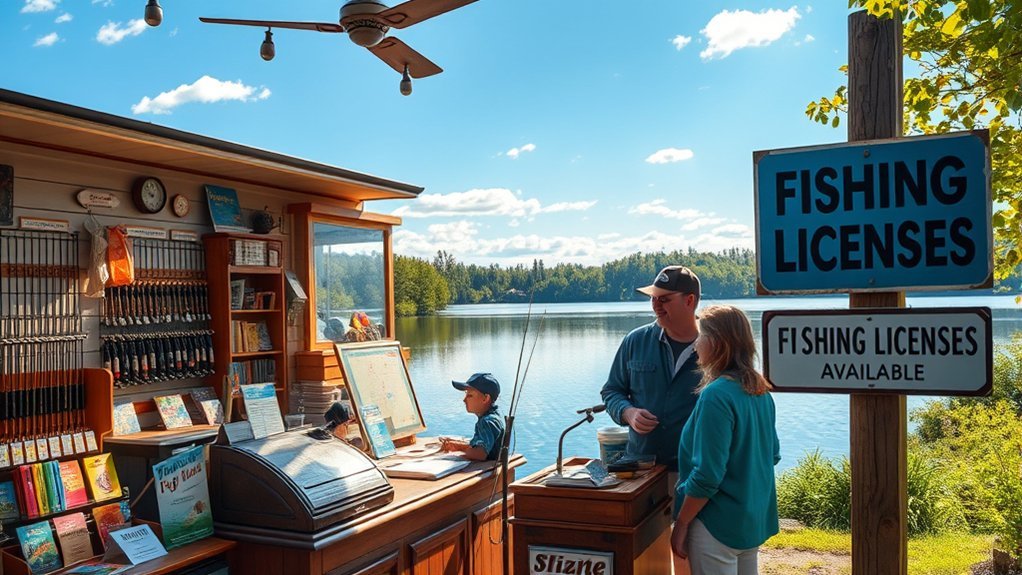
California offers several authorized purchasing channels. Availability, operating hours, and payment methods can differ by location.
| Sales channel | Best for | Important detail |
|---|---|---|
| CDFW Online License Sales | Convenient purchases, renewals, duplicates, and harvest reporting | Available at any time, subject to system availability |
| Authorized license agents | Local in-person purchases | Use CDFW’s agent search rather than assuming every sporting-goods retailer participates |
| CDFW license sales offices | Applications that require documentation or staff assistance | Cash is not accepted at CDFW licensing counters |
| Telephone sales | Customers who prefer to order by phone | CDFW lists its authorized telephone agent at 800-565-1458 |
Before traveling to an office or retail agent, check its current hours, available services, accepted payment methods, and whether it handles the specific reduced-fee application or duplicate report card you need.

This interactive sentence building set helps children practice early reading, writing, and grammar through hands-on play. Color-coded word cards, photo cards, and punctuation pieces make it easy to build simple sentences while reinforcing capitalization, parts of speech, and sentence structure. It is a versatile learning tool for homeschool and classroom use, with included game ideas and teaching suggestions to support multiple skill levels.

Keep papers neatly sorted with this Oxford 8-pocket paper folder designed for classroom, office, and home organization. Eight color-coded pockets help separate subjects or projects, while the comb-bound design opens flat for easy access and page turning. It also includes an inside business card holder and a high-capacity layout that makes managing letter-size documents simple and efficient.

Die With Zero offers a fresh perspective on personal finance by encouraging readers to use money intentionally to create memorable life experiences instead of simply accumulating wealth. Written by Bill Perkins, this book combines practical guidance with a motivating philosophy to help readers align spending, saving, and life goals for a more fulfilling future.
Requirements for Report Cards and Validations
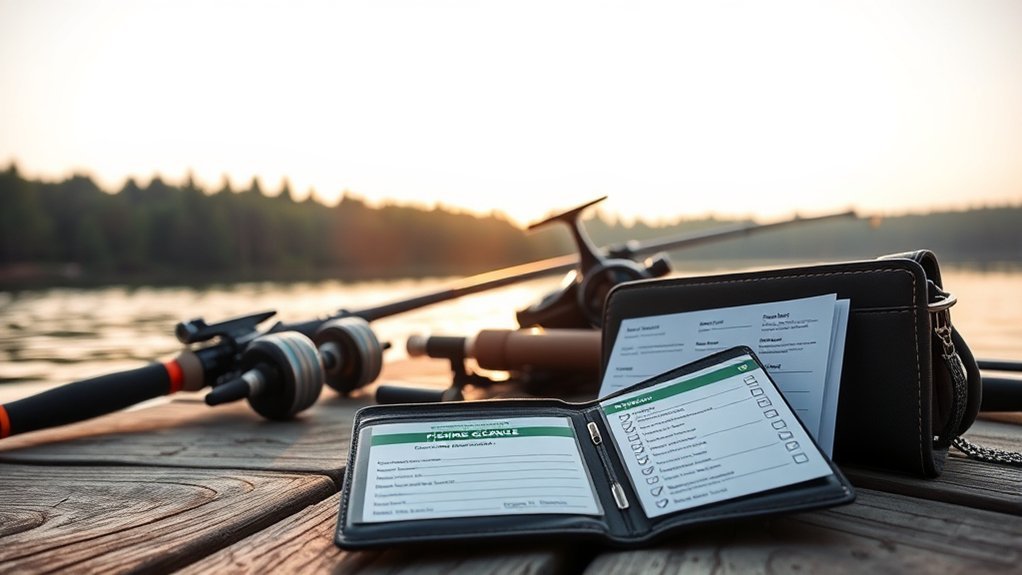
Report cards collect fishing-effort and catch information for specific managed species. They are required for every person fishing for the covered species, including children under 16, public-pier anglers, and people fishing during a Free Fishing Day.
Proof of purchase shown in the CDFW License App is not a valid substitute for a physical report card. Carry the original card and record activity according to the instructions printed on it.
| Report card | Standard reporting deadline | Key requirement |
|---|---|---|
| Steelhead | January 31 following the report-card year | Required when fishing for steelhead in inland waters |
| North Coast salmon | January 31 following the report-card year | Required in the Smith and Klamath-Trinity river systems |
| Spiny lobster | April 30 following the season | Failure to report by the deadline can result in a $21.60 nonreturn fee when buying the next card |
| 2025–2026 sturgeon | July 31, 2026 | Reporting is required even when no sturgeon were caught |
Reporting periods and regulations can change. Follow the deadline printed on the card and verify it through CDFW’s online harvest-reporting service.
Current Sturgeon Warning: As of July 28, 2026, white sturgeon fishing is catch-and-release only. The 2025–2026 season closed after June 30, and CDFW lists October 1 as the reopening date. The 2026–2027 report card is scheduled to become available August 15, 2026. Check the current sturgeon page before fishing because emergency closures or restrictions can change.
Importance of Fishing Licenses in Conservation Efforts
Fishing-license and report-card revenue helps support California fisheries management, conservation programs, habitat work, research, data collection, public access, education, and enforcement.
Report cards provide information about fishing effort, catches, and locations. CDFW can use that information to follow population trends, assess fishing pressure, plan habitat work, and evaluate whether regulations are meeting management goals.
License purchases also support the state systems used to issue fishing privileges and administer recreational fishing programs. The exact use of money varies by license, validation, report card, and legally dedicated account.
A sport fishing license provides the legal privilege to fish; it does not replace the responsibility to follow current species, season, area, gear, size, and bag-limit rules.
Common Questions About Fishing Licenses
How Does California Define a Resident?
A person generally qualifies as a resident after living continuously in California for at least six months immediately before applying. Active-duty members of the United States Armed Forces and Job Corps enrollees may also qualify under the statutory definition.
Which License Offers the Best Value?
A resident expecting to fish at least four separate days will usually pay less for the $64.54 annual license than for four $21.09 one-day licenses. A nonresident should compare the length and timing of each trip: the ten-day license costs $64.54, while the annual nonresident license costs $174.14.
Include required validations and report cards when comparing the final cost. One-day and two-day licenses do not require an Ocean Enhancement Validation, which can affect the comparison for Southern California ocean fishing.
What Must You Carry While Fishing?
You must have your valid sport fishing license in your immediate possession unless a specific legal exception applies. An eligible license or validation may be displayed through the CDFW License App.
Physical report cards must still be carried. Complete each entry exactly as the card instructs and submit the report by its deadline, even when you did not catch the target species if the card requires a no-catch report.
Are License Purchases Refundable?
CDFW generally treats sport fishing licenses, validations, and report cards as valid and in use from the time of purchase. They are nonrefundable, so verify the customer name, residency, dates, and selected items before paying.
Frequently Asked Questions
Can I fish without a license in California?
A person age 16 or older generally needs a sport fishing license. Exceptions include qualifying public ocean piers, designated Free Fishing Days, and certain qualifying private ponds. All other applicable regulations and report-card requirements remain in effect.
Are California fishing licenses transferable?
No. A fishing license is issued to the named customer and cannot be shared or transferred to another angler. A person who wants to pay for someone else can purchase an eligible gift voucher instead.
What happens if I lose my fishing license?
A duplicate sport fishing license costs $14.30 in 2026 and can generally be obtained online, from an authorized agent, or at a CDFW office. Eligible licenses may also be displayed through the CDFW License App. Physical report cards have separate replacement procedures.
Do I need a license for catch-and-release fishing?
Yes. Attempting to catch a fish normally counts as taking under California law, even when you intend to release it. A license exemption applies only when the angler and location meet a specific exception.
Can I fish from a boat without a fishing license?
A person age 16 or older generally needs a valid license when fishing from a private boat, rental boat, guide boat, or charter vessel. Paying for a guide or charter trip does not normally include a personal license exemption.
Can I show my California fishing license on my phone?
Yes. The official CDFW License App can display eligible resident, nonresident, and short-term sport fishing licenses along with selected validations. Report cards remain physical documents and must be carried when fishing for a report-card species.
Do children under 16 need fishing report cards?
Yes, when they fish for a species covered by a mandatory report card. The under-16 license exemption does not remove steelhead, sturgeon, North Coast salmon, spiny lobster, or other applicable report-card requirements.
Conclusion
For 2026, California’s 365-day sport fishing license costs $64.54 for residents and $174.14 for nonresidents. Choose a short-term license when it better fits your trip, and add only the validations or report cards required for your fishing area, gear, and target species.
Before heading to the water, confirm the current regulations, carry valid proof of your license, and keep every required physical report card with you. Prices, seasons, closures, and species rules can change, so CDFW should remain your final source before fishing.
Sources
- California Department of Fish and Wildlife: Sport Fishing Licenses and Report Cards — 2026 prices, license eligibility, validations, report cards, duplicate fees, and purchase rules
- California Department of Fish and Wildlife: Free Fishing Days — 2026 Free Fishing Day dates and continuing regulatory requirements
- California Department of Fish and Wildlife: California Beach Fishing — public-pier definitions and license exemptions
- California Department of Fish and Wildlife: License App — electronic display of licenses and physical report-card requirements
- California Department of Fish and Wildlife: Sturgeon Report Card — current sturgeon season, reporting, and catch-and-release information
- California Fish and Game Code Section 7145 — general sport fishing license and possession requirements

This colorful toy boat fleet gives toddlers fun, screen-free water play during bath time, pool days, beach trips, and water table adventures. Designed for little hands, the boats are easy to grip and float well while encouraging imaginative storytelling, pretend ocean journeys, and sensory play.

This heartfelt memoir blends laugh-out-loud honesty with tender reflections on love, loneliness, and the unexpected healing power of rescue dogs. Isabel Klee shares her journey fostering pups in the city while navigating dating and self-discovery, offering an intimate, relatable story for readers who enjoy emotional, character-driven narratives. It is a warm, engaging read about opening your heart and finding connection in surprising places.

Come Eat offers 100 approachable recipes designed to make everyday cooking more enjoyable, nourishing, and sustainable. With a focus on flavorful meals and practical preparation, this hardcover cookbook is ideal for home cooks looking for inspiration for salads, sides, and main dishes. Author Melissa Ben-Ishay shares recipes that encourage consistent, feel-good eating without sacrificing taste.
