

If you’re fishing North Carolina public waters and you’re 16 or older, you’ll need a non‑resident license for most trips: an Annual Coastal Recreational Fishing License is $38 and a ten‑day coastal option is $14 (inland annual $54, ten‑day inland $28). Buy online, by phone or at vendors; carry photo ID and your license while fishing. Exemptions (e.g., Fourth of July, private ponds) and tournament rules apply — continue for specific limits, purchase steps and compliance details.
Who Needs a Non-Resident Fishing License in North Carolina?
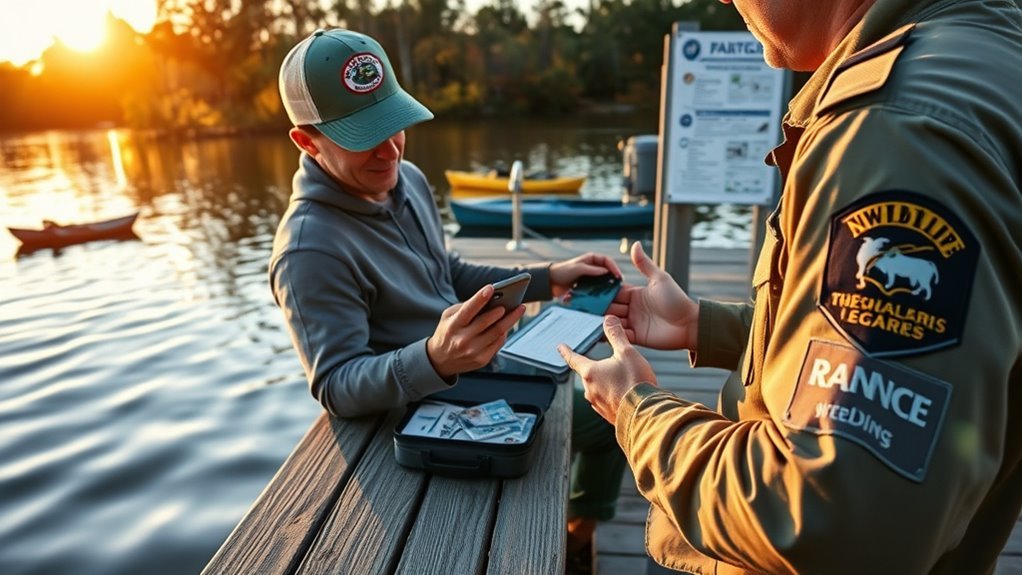
Who needs a non-resident fishing license in North Carolina? You do if you’re 16 or older and fishing in public waters—coastal or inland—unless a specific exemption applies.
If you’re 16+ and fishing public waters in North Carolina, you need a non-resident license unless specifically exempt.
For fishing regulations compliance, note that non resident eligibility is limited: you can’t buy the Unified Inland/Coastal Recreational License as an out-of-state angler. Instead, you’ll need the annual Coastal Recreational Fishing License or the ten-day coastal option for short trips.
You’re exempt from licensing when fishing aboard a saltwater charter boat or when fishing on the Fourth of July, and you don’t need a license for angling in private ponds on privately owned land.
These distinctions matter for enforcement and penalties: failing to carry the appropriate non-resident license exposes you to citations.
Before fishing, verify whether your planned activity falls within coastal public waters and which short-term or annual coastal license matches your trip to maintain compliance with state regulations.
Current Non-Resident License Prices and Recent Increases
If you’re a non-resident planning to fish in North Carolina, expect to pay different fees depending on where and how long you’ll fish: the annual Coastal Recreational Fishing License is $38, a 10‑day coastal license runs $14, the annual inland license is $54, and short‑term inland options now cost $28 — all reflecting recent statewide fee adjustments that have also pushed season‑long hunting permits to $119. You’ll need to understand license types and the fee structure to comply with regulations and budget for trips. Annual coastal unified options aren’t available to non-residents, so choose coastal or inland products deliberately. Recent increases affect short-term and season-long permits uniformly, indicating a regulatory shift toward higher revenue for resource management. Below is a concise matrix summarizing current non-resident fees for quick reference.
| License Type | Term | Fee |
|---|---|---|
| Coastal Annual | 1 year | $38 |
| Coastal 10-day | 10 days | $14 |
| Inland Annual | 1 year | $54 |
| Inland 10-day | 10 days | $28 |
Products Worth Considering

Deluxe Super Stock Embossed aluminum license plate mirror finish background with imprint in team colors

LASTING PERSONALIZATION: Create your own personalized plate with custom name, number, or text on genuine aluminum plate material. Our high-quality finish won't fade or peel like cheaper alternatives. Suitable as a personalized attachment or customized plate for any collection. Each plate offers professional detailing at a compact size, making it versatile for displaying on bikes, toy cars, or as decorative signs.

Team colored license plate measures 6-inches by 11.5-inches
Short-Term Options: Ten-Day and Seasonal Passes for Visitors
When planning a short visit, know that North Carolina offers discrete 10‑day and seasonal options: a non‑resident Coastal Recreational Fishing 10‑day license lets you fish designated coastal waters for the specified period, and a non‑resident inland 10‑day license covers freshwater access; both are non‑transferable and valid only for the dates printed, while annual coastal and inland licenses provide year‑long coverage at higher cost.
You’ll pay $38 for the coastal 10‑day option and $28 for the inland 10‑day option; the seasonal non‑resident coastal annual pass is listed at $38 for a full year.
These short-term products simplify temporary compliance but don’t exempt you from fishing regulations, size and bag limits, or area-specific rules. Pay attention to license validity and printed dates: violations for expired or misused short-term licenses carry penalties similar to those for annual licenses.
Choose the duration that matches your trip length to minimize enforcement risk and potential fines.
Products Worth Considering
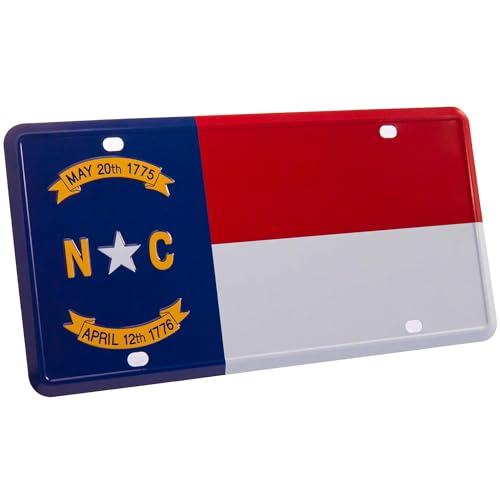
NORTH CAROLINA STATE FLAG DESIGN: Features a textured, raised North Carolina flag design for an authentic, high-end look and feel.

Decorative Item Only: This product is a vintage-style decorative license plate, crafted as a replica/artifact. It is NOT a real license plate and cannot be used as such. Please comply with all applicable laws—it must NOT be mounted on any vehicle to replace, cover, or imitate an official license plate. Use only for indoor or outdoor decoration where legally permitted.
Where to Buy Non-Resident Licenses: Online, Phone, and In-Person
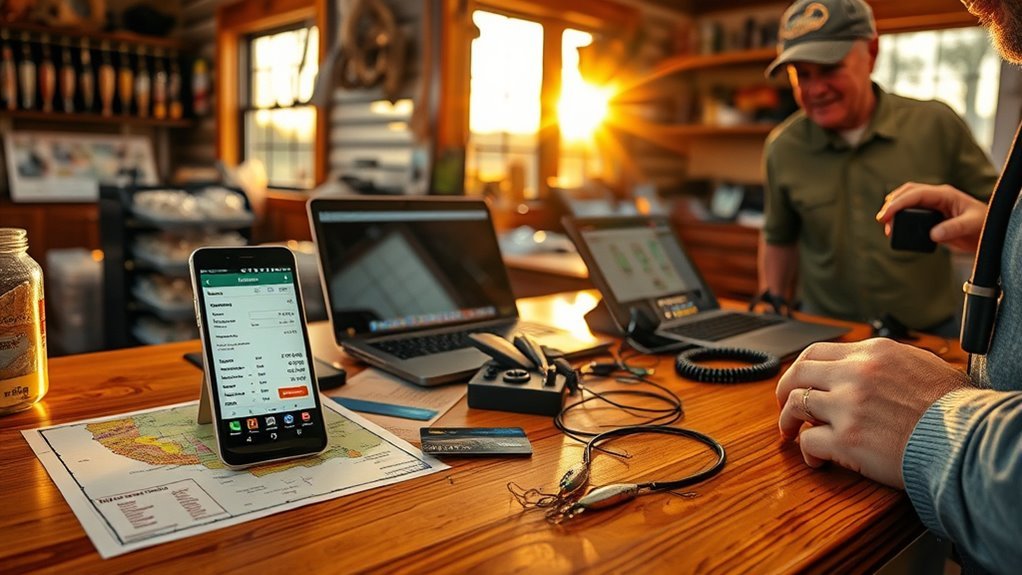
You can buy a non-resident license online via the Go Outdoors North Carolina portal, noting a $2 transaction fee applied at checkout.
If you prefer not to use the web, call 888-248-6834 during business hours to complete the purchase by phone.
Registered vendors statewide — including tackle shops and Walmart — issue licenses instantly, and you’ll need a valid photo ID (no SSN required).
Products Worth Considering

Add a touch of humor and flair to your car with this funny "Weekend Hooker" front license plate. Perfect for the bass fishing enthusiast, this custom car tag is a great gift for men, especially for dads, husbands, or any fishing fanatic. Whether you're an outdoorsman or just enjoy a good laugh, this novelty license plate is sure to bring a smile to your face and enhance your fishing-themed car decor. Let your personality shine on the road with this fun and unique accessory.

【Material】Our License Plate Frame Is Made Of Stainless Steel, Strong And Durable.

Material :High-Quality Metal Aluminum With High Gloss Stamped Metal License Plate.Lightweight, Waterproof,Anti-Rust And Very Durable.
Online Purchase Options
Although online options streamline buying non-resident fishing licenses, you’ll need to account for a $2 transaction fee when using the Go Outdoors North Carolina portal and verify the correct coastal license is selected — non-residents must purchase the $38 Coastal Recreational Fishing License, since the Unified Inland/Coastal option isn’t available. Use the online application to complete purchase before fishing public waters; transaction fees apply. Records are electronic and printable; retain proof.
| Channel | Key Action | Notes |
|---|---|---|
| Go Outdoors NC | Complete online application | $2 transaction fee |
| Phone | Call for assistance | Business hours only |
| Vendor | Buy in-person | Instant issuance |
This section focuses on online purchase mechanics, fee disclosure, and regulatory compliance.
In-Person & Phone
If you prefer not to buy online, non-resident fishing licenses are available by phone or in person: call 888-248-6834 during business hours to complete a purchase, or visit any registered vendor—tackle shops, Walmart, and other outlets statewide—to get an instant-issued license.
You’ll follow a straightforward licensing process whether you call or visit: specify Coastal Recreational Annual ($38) or the Ten-Day Coastal ($14). Note the Unified Inland/Coastal option isn’t available to non-residents.
Regulators require proof of identity and residency information to document the sale. Vendors and phone agents accept standard payment methods; online carries a $2 transaction fee, while in-person/payment method options vary by vendor.
Keep your receipt and issued license on you while fishing to demonstrate compliance.
Rules, Limits, and What You Can (and Can’t) Sell
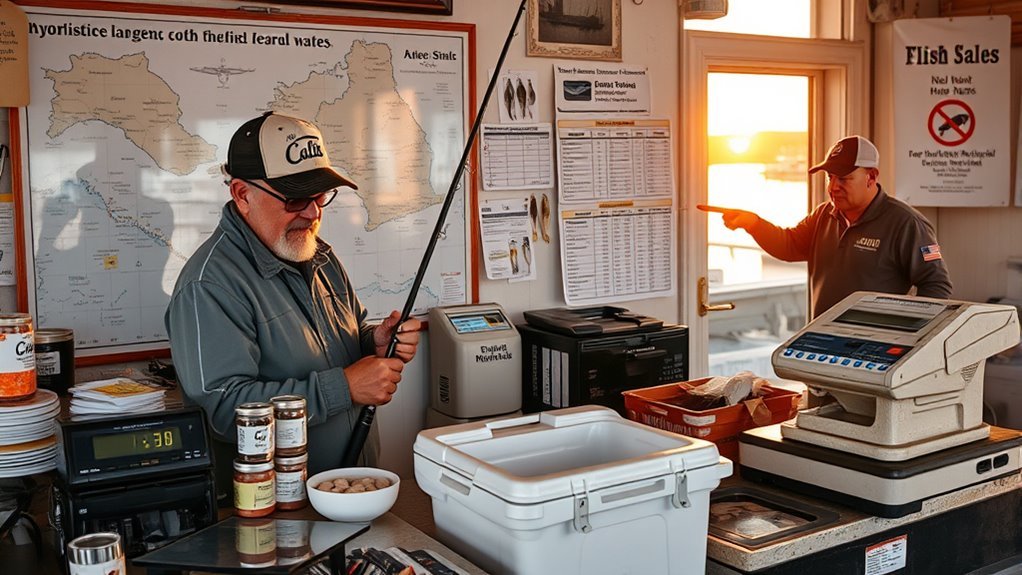
When fishing in North Carolina as a non-resident, you’ll need the appropriate coastal or unified license and must follow the state’s recreational size and possession limits; any catch taken under those licenses is strictly for personal use and can’t be sold.
You must comply with fishing regulations that set species-specific size, bag, and seasonal limits; selling restrictions prohibit commercial disposition of recreationally harvested seafood.
A Coastal Recreational Fishing License ($38) covers coastal waters only; a Unified Inland/Coastal License ($49) covers both inland and coastal waters, but neither permits sale of your catch.
Treat limits as binding: exceeding size or possession limits can trigger fines and license actions.
If you plan organized events, note there are separate procedures (including advance written requests) to alter licensing requirements — those procedures don’t change the fundamental prohibition on selling recreationally taken seafood under standard licenses.
Check current state regulations before you fish to guarantee compliance and avoid penalties.
Exemptions, Tournament Permits, and Special Event Coverage
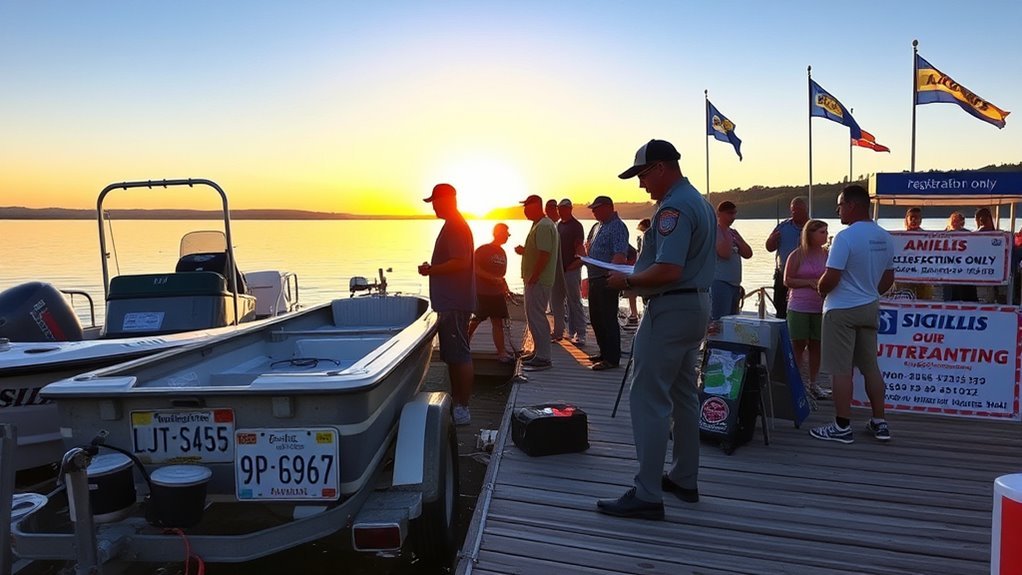
Because organized events can alter normal licensing needs, non-resident anglers and event organizers must secure specific permits or exemptions in advance to remain compliant.
You can obtain a Coastal Recreational Fishing License for $38 for personal coastal fishing, but tournament regulations create different pathways: apply for a Coastal Recreational Fishing License Exemption Permit at least 30 days before the event to waive individual license requirements for participants.
You must confirm exemption eligibility early and document notices to authorities.
If you or the event will sell fish caught during competition, secure a Recreational Fishing Tournament License; selling converts activity into regulated commercial take and requires this separate authorization.
Special provisions for tournaments—applied to residents and non-residents—exist to monitor stock and enforce sustainable practices. Under an exemption permit you may not sell harvested seafood.
You should coordinate with local regulators to guarantee permits, compliance with tournament regulations, and adherence to conservation-focused reporting and handling requirements.
Tips for Visiting Anglers: Saving Money and Staying Compliant
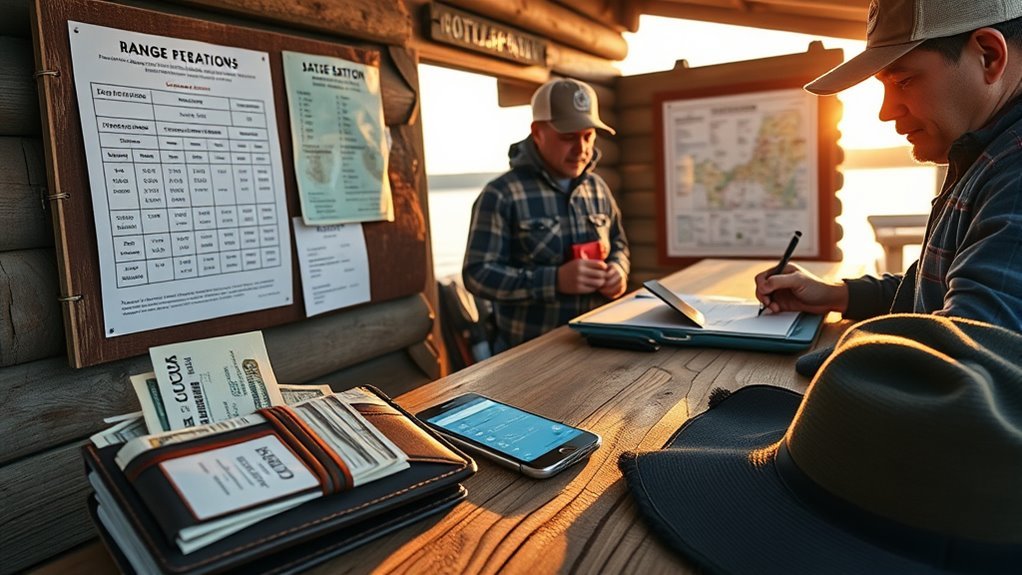
When planning your trip, choose the short-term Coastal Recreational Fishing License that fits your stay—a 10-day license is $14 or you can buy a block of ten for $150 if you’re organizing group outings.
Always carry the required photo ID and proof of license, since officers will request both to verify non-resident status and permit validity.
Also check whether your license covers joint waters and review local size and season regulations to avoid fines.
Short-Term License Options
Heading to the coast for a weekend—what’s the most cost‑effective way to stay legal?
You’ll weigh short-term options against fishing regulations and license validity. For coastal trips, a Coastal Recreational Fishing Ten‑Day License costs $38; inland ten‑day is $28. Annual non‑resident unified inland/coastal options aren’t available, so short‑term permits often make sense.
Remember licenses are valid only for the specified period and aren’t transferable. Buying online adds a $2 transaction fee; local vendors can be cheaper.
- Coastal weekend: Coastal 10‑day license ($38) covers coastal waters for the period.
- Inland stay: Inland 10‑day license ($28) limits you to inland waters.
- Cost choice: Compare duration, waters, and vendor fees before purchase.
Bring Required ID
After you pick the right short-term permit, make sure you can prove your identity at purchase and while fishing: non-resident anglers must present a valid photo ID to buy a North Carolina license and to verify that the license matches the holder. Bring that valid identification when you buy a Coastal Ten-Day ($14) or other short-term option, and note online purchases add a $2 transaction fee and mailed delivery time. You’ll avoid enforcement issues by carrying ID plus your license copy and by knowing local fishing regulations and possession limits.
| Item | Cost | Note |
|---|---|---|
| Coastal Ten-Day | $14 | Short-term, specified waters |
| Annual Coastal | $38 | Non-resident only |
| Online fee | $2 | License mailed after purchase |
Frequently Asked Questions
Do Non-Resident Licenses Cover Fishing From Boats Rented in NC?
Yes — you can fish from rented boats in NC with a valid non-resident license, provided you follow boat rental regulations and fishing equipment restrictions; you’ll need to carry the license and comply with local size, bag, and gear rules.
Can I Fish in Federal Waters With a NC Non-Resident License?
Yes — you can fish in federal waters with a NC non-resident license, but you’ll follow federal waters regulations and applicable non resident fishing limits; check NOAA and state regulations to confirm species, bag, and gear rules.
Are Youth Non-Resident Rates Available for Children?
Yes — you can access youth eligibility for non-resident rates in many jurisdictions; check age thresholds and required ID. You’ll find discount options vary by state, residency status, and program, so verify specific regulatory criteria.
Is a Fishing License Required on Private Ponds Open to Guests?
Sometimes — and here’s the catch: you’ll need to check local private pond regulations. If guests fish without explicit exemptions, you’re required to guarantee guest fishing rules and licenses are followed to avoid citations and penalties.
Do Non-Resident Licenses Include Ice Fishing Permissions?
Yes, non-resident licenses typically include ice fishing permissions, but you’ll need to verify specific ice fishing regulations and any non resident privileges or seasonal endorsements with the state agency to ascertain compliance and avoid penalties.
Conclusion
If you’re visiting North Carolina to fish, you’ll need a non-resident license unless you’re exempt — and coincidentally, the same fee rules you read online also apply at the bait shop counter. You’ll want to pick the right short-term pass, follow possession and sale limits, and get any tournament permits in advance. Stay compliant to avoid fines; small planning saves money and keeps your trip legal and focused on fishing, not paperwork.
