

A lifetime fishing license lets you pay once for permanent Ohio fishing privileges, protecting you from future fee hikes; residents pay $599.04 and seniors (66+) pay $84.24, while nonresidents can’t buy lifetime permits. Financially, break-even versus annual fees typically occurs around 24–28 years, though upfront cost ties up capital and foregoes investment returns; proceeds support fisheries and habitat management. Keep going and you’ll find detailed cost comparisons, eligibility rules, purchase steps, and policy implications.
What Is a Lifetime Fishing License and How It Works
A lifetime fishing license in Ohio is a one-time purchase that gives you permanent legal access to state waters without annual renewals, making it a clear long-term cost decision for anglers.
You’ll get lifetime benefits that include immunity to future fee hikes and uninterrupted compliance with Ohio fishing regulations as long as state law keeps the lifetime category. At $599.04 for residents (and a senior option at $84.24), the license removes the administrative burden of yearly purchases and still applies if you relocate out of state.
From a policy-aware perspective, that permanence means you’re locking in current statutory privileges and obligations, so you must remain aware of rule changes that affect seasons, limits, or protected species.
Financially, the break-even horizon—about 24–28 years versus annual licenses—frames the choice: you’ll save if you expect to fish that long.
You should weigh projected fishing years, regulatory risk, and upfront cost to decide if the lifetime option suits your long-term budget and compliance needs.
Pricing Breakdown by Age and Residency

While the lifetime license costs $599.04 for Ohio residents (and just $84.24 for seniors 66+), it’s important to note that non‑residents can’t buy a lifetime option and must rely on annual or short‑term permits.
You should weigh age specific pricing and residency considerations when planning the purchase. The policy differentiates by age and residence status, producing different cost pathways and eligibility rules.
- Residents under retirement age: single flat fee $599.04, one upfront payment covers lifetime access.
- Seniors 66+: discounted lifetime fee $84.24; you can upgrade from an annual to lifetime by paying the difference.
- Non‑residents: lifetime option unavailable — purchase annual or multi‑day licenses only; no permanent pathway.
- Fiscal impact: younger residents gain longest amortization window; seniors benefit from reduced upfront cost and upgrade policy.
This data-driven breakdown focuses on eligibility, explicit pricing, and the fiscal implications of age specific pricing and residency considerations.
Products Worth Considering

Embossed aluminum license plate in team colors Permanent baked on finish 6 x 12 inches Universal mounting slots Officially licensed merchandise
Financial Pros and Cons of Buying Lifetime Vs Annual Licenses
Given the age- and residency-specific pricing just outlined, you should weigh the straight cost comparison and long-term fiscal effects when choosing between a $599.04 lifetime license and a roughly $25 annual permit.
From an investment analysis perspective, the nominal break-even sits around 24–28 years at current annual rates; if you expect to fish beyond that horizon, the lifetime purchase becomes a clear cost saver.
At current annual rates, you break even in roughly 24–28 years — beyond that, a lifetime license saves money.
Annual fees, however, expose you to future fee inflation tied to policy and budget needs, so a lifetime license functions as a hedge against upward fishing trends and regulatory adjustments.
Weigh opportunity cost: $599.04 ties up capital now that could earn returns elsewhere, while renewing annually preserves liquidity.
For seniors (66+), the $84.24 lifetime option dramatically shifts the calculus toward immediate purchase.
In short, choose lifetime if you plan sustained participation and value protection from fee increases; otherwise, prefer annuals for flexibility and lower short-term outlay.
Products Worth Considering

Add a touch of humor and flair to your car with this funny "Weekend Hooker" front license plate. Perfect for the bass fishing enthusiast, this custom car tag is a great gift for men, especially for dads, husbands, or any fishing fanatic. Whether you're an outdoorsman or just enjoy a good laugh, this novelty license plate is sure to bring a smile to your face and enhance your fishing-themed car decor. Let your personality shine on the road with this fun and unique accessory.

Enough to Use: you will receive 6 pieces of fishing license holders, and 6 pieces of safety pins, abundant in quantity, enough for you to choose and replace, can meet your different needs; You can also share them with your friends

Enough to Use: you will receive 6 pieces of fishing license holders, and 6 pieces of safety pins, abundant in quantity, enough for you to choose and replace, can meet your different needs; You can also share them with your friends
How Lifetime Licenses Compare Across Other States

Because lifetime-license programs vary widely by price, benefits and residency rules, you’ll want to compare Ohio’s nearly $600 fishing license against other states’ structures before deciding.
You should weigh upfront cost, projected break-even, portability and extra privileges. Ohio’s break-even hits about 24–28 years of annual fees, and its license uniquely remains valid if you move out of state — a notable license feature in state comparisons.
- South Carolina: seniors 64+ can buy a lifetime fishing license for $9 — extreme low-cost policy affecting break-even analysis.
- Multi-use states: some lifetime plans bundle hunting or waterfowl privileges, increasing value versus Ohio’s fishing-only option.
- Residency rules: many states restrict lifetime benefits to current residents, reducing portability compared with Ohio.
- Cost vs. use: in states with lower annual fees, break-even occurs much later, making lifetime purchase less cost-effective.
Use these state comparisons and license features to run your own cost-focused decision model.
Products Worth Considering

Standard Size

Four universal mounting slots

FISHING LICENSE HOLDER W/ZIP CLOSURE
Who Benefits Most From a Lifetime License
If you fish often, a lifetime license can turn annual fees into a one-time investment that typically breaks even after about 24–28 years, delivering clear long-term cost savings.
You’ll find the value highest for frequent anglers and people who travel or change residency, since lifetime status removes renewal hassles and lost-paper risks.
Gifting a lifetime license to a 16–18-year-old is a policy-smart, cost-effective way to lock in decades of access at today’s rates.
Products Worth Considering

【PREMIUM QUALITY】-The black license plate frame was Crafted with high quality aluminum prevent Corrosion And Rust

Black LASER cut tag

Long-Term Cost Savings
Many Ohio anglers will find a lifetime fishing license—$599.04 for residents—delivers clear long-term savings once you factor in annual fees and fee inflation.
Your cost analysis should treat the license as a long term investment: at a 24–28 year break-even, you lock in current policy rates and avoid future increases. You also gain administrative ease and predictable budgeting.
- Younger anglers: protect against decades of fee inflation and lower lifetime present cost.
- Seniors (66+): pay $84.24, an immediate high-return purchase under current policy.
- Long-term residents: eliminate recurring purchase costs if you plan to stay in state.
- Budget-conscious households: simplify expense forecasting and reduce cumulative spending over time.
Frequent Anglers’ Value
1 clear advantage of a lifetime fishing license is eliminating recurring annual fees and exposure to future price hikes—if you fish multiple times a year, that protection typically pays off by year 24–28 relative to annual permits.
You’ll see immediate financial logic: paying an upfront fee (for example, Ohio’s $599.04 resident rate) removes decades of renewal costs and uncertainty about policy-driven fee increases.
If you consistently fish several times per season, the present-value comparison favors the lifetime option.
Beyond cost, lifetime licenses stabilize participation in the angler community and support continuity of fishing traditions by reducing administrative churn.
For policy-minded anglers, the calculation is straightforward: estimate your annual spend, apply the 24–28 year break-even threshold, and decide if long-term certainty justifies the lump sum.
Gift for Youth
Giving a 16–18-year-old a lifetime fishing license costs $599.04 in Ohio but removes decades of renewal costs and exposure to fee inflation, making it a clear, data-driven investment for youths who fish routinely.
You’ll lock in resident access, avoid future price hikes, and remove administrative hassles like lost paper licenses. This policy-aware gift supports youth engagement and preserves fishing traditions while delivering measurable cost savings.
- Eliminate annual renewal fees and inflation risk.
- Guarantee uninterrupted legal access regardless of life changes.
- Reduce paperwork and lost-license incidents for families.
- Signal long-term commitment to outdoor stewardship and conservation.
If your teen fishes often, this one-time expense compares favorably to recurring fees and strengthens lifelong participation.
How to Purchase, Transfer, or Replace a Lifetime License
When you’re ready to buy, transfer, or replace an Ohio lifetime fishing license, use the Ohio Wildlife Licensing System online or visit a registered vendor—both methods show current fees, required documentation, and processing times so you can plan costs and compliance steps precisely.
When ready to buy, transfer, or replace an Ohio lifetime fishing license, use the Ohio Wildlife Licensing System or a registered vendor for fees, documents, and processing details.
You’ll purchase using resident/nonresident criteria (price varies by age/residency at purchase) and receive a permanent digital record you should store for enforcement checks.
For the license transfer process, the original licensee must submit a transfer request; expect to provide identity proof, the license number, and any state-required forms plus applicable transfer fees.
If your lifetime license is lost or damaged, follow the duplicate request procedure online or at designated locations to obtain a no-cost replacement—this preserves your entitlement regardless of residency changes.
Track processing times and fee disclosures during any transaction to quantify outlays and ascertain policy compliance before you fish.
Products Worth Considering


[IDEAL FOR OHIO STATE BUCKEYES FANS] - This Ohio State University license plate frame is the perfect sports memorabilia for supporters and fans of the Ohio State Buckeyes. It is a stylish yet elegant way of showing your support, without being too flashy.

Conservation Impact and Where Your Money Goes
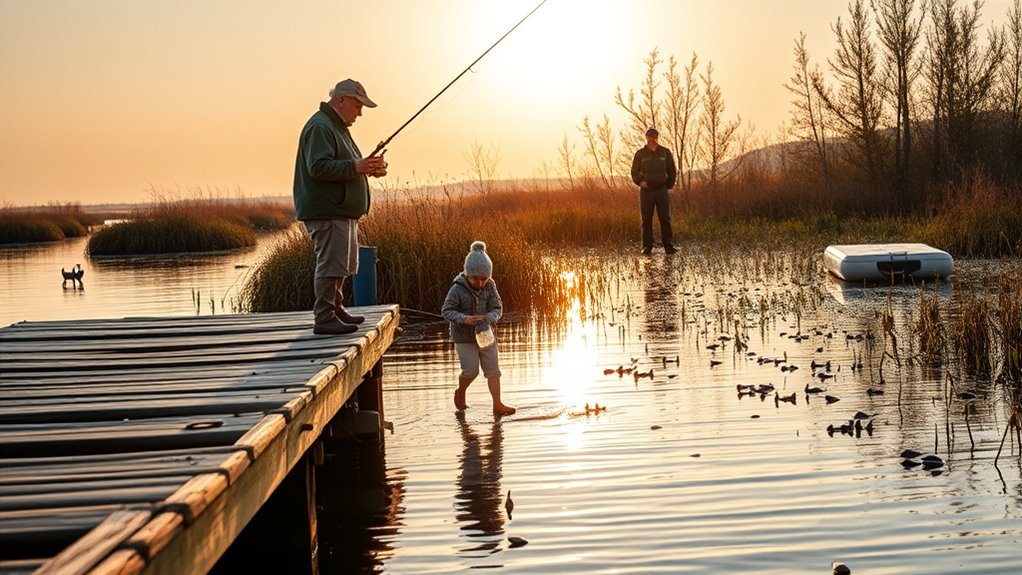
Because lifetime license sales provide a predictable revenue stream, you can see exactly how your purchase supports conservation: roughly 25% of fishing-license receipts are earmarked for fisheries management and conservation, funding habitat restoration, population management, and improved public access across Ohio.
You’re buying stable conservation funding that underwrites measurable outcomes and reduces annual budget volatility.
- Enhanced public access — funds build and maintain boat ramps and shoreline access, improving angler reach and equity.
- Habitat preservation — dollars restore wetlands, reforest riparian zones, and improve in-stream structures for fish resilience.
- Population management — revenues support stocking, monitoring, and data-driven harvest regulations to sustain fish stocks.
- Research & outreach — investments finance scientific studies, education, and community programs that promote responsible fishing.
ODNR channels lifetime-license income into targeted projects, turning an up-front cost into long-term, policy-aligned conservation impact.
That cost-effectiveness makes lifetime licenses a strategic investment in Ohio’s aquatic ecosystems.
Frequently Asked Questions
Can I Fish in Tidal/Estuarine Waters With a NC Lifetime License?
Yes — you can fish tidal/estuarine waters with a NC lifetime license, but you’ll need to follow tidal regulations, bag limits, and gear rules; factor compliance costs and potential permit fees into your estuarine fishing budget.
Does the Lifetime License Include Shellfishing or Clam/Gastropod Harvest?
Like a magnifying glass, you’ll see that the lifetime license generally doesn’t cover shellfishing—shellfishing regulations usually require separate permits; evaluate license benefits, fees, and enforcement data to assess total cost and compliance.
Are International Residents Eligible to Purchase a Lifetime License?
Generally no — you’ll face residency requirements and must meet international fishing regulations; nonresidents typically can’t buy lifetime licenses, so you’ll compare costs for alternative permits, reciprocity rules, and any temporary or permanent residency paths.
Does the Lifetime License Cover Hunting or Only Fishing Privileges?
About 72% of states restrict lifetime licenses to fishing only; you’ll find a clear hunting license distinction — fishing privilege details exclude hunting, so you’ll likely need a separate hunting license, raising your total long‑term cost.
Is There a Refund if I Move Out of North Carolina Permanently?
No, you won’t get a refund if you move permanently; North Carolina’s policy denies refunds. Follow the refund process guidelines: provide residency verification only for administrative closure, but fees remain nonrefundable per cost-focused state rules and data.
Conclusion
A lifetime fishing license can be a smart, numbers-driven choice if you fish consistently: you’ll break even in X–Y years versus annual fees, saving hundreds over a lifetime while locking in today’s rates against inflation. Policy-wise, your one-time payment supports conservation budgets long-term, though opportunity cost and mobility matter. Think of it as buying a small pension for your rod and reel — weigh residency, age, and transfer rules before committing.
