
You pay a one-time, age-based fee for a California lifetime fishing license. It replaces annual permits and helps fund long-term conservation through the Department of Fish and Wildlife (CDFW). Residents pay $709 (ages 0–9 or 62+), $1,160.25 (ages 10–39), or $1,045 (ages 40–61). Add-ons like privilege packages and species report cards cost extra. You apply through CDFW with ID and payment. The license is nontransferable and permanent. Keep reading for the application steps, break-even analysis, and optional add-ons.
Quick Answer
- Buy once for lifetime fishing privileges in California waters as a resident.
- Age-based prices: $709 (0-9 or 62+), $1,160.25 (10-39), or $1,045 (40-61).
- Supports conservation with no annual fees after the one-time purchase.
- Break-even in 11-18 years compared to yearly licenses.
- Apply with proof of age and residency; extra fees for add-ons.
- Nontransferable, but stays valid for California fishing even if you move out of state.
What Is a Lifetime Fishing License and Who Qualifies
A lifetime fishing license gives you perpetual fishing privileges and eliminates annual renewals. It also serves as a funding mechanism for fish and wildlife conservation run by the California Department of Fish and Wildlife (CDFW).
You get uninterrupted access to inland and coastal recreational fishing. At the same time, your payment provides predictable revenue for conservation programs.
Only California residents qualify. You must have lived in the state for six months or more and show proof when you apply.
You download the application or pick it up at a CDFW office, fill it out, and submit it. CDFW follows standard procedures to check your identity, age group, and residency.
The one-time purchase cuts down on paperwork and gives the agency steady money for habitat work, population checks, and enforcement.
You can add privilege packages for fishing or hunting at the same time to cover more activities.
Weigh the permanent access and conservation benefits against how often you fish before you decide.
Pricing Breakdown by Age Group and Resident Status
California sets different prices by age so the fee matches expected years of use and keeps funding steady. Ages 0–9 and 62+ pay $709. Ages 10–39 pay $1,160.25. Ages 40–61 pay $1,045.
Younger buyers who get more years of fishing pay more upfront. Seniors and kids pay less. This approach helps long-term fund stability while keeping the license affordable for everyone.
Only residents get these rates. Nonresidents face higher costs, which changes the savings picture.
Compare the one-time fee to what you would spend on annual licenses over your lifetime to see the real value.
Products Worth Considering


Enough to Use: you will receive 6 pieces of fishing license holders, and 6 pieces of safety pins, abundant in quantity, enough for you to choose and replace, can meet your different needs; You can also share them with your friends

Durable Material, Built to Last: Crafted from high-purity aluminum with a UV-protective film, it resists sun exposure, rain, fading, and rust. The tough material stays rigid and undamaged through daily use, maintaining a sleek appearance for years.
What the Lifetime License Includes and Optional Add‑Ons
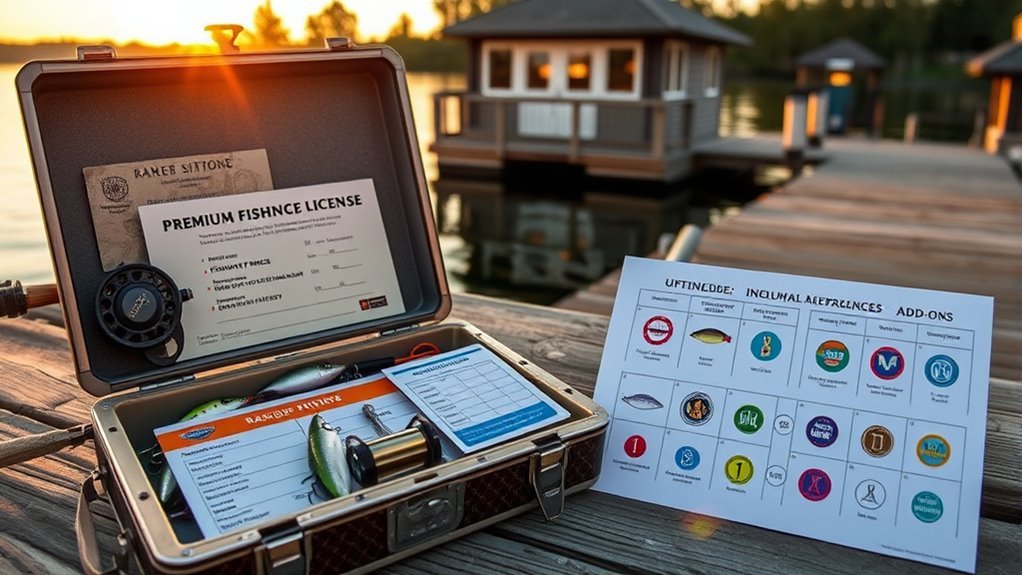
The lifetime fishing license locks in a one-time fee based on your age — for example, $709 for ages 0–9 and 62+, or $1,160.25 for ages 10–39. It does not automatically include every validation or report card.
Although it removes annual renewals with a one‑time, age‑based fee, some validations and report cards remain extra.
The core license covers basic fishing privileges and supports conservation. You can add the Fishing Privilege Package for $478.75. You can also buy activity-specific items such as the Ocean Enhancement validation ($7.30), Second Rod validation ($20.26), or species report cards such as the Sturgeon report card ($8.13).
Compare bundled and separate costs against your usual annual spending to figure out the savings. You get permanent access plus steady money for fish and wildlife programs.
The add-ons let you customize your permissions and stay legal for specific species or activities. Calculate how many validations you need each year, run the break-even math, and decide if the lifetime option saves you time and money.
Products Worth Considering

EASY & FUN TO CUSTOMIZE: Click "Customize Now" to add your personalization to your mini Calfironia state plate!

CUSTOMIZE NOW – Select te finish, choose the size and add your personalized text. NOT embossed

【MATERIAL】: oFloral License plate frame is made from premium quality aluminum, which can provide long-lasting protection from corroding, rusting and aging, durability for long lasting usage.Personalized Car Frame Can Perfect to Put on Your Front of Car or for Decorative Purposes Around the House Like in Your Bedroom, Garage, Basement, Ect.
How to Apply, Pay and Receive Your Lifetime License
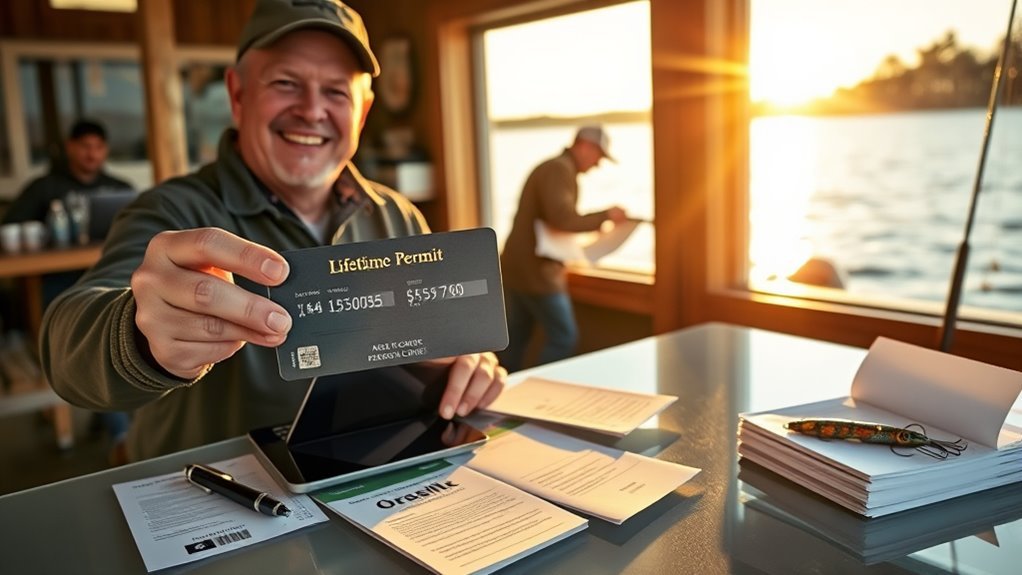
Once you have checked the costs and add-ons, the next step is the paperwork. Download the correct form from the CDFW Lifetime License page or get it at a CDFW office. Fill it out, attach proof of age (birth certificate or driver’s license), and include payment.
The fee depends on your age bracket, so double-check before you send it in. CDFW takes checks, money orders, or Visa/Mastercard. They do not accept cash at their offices.
You can mail the packet or drop it off in person. After they process everything, they mail you the permanent license. Keep copies of your application and receipt in case you need them later.
Products Worth Considering
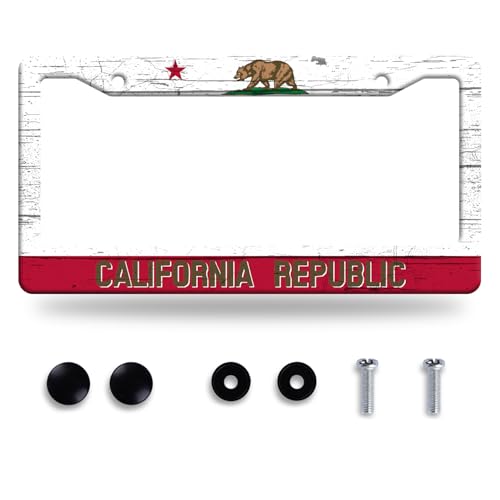
Product Material:made of Stainless steel. Personalized Car Frame Can Perfect to Put on Your Front of Car,Decorate your car to make it look more beautiful and unique,just wipe with a damp cloth

The size of the license plate frame is: 12.3" x 6.3" , it fits all standard size US and Canada vehicle license plates.the stylish design frame fits ly on your car license plate.
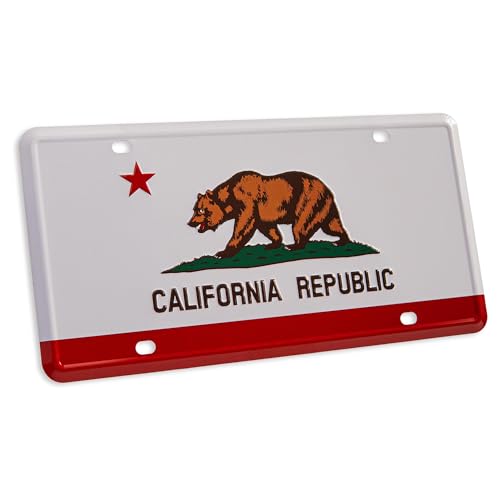
CALIFORNIA STATE FLAG DESIGN: Features a textured, raised California flag design for an authentic, high-end look and feel.
Replacements, Transfers and Moving Out of State
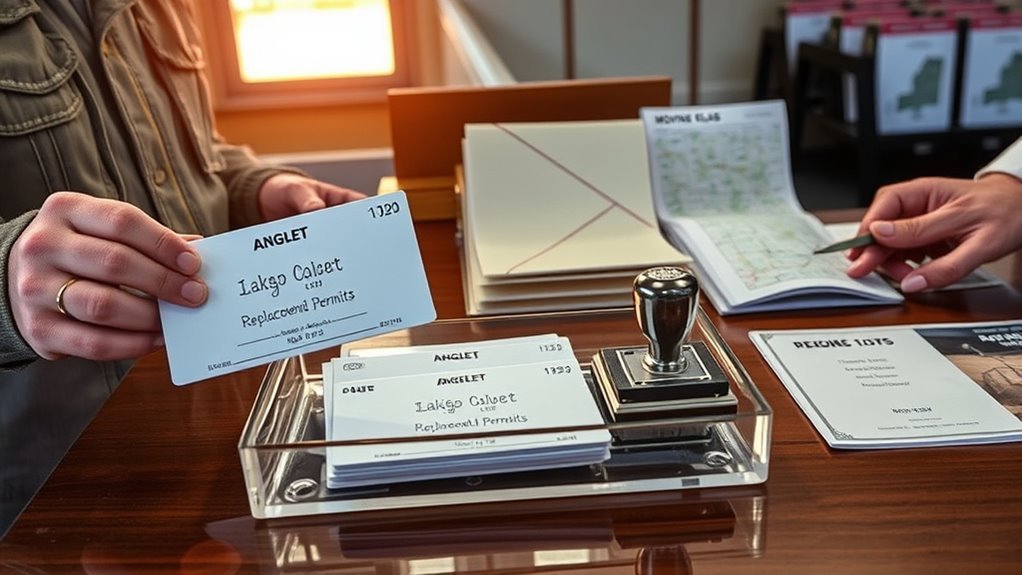
If you lose your California lifetime fishing license, you can get a duplicate for $14.30 through a license agent or CDFW office. Keep the receipt for your records.
The license is non-transferable and belongs only to the original buyer for life. You cannot give it to anyone else.
If you move out of state, the license still works for fishing in California. You must follow the rules in your new state and may need their license as well.
Replacing a Lost License
Losing the license does not end your privileges. Order a duplicate online or at a CDFW office for $14.30. Lost validations (Second-Rod or Ocean Enhancement) cost $3.81 each to replace. The Sturgeon Fishing Report Card is different — you must replace it in person at a CDFW sales office for $18.28.
Show ID, give your purchase details, and pay the fee. The process covers record-keeping costs set by state rules.
If you move, the license stays yours. You just need whatever permit your new state requires.
Transferring Privilege Details
California issues the lifetime fishing license to you alone. It cannot be transferred, and moving does not change that. Replacements cost a small fee but do not affect ownership or validity.
- Replacement: get a duplicate at a CDFW office or authorized agent (online duplicates are not available).
- Fee: a small replacement fee applies; validity stays the same.
- Documentation: proof of age or identity may be required.
Moving Out-of-State Rules
When you move, your California lifetime license still belongs to you. It works for fishing here, but your new state will require its own resident or nonresident license. The permit stays non-transferable. Keep your paperwork and check local rules before you fish anywhere else.
| Item | Implication |
|---|---|
| Ownership | Remains with holder |
| Transferability | Not allowed |
| Replacement | Available for fee |
| New-state permit | Required |
| Compliance | Follow local rules |
Cost Savings Comparison: Lifetime Vs Annual Licenses
If you fish often, the lifetime license can save money over time. Compare the upfront cost to years of annual fees and factor in future price hikes.
- Residents 10–39: $1,160.25 lifetime vs $64.54/year → break-even ≈ 18 years.
- Residents 40–61: $1,045 lifetime vs $64.54/year → break-even ≈ 16 years.
- Residents 0–9 & 62+: $709 lifetime vs $64.54/year → break-even ≈ 11 years.
For non-residents the math is similar: the $1,160.25 lifetime price beats about 7 annual non-resident licenses at $174.14 each.
Include expected inflation and how many days you actually fish to get the true picture.
Products Worth Considering

PREMIUM QUALITY: Crafted from high-grade materials, our License Plate is built to withstand the elements and maintain its vibrant appearance over time. It is resistant to fading, cracking, and peeling, ensuring long-lasting performance.

USA, License, plate, Vintage, tag, lot, set, plates, number, wall, decor, art, bar, restaurant, design, gift, cool, nice, american, america, hawaii, alaska, california, texas

DESIGN: Military-style camouflage pattern license plate featuring rugged outdoor aesthetics perfect for vehicle customization
Frequently Asked Questions
Can I Fish in Other States With a California Lifetime License?
No. The license covers only California waters. You must follow each state’s rules and check for any reciprocal agreements.
Are License Fees Tax-Deductible for Income Tax Purposes?
Generally no for personal use. If you use the license for business or research, keep records and talk to a tax professional.
Does the License Cover Commercial Fishing Activities?
No. Personal lifetime licenses are for recreational fishing only. Commercial harvest has separate rules, quotas, and permits.
Are Senior Discounts Applied Retroactively to Existing Lifetime Licenses?
No. You must meet the current senior rules and complete the regular process with documentation.
What Happens if I Lose Fishing Privileges Due to Legal Penalties?
Your privileges can be suspended or revoked. You follow the agency’s reinstatement steps, which may include fines or probation.
Conclusion
A California lifetime fishing license locks in your costs and removes yearly renewals. It gives guaranteed access and supports conservation. If you plan to fish for decades, the numbers usually work in your favor. It is like buying a weatherproof umbrella for a lifetime of forecasts — statistically prudent and cost-efficient.
