

A small, accessible exhaust weld is usually one of the cheaper automotive repairs, but the total can rise quickly when rust, tight access, fabrication, or replacement parts are involved. The most useful question is not only “How much does exhaust welding cost?” but also whether the damaged metal is still strong enough to weld safely.
Quick Answer
A small professional exhaust weld commonly costs about $80–$150. Expect roughly $150–$400 for many flex-pipe repairs and $200–$600 or more when a flange, muffler, or pipe section must be fabricated or replaced. Catalytic-converter, manifold, and full-system work can exceed $1,000.
Key Takeaways
- A clean crack or small hole in solid metal is cheaper to weld than a rusted flange, flex pipe, muffler, or complete exhaust section.
- Location, vehicle design, corrosion, access, material, shop minimums, and required fabrication all affect the quote.
- Thin, flaking metal may not hold a durable weld. Replacing the damaged section can be safer and more economical.
- Cabin fumes require urgent attention because carbon monoxide cannot be seen or smelled.
- Compare written estimates that describe the exact repair, parts, labor, taxes, and warranty.
At a Glance
| Small accessible weld | About $80–$150 |
| Flex-pipe repair or replacement | About $150–$400 |
| Flange, muffler, or pipe section | About $200–$600+ |
| Converter, manifold, or major system work | Often $600–$3,500+ |
| Typical shop time | About 30 minutes to three hours; severe corrosion or difficult removal can take longer |
These are U.S. planning ranges, not guaranteed quotes. Vehicle design, location, taxes, diagnosis, parts, and shop minimums can change the total substantially.
Warning: Do not ignore exhaust fumes in the cabin, headaches, dizziness, nausea, confusion, or unusual tiredness while driving. Carbon monoxide is colorless and odorless. Open the windows, stop in a safe outdoor location, leave the vehicle, and arrange an inspection before driving it again. Seek urgent medical help when poisoning is suspected.
Factors Influencing Exhaust Welding Costs
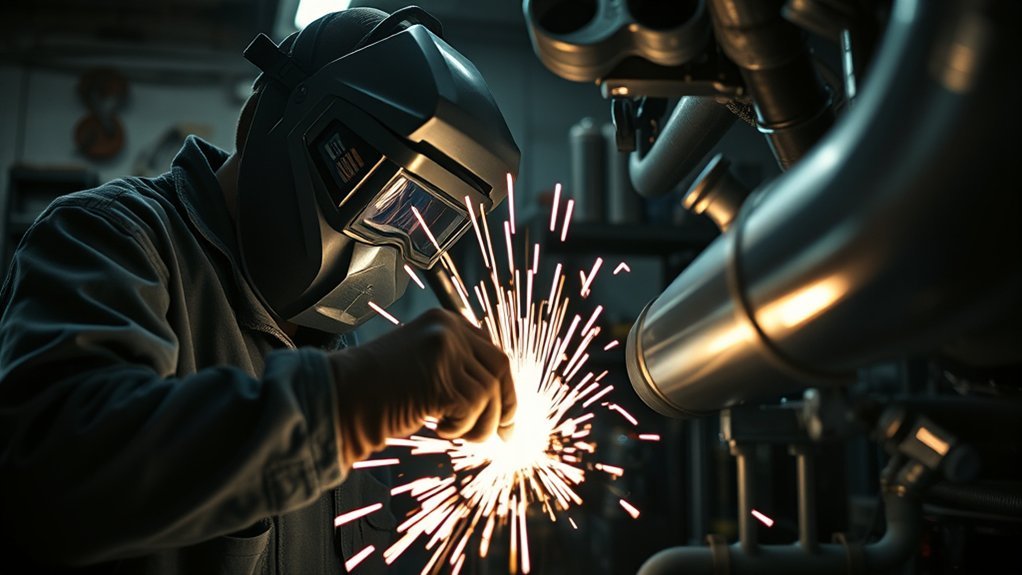
The price of exhaust welding depends on much more than the length of the visible crack. A technician must first determine where the leak begins, whether nearby metal is still solid, and whether the exhaust can be repaired on the vehicle or must be removed.

Make straight, accurate cuts with your handheld circular saw using this all-metal rip fence from DEWALT. It attaches easily to compatible saws and helps you set a consistent distance from the blade for smooth, precise rip cuts. Built for durability, it is a practical accessory for improving control and consistency on a variety of cutting jobs.

The ANCEL AD310 is a compact OBD II scanner designed to quickly diagnose check engine light issues by reading and clearing emission-related trouble codes. It also provides live data, freeze frame, I/M readiness, and vehicle information, making it a practical tool for drivers and home mechanics. With broad compatibility across many 1996 and newer OBD2 vehicles, it is a simple, fast, and portable way to check engine problems.

The Veepeak OBDCheck BLE is a Bluetooth OBD-II scanner designed for iOS and Android users who want an easy way to read and clear check engine light codes. It supports generic diagnostics such as freeze frame data, I/M readiness, and live sensor readings through compatible third-party apps. Built for most 1996+ vehicles in the US, it connects over Bluetooth LE and works with popular apps for everyday vehicle troubleshooting and monitoring.
Repair Type and Extent of Damage
A short crack in clean, solid tubing may need only surface preparation and a small weld. Costs increase when the shop must cut away rust, fabricate a sleeve, replace a flange, align several sections, or install a new flex pipe.
A current 2026 exhaust repair guide places a small muffler welding repair at roughly $80–$150 and flex-pipe replacement at about $150–$400. These figures are more realistic for budgeting than an older $20–$100 estimate, although a shop may occasionally charge less for a very small, accessible tack weld.
Condition of the Existing Metal
Welding works best when the metal around the leak remains thick enough to clean and fuse. If the pipe flakes apart during preparation or has widespread pinholes, welding one spot can move the failure to the next weak area.
Severe rust often makes section replacement the better value. A shop may also refuse to weld unsafe material because a bead placed over weak metal can look complete without providing a durable seal.
Access and Vehicle Design
A repair costs less when the damaged area is easy to reach on a lift. Prices rise when heat shields, braces, sensors, or other exhaust sections must be removed first. Broken studs, seized clamps, and corroded bolts add labor even when the weld itself is small.
Material and Welding Process
Exhaust systems may use mild steel, aluminized steel, or stainless steel. The shop must match its wire, filler material, shielding gas, and heat settings to the metal and its thickness.
MIG welding is widely used for automotive repair because it works with common automotive metals and can weld thin material efficiently. TIG welding offers precise heat control and a clean finish for stainless or custom fabrication, but it generally requires more setup and operator time. Neither process is automatically best for every exhaust repair.
Shop Minimum and Location
Many repair businesses charge a minimum amount to cover inspection, lift time, setup, welding equipment, consumables, insurance, and administration. That minimum can make a ten-minute weld cost considerably more than ten minutes of posted labor.
Labor rates differ by region, but location alone does not determine value. A higher quote may include diagnosis, removal, fabrication, new hardware, leak testing, and a written warranty, while a lower quote may cover only a quick external bead.
Regional Price Variations and Expectations

Exhaust welding prices can vary noticeably among cities and even among shops in the same neighborhood. Rent, technician wages, environmental rules, insurance, demand, and business overhead all contribute to the difference.
Older forum anecdotes sometimes cite prices near $30 in places such as Apple Valley, California, or around $100 in the Washington, D.C., area. Those examples should not be treated as current market rates because they rarely identify the vehicle, repair date, metal condition, parts, or exact work performed.
The most useful comparison is not the shop’s hourly rate alone. Compare the exact damaged section, proposed repair, replacement parts, labor, warranty, and final out-the-door price.
Independent muffler shops may offer efficient fabrication because exhaust work is their specialty. National chains may provide longer hours, standardized procedures, or broader warranty networks. Neither type is always cheaper, so obtain at least two comparable written estimates when the vehicle is safe enough to drive.
Pro Tip: Ask each shop to quote the same scope: diagnosis, welding or replacement, parts, removal and installation, taxes, shop supplies, leak testing, and warranty. This prevents a low initial figure from being compared with a complete out-the-door estimate.
Comparing Professional Services and DIY Options
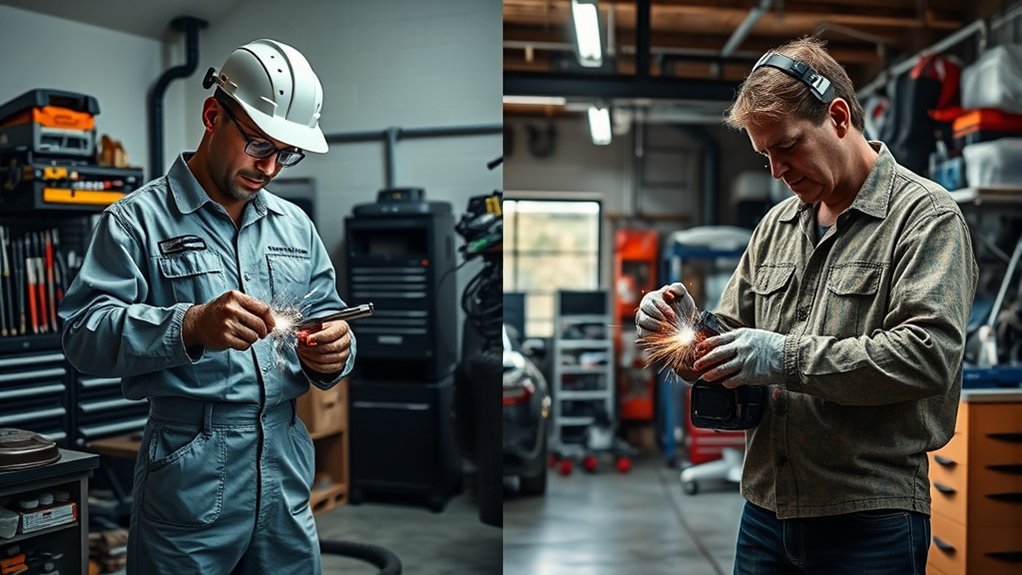
DIY exhaust welding can avoid professional labor charges, but it is not a simple beginner repair. The job involves thin metal, overhead welding, sparks, hot slag, fumes, electronics, fuel and brake lines, and a vehicle that must be supported safely above the worker.
Professional Exhaust Welding
A professional shop can inspect the entire system, distinguish a local crack from widespread corrosion, identify leaks near flanges or sensors, and determine whether welding will last. A competent repair should also include alignment and a final leak check rather than only covering the visible opening.
Professional service is especially valuable when the damage is near the exhaust manifold, catalytic converter, oxygen sensor, flex joint, fuel system, or passenger compartment.
DIY Welding Considerations
An experienced welder may spend only 20–30 minutes making the actual weld after the exhaust is clean, fitted, and positioned. The complete job usually takes longer because diagnosis, lifting, preparation, cutting, alignment, cooling, and leak testing are separate steps.
| Aspect | DIY Welding | Professional Service |
|---|---|---|
| Initial cost | Welder, gas or wire, PPE, tools, fire protection, and safe lifting equipment | Shop labor, parts, supplies, and possible diagnostic fee |
| Total time | Often several hours when preparation and setup are included | About 30 minutes to three hours for many repairs |
| Skill required | High; thin and overhead welding is difficult | Performed by the technician |
| Diagnosis | Depends on the owner’s inspection ability | Entire system can be inspected on a lift |
| Warranty | None | May include a workmanship or parts warranty |
Warning: Never work beneath a vehicle supported only by its factory jack. Welding also creates fumes, ultraviolet radiation, fire risk, burns, eye hazards, and electrical hazards. Use approved lifting equipment, ventilation, PPE, fire protection, and the vehicle manufacturer’s electrical precautions. Anyone without automotive welding experience should use a qualified shop.
When Can an Exhaust Be Welded?
Welding is usually appropriate when the damage is localized and the surrounding metal remains structurally sound. Common candidates include a clean crack, a separated seam, a broken hanger attachment, or a short damaged section that can be cut out and replaced with new tubing.
When Replacement Is Better
A shop may recommend replacing the affected part when:
- The metal flakes, crumbles, or has many pinholes.
- Rust extends far beyond the visible leak.
- The flex section has split or unraveled internally.
- A flange has lost too much material to seal correctly.
- The muffler has loose internal baffles.
- The catalytic converter is damaged, clogged, contaminated, or failed internally.
- A cast exhaust manifold has a crack that requires specialized removal or repair.
- A previous patch has failed because the surrounding metal is too thin.
Complete muffler replacement can cost much more than a local weld, especially when an original-equipment assembly includes long integrated pipe sections. That is why the shop should explain whether its quote covers a small repair or a complete component.
Note: A clamp or exhaust-repair sleeve may work on certain straight, solid sections, but it is not suitable for every leak. Repairs near flanges, flex joints, sensors, manifolds, or severely rusted metal require a proper inspection.
Quality of Work and Its Impact on Pricing
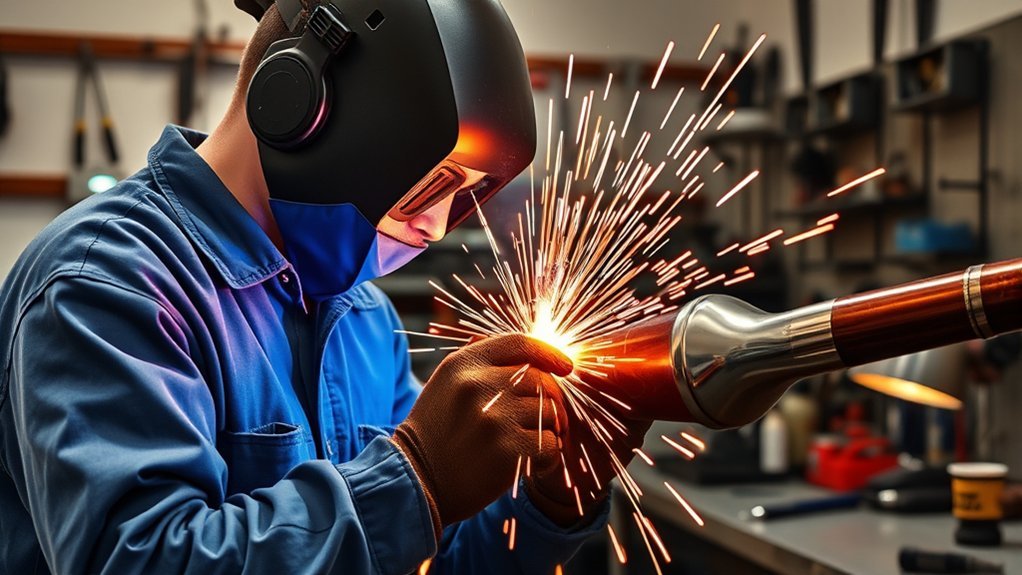
Quality exhaust welding depends on preparation, fit-up, heat control, access, and the condition of the original material. A clean bead placed over rust is not necessarily a durable repair.
A skilled technician may spend more time removing contaminated metal, shaping a replacement sleeve, aligning the exhaust without stress, and controlling heat on thin tubing. These steps can justify a higher initial quote because they reduce the chance of burn-through, misalignment, rattles, or a leak beside the new weld.
A durable exhaust repair depends as much on the strength of the surrounding metal and joint preparation as it does on the visible weld bead.
Price alone does not prove quality. Ask whether the shop will remove weak metal, use new tubing where needed, check alignment and hangers, inspect nearby joints, and verify the repair for leaks after the work is complete.
Customer Experiences and Satisfaction Levels
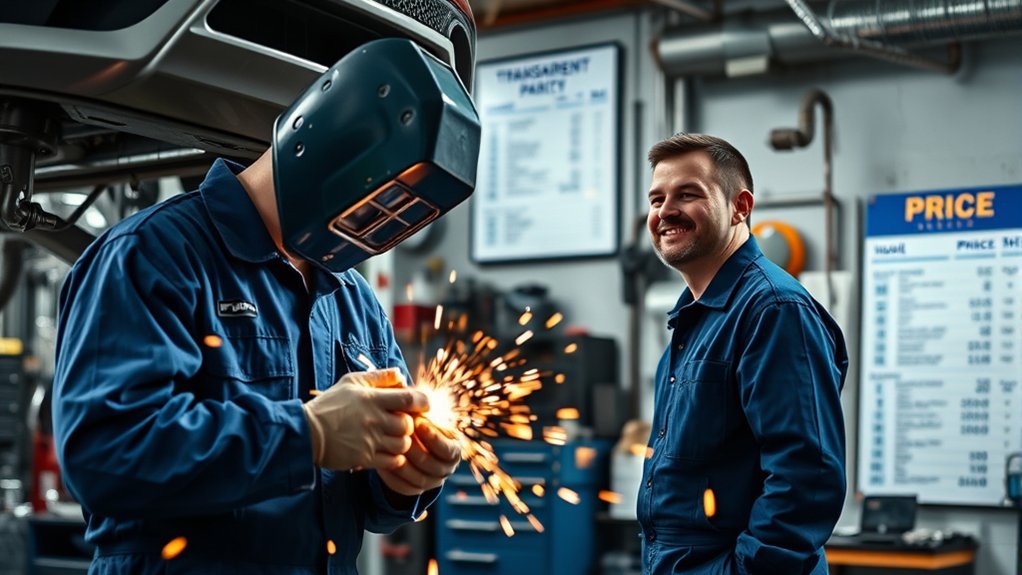
Customer satisfaction usually depends on whether the final repair matches the quoted scope. A $100 weld can feel reasonable when it includes diagnosis, lift time, preparation, welding, and leak testing. The same price may feel excessive when the customer expected a complete repair but receives only a temporary bead over rust.
Why Price Perception Varies
| Situation | Likely Effect on Cost |
|---|---|
| Small crack with clean access | Lower end of the range |
| Rusted flange or several weak areas | More preparation, fabrication, or replacement |
| Exhaust must be removed | Additional labor and possible hardware |
| Initial quote excludes parts or shop fees | Higher final bill and lower customer satisfaction |
| Written scope and warranty are provided | Clearer value and fewer disputes |
Comparing Repair Quotes
A useful quote should identify:
- The location and cause of the leak
- Whether the repair is welded, clamped, sleeved, or replaced
- The material and parts being installed
- Whether removal and reinstallation are included
- Any diagnostic, shop-supply, disposal, or minimum charges
- Taxes and the final estimated total
- The workmanship and parts warranty
- Whether additional rust may change the estimate after disassembly
International anecdotes, such as an NZD$85 bill after an earlier NZD$25 verbal estimate, illustrate why written authorization matters. They do not establish a normal U.S. price because currency, labor, vehicle condition, and repair scope differ.
Tipping an automotive technician is not generally required. When a shop provides exceptional service, a detailed positive review, referral, or return visit may be a more useful way to show appreciation.
Business Considerations for Repair Shops
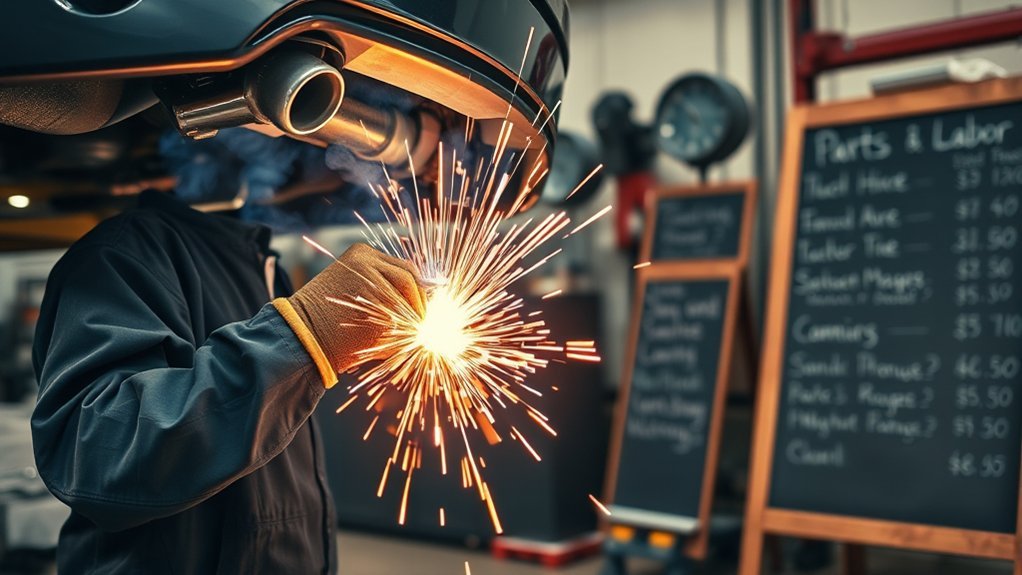
An exhaust shop’s price includes more than the technician’s time holding the welding gun. The business must cover lifts, welders, ventilation, electricity, shielding gas, wire, cutting tools, replacement tubing, insurance, rent, training, and employee wages.
Diagnostic checks also consume lift and technician time. A shop may need to inspect the complete exhaust while the engine is running, allow hot components to cool, remove shields, or separate corroded joints before it can confirm the repair.
Credit-card fees, shop supplies, taxes, and disposal costs may appear separately. These charges should be disclosed before work begins rather than added unexpectedly at checkout.
A responsible pricing strategy balances those costs with the value of skilled craftsmanship. It also allows enough time for safe preparation and inspection instead of encouraging a rushed weld over contaminated or rust-thinned metal.

The Danco Lift and Turn Bathtub Drain Stopper provides an easy replacement for worn or non-functioning tub stoppers while helping keep debris out of your drain. Its lift-and-turn design makes filling and draining the tub simple, and the reversible thread sizes support flexible installation without removing the drain. The chrome finish adds a clean, updated look to your bathtub trim, while the durable metal and plastic construction is built for everyday use.

The DeLonghi Water Filter helps reduce scale buildup and unwanted impurities that can affect your coffee machine's performance and taste. Its active carbon and ion-exchange technology helps improve brew consistency, maintain flavor, and reduce the need for frequent descaling. Designed as an OEM authorized replacement part, it fits select DeLonghi models for reliable everyday maintenance.

This practical guide brings together traditional skills and self-sufficiency knowledge in one accessible reference. It helps readers learn time-tested home, craft, and survival techniques with clear guidance suited for beginners and hobbyists alike. Ideal for anyone interested in homesteading, DIY living, or preserving old-fashioned know-how.
Recommendations for Finding Affordable Services

Start with shops that regularly perform exhaust fabrication. A specialist may be able to replace only the damaged section rather than installing a large original-equipment assembly, but that depends on the vehicle and emissions requirements.
- Describe the symptoms clearly. Mention when the noise occurs, whether fumes enter the cabin, and whether a warning light is on.
- Request an inspection. A phone quote cannot reveal the amount of hidden rust or determine whether the metal is weldable.
- Get comparable written estimates. Ask local independent shops and established chains such as Midas or Meineke to describe the same repair scope.
- Ask why welding or replacement is recommended. The shop should be able to show the damaged area and explain the condition of the surrounding metal.
- Confirm the final price. Check labor, parts, taxes, shop fees, and possible additional charges.
- Review the warranty. Ask how long workmanship and replacement parts are covered and obtain the terms in writing.
- Check recent reviews carefully. Look for comments about accurate quotes, leak-free repairs, communication, and warranty support rather than only the lowest advertised price.
Note: Before paying to replace a catalytic converter, check the vehicle’s warranty booklet. The EPA states that specified major emissions components—including catalytic converters, the ECU, and the OBD device—generally receive federal coverage for eight years or 80,000 miles, subject to eligibility and warranty conditions.
Legal and Emissions Considerations
An exhaust repair must preserve the vehicle’s required emissions equipment. According to the U.S. Environmental Protection Agency, removing a catalytic converter without replacing it with an approved replacement is illegal under federal law.
A cheap quote should not involve deleting a converter, bypassing sensors, installing a straight pipe in place of required emissions equipment, or disabling a warning light. State inspection and replacement-converter requirements may be stricter than federal rules.
Normal wear, rust, or impact damage is usually a maintenance issue rather than an insurance claim. Comprehensive or collision coverage may apply when the exhaust was damaged by theft, an accident, road debris, or another covered event. The policy terms and deductible determine whether filing a claim makes sense.
Signs an Exhaust May Need Welding or Replacement
Common exhaust-leak symptoms include:
- A louder exhaust note, ticking, hissing, or popping sound
- Visible cracks, holes, separated seams, or hanging components
- Black soot around a joint or leak
- Exhaust or fuel odors near or inside the vehicle
- Unusual vibration beneath the floor
- Reduced fuel economy
- A check-engine light, especially when the leak is near an oxygen sensor
- Headache, dizziness, nausea, confusion, or unusual tiredness in the vehicle
An odor may indicate an exhaust leak, but carbon monoxide itself has no smell. The EPA identifies carbon monoxide as a colorless, odorless gas that can interfere with oxygen delivery to the heart and brain.
Frequently Asked Questions
How long does exhaust welding typically take?
A small accessible weld may take 30–90 minutes after inspection. Repairs that require removing the exhaust, cutting out rust, fabricating a sleeve, replacing a flex pipe, or freeing seized hardware may take one to three hours or longer. Actual welding time is only one part of the job.
What are the signs that my exhaust needs welding?
Possible signs include louder exhaust noise, ticking or hissing, visible cracks, black soot, vibration, hanging pipes, reduced fuel economy, fumes in the cabin, or a check-engine light. An inspection is needed to determine whether the damage can be welded or whether the affected section is too corroded and must be replaced.
Can exhaust welding improve vehicle performance?
It can restore normal operation when a leak affects exhaust flow or allows outside air to interfere with an upstream oxygen sensor. That may improve fuel control, noise, and drivability. A rear exhaust weld does not automatically add horsepower, and “reducing back pressure” is not a universal explanation for improved performance.
Is exhaust welding environmentally friendly?
Repairing a leak can help keep exhaust gases routed through the system as designed and can prevent an upstream leak from affecting engine controls. Welding still uses electricity, gas, and materials, so it is not impact-free. The repair must retain required catalytic converters, sensors, and other emissions equipment.
Are there warranties on exhaust welding services?
Many shops offer a limited workmanship warranty, but the duration and exclusions vary. Ask whether it covers only the new weld or also the installed tubing and hardware. Rust failure beside the repaired area may be excluded. Obtain the terms in writing before authorizing the repair.
Can a badly rusted exhaust still be welded?
Not always. If cleaning exposes thin, flaking, or perforated metal, a weld may burn through or fail beside the repair. A shop may cut out the weak area and install new tubing or recommend replacing the complete component.
Is it safe to drive with an exhaust leak?
It may not be safe, especially when fumes enter the cabin, the leak is near the engine, or a pipe is loose enough to contact the road. Carbon monoxide cannot be seen or smelled. Stop driving and arrange service if occupants experience headache, dizziness, nausea, confusion, or unusual fatigue.
Conclusion
A small exhaust weld commonly costs about $80–$150, but the final bill depends on access, corrosion, material, fabrication, parts, and whether the damaged section must be removed. Flex-pipe, muffler, flange, manifold, and catalytic-converter repairs can cost considerably more.
Choose the repair based on the condition of the metal rather than the lowest advertised price. A written estimate should explain what will be welded or replaced, what the total includes, and how the work is warranted. Treat cabin fumes as urgent, and never approve a repair that removes or disables required emissions equipment.
Sources
- Suncent Auto — 2026 Exhaust Leak Repair Cost Guide — current planning ranges for small welds, flex pipes, manifolds, and catalytic-converter repairs.
- RepairPal — Exhaust Muffler Replacement Cost Estimate — replacement costs, diagnostic inspection, corrosion, and installation considerations.
- U.S. Environmental Protection Agency — Carbon Monoxide Basics — carbon-monoxide properties and health effects.
- U.S. Environmental Protection Agency — Transportation and Emissions FAQs — federal emissions warranties and catalytic-converter tampering rules.
- Occupational Safety and Health Administration — Welding Hazards and Solutions — welding fumes, radiation, burns, electrical hazards, and PPE.
- Miller Electric — MIG Basics for Automotive Welding Repair — automotive metals, thin-material welding, preparation, safety equipment, and overhead welding.

These Stanley MaxSteel straight aviation snips are built for clean, controlled cutting through sheet metal and other tough materials. Serrated cutting edges help prevent slippage for more accurate results, while the double pivot action delivers increased cutting power with less effort. Designed for dependable performance, they are a practical choice for metalworking, HVAC tasks, and general workshop use.

Nature's Bounty Fish Oil softgels provide a convenient source of omega-3 fatty acids, including EPA and DHA, to support heart, cellular, and metabolic health. These burpless softgels are purified to remove mercury and are free from shellfish, gluten, sugar, and lactose for everyday wellness support. With easy-to-swallow capsules and 200 softgels per bottle, they fit seamlessly into a daily supplement routine.

Nature Made Burp Less Fish Oil provides omega-3 support for heart health in easy-to-take softgels designed to help reduce fish burps. Each serving delivers concentrated EPA and DHA from purified fish oil sourced from wild-caught ocean fish, with no artificial colors, flavors, or preservatives. This gluten-free, dairy-free supplement is a trusted daily option for adults looking to support overall cardiovascular wellness.
