
Last updated: August 10, 2026
Welding school cost in 2026 ranges from about $3,000 at some public certificate programs to nearly $30,000 for certain private accelerated welding-and-pipefitting programs. The number that matters most is your total education cost after required gear, testing, transportation, living-cost changes, and grants or scholarships—not the advertised tuition alone. Current official school examples below show how widely the price can vary.
Quick Answer
Plan on roughly $3,000 to $10,000 for many public certificate or diploma programs. Current published examples include about $2,983 at Pima Community College, $3,066 at Florida State College at Jacksonville, $7,433.20 at Emerald Coast Technical College, and $9,050 for Salina Tech’s nine-month certificate. At the private end, Tulsa Welding School lists $23,650 for Welding Specialist and $29,150 with pipefitting. Books, PPE, tools, testing, transportation, and living costs may be extra or included differently by school.
Key Takeaways
- Current published prices range from about $3,000 at some public certificate programs to nearly $30,000 for certain private welding and pipefitting programs.
- Tuition is only part of the cost. Add required PPE, books, consumables, transportation, housing, childcare, testing, and income lost while attending school.
- A school completion certificate is not the same as an AWS certification or an employer-specific welder qualification test.
- Federal aid is available only when the school and program meet eligibility requirements. The maximum Pell Grant for 2026–27 is $7,395 for qualifying students, and new rules effective July 1, 2026 can extend Pell eligibility to certain eligible workforce programs.
- Apprenticeships can lower out-of-pocket training costs because they combine paid work with instruction, but openings may be competitive and programs usually take longer.
At a Glance
| Public Certificate or Diploma | Often about $3,000–$10,000 in direct program costs before aid, depending on residency and length |
| Private Accelerated Program | Some published programs exceed $20,000 and may approach $30,000 with pipefitting or advanced training |
| Typical Duration | A few months to one year for many certificates and diplomas; about two years for an associate degree |
| Common Extra Costs | Books, PPE, uniforms, hand tools, consumables, testing, transportation, housing, childcare, and lost work time |
| Possible Funding | Pell Grants at eligible programs (including certain eligible workforce programs under 2026–27 rules), AWS scholarships, state workforce funding, GI Bill benefits, employer assistance, and registered apprenticeships |
How Much Does Welding School Cost in 2026?
There is no single national welding-school price. Schools calculate costs differently, and advertised tuition may exclude supplies, testing, registration fees, and living expenses. Published prices also change by campus, residency status, schedule, and program length.
Current school listings illustrate the range:
| Published Program | Published Cost | What the Figure Shows |
| Pima Community College Welding Basic Certificate | $2,983 | 2026–27 in-state estimated program total; the school lists an optional $125 AWS D1.1 credential within that estimate |
| Florida State College at Jacksonville Welding Technology Certificate | About $3,066 | Approximate in-state tuition for welding classes |
| TCAT Nashville Welding Technology | $6,212 tuition and fees plus $1,258 for textbooks and supplies | A 12-month, 1,296-clock-hour public technical program |
| Emerald Coast Technical College Welding Technology | $7,433.20 estimated direct cost | 2026–27 in-state tuition, fees, books, supplies, uniforms, and listed graduation costs |
| Salina Tech Welding Technology | $9,050 for nine months or $12,905 for two years | Published technical-certificate and associate-degree costs |
| Tulsa Welding School | $23,650 for Welding Specialist or $29,150 with pipefitting | A private accelerated-program example |
Note: These are examples, not national averages. Confirm the current cost sheet for your campus and start date. Tuition and aid can change between academic years.
Use one comparison number: estimated net education cost = tuition and mandatory fees + required books/PPE/tools/testing + extra transportation/housing/childcare + income lost while training − grants, scholarships, and employer assistance. Keep borrowed money in your cost calculation because loans must be repaid.
A short certificate may cost less because it focuses on core welding processes. A diploma normally adds more shop hours, blueprint reading, fabrication, and related technical instruction. An associate degree usually includes general-education courses and more total credits, so its full price can be higher even when the per-credit tuition rate is low.
Specialized commercial-diving programs are a separate cost category because they add diving instruction, medical-clearance requirements, specialized gear, and often relocation costs. If that is your goal, compare those expenses separately in our underwater welding school cost guide.
When comparing programs, separate the price into four categories:
- Tuition and mandatory fees: Charges required for enrollment and instruction.
- Program supplies: Books, uniforms, PPE, tools, metal, filler material, and consumables.
- Testing and credential costs: Qualification tests, facility fees, retests, and travel to a testing site.
- Living and opportunity costs: Housing, food, transportation, childcare, and wages you give up while attending class.

This daily devotional helps parents pray purposefully for their children through a full year of Scripture readings, reflections, and guided prayer prompts. Written to encourage faithful family discipleship, it offers practical, biblically grounded support for parents who want to shape their prayers around God's Word. A foreword by Sinclair B. Ferguson adds trusted theological insight and encouragement.

These Stanley MaxSteel straight aviation snips are built for clean, controlled cutting through sheet metal and other tough materials. Serrated cutting edges help prevent slippage for more accurate results, while the double pivot action delivers increased cutting power with less effort. Designed for dependable performance, they are a practical choice for metalworking, HVAC tasks, and general workshop use.

This interactive sentence building set helps children practice early reading, writing, and grammar through hands-on play. Color-coded word cards, photo cards, and punctuation pieces make it easy to build simple sentences while reinforcing capitalization, parts of speech, and sentence structure. It is a versatile learning tool for homeschool and classroom use, with included game ideas and teaching suggestions to support multiple skill levels.
How School Type Changes Welding School Cost
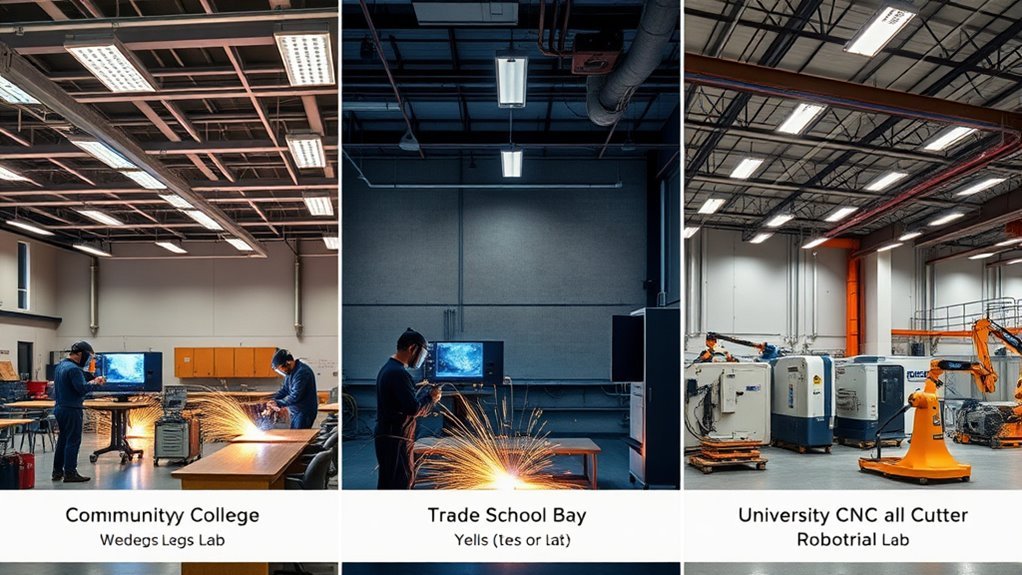
The type of school affects the schedule, credential, amount of shop time, financing options, and total price. A lower advertised tuition does not always mean the lowest final cost.
Community Colleges and Public Technical Colleges
Public colleges often charge lower in-district or in-state tuition than private career schools. They may offer certificates, diplomas, and associate degrees, along with access to federal or state aid when the institution and program are eligible.
Check the required number of credits or clock hours rather than assuming every two-year program costs the same. Out-of-state tuition, lab fees, and general-education courses can increase the total.
Private Trade Schools
Private trade schools often use accelerated schedules and concentrate heavily on shop training. Some offer employer relationships, career services, or several welding processes in one program. The tradeoff can be substantially higher tuition.
Ask for the school’s full enrollment agreement, itemized cost sheet, cancellation policy, completion rate, median debt, and job-placement definition before signing.
Apprenticeship and Employer Training
A registered apprenticeship combines paid employment, mentorship, classroom instruction, progressive wage increases, and a recognized credential. Because you earn while learning, the out-of-pocket cost may be lower than full-time school. Openings can be limited, and completion may take several years.
Four-Year Degree Programs
A bachelor’s degree in welding engineering, welding engineering technology, manufacturing, or a related field is different from entry-level welder training. It may support engineering, management, automation, inspection, or research careers, but a four-year degree is not the normal requirement for production welding work.
The U.S. Bureau of Labor Statistics says welders typically enter the occupation with a high school diploma or equivalent plus technical and on-the-job training.
How Long Does Welding School Take?

Welding programs range from focused courses lasting a few weeks to associate degrees lasting about two years. Longer is not automatically better. The right timeline depends on the processes you need to learn and the jobs available in your area.
Certificate Program Duration
Certificate programs commonly run from several weeks to about one year. They may focus on shielded metal arc welding, gas metal arc welding, gas tungsten arc welding, flux-cored arc welding, cutting, fabrication, or pipe welding.
Short programs can be useful when you need a specific skill or a quicker route into entry-level work. Before enrolling, verify:
- The number of supervised shop hours
- Which welding processes, positions, and base metals are taught
- Whether blueprint reading, weld symbols, measurement, and safety are included
- Whether testing fees and test materials are included
- Whether the credential can be applied toward a longer diploma or degree
Degree and Diploma Timelines
A one-year diploma normally includes more shop practice and technical theory than a short certificate. A two-year associate degree may add general education, metallurgy, quality control, inspection, fabrication, robotics, or supervisory coursework.
- Short certificate: Best for focused training, skill upgrades, or quick entry when local employers accept the curriculum.
- One-year diploma: Offers broader process coverage and more time to build consistent shop skills.
- Two-year associate degree: Adds general education and may support later advancement, transfer, or technical leadership.
- Four-year technical or engineering degree: Intended for a different career path involving engineering, manufacturing systems, automation, inspection, or management.
Pro Tip: Ask employers in your area which processes and qualifications they hire for before choosing a program. Paying for training that does not match local work can extend your job search and reduce your return on investment.
Required Tools, Gear, and Additional Materials

Required supplies differ by school. Some programs include consumables and shop equipment in tuition, while others require students to purchase a tool kit, uniform, boots, helmet, gloves, books, and replacement materials.
Current published cost sheets show how much required supplies can vary. Pima Community College lists about $200 for books, course materials, supplies, and equipment in its 2026–27 Welding Basic Certificate estimate; Emerald Coast Technical College lists $900 for books and supplies; and TCAT Nashville lists $1,258 for textbooks and supplies. Use the school’s written equipment list rather than relying on a generic national estimate.
Essential Personal Protective Equipment
A typical student equipment list may include:
- An approved welding helmet with the lens shade required for the process
- Safety glasses with side protection
- Flame-resistant clothing or a welding jacket
- Leather welding gloves
- Hearing protection
- Protective work boots
- A face shield for grinding when required
- Respiratory protection only when selected, fitted, and used under the applicable safety program
Do not assume that PPE alone controls every welding hazard. Ventilation, equipment condition, fire prevention, training, shielding, safe work practices, and supervision also matter.
Warning: Welding can expose students to metal fumes, gases, ultraviolet radiation, burns, eye injuries, electrical shock, noise, fire, cuts, and crushing hazards. Follow the school’s safety rules and review OSHA’s welding hazard guidance. Never weld on a closed container or a container that held flammable material unless it has been properly cleaned, vented, tested, and approved for hot work.
Tools, Machines, and Supplies
Students may need hand tools such as a chipping hammer, wire brush, soapstone, welding pliers, clamps, square, tape measure, files, and inspection gauges. Consumables may include electrodes, wire, filler rods, contact tips, nozzles, grinding wheels, and practice metal.
Most school shops provide welding power sources for class. Do not buy a personal welder unless the official equipment list requires one. A machine that does not match the course voltage, processes, duty cycle, or accessories may be of little use.
Ask these questions before buying supplies:
- Is a school tool kit mandatory?
- Can you use equipment you already own?
- Are consumables included in lab fees?
- Will supplies need to be replaced during the program?
- Are lockers or secure storage available?
- Can tools be purchased used?
Certification and Testing Expenses
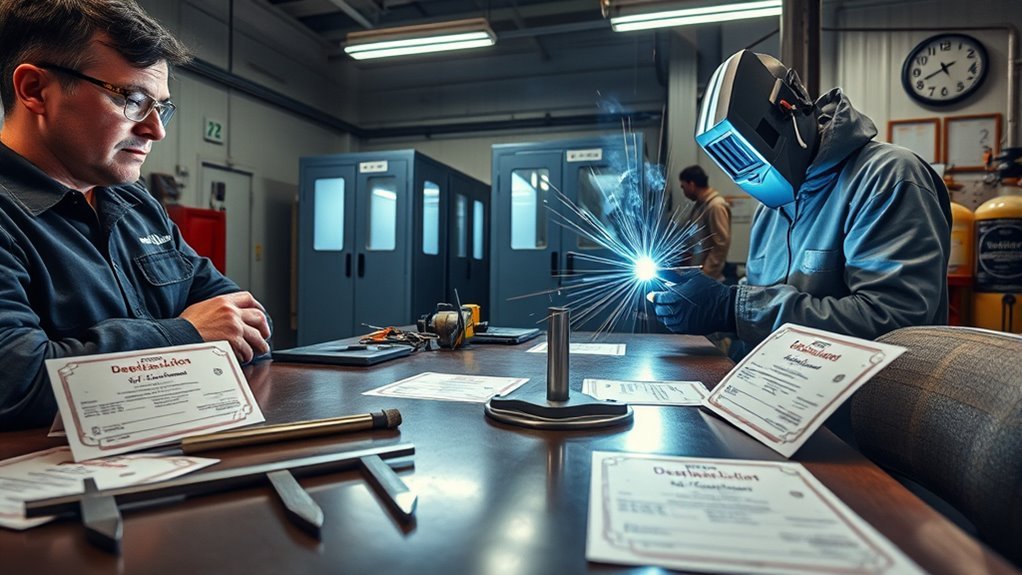
“Certificate,” “certification,” and “qualification” are not interchangeable terms.
- School certificate or diploma: Shows that you completed the school’s curriculum.
- AWS Certified Welder credential: Is based on a performance test completed through an approved testing facility under the applicable program rules.
- Employer qualification: Confirms that you can weld to a particular procedure, process, material, position, or code required by that employer or project.
- Inspector or educator certification: Uses different eligibility rules and fees and is not the same as an entry-level welder test.
The AWS Certified Welder program does not require a specific prerequisite course, but candidates must pass the required performance test. Testing is available through accredited facilities.
For 2026, the AWS certification price list shows a $70 Certified Welder application fee and a $105 yearly maintenance subscription, while the Certified Welder exam itself is priced by the individual Accredited Test Facility. Facility charges can vary by welding process, position, code, coupon material, examination method, laboratory time, paperwork, and retest policy, so ask for a written quote that states exactly what is included.
For a dedicated breakdown of testing pathways and fee categories, see our welding certification cost guide.
Note: A school’s statement that it “prepares students for certification” does not necessarily mean the certification test, test coupon, facility charge, registration, or retest is included in tuition.
Certification can help document a tested skill, but it does not guarantee employment or higher pay. An employer may still require a separate test based on its own welding procedure or project code.
Financial Aid, Scholarships, and Payment Plans
Financial aid can reduce the amount you pay, but not every welding school or short program participates in every aid program.

These colorful answer buzzers turn lessons, review games, and family activities into lively game-show style challenges that boost participation and make learning more interactive. Each buzzer has a distinct sound to clearly identify who buzzed in first, while the durable, palm-sized design makes them easy for kids and adults to use in classrooms, homeschools, and group settings.

Ticonderoga Wood-Cased Pencils deliver smooth, reliable writing with an exclusive #2 graphite formula designed for consistent performance. A premium latex-free eraser makes corrections clean and easy, while the satin smooth finish and responsibly sourced wood support comfortable everyday use. This unsharpened 96-count pack is ideal for classrooms, offices, and home writing needs.

Ticonderoga Wood-Cased Pencils deliver smooth, reliable writing with an exclusive #2 graphite formula that creates consistent lines and effortless performance. Made with premium wood for easy sharpening and minimal breakage, these pre-sharpened pencils are ready to use right away. The latex-free eraser removes marks cleanly, and the non-toxic design makes them a trusted choice for school, office, and everyday writing tasks.
Federal Student Aid
Complete the FAFSA to find out whether you qualify for grants, work-study, or federal loans at an eligible school. For the 2026–27 award year, the maximum Federal Pell Grant is $7,395. Your actual award depends on eligibility, enrollment, program cost, and other federal-aid rules.
New for 2026–27: Federal rules effective July 1, 2026 allow Pell eligibility for certain eligible workforce programs. This can include some short-term workforce training, but the school must determine whether your specific welding program meets the requirements. Do not assume every short course qualifies.
Before assuming that aid will apply, confirm that:
- The school participates in federal student-aid programs
- Your specific welding program is eligible
- The program meets required length and credential rules
- If it is a short-term program, whether the school has classified it as an eligible workforce program under the 2026–27 rules
- You understand which aid is a grant and which aid must be repaid
Welding Scholarships
The AWS Welder Training Scholarship supports qualifying students in certificate programs lasting less than two years. AWS states that up to 800 awards of $1,000 may be offered annually. Separate AWS national, district, and section scholarships support eligible degree and certificate students.
Also check state workforce agencies, unions, manufacturers, local foundations, community organizations, and the school’s financial-aid office.
Military and Veterans Benefits
Eligible veterans, service members, and dependents may be able to use GI Bill benefits for approved non-college-degree programs. Benefits may also apply to approved on-the-job training or apprenticeships. Use the VA GI Bill Comparison Tool to verify the institution and program.
Payment Plans and Loans
Some schools divide tuition into monthly or term-based payments. Ask whether the plan includes setup fees, interest, late charges, automatic withdrawals, or a balance due before graduation.
Loans can make enrollment possible, but they increase the final cost. Compare the loan’s interest rate, fees, repayment term, monthly payment, and total amount repaid. Do not judge affordability only by the first monthly payment.
Apprenticeships and Employer-Sponsored Training
A Registered Apprenticeship is a paid career pathway that combines work experience, mentorship, instruction, progressive wage increases, and a portable credential.
Apprenticeships may reduce tuition costs and the income you give up while learning. Employer-sponsored programs may also pay for classes, PPE, testing, or tools. However, the details depend on the sponsor.
Before accepting an apprenticeship or employer program, review:
- The starting wage and wage-increase schedule
- The expected program length and work schedule
- Who pays for tuition, books, PPE, tools, and testing
- The credential earned at completion
- Whether you must repay training costs if you leave early
- Travel, union-membership, or jobsite requirements
Search current openings through the Apprenticeship.gov Job Finder and apply directly through the listed employer or sponsor.
Calculating Return on Investment and Earning Potential
Welding-school ROI depends on your net cost, the income you give up during training, local wages, hiring requirements, debt, and how quickly you find related work.
The May 2025 Occupational Employment and Wage Statistics national table reports a median hourly wage of $25.84 for welders, cutters, solderers, and brazers. Annualized at 2,080 hours, that is about $53,750 per year. This is a national median—not an expected starting salary or guaranteed wage.
The Bureau of Labor Statistics Occupational Outlook Handbook projects 2% employment growth from 2024 to 2034, which is slower than the average for all occupations, and about 45,600 openings per year on average. The handbook page currently displays the May 2024 median wage, while the separate May 2025 OEWS table above is the newer wage dataset.
The cheapest program is not always the best value, and the highest tuition does not guarantee the strongest employment outcome. Compare net cost with verified completion, debt, skills, and placement information.
A Simple ROI Calculation
Start with this formula:
Total education investment = net tuition and fees + supplies + testing + transportation and living-cost increase + income lost while attending
Then estimate a simple gross payback period:
Payback period = total education investment ÷ estimated annual earnings increase linked to the training
For example, suppose your total net investment is $8,000 and the training helps you qualify for work that pays $8,000 more per year than your realistic alternative. The simple gross payback period would be about one year. This estimate does not account for taxes, loan interest, unemployment, overtime, benefits, raises, or unexpected expenses.
Use regional wage data rather than relying only on the national median. The BLS publishes state and metropolitan wage estimates, and job postings can help identify the welding processes and qualifications employers currently request.
Picking the Right Program for Your Budget and Goals
Compare at least three programs using the same cost and outcome categories. A school with lower tuition can become more expensive if it requires a long commute, extra semesters, or extensive supply purchases.
Value check: calculate direct training cost per supervised shop hour = tuition + mandatory lab fees + required program supplies, divided by supervised welding-lab hours. Use it as one comparison metric—not as a quality score. Then compare the processes taught, instructor access, equipment, completion data, and employer requirements before choosing the lowest-cost option.
Verify the School and Program
Use the U.S. Department of Education’s Database of Accredited Postsecondary Institutions and Programs to check accreditation information. Accreditation does not guarantee that a program is right for you, but it can affect aid, transfer, employer recognition, and further education.
Use College Scorecard to review available cost, completion, debt, and earnings data. Ask the school to explain any figures that cover the entire institution rather than the welding program alone.
Ask These Questions Before Enrolling
- What is the complete price for my campus, residency status, schedule, and start date?
- Which fees, books, PPE, tools, consumables, and tests are included?
- How many supervised welding-lab hours will I receive?
- Which processes, positions, metals, codes, and cutting methods are taught?
- Is the program eligible for federal, state, VA, or workforce aid?
- What percentage of students complete the program on time?
- How does the school define and verify its job-placement rate?
- Does placement data include only welding jobs or any job?
- What is the average debt of students who borrow?
- What happens financially if I withdraw, fail a course, or need a retest?
- Can credits transfer to another institution?
- Can I inspect the shop, equipment, ventilation, and PPE requirements before enrolling?
Warning: Be cautious when a school promises guaranteed employment, unusually high starting pay, or certification without explaining the employer, location, test standard, and placement-rate calculation. Request every important claim in writing.
Frequently Asked Questions
How much does welding school cost in 2026?
Current published examples range from about $3,000 for some public welding certificates to nearly $30,000 for certain private accelerated programs with pipefitting. Your final cost depends on residency, program length, included books and PPE, testing, transportation, housing, and aid. Compare the itemized cost for your exact campus and start date.
How long does welding school take?
Many certificate and diploma programs take a few months to about one year, while an associate degree commonly takes about two years. Part-time schedules can take longer. Compare supervised shop hours and the welding processes taught, not just the calendar length.
How much does AWS welding certification cost?
AWS’s 2026 price list shows a $70 Certified Welder application fee and a $105 yearly maintenance subscription, while the actual Certified Welder exam is priced by the individual Accredited Test Facility. The facility total can vary by process, position, code, coupon material, examination method, paperwork, and retesting.
Can you go to welding school for free?
Sometimes your out-of-pocket tuition can be reduced to little or nothing through grants, scholarships, workforce funding, employer assistance, or a paid apprenticeship, but no option is automatically free. Eligibility, covered expenses, and available openings vary, and living costs may still remain.
How long does it take to get a welding job after graduation?
There is no standard placement timeline. It depends on local hiring demand, the processes you learned, your ability to pass practical tests, transportation, schedule flexibility, and the school’s employer relationships. Start applying before graduation and practice the positions and processes used by local employers.
Are welding programs available online or in hybrid formats?
Some programs deliver welding theory, safety, symbols, metallurgy, and blueprint instruction online. Hands-on welding still requires supervised practice in a properly equipped lab, shop, apprenticeship, or employer facility. Check how often you must attend in person and who provides the equipment and materials.
Do welding schools help with job placement or internships?
Many schools offer career services, employer events, resume help, interview practice, or apprenticeship referrals. Services do not guarantee a job. Ask for the welding program’s placement rate, the reporting period, the number of graduates counted, and whether the jobs were related to welding.
Can prior experience or military service reduce welding-school costs?
A school may grant advanced standing, credit, or a course waiver after reviewing prior training or testing your skills, but its policy controls. Eligible veterans and dependents may use GI Bill benefits at approved schools, non-college-degree programs, or apprenticeships. Verify the exact program through the VA before enrolling.
What safety risks are taught beyond basic PPE?
Training should address fumes and gases, ultraviolet and infrared radiation, burns, electrical shock, fire prevention, compressed gases, hot work, grinding, noise, confined spaces, ventilation, material coatings, cylinder handling, housekeeping, ergonomics, and emergency procedures. PPE is only one part of an effective safety system.
Does FAFSA cover welding school?
FAFSA is the application used to determine eligibility for federal student aid. Aid may be available when both the institution and welding program meet federal requirements. Completing FAFSA does not guarantee that every school, short course, or expense will be covered.
Are welding tools and certification tests included in tuition?
Sometimes, but not always. One program may include practice metal, PPE, books, and testing, while another bills each item separately. Request an itemized cost sheet showing tools, consumables, test coupons, facility charges, registration, and retest fees.
Is welding school worth the cost?
It can be worthwhile when the program teaches skills local employers need, has a reasonable net price, provides substantial supervised practice, and does not require unmanageable debt. Compare school with apprenticeships, employer training, and lower-cost public programs before deciding.
Conclusion
Welding-school prices vary too much for one number to fit every student. Current published examples range from about $3,000 for a public certificate to nearly $30,000 for some private welding and pipefitting programs. Your true cost may also include PPE, books, tools, testing, transportation, housing, childcare, loan interest, and income lost while attending class.
Compare the complete net price, supervised shop hours, curriculum, safety standards, completion data, placement definitions, and local employer requirements. Grants, scholarships, GI Bill benefits, employer training, and apprenticeships can reduce what you pay. Choose the program that delivers the skills you need at a debt level your expected local wages can reasonably support.
Next step: shortlist at least three programs, request each school’s current itemized cost sheet and supervised lab-hour total, then run the same net-cost and cost-per-shop-hour calculation for all three before you apply.
Sources
- U.S. Bureau of Labor Statistics — May 2025 Occupational Employment and Wage Statistics national table and Occupational Outlook Handbook — Welders, Cutters, Solderers, and Brazers — current wage data, entry requirements, employment outlook, and projected openings
- U.S. Department of Education College Scorecard and accreditation database — comparing costs, outcomes, and institutional accreditation
- Federal Student Aid — Pell Grants and 2026–27 Pell eligibility guidance — maximum award and eligible workforce program rules
- Apprenticeship.gov — Registered Apprenticeship — paid work, mentorship, instruction, progressive wages, and credentials
- Occupational Safety and Health Administration — Welding Hazards and Solutions — fumes, radiation, burns, electrical, fire, and physical hazards
- American Welding Society — Certified Welder Program, 2026 Certification & Education Programs Price List, and AWS Welder Training Scholarship — performance testing, published AWS fees, testing-facility pricing, and welding education funding
- Published welding-program cost sheets: Pima Community College, Florida State College at Jacksonville, TCAT Nashville, Emerald Coast Technical College, Salina Tech, and Tulsa Welding School

Stay organized with a durable 1-subject notebook set designed for school, note-taking, and digital study support. The college ruled pages resist ink bleed, tear out cleanly, and work with the Five Star Study App to create flashcards and sync notes to Google Drive. Tough pockets, a water-resistant cover, and Spiral Lock wire help protect your work throughout the year.

These Rawlings practice baseballs are built for young players ages 8 and under, offering an easy grip and consistent feel for recreational play. Each ball features a synthetic leather cover with a solid cork and rubber center, plus official size and weight for reliable training. The set includes a durable bucket for convenient storage and transport, making it a smart choice for coaches, parents, and teams.

This versatile makeup brush set includes essential face and eye tools plus two blending sponges for smooth, polished application. Designed with soft synthetic bristles and an ergonomic handle, it helps create even coverage with cream, liquid, powder, and eyeshadow products. The included latex-free sponges expand when wet for a seamless, full-coverage finish and are easy to clean and maintain.
