
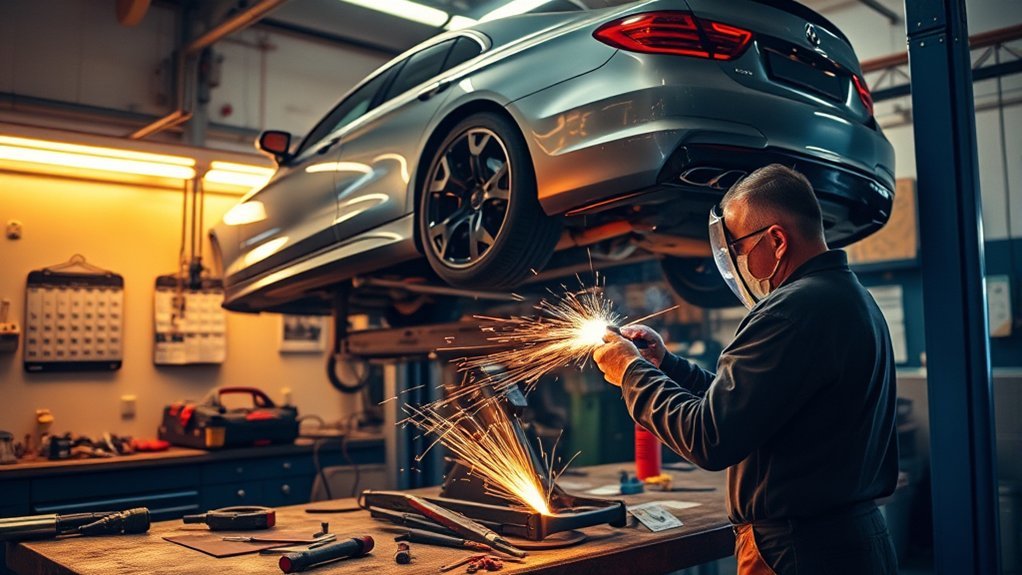
Car welding can be a small metal repair or a major structural job, so the final bill depends on much more than the time spent running a weld. The shop may also need to remove rust, fabricate metal, dismantle nearby parts, follow a vehicle-specific repair procedure, restore corrosion protection, and repaint the area.
Quick Answer
In the U.S., many basic automotive welding repairs fall around $100 to $600, but rust removal, panel fabrication, refinishing, and structural work can push the bill above $1,000. The safest estimate comes after the shop exposes solid metal and checks the vehicle maker’s repair procedure, because hidden corrosion and restricted high-strength steel can change the job.
Key Takeaways
- Many U.S. automotive welding projects cost about $100 to $600, but complete rust, panel, or structural repairs can cost much more.
- The visible hole or crack may be only a small part of the damage. The shop must cut back to clean, strong metal before estimating the final repair.
- Modern frames and body structures must be repaired according to the exact year, make, model, material, and vehicle-maker procedure.
- A complete quote should cover preparation, fabrication, welding, corrosion protection, paint, reassembly, and any required measurements or calibrations.
- Structural, fuel-adjacent, restraint-system, hybrid, and electric-vehicle welding should not be treated as beginner DIY work.
At a Glance
| Time Required | About 1–2 hours for some simple welding-only jobs; one day to several days when teardown, rust removal, fabrication, paint, curing, or calibration is required |
| Difficulty | Moderate for a small nonstructural fabrication job; expert-level for body structure, aluminum, advanced steel, restraint areas, or hybrid and electric vehicles |
| Tools Needed | Correct welding equipment, OEM repair information, safe lifting equipment, PPE, fire controls, metal-preparation tools, measuring equipment, and corrosion-protection materials |
| Cost | Common U.S. welding projects: about $100–$600; extensive rust, structural work, replacement sections, or refinishing: often $1,000 or more |
What Is Automotive Welding?
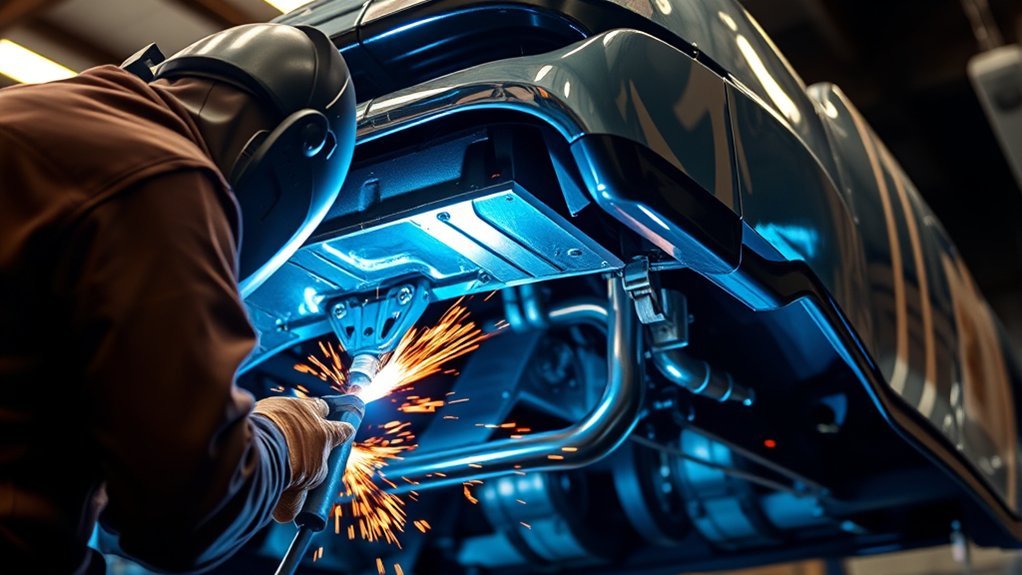
Welding joins compatible metal parts by using heat, pressure, or both. In automotive work, it may be used to repair an exhaust bracket, install a rust-repair patch, replace a body panel, or attach an approved structural component.
The process is not the same for every vehicle. Thin mild-steel sheet, aluminum, high-strength steel, ultra-high-strength steel, cast parts, and stainless exhaust components require different equipment and procedures. Some body parts may be welded only at specified factory seams, while others must be replaced as a complete assembly.
Modern collision repairs may use gas metal arc welding, squeeze-type resistance spot welding, or MIG brazing. The correct choice should come from the vehicle maker’s repair instructions rather than the welder’s general preference. I-CAR advises repairers to follow OEM-specified attachment methods when spot welding or MIG brazing is required.
The safest repair is not simply the strongest-looking weld. It is the repair method specified for that exact vehicle, component, and metal grade.

These Stanley MaxSteel straight aviation snips are built for clean, controlled cutting through sheet metal and other tough materials. Serrated cutting edges help prevent slippage for more accurate results, while the double pivot action delivers increased cutting power with less effort. Designed for dependable performance, they are a practical choice for metalworking, HVAC tasks, and general workshop use.

Meguiar’s Ultimate Compound is designed to remove stubborn stains, bird dropping marks, oxidation, light scratches, and swirl marks from automotive paint. Its advanced abrasive technology helps restore a smoother, clearer finish without scouring clear coats, making it a reliable choice for paint correction before waxing. Use it by hand or with a dual action polisher to prepare your vehicle for a brilliant final shine.

Drop Stop provides complete coverage for the gap around your seat belt catch, helping keep keys, phones, and other small items from slipping into hard-to-reach spaces. Designed to move with your seat, it installs easily and stays in place without constant readjustment. This original, patented seat gap filler comes with bonus accessories for added convenience and a cleaner, safer driving experience.
How Long Does Car Welding Take?
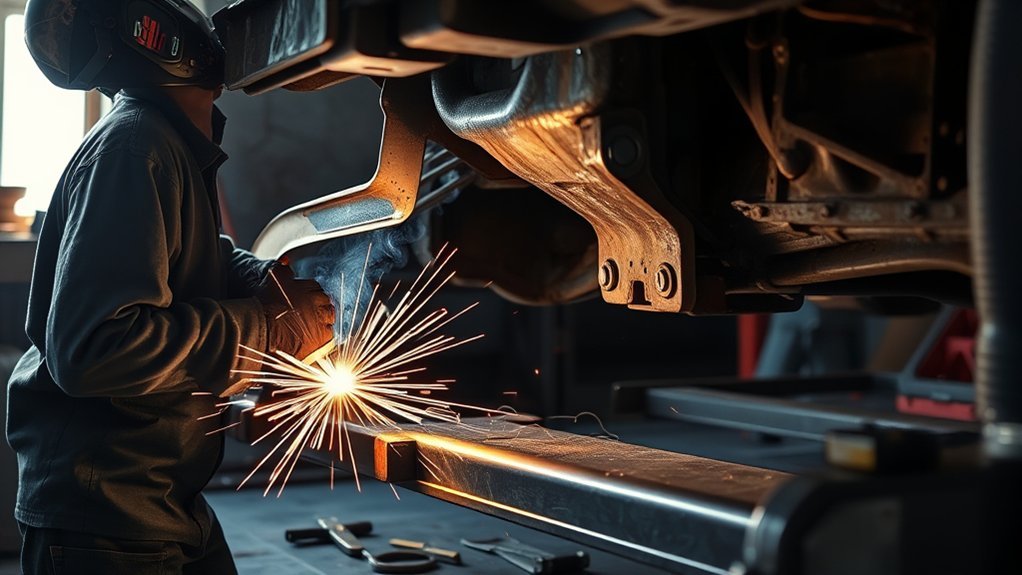
A small, accessible welding-only repair may take one to two hours. That does not mean the complete vehicle repair will be finished in the same period. Preparation and finishing often take longer than the weld itself.
Repair time may include:
- Inspecting the damage and identifying the metal
- Checking the vehicle maker’s body-repair procedure
- Disconnecting or protecting electrical components
- Removing seats, carpet, trim, wiring, fuel-system parts, glass, or nearby panels
- Grinding coatings and cutting away damaged or corroded metal
- Fabricating and test-fitting a patch or replacement section
- Welding in short, controlled intervals to limit distortion
- Dressing and inspecting the welds
- Applying primer, seam sealer, coatings, paint, and cavity protection
- Reassembling the vehicle and completing required measurements, scans, or calibrations
A simple bracket may be completed during one visit. A rusted rocker, floor section, quarter panel, or structural component may keep the vehicle in the shop for several days, especially when more corrosion appears after the outer layer is removed.
Note: Ask whether the quoted time covers only metalwork or the entire repair through primer, paint, corrosion protection, reassembly, and final inspection.
Mobile Welding Cost
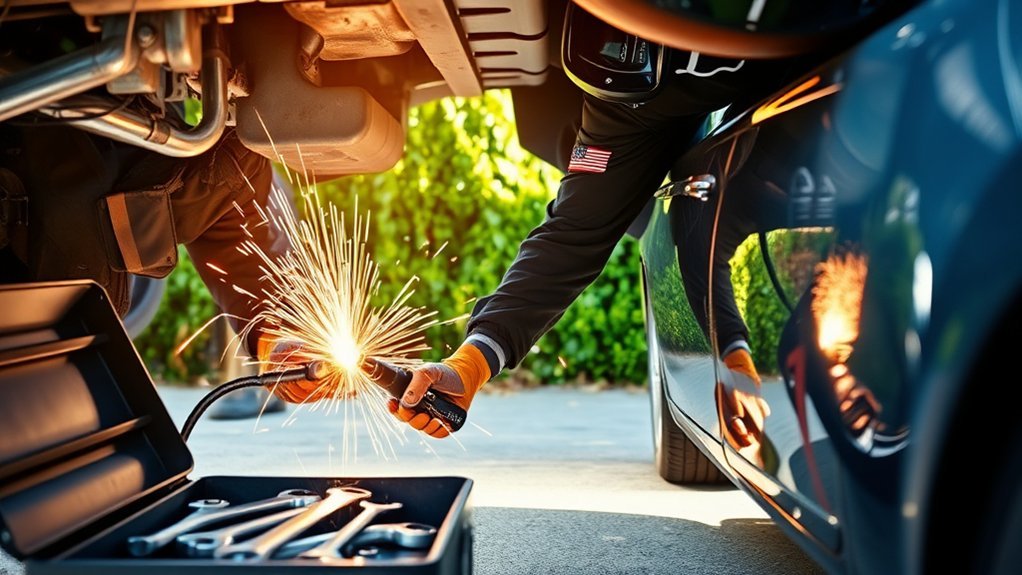
Mobile welding can be convenient when a vehicle or detached component cannot easily be transported. The charge may include travel, setup, a minimum number of labor hours, equipment, consumables, parking, and an emergency or after-hours premium.
There is no standard national mobile-welding call-out rate. In the UK, a quote with a £200 minimum covering two to three hours, or a price closer to £300 for urgent evening or weekend work, is possible. Other providers advertise lower starting call-outs or price emergency work only after seeing photos and the location.
Mobile service is not suitable for every vehicle repair. A driveway or roadside location may lack a lift, frame-measuring equipment, weather protection, extraction, fire control, or enough access to inspect both sides of the panel. Structural repairs and many collision jobs are safer in a properly equipped body shop.
Before booking mobile welding, ask whether the estimate includes:
- Travel and call-out charges
- The minimum billable time
- Metal, wire, shielding gas, grinding discs, and other consumables
- Removal of rust or coatings
- Access to both sides of the repair
- Primer, seam sealer, paint, and cavity protection
- Evening, weekend, parking, or congestion charges
- A written workmanship warranty
Pro Tip: Send the shop clear close-up and wide-angle photos, the vehicle’s year, make, model, VIN, damage location, and any inspection report. Photos help with screening, but a rust quote may still change after the area is stripped to solid metal.
How Much Does Welding on a Car Cost?
Angi’s 2026 welding-cost guide places many U.S. automotive welding projects around $100 to $600. That range is most useful for basic welding projects. It should not be treated as a cap for a complete rust, collision, structural, or refinishing repair.
In the UK, published consumer estimates commonly use about £125 for a small hole, patch, or rust weld and around £1,000 for complex chassis work. Those are broad market examples rather than fixed national prices, and they are not currency conversions of the U.S. estimates.
Factors Influencing Welding Costs
The price depends on the amount of work needed to reach clean, undamaged metal and complete a safe repair. Major cost factors include:
- Damage size: A small crack is cheaper than a long seam or multi-layer structural repair.
- Hidden corrosion: Rust usually extends farther under paint, sealer, undercoating, or overlapping panels than the visible hole suggests.
- Access: Seats, carpet, suspension parts, exhaust components, fuel-system parts, trim, glass, or interior panels may need removal.
- Metal and construction: Mild steel, advanced steel, aluminum, cast metal, and multi-layer structures require different procedures.
- Attachment method: GMAW, resistance spot welding, MIG brazing, rivets, adhesives, or a combination may be specified.
- Fabrication: A ready-made repair panel is usually quicker than forming a patch from sheet metal.
- Shop labor rate: Rates vary by region, training, facility type, equipment, and repair specialty.
- Finishing: Grinding, primer, seam sealing, undercoating, cavity wax, body filler, paint blending, and polishing add labor and materials.
- Diagnostics and calibration: Collision work may require pre- and post-repair scans, measurements, wheel alignment, or driver-assistance calibration.
AAA’s 2026 labor-rate overview reports automotive shop rates ranging from below $100 to above $200 per hour, with almost half of surveyed shops charging $120 to $159. A specialty collision, restoration, aluminum, or structural facility may use a different rate.
Typical Price Ranges
| Repair Scope | U.S. Planning Range | What Can Change the Price |
|---|---|---|
| Small welding-only repair | About $100–$250 | Minimum labor charge, access, metal preparation, and consumables |
| Medium automotive welding project | About $250–$700 | Patch size, fabrication, panel removal, material, and weld length |
| Rust cutout or panel repair with finishing | Often $600–$1,000+ | Hidden rust, replacement metal, seam sealer, primer, paint, and blending |
| Structural, frame, unibody, or multi-layer repair | Commonly $1,000+; potentially much higher | OEM restrictions, measurement, teardown, part replacement, specialized equipment, and calibration |
These ranges are budgeting guides, not binding estimates. A shop may quote a lower welding charge but add separate lines for disassembly, metal, paint, corrosion protection, scans, alignment, tax, or hazardous-material fees.
Welding-Only Price vs. Complete Repair Cost
A low quote may cover only preparation and welding. A complete repair may also require:
- Removing damaged panels and nearby components
- Cutting back rust until solid metal remains
- Buying or fabricating replacement metal
- Measuring and pulling the body structure
- Protecting wiring, modules, glass, upholstery, and fuel components
- Applying weld-through products where the OEM procedure allows them
- Restoring primer, seam sealer, undercoating, paint, and cavity wax
- Reinstalling parts and checking for water leaks, noise, or electrical faults
Ask the shop to identify exclusions in writing. Otherwise, two estimates that appear far apart may simply cover different amounts of work.
Factors That Affect the Final Car Welding Estimate
The visible damage, vehicle design, repair location, and desired finish can all change the final estimate.
- Cosmetic or structural location: An outer fender skin is different from a pillar, rail, rocker reinforcement, crossmember, suspension mount, or crumple zone.
- Repair or replacement: A repair panel may be available, or the manufacturer may require replacement of a complete component.
- Number of metal layers: Rust or collision damage may extend into reinforcements hidden behind the outer panel.
- Vehicle age and parts availability: Older vehicles may require hand fabrication when replacement panels are unavailable.
- Finish quality: A basic functional repair costs less than restoration-quality metal finishing and paint blending.
- Previous repairs: Body filler, overlapping patches, contamination, poor welds, or trapped corrosion can increase labor.
- Local pricing: Rent, wages, insurance, equipment, regulations, and regional demand affect shop rates.
Rust repair can be difficult to estimate from the outside. A small bubble may sit above a large area of thin metal, and the welder cannot create a durable joint until the weak section has been removed.
Note: Ask the shop what happens if hidden corrosion is discovered. A good authorization form should explain whether work stops for approval, continues up to a stated dollar limit, or changes to part replacement.
Key Considerations for Welding Services
Price matters, but the repair method, equipment, documentation, and corrosion protection matter just as much. A cheap weld can become expensive if it cracks, traps moisture, weakens a structural part, damages electronics, or must be removed and performed again.
| Question to Ask | Why It Matters |
|---|---|
| Did you check the OEM body-repair procedure for my VIN or exact model? | The allowed repair area, attachment method, sectioning location, wire, gas, and heat limits may be vehicle-specific. |
| Is this part cosmetic, structural, or connected to a restraint or suspension area? | Safety-critical components require stricter procedures, measurement, and documentation. |
| What corrosion protection will be restored? | Heat and grinding remove factory coatings, leaving bare metal vulnerable if primer, sealer, paint, and cavity protection are not restored. |
| Does the quote include paint, reassembly, scans, alignment, and calibration? | These items may add more to the bill than the welding operation itself. |
| What written warranty applies? | Workmanship, corrosion, paint, supplied parts, and pre-existing rust may have different coverage or exclusions. |
When a Part Must Be Replaced Instead of Welded
Not every damaged vehicle component is repairable. Replacement may be required when:
- The vehicle maker prohibits sectioning or welding in that location
- The component is made from heat-sensitive ultra-high-strength steel
- Damage reaches a suspension, engine, transmission, steering, seat-belt, or restraint-system mounting point
- The metal is cracked, stretched, crushed, severely thinned, or corroded through multiple layers
- A previous repair has removed too much material or changed the structure
- The labor needed to fabricate a reliable repair exceeds the cost or value of replacement
A Honda body-repair bulletin hosted by the National Highway Traffic Safety Administration explains that specified 1,500 MPa steel parts must be replaced at factory seams and must not be conventionally MAG welded. The bulletin warns that welding heat can reduce the steel’s strength. Requirements differ by manufacturer and vehicle, so the exact repair manual must control the decision.
Corrosion Protection After Welding
Cutting, grinding, and welding disturb factory coatings on both sides of the panel. A complete repair may require epoxy or direct-to-metal primer, seam sealer, undercoating, paint, and cavity wax.
3M’s collision-repair corrosion resources explain the role of weld sealing, seam sealer, coatings, paint systems, and cavity protection. The exact products and application order should match the automaker procedure and coating manufacturer’s instructions.
Types of Welding Processes Used on Cars
Automotive manufacturing and repair use several joining processes, but they are not interchangeable.
- Gas Metal Arc Welding or GMAW/MIG: Common for approved plug welds, butt joints, patches, brackets, and mild-steel repairs. Wire type, gas, settings, joint design, and heat input must match the repair procedure.
- Squeeze-Type Resistance Spot Welding or STRSW: Recreates factory-style spot welds where both sides of the flange can be reached. Many modern collision repairs require or recommend this process.
- MIG Brazing: Uses silicon-bronze filler at lower heat than conventional steel welding. It should be used only where the vehicle maker specifies it.
- Gas Tungsten Arc Welding or GTAW/TIG: Offers precise heat control and may be used for certain aluminum, stainless, custom, or restoration repairs. It is slower and demands more skill.
- Flux-Cored and Stick Welding: Useful for some heavy fabrication, equipment, or off-road applications, but generally unsuitable for ordinary thin exterior body panels because heat and spatter are harder to control.
- Submerged Arc Welding: A production process for thick, long steel seams. It is not a normal passenger-vehicle body-repair method.
Some current repairs also combine welding with structural adhesives, rivets, or other mechanical fasteners. The shop should not substitute a preferred process unless the vehicle maker permits that substitution.

This practical guide brings together traditional skills and self-sufficiency knowledge in one accessible reference. It helps readers learn time-tested home, craft, and survival techniques with clear guidance suited for beginners and hobbyists alike. Ideal for anyone interested in homesteading, DIY living, or preserving old-fashioned know-how.

This retractable car window shade helps block UVA and UVB rays to make rides more comfortable and protected for passengers. It includes a White Hot heat alert that turns white when the car is too hot, plus dual installation options for a secure fit in many vehicles. The safe-view mesh supports visibility while helping reduce glare, and the easy one-push retraction makes it simple to use when needed.

This daily devotional helps parents pray purposefully for their children through a full year of Scripture readings, reflections, and guided prayer prompts. Written to encourage faithful family discipleship, it offers practical, biblically grounded support for parents who want to shape their prayers around God's Word. A foreword by Sinclair B. Ferguson adds trusted theological insight and encouragement.
Safety Steps Before Welding on a Vehicle
Vehicle welding creates fire, electrical, fume, ultraviolet-light, and hot-metal hazards. Sparks can travel into carpet, insulation, seam sealer, sound-deadening material, wiring, fuel lines, or trim hidden on the other side of the panel.
Warning: Do not weld near a fuel tank, fuel line, battery, airbag component, unknown vehicle cavity, hybrid or EV high-voltage component, or unsupported vehicle. Structural and electrified-vehicle repairs require trained personnel, model-specific shutdown procedures, safe lifting equipment, fire controls, and inspection of both sides of the work area.
OSHA’s welding, cutting, and brazing requirements call for trained operators, fire-safe work areas, protection or removal of combustible materials, and precautions where heat or sparks could ignite material on the other side of a wall or panel.
Before vehicle welding, a qualified repairer may need to:
- Read the vehicle maker’s welding and disabling instructions
- Disconnect and isolate the 12-volt battery as directed
- Disable the high-voltage system on a hybrid or EV using the manufacturer’s procedure
- Place the welding work clamp close to the repair on the same panel where specified
- Protect or remove electronic modules, sensors, wiring, restraint parts, glass, trim, carpet, and insulation
- Inspect both sides of the work area for fuel, vapor, seam sealer, undercoating, and hidden combustibles
- Provide suitable ventilation, PPE, extinguishing equipment, and a fire watch
- Keep the vehicle securely supported on equipment rated for the work
I-CAR’s battery-disconnection guidance advises isolating battery cables, addressing the high-voltage service disconnect where applicable, keeping the current path short, and protecting vehicle computers and wiring.
The Importance of Hiring Experienced Automotive Welders
A skilled general welder may produce excellent welds but still lack access to the repair information, measuring systems, resistance spot welder, aluminum equipment, corrosion products, electronics knowledge, or collision training needed for a modern vehicle.
For body or structural work, look for a shop that can show:
- Access to current OEM body-repair procedures
- I-CAR, automaker, or equivalent collision-repair training
- Experience with the vehicle’s metal and construction type
- Equipment appropriate for the required attachment method
- Before-and-after measurements for structural work
- A process for restoring corrosion protection
- Documentation of weld tests or equipment setup where required
- Clear photos, itemized estimates, supplements, and final invoices
- A written warranty with stated exclusions
Reviews and references can help, but they should not replace technical questions. Ask the shop to explain why the part is repairable, what procedure it will follow, and how the inside of the repaired cavity will be protected after welding.
DIY Welding Options and Costs
DIY welding can be useful for learning fabrication, repairing removable nonstructural parts, or practicing on scrap metal. It is not a safe shortcut for every repair on a road vehicle.
A basic home setup may cost $500 to $1,500 or more once the welder, helmet, gloves, clothing, shielding gas, wire, steel, grinder, clamps, fire extinguisher, ventilation, and electrical supply are included. Aluminum or professional collision equipment can cost substantially more.
Warning: Do not use a first welding project to repair a frame rail, unibody reinforcement, pillar, rocker reinforcement, suspension mount, steering component, seat or seat-belt mount, airbag area, fuel-system area, or hybrid/EV structure. A weld can look acceptable while having poor penetration, porosity, excessive heat damage, or inadequate joint strength.
Tools and Equipment Needed
A beginner setup may include:
- A suitable MIG or TIG welding machine, often $300–$800 for basic equipment
- An auto-darkening welding helmet, commonly $50–$200
- Welding gloves, flame-resistant clothing, and appropriate footwear, commonly $30–$100 or more
- Wire or filler material, shielding gas, replacement steel, and other consumables
- A grinder, metal-cutting tools, clamps, magnets, and measuring tools, often $50–$300 or more
- Ventilation, welding screens, a suitable extinguisher, and fire-resistant covers
- Electrical service that matches the machine’s voltage and current requirements
- Safe stands or a lift rated for the vehicle when underneath access is required
The machine price is only part of the investment. Practice material, gas-cylinder ownership or rental, replacement lenses, grinding discs, wire, tips, nozzles, paint products, and corrosion protection create ongoing costs.
Learning Welding Techniques
MIG welding is often easier for beginners to learn than TIG welding, but operating the machine is only one skill. Vehicle repair also requires metal identification, joint preparation, heat control, distortion control, access planning, corrosion restoration, and inspection.
Practice on scrap metal of the same type and thickness before attempting a nonstructural repair. Cut test welds apart or bend them to check fusion rather than judging only the surface appearance. Formal instruction at a community college, trade school, equipment supplier, or recognized collision-training program is safer than relying entirely on short online videos.
For any part that could affect crash performance, steering, suspension, occupant restraints, or roadworthiness, obtain a professional assessment instead of treating the repair as a learning exercise.
Comparing Quotes for Welding Services
Compare the scope of work rather than looking only at the total. Ask each shop to inspect the same exposed area and provide an itemized estimate.
A useful quote should identify:
- The damaged component and whether it is structural
- The metal type and approved repair or replacement method
- The amount of teardown and access work included
- Whether rust removal and replacement metal are included
- The welding, brazing, adhesive, rivet, or spot-welding process
- Labor hours and the shop’s labor rate
- Parts, sheet metal, wire, gas, and other materials
- Primer, seam sealer, undercoating, paint, blending, and cavity wax
- Measurements, scans, alignment, or calibration
- Taxes, disposal charges, towing, parking, or mobile call-out fees
- How hidden damage and estimate supplements will be authorized
- The workmanship, paint, corrosion, and parts warranty
A low estimate may exclude paint or corrosion protection, while a higher estimate may include complete disassembly, a replacement panel, refinishing, and a written warranty. Ask for clarification before assuming the higher quote is overpriced.
For extensive rust, compare the complete repair cost with the vehicle’s condition and value. A well-executed repair can extend a useful vehicle’s life, but repeated corrosion across several structural areas may make replacement more practical than repairing one section at a time.
Frequently Asked Questions
What types of materials can be welded on cars?
Cars may contain mild steel, high-strength steel, ultra-high-strength steel, stainless steel, aluminum, cast metals, and mixed-material joints. Some can be welded only with a specified process, while others must not be straightened, sectioned, or conventionally welded. The vehicle maker’s procedure should identify the material and allowed repair.
Are there safety concerns when welding on a vehicle?
Yes. Welding can ignite carpet, seam sealer, undercoating, fuel vapor, insulation, wiring, or trim hidden behind the panel. It can also damage electronics or expose the operator to fumes, ultraviolet light, hot metal, and electrical hazards. Hybrid and EV work adds potentially lethal high voltage and requires model-specific disabling procedures.
Can welding damage a car’s paint or finish?
Yes. Heat, sparks, grinding debris, and metal preparation can burn or mark paint on both sides of the repair. Nearby surfaces should be removed or protected. Bare metal must then receive the primer, seam sealer, coatings, paint, and cavity protection required for the repair.
How do I choose a reliable automotive welding service?
Choose a shop that will identify the metal, consult the OEM procedure, explain whether the part is structural, use the specified attachment method, restore corrosion protection, and provide an itemized written estimate. For collision work, ask about I-CAR or manufacturer training and equipment for your vehicle’s construction.
What warranties are offered for car welding work?
There is no universal warranty period. Coverage varies by shop, repair type, existing corrosion, supplied parts, paint system, vehicle use, and local law. Ask for written terms covering workmanship, paint, corrosion, parts, transferability, required maintenance, and exclusions before authorizing the repair.
Is welding a car frame safe?
It can be safe only when the exact component is repairable, the manufacturer permits the repair, the structure is measured correctly, and a qualified facility follows the required procedure. Some frame or unibody parts must be replaced rather than welded or sectioned. A visual inspection alone cannot confirm structural integrity.
Can a shop weld over rust?
A durable repair should not be welded directly over weak, heavily corroded metal. The damaged material must be removed until the shop reaches metal strong enough to support the approved joint. If corrosion extends into several layers or a prohibited structural area, replacement may be safer than another patch.
Conclusion
Many basic car welding jobs fall within a few hundred dollars, but the complete cost can rise quickly when rust removal, fabrication, structural procedures, corrosion protection, paint, and reassembly are included. Treat any price given from a brief description as an early estimate rather than a guaranteed total.
For a safe decision, determine whether the damaged part is cosmetic or structural, confirm that the shop has checked the vehicle maker’s procedure, and compare itemized quotes with the same scope. DIY practice can build useful welding skills, but structural, restraint-related, fuel-adjacent, hybrid, and electric-vehicle repairs belong with properly trained and equipped professionals.
Sources
- Angi — Welding Cost Guide — supports current U.S. planning ranges for automotive and general welding projects.
- AAA — Average Mechanic Labor Rate — supports current automotive shop-rate ranges and the factors that affect labor pricing.
- OSHA 29 CFR 1910.252 — supports hot-work training, fire prevention, combustible-material, and personnel-protection requirements.
- I-CAR — Battery Disconnection Before Welding — supports battery isolation, welding-clamp placement, and vehicle-electronics precautions.
- 3M Collision Repair — Corrosion Protection — supports restoring seam sealing, coatings, paint systems, and cavity protection after metal repair.
- American Honda Body Repair News via NHTSA — documents vehicle-specific high-strength-steel welding and replacement restrictions.

The ANCEL AD310 is a compact OBD II scanner designed to quickly diagnose check engine light issues by reading and clearing emission-related trouble codes. It also provides live data, freeze frame, I/M readiness, and vehicle information, making it a practical tool for drivers and home mechanics. With broad compatibility across many 1996 and newer OBD2 vehicles, it is a simple, fast, and portable way to check engine problems.

The Veepeak OBDCheck BLE is a Bluetooth OBD-II scanner designed for iOS and Android users who want an easy way to read and clear check engine light codes. It supports generic diagnostics such as freeze frame data, I/M readiness, and live sensor readings through compatible third-party apps. Built for most 1996+ vehicles in the US, it connects over Bluetooth LE and works with popular apps for everyday vehicle troubleshooting and monitoring.

Listerine Total Care Intense Anticavity Fluoride Mouthwash helps protect teeth and freshen breath with a powerful intense mint formula. It delivers multiple oral care benefits in one rinse, including cavity protection, enamel repair, and germ killing for a cleaner whole-mouth feel. Designed for twice-daily use, it supports a healthier mouth as part of a regular brushing and flossing routine.
