

You’ll typically pay between $2,800 for basic certificate tracks and $24,500 for intensive private programs, with full air/mixed‑gas diver-plus‑welding courses often around $14,000–$15,000. Expect extra costs for books, certification exams, consumables and gear ($300–$1,500+), plus living and travel ($5,000–$15,000/yr). Many programs run 20–28 weeks; community colleges are cheaper. Ask about what’s included, job placement, and financing options — keep going and you’ll get detailed cost and career context.
Average Tuition and Program Price Ranges

While programs vary, you should expect to pay roughly $14,000 to $24,500 for reputable underwater welding training, with some basic courses starting as low as $2,800 and advanced or specialty tracks topping $15,000.
You’ll use a tuition comparison to weigh midrange offerings—like Air/Mixed Gas Diver tuition near $14,800—against premium programs exceeding $24,500.
Don’t assume sticker price equals quality; verify program accreditation and industry partnerships to confirm training translates to employable skill.
You’ll also consider length, instructor credentials, and hands‑on hours when comparing costs per training hour.
Choose programs where accreditation aligns with commercial diving bodies and employers; paying more can be justified if it reduces job search friction and improves safety and competency outcomes.
Products Worth Considering


Breakdown of Additional Fees and Supplies
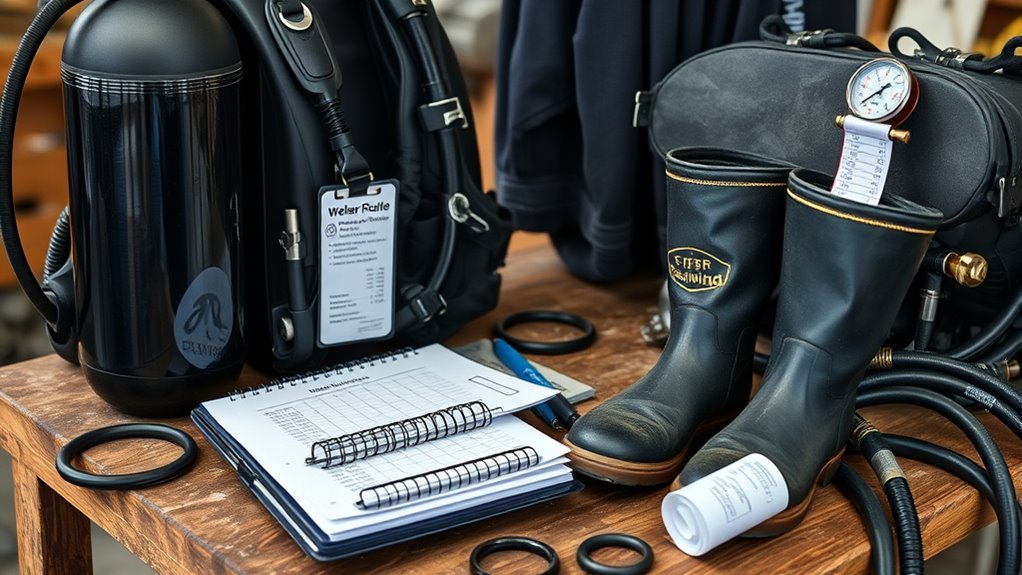
Because tuition rarely covers everything, you should budget for several predictable add‑ons: books and consumable supplies, certification exams (typically $300–$550 each), and required safety gear and tools that can run $500–$1,500.
Budget for add‑ons: books, consumables, certification exams ($300–$550), and safety gear/tools ($500–$1,500).
Beyond that, plan for training materials and additional equipment specific to underwater welding—replacement rods, dive consumables, and specialty PPE.
Room and board can add $5,000–$15,000 per year, so factor living costs if the program isn’t local.
Some schools disclose hefty extra fees; for example, certain programs report up to $24,500 in additional charges beyond tuition.
Itemize expected costs before enrolling, ask for a full fee schedule, and compare totals so you won’t be surprised by outlays during the course.
Products Worth Considering

Auto-Darken Design- Auto-darkening Welding Goggles are made of PC material, which is strong, shockproof and unbreakable. They automatically darken to the appropriate level when they sense extreme light when an arc is struck, and it returns to the light state when welding stops. It also features anti-ultraviolet, infrared radiation, anti-glare.

[Wellington Work Boots]: Offering rugged and comfort, these HISEA soft toe boots for men hold up to hard work. Engineered for energy all day, and dry feet thanks to seamed seals construction, these work boots for men return energy, cushion, and support without the weight for all-day comfort. Tip: If you have wide fat feet or need to wear thick socks, order half or one size up would be better.

Titus Welding Glasses in various styles.
Typical Program Lengths and Curriculum Structure
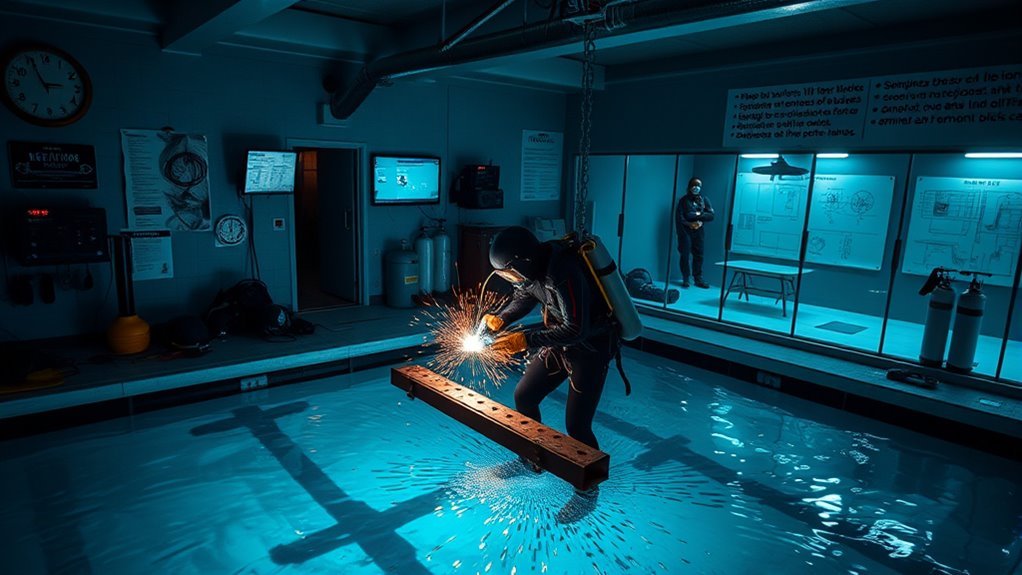
You’ll find program lengths range from about 20 weeks up to two years, depending on the credential you’re after and the school’s intensity.
Core modules blend welding theory, underwater-specific equipment handling, and rigorous safety and emergency procedures.
Expect a heavy emphasis on hands-on training with simulated underwater work to balance classroom instruction and real-world skill development.
Program Durations Overview
When you’re comparing programs, expect most extensive underwater welding courses to run about 20 to 28 weeks, while shorter certificate tracks may span from a few weeks up to several months and concentrate on practical skills and safety.
You’ll weigh program lengths against training intensities: longer programs blend classroom theory with extended in-water practice, while short certificates prioritize condensed, hands-on competency and safety drills.
Course choice affects cost—extended tracks demand more instructor hours, facility time, and equipment use. Expect modules on equipment handling and unique underwater techniques across formats, but depth and repetition rise with duration.
Pick a duration that matches your prior experience and career goals to optimize time-to-competency and budget.
Core Curriculum Modules
Although program lengths vary from about 20 weeks up to two years, core curriculum modules follow a consistent mix of classroom theory and hands‑on practice that prepares you for real underwater work.
You’ll cover diving principles, welding techniques specific to wet and hyperbaric environments, and rigorous safety protocols that reduce risk underwater. Expect sequential modules that build competence and prepare you for certification exams, though test fees may be extra.
- Diving physics and physiology: pressure, decompression, fitness checks
- Welding processes: SMAW, GMAW adaptations, electrode selection
- Equipment handling: surface-supplied systems, helmets, umbilicals
- Emergency procedures: entrapment, gas loss, rapid ascent drills
- Certification prep: exam simulations, documentation, industry standards
Hands-On Training Balance
Because underwater welding mixes high-risk skills with technical theory, good programs strike a clear balance between classroom instruction and repeated, supervised in-water practice.
You’ll study safety protocols, equipment handling, and underwater-specific techniques before you pick up a torch underwater. Typical program lengths vary — some run about 20 weeks, others span several months — but all front-load theory and then layer progressive in-water sessions.
That sequencing delivers hands on benefits: muscle memory, situational awareness, and confidence under pressure. Instructors emphasize repeated drills in controlled settings to drive training effectiveness and guarantee safe skill transfer to live jobs.
Choose programs that document drill frequency, instructor ratios, and measurable competency milestones rather than vague contact hours.
Certification and Licensing Costs
You’ll need to factor in certification exam fees, which typically run $300–$550 per test and aren’t always covered by tuition.
Also account for licensing costs and periodic renewals, which vary by region and can add hundreds more over time.
Don’t forget safety gear and tool expenses ($500–$1,500) that accompany these credentialing costs.
Certification Exam Fees
Certification exam fees for underwater welding usually run $300–$550 per test, and they can be an extra cost on top of tuition that pushes your total training bill into the high hundreds or more.
You’ll want to account for certification importance early: programs often mandate exams to verify skill and safety proficiency. Some schools fold fees into tuition; others don’t, so budget accordingly. Focused exam preparation reduces retake costs and shortens time-to-qualification.
- Confirm whether exam fees are included in advertised tuition.
- Ask which specific certifications the program requires.
- Estimate total certification costs across all required tests.
- Include funds for study materials and practical prep sessions.
- Factor potential retake fees into your budget.
Licensing Renewal Costs
Renewals for underwater welding credentials pop up regularly and can add $100 to several hundred dollars each cycle, so plan for recurring expenses beyond your initial certification.
You’ll face certification tests costing $300–$550 that aren’t always included in tuition, plus periodic renewal processes set by certifying bodies.
Licensing requirements vary by state or region, so you should map fees: application charges, continuing education, and safety recertifications.
Some schools offer reduced-rate renewals or assistance — confirm availability before enrolling.
Factor ongoing costs for industry-standard training and recertification into your budget; staying current isn’t optional.
Track renewal timelines, required documentation, and associated fees to avoid lapses that could cost more in downtime or requalification.
Living Expenses and Travel Considerations
Because most underwater welding schools are in specific coastal or industrial hubs, you’ll need to budget for substantial living and travel costs—typically $5,000 to $15,000 per academic year for housing, food, and local transport, plus extra for round trips to the training site.
You’ll factor living costs and travel expenses into total program cost — tuition often excludes room and board. If you relocate temporarily, expect added move‑in, storage, and repeat transit charges.
Plan a conservative monthly budget, track receipts, and compare nearby versus commuter housing. Consider seasonal price swings in coastal markets and emergency travel contingencies.
- Temporary housing and deposit fees
- Commuting or vehicle costs
- Meal and grocery budgets
- Occasional return trips home
- Storage and relocation charges
Financing Options: Loans, Payment Plans, and Scholarships
If you need help covering tuition and related costs, explore a mix of payment strategies—upfront payments to avoid interest, flexible school payment plans for smaller monthly installments, federal loans where available, and targeted scholarships or grants from industry groups and employers.
Tuition often starts near $14,000, with books, certification, and gear pushing totals above $14,900, so plan accordingly.
Check school-specific loan options: some programs qualify for federal student loans with lower rates and flexible repayment, others don’t.
Investigate scholarship opportunities from professional associations and private companies; targeted awards can cut major chunks from your balance.
Combine grants, scholarships, and loans to minimize borrowing.
Ask schools for payment-plan terms, deadlines, and net-cost estimates before committing.
Comparing Schools: Public, Private, and Specialized Programs
You’ve looked at ways to pay for training; now weigh where to train. Public vs private choices hinge on cost, scope, and program reputation.
Public community colleges run $2,800–$15,000—cost‑efficient with solid fundamentals. Private schools, like Ocean Corporation, can reach $24,500 for intensive, brand‑recognized training.
Specialized programs (Divers Institute of Technology) focus on hands‑on underwater skills and industry ties.
- Compare tuition ranges against the average $14,000–$15,000 benchmark.
- Evaluate safety protocols and practical hours delivered.
- Check alumni placements and employer recognition for program reputation.
- Account for extra costs: books, equipment, certifications.
- Balance upfront cost with training quality and network access.
Choose the option that fits your budget without compromising critical underwater competencies.
Products Worth Considering

🎲Superior Processing: Our steel plates are all laser-cut, providing edge and overall flatness that is unmatched by other stamped and sheared components.
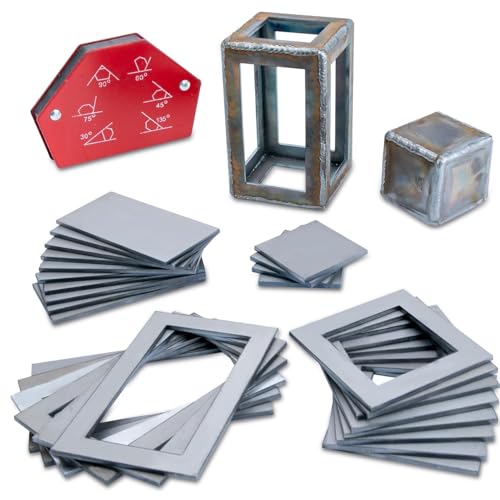
Richly Packed Welding Kit: This kit includes 10 pieces of 3x2-inch plates, 10 pieces of 2x2-inch plates, 10 pieces of 5x3-inch plates, and 10 pieces of 4x2-inch plates. You can weld them into basic 3x3x3-inch and 2x2x2-inch cubes, or create rectangular shapes like a 5x3x3-inch box or a 4x2x2-inch box. Perfect for beginners looking to enhance their welding skills.

Quantity and size:Welding Practice Kit, With 8 Of 3x5”, 8 Of 2x4”, 4 Of 3x3” And 4 Of 2x2” 24 pieces in total.
Career Earnings, Job Placement, and Return on Investment
When you weigh the numbers, underwater welding can pay off quickly: entry-level pay often starts around $25,000 but experienced commercial divers commonly earn six figures, and select graduates from top programs report annual incomes up to $200,000.
You’ll choose career paths that range from ship repair and offshore construction to inspection and salvage; each specialty affects earnings and geographic mobility. Programs report strong job placement — about 92% overall and 260 of 283 students placed in one year — which underscores sustained industry demand.
Your upfront training investment (often exceeding $20,000) can be recouped rapidly if you target high-demand sectors and build experience. Evaluate specialties, location, and employer networks to maximize return on investment.
What to Ask Before Enrolling
What should you ask before committing to an underwater welding program? You’ll want crisp answers that tie cost to outcomes: total price (typically $14,000–$24,500+), what’s included, program length, placement, and financing.
Verify specifics so you can judge return on investment against industry demand and career opportunities.
- What’s the total cost and which fees are extra (materials, tests, safety gear)?
- Does tuition cover certification exams and required equipment?
- How long is the program (most run ~20–28 weeks) and what’s the schedule?
- What’s the job placement rate and which employers do you partner with?
- What financial aid, scholarships, grants, or payment plans do you offer?
Ask for documentation and alumni contacts before signing up.
Frequently Asked Questions
Do I Need Prior Welding Experience to Enroll?
You don’t strictly need prior welding experience to enroll; many programs accept beginners but expect basic welding experience or will offer foundational training. Check specific enrollment requirements, prerequisites, certifications, and recommended skill levels before applying.
Are There Age or Medical Restrictions?
Yes — you’ll face age limits and medical requirements: programs usually require you be 18+, have diving physicals, fitness for pressure, hearing and lung clearance, and sometimes cardiology screens; bring records and expect strict, documented exams.
What Safety Training Is Included Beyond Welding?
You get thorough safety protocols training, dive physiology, hazard recognition, confined‑space and gas management, plus emergency procedures like rescue diving, CPR/first aid, and evacuation drills; you’ll practice scenarios and document competence before certification.
Can I Transfer Credits to Another School Later?
Yes — typically you can transfer credits, but it depends on credit transfer policies and school accreditation; check syllabi equivalency, contact registrars, and get approvals in writing; policies vary, so don’t assume automatic acceptance.
Do Employers Sponsor Tuition or Apprenticeships?
Yes — employers often sponsor tuition or apprenticeships; they’ll offer tuition reimbursement, sign employer partnerships with schools, and fund on‑the‑job training, especially if you commit to service terms or meet performance and safety qualifications.
Conclusion
You’ll pay for underwater welding school — tuition, gear, travel, certification — because apparently you enjoy expensive hobbies that also require life insurance. But that price buys a rare, highly paid skill and fast routes into steady work, so the cost isn’t just tuition; it’s an investment that can pay itself back. Ask smart questions, compare programs, and don’t confuse sticker price with long‑term value — you’re buying career runway, not just classes.
