
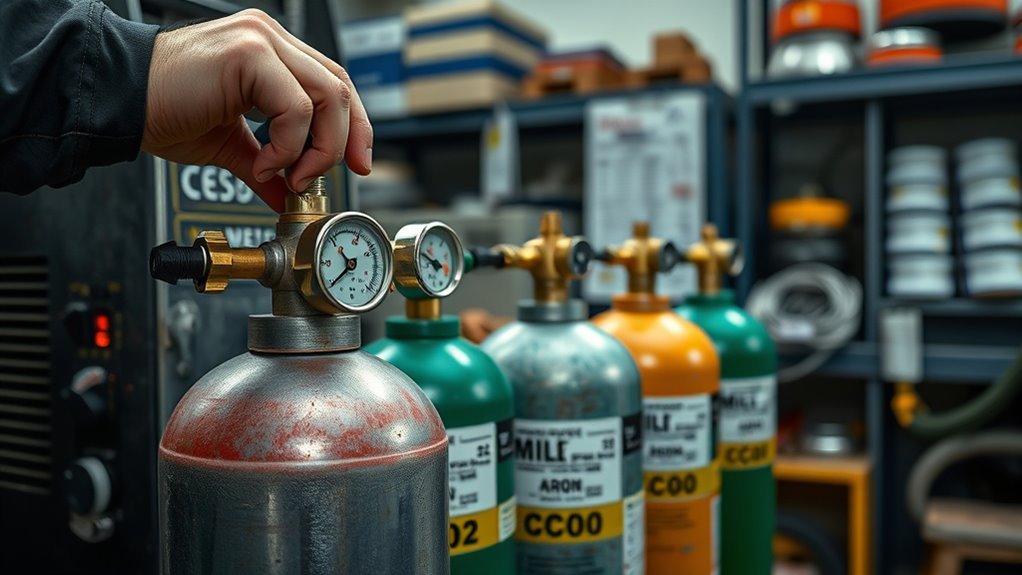
Gas mix and cylinder choice drive MIG welding costs more than most people expect, once you factor in refills or leases. Compare C25, pure CO2, and specialty blends by cylinder size, refill price, and flow rate to find your true per-hour and per-project expense. The right choice can cut costs substantially when you match gas, tank ownership, and usage patterns.
Quick Answer
- C25 (75% argon / 25% CO2) is the most common MIG shielding gas. Pure CO2 costs less but creates more spatter.
- New cylinder prices range from about $100 for small tanks to $725 for large 125–300 CF tanks.
- A 125 CF C25 refill typically costs $60–$70. Pure CO2 refills run $25–$30.
- Buying your own cylinder usually saves money over leasing if you weld regularly.
- Set flow rates to 10–15 CFH, check for leaks, and pick the right tank size to reduce waste.
Products Worth Considering

All HP cylinders come with a 10 year hydrotest date stamped.
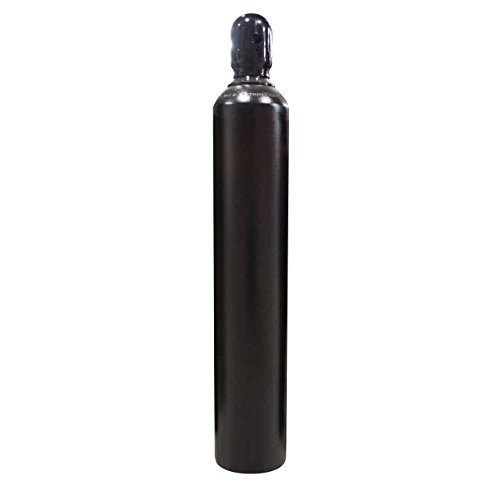
All HP cylinders come with a 10 year hydrotest date stamped.
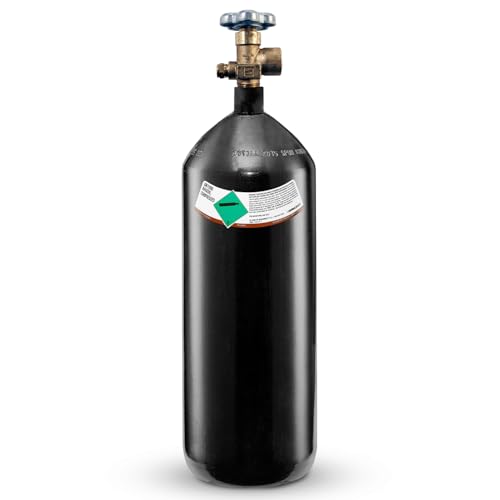
Welding Gas to Your Door - Get PrimeWeld's industrial grade Argon welding gas delivered right to your door. We offer different mixtures for any application, and you can purchase a tank without worrying about costly rental fees or wasted trips out to your local welding supply shop.
Common Gases Used for MIG Welding
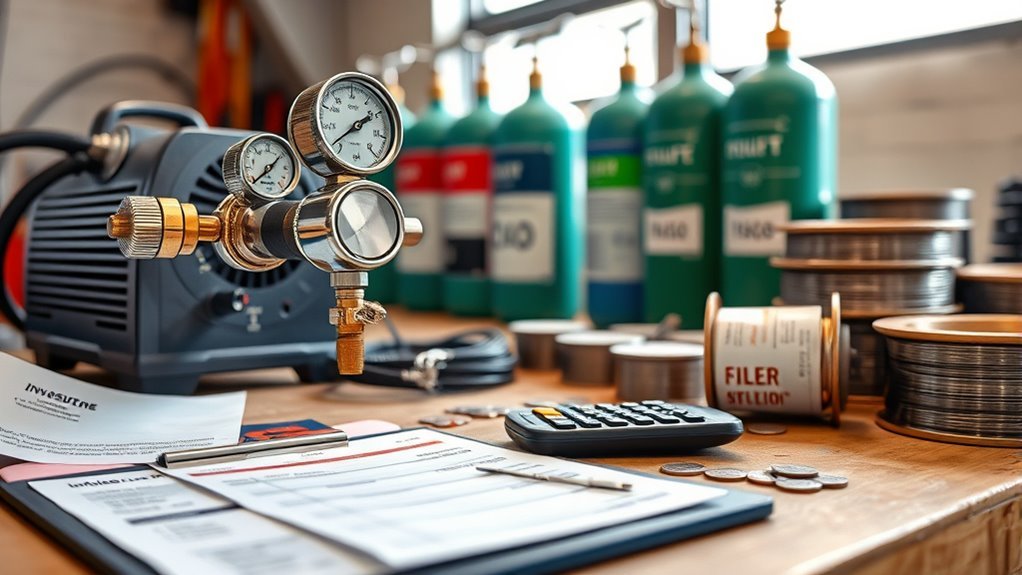
Gas choice has a direct effect on MIG performance. The most common mixture is 75% argon/25% CO2 (C25), which gives you cleaner, lower-spatter welds than 100% CO2.
C25 balances arc stability, penetration, and reduced spatter across a wide range of mild steel applications. For a full breakdown of gas blends and their effects, Miller Welds’ shielding gas selection guide is a reliable reference.
If cost is the priority, 100% CO2 is more economical but increases spatter and changes bead profile. Expect rougher finishes and more post-weld cleanup.
For portability and small jobs, common cylinder sizes include compact CO2 canisters and standard 80 cu ft argon/CO2 tanks used by hobbyists and professionals alike.
When setting up equipment, match flow rates and welding parameters to your chosen mix. Adjust voltage and wire feed to account for the different ionization and thermal conductivity of CO2 versus argon blends.
Choose your gas based on part geometry, required appearance, and post-weld work.
Typical Cylinder Sizes and Prices

Once you pick a gas mixture, cylinder size and cost become the next factor. Tank capacity affects both run time and per-fill price, so match your cylinder to your duty cycle and budget.
New tank prices range from roughly $100 to $725. Small 20–40 CF tanks cost the least; 80 CF tanks are mid-range; 125–300 CF tanks carry a higher upfront cost but lower per-hour expense.
Think visually about capacity:
- 40 CF — compact, portable, lower initial cost, shorter run time.
- 80 CF — common shop choice; 75% Ar / 25% CO2 fills run about $290–$320 new.
- 125–300 CF — higher upfront cost ($350–$725) but reduced refill frequency and better long-term economics.
Larger cylinders make more financial sense if you weld frequently, since the upfront cost spreads across more fills.
Compare cylinder dimensions, tare weight, and mixture compatibility to optimize cost per welding hour without sacrificing workflow.
Products Worth Considering

Welding Gas to Your Door - Get PrimeWeld's industrial grade 75 %Argon 25% CO2 gas cylinder delivered right to your door. We offer different mixtures for any application, and you can purchase a tank without worrying about costly rental fees or wasted trips out to your local welding supply shop.

All HP cylinders come with a 10 year hydrotest date stamped.

CGA580 Inlet Connection: Welding gas regulators connects easily to argon and Co2 tanks, note that a CGA-320 adapter is required for use with Co2 cylinders. This product comes standard with the CGA-580 connector only
Refill Costs and Exchange Programs

Refilling or exchanging cylinders is a major part of your operating costs. A 125 CF C25 refill runs about $70, a small 40 CF top-up is roughly $60, and pure CO2 fills are considerably cheaper at $25–$30 versus $50–$60 for C25.
Your refill frequency depends on consumption rate. High-use shops refill weekly; light users may go several months between fills.
Exchange programs reduce downtime but add exchange costs and upfront capital. Some suppliers require an initial tank purchase (current full 125 CF inventory prices near $725) and no longer refill customer-owned bottles.
Exchange programs cut downtime but add exchange fees and upfront costs. Some suppliers require buying new 125 CF tanks.
Factor potential HAZMAT fees per fill and limited supplier options into your lifecycle cost models.
To minimize expense, standardize cylinder sizes, negotiate exchange fees, and track per-fill surcharges.
Monitor market shifts in cylinder pricing. Forced exchanges can convert variable refill costs into semi-fixed recurring charges.
Use these inputs to budget gas procurement before diving into per-hour or per-project calculations.
Calculating Cost Per Hour and Per Project

With refill and exchange costs covered, the next step is putting numbers to how gas costs affect hourly and project budgets. Use tank size, refill price, and average flow to compute rates for MIG welding with common gas types.
For example, a $60 refill for an 80 CF tank at 10 CFH yields $7.50 per hour ($60 divided by 8 hours). For a 125 CF tank refilled quarterly at $70, annual gas cost approximates $280 after the initial purchase.
- Visualize an 80 CF cylinder fueling continuous welding for about 8 hours at 10 CFH.
- Picture a 20 lb CO2 cylinder providing roughly 177 CF, refilled at $25–$30 for small jobs.
- Imagine scaling to multiple 125 CF refills per year for larger fabrications.
To estimate project cost, multiply hourly gas cost by welding hours, then add proportional refill fees. Track usage by job to allocate gas expenses accurately and compare Argon/CO2 blend costs against pure CO2.
How Long a Tank Lasts at Different Flow Rates

Divide the tank’s cubic feet rating by your chosen flow rate to get operating hours. An 80 CF cylinder at 10 CFH gives about 8 hours; at 20 CFH it drops to roughly 4 hours.
Use the formula (hours = CF ÷ CFH) to plan across common flow ranges of 10–40 CFH. An 80 CF tank at 10 CFH lasts about 8 hours; at 20 CFH, about 4 hours. A 125 CF tank at 15 CFH gives roughly 8.3 hours.
These calculations assume constant flow and ignore regulator bleed and system leaks. Monitor the pressure gauge to estimate remaining volume. A full tank reads about 2,015 psi; half-full is roughly 1,000 psi. Convert psi to approximate remaining CF if you know the cylinder specs.
For planning, figure out your required welding hours, pick a CFH that balances weld quality and consumption, then choose a cylinder size that gives enough tank longevity with margin for regulator losses and high-flow demands.
Bottle Ownership vs. Leasing: Which Saves Money?
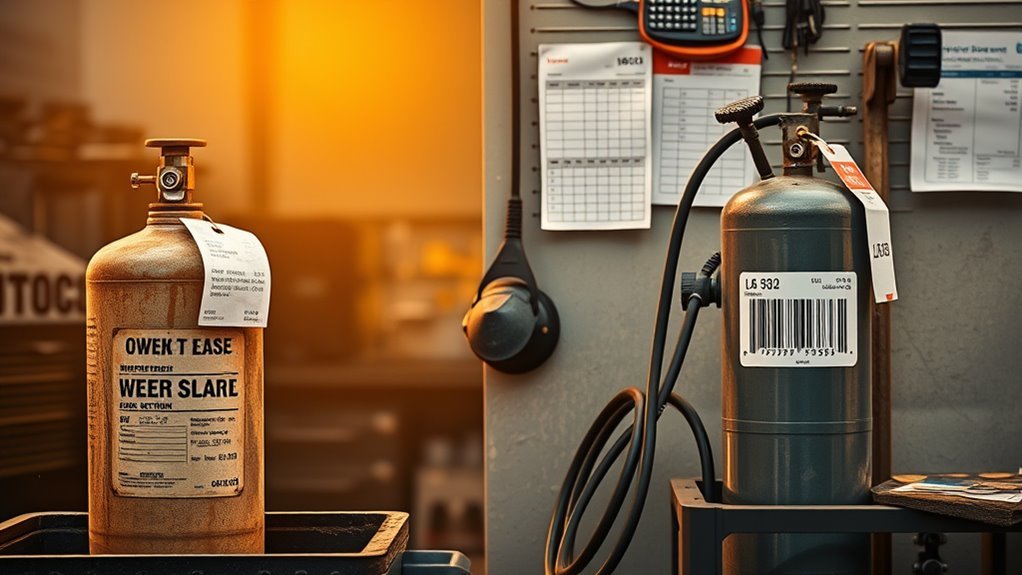
Buying a 125 CF argon/CO2 cylinder costs more up front (about $360), but you avoid ongoing rental fees.
Leasing lowers initial cash outlay and suits infrequent users or tight budgets.
For regular welding, ownership typically yields lower per-refill costs and overall savings over time.
Products Worth Considering

Comes with a CGA-580 valve for Argon, Nitrogen, Argon/CO2, Helium

TESTED AND CERTIFIED: Certification/hydro test within 12 months and DOT Approved
Buy: Upfront Cost Higher
Buying a 125 CF MIG gas cylinder costs more up front, typically $350–$400, but you save over time. Refills run about $60–$70 each for C25 (75% Ar/25% CO2).
Leased tanks can accumulate roughly $700 in fees every three years. Smaller 20 CF rentals need more frequent, costlier refills.
You pay a higher capital expense but get lower per-refill costs and larger capacity, which reduces downtime and refill frequency.
Ownership also lets you control maintenance, perform regular visual inspections, and implement safety precautions for gas storage and handling.
Consider typical scenarios:
- Full 125 CF tank lasts longer between refills.
- 20 CF rental requires more frequent swaps, increasing effective cost.
- Three-year leased fees can exceed purchase-plus-refill expenses.
Lease: Lower Initial Expense
Leasing a welding gas bottle means avoiding the large upfront purchase, typically $100–$700, and spreading costs into manageable rental and refill charges. Most leases include periodic fills and a refundable deposit.
The main benefits are lower initial expense, a simpler process, and reduced ownership risk. When done, you return the bottle for a deposit refund.
Rental fees often bundle refills, easing cash flow versus paying per-refill on an owned tank.
For high-volume welding, run the per-cubic-foot math. Ownership often wins on cost per unit.
Also verify supplier restrictions on customer-owned bottles before buying. Use the table to compare core factors quickly.
| Factor | Leasing | Ownership |
|---|---|---|
| Initial cost | Low | High |
| Refill cost control | Bundled | Per-use |
| Return deposit | Refundable | N/A |
Alternatives to Shielding Gas for MIG
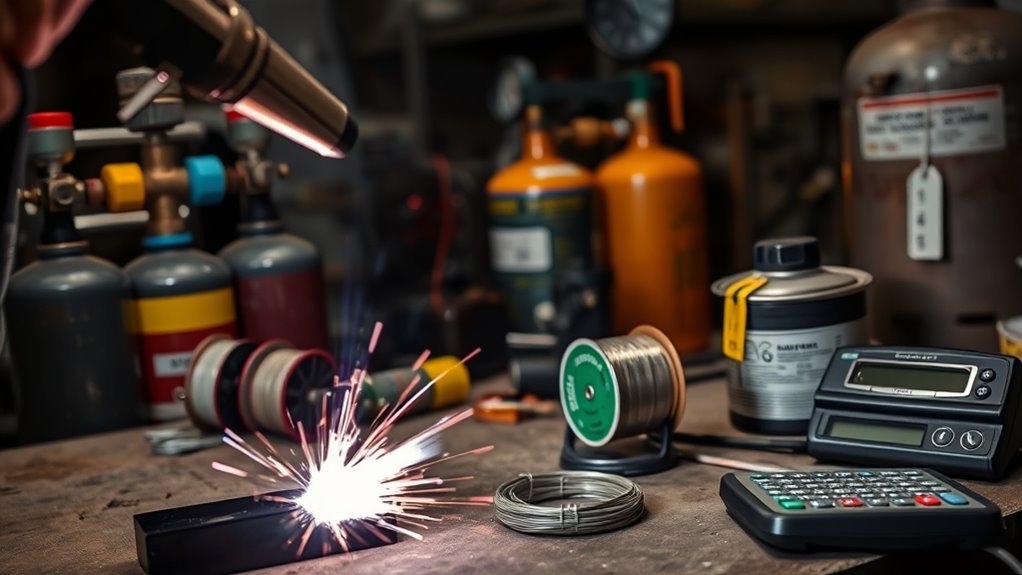
When gas costs or logistics become impractical, switching to gas-less options is worth considering. Self-shielded flux-cored wire and stick welding both eliminate external shielding gas, cut cylinder expenses, and simplify outdoor work. The trade-off is higher spatter and slightly different weld profiles.
Flux-cored wire offers portability and reduced operational cost. Self-shielded wires feed like MIG, require no gas, and work well on thin-to-medium steel with higher deposition rates.
Stick welding benefits include simple equipment, strong joint tolerance to contamination, and reliable outdoor performance.
Trade-offs include more spatter, a different bead appearance, and sometimes extra cleaning. A gas-less MIG setup or basic stick rig lowers recurring costs and learning curve for hobbyists or budget shops.
Choose consumable type and polarity to match base metal and position. Tune wire feed and voltage, and expect slightly different mechanical properties compared to argon-mix MIG.
Evaluate application, finish requirements, and total lifecycle cost before converting.
- portable feed and no tank
- tolerates wind and rust
- higher spatter, simpler kit
Where to Buy or Refill Welding Gas

Welding gas is available from local gas suppliers, welding shops, big-box retailers, and online vendors like Northern Tool and Airgas.
Business models vary. Many suppliers lease tanks with rental fees or require new purchases rather than refills, and refill policies differ by chain.
Compare local pricing and refill restrictions to find the most cost-effective option for your tank size and gas mix.
Products Worth Considering

Compatible with CGA-580 tanks: Easily attach this Gas Pressure Regulator/Flowmeter to your Argon, Helium, and CO2 tanks with its CGA-580 inlet connector

APPLICATION: The ARCCAPTAIN gas pressure regulator can be used with argon, helium, and carbon dioxide gas tanks.

60 CU FT ARGON CAPACITY - Mid-size cylinder for welding, metal fabrication, and more. Balances generous capacity with portability at 29 lbs for professional welders, fabrication shops, and mobile repair
Local Gas Suppliers
Most local gas suppliers lease tanks rather than selling outright, and many refill tanks only if they provided the bottle. You’ll either rent their cylinder or look elsewhere.
Evaluate local suppliers’ pricing strategies and inventory before committing. Expect refills near $50–$70 for common C25/125 CF sizes. HAZMAT fees may add to each transaction.
Availability of 300 CF cylinders is limited. Plan for extra travel if you need larger capacity.
- A small shop with fleet tanks: predictable rental, steady refills.
- An industrial supplier: higher base price, possible HAZMAT surcharges.
- An independent distributor: variable pricing, potential savings but inconsistent stock.
Compare lease terms, refill policies, and distance to minimize total cost and downtime.
Big-Box Retailers
Big-box retailers like Home Depot and Lowe’s carry argon/CO2 cylinders and occasionally run sales, but their refill options and pricing are generally more limited and costlier than specialty gas suppliers.
Big-box pricing reflects convenience and inventory constraints. Initial MIG gas bottles commonly run $100–$200, and refill availability can be inconsistent.
Retailer policies may require you to buy their tanks rather than refill personal cylinders, reducing flexibility and increasing lifecycle cost.
For consistent workflow, compare local welding shops‘ per-fill rates and exchange programs against the retailer’s sticker price and refill rules.
Use measured cost-per-cubic-foot calculations to determine true expense rather than relying on promotional sale signage.
Online Tank Vendors
Both online vendors and local gas suppliers sell or refill MIG gas tanks. Weigh price, ownership rules, and shipping before choosing.
Online vendors like PrimeWeld offer competitive rates and free shipping on 125 CF C25 cylinders. Compare that to local suppliers like Airgas and Northern Tool, whose refill policies and ownership rules vary. Some won’t refill customer-owned bottles.
Compare vendors to find $50–$70 refill rates and spot regional price differences.
- Visualize a 125 cf C25 tank labeled with price, ship icon, and ownership tag.
- Picture a local shop counter showing refill, exchange, and refusal signs.
- Imagine a comparison table highlighting cost, availability, and refill policy.
Research both channels for best value and availability.
Tips to Reduce Gas Consumption and Waste
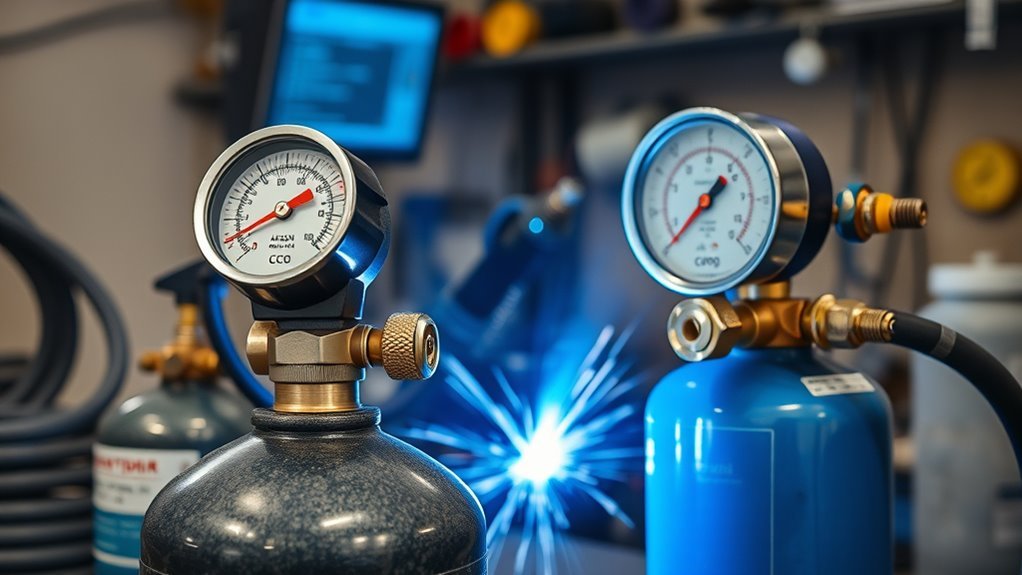
Cutting shielding-gas costs starts with controlling flow and technique. Set MIG flow to about 10–15 CFH, keep arc length at the ideal distance, and maintain steady travel speed and angle to prevent excess gas use and porosity.
Improve gas efficiency by calibrating flow with a flowmeter before each session and recording settings per material and wire. Use consistent welding techniques to avoid unnecessary restarts or corrective passes that consume extra gas. Lincoln Electric’s MIG gas overview covers matching flow settings to different materials and wire types.
Choosing tank sizes strategically also helps. Smaller 40 CF or 80 CF cylinders encourage disciplined planning and reduce long idle-open times.
Fit gas-saving nozzles or diffusers to concentrate shielding over the puddle. They lower required CFH without changing arc characteristics.
Keep fittings and hoses leak-free. Pressure tests and quick-change fittings help cut invisible losses.
Finally, train operators on setpoints, position control, and travel speed. Measurable operator discipline typically delivers the largest reductions in gas consumption with minimal equipment changes.
Hidden Fees and Supplier Policies to Watch For
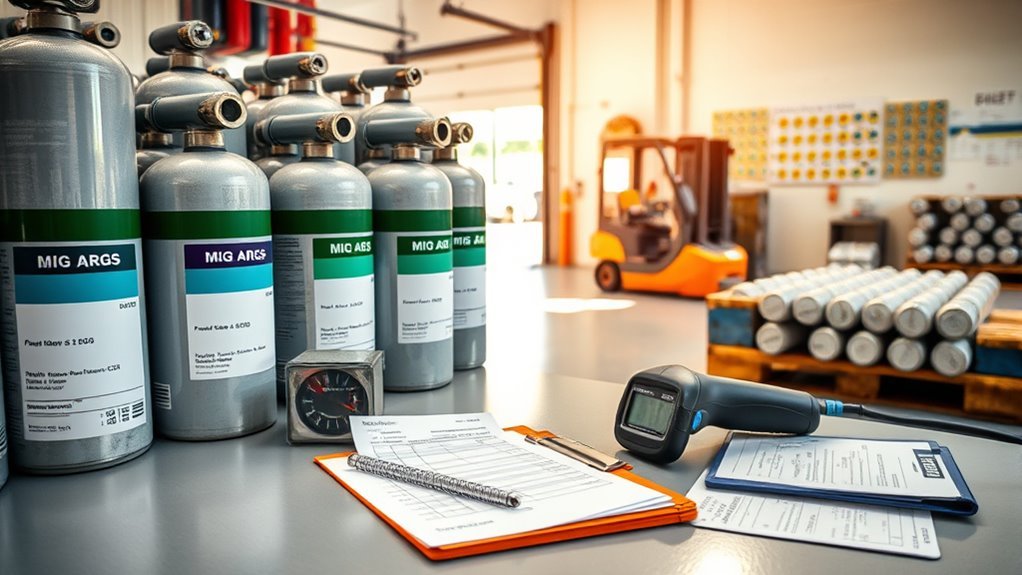
Watch for rental and lease traps that can lock you into long-term fees or force you to swap tanks at the supplier’s rates.
Expect hidden refill charges such as HAZMAT fees and premium pricing on specialty fills that can double your per-fill cost.
Confirm bottle ownership rules up front to avoid confiscation attempts or being told your larger tanks aren’t refillable locally.
Rental and Lease Traps
Suppliers have tightened control over cylinders, so scrutinize rental and lease terms before committing. Many shops now refuse to refill customer-owned bottles, add HAZMAT surcharges per fill, and impose rental fees or deposits that compound over time. What looks cheaper short-term can cost far more long-term.
Rental traps and rising leasing costs shift operating expense into recurring obligations. Verify refill policy, surcharge schedule, and end-of-term liabilities before signing.
- Cylinder ownership: buy vs. lease — ownership avoids ongoing rental fees.
- HAZMAT per-fill fees — multiply fills by fee; model annual cost.
- Deposits and contract penalties — factor into total cost of service.
Make decisions with numbers. Run a three-year cost projection before committing.
Hidden Refill Charges
When you factor in HAZMAT per-fill fees, refill restrictions, and regional price swings, the true cost of keeping cylinders ready can far exceed advertised rates.
Hidden costs like per-fill HAZMAT surcharges can bump a 125 CF argon refill to as much as $90 in some areas. Supplier policies may forbid refilling customer-owned bottles, forcing new purchases or costly lease agreements.
Leasing can add recurring charges, roughly $700 every three years for certain oxy/acetylene and mixed tanks. Limited local capacity for 300 CF fills can also force replacement instead of refill.
Audit invoices for line-item fees, confirm refill eligibility for your bottle size, and compare regional suppliers to minimize unexpected expenses.
Bottle Ownership Rules
Some suppliers advertise simple refill services, but many enforce strict bottle-ownership rules that raise costs and limit your options.
Verify exchange policies, ownership transfer paperwork, and HAZMAT surcharges before committing. Suppliers may require you to buy their bottles, refuse to refill privately owned cylinders, or add per-bottle hazardous material fees that exceed advertised refill rates.
- Visualize buying a new cylinder at checkout and a hidden surcharge added.
- Picture arriving with your bottle and being told it’s not eligible for refill.
- Imagine a dispute over ownership certificates and potential confiscation.
Compare local vendors, document your bottle ownership, and prefer suppliers with transparent exchange policies to avoid unexpected expense and risk.
Frequently Asked Questions
Can Welding Gas Affect the Weld’s Appearance or Color Long-Term?
Yes. Gas selection directly affects weld aesthetics and long-term color. Correct shielding produces cleaner, shinier beads, while wrong mixes cause oxidation, porosity, or discoloration. Choose shielding gas based on material and process.
Are There Environmental Regulations for Disposing Empty Gas Cylinders?
Yes. Empty cylinders are subject to strict local hazardous-waste rules. Contact cylinder recycling programs and certified vendors for gas cylinder disposal. They handle depressurization, valve removal, labeling, and documentation to meet regulations.
Can I Mix Gases Myself to Save Money Safely?
No. Gas mixing safety requires calibrated equipment, traceable cylinders, and trained procedures. DIY mixing risks contamination, leaks, and regulatory violations, with little to no cost savings compared to buying certified pre-mixed welding gas.
Do Temperature Changes Affect Gas Pressure and Welding Performance?
Yes. Temperature causes pressure fluctuations in gas cylinders. Pressure rises with heat and drops when the cylinder cools. Those fluctuations affect flow stability and arc characteristics, so adjust your regulator as needed for consistent welding.
Is Gas Purity Graded and Does It Impact Weld Strength?
Yes. Gas composition and purity are graded, and they matter. Impurities alter shielding and affect welding quality. Higher-purity gases give more stable arcs, better fusion, fewer defects, and more predictable mechanical strength.
Conclusion
Understanding gas types, cylinder sizes, and refill versus lease tradeoffs gives you real control over MIG welding costs. One small fabrication shop switched from rented 80 cu ft C25 tanks at $320 plus fees to owned tanks with $55 refills and cut annual shielding gas expenses by 40% without sacrificing weld quality. Apply flow-rate math and leak checks to calculate cost-per-hour for each job, lean on CO2 for low-cost work, and dial in your settings to reduce waste.
