The cost to paint a truck in the U.S. is about $300–$900 for a basic economy repaint, $1,000–$4,000 for standard work, and $5,000–$20,000+ for showroom-quality or heavily customized work. The biggest price drivers are surface preparation, body damage, truck size, paint system, color complexity, and whether the job keeps the original color or changes it.
Last updated: October 24, 2026. These are planning ranges, not guaranteed quotes. Published price guides vary, and an in-person inspection is the best way to price rust repair, dent work, disassembly, masking, and color matching.
How Much Does It Cost to Paint a Truck in 2026?
| Paint-job level | Typical U.S. planning range | What you usually get |
|---|---|---|
| Basic / economy | $300–$900 | Minimal prep and a lower-cost single-stage finish; best for a cosmetic refresh. |
| Standard | $1,000–$4,000 | More sanding and repair work, better materials, and a more durable finish. |
| Showroom / custom | $5,000–$20,000+ | Extensive bodywork, high-end finishing, specialty colors, graphics, or restoration-level prep. |
These bands match the ranges in truck-paint guidance from CarParts.com. J.D. Power also notes that larger vehicles cost more to paint because of their surface area, and that a truck with premium paint and a ceramic coating could reach $5,000 or more. The CarParts.com guide was last updated in August 2024, so treat its figures as a baseline and get current local quotes.
Key takeaways: A low quote may exclude body repair, rust removal, jambs, trim removal, or premium clearcoat. Compare the scope of work—not just the bottom-line price—and ask each shop to itemize what is included.
Introduction To Truck Painting
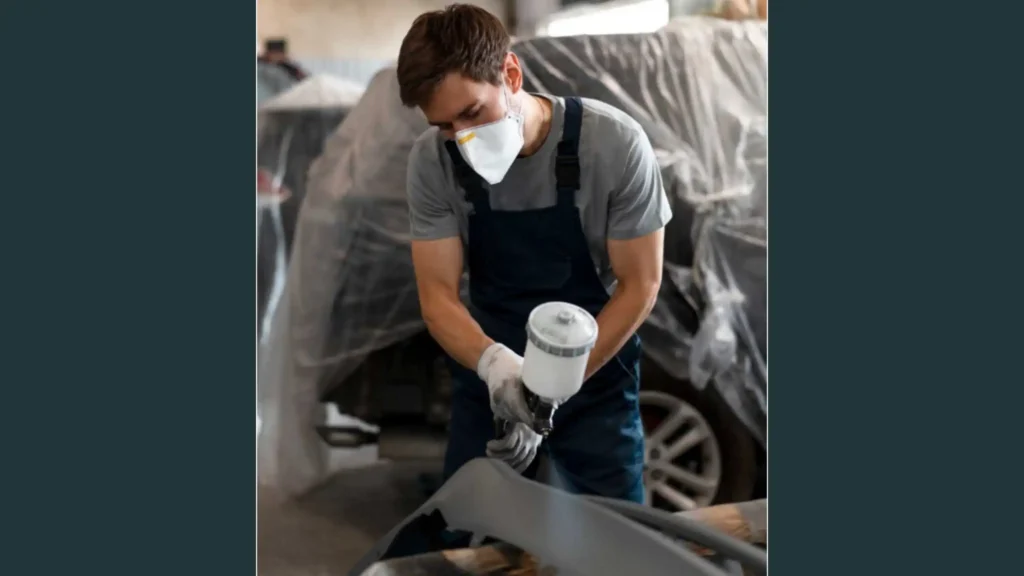
Painting a truck is mostly a preparation-and-finishing job, not simply the cost of color. A durable result depends on cleaning, repairing defects, sanding or scuffing the existing finish, priming or sealing where needed, applying the chosen paint system, and allowing proper flash and cure time.
Importance Of A Quality Paint Job
A properly applied finish can improve appearance and help protect exposed body panels from weather and corrosion. It can also make an older truck easier to sell, but a repaint does not guarantee a higher resale value. Poor color matching, overspray, visible masking lines, or a non-factory color can reduce buyer confidence.
- Protection: A sound coating system helps isolate metal from moisture and road contaminants.
- Appearance: Good preparation produces a smoother, more consistent gloss and color.
- Resale presentation: A clean, well-documented repaint can help an older truck present better, while low-quality work can have the opposite effect.
Factors Influencing Truck Painting Costs
The quote usually changes most when the shop discovers additional preparation or when the requested finish requires more labor. Ask the estimator to separate these cost drivers on the written quote:
- Truck size and configuration: A crew cab, long bed, heavy-duty pickup, or commercial body has more surface area and more edges to mask or disassemble.
- Surface condition: Peeling clearcoat, dents, old repairs, rust, and bare metal add preparation time.
- Paint system: Single-stage finishes generally cost less than more involved basecoat/clearcoat or specialty multi-stage systems.
- Color: Metallic, pearl, tri-coat, matte, and custom-mixed colors can require more material and blending work.
- Color change: Changing the truck from one color to another can require door jambs, inner edges, and extra disassembly for a complete-looking result.
- Customization: Stripes, graphics, airbrushing, and hand-finished details add labor.
If the existing finish is dull but still intact, a full repaint may not be necessary. Compare repainting with paint correction costs before committing to a complete respray.
Pre-paint Preparations
Preparation determines whether the new finish bonds well and looks even. A shop may wash and degrease the truck, repair damaged panels, sand or scuff the old finish, mask or remove trim, and use primer or sealer where the paint system requires it.
Surface Preparation
Do not judge a quote by paint material alone. Labor spent correcting the surface often makes the largest difference between a quick cosmetic job and a long-lasting professional repaint.
- Clean and degrease: Remove wax, silicone, grease, road film, and other contaminants.
- Repair: Address dents, peeling coatings, rust, and damaged panels before color is applied.
- Sand or scuff: Create a uniform surface and feather damaged edges as required by the refinishing system.
- Prime or seal where required: Use compatible products to support adhesion, corrosion protection, color uniformity, or substrate isolation.
Maaco’s service page says surface cleaning, sanding, masking, and a heat-cured finish come with its paint packages, with body repairs, rust removal, and sealers offered as optional add-ons. See Maaco auto-paint services for an example of what a national chain lists.
Choosing The Right Paint
Instead of choosing by a label such as “acrylic” or “enamel” alone, ask what complete refinishing system the shop will use and what warranty applies. Shops commonly distinguish single-stage finishes from two-stage basecoat/clearcoat systems.
| Paint system | How it works | Cost position |
|---|---|---|
| Single-stage enamel | Color and gloss are applied in one paint stage. | Usually the budget end. |
| Single-stage urethane | Color and gloss are combined in a more durable single-stage system. | Usually mid-range. |
| Basecoat / clearcoat | Color basecoat is followed by a separate protective clearcoat. | Usually higher-priced. |
| Specialty multi-stage | Pearl, tri-coat, candy, matte, or custom effects may require extra layers and blending. | Highest and most variable. |
Paint packages at national chains and local shops usually differ in the number of stages and the materials used, which is why the paint system matters more than a simple material name. Ask each shop which system it will apply.
Diy Vs. Professional Painting
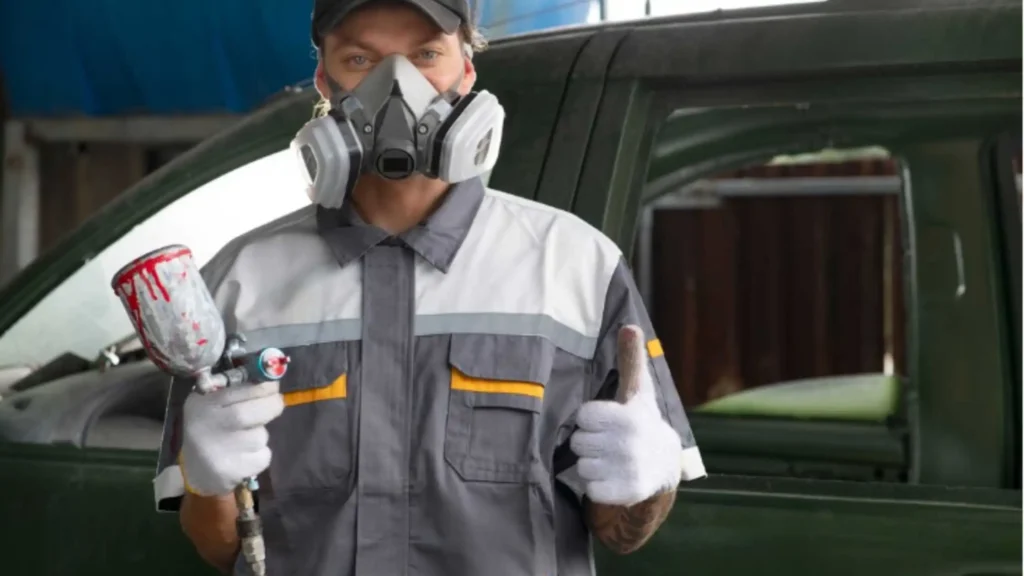
DIY painting can reduce paid labor, but a first-time painter may need a spray gun, suitable compressor, filtration, masking supplies, sanding tools, lighting, a controlled work area, and professional-grade safety equipment. The cheapest DIY materials do not represent the full project cost.
Cost Comparison
| Painting Type | Realistic budgeting approach |
|---|---|
| DIY painting | Budget for paint, primer/sealer, reducers/hardeners as required, abrasives, masking, equipment, ventilation, PPE, cleanup, and possible rework. |
| Professional painting | Use the $300–$900 basic, $1,000–$4,000 standard, and $5,000–$20,000+ showroom/custom bands as broad planning ranges, then compare itemized local quotes. |
A professional quote costs more because it can include body repair, controlled spray conditions, skilled application, color matching, finishing, polishing, reassembly, waste handling, and a written warranty.
Pros And Cons Of Diy Painting
- DIY advantages: Lower paid labor, full control over the schedule, and the ability to stop at a simple functional finish.
- DIY disadvantages: Equipment cost, dust and overspray risk, difficult color matching, significant preparation time, and the possibility of having to strip or redo a failed finish.
- Professional advantages: Better access to paint systems, booths, color tools, repair equipment, and technicians who do this work repeatedly.
- Professional disadvantages: Higher upfront cost and truck downtime while the job is scheduled and completed.
Safety warning: Automotive spray coatings can expose painters to hazardous vapors and mists. Some coatings contain isocyanates, which require serious respiratory and ventilation controls in occupational settings. Follow the coating manufacturer’s safety data sheet and applicable local rules; do not spray in an enclosed garage without a properly designed setup. A 1992 OSHA interpretation letter on vehicle-maintenance spray painting highlights ventilation, ignition-source, and respiratory-protection requirements for shop spray painting; check OSHA’s current standards for up-to-date rules.
Size And Type Of Truck
This guide is most useful for pickups and light trucks. Heavy commercial trucks and semis vary too much in cab style, sleeper configuration, chassis equipment, boxes, tanks, and fleet specifications for a reliable one-size price table.
Impact On Paint Quantity
Larger trucks generally require more material, masking, booth time, and labor. The number of removable parts and edges also matters: a crew-cab pickup with a long bed can take more work than a smaller regular-cab truck even when both use the same color.
- Mid-size pickups: Less body area than full-size and heavy-duty pickups.
- Full-size and heavy-duty pickups: More surface area, larger beds, and more complex trim can increase labor and material use.
- Commercial trucks and semis: Get a specialty-shop estimate rather than applying pickup-truck price bands.
Price Variations By Truck Size
| Truck category | Budgeting guidance |
|---|---|
| Mid-size pickup | Often falls toward the lower or middle part of the chosen paint-quality tier, assuming limited bodywork. |
| Full-size pickup | Often costs more than a smaller pickup because of added surface area and preparation. |
| Heavy-duty pickup | May cost more again if the cab, bed, flares, bumpers, or accessories add labor. |
| Semi / commercial body | Request a fleet or commercial refinishing quote; do not extrapolate from pickup pricing. |
J.D. Power identifies vehicle size as a direct cost factor because larger vehicles have more surface area to paint.
Quality And Type Of Paint
Paint quality affects gloss, color match, durability, repairability, and price, but the complete system and preparation matter more than a marketing label. Ask for the product line, number of stages, clearcoat details, and written warranty on your quote.
Standard Vs. Premium Paint
| Option | Typical characteristics | When it makes sense |
|---|---|---|
| Budget / single-stage | Fewer paint stages and less expensive materials; prep may also be limited. | Older work trucks or cosmetic refreshes where price matters most. |
| Standard professional finish | More preparation and a better-quality system; may use single-stage urethane or basecoat/clearcoat depending on the shop. | Daily drivers where durability and appearance both matter. |
| Premium / restoration finish | Extensive panel correction, high-end materials, multi-stage finishing, sanding/polishing, or custom color work. | Show trucks, restorations, and owners who want a near-flawless finish. |
Specialty Paints And Their Costs
Metallic, pearl, tri-coat, matte, candy, and custom-mixed finishes can cost more because color matching and application are more demanding. Specialty work may also need test panels, extra blending, additional coats, or more finishing time.
- Metallic: Metallic particles make application consistency and panel blending more important.
- Pearl / tri-coat: A separate effect layer can change color depth and raise labor.
- Matte or satin: Gloss-level consistency is critical and repairs can be less forgiving.
- Custom graphics: Layout, masking, artwork, and clearcoating can add substantial labor.
Ask the shop to quote specialty color as a separate line item instead of assuming a fixed surcharge.
Labor Costs
Most customers are better served by comparing the total labor scope than by relying on a national hourly-rate estimate. Body-shop rates vary by region, facility, technician level, operation, insurer relationship, and local market conditions.
How Professional Labor Is Priced
Request an itemized estimate that shows preparation, body repair, disassembly, refinishing, finishing, and reassembly where applicable. A shop may price some work by estimated labor hours and other work as a package or flat operation.
- Preparation labor: Cleaning, sanding, masking, rust treatment, and surface correction.
- Body labor: Dent repair, panel repair or replacement, and corrosion work.
- Refinish labor: Primer/sealer, color application, blending, clearcoat, and booth work.
- Finishing labor: Denibbing, sanding, polishing, cleanup, and reassembly where included.
Estimated Time For Completion
Separate active labor hours from calendar turnaround time. CarParts.com reports roughly 40–80 hours for vehicle paint work, while demanding body repair or custom work can extend the elapsed project to weeks. A shop may also have a scheduling queue before work begins.
| Job type | Planning expectation |
|---|---|
| Basic cosmetic repaint | Several days may be possible when preparation is limited and the shop has capacity. |
| Standard repaint | Often several days to more than a week once prep, paint, curing, finishing, and shop schedule are included. |
| Restoration / high-detail custom job | Can take multiple weeks or longer if body correction, disassembly, specialty paint, or repeated finishing is required. |
Ask for two dates: the estimated start date and the estimated completion date. That makes downtime easier to plan than an isolated “labor hours” number.
Additional Services
A repaint quote can grow quickly when optional protection, graphics, bodywork, or disassembly is added. Keep these items separate so you can decide which upgrades are worth paying for.
Custom Designs And Detailing
- Airbrushing: Hand-applied artwork and multi-layer graphics.
- Striping: Painted or applied accent lines.
- Decals or vinyl graphics: A removable alternative for branding or decoration.
- Color-change detailing: Door jambs, inner edges, under-hood areas, and other visible original-color areas.
For custom work, ask the shop to define how many panels and edges are included, whether graphics will be buried under clearcoat, and what happens if the design needs revision before spraying.
Protective Coatings And Their Value
Wax, paint sealant, ceramic coating, and paint-protection film (PPF) are separate from the paint job itself. Their prices vary widely with truck size, surface correction, coverage area, brand, and installer.
| Protection option | What it does | Budget note |
|---|---|---|
| Wax / sealant | Adds sacrificial gloss and environmental protection. | Usually the lowest-cost add-on; reapplication is periodic. |
| Ceramic coating | Adds a hydrophobic, easier-to-clean protective layer over cured paint. | Professional pricing varies by prep and coating package. |
| Paint-protection film (PPF) | Physical film helps protect high-impact areas from chips and scratches. | Partial-front coverage costs less than full-body coverage. |
Do not apply a coating simply because the paint feels dry. Follow the paint manufacturer, body shop, and coating installer’s cure-time guidance before waxing, coating, or applying film.
Estimating Your Total Cost
The fastest way to get a useful estimate is to define the finish you want and make every shop quote the same scope. A $2,000 quote and a $5,000 quote may not be comparable if one includes bodywork, jambs, trim removal, and clearcoat while the other does not.
Creating A Budget For Truck Painting
- Decide whether you need a full repaint. Small chips, scratches, and oxidation may be better suited to touch-up, panel repair, or paint correction.
- Choose same color or color change. A complete color change can add significant disassembly and edge/jamb work.
- Set the finish tier. Decide whether you want a budget refresh, standard daily-driver finish, or premium/custom result.
- List body defects. Note rust, peeling clearcoat, dents, cracked paint, previous repairs, and replacement panels.
- Get at least three itemized local quotes. Compare scope, materials, warranty, turnaround time, and exclusions.
If you are weighing add-on protection after the paint cures, see our guide to the cost to ceramic coat a car.
Hidden Costs To Consider
| Potential extra | What to ask |
|---|---|
| Rust or hidden damage | Is rust repair included, and what happens if more corrosion appears after sanding or disassembly? |
| Dents and panel repair | Are body repairs included or billed separately? |
| Trim removal | Will lights, handles, emblems, moldings, bumpers, or bed accessories be removed or masked? |
| Door jambs and inner edges | Are they included in a color change? |
| Clearcoat and polishing | How many stages are included, and is final sanding/polishing part of the quote? |
| Shop supplies and taxes | Are materials, environmental fees, supplies, and taxes included in the written total? |
| Downtime | How long will the truck be unavailable, and is the completion date guaranteed or estimated? |
Ask the shop to require your approval before adding supplemental work. That prevents an unexpected bill when hidden damage is found.
Maintaining Your Truck’s Paint
Good maintenance protects the money you spent on the repaint. The first rule is to follow the body shop’s post-paint instructions because fresh paint may need time before aggressive washing, polishing, waxing, ceramic coating, or PPF installation.
Long-term Care Tips
- Wash regularly with paint-safe products to remove dirt, road film, bird droppings, and other contaminants.
- Use clean wash media and avoid aggressive scrubbing that can create swirl marks.
- Protect the finish with a compatible wax, sealant, coating, or film after the paint has cured enough for that product.
- Park under cover or in shade when practical to reduce sun and weather exposure.
- Repair chips promptly when bare metal is exposed so corrosion does not spread under the coating.
Cost Of Regular Maintenance
Maintenance pricing varies by truck size, local labor rates, correction needed, and the protection product used. Instead of relying on a national price table, budget for routine washing and periodic protection, then get a separate quote for professional polishing, ceramic coating, PPF, or chip repair.
If the paint mainly has swirl marks or light defects, paint correction may restore gloss without the cost and disruption of a full repaint.
Paint vs. Wrap: Which Is Better for a Truck?
A vinyl wrap can be a better fit when you want a reversible color change, commercial branding, or less permanent customization. Paint is usually the better route when the existing coating is failing, rust or body repair must be corrected, or you want a permanent refinished surface. An Edmunds guide published by AP notes that wraps are relatively easy to remove and that a reputable paint job can cost almost double a wrap, or more.
Wraps still need a sound, clean surface, and they do not replace rust or body repair. For a working fleet truck, compare not only the installation price but also downtime, expected service life, ease of branding changes, and removal cost.
Other body and finish repair costs: hail damage repair costs, bumper repair costs.
Frequently Asked Questions of How Much Does It Cost to Paint a Truck?
How Much Does It Cost To Completely Repaint A Truck?
For U.S. budgeting, a basic economy repaint may run about $300–$900, standard work about $1,000–$4,000, and showroom-quality or heavily customized work about $5,000–$20,000+. Your local quote can fall outside these bands when the truck needs major rust repair, dent work, disassembly, or specialty finishes.
Is It Worth Repainting An Old Truck?
It can be worth repainting an older truck when the body is structurally sound, you plan to keep the vehicle, or the current finish is failing. Compare the repaint cost with the truck’s condition and market value. Do not assume the repaint will add the full cost back to resale value.
How Long Does A Full Truck Paint Job Take?
A professional repaint can take several days to multiple weeks depending on preparation, body repair, paint system, curing, finishing, and the shop’s workload. Published guidance from CarParts.com estimates roughly 40–80 hours of paint work before extra repair or custom work is considered.
Can I Paint My Truck Myself?
Yes, but a safe and durable DIY result requires more than paint. You need suitable preparation tools, spray equipment, ventilation, PPE matched to the coating hazards, a clean work area, and enough time to correct defects. Follow the paint manufacturer’s technical and safety instructions.
Is It Cheaper To Wrap Or Paint A Truck?
A wrap can cost less than a comparable high-quality color-change repaint and is reversible, but a cheap economy paint job can cost less than a full professional wrap. Compare equal-quality options and remember that a wrap will not fix rust, peeling paint, or body damage.
Does Changing The Truck Color Cost More?
Usually, yes. A complete color change can require extra masking or removal of trim plus painting door jambs, inner edges, and other areas where the original color would otherwise remain visible. Ask the shop exactly which hidden and semi-hidden areas are included.
Conclusion
For most pickup owners, the useful planning range is not one single average: think roughly $300–$900 for a basic cosmetic repaint, $1,000–$4,000 for standard work, and $5,000–$20,000+ for showroom or custom work. The truck’s condition and the amount of preparation are often more important than the price of the paint itself.
Before booking, get several itemized local estimates and compare the same scope: body repair, rust treatment, prep level, paint system, color change, jambs, trim removal, clearcoat, polishing, warranty, taxes, and turnaround time. That is the best way to avoid a low quote becoming an expensive surprise.