
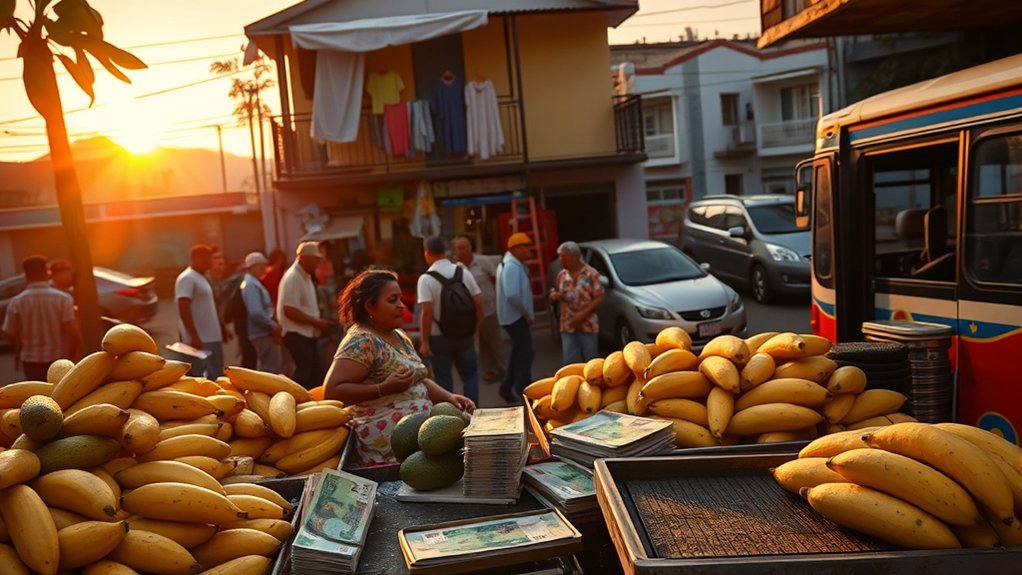
You can live cheaply in Venezuela for basic needs, but wages and services vary sharply. A city-center one‑bed rent averages about $228, utilities and internet run ~$15–34 per month, and groceries are low-priced though food can eat 40%+ of income. Average reported pay is near $176 monthly with an official minimum under $7, so many households face budget shortfalls. Regional differences (Caracas, Maracaibo) and limited public investment shape your real costs—keep going to see full breakdowns and policy implications.
Cost of Living Breakdown: Food, Housing and Utilities
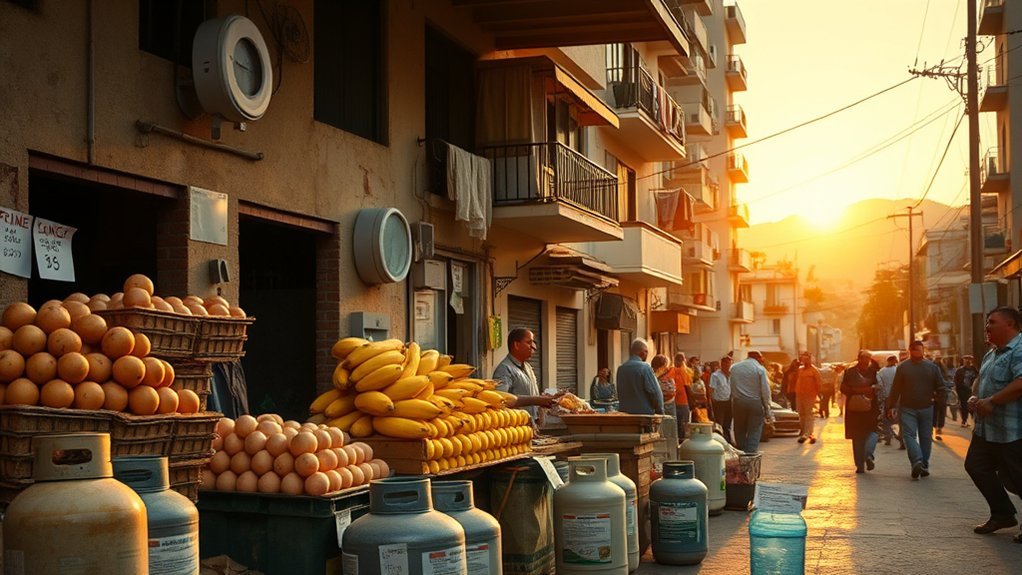
One-bedroom city-center rent averages about $228 monthly (cheap options near $152), so if you’re budgeting for housing in Venezuela you’ll find core urban rents relatively low by international standards; basic utilities run roughly $15.40 per person per month, internet plans of 50 Mbps+ cost about $34.40, and staple food items—like a liter of milk at ~$1.93—keep grocery bills modest, while a midrange restaurant meal for two is around $43.40, highlighting that housing and groceries are affordable but connectivity can be a notable line-item in household budgets.
When you assess cost of living, prioritize housing and food as primary determinants of household resilience and standard of living.
Affordable rents and low staple prices reduce vulnerability to price shocks, but relatively higher internet costs can strain modern work and education needs.
Affordable rents and cheap staples cushion households, yet higher internet costs risk limiting work, education, and opportunity.
For policy, that suggests targeting broadband subsidies or competitive market measures to lower connectivity prices while preserving low utility tariffs.
You’ll want to factor these dynamics into program design, urban planning, and social assistance to sustain gains in living standards.
Average Salaries, Minimum Wage and Monthly Budgets

Having noted that housing and staple food remain relatively affordable by international measures, it’s important to look at incomes to see who can actually pay those bills: average monthly pay is only about $176 while the official minimum wage sits under $7, creating a sharp mismatch with typical monthly expenses that often top $1,000.
You’ll see the average salary reported near $175.99, but post-tax figures cited around $376 conflict with that and reflect informal earnings, remittances, or data source variance.
Food alone can consume over 40% of declared income, so budgeting pressures are acute. Policy choices — currency controls, wage-setting, and subsidy targeting — shape this gap; addressing it requires index-linked minimum wage adjustments and targeted transfers to prevent deeper poverty.
Economic polarization means many lack access to stable incomes, so when you plan monthly budgets you must account for volatility, limited social safety nets, and large informal income shares that distort official average salary and minimum wage metrics.
City-by-City Prices: Caracas, Maracaibo and Other Cities
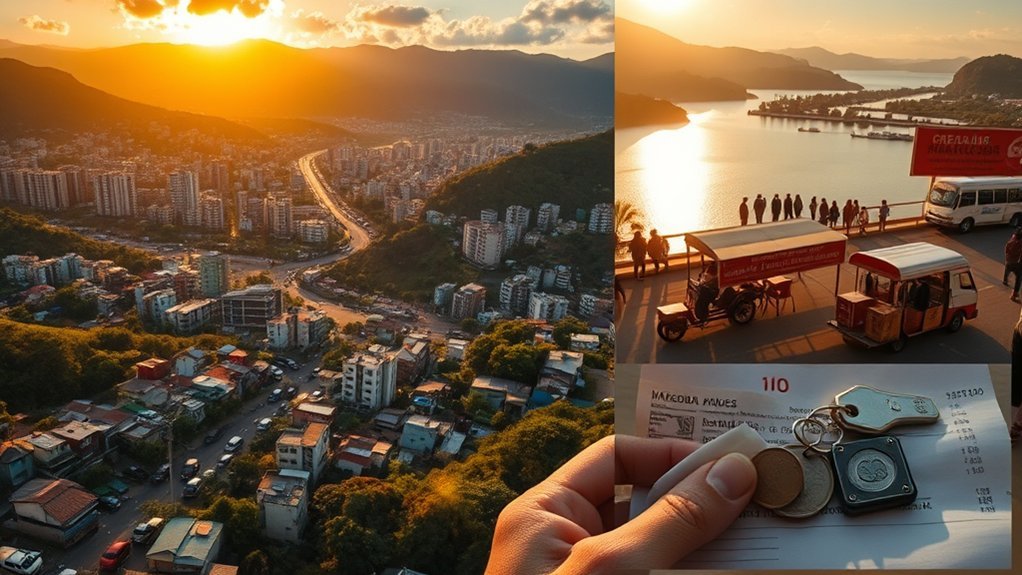
Cities in Venezuela show sharp cost contrasts that matter for how you budget: Caracas tops the list (a simple dinner for two runs about $35), Maracaibo’s rents swing from roughly $200 to $1,500 depending on neighborhood and amenities, and Barquisimeto sits third with staples like 1 kg of tomatoes near $3.67.
You’ll find the cost of living varies by city size, service availability and market access. Policy and household budgeting intersect: with an average salary near $176, urban residents must prioritize housing and food security.
Caracas’s higher prices reflect concentrated demand, imported goods and safer neighborhoods that command premiums. In Maracaibo, spatial inequality produces wide rental spreads that affect mobility and access to services.
Barquisimeto’s moderate grocery costs can offset other urban expenses. If you’re planning relocation or assistance programs, target subsidies and wage policies to city-specific pressures—rent relief in Maracaibo, food programs in Barquisimeto, and living-wage adjustments in Caracas to reduce urban poverty.
Products Worth Considering

Show your support for affordable housing, stopping evictions, campaign for the end of poverty in America, help those in financial hardship and more housing assistance. Protect the homeless by continuing the eviction moratorium.


Transportation, Healthcare and Personal Care Costs
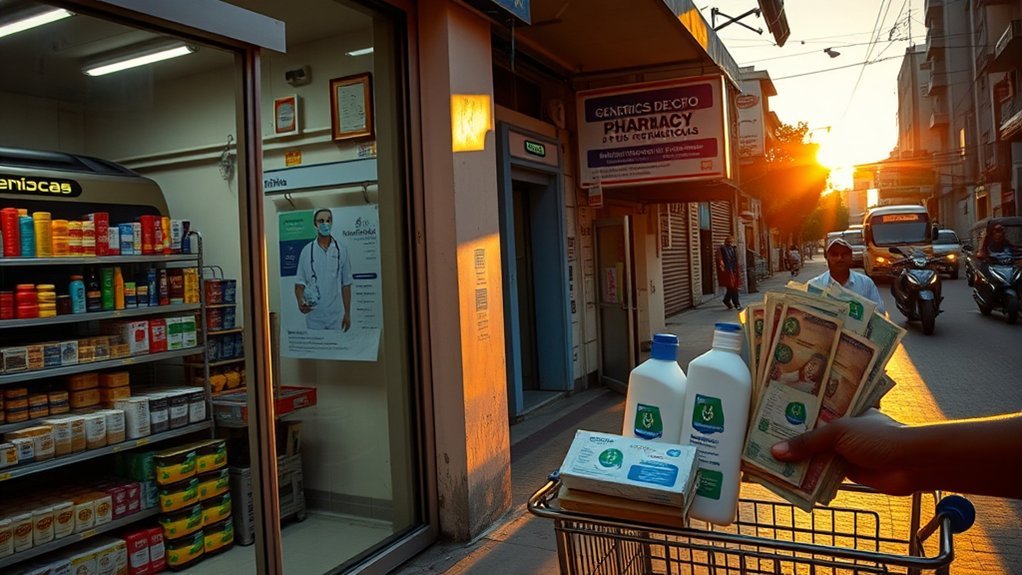
While public transport remains very affordable (single tickets around $0.44 and a monthly pass about $32.10), other essential services push household budgets: utilities for an 85 m² apartment average only $19 monthly, but internet at roughly $34.40 and a typical doctor’s visit near $39.80 can outstrip income-sensitive spending items.
You should view transportation as a clear budget relief — regular commuting is cheap — but factor in healthcare and connectivity as growing burdens that can erode disposable income.
- Transportation: cheap fares lower commuting costs, supporting labor mobility and informal economic participation, but quality and coverage vary across cities.
- Healthcare: a $39.80 doctor’s visit is substantial relative to wages; you’ll need contingency savings or private insurance where public provision is limited.
- Personal care & utilities: low utility costs help households, yet higher internet prices and medical fees create policy challenges for equitable access to services.
Policy focus: target subsidies and regulatory measures to balance affordability and service quality in transportation, healthcare, and digital access.
Comparing Venezuela to the United States and Global Averages
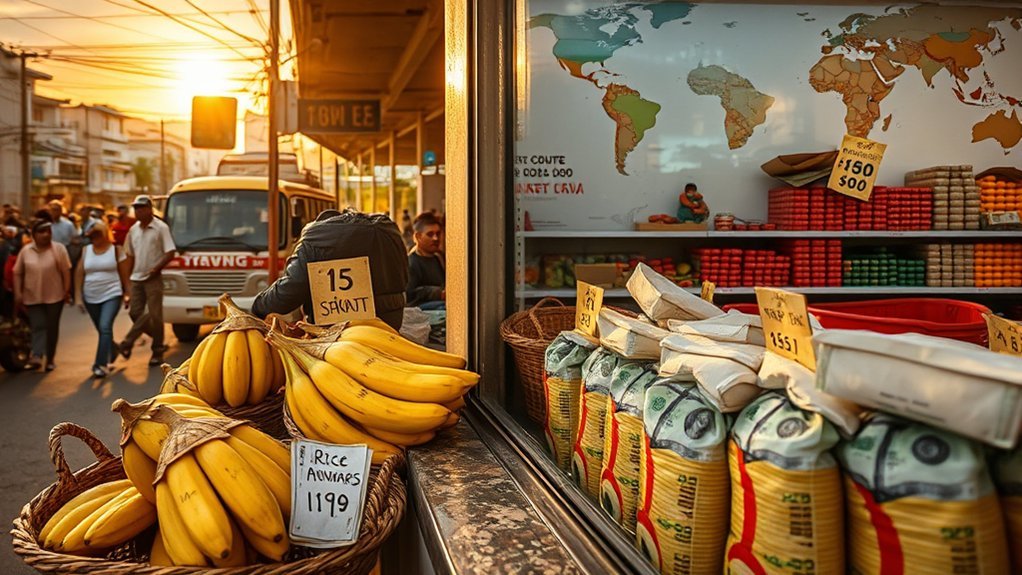
Overall, Venezuela’s cost-of-living profile sits well below both U.S. and global averages, and that gap has clear policy implications: with an average monthly cost of about $805—roughly 1.42 times cheaper than the world average—basic consumption like dining ($8.27 per meal) and groceries (a dozen eggs at $2.52) are markedly more affordable than in the United States, where comparable items run at $19.45 and $4.27.
Housing and transport show even starker differences (a city-center one-bedroom at ~$228 versus ~$1,664.59 in the U.S., and a local transport ticket at $0.44 vs. $2.56), signaling both potential short-term relief for household budgets and long-term challenges for revenue, public service funding, and equitable access to quality goods and services.
You should view these figures as a double-edged sword: low cost of living eases everyday expenses but reflects constrained wages, limited public investment, and fiscal pressures.
Policy must balance affordability with strategies to bolster revenues, improve service quality, and protect vulnerable populations.
Products Worth Considering
What You'll Receive: 8 sheets of Venezuela-themed temporary tattoos, totaling over 200 pieces. This set is great for quick party setups and includes vibrant designs that work...
Frequently Asked Questions
How Much Can 100 Dollars Get You in Venezuela?
You can cover basic monthly utilities and still have funds left; you could eat two restaurant meals for two, contribute toward rent or shared housing, buy groceries, and afford a gym membership with money remaining.
How Much Is Rent in Venezuela?
Rent averages $152–$496 depending on size and location; expect $200–$1,500 in the range. You’ll face upfront payments and market variability, so plan budgets, consider ownership trends, and prioritize secure contracts and policy-aware choices.
Can US Citizens Live in Venezuela?
Yes — you can live in Venezuela, but you’ll face high safety risks, travel warnings, limited services, and economic instability; plan contingencies, secure reliable accommodations, budget carefully, and stay informed about consular guidance and local policies.
What Is the Average Salary in Venezuela in US Dollars?
The average salary in Venezuela is about $176 per month. You’ll note extreme disparity: after taxes some reports cite ~$376, but most earn far less, prompting policy focus on wage reform, inflation control, and social safety nets.
Conclusion
You’re facing a complex picture: inflation and low real wages mean basic baskets can eat most paychecks, while housing and utilities vary widely by city. Caracas and Maracaibo cost more; smaller towns are cheaper but offer fewer services. Compare cautiously to the U.S.: prices may seem low, but purchasing power is eroded. Think policy—stabilize currency, bolster wages, and target subsidies—to turn the tightrope of daily survival into a steadier path for households.
