
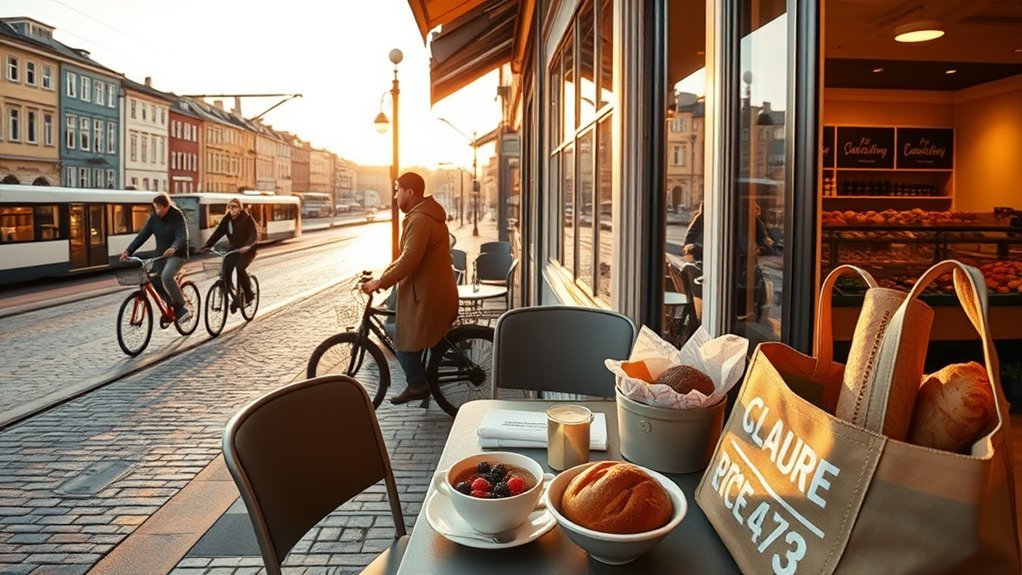
You’ll generally pay less for everyday goods in Sweden than in the U.S., but expect higher housing and tax-driven service costs that shape your budget. A single person can budget about 10,000–13,000 SEK monthly for living expenses excluding rent; families need around 38,000 SEK. Stockholm rents run 11,000–20,000 SEK for one-bedrooms, while suburban options are cheaper. Public healthcare and education cut long-term costs, and transit passes cost about 860 SEK. Keep reading for detailed city, housing, and savings tips.
Quick Answer
Sweden offers a balanced cost of living that feels surprisingly manageable for many expats and families. Consumer prices sit close to U.S. levels, rents often come in lower overall, and strong public services keep big expenses down. Here’s the quick breakdown:
- Singles: roughly 10,000–13,000 SEK per month excluding rent
- Families of four: around 38,000 SEK per month excluding rent
- Stockholm one-bedroom rents: 11,000–20,000 SEK
- Cheaper living in suburbs and smaller cities
- Healthcare and education stay low-cost or free for residents
Is Sweden Expensive Compared to Other Countries?

How expensive is Sweden compared with other countries? You’ll find the cost profile is surprisingly liberating. Consumer prices run comparable to the U.S., with groceries 6% lower, according to Numbeo, and the average cost of living for a family of four is roughly 38,000 SEK monthly, undercutting places like Germany and the UK. Stockholm is the priciest city but still posts consumer prices close to many U.S. spots. Rent patterns reinforce this: one-bedroom city-center units typically range from 8,850 SEK nationally to 16,000 SEK in Stockholm. Healthcare costs are effectively bundled into the social system, reducing out-of-pocket exposure versus private-dominant markets. When you compare overall living expenses to midwestern U.S. cities such as Detroit or St. Louis, Sweden is competitive, not prohibitive. That data lets you weigh freedom of choice against specific budget priorities without surprises.
Where to Live: Most Expensive and Most Affordable Cities

If you’re comparing cities, Stockholm tops the list at about 12,650 SEK per month for a single person (excluding rent). Gothenburg and Malmö sit close behind but noticeably lower. For lower costs, consider Norrköping, Umeå or Örebro, and student-friendly Lund. You’ll also find Swedish rent levels generally lower than in the UK and U.S., so weigh commuting options and student hubs against those price differences.
Products Worth Considering

Most Expensive Cities
Stockholm tops the list with monthly costs around 12,650 SEK for a single person (excluding rent). You’ll see noticeably lower figures in other cities — Gothenburg and Malmö reflect high cost but slightly more breathing room. If you want liberation from expensive rent, these comparisons show where monthly costs bite hardest. Use the data to prioritize job location versus living expenses and plan housing and budget choices accordingly.
Cheapest Towns to Consider
Because living costs vary widely across Sweden, picking a smaller city can cut your monthly expenses considerably without sacrificing services or culture. You can choose Umeå for an affordable northern university town where living expenses stay lower. Örebro gives mid-sized city comforts and reasonable costs, with historical character that doesn’t inflate budgets. Linköping balances affordability with a tech and environmental focus. Malmö offers bikeable neighborhoods and an eco-conscious center that reduces transport and lifestyle costs. Lund’s student-driven cafés and nightlife keep daily expenses down. Compare rent, transport, and groceries across these towns to maximize freedom on a modest budget.
Commuter and Student Hubs
Though Stockholm tops the list for costliest living — about 12,650 SEK a month for a single person — you can lower expenses substantially by choosing commuter belts or student towns like Solna, Umeå, Lund, Örebro, or Malmö. Each offers a distinct trade-off between rent, transport time, and access to jobs or campus life. Lund’s city-center one-bed rents show student hubs can be affordable cities without sacrificing academic access. Solna gives you proximity to Stockholm jobs with lower taxes and commuter options. If you value freedom, pick the hub that minimizes costs while maximizing mobility and community.
Typical Monthly Budget for Singles, Couples, and Families
A typical monthly budget in Sweden varies considerably by household size: expect around 10,000 SEK for a single person and about 38,000 SEK for a family of four (both figures exclude rent). Major differences come from housing, groceries, transport, and childcare. If you’re single you’ll allocate more proportionally to grocery expenses — roughly 2,500–3,000 SEK monthly — and transportation costs like a Stockholm pass at about 1,060 SEK. Couples sharing costs can cut per-person spending on groceries and transport by pooling resources. Families face childcare costs and after-school fees that are heavily subsidized: public daycare often costs 120–130 SEK for the first child, with after-school care around 80–130 SEK. Compare that to rent prices, which can swing your budget dramatically depending on location. Use these figures to model scenarios: single, dual-income couple, or family with one or two children. That clarity helps you plan toward financial freedom without guesswork.
Housing Costs: Rent, Buying, and Where Prices Vary
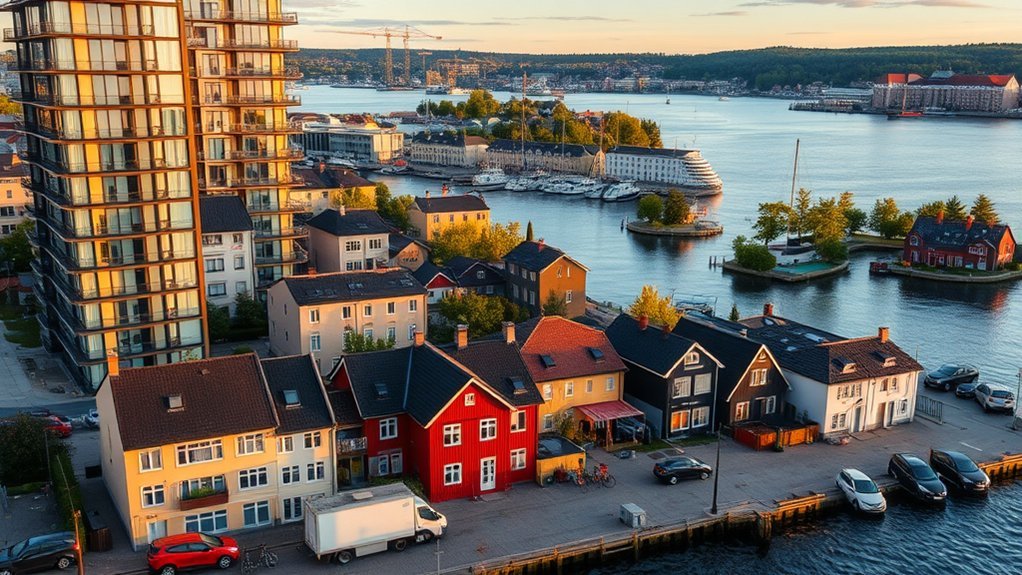
You’ll see sharp differences between city and suburban rents: a one-bedroom in central Stockholm runs about 11,000–20,000 SEK (Numbeo Stockholm data) versus 7,000–13,000 SEK outside the center, while Gothenburg and Malmö typically fall in the 7,000–11,000 SEK range. Buying changes the equation further — central Stockholm can reach SEK 90,000 per m² compared with roughly SEK 25,000 per m² in smaller towns — so compare financing, long-term appreciation, and monthly costs like 600–800 SEK for utilities and 200 SEK for internet. Given tight urban markets and competition for leases, you’ll often face tradeoffs between higher rent for location and the stability or upfront costs of purchasing.
City vs. Suburban Rents
While city-center rents in Stockholm can top $1,500 for a one-bedroom and exceed $2,400 for three-bedrooms, suburbs and smaller cities like Lund, Umeå, and Örebro offer substantially lower prices — often 25–40% cheaper for comparable units — so choosing location will be the single biggest lever you can use to cut housing costs. You’ll see city centers nationally average $778–$950 for a one-bedroom apartment, with three-bedrooms at $1,255–$1,535, but Stockholm skews high: one-bedrooms $1,267–$1,549 downtown versus $911–$1,115 outside. Lund’s one-bedrooms sit around $730–$893. For three-bedrooms in Stockholm, expect $2,037–$2,490 downtown, falling to $1,409–$1,722 in suburbs. If you want freedom, target suburban rents or smaller cities where prices drop and your budget stretches further.
Buying vs. Renting Tradeoffs
Because housing choices hinge on your timeline and budget, weigh renting’s flexibility against buying’s long-term cost and asset value. In Stockholm, renting a one-bedroom in the center runs SEK 11,000–20,000 while outside it’s SEK 7,000–13,000; buying can hit SEK 90,000 per square meter, so upfront capital and mortgages often outweigh short-term gains. Smaller towns drop to about SEK 25,000/m², shifting the buying vs. renting calculus toward purchase if you plan to stay. Expect a housing shortage in major cities: competition pushes you toward second-hand leases and careful scrutiny of rental contracts. Practically, choose renting for mobility and lower entry cost, buy when you have capital, a long horizon, and accept maintenance and market risk.
Utilities, Internet and Mobile Plans
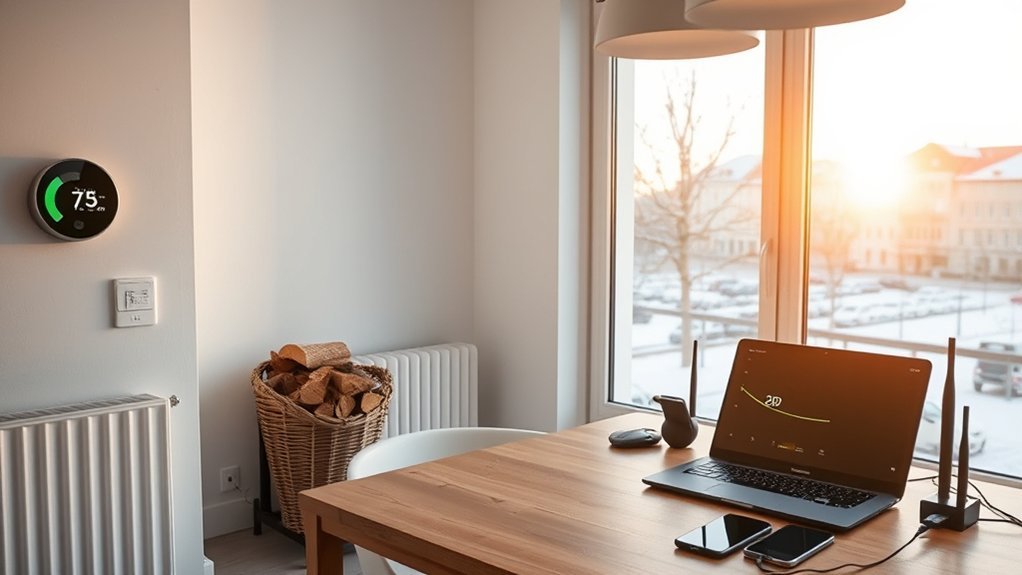
Expect to pay roughly 1,200–1,600 SEK a month for basic utilities in a typical Swedish apartment — for a 915-sq-ft place estimates run 1,200–1,400 SEK, while an 85-m² flat is about 1,250 SEK — and add 350–400 SEK for home internet that usually delivers 60+ Mbps with unlimited data. In Sweden you’ll find utilities, internet, mobile plans, monthly cost comparisons are straightforward: basic utilities cover electricity, heating and water; internet pricing is competitive; mobile plans averaging ~270 SEK per month include calls and at least 10GB. That means a realistic baseline monthly cost for connectivity and services is roughly 1,550–2,000 SEK. For budgeting, compare providers by speed, contract length and bundled discounts — ISPs often undercut each other, lowering total cost. If you want freedom from surprises, pick unlimited-data internet and a midrange mobile plan; you sacrifice little and keep mobility. These choices free you to direct savings toward housing, transport or building an emergency fund.
Food and Groceries: Eating In and Eating Out
You’ll typically spend SEK 2,500–3,000 monthly on groceries as a single person, with budget chains like Lidl and Willys helping you keep costs down. Eating out is often cheaper than in the U.S. for basic meals — expect SEK 100–150 for an inexpensive restaurant meal and about SEK 700–1,200 for a three-course dinner for two. For quick options, fast food runs around SEK 80–90 and staples like a dozen eggs cost about SEK 41, so you can compare specific item prices to decide when to cook or eat out.
Products Worth Considering

Product Type:Grocery

Fifteen movie theater boxes of SOUR PATCH KIDS and SWEDISH FISH Soft & Chewy Candy

Earth-friendly, reusable sponge cloth is a unique economical alternative to paper towels and sponges and is completely compostable – 8 x 6.5 inches, set of 3
Eating In: Grocery Costs
When you shop for groceries in Sweden you’ll find that a single person’s monthly bill typically falls between SEK 2,500 and SEK 3,000 ($290–$345), with staples like beef at about SEK 70–100 per pound and chicken at SEK 35–50 per pound. You’ll use common grocery prices — eggs around SEK 41.25 per dozen and a half-liter beer about SEK 19.50 — to plan realistic budgets. Choose Lidl or Willys for lower grocery costs, or ICA and Coop if you want variety and can pay more. Your monthly grocery bill reflects choices: buying meat and branded goods raises costs, cooking from basics reduces them. Compare grocery prices across stores, buy seasonal produce, and cook intentionally so food spending supports your financial freedom rather than limits it.
Dining Out: Restaurant Prices
Curious how much eating out will hit your budget in Sweden? You’ll find dining out reasonably predictable: an inexpensive restaurant meal runs $10–$12.50, a McMeal is about $8.80, and a three-course meal for two at a mid-range place costs $68–$83.50. Compared to the U.S., basic restaurant prices are slightly cheaper, freeing budget for experiences.
| Item | Typical cost |
|---|---|
| Inexpensive restaurant | $10–$12.50 |
| McMeal (fast food) | $8.80 |
| Three-course meal for two | $68–$83.50 |
| Weekly grocery shopping (single) | $17–$25 |
Use grocery shopping data and these restaurant prices to plan: cook more to save, eat out strategically to enjoy culture without overspending.
Transportation: Public Transit, Cars and Intercity Travel

Public transit in Sweden is efficient and often more cost-effective than driving: a single one-way trip typically runs $3–$4, monthly passes cost about 860 SEK depending on city (Stockholm’s is roughly 1,060 SEK), and intercity travel offers cheaper buses alongside more frequent, faster trains. You’ll find public transportation reliable across cities in Sweden, making a monthly pass attractive if you commute daily. Compare costs: in smaller cities you may pay less, while Stockholm’s higher pass still beats parking, congestion and fuel. For occasional long-distance trips, buses save money; trains save time and run more often. If you plan to drive, note foreign licenses work until you establish residency, and EU/EEA holders can swap without retesting. Factor parking fees, tolls and insurance when comparing ownership versus transit. Practically, pick a mix: monthly pass for urban freedom and buses or trains for intercity movement — that combination maximizes mobility and reduces monthly spending without sacrificing autonomy.
Healthcare and Insurance Costs for Residents and Expats
Healthcare in Sweden is high-quality and largely tax-funded, and you’ll pay modest out-of-pocket fees capped at about 1,100 SEK (~$105) over any 12-month period. You’ll access the public healthcare system once you have a residence permit and Swedish tax ID (personnummer); typical primary-care visits cost 110–300 SEK (~$12–35), specialists about 400 SEK (~$45). That cap makes costs predictable and lets you plan budgets alongside housing and utility costs.
If you value quicker access or private choice, private health insurance runs around 4,000 SEK (~$460) per year and can reduce waits and increase consistency of care. EU visitors with an EHIC get emergency public healthcare; other tourists should buy private coverage for their stay. For expats, combine public healthcare eligibility, possible private top-up, and an emergency policy while adapting. Practically, factor base public fees and optional insurance into monthly spending to keep financial freedom — public healthcare covers most needs, and private plans are a calculated boost, not a necessity.
Education Costs: Public Schools, Universities and International Schools

After you’ve accounted for medical and insurance costs, you should next look at education, which can greatly affect household budgets in Sweden. You’ll find education costs here are unusually redistributive: public schools are free for all residents, and higher education is free for residents too, lowering lifetime expenses compared with places like the U.S. For families weighing options, international schools are the main out-of-pocket variable.
- Public schools: free K–12 access guarantees predictable budgets and equitable outcomes.
- Higher education: tuition-free for residents reduces long-term debt and supports mobility.
- International schools: annual fees typically run 30,000–100,000 SEK ($3,500–$11,500) per child—factor this into relocation decisions.
- Childcare costs: subsidized by income; public daycare is roughly 120–130 SEK/month for the first child, and preschool (age 3+) offers 15 free hours/week.
This data-driven, comparative view helps you plan liberating financial choices without surprises, focusing on where you’ll actually pay versus what the state provides.
Tips to Lower Your Cost of Living in Sweden
If you want to cut monthly expenses fast, focus on housing, transport and food — these three categories typically eat the largest share of budgets and offer the biggest savings potential. Choose to live outside major cities; rent for a one-bedroom can cost around SEK 7,000–13,000 versus SEK 11,000–20,000 in central Stockholm or Gothenburg, freeing cash for other goals. Swap car ownership for public transportation: monthly passes cost about 860 SEK and often beat car insurance, fuel and parking combined. Trim grocery costs by shopping at Lidl or Willys — single-person grocery costs can stay between SEK 2,500–3,000 if you cook at home. Eating out costs around SEK 100–150 per cheap meal; prioritize home-cooked meals to save substantially. Also monitor your monthly utility use — lower thermostat settings and efficient appliances cut bills. Use public healthcare (visits cost around SEK 200) and subsidized dental care to reduce medical expenses. These practical switches give you mobility and financial freedom while living in Sweden.
Frequently Asked Questions
Is It Cheaper to Live in Sweden or the US?
Sweden’s generally cheaper overall, though it depends: cost comparison shows lower grocery prices, transportation costs, and consumer prices versus the U.S.; living standards and healthcare expenses differ — Sweden’s public healthcare cuts out high U.S. medical bills.
Can a US Citizen Live in Sweden?
Yes — you can live in Sweden: meet visa requirements, secure work permits or study/family ties, navigate cultural adaptation, compare cost of living, and enroll in health insurance; you’ll gain practical, data-driven freedom to relocate.
How Much Is Rent in Sweden in US Dollars?
You’ll pay about $1,000–$1,800 for one-bedroom city flats, $1,300–$2,500 for three-bedrooms; Swedish housing rental market varies urban vs rural, so compare lease agreements, cost comparison shows Sweden’s rents beat many UK/US cities.
What Is the Average House Price in Sweden?
You’ll find Sweden’s average property prices vary: roughly $10,350/m² in Stockholm versus $2,875/m² rural; use housing market trends, urban vs rural comparisons, mortgage rates comparison and real estate investment data to liberate your choices.
Conclusion
You’ll see Sweden isn’t uniformly pricey — Stockholm and Gothenburg gleam like polished coins, while smaller towns feel more wallet-friendly — so compare costs city by city. Picture your budget as a map: housing pins, transport routes, and grocery stops show where money flows. Use data — average rents, transit passes, tuition figures — to plot choices that cut costs without cutting quality. With practical swaps and comparisons, you’ll design a sustainable, affordable life in Sweden.
