
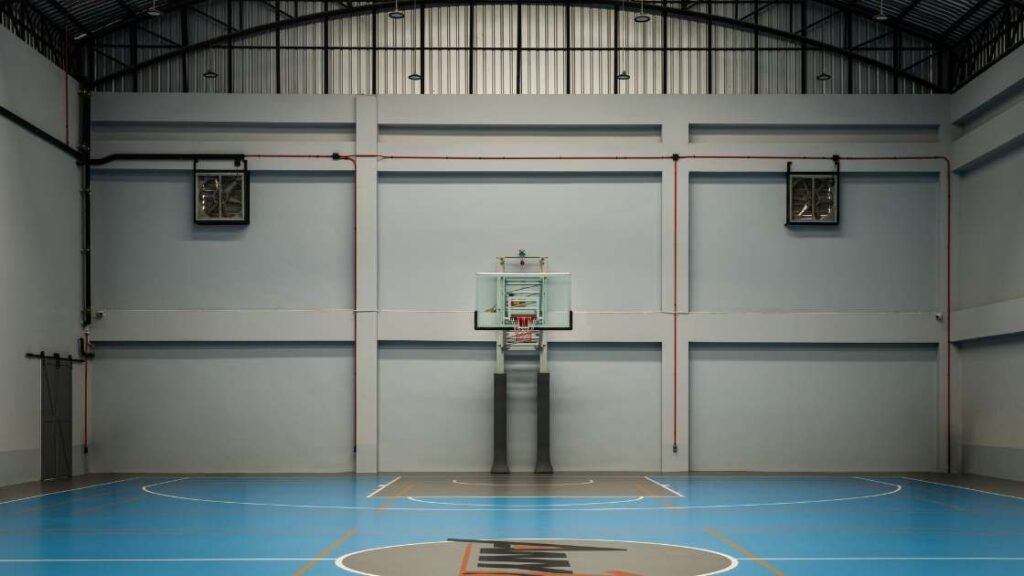
If you already have a suitable building, installing a full indoor basketball court can cost roughly $12,400 to $75,000, depending on court size, flooring, hoops, padding, and line painting. Building a new dedicated gym is a different project: a full structure with site work, foundation, roof, HVAC, electrical, restrooms, accessibility, and sports equipment can easily become a seven-figure build.
For context, HomeGuide’s 2026 indoor-court data lists full-court installations in existing structures at about $12,400 to $75,000. By contrast, the public RSMeans gymnasium model estimates a 20,000-square-foot gym at $3.47 million to $3.78 million using 2019 national cost data; RSMeans notes that current localized pricing requires newer data. That older benchmark is still useful for showing why a court-only project and a new gym building should never share one headline price.
Last updated: August 11, 2026. Prices are planning ranges, not bids. Local labor, site conditions, code requirements, and finish level can move a project well outside national examples.
This guide separates court installation from new-building construction, then breaks down space, flooring, equipment, permits, accessibility, maintenance, and financing so you can build a realistic budget.
How Much Does It Cost to Build a Basketball Gym?
- Existing building, full court: about $12,400 to $75,000 for the court installation itself, depending on dimensions and finish level.
- Existing building, 30′ x 30′ half court: about $3,600 to $14,400.
- New dedicated gym: budget as a commercial construction project, not as a flooring project. A public RSMeans 20,000-square-foot model based on 2019 data was already about $3.47 million to $3.78 million.
- Largest cost drivers: total building area, site work, structure, HVAC, electrical service, sports flooring, restrooms, seating, accessibility, and equipment.
- Operating costs: utilities, staff, cleaning, floor maintenance, repairs, insurance, and security continue after construction.
| Project scope | Planning benchmark | What the number includes |
|---|---|---|
| 30′ x 30′ indoor half court in existing space | $3,600-$14,400 | Typical installed court package in a suitable existing structure |
| Full indoor court in existing space | $12,400-$75,000 | Varies by court dimensions, flooring, hoops, paint, and accessories |
| 20,000 sq. ft. new gymnasium benchmark | $3.47M-$3.78M | RSMeans public 2019 national model; use current local 2026 bids for an actual project |
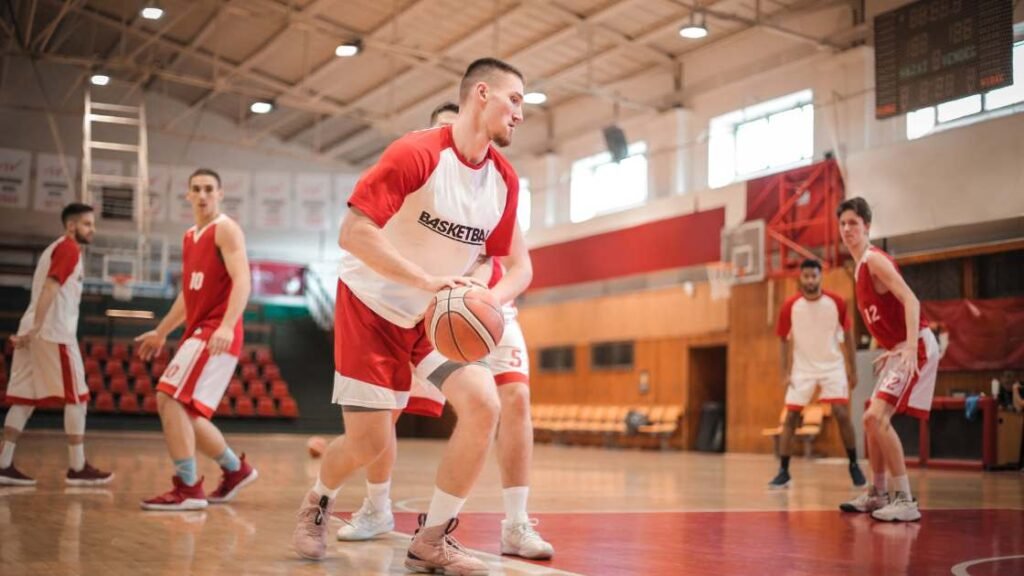
Choose the Basketball Gym Scope Before You Price It
The first budgeting decision is not hardwood versus synthetic flooring. It is what you are actually building. A court added to an existing warehouse, barn, school, or recreation building can avoid much of the cost of a new shell. A ground-up gym must also pay for land or site control, civil work, structure, mechanical and electrical systems, code compliance, and support spaces.
Which Type of Basketball Gym Are You Building?
- Court-only conversion: Best when an existing structure already has adequate clear space, slab conditions, utilities, exits, and zoning.
- Private training gym: Often prioritizes one court, basic restrooms, storage, training equipment, and limited spectator space.
- School or community gym: Usually needs more seating, locker rooms, accessibility features, life-safety systems, and multipurpose use.
- Competition or event facility: Adds larger seating systems, scoring and timing, media needs, concessions, enhanced lighting, and more circulation space.
Cost Breakdown for a Basketball Gym
Use the table below as a budgeting map. Some items have useful national price references; others must be priced locally because the scope changes too much from project to project.
| Item | Planning Guidance |
|---|---|
| Existing-space court installation | About $4-$16 per sq. ft. installed in HomeGuide’s 2026 data; full courts listed at about $12,400-$75,000 depending on size. |
| New building | Price from current local commercial bids. The public RSMeans 20,000-sq.-ft. gym model is $173.39-$189.23 per sq. ft., but it is based on 2019 national data. |
| Full-court flooring | HomeGuide lists roughly $9,300-$70,500 for flooring on full courts, depending on surface and size. |
| Hoops and backstops | Basic systems can cost hundreds to a few thousand dollars; institutional competition backstops can exceed $20,000 each. |
| Scoreboard and timing | Ranges from portable scoreboards to large fixed displays and video boards; price the exact system rather than using one generic allowance. |
| Seating, locker rooms, restrooms, concessions | Get project-specific quotes because capacity, plumbing, accessibility, finishes, and code requirements drive the cost. |
A practical budget separates hard construction costs, soft costs such as design and permits, sports equipment, and a contingency. That makes contractor bids easier to compare and prevents a low court-installation estimate from being mistaken for a full-building budget.
What Drives Basketball Gym Construction Cost?
Four decisions drive most of the budget: site, total square footage, building systems, and finish level. Lock those down before comparing contractor numbers.
How Does Location Affect Basketball Gym Cost?
Location changes land cost, labor rates, utility work, snow or wind design, drainage, parking, and permitting. For a conversion, confirm that the existing use and zoning allow athletic occupancy before signing a long lease.
- Site work: grading, drainage, soil conditions, utility extensions, and parking can materially change a ground-up budget.
- Existing-building condition: verify slab flatness and moisture, roof height, columns, electrical capacity, HVAC capacity, and exit layout.
- Access: schools, community gyms, and commercial facilities may need parking, drop-off areas, accessible routes, and spectator circulation.
- Local market: contractor availability and material freight can change the same design from one region to another.
Compare sites using total project cost, not rent or land price alone. A cheap building can become expensive if it needs major structural, mechanical, or code upgrades.
How Much Space Do You Need for a Basketball Gym?
An NBA court is 94 feet by 50 feet, or 4,700 square feet, according to the NBA rulebook. That is only the playing surface. A real gym needs additional room for boundary clearance, benches, scorer’s table, circulation, storage, seating, restrooms, and mechanical spaces.
| Space decision | Budget effect |
|---|---|
| Playing court | Sets the minimum sports-floor area; a regulation NBA court alone is 4,700 sq. ft. |
| Run-off and circulation | Adds floor area around the playing lines for safe movement and access. |
| Spectator seating | Adds structural, egress, accessibility, railing, and sightline requirements. |
| Locker rooms and restrooms | Add plumbing, partitions, fixtures, ventilation, and accessibility requirements. |
| Storage, offices, concessions | Increase total conditioned area and mechanical/electrical loads. |
Do not size the building by court dimensions alone. Ask the architect to produce a gross-square-foot program before you apply any construction cost per square foot.
What Permits and Accessibility Rules Apply?
Permit requirements are local, but a commercial or public gym commonly involves zoning review, building permits, fire and life-safety review, electrical and mechanical permits, and a certificate or approval for occupancy. The authority having jurisdiction should confirm the exact list for your site.
- Verify zoning and permitted use before committing to the property.
- Confirm occupancy, egress, fire-protection, plumbing, and parking requirements with the local code officials and design team.
- For covered facilities, incorporate accessibility from the start. The 2010 ADA Standards for Accessible Design include requirements for accessible routes and assembly seating, including wheelchair spaces and companion seating.
- Carry design, permit, inspection, testing, and contingency costs separately from the court equipment allowance.
Because code requirements vary by occupancy, size, renovation scope, and jurisdiction, use a licensed local design professional and the local authority having jurisdiction for final compliance decisions.
Basketball Gym Construction Cost Breakdown

For a new building, separate the estimate into site work, structure, building systems, interior build-out, sports fit-out, soft costs, and contingency. That is more useful than one lump-sum “gym cost.”
Site, Foundation, and Structural Shell
Ground-up construction usually starts with civil and geotechnical work before the sports floor is considered. Budget categories can include:
- Surveying and soil/geotechnical work for site and foundation design.
- Clearing, grading, drainage, and utilities where the site is not already developed.
- Concrete slab and foundations sized for the building and sports-floor system.
- Long-span structural framing and roofing that keep columns out of the playing area.
- Exterior walls, doors, glazing, insulation, and weatherproofing.
The structural shell can dominate a new-build budget. For a conversion, the equivalent question is whether the existing structure can support the intended use without major roof, column, slab, or egress changes.
How Much Does Basketball Gym Flooring Cost?
For full indoor courts, HomeGuide’s 2026 data lists flooring at roughly $9,300 to $70,500, depending on court size and material. The Maple Flooring Manufacturers Association (MFMA) describes northern hard maple as the most popular choice for sports flooring and publishes specifications for subfloors, surfaces, installation, and performance.
- Maple sports floor: suited to dedicated basketball and competition use, but it requires moisture and humidity management.
- Synthetic sports floor: can be appropriate for multipurpose facilities and may change both first cost and maintenance needs.
- Subfloor and slab: moisture, flatness, and the selected resilient system matter as much as the visible surface.
- Finishing and game lines: sanding, sealing, striping, logos, and curing time belong in the flooring scope.
MFMA recommends qualified sports-floor installers and publishes current installation guidance. For new slabs, moisture testing should be completed to the flooring manufacturer’s requirements before installation.
HVAC, Lighting, Walls, and Ceiling
A basketball gym is a large-volume space, so HVAC and electrical design should be sized from actual occupancy, climate, envelope, and lighting loads rather than a generic allowance. For maple floors, environmental control is also part of floor protection: MFMA’s 2026 humidity and temperature guidance recommends maintaining indoor relative humidity within a 15% range appropriate to the region, at 55°F to 75°F.
- HVAC and dehumidification control comfort and protect moisture-sensitive flooring.
- High-bay lighting should provide even court illumination while limiting glare.
- Acoustical treatment can reduce excessive reverberation in hard-surface gyms.
- Wall padding and protective finishes should be coordinated with the court layout and equipment.
These systems should be designed together. Cutting HVAC or lighting without checking the sports-floor and occupancy requirements can create expensive operating or performance problems later.
Basketball Gym Equipment Costs

Sports equipment can range from a small share of the total on a new building to a major share of a simple conversion. Specify the competition level before requesting quotes.
How Much Do Basketball Hoops and Backstops Cost?
Basic residential or light institutional systems are far cheaper than competition backstops. HomeGuide’s 2026 court-cost data allows about $300 to $4,000 for two hoops on full-court projects. At the institutional end, current retailer listings show a much wider range: a Porter Pro-Strut backboard/goal package is about $2,500, while a Porter 1135 competition portable backstop is listed above $20,000.
- Wall-mounted or ceiling-suspended systems need structural coordination and installation labor.
- Portable competition backstops cost more but can support event reconfiguration.
- Breakaway goals, backboard padding, wall padding, and height adjusters should be included in the equipment schedule.
For a school or competition gym, request a complete installed equipment quote rather than multiplying a consumer hoop price by two.
How Much Do Gym Bleachers and Amenities Cost?
There is no reliable universal “price per seat” for telescopic gym bleachers. The cost changes with row count, bank length, power operation, aisle rails, code requirements, accessibility, seat modules, demolition, and installation. Manufacturers such as Interkal publish configurations and specifications but typically require project-specific pricing.
| Item | What to include in the quote |
|---|---|
| Telescopic bleachers | Seat count, rows, bank length, power/manual operation, rails, accessible seating, delivery, installation |
| Locker rooms | Plumbing, showers if used, lockers, benches, ventilation, finishes, accessible fixtures |
| Restrooms | Fixture count, plumbing rough-in, partitions, accessories, accessibility, exhaust |
| Concessions | Casework, sinks, equipment, electrical loads, health-code requirements where applicable |
These support spaces often cost more than owners expect because they add plumbing, ventilation, finishes, and code-driven circulation—not just furniture.
How Much Do Basketball Scoreboards and Shot Clocks Cost?
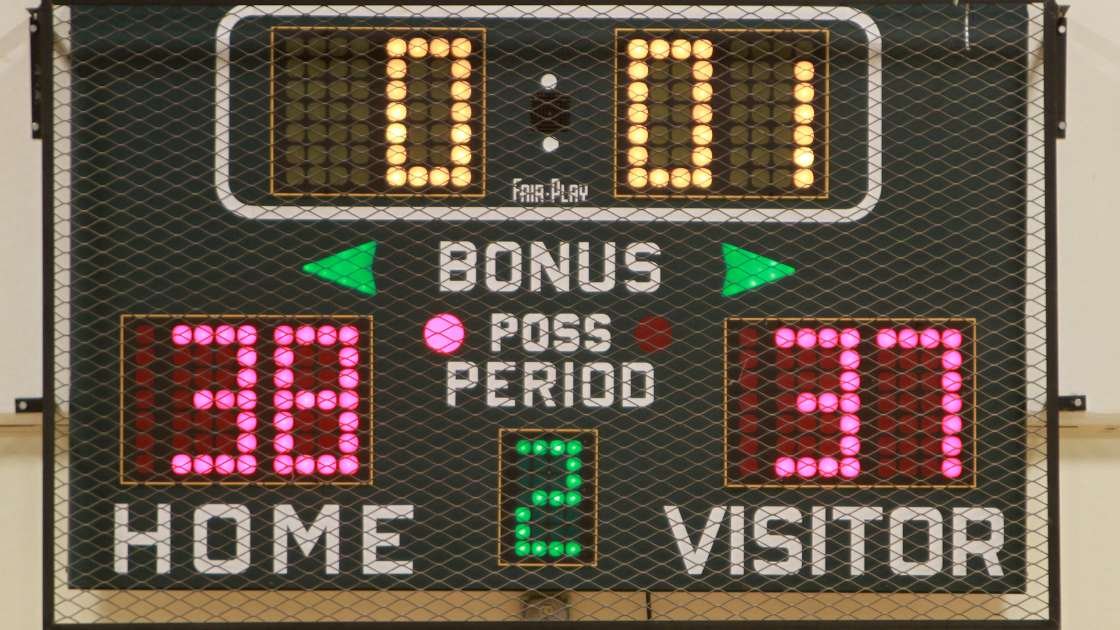
Scoreboard pricing spans from portable units to six-figure video displays, so the old habit of carrying one flat allowance can be misleading. As a current retail reference checked in August 2026, BSN Sports’ basketball scoreboard listings include:
- Portable or small indoor electronic scoreboards: roughly $700-$1,600 for several listed models.
- 8′ x 4′ fixed basketball scoreboard: about $5,500.
- Shot-clock packages: about $1,250-$1,700 for listed wireless/paired systems.
- Indoor video displays: roughly $50,000-$115,000 for listed 11′-17′ class displays before project-specific installation and integration.
Large school, college, and event systems are frequently quote-based. Nevco, for example, sizes integrated basketball scoring systems after a facility assessment. Treat controls, wiring, mounting, structural support, sound, shot clocks, and installation as part of the same package.
Ongoing Operational Costs
Construction is only the capital cost. A workable business or facility plan also budgets for utilities, staffing, cleaning, sports-floor care, repairs, insurance, and replacement reserves.
Utilities and Energy Use
Gym utility cost depends on climate, operating hours, occupancy, lighting power, hot-water use, and the volume of air being conditioned. Energy-saving measures can reduce consumption, but the payback period depends on the installed cost and how often the building is used.
- LED sports lighting and occupancy controls
- Efficient HVAC equipment sized for the actual load
- Building automation or scheduling controls
- Envelope insulation and air-sealing appropriate to the climate
For maple courts, do not save energy by shutting off environmental control for long periods without checking the flooring requirements. MFMA warns that large humidity swings can cause wood movement and floor problems.
Basketball Court Maintenance and Repairs
Floor care is a real operating line item. MFMA recommends periodic refinishing and says most gymnasium maple floors should be recoated annually, with the actual schedule driven by use, abuse, and maintenance.
- Daily dust-mopping and prompt spill cleanup
- HVAC and humidity monitoring for wood floors
- Goal, backstop, padding, bleacher, and hardware inspections
- Periodic court recoating or resurfacing as required
- Cleaning and upkeep for locker rooms, restrooms, and spectator areas
Create separate annual budgets for routine maintenance and major replacements. That is safer than relying on one emergency reserve.
Insurance and Security
Coverage needs depend on ownership, employees, programs, events, and local law. Discuss general liability, property, workers’ compensation where required, business interruption, participant-related risks, and any event-specific coverage with a qualified insurance professional.
Security cameras, access control, alarms, and good key-management procedures can reduce operational risk, but any effect on premiums depends on the insurer and policy.
How to Fund and Control the Basketball Gym Budget

A solid financial plan is as important as a solid foundation. It covers where the money comes from and how the gym stays viable long-term.
Equity, Savings, and Loans
Match the financing term to the useful life of the asset and the project’s cash flow. Savings avoid borrowing costs, while loans preserve cash but add interest and lender requirements. Common funding sources include:
- Personal Savings: Use existing funds and avoid debt entirely.
- Bank Loans: Work with financial institutions for lending support.
- Credit Lines: Access flexible borrowing as needed.
Before borrowing, model debt service together with utilities, staffing, insurance, maintenance, and a replacement reserve. A project can be affordable to build and still be expensive to operate.
Fundraising And Sponsorships
Community-driven funding can reduce how much you need to borrow. Good options include:
- Fundraising Events: Host tournaments or auctions to raise capital.
- Local Sponsors: Partner with businesses for mutual benefit.
- Online Crowdfunding: Use social media platforms to reach a wider donor base.
Success in even one of these areas can meaningfully offset your initial costs.
Where Can You Cut Cost Safely?
The best savings come from reducing unnecessary scope, not from improvising structural, electrical, fire-safety, or sports-floor work.
| Strategy | How It Can Save Money |
|---|---|
| Use a suitable existing building | Avoids much of the cost of a new shell if the structure, slab, utilities, zoning, and life-safety systems already work for the intended use. |
| Phase nonessential amenities | Build the court, code-required spaces, and core operations first; add premium seating, video displays, or expanded concessions later if the design allows. |
| Use pre-owned movable equipment selectively | Can reduce furniture and training-equipment costs after safety, condition, compatibility, and warranty are checked. |
| Bid clearly defined packages | Comparable scopes make it easier to spot omissions and avoid change orders caused by vague allowances. |
Keep licensed and code-regulated work with qualified professionals. DIY effort is better reserved for low-risk tasks that do not affect structure, life safety, accessibility, electrical systems, or the sports-floor warranty.
Basketball Gym Cost FAQs
How Many Square Feet Should A Basketball Gym Be?
An NBA playing court is 94 feet by 50 feet, or 4,700 square feet, according to the NBA rulebook. A complete gym must be larger than the playing surface because you also need space for run-off, benches, circulation, storage, seating, restrooms, and building systems. The final gross square footage should come from the facility program and the rules/code standards that apply to your level of play.
How Much Does It Cost To Build An NBA Basketball Court?
For a 94′ x 50′ full indoor court inside an existing suitable structure, HomeGuide’s 2026 data lists an NBA-size court at about $18,800 to $75,000 installed. That is a court-installation range, not the cost of constructing a new gymnasium building around it.
What Is The Cheapest Way To Build A Basketball Court?
If your goal is simply a place to play, using an existing safe paved surface or a suitable existing indoor structure is usually cheaper than constructing a new building. For an indoor project, the biggest savings come when the existing slab, roof clearance, utilities, exits, zoning, and HVAC already work for athletic use. Do not skip surface, structural, electrical, or code checks just to reduce the upfront price.
How Many Sq Ft Is A High School Basketball Court?
A commonly used high-school full-court size is 84 feet by 50 feet, or 4,200 square feet. Before striping a competition court, confirm the current court diagram and rules used by your state association; the NFHS basketball resources publish the current high-school court diagram and rules materials.
How Much Does It Cost Per Square Foot To Build A Basketball Gym?
There is no single dependable 2026 national rate for every basketball gym. The public RSMeans model for a 20,000-square-foot gymnasium is $173.39 to $189.23 per square foot, but that page uses 2019 national data and directs users to current RSMeans data for updated localized estimates. Use current local bids for a real 2026 budget, and make sure the quote states whether site work, design fees, sports flooring, seating, and equipment are included.
Is It Cheaper To Convert An Existing Building Into A Basketball Gym?
Usually, yes, if the existing building is already suitable. HomeGuide’s 2026 data puts indoor court work in an existing structure at about $4 to $16 per square foot for the court installation scope. The savings can disappear if the building needs major slab repair, roof changes, new HVAC, electrical upgrades, additional exits, restrooms, accessibility work, or a zoning change.
Conclusion
The most important budgeting rule is to separate court installation from building construction. A full court inside a suitable existing structure may cost tens of thousands of dollars, while a new dedicated gym with structure, HVAC, electrical, restrooms, accessibility, seating, and sports equipment can move into the millions.
Start by defining the court size, total gross building area, occupancy, seating, and amenities. Then have local design professionals and contractors price the same written scope. Compare exclusions as carefully as totals, carry a contingency, and include annual operating and floor-maintenance costs before you decide what the project can afford.


2 thoughts on “How Much Does It Cost to Build a Basketball Gym? (2026 Guide)”
Pingback: Exploring The Price Tag: How Much Does It Cost To Fix A Bent Rim?
Pingback: How Much Does It Cost To Build A Bunker?