
The cost of 75% argon and 25% carbon dioxide welding gas, usually called C25 or 75/25 welding gas, depends on more than the gas itself. Your total can include the cylinder, its first fill, later exchanges, supplier fees, rental charges, and cylinder-testing requirements. Prices also vary sharply by region and supplier program.
Quick Answer
As of July 2026, C25 welding-gas cost depends more on the cylinder program than on gas alone. One U.S. retail exchange program lists empty 40-, 80-, and 125-CF cylinders at about $360, $445, and $500, while contents-only exchanges are about $63-$70. Local fees, ownership rules, and cylinder acceptance can change the total.
Key Takeaways
- A cylinder-only price does not include the gas unless the listing clearly says it is filled.
- Current exchange examples are about $63 for 40 CF and $70 for either 80 CF or 125 CF, before local fees.
- Larger tanks usually cost less per cubic foot and require fewer trips to the supplier.
- At a typical 20-25 CFH starting flow, a 125 CF cylinder provides about five to 6.25 theoretical hours of gas flow.
- Confirm the supplier’s cylinder-acceptance policy before buying a tank online or secondhand.
The Cost of 75/25 Welding Gas
When comparing C25 prices, first determine whether the quote covers the empty cylinder, the gas contents, or both. A low price may be for an exchange only, which requires you to bring in an accepted customer-owned cylinder.
The following table uses listed prices from one U.S. retail exchange program on July 28, 2026. It is a current example, not a nationwide average.
| Cylinder Size | Empty Cylinder Example | Gas Exchange Example | Approx. First Filled Total | Exchange Cost per CF |
|---|---|---|---|---|
| 40 CF | $359.99 | $62.99 | $422.98 | About $1.57 |
| 80 CF | $444.99 | $69.99 | $514.98 | About $0.87 |
| 125 CF | $499.99 | $69.99 | $569.98 | About $0.56 |
These first-filled totals simply add the listed empty-cylinder price to one contents exchange. Tax, hazmat charges, environmental fees, delivery, regulator purchases, and supplier-specific charges are not included.
Price sources: 40 CF cylinder and 40 CF exchange; 80 CF cylinder and 80 CF exchange; 125 CF cylinder and 125 CF exchange.
Note: Some suppliers sell a filled cylinder as one package, while others list the cylinder and contents separately. Ask exactly what the quote includes before comparing prices.

These Stanley MaxSteel straight aviation snips are built for clean, controlled cutting through sheet metal and other tough materials. Serrated cutting edges help prevent slippage for more accurate results, while the double pivot action delivers increased cutting power with less effort. Designed for dependable performance, they are a practical choice for metalworking, HVAC tasks, and general workshop use.

This hardcover book celebrates the art of gathering with inspiring table settings, thoughtful traditions, and practical ideas for hosting memorable meals. Written by Shea McGee, it offers beautiful design inspiration alongside approachable guidance for creating warm, welcoming spaces for family and friends. It's a charming resource for anyone who loves entertaining, home styling, and making everyday moments feel special.

The Fullstar Pro Original Vegetable Chopper is a large-capacity kitchen tool designed to speed up everyday meal prep with fast, consistent dicing. Its compact, dishwasher-safe design features sharp stainless steel blades, a non-skid base, and a built-in catch tray for cleaner, easier cooking. Built for convenience and versatility, it helps make healthy dinners and family meals quicker and more enjoyable.
Common Welding Gases

C25 contains 75% argon and 25% carbon dioxide. It is one of the most common shielding-gas choices for solid-wire MIG welding on mild steel.
Argon helps produce a stable arc, smooth bead profile, and lower spatter. Carbon dioxide adds heat and penetration while keeping the blend less expensive than higher-argon mixtures. Miller describes C25 as a common all-purpose choice for mild-steel MIG welding because it offers good arc characteristics and bead appearance.
- C25, 75% argon/25% CO2: A versatile choice for short-circuit MIG welding on mild steel, automotive repairs, fabrication, and general shop work.
- 100% CO2: Usually cheaper and capable of deeper penetration, but it often creates more spatter and a harsher arc.
- 90% argon/10% CO2: Commonly used for some spray-transfer applications when the machine, wire, material thickness, and welding procedure support it.
- 100% argon: Common for aluminum MIG and TIG welding, but it is not the normal choice for solid-wire MIG welding on mild steel.
- Stainless-steel blends: Gas selection varies with the wire, transfer mode, and required weld properties.
Always use the gas listed on your welder’s setup chart, wire data sheet, or approved welding procedure. A gas that works well for mild steel may be unsuitable for aluminum, stainless steel, or TIG welding.
C25 Welding Gas Cylinder Cost
The cylinder is usually the largest upfront expense. Your options may include customer ownership, rental, lease, or participation in a cylinder-exchange program.
- 40 CF cylinder: Compact and easier to move. It suits occasional repairs, portable setups, and welders with very limited storage, but its gas cost per cubic foot is often high.
- 80 CF cylinder: A practical middle size for home garages and regular hobby work. It provides roughly twice the capacity of a 40 CF tank without becoming as heavy or bulky as larger shop cylinders.
- 125 CF cylinder: Often the best value among common customer-owned sizes. It reduces refill trips and can cost much less per cubic foot than a small tank.
Buy, Rent, Lease, or Exchange?
- Customer-owned cylinder: You pay more upfront but normally avoid monthly or annual cylinder rent. You remain responsible for using an accepted and serviceable cylinder.
- Rental or lease: The supplier owns the cylinder. This can lower the initial cost, but rental, lease, or account fees may apply.
- Exchange program: You bring in an accepted empty cylinder and receive a filled cylinder of the same program and size. This is fast, but you may not receive the exact physical cylinder you brought in.
- On-site refill: The supplier fills and returns your cylinder. Availability and turnaround time vary, and many retail locations use exchange instead.
Check Cylinder Acceptance Before Buying
A cheap online or secondhand cylinder may become expensive if no local supplier will fill or exchange it. Before buying, ask the supplier:
- Do you accept customer-owned cylinders from another brand or exchange network?
- Does the cylinder need current hydrostatic requalification?
- Will you refill my cylinder or exchange it for another one?
- Are there extra charges for an out-of-network or expired cylinder?
- Which DOT or UN markings and valve connection do you require?
- Is the quoted price for the cylinder, the gas, or both?
Warning: Do not buy an unmarked or uncertified high-pressure cylinder. The U.S. Pipeline and Hazardous Materials Safety Administration has warned that some cylinders sold online lack required DOT or UN certification markings.
75/25 Welding Gas Refill and Exchange Cost
The gas-content charge is normally much lower than the cylinder purchase. In the July 2026 retail example above, a 40 CF exchange was $62.99, while both the 80 CF and 125 CF exchanges were listed at $69.99.
This pricing illustrates why a larger cylinder can provide better long-term value:
- 40 CF: About $1.57 per cubic foot before fees.
- 80 CF: About $0.87 per cubic foot before fees.
- 125 CF: About $0.56 per cubic foot before fees.
Local suppliers may quote higher or lower prices. The invoice may also include:
- Hazmat or environmental fees
- Delivery or pickup charges
- Fuel surcharges
- Cylinder rental or lease fees
- Hydrostatic requalification charges
- Out-of-network exchange fees
- Taxes and account charges
Pro Tip: Call at least two local welding-gas suppliers and ask for the total out-the-door price, including every fee. Also ask whether the price is for a refill, a same-size exchange, or gas plus a new cylinder.
How to Calculate the Real Cost
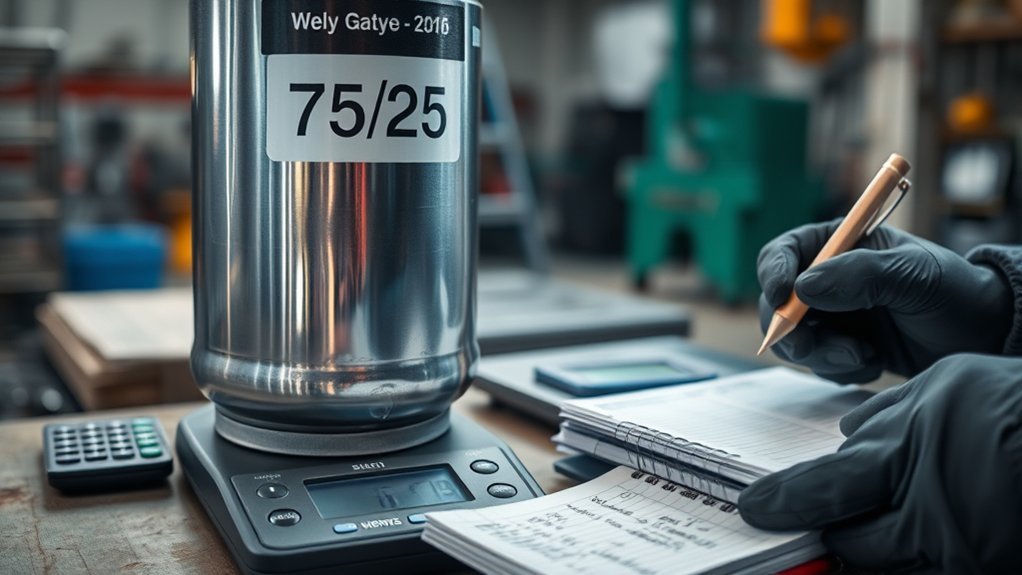
Use separate calculations for your first-year cost and your later operating cost.
First-Year Cost Formula
First-year cost = cylinder purchase or lease + all gas fills or exchanges + supplier fees + required equipment
Required equipment may include a compatible regulator or flowmeter, high-pressure hose, cylinder cart, chain, or wall restraint.
For example, using the July 2026 125 CF retail prices:
- Empty cylinder: $499.99
- Five gas fills during the year, including the first fill: 5 × $69.99 = $349.95
- Example first-year subtotal: $849.94 before tax, equipment, and supplier fees
After you already own the cylinder, five exchanges at that same listed rate would total $349.95 before fees.
Operating Cost per Welding Hour
Gas cost per theoretical hour = total exchange price ÷ theoretical gas-flow hours
At 20 CFH, a 125 CF cylinder has 6.25 theoretical flow hours. A $69.99 exchange therefore costs about $11.20 per theoretical gas-flow hour before fees.
Real shop time is usually lower because gas is also consumed during:
- Pre-flow and post-flow
- Purging the hose after a cylinder change
- Trigger tests and machine setup
- Leaks at fittings, hoses, the gun, or the solenoid
- Excessive flow settings
- Gas released while the arc is not producing useful weld
A larger cylinder does not reduce the amount of gas used per minute, but it can sharply reduce the price per cubic foot and the number of refill trips.
How Long Will 75/25 Welding Gas Last?

To estimate runtime, divide the tank capacity in cubic feet by the shielding-gas flow rate in cubic feet per hour.
Theoretical runtime in hours = cylinder capacity in CF ÷ flow rate in CFH
Miller recommends setting gas flow to about 20-25 CFH as a common starting range for mild-steel MIG welding. Follow the chart inside your welder, the wire instructions, and the conditions around the weld.
| Tank Size | At 20 CFH | At 25 CFH | Typical Use |
|---|---|---|---|
| 40 CF | 2 hours | 1.6 hours | Occasional repairs and portable use |
| 80 CF | 4 hours | 3.2 hours | Regular home-garage welding |
| 125 CF | 6.25 hours | 5 hours | Frequent shop and fabrication work |
At 10 CFH, an 80 CF tank would mathematically last eight hours. At 40 CFH, it would last two hours. These are useful examples of how flow affects runtime, but they should not be treated as default settings.

This hardcover cookbook offers fast, approachable recipes designed for busy days and low-energy nights. Caroline Chambers focuses on simple, flavorful meals that help you get dinner on the table without overthinking it. It's a practical pick for home cooks who want quick weeknight inspiration and minimal-fuss cooking.

This versatile cookware set equips home cooks with essential pots, pans, and a steamer insert for everyday meals and larger gatherings. The aluminum-encapsulated base promotes quick, even heating, while Cool Grip handles and tight-fitting glass lids support comfortable, controlled cooking. Designed for stovetop, oven, broiler, and dishwasher use, it offers reliable performance across a wide range of recipes.

This heartfelt cookbook shares the kitchen wisdom of a Korean mom alongside 100 family recipes that bring comforting, authentic flavors to your table. Blending personal stories with practical guidance, it offers home cooks approachable ways to explore Korean cooking with confidence. The hardcover format and trusted editorial guidance make it a beautiful and reliable addition to any cookbook collection.
Flow Rate Impact
Higher flow empties the tank faster, but more gas does not always produce better shielding. Excessive flow can create turbulence around the nozzle and pull surrounding air into the shielding envelope.
Start with the machine manufacturer’s recommendation. Increase flow only when the welding position, nozzle size, procedure, or controlled airflow requires it. Outdoor drafts can disrupt MIG shielding even when the flow is raised, so a wind barrier or a different process may be safer and more effective.
Tank Size Considerations
Choose a cylinder based on portability, storage space, welding frequency, and access to a supplier.
- Choose 40 CF when portability matters more than cost per cubic foot.
- Choose 80 CF for a compromise between runtime, weight, and purchase cost.
- Choose 125 CF when you weld regularly and want fewer exchanges and a lower gas cost per cubic foot.
Check the filled cylinder’s dimensions and weight before buying. A larger cylinder needs a stable cart or fixed restraint and may be difficult to lift safely.
Usage Frequency Factors
Your actual refill schedule depends on more than the number of projects. Important factors include:
- Arc-on time: Long continuous welds consume gas faster than short tack welds, although repeated starts may add pre-flow and post-flow losses.
- Flow setting: A tank lasts twice as long at 10 CFH as at 20 CFH, assuming all other conditions are equal.
- Leaks: Loose fittings, cracked hoses, a leaking gun, or a faulty solenoid can empty a cylinder while no useful welding is taking place.
- Drafts: Air movement can lead users to increase flow and consume more gas.
- Machine settings: Burnback, pre-flow, post-flow, and trigger habits affect total consumption.
The high-pressure gauge can provide a rough indication of remaining contents after the cylinder temperature has stabilized. Do not assume that one exact pressure always means the tank is full or half full.
Where to Buy or Refill Your Gas
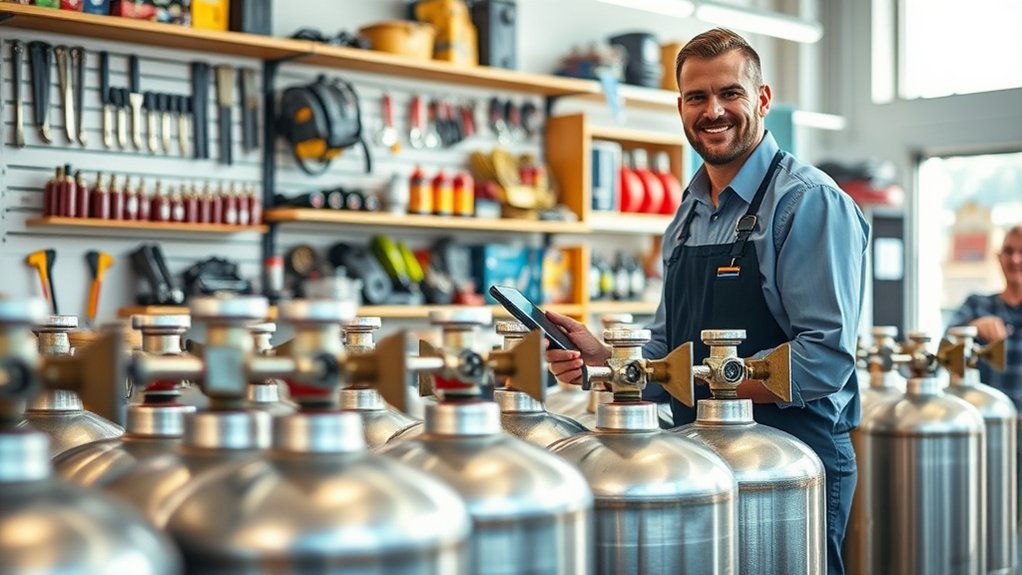
You can obtain C25 from local welding-supply stores, industrial-gas distributors, participating farm or tool retailers, and some online cylinder sellers. Local availability matters because a cylinder is only useful if a nearby supplier will fill or exchange it.
Local Supplier Considerations
Local independent suppliers may offer refill, exchange, rental, lease, and delivery programs. Large chains and retail exchange cages may provide faster exchanges but limit the cylinder sizes or brands they accept.
Compare suppliers using the total cost rather than the advertised gas price. Ask about:
- Cylinder purchase, deposit, rental, or lease charges
- Gas-content price
- Hazmat, environmental, fuel, and delivery fees
- Accepted cylinder sizes and brands
- Hydrostatic requalification requirements
- Turnaround time for an actual refill
- Availability of immediate exchanges
Online Purchasing Options
Many cylinders sold online are empty, even when the product photo shows a gas label. Shipping a filled high-pressure cylinder involves hazardous-material requirements, so full-cylinder delivery is more limited than ordinary parcel shipping.
Before ordering online:
- Read whether the listing is empty, prefilled, or local-pickup only.
- Confirm that the cylinder carries the required DOT or UN certification markings.
- Send the product details to your local supplier and ask whether it will accept the cylinder.
- Check the valve type and confirm that it matches the approved regulator for the gas service.
- Include shipping, testing, and possible exchange-network charges in the total.
Note: A low online cylinder price is not a bargain if your nearest supplier refuses to fill or exchange it.
Refilling Policies Overview
Supplier policies differ. One shop may refill any serviceable customer-owned cylinder, while another may accept only its own exchange-network cylinders. A supplier may also reject a cylinder because of its size, ownership marking, valve, physical condition, certification, or overdue requalification.
An exchange is not the same as a refill. With an exchange, you surrender an accepted empty cylinder and receive another filled cylinder. With a refill, the supplier fills and returns your original cylinder.
What to Check on a Used Cylinder
Do not buy a used cylinder based only on paint condition or seller claims. Ask a local gas supplier to review the following before purchase:
- DOT or UN specification markings
- Ownership or rental-company markings
- Hydrostatic requalification date
- Correct valve and gas service
- Deep rust, dents, gouges, fire damage, or neck damage
- Whether the supplier will fill or exchange that exact size and brand
Alternatives to Traditional Shielding Gas

C25 is convenient for solid-wire MIG welding on mild steel, but it is not the only option.
Self-Shielded Flux-Cored Wire
Self-shielded flux-cored wire does not require an external gas cylinder. It can be useful outdoors and in drafty areas where shielding gas is easily disturbed. Tradeoffs may include more smoke, slag, spatter, cleanup, and a rougher bead appearance.
Stick Welding
Stick welding uses a flux-coated electrode and does not require a separate shielding-gas cylinder. It works well for outdoor repairs, thicker steel, and less-clean material, although it may be harder to control on thin sheet metal.
100% Carbon Dioxide
Some MIG welders can use 100% CO2 on mild steel. CO2 is often cheaper and can produce deeper penetration, but it normally creates more spatter and a less stable arc than C25. Confirm that your machine, regulator, and welding procedure support it.
Self-shielded flux-core wire and stick welding remove the recurring shielding-gas expense, but they also change weld appearance, cleanup, technique, and suitable applications.
Oxy-Fuel Is a Different Process
Acetylene can be used in oxy-fuel welding, brazing, heating, and cutting, but it is not a replacement shielding gas for a MIG machine. Switching to oxy-fuel means changing the equipment and welding process.
Do not substitute nitrogen or another gas merely because it is cheaper or available. Use only a shielding gas approved for the base metal, filler wire, transfer mode, machine, and welding procedure.
Welding Gas Cylinder Safety
C25 is nonflammable, but the cylinder contains gas under high pressure. Argon and carbon dioxide can also displace oxygen in a poorly ventilated area.
Warning: Never weld, drill, grind, heat, modify, or attempt to repair a compressed-gas cylinder or its valve. A damaged or leaking cylinder must be handled by the gas supplier or qualified emergency personnel.
Safe Storage
- Store the cylinder upright and secure it with a chain, strap, rack, or approved cylinder cart.
- Close the cylinder valve when welding is finished.
- Remove the regulator and install the valve-protection cap when the cylinder is moved or placed in storage.
- Keep the cylinder in a dry, well-ventilated location.
- Protect it from sunlight, high heat, sparks, hot slag, impact, and falling objects.
- Do not store it in an unventilated locker, cabinet, or other enclosed space.
Checking for Leaks
After installing the regulator, use an approved leak-detection solution or soapy-water solution on the connections. Bubbles indicate a leak. Close the valve, release pressure from the system, and correct the connection only when it can be done safely and according to the equipment instructions.
Do not use an open flame to look for a leak. Do not attempt to repair the cylinder valve.
What to Do if the Cylinder Is Leaking
- Stop welding and keep people away from the area.
- Do not touch or approach a badly damaged cylinder.
- Close the cylinder valve only if this can be done without personal risk.
- Ventilate the area from a safe location when possible.
- Contact the gas supplier for instructions.
- Call emergency services if the leak is large, the cylinder is damaged or heated, breathing is affected, or the cylinder cannot be isolated safely.
Safe Vehicle Transport
- Remove the regulator and install the valve-protection cap.
- Secure the cylinder so it cannot roll, fall, shift, or strike another object.
- Use a well-ventilated vehicle area, preferably an open truck bed or approved external rack.
- Do not leave the cylinder in a hot or enclosed vehicle.
- Drive directly to the destination and unload the cylinder promptly.
- Follow the supplier’s instructions and all applicable local and federal transport rules.
Frequently Asked Questions
Can I use a different gas mixture for MIG welding?
Yes, but the correct mixture depends on the metal, wire, transfer mode, machine, and required weld properties. For mild steel, common options include C25 and 100% CO2. Aluminum normally uses pure argon, while stainless-steel procedures may require an argon-rich or tri-mix gas. Follow the welder and wire manufacturer’s recommendations.
Are there safety precautions for handling welding gas?
Yes. Keep cylinders upright and secured, use the correct regulator, protect the valve, check connections for leaks, and work in a ventilated area. Close the valve when finished. Never drop, heat, modify, or repair a compressed-gas cylinder.
How should I store a 75/25 welding gas cylinder?
Store it upright in a cool, dry, ventilated area and secure it with a chain, strap, or rack. Keep it away from heat, sparks, hot slag, traffic, and falling objects. Close the valve and install the protective cap when the regulator is removed.
What should I do if my welding gas cylinder is leaking?
Stop work, keep people away, and close the valve only if you can do so without personal risk. Ventilate the area from a safe location and contact the gas supplier. Call emergency services for a major leak, a heated or damaged cylinder, breathing symptoms, or any situation you cannot control safely. Never weld or repair the cylinder.
Can I transport a welding gas cylinder in my vehicle?
Transport it only with the valve closed, regulator removed, protective cap installed, and cylinder firmly restrained. Use a ventilated cargo area such as an open truck bed when possible. Do not leave the cylinder in a hot or enclosed passenger compartment, and follow supplier and transport requirements.
Is a welding gas refill the same as an exchange?
No. A refill means the supplier fills and returns your original cylinder. An exchange means you surrender an accepted empty cylinder and receive another filled cylinder of the same program and size. Exchanges are often faster, but supplier acceptance rules apply.
What size C25 cylinder is best for a home welder?
A 40 CF cylinder works for occasional portable repairs, while 80 CF is a balanced home-garage size. A 125 CF cylinder usually offers better cost per cubic foot and fewer exchange trips for regular welding. Confirm the cylinder’s filled weight, storage space, and local exchange availability before choosing.
Conclusion
The real cost of 75/25 welding gas is the combined cost of the cylinder, gas contents, supplier fees, and the number of exchanges your work requires. Current examples show that a larger 125 CF cylinder can cost more upfront but deliver a much lower exchange cost per cubic foot than a 40 CF tank.
Before buying, confirm whether the cylinder is empty or filled, whether your local supplier will accept it, and what fees apply. Set the gas flow according to the welder and wire instructions, check the system for leaks, and always secure, store, and transport the high-pressure cylinder safely.
Sources
- Northern Tool 125 CF C25 fill or exchange — current gas-content price and estimated cylinder runtime.
- Northern Tool 125 CF customer-owned cylinder — current cylinder-only price and purchase terms.
- Miller: Gas for MIG welding — C25, straight CO2, argon-rich mixtures, and material applications.
- Miller: MIG welding mild steel — common C25 use and 20-25 CFH starting flow guidance.
- OSHA 1926.350 — compressed-gas cylinder movement, restraint, valve protection, and storage.
- American Welding & Gas C25 Safety Data Sheet — high-pressure, ventilation, leak, storage, and exposure hazards.

Drop Stop provides complete coverage for the gap around your seat belt catch, helping keep keys, phones, and other small items from slipping into hard-to-reach spaces. Designed to move with your seat, it installs easily and stays in place without constant readjustment. This original, patented seat gap filler comes with bonus accessories for added convenience and a cleaner, safer driving experience.

This cordless mini dehumidifier helps keep small spaces dry, fresh, and odor-free without spills, cords, or batteries. Its rechargeable silica gel design is ideal for closets, cabinets, cars, bathrooms, boats, and gun safes, with a moisture indicator that shows when it is ready to recharge. Compact and easy to place or hang, it offers a simple low-maintenance solution for controlling humidity in tight areas.

Experience J.R.R. Tolkien's legendary Middle-earth saga in a compact hardcover boxed set that brings together The Hobbit and The Lord of the Rings. This deluxe collection is ideal for readers who want a portable, collectible edition of the classic fantasy adventures, making it perfect for gifting, re-reading, and building a treasured library. The boxed presentation adds display appeal while the hardcovers offer lasting durability for years of enjoyment.
