
Florida hotel prices usually rise during Spring Break because school calendars, college breaks, beach travel, theme-park trips, cruises, and major events concentrate demand into a few busy weeks. There is no reliable statewide percentage or fixed nightly rate, so the best approach is to compare the same dates, room type, cancellation terms, and total after-fee cost across several properties.
Quick Answer
Florida Spring Break hotel prices are often highest on popular March weekends near beaches, theme parks, cruise ports, and nightlife districts. Start comparing several months ahead, book a refundable rate when the total cost fits your budget, and recheck prices. Always compare taxes, mandatory fees, parking, breakfast, and cancellation rules before paying.
Key Takeaways
- Florida does not have one universal Spring Break week; demand shifts as different school districts and colleges take breaks on different dates.
- There is no dependable statewide rule that rates rise by a specific percentage. Destination, exact dates, room type, events, and remaining inventory matter more.
- A refundable booking gives you the option to recheck the same room and rebook if the total price falls before the cancellation deadline.
- Compare the full trip cost, not only the nightly rate. Taxes, mandatory fees, parking, transportation, breakfast, and occupancy charges can change which hotel is cheapest.
Understanding Spring Break Demand in Florida

Spring Break demand in Florida is spread across several weeks rather than one statewide holiday. In 2026, many Central Florida public schools were off March 16–20, while Miami-Dade County Public Schools observed Spring Recess March 23–27. College calendars in Florida and other states add more overlapping travel dates. That is why Orlando, Miami, Fort Lauderdale, Tampa Bay, the Florida Keys, and Panhandle beach towns can stay busy across much of March and sometimes into early April.
There is no single “Florida Spring Break week.” The busiest dates depend on the destination, school calendars, events, and weekend travel patterns.
Demand is usually strongest at hotels that remove another trip cost or inconvenience. Examples include properties within walking distance of the beach, hotels with theme-park transportation, rooms near cruise terminals, and resorts that can sleep larger families. Limited-service hotels farther from major attractions may cost less, but transportation and parking can erase part of the savings.
Before choosing dates, check the school calendars that matter to your group and the event calendar for your destination. Also check whether a major concert, sports event, cruise departure, festival, or holiday overlaps with the stay. A city can be expensive even when local schools are in session if outside visitors arrive for another event.
When Should You Book to Get the Best Rates?
No single booking window guarantees the lowest Florida Spring Break hotel price. A safer strategy is to begin comparing rates early, reserve a refundable option when the total cost is acceptable, and keep checking the identical room and cancellation terms. Waiting can work when demand is weak, but it can also leave only expensive rooms or inconvenient locations.
| Planning Stage | What to Do | Why It Helps |
|---|---|---|
| Four to six months ahead | Compare neighborhoods, room capacity, transportation, parking, and refundable rates. | You can see the broadest selection and identify what a reasonable total cost looks like. |
| Two to three months ahead | Book if a suitable refundable rate is within budget, especially for a large family, beachfront stay, suite, or theme-park hotel. | High-demand room types often disappear before standard rooms do. |
| Two to six weeks ahead | Recheck the same hotel and nearby alternatives using identical dates, occupancy, and rate rules. | Hotels may adjust rates as cancellations and demand change. |
| Final week | Confirm the cancellation deadline, check-in requirements, parking plan, and final amount due. | Last-minute changes can be costly once a refundable window closes. |
Pro Tip: Take a screenshot or save the confirmation showing the room type, occupancy, included benefits, total price, and cancellation deadline. When you recheck, compare those exact terms rather than a cheaper but nonrefundable or smaller room.
How Pricing Trends Shift During Peak Travel Season
Hotel pricing is dynamic, so rates can move up or down as rooms sell, groups cancel, weather changes, or an event is announced. The following patterns are common, but none applies to every property:
- Friday and Saturday nights often carry the most leisure demand. A Sunday-through-Thursday stay may be cheaper, especially outside beachfront entertainment districts.
- Family-sized rooms can sell faster than standard rooms. Suites, connecting rooms, kitchen units, and rooms that sleep five or more may become expensive before basic rooms.
- Beachfront and walkable locations command a convenience premium. A lower rate inland may require rental-car, rideshare, shuttle, toll, or parking costs.
- Event overlap can matter more than the words “Spring Break.” Theme-park events, tournaments, cruises, festivals, and concerts can tighten inventory on specific nights.
- Restrictions and traffic plans can affect the practical value of a hotel. Miami Beach, for example, used special traffic, parking, and public-safety measures during March 2026.
Because rates change quickly, compare hotels using the same search settings. Keep the dates, number of guests, number and ages of children, room type, refundability, and currency identical. Otherwise, the apparent price difference may not be a true comparison.
How Location Affects Hotel Prices
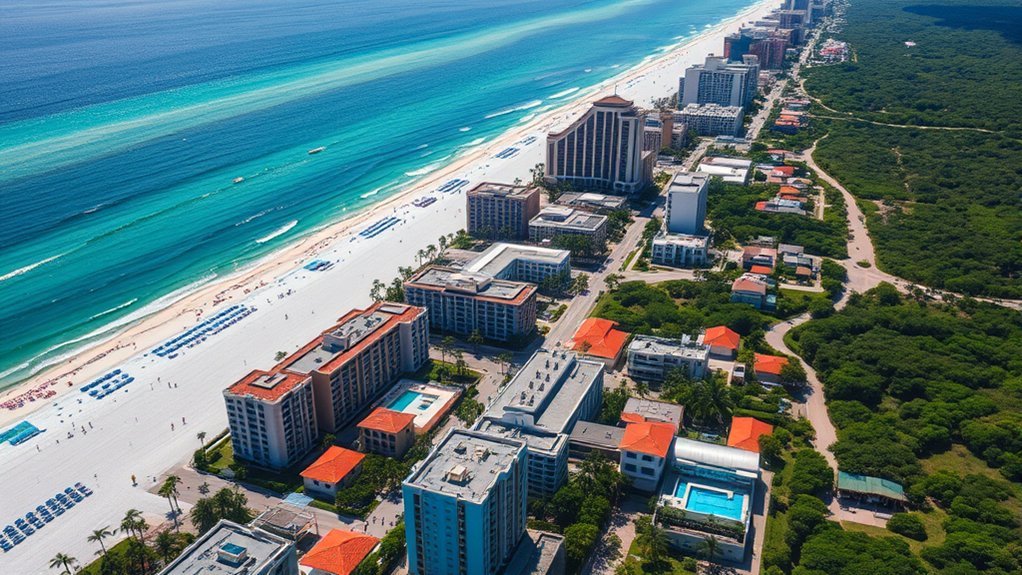
Location changes both the room price and the cost of getting around. A hotel farther from the beach or attraction may have a lower nightly rate, but you should add parking, tolls, fuel, rideshare fares, and travel time before deciding it is the better deal.
| Florida Area | Main Price Pressure | Value Check |
|---|---|---|
| Orlando and theme-park corridors | School-break travel, park events, family-size rooms, and shuttle convenience | Compare resort fees, theme-park transportation, parking, breakfast, and ticket-package terms. |
| Miami Beach and South Beach | Beach access, nightlife, weekend demand, traffic plans, and parking restrictions | A walkable hotel may cost more but reduce parking, towing, and rideshare risk. |
| Fort Lauderdale and Port Everglades area | Beach travel plus pre- and post-cruise stays | Check cruise parking, port transportation, and whether the hotel shuttle is included. |
| Florida Keys and Key West | Limited inventory, island geography, and weekend leisure demand | Compare the full route, parking, minimum-stay rules, and alternatives outside the most central areas. |
| Tampa Bay and Gulf beaches | Beach weekends, local school breaks, sports, concerts, and seasonal events | Compare beach access, bridge traffic, parking, and cancellation terms. |
| Panhandle beach towns | College-oriented Spring Break dates, beach proximity, and event rules | Confirm age, occupancy, security-deposit, and minimum-stay policies before booking. |
How to Compare Budget and Luxury Hotel Options
A budget hotel is not automatically the cheapest trip, and a luxury hotel is not automatically poor value. Compare what you will actually use and what you would otherwise pay for separately.
- Room capacity: Check the maximum occupancy and bed setup. Two low-priced rooms may cost more than one suite, while a suite may include a kitchen that lowers meal costs.
- Transportation: Add parking, tolls, resort shuttles, rideshare fares, and airport or cruise-port transfers.
- Food: Compare included breakfast, kitchen facilities, refrigerator size, and nearby dining prices.
- Beach or attraction access: A walkable location can save time and reduce daily transportation costs.
- Rate rules: A cheaper prepaid rate may be a worse choice than a slightly higher refundable rate when plans are uncertain.
- Benefits you will use: Pools, kids’ activities, late checkout, lounge access, and theme-park transportation have value only when they match your plans.
Compare the True Total Cost Before Booking
Since May 12, 2025, the Federal Trade Commission’s rule on unfair or deceptive fees has required businesses that advertise short-term lodging prices to display the total price including mandatory fees more prominently than other pricing information. Government taxes and optional extras may still appear separately before payment. Even with clearer displays, read the final checkout page carefully.
Florida hotel stays are generally subject to the state sales tax, and counties may impose additional tourist development or other local transient-rental taxes. The exact tax depends on the property’s location. Compare the final amount for the entire stay, not a base nightly rate multiplied by the number of nights.
Note: A useful comparison formula is: room total + mandatory fees + taxes + parking + transportation + expected food costs − included benefits. Use the same number of guests and the same cancellation terms for every option.
Also check for charges or deposits that depend on your choices or behavior, such as valet parking, pet fees, rollaway beds, early check-in, late checkout, damage deposits, or incidental holds. A refundable incidental hold is not the same as a fee, but it can temporarily reduce the available balance on a debit or credit card.
Last-Minute Hotel Deals: Are They Worth the Risk?
Last-minute deals can exist, but they are not a dependable Spring Break strategy in Florida’s most popular locations. The risk is highest when you need a specific neighborhood, beachfront access, a suite, multiple beds, connecting rooms, accessible features, pet-friendly lodging, or space for a larger group.
Timing Considerations
A flexible solo traveler who can change neighborhoods or dates has a better chance of using a last-minute rate than a family tied to school dates. Check Sunday-through-Thursday stays, nearby cities, and one-day date shifts. Do not assume a midweek room will always be cheaper; conventions, events, and group bookings can reverse the normal pattern.
Price Variability Risks
The original nightly rate is only one part of the risk. Last-minute travelers may also face fewer room types, stricter rate rules, higher parking costs, longer drives, and limited dining or transportation options.
| Traveler Need | Last-Minute Risk | Safer Approach |
|---|---|---|
| Beachfront or theme-park location | High | Book refundable early and recheck. |
| Suite, kitchen, or room for five or more | High | Reserve while the required room type is available. |
| Flexible dates and neighborhood | Moderate | Search several nearby areas and shift dates by one or two nights. |
| One traveler needing only a basic room | Lower, but not zero | Set a maximum all-in cost and confirm transport before booking. |
Flexibility Advantages
Flexibility can reduce risk when it is specific. Useful options include changing the trip by one or two nights, staying inland, splitting a stay between two hotels, choosing a different beach community, or accepting a basic room. A vague plan to “wait for a deal” is not the same as having workable alternatives.
Warning: Do not cancel an existing reservation until the replacement booking is confirmed and you have checked its total price, room type, cancellation terms, and payment status.
Effective Strategies for Scoring Hotel Discounts
Use several savings methods instead of relying on one advertised discount:
- Check the hotel’s direct rate and at least one comparison platform. Confirm that the room type, occupancy, taxes, mandatory fees, and cancellation rules match.
- Look for official destination or resort offers. Promotions are date-specific and can expire, so verify the current terms on the property’s official website. Walt Disney World, for example, publishes changing offers on its official special-offers page.
- Join free loyalty programs before booking. Member rates can help, but compare the final price and benefits rather than assuming the member label is cheapest.
- Use eligible discounts carefully. AAA, AARP, government, military, resident, employer, and credit-card travel rates may require identification or membership at check-in.
- Compare package value. A room-and-ticket or room-and-transportation package can be useful, but calculate the separate prices and read change and refund rules.
- Try nearby dates and neighborhoods. Moving one night or a few miles can matter more than a small percentage coupon.
- Call for complex needs. For connecting rooms, accessible features, large families, or extended stays, a hotel agent may explain inventory and policies that are unclear online.
Cancellation Policies and Flexibility: What to Expect After Booking
Cancellation rules vary by hotel, rate plan, booking channel, and date. There is no universal 24-hour, 48-hour, or 72-hour refund rule for Florida hotels. Some flexible rates allow cancellation shortly before arrival; advance-purchase and promotional rates may be partly or fully nonrefundable.
Cancellation Policies Overview
Before paying, identify all of the following:
- The exact cancellation deadline, including the property’s local time zone.
- Whether the deadline applies to the full stay or each night.
- The penalty after the deadline, such as one night, a deposit, or the full reservation.
- Whether shortening the stay changes the nightly rate or triggers an early-departure charge.
- Whether a third-party platform or the hotel controls changes, refunds, and customer service.
- Whether the rate is prepaid, pay-later, refundable, partially refundable, or nonrefundable.
- How long a refund may take to return to the original payment method.
Importance of Flexibility
A flexible rate is valuable only if you track the deadline. Add it to your calendar and recheck the reservation several days before it closes. If a lower rate appears, compare every term, reserve the replacement, verify the confirmation, and then cancel the original booking.
Booking directly can simplify communication with the property, while a third-party site may offer a lower rate or useful rewards. Neither channel is always best. The key is to know who will handle changes and what happens if the hotel cannot find the reservation, the room type changes, or a refund is delayed.
Florida Spring Break Hotel Booking Checklist
- Confirm your exact travel dates and check the school and event calendars affecting the destination.
- Choose two or three acceptable neighborhoods, not only one hotel.
- Search with the correct number and ages of guests so occupancy and extra-person charges are accurate.
- Compare the same room type and refundability across direct and third-party channels.
- Add taxes, mandatory fees, parking, transportation, and expected food costs.
- Read age, deposit, pet, minimum-stay, and check-in requirements.
- Book a refundable option when the total price and location meet your needs.
- Save the confirmation and cancellation deadline.
- Recheck prices before the deadline and change only after a replacement is confirmed.
- Review destination-specific traffic, parking, beach, and public-safety notices shortly before travel.
Frequently Asked Questions
Is Florida expensive during Spring Break?
It can be, especially on popular March weekends near beaches, theme parks, cruise ports, and nightlife areas. There is no single statewide rate increase. Compare your exact dates and the full after-fee total for several neighborhoods.
When is Spring Break in Florida?
Florida does not have one Spring Break week. Public-school districts and colleges publish separate calendars. In 2026, many Central Florida districts were off March 16–20, while Miami-Dade public schools were off March 23–27. Check the current calendar for the destination and the schools affecting your group.
How early should I book a Florida Spring Break hotel?
Start comparing about four to six months ahead when possible. Book earlier when you need a beachfront location, suite, kitchen, connecting room, accessible room, pet-friendly property, or space for a large group. A refundable rate lets you recheck before the cancellation deadline.
Are Florida hotels cheaper during the week?
They often can be, but not always. Sunday-through-Thursday leisure demand may be lower than Friday and Saturday demand, while conventions, tournaments, or events can make a weekday expensive. Compare your exact dates rather than relying on a general rule.
Do displayed hotel prices include resort fees and taxes?
Mandatory lodging fees should be included in the prominently displayed total price under the FTC rule effective May 12, 2025. Government taxes and optional extras may be shown separately before payment, so review the final amount for the entire stay.
Is it better to book directly with the hotel?
Direct booking can make property communication simpler, while a third-party platform may offer a different price or rewards. Compare identical terms and confirm who controls changes, cancellations, refunds, and customer service.
Conclusion
Florida Spring Break hotel prices depend on the destination, exact dates, room type, events, and remaining inventory, so avoid relying on a single statewide percentage or a promised “best” booking day. Start comparing early, reserve a suitable refundable rate, and recheck it before the cancellation deadline. The strongest deal is the property that meets your needs at the lowest true trip cost after taxes, mandatory fees, parking, transportation, and included benefits.
Sources
- Federal Trade Commission: Rule on Unfair or Deceptive Fees FAQ — total-price and mandatory-fee requirements for short-term lodging.
- Florida Department of Revenue: Sales and Use Tax — state sales tax and local transient-rental tax framework.
- Google Travel Help: Search for Hotels — hotel comparison, price accuracy, taxes, fees, and booking-partner guidance.
- Orange County Public Schools: March 2026 Spring Break notice — Central Florida school-break timing.
- Miami-Dade County Public Schools: 2026 Spring Recess notice — March 23–27, 2026 district closure.
- City of Miami Beach: Spring Break 2026 measures — March high-impact periods, traffic, parking, and public-safety planning.