
In Zambia, your monthly rent usually ranges from about $400 to $800 for a one-bedroom apartment and $600 to $1,200 for a two-bedroom unit. In Lusaka, standard 2–3 bedroom homes often cost 10,000 to 15,000 ZMW, with central neighborhoods priced higher. Location, amenities, inflation, and limited supply drive rates, while housing quality can lag behind rent. If you keep going, you’ll see how costs vary by area and property type.
How Much Does Rent Cost in Zambia?
Rent in Zambia varies widely by city, neighborhood, and property type, but a typical one-bedroom apartment costs about $400 to $800 per month, while a two-bedroom unit usually falls between $600 and $1,200.
You’ll see average rental trends shaped by location, access to transport, and nearby services, so your costs can shift fast. In Lusaka, standard rent for 2-3 bedroom homes often runs 10,000 to 15,000 ZMW, and central areas usually price higher.
Your housing market analysis should also account for seasonal demand, which can push rates up when supply tightens. Reports show quality often lags behind price, so you shouldn’t assume higher rent means better housing.
If you’re comparing options, you can use expat communities for practical cost references and local insight. That lets you negotiate more confidently and protect your freedom to choose housing that fits your budget and standards.
Rent in Lusaka by Neighborhood
In Lusaka’s central neighborhoods, standard 2-3 bedroom rentals typically cost between 10,000 and 15,000 ZMW, and you’ll usually pay more as demand rises in well-connected areas.
If you’re comparing Lusaka neighborhoods, you’ll see clear rental trends: central locations command higher prices because housing demand stays strong and market competition remains tight.
For you, that means expat preferences often cluster near these areas, especially where transport, services, and security feel more accessible.
Still, price fluctuations don’t always reflect quality. You may encounter quality concerns, including concrete kitchens and lower construction standards, even as rents climb.
That gap matters if you’re weighing value against cost. In practical terms, the market asks you to pay for location first, while the housing stock doesn’t always justify the premium.
As a result, you should assess each neighborhood carefully, compare listings, and push for better standards that match what you’re asked to spend.
Apartment Rent in Zambia
Apartment rents in Zambia vary sharply by city and neighborhood, with a one-bedroom unit typically costing $400 to $800 per month and a two-bedroom apartment ranging from $600 to $1,200. You’ll see the highest pressure in central Lusaka, where demand outpaces supply and landlords push prices upward. Many furnished apartments include appliances and meet international expectations, which can save you upfront costs. Still, you should inspect quality carefully, because some rentals show weak construction standards despite higher asking rents.
| Unit Type | Monthly Rent |
|---|---|
| 1-bedroom | $400-$800 |
| 2-bedroom | $600-$1,200 |
Before you sign rental agreements, compare neighborhood pricing, included amenities, and maintenance conditions. If you’re seeking housing that supports freedom and mobility, focus on value, not just appearance. The market rewards informed tenants who analyze costs, demand clarity, and negotiate from evidence rather than pressure.
House Rent in Zambia
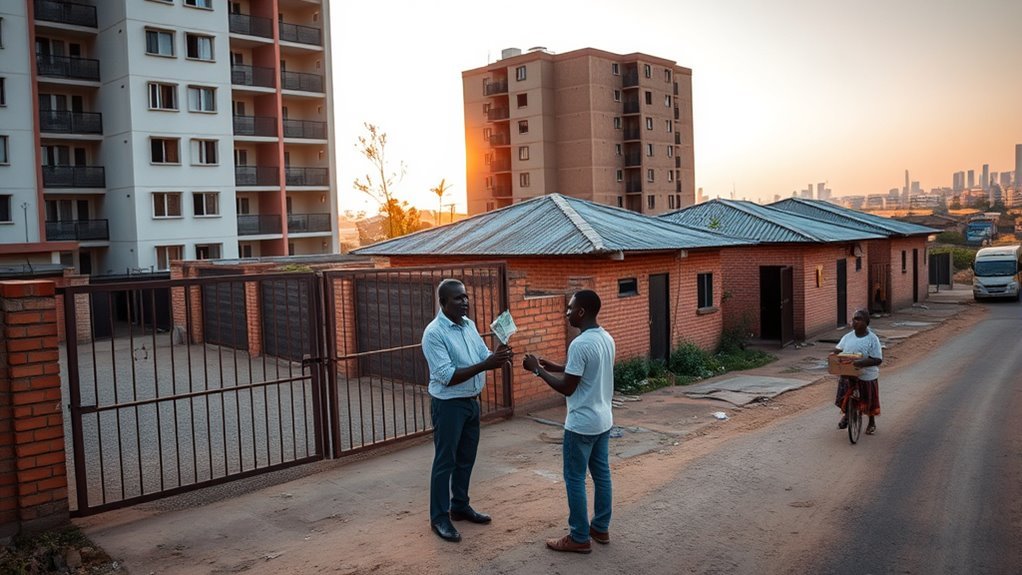
When you compare house rents across Zambia, you’ll see wide variation by city, with Lusaka’s standard 2- to 3-bedroom homes often renting for 10,000 to 15,000 ZMW and central areas costing more.
Your lease type and home size also shape the monthly rate, since larger houses and furnished properties usually command higher prices.
You should also factor in location, demand, and build quality, because these conditions can push rents up in high-density areas and affect overall value.
Rental Prices Across Cities
Rental prices vary widely across Zambia’s major cities, with Lusaka leading the market and central neighborhoods showing the steepest increases.
You’ll see clear urban trends in monthly costs: a 1-bedroom apartment usually runs from $400 to $800, while a 2-bedroom often reaches $600 to $1,200, depending on demand and amenities.
In Lusaka, standard 2-3 bedroom units range from 10,000 to 15,000 ZMW, so your rental comparisons need to factor in location.
At the high end, Woodlands can command about R110,370 for a 4-bedroom house, while Kabulonga sits near R95,983, even as housing quality falls.
These figures show how market pressure shapes your options and why informed choices matter for freedom and financial control.
Lease Types And Sizes
House rentals in Zambia typically come with lease terms of one to five years, and landlords usually favor longer agreements to keep occupancy stable.
You’ll usually see rental agreements that set the lease duration at 12 months or more, with upfront deposit requirements equal to one month’s rent plus the first payment. This structure gives you a clear cost baseline and limits surprise charges.
Property sizes often range from 2 to 4 bedrooms, so you can match space to household needs or shared living.
In many markets, especially for expats, furnishing options are often furnished or semi-furnished, with key appliances included. That setup can align with tenant preferences for mobility, autonomy, and faster move-in.
Factors Affecting Monthly Rent
Monthly rent in Zambia is shaped by a mix of location, unit size, and market conditions. One-bedroom apartments typically range from $400 to $800, while two-bedroom units range from $600 to $1,200, depending on amenities and neighborhood.
You’ll see rental trends rise fastest in central Lusaka, where housing demand pushes 2-3 bedroom units to about 10,000-15,000 ZMW. Neighborhood amenities, like schools and shopping centers, often lift prices because they improve daily access.
Economic factors also matter; inflation and income pressure can tighten supply and shift rates. Seasonal fluctuations can change availability, so you may face higher quotes during peak periods.
You should also weigh construction quality, since many rentals’ standards are slipping even as rents climb, limiting value and housing freedom.
How Much Does Commercial Rent Cost in Lusaka?
Commercial rent in Lusaka varies widely by location, building grade, and floor area, with prices ranging from about R146,641 per month for newly built office space in Rhodespark to R759,866 per month for Grade B offices near Longacres Mall.
You can use these rental trends to benchmark your budget and compare office space across districts. A modern building on Kafue Road costs about R409,528 monthly and gives you two spacious floors plus parking.
In the Central Business District, a 1,200 m² property lists at R533,239 per month and offers multiple floors for varied operations. Rhodespark’s open-plan units, from 120 sqm to 140 sqm, start at R146,641, while many listings include partitions and utilities, which can lower setup friction.
If you’re seeking room to grow, you can assess each option against your team size, customer access, and cash flow. The market gives you choices, but disciplined comparison helps you secure space that supports autonomy and efficient business delivery.
What Drives Rent Prices in Zambia?
Rent in Zambia is shaped by a few clear market forces, and location sits at the top of the list: properties in central neighborhoods usually command higher rates because demand is stronger there.
In the rental market, you’ll also see housing demand rise when jobs, transport, and services cluster nearby, amplifying location impact. Economic factors like inflation can push landlords to adjust prices upward, while seasonal trends create short-term spikes during peak moving periods.
Supply imbalance matters too: when new housing doesn’t keep pace with urban growth, rents climb faster than wages. Tenant preferences for accessibility and reliability further concentrate demand in a few areas.
When new housing lags behind urban growth, rents rise faster than wages.
- Central areas often price above the average because competition stays intense.
- Limited new developments deepen the supply imbalance in high-density zones.
- Market pressure rises when seasonal trends and inflation overlap.
How Housing Quality Affects Rent
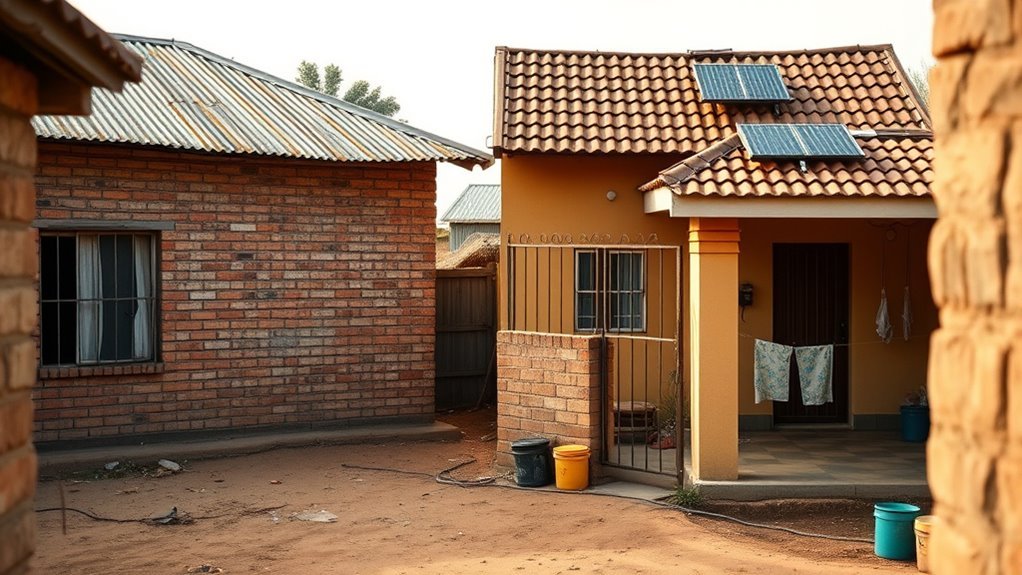
Housing quality plays a direct role in what you pay in Zambia’s rental market, because better-built and better-finished homes usually justify higher asking prices, while weaker construction can leave tenants paying more for less.
When you assess a unit, you’ll often see the gap in housing aesthetics, especially in kitchens built with plain concrete finishes that many residents see as short on durability. That gap matters because tenant expectations are rising even as rent climbs, particularly in central Lusaka, where prices increase despite complaints about construction quality.
You may also notice stronger demand for timber and other upgraded materials, which signals a clear preference for better material quality. In practical terms, rent should reflect reliable construction standards, not only location.
If landlords ignore that balance, you’re left funding poor workmanship. Better housing isn’t a luxury; it’s part of fair value and dignity.
Where to Find Rentals in Zambia
You can find rentals in Zambia through several reliable channels, each offering different levels of market visibility and support.
Local real estate websites and expat forums often show current listings and market notes, so you can compare prices and availability efficiently.
Social media groups for expats also post rentals and housing advice, giving you fast access to community-verified options.
Networking with other expats can surface expat recommendations for trusted agents and safer neighborhoods, which helps you avoid weak leads.
Local classifieds in newspapers and community boards still matter, especially if you want broader coverage beyond digital platforms.
Real estate agents can guide you through rental agreements and match your needs with available properties.
For practical rental tips, track multiple sources, verify contracts, and assess location data before committing.
- Compare listings across platforms to detect price gaps.
- Use expat recommendations to identify reliable agents.
- Check classifieds for overlooked housing opportunities.
Frequently Asked Questions
How Much Is the Average Rent in Zambia?
You’ll usually pay $400–$800 monthly for a one-bedroom Zambia rental, while two-bedrooms run $600–$1,200. In Lusaka’s housing market, 2–3 bedroom units often cost 10,000–15,000 ZMW, depending on location and demand.
How Much Do You Need to Live Comfortably in Zambia?
You’ll need roughly $600–$1,200 monthly to live comfortably in Zambia; housing expenses and cost of living vary by city. In Lusaka, you might pay 10,000–15,000 ZMW for a two-bedroom—an ocean of difference.
What Is the Average Salary in Zambia in USD?
You’d see Zambia’s average salary around $300–$400 monthly in USD, depending on industry and experience. For cost of living and salary comparison, that’s roughly $3,600–$4,800 annually, though urban jobs often pay more.
Where Do Expats Live in Lusaka?
You’ll find expats neighborhoods mostly in Woodlands, Kabulonga, and Rhodespark, where security and amenities stay strong. In Lusaka, higher cost of living often matches modern apartments, international standards, and easy access to expat networks.
Conclusion
In Zambia, rent varies widely by location and property type. In Lusaka, a one-bedroom apartment in the city center can cost around K6,000 to K10,000 per month, while similar units outside the center are often much cheaper. That gap shows how strongly neighborhood, size, and housing quality shape your budget. If you’re comparing options, use local data, inspect the property carefully, and weigh commute costs against monthly rent to find the best value.
