
The average cost of a double occupancy hotel room in the United States depends on where and when you stay. A national hotel rate can help you plan, but it is not a fixed price for two people. Your final cost also depends on fees, taxes, parking, meals, and booking terms.
Quick Answer
For 2026, a useful U.S. hotel benchmark is $161.78 per sold room per night, based on August industry data. If two adults divide that amount equally, each pays $80.89 before taxes and other costs. This is not a quoted two-guest rate. Your dates, destination, bed choice, included services, and mandatory fees determine your real bill.
Last checked: October 31, 2026. Dates and figures were verified against official sources.
Key Takeaways
- Double occupancy normally means two registered guests sharing one room. It does not automatically mean the room has two beds.
- U.S. hotel ADR was $161.78 in August 2026, down from $173.76 in June. These are monthly room-revenue averages, not two-guest quotes.
- New York, San Francisco, Miami, resorts, and large-event dates can cost much more than the national benchmark.
- Mandatory resort or destination fees should be included in the advertised total price, although government taxes and optional services may appear separately before payment.
- Compare the final total, room conditions, cancellation policy, parking, breakfast, and bed type instead of comparing base rates alone.
Average Double Occupancy Hotel Room Cost in the U.S.

A practical starting figure is the $161.78 U.S. hotel average daily rate reported in CoStar’s August 2026 hotel performance report. The earlier CoStar and STR June 2026 report recorded $173.76. The difference shows why you should not treat one month as a fixed yearly price.
Average daily rate (ADR) means room revenue divided by rooms sold, as defined in CoStar’s STR glossary. It includes rooms with different guest counts, so it is not a measured average for two-adult bookings. It also does not give you an all-in price after government taxes, separate fees, or optional purchases.
| Benchmark | Average Daily Rate | What It Shows |
|---|---|---|
| U.S. full year, 2025 | $160.54 | The most recent completed annual national ADR. |
| U.S., June 2026 | $173.76 | A summer monthly benchmark influenced by major events. |
| U.S., August 2026 | $161.78 | A more recent national monthly ADR, not a two-guest room quote. |
| New York City, full year 2025 | $333.71 | An example of a high-cost urban market. |
| San Francisco/San Mateo, June 2026 | $264.42 | An event-affected market substantially above the national average. |
Using the August 2026 U.S. ADR, two people splitting one room equally would pay $80.89 each per night before taxes and extra charges. Three nights at that constant rate would total $485.34 for the room, or $242.67 per person. This is a calculation from an industry average, not an available hotel offer.
A national hotel average is a planning benchmark, not a promise. The same room can change price according to the date, demand, cancellation rules, occupancy, and booking channel.
What Double Occupancy Means
Double occupancy normally means that two registered guests will share one hotel room. The quoted price is usually for the room, not per adult, provided both guests fit the property’s standard occupancy limit.
Double occupancy does not necessarily mean that the room includes two beds. A double-occupancy room can have one king bed, one queen bed, two double beds, or two queen beds. “Double room” and “double occupancy” do not promise the same bed layout. Confirm the room description, especially if you need separate beds.
A hotel may charge more when:
- The reservation exceeds the room’s standard number of adults.
- A rollaway bed or crib is requested.
- The selected package includes breakfast or another per-person benefit.
- Local rules or property policies create additional per-guest charges.
- A larger room or suite is required to meet occupancy limits.
Note: Enter the correct number of adults and children when searching. A rate shown for one guest may change when a second adult is added, particularly when meals, admission, or other per-person benefits are included.
Factors Influencing Hotel Prices in 2026
Hotels use dynamic pricing: rates can change as rooms sell and demand shifts. The June 2026 CoStar and Tourism Economics forecast projected 2.0% annual ADR growth and 62.8% occupancy. Its August 2026 revision raised those forecasts to 3.1% ADR growth and 63.1% occupancy. These national estimates do not predict every hotel’s price.
The largest influences on your double occupancy hotel room cost include:
- Destination and neighborhood: Downtown, airport, beachfront, convention-center, and theme-park locations may have very different rates.
- Travel date: Weekends, weekdays, holidays, concerts, conventions, sports events, and school breaks affect demand.
- Hotel category: Economy, midscale, upscale, boutique, resort, and luxury properties serve different price ranges.
- Room type: Bed configuration, floor, view, suite layout, balcony, and accessibility features can affect the rate.
- Cancellation terms: A prepaid nonrefundable rate may cost less than a flexible rate, but it carries more risk.
- Length of stay: Some properties offer weekly or extended-stay rates, while others charge more on high-demand nights within the same trip.
- Included benefits: Breakfast, parking, airport transport, lounge access, and resort activities may raise the rate but lower other trip costs.
Seasonal Changes: How Prices Fluctuate Throughout the Year
There is no single U.S. hotel peak season. The expensive period depends on where you are going and why travelers visit that destination.
- Beach destinations may peak during warm-weather months, spring break, or holiday weekends.
- Ski destinations often cost more during winter snow periods and holiday weeks.
- Desert destinations may be more expensive during cooler months.
- Business districts can have stronger weekday demand and lower weekend prices.
- Resort destinations may charge more on weekends than on midweek dates.
- College towns can spike during graduation, homecoming, move-in, and major sports weekends.
- Convention cities may become expensive during a single large conference even when the broader month is normally quiet.
Monthly lodging prices can also be volatile. The U.S. Bureau of Labor Statistics tracks hotels, motels, resorts, hostels, and vacation rentals within its lodging-away-from-home price index, reflecting how short-term accommodation prices move differently from ordinary long-term housing costs.
Pro Tip: Search one or two days before and after your preferred dates. Moving a stay away from a concert, convention, holiday, or Saturday night can produce a larger saving than waiting for a supposed “best booking day.”
Major Cities With the Highest Hotel Rates
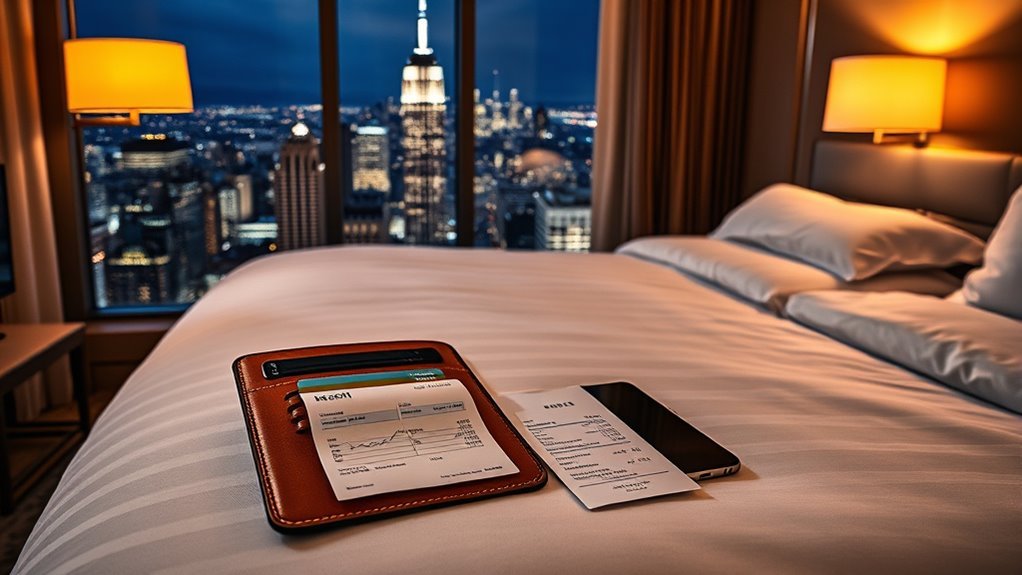
Large-city hotel costs often exceed the national benchmark, but the amount varies by neighborhood and event calendar. In CoStar’s 2025 annual data, New York City recorded a $333.71 ADR, San Francisco recorded $225.82, and Las Vegas recorded $199.79.
World Cup travel affected June 2026 prices: San Francisco/San Mateo reached a $264.42 ADR, while Miami reached $218.37. In August, San Francisco’s ADR was $216.77 and New York City’s was $275.07. These are market averages for rooms sold, not guaranteed prices for your dates.
To reduce costs in an expensive city, compare:
- Downtown hotels with properties near a subway or commuter-rail station.
- Hotels with free breakfast against lower base-rate hotels without breakfast.
- Properties with free parking against downtown hotels with paid parking.
- Refundable rates against cheaper nonrefundable offers.
- The cost of staying farther away against the additional transportation time and expense.
Exploring Budget-Friendly Hotel Alternatives
A standard hotel is not always the lowest-cost choice for two travelers. The best alternative depends on the stay length, location, transportation needs, and the amount of space you need.
- Motels: Often practical for road trips and may include free surface parking.
- Economy hotels: Usually offer basic rooms with fewer on-site services.
- Extended-stay hotels: May include a kitchenette, guest laundry, and weekly pricing.
- Hostels: A private room or two dorm beds may work in expensive urban markets, but compare bathroom arrangements and privacy.
- Vacation rentals: A kitchen and living space can provide value for longer stays, but cleaning terms, cancellation rules, parking, and location matter.
- Suites: A higher nightly price can still offer value when it replaces a second room or reduces meal costs.
Do not assume that a vacation rental automatically has clearer pricing or fewer charges. The FTC’s lodging fee rule covers hotels, motels, home shares, and vacation rentals. Mandatory cleaning fees and other calculable required charges must be included in the displayed total price.
How Hotel Amenities Affect Room Pricing
Amenities can affect a hotel’s rate, but location and demand are often more important. A basic hotel next to a convention center may cost more than a full-service hotel in a quieter neighborhood during a large event.
Amenities That Drive Costs
Features that may support a higher room rate include:
- Complimentary or full-service breakfast.
- On-site parking or valet service.
- Airport or local transportation.
- A pool, fitness center, spa, or private beach.
- A kitchenette or full kitchen.
- A club lounge, concierge, or room service.
- Premium views, balconies, larger floor plans, or separate living areas.
- Included activities at a resort.
Some amenities increase the rate but lower your total trip cost. For example, free parking and breakfast may be worth more to you than a slightly cheaper room that charges separately for both.
Impact on Booking Trends
Travelers increasingly compare the full value of a stay rather than the room rate alone. Hotels may package breakfast, parking, credits, or activities into a higher rate, while other properties offer a lower room-only price.
Compare packages using the benefits you will actually use. A $25 breakfast credit has little value if you plan to leave early, and resort facilities may not justify a higher total when your schedule keeps you away from the property.
Hidden Fees: Understanding Additional Costs
The term “hidden fees” needs current context. Effective May 12, 2025, the FTC’s Rule on Unfair or Deceptive Fees requires sellers of short-term lodging to show the total price more prominently than other price information when they advertise a price. The displayed total must include mandatory fees the business knows and can calculate upfront.
Government taxes, optional services, and charges created by a later guest decision may still appear separately, but the final amount must be disclosed before payment.
Warning: Do not compare a nightly base rate on one website with an all-in total on another. Confirm that the dates, guest count, room type, taxes, mandatory fees, and cancellation terms are identical.
Hidden Charges Overview
Check these items before completing a hotel reservation:
| Charge | What to Check |
|---|---|
| Mandatory resort or destination fee | It should be included in the advertised total price, although the seller may also itemize it. |
| Government taxes | These may be excluded from the initial total but must be disclosed before payment. |
| Parking | Confirm whether parking is free, optional, valet-only, off-site, or charged per night. |
| Breakfast | Check whether breakfast is included for both guests or only available as a paid add-on. |
| Extra-person charge | Enter the correct guest count and review the room’s standard occupancy. |
| Pet fee | Check whether the charge is per stay, per night, or per animal. |
| Deposit or card hold | A refundable security hold affects available credit even though it is not necessarily part of the final room cost. |
Resort Fees Breakdown
A mandatory resort fee may cover Wi-Fi, pool access, fitness facilities, local calls, classes, or other services. Whether you use those services does not normally make a mandatory fee optional.
Under the FTC rule, a property advertising a $199 room with a required $39 resort fee must display $238 as the upfront total price before government taxes. The hotel may still show the $199 and $39 components, but the itemization must not overshadow the total. Split equally, that $238 room-and-fee amount is $119 per person before government taxes.
Optional spa treatments, paid parking, room upgrades, meals, and trip protection can remain separate until you choose them. Review the final payment screen and save the confirmation showing the total and cancellation terms.
Average Costs for Extended Stays
For an extended stay, multiplying one advertised nightly rate by the number of nights may not produce the final price. Different nights can have different rates, and weekly discounts may apply only to certain room types or booking channels.
To see why your dates matter, use the June 2026 national ADR as a separate summer example:
- Three nights at $173.76 equal a $521.28 base room cost.
- Two people splitting the room equally would pay $260.64 each before taxes and optional items.
- Seven nights at the same rate would equal $1,216.32 before taxes and optional items.
Your actual stay may mix cheap and expensive nights. Add each night’s rate, required fees, taxes, and any extras you expect to buy. Then divide the complete amount by two if you are sharing equally. For longer stays, also compare kitchen access, laundry, housekeeping, parking, breakfast, and cancellation rules.
Pro Tip: When possible, reserve a refundable rate and check the same room again before the cancellation deadline. If the total falls, you may be able to rebook without losing the original reservation.
Tips for Finding the Best Deals on Hotel Rooms

There is no dependable universal day or hour that always produces the cheapest hotel price. Use a repeatable comparison process instead:
- Search flexible dates. Compare nearby weekdays and weekends.
- Check the event calendar. Conferences, concerts, games, graduation, festivals, and holidays can sharply increase demand.
- Compare equivalent rooms. Match the bed type, guest count, refundability, breakfast, and payment terms.
- Compare final totals. Include mandatory fees, taxes, parking, and other services you expect to use.
- Review the map. A lower-priced hotel may create higher transportation costs.
- Check direct and third-party offers. Direct bookings may include loyalty benefits, while another channel may have a lower public rate.
- Use price insights. Google Hotels can help compare offers and nearby properties. Google requires partners to include taxes and fees in prices sent to it, but rates can change before you finish booking.
- Book major events early. Waiting for a last-minute discount can backfire when the destination is likely to sell out.
- Read the cancellation policy. A cheaper nonrefundable rate may not be worth the risk when plans could change.
- Recheck refundable reservations. Rates may fall, rise, or disappear as inventory changes.
Comparing Hotel Prices Across Chains
Brand name alone does not determine a hotel’s price. Two properties from the same chain may have different owners, locations, parking policies, renovations, breakfast programs, and demand levels.
Use the following checklist when comparing hotel chains:
| Comparison Point | Why It Matters |
|---|---|
| Final price | Shows the real cost after mandatory charges and disclosed taxes. |
| Bed type and room size | A “double occupancy” room could have one bed or two. |
| Cancellation deadline | Flexible rates reduce risk when plans may change. |
| Parking and breakfast | Included services can outweigh a small base-rate difference. |
| Location | Transportation costs and travel time affect the overall value. |
| Loyalty benefits | Points, late checkout, upgrades, or included Wi-Fi may add value. |
Frequently Asked Questions
What is the average cost of a double occupancy hotel room in 2026?
CoStar recorded a U.S. average daily rate of $161.78 per sold hotel room in August 2026. That works out to $80.89 per person if two adults share equally, before taxes and extra charges. This ADR includes different guest counts, so it is a planning benchmark rather than the average quoted price for double occupancy.
What does double occupancy mean at a hotel?
Double occupancy means two registered guests sharing one room. It does not guarantee two beds. Check whether the room has one king, one queen, two doubles, or two queens before booking.
Is a hotel room price usually per person or per room?
Most U.S. hotel rates are quoted per room for the entered number of guests. The price may change when additional adults, meals, rollaway beds, or packages priced per person are added.
Are resort fees included in the advertised hotel price?
A mandatory resort or destination fee that the seller knows and can calculate must be included in the prominently displayed total price under the FTC’s lodging fee rule. Government taxes and optional services may be shown separately, but they must be disclosed before payment.
How much should two people budget for a three-night hotel stay?
At the August 2026 U.S. hotel ADR of $161.78, three nights at the same rate would cost $485.34 for one room. That is $242.67 per adult when split equally, before government taxes, parking, meals, and optional purchases. Your booked rate may vary each night.
What is the hotel occupancy forecast for 2026?
In August 2026, CoStar and Tourism Economics increased their 2026 U.S. hotel occupancy forecast to 63.1% and their ADR growth forecast to 3.1%. The earlier June projections were 62.8% occupancy and 2.0% ADR growth. Forecasts are not guarantees and can change with demand and economic conditions.
What is the best day to book a hotel?
There is no universal booking day that always produces the lowest rate. Flexible dates, comparable final-price searches, early booking for major events, and rechecking refundable reservations are more dependable strategies.
Conclusion
A useful U.S. hotel cost benchmark is the $161.78 August 2026 ADR, or $80.89 per person if two adults split one room equally. June was higher at $173.76. Neither figure is a guaranteed double-occupancy rate, especially in expensive cities, resort areas, or during major events.
Use the national average only as a starting point. Enter the correct guest count, confirm the bed type, compare final totals, review cancellation conditions, and account for parking, breakfast, deposits, and transportation. Those details determine whether a room is truly affordable.
Sources
- CoStar: U.S. Hotel Performance for June 2026 — supports the $173.76 national ADR and June 2026 city-market data.
- CoStar: U.S. Hotels’ 2025 Full-Year Performance — supports the 2025 national, New York City, San Francisco, and Las Vegas ADR figures.
- CoStar and Tourism Economics: June 2026 U.S. Hotel Forecast — supports the 2026 occupancy and ADR growth forecast.
- Federal Trade Commission: Rule on Unfair or Deceptive Fees — explains upfront total-price requirements for hotels and vacation rentals.
- Google Travel: Search for Hotels — explains hotel price comparison, price accuracy, and final-cost checking.
- U.S. Bureau of Labor Statistics: Hotels and Motels in the CPI — explains how short-term lodging price changes are measured.
- CoStar: U.S. Hotel Performance for August 2026 — supports the $161.78 national ADR and August city averages.
- CoStar and Tourism Economics: August 2026 U.S. Forecast — supports the revised 2026 occupancy and ADR growth projections.
- CoStar STR Benchmark: Glossary — defines ADR and the room-revenue measure.