

Welding school can be an affordable path into skilled work, but the advertised tuition rarely shows the complete cost. Depending on the school, program length, and included equipment, direct program charges may range from a few thousand dollars at a subsidized public career center to more than $25,000 at a private trade school. Housing, transportation, testing, and reduced work hours can raise the total further.
Quick Answer
Most students should plan for roughly $3,000 to $30,000 in welding-school tuition and required fees, although costs can fall below or rise above that range. Add required gear, certification tests, transportation, housing, childcare, and lost work income, then subtract grants, scholarships, employer assistance, or eligible veteran benefits.
Key Takeaways
- Public career and technical programs may cost only a few thousand dollars, while private welding programs can exceed $20,000 before living expenses.
- Ask for the complete written price, including lab fees, tools, protective gear, books, consumables, testing, retests, and graduation charges.
- Most schools provide welding machines in their labs, so do not buy a machine unless it appears on the official required-supply list.
- FAFSA, scholarships, workforce programs, employer training, apprenticeships, and eligible VA benefits may reduce your out-of-pocket cost.
- Compare net cost with realistic local starting wages rather than assuming that the occupational median will be your first salary.
Welding School Cost Overview
There is no single national welding-school price. Schools use different program lengths, credit systems, fee structures, and definitions of “tuition.” Some include protective equipment and testing in the published total, while others list them separately.
| Program type | General planning range | Typical length | Important cost note |
| Public career or technical certificate | About $3,000–$10,000 | Several months to one year | Local subsidies may reduce tuition substantially. |
| Community-college certificate or diploma | About $4,000–$15,000 | One or two semesters to about one year | In-district, in-state, and out-of-state tuition can differ sharply. |
| Private trade-school program | About $15,000–$30,000 or more | Roughly seven months to one year | Lab, technology, gear, and insurance fees may add thousands of dollars. |
| Associate degree | About $10,000–$30,000 or more | About two years | General-education credits increase the time and total price. |
| Bachelor’s program | Often $40,000 or more before aid | About four years | Usually related to welding engineering, engineering technology, education, or management rather than entry-level welder training. |
These are screening ranges, not guaranteed prices. For a current comparison, one public five-month Welding Fabricator program lists $2,400 in tuition plus a $150 technology fee, approximately $223 for books, and approximately $858 for tools, supplies, and certifications. That produces about $3,631 in listed direct costs. A private-school cost page, by comparison, publishes welding-program totals above $20,000 for its stated enrollment periods. Review the dates and inclusions before comparing one figure with another.
Note: Tuition is only the charge for instruction. “Direct program cost” may add mandatory books, lab fees, tools, and gear. “Cost of attendance” may also include estimated housing, food, transportation, and personal expenses. Your “net price” is the remaining amount after grants and scholarships.

This daily devotional helps parents pray purposefully for their children through a full year of Scripture readings, reflections, and guided prayer prompts. Written to encourage faithful family discipleship, it offers practical, biblically grounded support for parents who want to shape their prayers around God's Word. A foreword by Sinclair B. Ferguson adds trusted theological insight and encouragement.

These colorful answer buzzers turn lessons, review games, and family activities into lively game-show style challenges that boost participation and make learning more interactive. Each buzzer has a distinct sound to clearly identify who buzzed in first, while the durable, palm-sized design makes them easy for kids and adults to use in classrooms, homeschools, and group settings.

Q-tips Original Cotton Swabs are a versatile everyday essential for home, beauty, and first aid tasks. Made with 100% cotton and soft tips at both ends, they provide gentle care for sensitive skin while helping with makeup touch-ups, small cleaning jobs, and hard-to-reach spaces. Their trusted quality and recyclable packaging guidance make them a practical choice for daily use.
Types of Welding Programs and Institutions
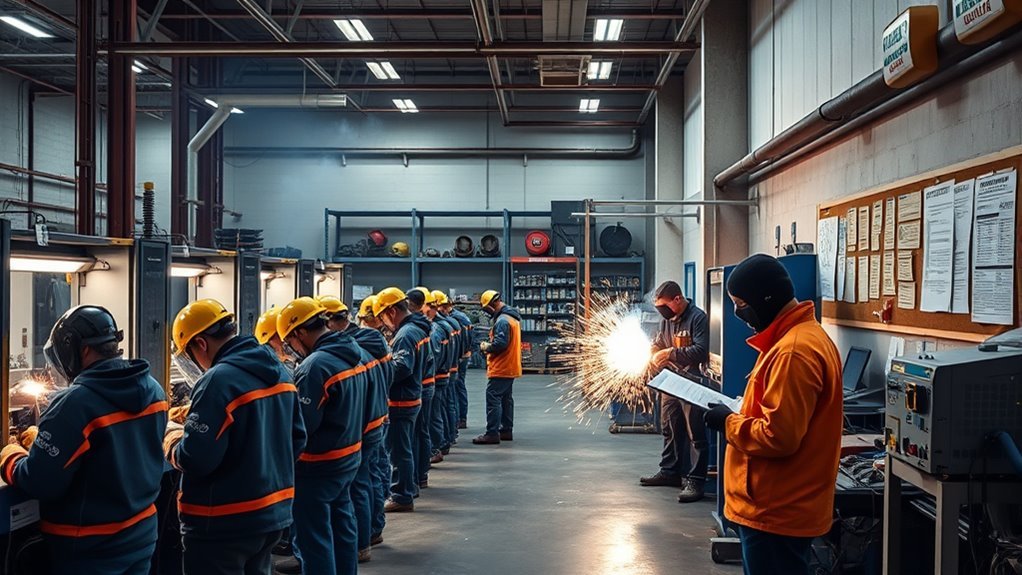
Welding training comes in several formats, including public career centers, private trade schools, community colleges, certificate or diploma programs, associate degrees, apprenticeships, and limited online coursework. The right path depends on the job you want, your local employers, your schedule, and the amount you can afford after financial aid.
Trade and career schools generally emphasize shop time and job-ready processes. Programs may cover shielded metal arc welding, gas metal arc welding, flux-cored arc welding, gas tungsten arc welding, cutting, blueprint reading, fabrication, and basic inspection.
Community colleges may offer short certificates, longer diplomas, and two-year associate degrees. Degree programs usually include general-education courses in addition to welding and fabrication classes. Credits may be useful for later education, but transfer is never automatic.
Certificate and diploma programs provide focused training without all the academic requirements of a degree. They can be a practical choice when local employers mainly want hands-on ability, safety knowledge, and successful completion of a welding qualification test.
Online courses can teach theory, symbols, metallurgy, safety concepts, and blueprint reading, but they cannot replace supervised booth time. A credible job-preparation program should include substantial in-person practice using the processes, positions, materials, and joint types relevant to local employers.
Registered Apprenticeships combine paid employment with structured training. They are usually separate from ordinary school tuition, although a college, union, employer, or training center may partner with an apprenticeship sponsor. Search current opportunities through the Apprenticeship.gov Job Finder.
Check institutional accreditation through the U.S. Department of Education accreditation database. Accreditation is an important quality and aid-eligibility signal, but it does not guarantee employment, credit transfer, employer recognition, or eligibility for every certification.
Pro Tip: Before choosing a program, call three local employers and ask which welding processes, positions, qualification tests, and credentials they expect from entry-level applicants. Choose training that matches those requirements instead of paying for unrelated courses.
Typical Tuition Ranges by Program Length

Program length affects tuition, but it does not tell you everything about value. A short course may be inexpensive yet too narrow for the jobs available near you. A longer program may teach more processes but include academic classes or fees that you do not need for your target position.
Short certificate courses lasting a few weeks or months may cost a few thousand dollars. They work best for students who already have basic fabrication experience, need one process, or are preparing for a specific employer test.
Programs lasting six to twelve months commonly provide broader hands-on preparation and may fall anywhere from the mid-four figures at a public school to more than $20,000 at a private institution.
Two-year associate degrees include technical courses plus general education. Total tuition and fees may reach $10,000–$30,000 or more, particularly for out-of-state students. Compare the additional cost with the degree requirements of the jobs you intend to pursue.
Four-year programs in welding engineering, welding engineering technology, manufacturing, or technical education can cost substantially more. They may support engineering, supervision, teaching, inspection, or management goals, but the Bureau of Labor Statistics lists a high school diploma or equivalent plus technical and on-the-job training as the typical entry path for welders, cutters, solderers, and brazers.
Compare programs by total direct cost, scheduled shop hours, student-to-booth ratio, included processes, equipment condition, test preparation, completion rate, and the percentage of graduates placed in welding-related jobs.
How to Calculate Your Total Welding School Cost
Start with an itemized written price from each school. Do not rely only on the number shown in an advertisement or discussed during a recruiting call.
Total-Cost Formula
Estimated out-of-pocket cost = tuition + mandatory fees + books + tools and PPE + testing and retests + transportation + housing and food + childcare + lost earnings − grants − scholarships − employer assistance − eligible workforce or VA benefits.
For example, a $9,000 program may appear cheaper than a $12,000 program. However, if the first school charges $2,000 for tools and lab access, requires a long commute, and offers no grant aid, its actual cost may be higher.
Include the following when comparing written estimates:
- Application and registration fees
- Tuition and mandatory institutional fees
- Lab, booth, technology, and consumable fees
- Books, online platforms, and blueprint materials
- Helmet, jacket, gloves, boots, safety glasses, and hand tools
- Certification applications, qualification tests, retests, and test coupons
- Transportation, parking, fuel, and vehicle maintenance
- Housing, utilities, food, health coverage, and childcare
- Income lost because of reduced work hours
- Loan interest and origination charges, when applicable
Equipment, Materials, and Safety Gear Costs
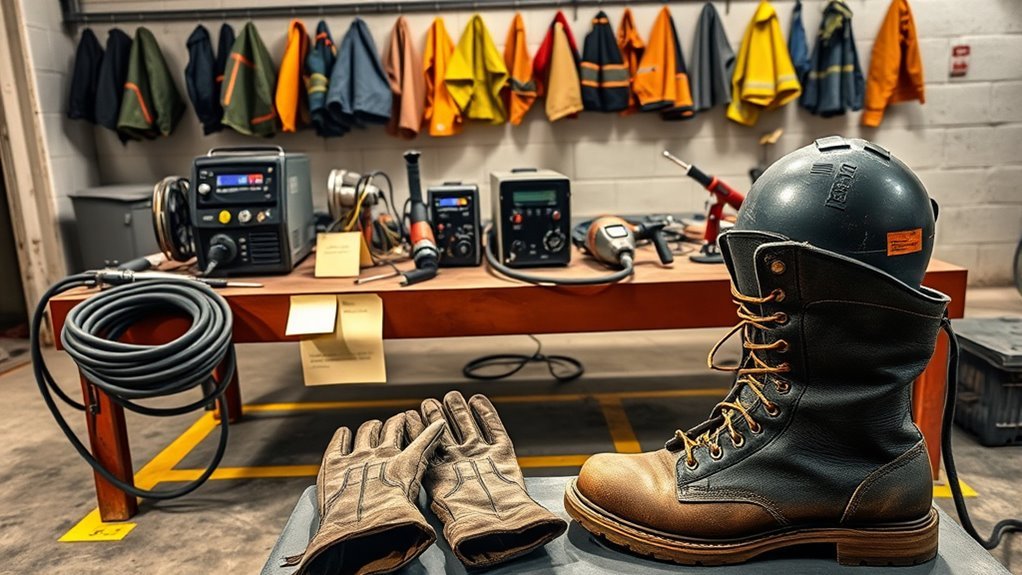
Most welding students need personal protective equipment and a basic set of hand tools. The exact list varies by school and may be included in the program price, sold as a required package, or purchased independently.
A typical list may include an approved welding helmet, safety glasses, hearing protection, flame-resistant clothing, welding gloves, work boots, pliers, a chipping hammer, wire brushes, soapstone, measuring tools, and a tool bag. Depending on the school package and quality level, required personal gear and tools may add several hundred to roughly $2,000.
Published school examples show how much the structure can vary. A public program may list hundreds of dollars for tools, supplies, and certifications, while a private program may charge separate four-figure gear and lab packages. Ask whether you keep the equipment after graduation and whether substitutions are permitted.
Warning: Welding can expose students to fumes, ultraviolet radiation, burns, electric shock, fire, noise, and flying particles. Inspect the lab before enrolling. Confirm that the school provides functioning ventilation, appropriate PPE rules, maintained equipment, safe cylinder storage, and direct instructor supervision. Review OSHA’s welding hazard guidance.
A basic personal welding machine may cost roughly $500–$2,000 depending on its process, output, duty cycle, and accessories. However, most students use school-owned lab machines. Do not buy a machine unless the official supply list clearly requires it or you independently want one for supervised practice at an appropriate location.
Consumables and replacement items can include electrodes, wire, tungsten, contact tips, cups, nozzles, grinding discs, cutting wheels, lenses, batteries, and gloves. Determine whether the lab fee includes these materials or whether students must replenish them.
Certification charges require special attention. Under the American Welding Society price list effective January 1, 2026, the Certified Welder application fee is $70, while the practical examination fee is set by the Accredited Test Facility. Retesting and maintaining a certification may create additional charges. Advanced credentials, such as Certified Welding Inspector, use a different fee structure and should not be confused with an entry-level welder qualification.
Use the AWS certification and education price list and request the school’s test-facility fees in writing.
Living Expenses and Additional Fees to Budget For

Living expenses may exceed tuition, especially when a student relocates or attends a full-time daytime program. A fixed estimate such as $5,000–$15,000 per academic year will not fit every location or household.
Use the school’s current cost-of-attendance budget as a starting point, then replace its estimates with your actual monthly costs. Published budgets from some private schools exceed $2,000 per month for students living with parents and approximately $3,000 per month for students living off campus in certain metropolitan areas. Those figures include categories such as living, travel, and personal expenses and may not match your situation.
Budget for:
- Housing: rent, deposits, utilities, internet, and renters insurance
- Food: groceries, meals between classes, and work lunches
- Transportation: fuel, public transit, parking, tolls, maintenance, and repairs
- Family costs: childcare or dependent care during class and lab hours
- Health costs: health insurance, prescriptions, and medical copays
- School charges: application, technology, graduation, transcript, and replacement-ID fees
- Testing costs: qualification tests, retests, travel to a test facility, and maintenance fees
- Opportunity cost: earnings lost when full-time training reduces your paid work hours
Pro Tip: Multiply your realistic monthly living cost by the number of months you will attend. A nine-month program with $1,600 in monthly expenses adds $14,400 to the education decision even when those expenses are not billed by the school.
Financial Aid, Scholarships, and Grants Available

Grants, scholarships, workforce funding, employer assistance, and eligible veteran benefits can reduce the amount you pay. Availability depends on the school, program, student, location, and funding year.
Always compare the net price after grants and scholarships, not simply the largest financial-aid package. Loans lower the amount due today but do not reduce the underlying cost.

This self-help book offers practical guidance for breaking free from overthinking, emotional chaos, and self-sabotage. Written by Daniel Chidiac, it helps readers build stronger self-awareness, emotional resilience, and healthier mental habits. A valuable read for anyone looking to regain control of their thoughts and responses.

Post-it Super Sticky Easel Pads are designed to keep ideas visible and organized during meetings, training sessions, brainstorming, and project planning. The large premium paper resists marker bleed-through and sticks securely to many surfaces, then repositions without surface damage. A sturdy backcard and portable handle make them easy to move between rooms and use with most easel stands.

Experience J.R.R. Tolkien's legendary Middle-earth saga in a compact hardcover boxed set that brings together The Hobbit and The Lord of the Rings. This deluxe collection is ideal for readers who want a portable, collectible edition of the classic fantasy adventures, making it perfect for gifting, re-reading, and building a treasured library. The boxed presentation adds display appeal while the hardcovers offer lasting durability for years of enjoyment.
Federal Grants and Loans
The Free Application for Federal Student Aid, or FAFSA, is used to determine eligibility for federal grants, work-study, and federal student loans. It is also used by many states and schools when awarding their own aid. The school and welding program must participate in the relevant federal aid programs.
For the 2026–27 award year, the maximum Federal Pell Grant is $7,395. The actual award depends on federal eligibility rules, enrollment intensity, cost of attendance, and other factors. A maximum award is not automatic and may not cover the complete program cost.
Complete the FAFSA through Federal Student Aid, add every school you are seriously considering, and compare the written offers.
- Prioritize grants and scholarships because they generally do not require repayment.
- Ask whether aid covers the full program or only one academic period.
- Check whether maintaining satisfactory academic progress is required.
- Review loan interest, fees, repayment obligations, and total projected debt.
- Confirm how withdrawing or failing a course could affect aid or create a balance owed to the school.
Industry Scholarships Available
Welding associations, foundations, employers, unions, local businesses, and community groups may offer scholarships for tuition, books, tools, equipment, or required fees.
The AWS Foundation scholarship program supports qualifying students in short-term training, certificate, two-year, and four-year welding-related programs. Award categories, eligibility rules, application periods, and deadlines vary.
Improve your application by preparing:
- A concise resume covering work, school, volunteer, and shop experience
- Transcripts or enrollment documentation
- Letters of recommendation from instructors or employers
- A clear explanation of your welding career goal
- Examples of projects, competitions, certifications, or related experience when requested
Apply broadly, but never pay an upfront fee for a scholarship application. Verify every opportunity through the organization’s official website.
School-Based Aid Programs
Schools may offer institutional grants, merit awards, need-based assistance, military pricing, payment plans, emergency funds, or donated equipment. Ask whether an award renews automatically and what happens if you change schedules or take a leave.
Other possible funding sources include:
- State or local workforce-development programs
- Workforce Innovation and Opportunity Act training support where available
- Employer tuition assistance or paid trainee programs
- Union training and apprenticeship programs
- High-school CTE and dual-credit programs
- Vocational rehabilitation benefits for eligible students
- Tribal, community-foundation, or local-industry grants
Do not assume that every accredited welding school accepts federal aid or that every program at a participating school is eligible. Confirm the exact program with the financial-aid office before signing an enrollment agreement.
Payment Plans, Loans, and Veteran Benefits
Some welding schools allow tuition to be divided into installments. A payment plan can help with cash flow, but it does not reduce the price. Ask for the enrollment fee, due dates, late charges, automatic-payment terms, refund treatment, and consequences of missing a payment.
Compare the net price and total debt, not the size of the monthly payment. A smaller payment stretched over a longer period can still produce a higher overall cost.
Federal student loans may provide fixed interest rates and federal borrower protections, but they remain debt. Private loans may use different rates, cosigner requirements, fees, and repayment terms. Review grants, scholarships, employer support, and workforce programs before borrowing.
Veterans, service members, and eligible dependents may be able to use GI Bill® benefits for an approved welding program. Approval applies to specific institutions and programs, not automatically to every course offered by a school. Search and compare programs with the Department of Veterans Affairs GI Bill school guidance, then confirm the program with the school’s VA certifying official.
Ask whether tuition, mandatory fees, books, supplies, certification tests, and housing are covered under your specific benefit and eligibility level. Do not rely only on a recruiter’s verbal estimate.
Certification, Licensing, and Testing Costs
Welding-school tuition and certification costs are not always the same. A program may teach toward an industry qualification while charging separately for the final test, test materials, retests, or certification maintenance.
There is no single nationwide license that every U.S. welder must hold. Requirements can come from an employer, union, contractor, government agency, code, project specification, or customer. A welder may need to qualify for a particular process, material, position, thickness, joint, or code.
The AWS Certified Welder program is a performance-based credential administered through Accredited Test Facilities. Under the AWS fee schedule effective January 1, 2026:
- The Certified Welder application fee is $70.
- The Accredited Test Facility sets the practical examination price.
- Retests, extra processes, test coupons, or facility time may cost more.
- AWS lists separate maintenance charges for keeping certification records current.
- Advanced credentials such as Certified Welding Inspector have substantially different requirements and fees.
Before enrolling, ask the school:
- Which exact certifications or qualification tests are included?
- Who issues the credential?
- Is the final test included in tuition?
- How many attempts are included?
- Who pays for retests and additional test coupons?
- Does the credential need renewal or continuity documentation?
- Do nearby employers request that credential?
Certification can demonstrate ability under defined test conditions, but it does not guarantee employment, a particular wage, or permanent qualification for every welding job.
How to Compare Welding Schools Before Enrolling
The Federal Trade Commission’s vocational-school guidance recommends investigating costs, facilities, completion, placement, debt, instructor qualifications, and enrollment terms before committing to a program.
Request written answers to these questions:
- Total price: What is the complete cost from enrollment through graduation?
- Included equipment: Which tools, PPE, books, consumables, and tests are included?
- Hands-on hours: How many supervised booth hours will you receive?
- Class size: How many students share each booth, machine, and instructor?
- Curriculum: Which processes, positions, metals, and cutting methods are taught?
- Completion rate: What percentage of students finish on time?
- Placement rate: How does the school define “placed,” and does it count only welding-related jobs?
- Starting earnings: Are reported wages based on documented graduates, and what year and location do they represent?
- Debt: How much do graduates typically borrow?
- Refund policy: What will you owe if you withdraw, fail, or change schedules?
- Accreditation: Who accredits the institution, and will another school accept its credits?
- Employer recognition: Which local employers have recently hired graduates?
- Career services: Does the school guarantee a placement, arrange interviews, or only provide job-search assistance?
Warning: Be cautious when a recruiter pressures you to enroll immediately, refuses to provide a written cost breakdown, promises guaranteed employment, describes the occupational median as your expected starting wage, or will not let you inspect the welding lab before signing.
Return on Investment: Career Paths and Earning Potential
The value of welding school depends on the amount you actually pay, whether you complete the program, the jobs available in your area, and the wages you could earn with and without the training.
According to the U.S. Bureau of Labor Statistics, the median annual wage for welders, cutters, solderers, and brazers was $51,000 in May 2024, equal to $24.52 per hour. The lowest 10 percent earned less than $38,130, while the highest 10 percent earned more than $75,850.
BLS projects about 45,600 openings for welders, cutters, solderers, and brazers each year on average from 2024 through 2034, although overall employment growth is projected at 2 percent.
The $51,000 figure is the median for workers across experience levels, industries, and locations. It is not a guaranteed starting salary for a new graduate. Starting wages may be lower or higher depending on the employer, shift, overtime, union agreement, travel, skill test, and local labor market.
Specialized work involving pipe, pressure systems, robotic equipment, inspection, aerospace materials, or difficult field conditions may create additional opportunities. However, higher earnings may also require experience, travel, irregular shifts, advanced qualifications, safety clearances, or hazardous working conditions. Underwater welding in particular requires commercial-diving training and should not be treated as an automatic high-paying next step.
Estimate a basic payback period with this formula:
Break-Even Estimate
Net education cost ÷ expected increase in monthly take-home earnings = estimated months to recover the cost.
For example, if your net education cost is $12,000 and the training increases your take-home earnings by an estimated $800 per month, the simple break-even period is 15 months. This calculation does not include loan interest, taxes, unemployment periods, relocation, tool replacement, or income you gave up while attending school.
Use local job postings and direct employer conversations to estimate realistic entry wages. Then compare those earnings with your current income and the complete net cost of training.
Frequently Asked Questions
How long does it take to find a welding job after graduation?
There is no reliable national hiring timeline. It depends on local demand, your processes and positions, your ability to pass an employer test, your schedule, transportation, and whether you are willing to travel. Ask each school for documented welding-related placement results and the method used to calculate them.
Do employers prefer specific welding school brands?
Some employers know and recruit from particular local programs, but school branding is only one factor. Hands-on ability, safety habits, attendance, blueprint knowledge, references, experience, and performance on the employer’s welding test often matter more.
Can I specialize in exotic welding materials such as titanium?
Yes, but specialization normally comes after strong fundamentals. Titanium requires careful cleaning, shielding, contamination control, and process knowledge. Look for advanced coursework, supervised practice, and employers in aerospace, medical, motorsports, or other industries that use the material.
Are apprenticeship opportunities included with tuition?
Not usually. A Registered Apprenticeship is generally a separate paid employment-and-training arrangement. A school may have employer partnerships, internships, or work-based learning, but you should verify whether participation is guaranteed, competitive, paid, unpaid, or limited to career-services referrals.
What insurance or liability coverage should I have as a student?
Review the school’s written coverage before buying a separate policy. Ask whether tuition includes student accident insurance and how injuries in the lab are handled. Paid apprentices should ask the employer about workers’ compensation. Health, auto, and renters coverage may also be relevant. Personal liability coverage is not a universal welding-school requirement.
Do I need to buy my own welding machine for school?
Usually not. Schools normally provide machines in their training labs. Buy only the helmet, protective clothing, tools, and supplies shown on the official required-equipment list. A personal machine is an optional purchase unless the school states otherwise in writing.
Can FAFSA help pay for welding school?
Yes, when the student, school, and specific program meet federal eligibility requirements. FAFSA may provide access to Pell Grants, work-study, federal loans, and aid offered by states or schools. Confirm the exact welding program’s eligibility before enrolling.
Are welding certification tests included in tuition?
Sometimes, but not always. Ask which test is included, who administers it, how many attempts are covered, and who pays for retests, test coupons, facility charges, applications, and certification maintenance. Get the answer in writing.
Conclusion
Welding school may cost roughly $3,000 to $30,000 or more in tuition and required fees, but the best comparison is your complete net cost after grants, scholarships, employer assistance, workforce funding, or eligible VA benefits. Include tools, protective gear, testing, transportation, living expenses, loan costs, and lost earnings.
Do not assume that the most expensive school offers the best training or that a short program will cover everything local employers require. Inspect the lab, compare supervised booth hours, verify placement claims, review the refund policy, and ask employers which skills and qualification tests they value.
The current national median wage provides useful context, but it is not a promised starting salary. A sound decision connects the program’s verified cost and curriculum with realistic local job opportunities, safe hands-on training, and an affordable path to completion.
Sources
- U.S. Bureau of Labor Statistics — Welders, Cutters, Solderers, and Brazers — median wage, education pathway, work environment, and employment outlook.
- American Welding Society — Certification and Education Price List — 2026 application, maintenance, and advanced-certification fees.
- Federal Student Aid — Federal Pell Grants — 2026–27 maximum award and eligibility guidance.
- U.S. Department of Veterans Affairs — Choosing a GI Bill-Approved School — program approval and school-comparison guidance.
- Federal Trade Commission — Choosing a Vocational School or Certificate Program — cost, accreditation, placement, debt, and enrollment checks.
- Occupational Safety and Health Administration — Welding, Cutting, and Brazing Hazards — welding fumes, radiation, burns, electrical hazards, ventilation, and PPE.

Stay organized with a durable 1-subject notebook set designed for school, note-taking, and digital study support. The college ruled pages resist ink bleed, tear out cleanly, and work with the Five Star Study App to create flashcards and sync notes to Google Drive. Tough pockets, a water-resistant cover, and Spiral Lock wire help protect your work throughout the year.

Coghlan's Magnetic Bear Bell helps alert bears and other wildlife to your presence while hiking, walking, or exploring outdoors. The built-in magnetic silencer lets you quiet the bell when it is not needed, and the hook-and-loop closure makes it easy to attach to clothing, boots, hats, packs, or pet collars. It is a simple safety accessory designed to add peace of mind on the trail.

Ticonderoga wood-cased pencils deliver smooth, reliable writing with an exclusive #2 graphite formula that produces consistent, bold lines. Made with premium wood for easy sharpening and minimal breakage, these pre-sharpened pencils also feature a latex-free eraser that removes marks cleanly. Trusted by teachers and suitable for kids, they offer dependable performance for school, office, and everyday writing tasks.
