San Francisco hotel prices change quickly based on your dates, neighborhood, room type, cancellation terms, and the city’s event calendar. Instead of relying on one supposedly fixed 3-star average, use a current citywide benchmark, calculate taxes and assessments, and compare live quotes for the exact nights you plan to stay.
Quick Answer
Use about $260 per night before taxes as a 2026 planning baseline, not a guaranteed 3-star average. San Francisco Travel forecasts a $257.81 citywide average daily rate across all hotel classes. Your actual 3-star quote can be lower or much higher depending on dates, neighborhood, room type, and major events.
Key Takeaways
- The strongest current benchmark is San Francisco’s forecast 2026 citywide hotel ADR of $257.81, but that figure includes all hotel classes.
- A room near the benchmark can total roughly $299 to $300 after the 14% hotel tax and a 2% to 2.25% Tourism Improvement District assessment, if the assessment is passed through.
- Convention, concert, festival, and sports dates can matter more than the month or day of the week.
- Breakfast, parking, air conditioning, fitness facilities, and flexible cancellation are not guaranteed at every 3-star property.
- Compare the total for the full stay using the same room, occupancy, taxes, fees, and cancellation conditions.
San Francisco 3-Star Hotel Price Benchmark for 2026
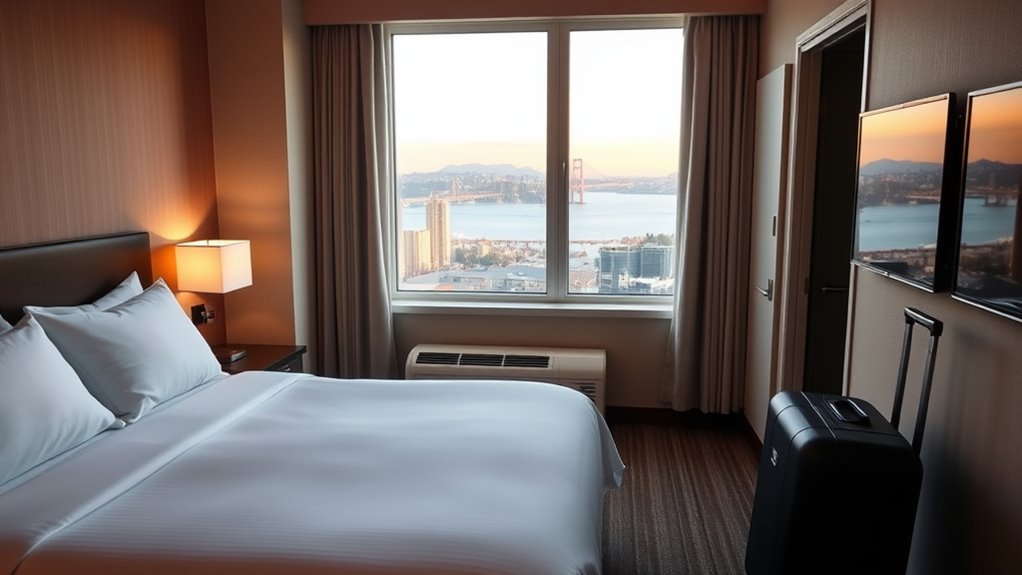
The San Francisco Travel Association’s May 2026 forecast estimates a citywide average daily hotel rate of $257.81 for 2026. It also forecasts hotel occupancy of 69%.
This is the most useful current market benchmark, but it is not a 3-star-only average. It combines the broader San Francisco hotel market, including properties above and below the 3-star level. A practical approach is to budget about $260 before taxes and then search your exact dates.
A nightly rate is only a benchmark. The total for your dates, room type, occupancy, taxes, assessments, parking, and cancellation terms is the number that matters.
Sample Total After San Francisco Hotel Taxes
San Francisco imposes a 14% transient occupancy tax on most stays of fewer than 30 days. The city also lists Tourism Improvement District assessment rates of 2.25% in Zone 1 and 2% in Zone 2. These assessments may be passed through to guests.
| Example item | Estimated amount |
| Base nightly rate | $257.81 |
| 14% transient occupancy tax | $36.09 |
| 2% to 2.25% TID assessment, if passed through | $5.16 to $5.80 |
| Estimated nightly subtotal | About $299.06 to $299.70 |
This example does not include parking, optional breakfast, pet charges, an early check-in fee, a room upgrade, or any applicable Moscone Expansion District assessment. Always review the final checkout page and the hotel’s deposit policy.
Note: Government taxes may not appear in the first advertised price. Compare the full-stay total shown before payment rather than multiplying the headline nightly rate by the number of nights.
What Changes San Francisco Hotel Prices?
Conventions, Concerts, and Major Events
San Francisco’s hotel demand is strongly affected by conventions and large events. The city’s 2026 forecast includes 38 Moscone Center events expected to generate approximately 674,000 room nights. A large conference can raise demand around SoMa, Union Square, and downtown even during a period that is normally considered less busy.
Review the official Moscone Center event calendar before assuming a particular week will be inexpensive. Also check for major concerts, festivals, sports events, and holiday weekends.
Neighborhood and Transit Access
Hotels near major attractions, convention venues, BART stations, cable-car routes, and waterfront destinations may charge more when demand is strong. However, a cheaper room farther away is not always the better value if it adds parking, rideshare, or long transit costs.
Choose the neighborhood that reduces the travel you expect to do most often. A business traveler attending a Moscone event has different location needs from a family visiting PIER 39 or a traveler planning evenings in North Beach and the Mission.
Room and Booking Conditions
Two quotes from the same hotel may not be equivalent. Check the following before comparing prices:
- Room and bed type: A compact room with one double bed may cost less than a room with two queens.
- Number of guests: Additional-adult or occupancy charges may affect the total.
- Refundability: A prepaid nonrefundable rate is usually less flexible than a refundable booking.
- Breakfast: The cheapest rate may not include breakfast even when another package does.
- View and floor: Bay views, higher floors, and larger rooms can cost more.
- Direct versus third-party booking: Compare the same room and cancellation terms on the hotel’s site and reputable booking platforms.
Pro Tip: When a major event is approaching, reserve a reasonably priced refundable room first. Recheck the same dates periodically and cancel the original reservation only after confirming a better replacement.
Seasonal Variations and Event Price Spikes
There is no dependable universal “cheapest month” for a 3-star hotel in San Francisco. A low-demand week in a popular travel month can cost less than a convention week during a month that is normally quieter.
Weather, school vacations, international travel, business meetings, festivals, and sports all influence demand. This is why fixed claims such as “Tuesday is always most expensive” or “weekends are always cheaper” should not be treated as booking rules.
Use a flexible-date calendar to compare at least three date patterns:
- Your preferred travel dates.
- The same number of nights one week earlier.
- The same number of nights one week later.
Also test shifting the stay by one day. Moving a trip away from the opening night of a convention or a major Saturday event can sometimes change the total more than switching neighborhoods.
How to Compare 3-Star Hotels in Different Neighborhoods
San Francisco’s official neighborhood guide describes Union Square as a major hotel and transportation hub. Fisherman’s Wharf is closely connected to waterfront attractions, while SoMa provides access to museums, nightlife, sports venues, and Moscone Center.
| Neighborhood | Best for | Check before booking |
| Union Square | First-time visitors, shopping, theaters, central transit, and a broad hotel selection | Street-facing noise, room size, parking price, and walking route at night |
| SoMa and Yerba Buena | Moscone events, museums, Oracle Park, Chase Center access, and business travel | Convention dates, distance to your venue, and late-night surroundings |
| Fisherman’s Wharf | Families, waterfront sightseeing, PIER 39, and Alcatraz departures | Tourist-area pricing, travel time to SoMa, and breakfast or parking charges |
| Nob Hill | Classic San Francisco atmosphere, views, and access to cable-car routes | Steep hills, luggage transport, and whether the property is above a 3-star budget |
| Marina and Cow Hollow | Neighborhood dining, the Presidio, Palace of Fine Arts, and travelers who prefer motel-style access | Distance from BART, street noise, elevator availability, and parking terms |
| Downtown and Financial District | Business travel, the Embarcadero, Ferry Building, and BART access | Restaurant hours, event demand, room layout, and weekend service levels |
Do not compare neighborhoods using the room rate alone. Add the cost and time required to reach your main attractions, meetings, airport connection, and evening plans.
Amenities You May Find in San Francisco 3-Star Hotels
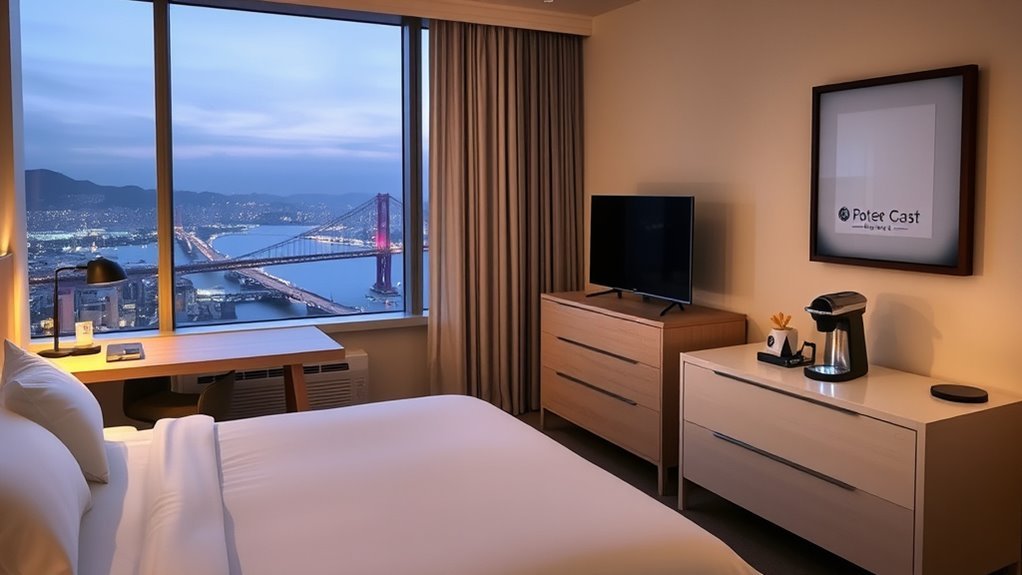
A 3-star classification generally suggests a comfortable mid-range stay, but star systems differ between booking platforms. Treat the label as a search filter rather than a promise that every property offers the same facilities.
Common Room Amenities
Many 3-star properties provide a private bathroom, Wi-Fi, television, toiletries, housekeeping, and a front desk. Air conditioning, a mini-refrigerator, microwave, coffee maker, safe, or workspace may be available, but you should verify each item on the room description.
Older San Francisco buildings can have smaller rooms, compact elevators, limited views, or unusual layouts. Travelers with mobility needs should confirm elevator access, accessible entrances, bathroom features, bed height, and the route from the lobby to the room.
Breakfast and On-Site Facilities
Complimentary breakfast is not a universal 3-star benefit. A hotel may provide a full breakfast, a limited continental selection, coffee and pastries, an optional paid package, or no breakfast service.
The same applies to fitness centers, restaurants, business facilities, luggage storage, and laundry service. Check whether the amenity is currently operating and whether it is included in your selected rate.
Parking and Public Transportation
Parking can change the value of a hotel significantly. Verify the nightly rate, taxes, valet requirements, vehicle-size limits, in-and-out privileges, and whether parking is operated by the hotel or a separate garage.
Travelers who do not need a car may save money by staying near Muni or BART. An SFMTA Visitor Passport covers Muni buses, Muni Metro, historic streetcars, and cable cars for its period of validity. It does not cover BART, other transit systems, or transportation between the city and San Francisco International Airport.
Budget Tips for Booking a 3-Star Hotel
- Compare the complete stay total. Use the same dates, number of guests, room type, taxes, and cancellation terms.
- Check the event calendar. Search Moscone events, sports, concerts, festivals, and holiday weekends before confirming your dates.
- Use flexible-date tools. Compare nearby arrival dates rather than assuming one weekday is always cheaper.
- Review both direct and third-party offers. A hotel’s direct rate may include different cancellation, loyalty, breakfast, or room-selection benefits.
- Check parking separately. A lower room rate can lose its advantage when daily parking is added.
- Read recent reviews for your room concern. Search reviews for noise, cleanliness, elevator, air conditioning, Wi-Fi, bed comfort, and street conditions.
- Confirm the deposit and hold. The hotel may place a temporary authorization on your card for incidentals.
- Save proof of the booking terms. Keep the confirmation showing the room, dates, occupancy, cancellation deadline, included benefits, and total.
The Federal Trade Commission’s Rule on Unfair or Deceptive Fees requires mandatory short-term lodging fees to be included in the displayed total price. Government taxes and optional services may still be shown separately, so review the final payment screen carefully.
Warning: Do not choose a prepaid nonrefundable rate solely because it is cheaper. A small saving can become an expensive loss if your flight, event, health, or travel schedule changes.
Best Time to Book San Francisco 3-Star Hotels
There is no evidence that every San Francisco traveler should book exactly 86 days in advance. The right timing depends on the dates, event calendar, room supply, and flexibility of your trip.
For a major convention, festival, holiday, or sporting event, start checking as soon as your dates are known. A refundable reservation can protect you from losing a suitable room while leaving room to rebook if the price falls.
For flexible leisure travel, compare several nearby weeks before choosing the stay. After booking, check the same room and conditions occasionally until the free-cancellation deadline. Do not cancel your original room until the replacement is fully confirmed.
Avoid relying on claims that Friday, Monday, Tuesday, or any other day is always the best or worst time to stay. In a convention market, a busy midweek date may cost more than a weekend. During a large weekend event, the opposite may be true.
What to Expect From a 3-Star Hotel in San Francisco
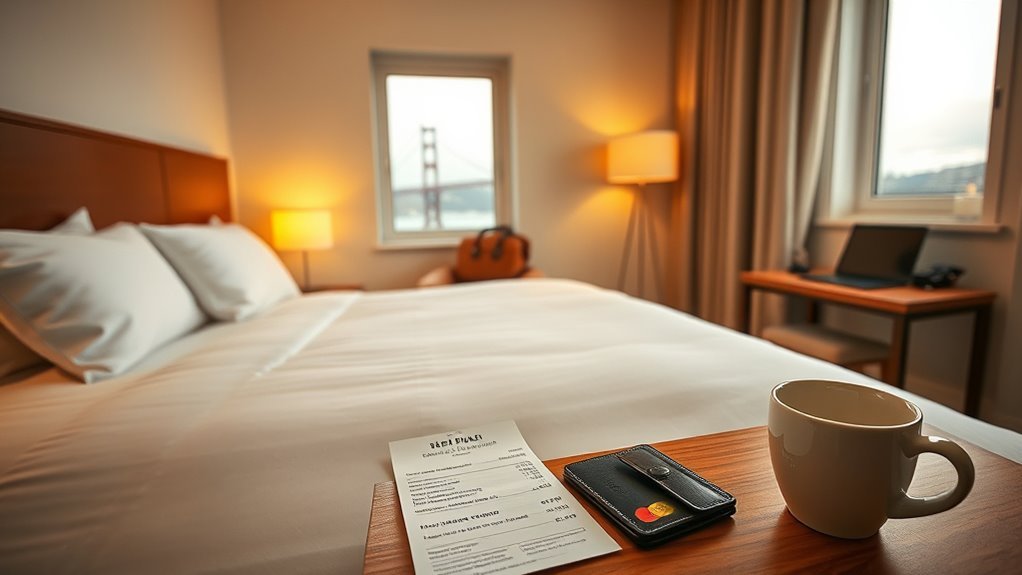
A well-chosen 3-star hotel can provide a clean, convenient base without the extensive services or space associated with a luxury property. Location is often the largest benefit, especially when the hotel is close to the attractions, meetings, or transit you plan to use.
Properties such as the Chancellor Hotel, Handlery Union Square Hotel, The Mosser, Monte Cristo Bed and Breakfast, Hotel 32One, and Buena Vista Motor Inn may appear in central San Francisco lodging searches. Their classifications, amenities, room inventory, and policies can differ between platforms and change over time. Verify the current property page rather than assuming every listing includes breakfast, parking, a fitness center, or the same star rating.
Before paying, confirm:
- The exact room and bed configuration.
- Whether the room has air conditioning.
- Private or shared bathroom arrangements.
- Elevator and accessibility information.
- Noise concerns and room-location requests.
- Breakfast, Wi-Fi, and parking terms.
- Check-in age and identification requirements.
- Deposit, incidental hold, and cancellation policy.
- The full amount due for the entire stay.
Frequently Asked Questions
Is a 3-star hotel considered luxury?
No. A 3-star hotel is generally a mid-range property focused on comfortable rooms and practical services. Luxury hotels usually provide more extensive service, dining, room features, and on-site facilities.
Is $260 the final nightly cost?
No. About $260 is a planning benchmark based on the 2026 citywide all-hotel ADR forecast. After the 14% hotel tax and a possible 2% to 2.25% TID assessment, a rate near that benchmark can approach $299 to $300 before parking, optional services, or another applicable assessment.
Are weekends cheaper than weekdays in San Francisco?
Not consistently. Business and convention demand can make weekdays expensive, while concerts, festivals, sports, and leisure travel can raise weekend prices. Compare your exact dates instead of relying on a universal weekday rule.
How far ahead should I book?
Book early when your trip overlaps a major convention, holiday, festival, concert, or sports event. For flexible dates, compare nearby weeks and consider reserving a refundable room that you can recheck before its cancellation deadline.
Which neighborhood is best for a first visit?
Union Square offers a large hotel selection and central transit access. Fisherman’s Wharf can suit families and waterfront sightseeing, while SoMa is practical for Moscone events, museums, and sports venues. The best choice depends on where you will spend most of your time.
Do San Francisco 3-star hotels include breakfast?
Some do, but breakfast is not guaranteed. Check whether your exact rate includes a full breakfast, continental breakfast, coffee and pastries, a credit, or no meal service.
Is hotel parking usually included?
Do not assume parking is included. Confirm the nightly charge, taxes, valet requirement, vehicle-size limits, in-and-out privileges, and whether a separate garage operates the facility.
Conclusion
For a 3-star hotel in San Francisco in 2026, use approximately $260 per night before taxes as a sensible starting budget rather than a fixed market average. A base rate near the official citywide benchmark can reach roughly $299 to $300 after the hotel tax and a possible TID assessment.
Your actual cost will depend on the dates, neighborhood, room, number of guests, event calendar, cancellation policy, and extras such as parking or breakfast. Compare the complete stay total under identical conditions, check major events, and confirm every included amenity before booking.
Sources
- San Francisco Travel Association: 2026 Tourism Forecast and 2025 Results — supports the 2026 citywide ADR, occupancy forecast, and Moscone room-night projections.
- San Francisco Treasurer and Tax Collector: Transient Occupancy Tax — supports the 14% hotel tax, TID assessment rates, and possible assessment pass-throughs.
- Federal Trade Commission: Rule on Unfair or Deceptive Fees FAQ — explains total-price disclosure requirements for short-term lodging.
- Moscone Center Official Event Calendar — helps travelers identify convention dates that may affect hotel demand.
- San Francisco Travel: Neighborhood Guide — supports neighborhood, attraction, and transportation comparisons.
- SFMTA: Visitor Passport — supports Muni coverage and the exclusion of BART and SFO transportation.