

An Illinois fishing license costs $15 for a standard resident annual license and $31.50 for a standard nonresident annual license for the 2026 license year. Short-term, senior, veteran, first-time, three-year, and lifetime options may cost less or cover a different period. Most anglers age 16 or older need a license, and trout or Lake Michigan salmon fishing may require an extra stamp.
Quick Answer
For 2026, Illinois residents pay $15 for an annual fishing license, while nonresidents pay $31.50. Illinois also sells 24-hour, three-day nonresident, three-year resident, senior, veteran, first-time, and lifetime options. Most licenses follow the state license year and expire March 31, not 12 months after purchase.
Key Takeaways
- The 2026 resident annual license is $15; the nonresident annual license is $31.50.
- Anglers under 16 are generally exempt, but there is no broad exemption for Illinois residents under 21 who fish with a licensed adult.
- Nonresidents can choose a $10.50 24-hour license, a $15.50 three-day license, or a $31.50 annual license.
- Annual licenses expire March 31 under Illinois’s license-year system; lifetime fishing licenses do not require annual repurchase.
- An inland trout stamp or Lake Michigan salmon stamp may be required in addition to the fishing license.
At a Glance
| Time Required | Usually 5–10 minutes for a standard online purchase |
| Difficulty | Easy |
| Tools Needed | Identification or IDNR customer details, payment method, and documents supporting any reduced rate or exemption |
| Cost | $15 resident annual; $31.50 nonresident annual; shorter and reduced-rate choices are available |
Who Needs an Annual Fishing License in Illinois?
In most cases, anyone age 16 or older who takes or attempts to take fish in waters under Illinois jurisdiction must first have a valid fishing license. The rule applies even when you plan to release every fish because Illinois law covers an attempt to take fish, not only keeping a catch.
You do not always need an annual license. Illinois offers short-term choices, and several narrow exemptions apply. The main license-free groups include:
- Anyone under age 16.
- Qualifying blind Illinois residents or Illinois residents with a Class 2 disability who have accepted documentation.
- Qualifying disabled veterans who meet the statutory service-connected disability standard.
- Certain resident landowners, bona fide resident tenants, and specified family members fishing waters lying on or flowing over that land.
- Illinois residents on qualifying ordinary or emergency military leave after entering the Armed Forces from Illinois.
- People fishing at an IDNR-licensed fee fishing area or during officially designated Free Fishing Days, subject to the conditions of those programs.
Warning: Illinois does not provide a general license exemption for resident children under 21 who are accompanied by a licensed adult. The normal age exemption ends when the angler turns 16 unless another specific exemption applies.
A fishing license gives you permission to fish under state law, but it does not replace site rules. You must still follow seasons, daily limits, size limits, protected-species rules, gear limits, and any special regulations for the water you visit.
Resident Eligibility and Proof of Residency
Resident prices are available only to people who meet Illinois’s legal definition of a resident. For fishing-license purposes, you must have maintained your permanent abode in Illinois for at least 30 consecutive days immediately before applying. You also must not maintain a permanent abode or claim similar license residency in another state.
Residency Proof Required
Illinois law requires an applicant to verify residency, and the IDNR sales system may use an ID number, customer number, date of birth, and other identifying information. A current Illinois driver’s license or state ID is common evidence, but the legal test is broader than possession of one specific card. Evidence of permanent residency can include where you vote, pay state income tax, obtain a driver’s license, and maintain your fixed home.
Have accurate identification and residency information ready before buying. A person who claims a resident rate without meeting the residency test may lose the license and face enforcement action.
Eligibility Timeframes
The 30-day period must be complete before the application date. A temporary stay, vacation home, school address, or recent move does not automatically establish resident status. Active-duty military members receive special treatment under the residency definition for most licenses, but lifetime-license eligibility has separate residency limits.
Note: Residency and license exemptions are different. Meeting an exemption may remove the need to buy a license, while resident status only determines which products and prices you may use.
Nonresident Requirements and License Choices
Most nonresidents age 16 or older need an Illinois fishing license before fishing in the state. For 2026, the standard choices are a $10.50 24-hour license, a $15.50 three-day license, and a $31.50 annual license.
A nonresident does not have to buy a full annual license for a short Illinois trip: 24-hour and three-day products are available.
Nonresident license holders must follow the same Illinois fishing regulations that apply to residents, including seasons, bag limits, size limits, legal methods, and water-specific restrictions. The short-term products do not remove any required trout or salmon stamp.
An out-of-state license does not generally authorize fishing throughout Illinois. Illinois law allows limited reciprocal agreements for certain boundary waters shared with neighboring states. Those privileges depend on the water, the agreement, and its conditions; they do not extend to inland Illinois lakes and streams.
Nonresidents cannot buy an Illinois resident lifetime fishing license. A qualifying nonresident age 26 or older who has not purchased an Illinois nonresident fishing license during the preceding 10 years may be eligible for the state’s one-time first-time/lapsed angler license.
2026 Fishing License Fee Breakdown for Illinois Residents

The standard resident annual fishing license costs $15. Illinois also offers lower-cost senior, super-senior, veteran, first-time, and 24-hour products, plus three-year and lifetime choices.
| Resident license | 2026 fee | Main eligibility or term |
|---|---|---|
| Annual fishing license | $15.00 | Residents ages 16–64 unless exempt |
| Senior annual fishing license | $7.75 | Ages 65–74 |
| Super senior annual fishing license | $1.50 | Age 75 or older |
| Resident veteran annual fishing license | $7.75 | Prior IDNR certification required |
| First-time/lapsed resident license | $5.50 | One time; age 26+ with no resident license in the previous 10 years |
| Resident 24-hour license | $5.50 | Expires 24 hours after the effective date and time |
| Resident three-year license | $44.00 | Expires March 31 of the second year after the year issued |
| Resident three-year senior license | $22.25 | Ages 65–74 |
| Resident three-year super senior license | $3.50 | Age 75 or older |
| Resident lifetime fishing license | $435.50 | Resident-only lifetime privilege; extra stamps or permits may still be required |
Products Worth Considering

Decorative Item Only: This product is a vintage-style decorative license plate, crafted as a replica/artifact. It is NOT a real license plate and cannot be used as such. Please comply with all applicable laws—it must NOT be mounted on any vehicle to replace, cover, or imitate an official license plate. Use only for indoor or outdoor decoration where legally permitted.

Team colored license plate measures 6-inches by 11.5-inches

Showcase your passion for fishing with intricately etched designs
Resident Annual Cost
The $15 standard license is the usual choice for a resident who expects to fish more than once during the license year. A 24-hour license can cost less for a single trip. The three-year product reduces the need to complete a purchase every spring, although its price is mainly a convenience rather than a large discount.
Seniors qualify at age 65, not age 64. The super-senior rate begins at age 75. Resident veterans must complete the required IDNR certification before the reduced veteran product appears as an available choice.
Renewal and Validity
Illinois uses a fixed license-year system. The 2026 license year began March 1, 2026. A standard resident license bought for that license year expires March 31, 2027. It is not a rolling 12-month license from the date of purchase.
A lifetime fishing license remains a lifetime privilege unless suspended or revoked. It does not require buying a new annual fishing license each March, but the holder must still obtain any additional stamp or permit required for the activity.
2026 Fishing License Fee Breakdown for Nonresidents
Nonresident visitors have three standard duration choices. Select the shortest product that fully covers the dates and times you plan to fish.
| Nonresident license | 2026 fee | Best fit |
|---|---|---|
| 24-hour sport fishing license | $10.50 | One day or overnight period within the printed 24-hour term |
| Three-day fishing license | $15.50 | A short trip covering up to three consecutive fishing days within the dates shown |
| Annual fishing license | $31.50 | Several trips during the Illinois license year |
The annual nonresident license follows the March 31 expiration rule. The three-day product is not an annual license, and the 24-hour product ends 24 hours after its stated effective date and time.
Pro Tip: Compare the trip dates before buying. Two separate 24-hour licenses cost more than one three-day license, while three short visits may make the annual license the better value.
Products Worth Considering

Material :High-Quality Metal Aluminum With High Gloss Stamped Metal License Plate.Lightweight, Waterproof,Anti-Rust And Very Durable.

Durability & Weather Resistance: Crafted from aluminum, our UEQIKI vanity plates for front of car are lightweight and colorful, ensuring long-lasting durability in any weather conditions. The sturdy construction and durable materials provide reliable protection while maintaining a sleek appearance, making this front license plate designs a practical choice for daily use
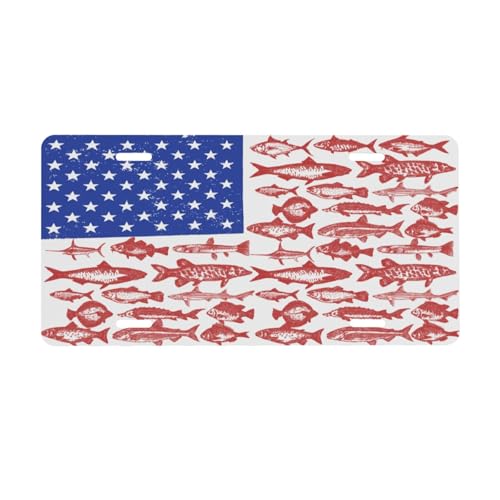
Durability & Weather Resistance: Crafted from aluminum, our UEQIKI vanity plates for front of car are lightweight and colorful, ensuring long-lasting durability in any weather conditions. The sturdy construction and durable materials provide reliable protection while maintaining a sleek appearance, making this front license plate designs a practical choice for daily use
Reduced Rates, Exemptions, and Special Eligibility
Illinois separates reduced-price licenses from license exemptions. A reduced-price license still must be purchased and carried. An exemption means no fishing license is required for the qualifying activity, although all seasons, limits, and other fishing laws still apply.
First-Time, Senior, and Veteran Reduced Fees
The first-time/lapsed angler program is a one-time benefit, not a statewide cut to every annual license. A resident age 26 or older who has not bought an Illinois resident fishing license during the previous 10 years can buy the listed resident first-time license for $5.50. Illinois law also authorizes a one-time nonresident license for a person age 26 or older who has not bought an Illinois nonresident fishing license in the previous 10 years; the statute sets a $10 base fee.
Residents ages 65–74 can buy the $7.75 senior license, and residents age 75 or older can buy the $1.50 super-senior license. Qualifying resident veterans can buy a $7.75 annual fishing license after prior certification with IDNR. Nonresident veterans do not qualify for that half-price veteran product.
License Exemptions and Required Documentation
The principal Illinois exemptions include:
- Under age 16: no sport fishing license is required.
- Blind or qualifying disabled Illinois residents: accepted Illinois disability documentation is required.
- Qualifying disabled veterans: the exemption is tied to the statutory service-connected disability or pension standard and supporting federal documentation.
- Resident landowners and bona fide resident tenants: the exemption applies only to waters lying on or flowing over the qualifying land and specified family members who permanently reside there. It does not cover club lakes, organizational lakes, or lake developments.
- Active-duty Illinois residents on qualifying leave: the person must have entered the Armed Forces from Illinois and be on ordinary or emergency leave.
- Licensed fee fishing areas and official Free Fishing Days: the exemption applies only within the program’s stated limits.
Carry the document that proves any exemption. An exemption from the license requirement does not grant access to private property and does not cancel site rules, seasons, or harvest limits.
How and Where to Purchase an Illinois Fishing License

You can buy most Illinois fishing licenses through the official ExploreMoreIL online sales system or from an authorized license vendor. Standard resident, nonresident, short-term, three-year, stamp, and lifetime fishing products are listed by IDNR as available online, although some reduced privileges require certification first.
- Choose your residency status. Use the resident option only if you meet the 30-day permanent-abode rule.
- Select the correct duration and privilege. Check whether you need a 24-hour, three-day, annual, three-year, or lifetime license.
- Add any required stamp. Trout and Lake Michigan salmon fishing can require a separate stamp.
- Review the effective and expiration dates. Make sure the license covers every planned fishing day.
- Save the issued license. Keep the official file or printout available for immediate presentation while fishing.
Online fishing-license reprints are free through the IDNR process. If the original license was bought over the counter from a vendor, IDNR says you must return to a vendor for a reprint and pay the listed $5 reprint fee.
Pro Tip: Save the official license PDF when you buy online. IDNR warns that an older license may no longer be available for online reprinting after the next license year’s products go on sale, even before the old license reaches March 31.
Products Worth Considering

Package length: 0.508 cm

FISHING LICENSE HOLDER W/ZIP CLOSURE

Made of chrome metal with a durable finish that resists the elements
License Validity, Renewal Dates, and Expiration Rules
Illinois does not give every fishing product the same term. The printed effective and expiration dates control, and the main rules are:
- Standard annual resident and nonresident licenses: expire March 31 following the applicable license year.
- Resident three-year licenses: expire March 31 of the second year after the year in which the license was issued.
- Resident and nonresident 24-hour licenses: expire 24 hours after the effective date and time shown.
- Nonresident three-day licenses: cover up to three consecutive fishing days within the product’s allowed issue window; follow the dates printed on the license.
- Lifetime fishing licenses: remain valid for the holder’s lifetime unless suspended or revoked; they are not annual licenses.
- Trout and salmon stamps: follow their stated annual term and are not permanently included with a lifetime license.
Warning: A license bought before the new license year begins may belong to the ending license year. For example, IDNR stated that licenses bought before March 1, 2026 were 2025 licenses and expired March 31, 2026.
You can buy the next license-year product when IDNR opens sales. Confirm the year shown in the cart before paying so you do not accidentally purchase a license that expires sooner than expected.
Photo ID, Carrying Your License, and Enforcement
Illinois law requires every license, trout stamp, salmon stamp, or permit holder to have the privilege in their possession for immediate presentation when an authorized IDNR employee or law-enforcement officer asks to inspect it.
The law cited for possession does not state that every angler must separately carry an Illinois photo ID at all times. Still, carrying government-issued identification is a sensible way to help confirm your identity and may be needed when buying a license, establishing residency, or proving eligibility for a reduced rate or exemption.
- Carry the official license or accepted proof of the privilege while fishing.
- Keep required stamps with the license or in the form issued by IDNR.
- Protect a paper copy from water, or retain the official digital file where it can be opened.
- Do not rely on a purchase confirmation that omits the actual license details.
- Carry exemption documentation when you fish without a license under a special status.
Fishing without the required privilege or failing to present it can lead to a citation and other penalties under the Fish and Aquatic Life Code. Serious or repeated violations can also affect future fishing privileges.
What the Recent First-Time License Change Means for Anglers

Illinois’s recent reduced-price program did not lower the normal annual resident fee from $15 to $5 or the normal nonresident fee from $31.50 to $10 for everyone. Instead, legislation effective January 1, 2024 created a one-time first-time/lapsed angler license for qualifying people age 26 or older who had not purchased the corresponding Illinois fishing license during the previous 10 years.
The current IDNR fee table lists the resident first-time product at $5.50. The statute sets base fees of $5 for a resident and $10 for a nonresident under the qualifying program. Everyone else pays the applicable standard, senior, veteran, short-term, three-year, or lifetime price.
This targeted structure is meant to make it easier for adults who have been away from fishing to return. After using the one-time product, the angler must choose another eligible license type in a later license year.
Fishing Stamps, Private Water, and Local Rules
A basic fishing license is not always the only required privilege. For 2026, IDNR lists both the Electronic Inland Trout Stamp and the Electronic Lake Michigan Salmon Stamp at $6.50 for standard licensees.
- Inland trout stamp: required when taking or attempting to take trout in Illinois waters other than Lake Michigan, unless the angler is exempt from the license requirement.
- Lake Michigan salmon stamp: required when taking or attempting to take salmon in Lake Michigan, unless the angler is exempt from the license requirement.
- Super-senior stamps: IDNR lists reduced $0.50 electronic trout and salmon stamps for qualifying residents age 75 or older.
A state fishing license does not give you permission to enter private land or fish a private lake. Obtain the owner’s or lawful occupant’s consent and obey posted rules. The narrow resident landowner exemption applies only in the circumstances written into state law.
Before each trip, check the current Illinois fishing digest and any site-specific notice for closed areas, daily limits, protected species, legal bait, hook restrictions, and special rules. A valid license does not excuse a violation of those regulations.
Frequently Asked Questions
Does an Illinois fishing license cover ice fishing tournaments or entry fees?
A valid license generally covers ordinary legal fishing methods, including ice fishing, but it does not pay a tournament’s entry fee. Tournament organizers or the site may also impose separate registration, permit, insurance, or access requirements. All season, size, possession, and water-specific rules still apply.
Can you replace a lost Illinois fishing license online?
Yes, an online-purchased fishing license can be reprinted through the IDNR sales process at no charge. Save the official PDF when you first buy it. A license purchased from a vendor must be reprinted through a vendor, and IDNR lists a $5 fee for that service.
Are there discounts for purchasing multiple years at once?
Illinois sells three-year resident fishing licenses, but the main benefit is convenience rather than a major bulk discount. The 2026 standard three-year resident license is $44, compared with $15 for one annual license. Senior, super-senior, and certified veteran three-year options are also available.
Does an annual license include access to stocked or private waters?
No. A license makes you legally eligible to fish where fishing is otherwise allowed, but it does not grant entry to private property or waive an owner’s permission requirement. Stocked public waters may also have special season, stamp, harvest, or site rules.
Will a future fee increase change the price of a license already purchased?
A later price change does not normally require you to pay more for a valid license already issued for its stated term. The new price applies when you buy a later license or privilege. Continue using the current license only through the expiration date printed on it.
Do you need an Illinois license for catch-and-release fishing?
Yes, unless you qualify for an exemption. Illinois requires a license for taking or attempting to take fish. Planning to release the fish does not remove the license requirement.
Does a lifetime Illinois fishing license need annual renewal?
No. A resident lifetime fishing license remains valid for the holder’s lifetime unless suspended or revoked. However, it does not include every additional stamp or permit, so the holder must still obtain any trout, salmon, or other privilege required for the planned fishing activity.
Can you fish in Illinois with a neighboring state’s license?
Only in limited situations covered by an active reciprocal boundary-water agreement and its conditions. A neighboring state’s license does not generally cover inland Illinois waters. Check the rule for the exact river or boundary water before relying on reciprocity.
Conclusion
For the 2026 Illinois license year, the standard annual fishing license costs $15 for residents and $31.50 for nonresidents. Short-term, senior, veteran, first-time, three-year, and lifetime choices can better fit different anglers. Confirm your residency and eligibility, add any required trout or salmon stamp, carry the issued privilege while fishing, and follow the printed effective and expiration dates.
The most important corrections are simple: most anglers need a license beginning at age 16, nonresidents have both 24-hour and three-day options, annual licenses are tied to Illinois’s March 31 license-year cutoff, and lifetime fishing licenses do not require annual repurchase. Always follow current IDNR rules for the water and species you plan to fish.
Sources
- Illinois Department of Natural Resources: Fishing Licenses — 2026 license-year notice, current fees, short-term products, stamps, and sales availability.
- Illinois Department of Natural Resources: Lifetime Licenses — lifetime fishing price, availability, and continuing privileges.
- Illinois General Assembly: Fish and Aquatic Life Code — license requirements, exemptions, terms, stamps, reciprocity, and enforcement rules.
- Illinois General Assembly: 515 ILCS 5/1-75 — the 30-day resident definition and evidence of permanent abode.
- Illinois Department of Natural Resources: Military Members and Veterans — military fee waivers, veteran reduced fees, and certification requirements.
- Illinois Department of Natural Resources: Reprint an Online License — free online reprints and the vendor reprint process.
