Professional welding prices vary because a quote covers far more than the few minutes when an arc is active. A welder may need to inspect the damage, identify the metal, remove coatings or corrosion, cut and fit replacement pieces, set up equipment, weld, grind, finish, and clean the work area. Location, access, safety requirements, and whether the job is completed in a shop or on-site also affect the final price.
Quick Answer
In 2026, professional welding commonly costs about $60–$125 per hour. Small jobs often have a one- or two-hour minimum, while mobile service, difficult access, stainless steel, aluminum, structural requirements, inspections, and detailed finishing can raise the total. Get an itemized local quote before setting your budget.
Key Takeaways
- Current consumer cost guides place many professional welding rates around $60–$125 per hour.
- A minimum service charge can make a ten-minute repair cost the same as one or two hours of labor.
- Preparation, fit-up, access, finishing, travel, and inspection time may cost more than the actual arc time.
- TIG, stainless steel, aluminum, cast iron, and code-governed work often require more skill or preparation.
- Compare written quotes by scope and inclusions, not by hourly rate alone.
At a Glance
| Typical Hourly Rate | About $60–$125 per hour for many residential and repair jobs |
| Common Minimum | One to two labor hours, sometimes plus travel or a call-out fee |
| Typical Home Project | Often a few hundred dollars, with custom or structural work reaching much higher |
| Main Cost Drivers | Metal, process, preparation, access, travel, finish, certification, inspection, and local labor rates |
Average Welding Rates and What They Cover
Two major consumer pricing guides updated in 2026 report professional welding rates of about $60–$125 per hour. HomeAdvisor also reports that many welders charge a minimum equal to one or two labor hours. These figures are planning ranges, not guaranteed prices for every city or specialty.
The service rate is not the same as the welder’s paycheck. The U.S. Bureau of Labor Statistics reported a median annual wage of $51,000 in May 2024, but a contractor’s billable rate must also cover equipment, insurance, payroll costs, rent, vehicles, fuel, nonbillable time, and business overhead.
The hourly rate is only one part of the quote. Setup, preparation, travel, finishing, and inspection often determine whether a job is affordable.
What a Welding Quote May Include
- Inspection and diagnosis: Identifying the metal, damage, contamination, and safest repair method.
- Setup and travel: Loading equipment, driving to the site, running leads, protecting nearby surfaces, and preparing a fire-safe work area.
- Preparation and fit-up: Cutting, beveling, cleaning, clamping, aligning, and making replacement pieces.
- Welding labor: Tack welds, root and fill passes, repositioning, interpass cleaning, and distortion control.
- Materials and consumables: Base metal, filler wire or rod, electrodes, shielding gas, abrasives, tips, nozzles, and cleaning supplies.
- Finishing: Grinding, blending, polishing, priming, painting, passivation, or powder coating.
- Quality and compliance: Visual inspection, nondestructive testing, permits, engineering, or documentation when required.
Common Ways Welders Charge
| Pricing Method | Best Fit | What to Confirm |
|---|---|---|
| Hourly | Repairs with uncertain damage or scope | Minimum hours and what the rate includes |
| Flat project price | Clearly defined fabrication or repeatable repairs | Exact scope, finish, exclusions, and change-order terms |
| Per foot, inch, pound, or unit | Production work with repeatable joints | Joint size, weld length, material grade, position, and inspection level |
| Service call plus labor | Mobile welding | Travel radius, mileage, mobilization, and after-hours fees |
Costs by Welding Method (Stick, MIG, TIG, FCAW)
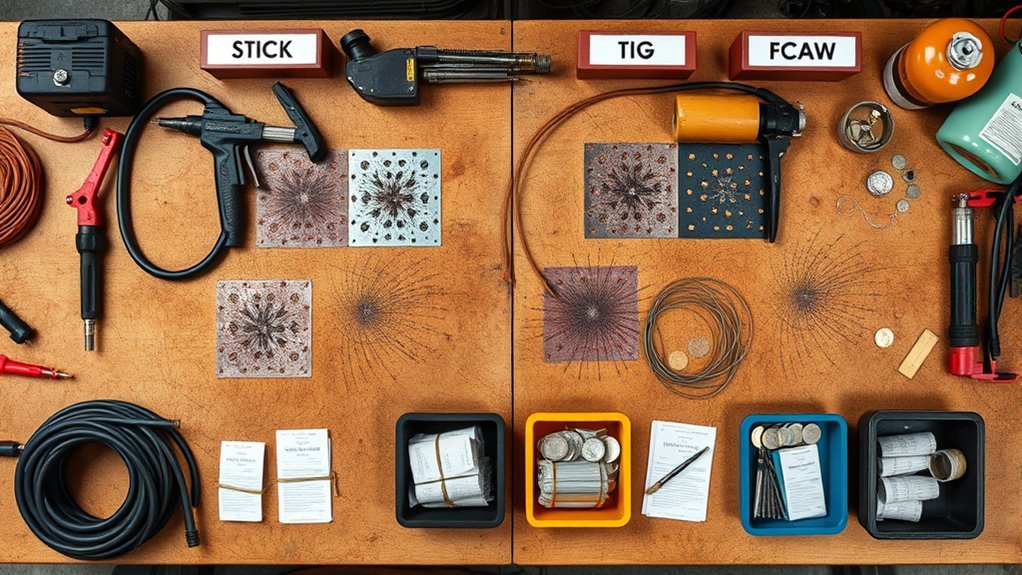
The welding process affects speed, preparation, equipment, and finish, but there is no dependable national hourly rate for each method. Some shops use one labor rate for all processes and adjust the estimated hours. Others charge a premium for specialized equipment, code work, or a highly skilled operator.
Miller Electric identifies stick as shielded metal arc welding (SMAW), MIG as gas metal arc welding (GMAW), and TIG as gas tungsten arc welding (GTAW). FCAW uses a continuously fed flux-cored electrode and may be self-shielded or gas-shielded.
| Method | Common Uses | Typical Cost Effect |
|---|---|---|
| Stick / SMAW | Field repair, structural steel, outdoor work, and less-portable pieces | Portable and practical outdoors, but electrode changes and slag removal add time |
| MIG / GMAW | Shop fabrication, mild steel, automotive work, and repeatable production | High productivity can lower labor time when fit-up and shielding conditions are suitable |
| TIG / GTAW | Thin material, stainless steel, aluminum, pipe roots, and visible precision work | Fine control and appearance often require slower travel and more operator skill |
| FCAW | Heavy fabrication, structural work, and some outdoor applications | High deposition can improve productivity, while slag removal and fume control add work |
Hourly Rate Comparison
Do not choose a welder from a process-specific hourly rate alone. A $75-per-hour shop that needs four hours costs more than a $110-per-hour specialist who completes the same approved scope in two hours. Ask each bidder to estimate total labor hours and state whether cutting, fitting, grinding, cleanup, and ordinary consumables are included.
Material-Specific Costs
The process must match the base metal, thickness, joint design, position, service conditions, and required appearance. MIG may be efficient on mild steel, TIG may be preferred for thin stainless or cosmetic aluminum, and stick or FCAW may suit field or structural work. The lowest-cost safe process is the one that meets the drawing, code, strength, and finish requirements without avoidable rework.
Complexity & Prep Time
Tight access, overhead or vertical welding, thin material, distorted parts, poor fit-up, rust, paint, galvanizing, oil, and previous failed repairs all add labor. Confined spaces and hot-work hazards may also require ventilation, fire watches, atmospheric testing, or a permit before welding starts.
Price Differences by Metal Type (Steel, Stainless, Aluminum)
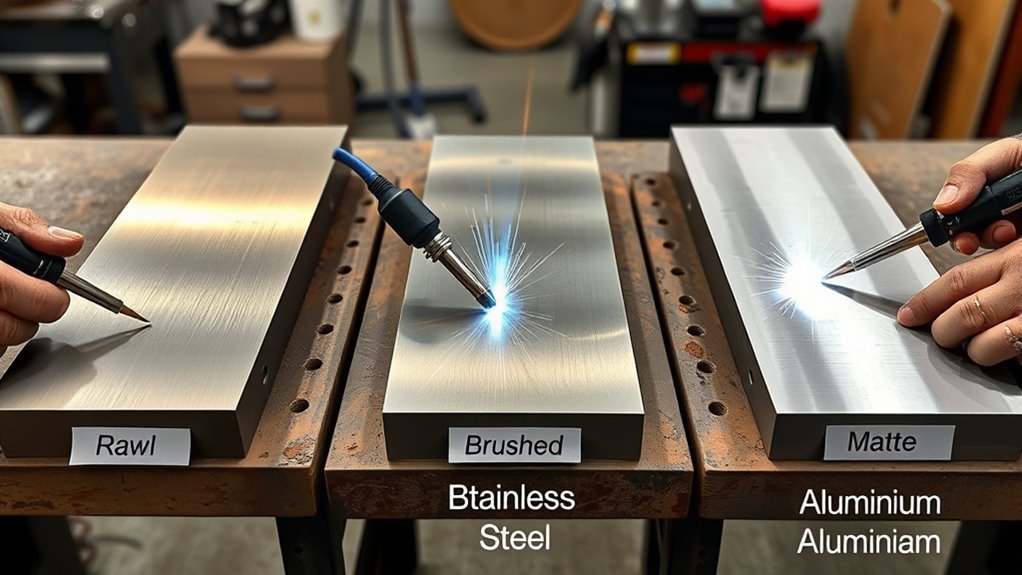
Metal type affects both the material bill and the labor needed to produce a sound weld. However, a universal “price per inch” is not reliable. Weld size, joint geometry, thickness, position, filler alloy, inspection level, and finish can change the cost of two welds with the same length.
Mild Steel Costs
Mild steel is often the most economical common choice because it is widely available and works with productive processes such as MIG, stick, and flux-cored welding. Clean, accessible mild-steel parts with simple joints usually require less preparation than corrosion-resistant or nonferrous alloys.
Costs still rise when the steel is thick, heavily rusted, galvanized, painted, load-bearing, or difficult to align. Finishing also matters: a visible railing that must be ground smooth, primed, and painted costs more than an unfinished shop bracket.
Stainless Steel Pricing
Stainless steel often costs more because the base metal and matching filler are more expensive, contamination control is stricter, and heat tint or distortion may need extra attention. Food, pharmaceutical, chemical, and sanitary work may also require documented procedures, specific surface finishes, purging, passivation, or inspection.
Preheat is not a universal requirement for stainless steel. The correct heat controls depend on the alloy, thickness, service, and approved welding procedure. For critical work, the drawing, code, welding procedure specification, or engineer should control the method.
Aluminum Welding Rates
Aluminum can increase labor because it conducts heat quickly, forms a persistent oxide layer, and is sensitive to contamination and distortion. Miller Electric’s aluminum preparation guidance explains that oxide, moisture, and contamination can contribute to lack of fusion, poor penetration, and porosity.
- Thin aluminum may need careful heat control to prevent burn-through or warping.
- MIG aluminum can require a spool gun or push-pull system, suitable wire, and proper shielding gas.
- AC TIG is commonly used when fine control or a clean visible finish is important.
- Preheat may be specified for some alloys or thick sections, but it should follow the approved procedure rather than a blanket rule.
Note: Cast iron, titanium, copper alloys, hardened steels, and unknown metals may require special procedures or may not be economical to repair. Ask the welder to identify the material before accepting a firm price.
Typical Material and Consumable Expenses
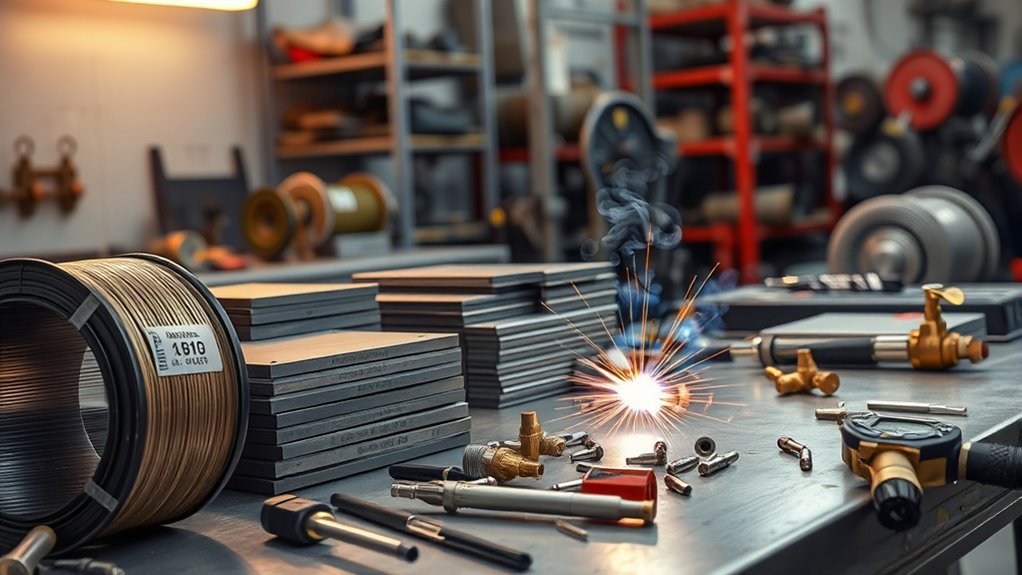
There is no universal rule that consumables equal a fixed percentage of every welding job. Some shops include ordinary wire, gas, and abrasives in the hourly rate. Others add a shop-supplies percentage or list major consumables separately. Specialty filler metal, purge gas, hardfacing products, rented equipment, and outsourced finishing are more likely to appear as separate charges.
| Cost Item | Examples | How It May Be Billed |
|---|---|---|
| Base metal | Plate, tube, angle, sheet, replacement brackets | Actual cost plus cutting, handling, and markup |
| Filler and electrodes | MIG wire, TIG rod, stick electrodes, flux-cored wire | Included in rate or charged by estimated use |
| Shielding and fuel gases | Argon, carbon-dioxide blends, oxygen, fuel gas, purge gas | Included, shop-supplies charge, or separate cylinder/use fee |
| Abrasives and wear parts | Grinding discs, flap wheels, contact tips, nozzles, tungsten | Usually included or covered by a supplies fee |
| Finishing | Primer, paint, polishing, passivation, powder coating | Separate labor/material line or subcontractor charge |
Typical Welding Project Cost Examples
Current national guides show why a single hourly number cannot predict every project. Angi’s 2026 guide reports the following broad planning ranges for common residential work. Local labor, material, access, design, and finishing can move a real quote below or above them.
| Project | Planning Range | Common Variables |
|---|---|---|
| Fence repair | $150–$350 | Rust extent, post damage, access, paint matching |
| Gate fabrication | $400–$1,200 | Size, hinges, latch, design, installation, finish |
| Decorative metalwork | $200–$900 | Detail, curves, grinding, polishing, custom finish |
| Automotive welding repair | $100–$600 | Disassembly, metal thickness, corrosion, safety-critical location |
| Metal furniture fabrication or repair | $250–$800 | Replacement parts, alignment, visible finish, pickup or delivery |
| Structural steel work | $500–$2,500+ | Engineering, access, qualified procedures, inspection, permits |
How Project Complexity Impacts Price
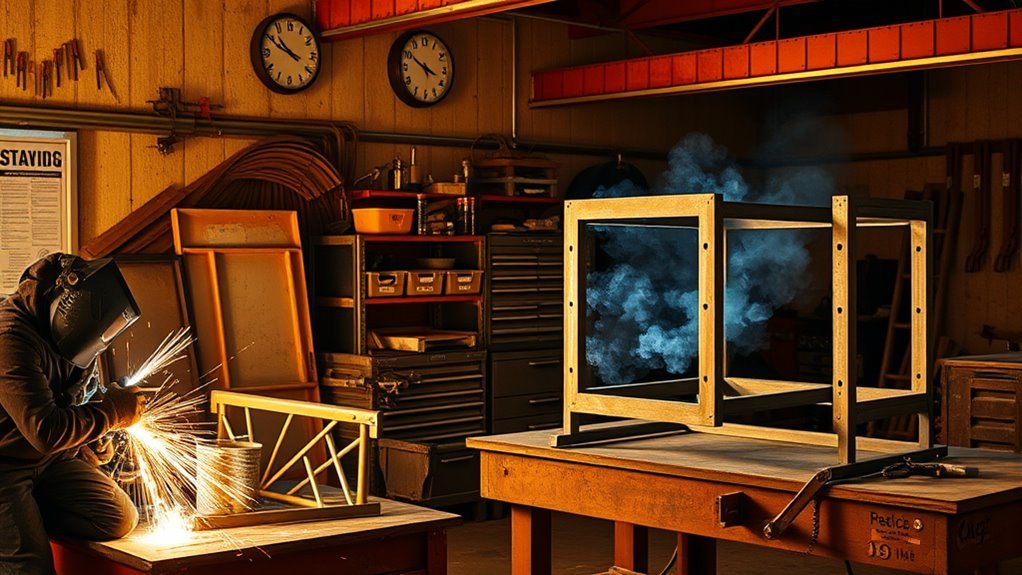
Complexity raises price by adding preparation, positioning, heat control, inspection, and the risk of rework. The visible weld bead may be the shortest part of the job.
- Access: Tight spaces, overhead positions, ladders, lifts, or machinery disassembly slow the work.
- Joint condition: Rust, cracks, contamination, old welds, and missing metal can require cutting and rebuilding.
- Thickness and geometry: Bevels, backing, multiple passes, distortion control, and fixturing add time.
- Service requirements: Load-bearing, pressure, sanitary, vehicle-frame, and code-governed welds demand the correct procedure and inspection.
- Appearance: Flush grinding, polishing, paint blending, and hidden fasteners may take longer than welding.
- Testing: Dye penetrant, magnetic-particle, ultrasonic, or radiographic inspection can add specialist fees.
Warning: Never weld, cut, or grind on a used fuel tank, drum, pressure vessel, or unknown container based only on a visual check. OSHA requires used containers to be thoroughly cleaned and made safe before hot work, and confined spaces may require atmospheric testing and rescue planning.
Shop vs. Mobile Welding Costs
Mobile welding is convenient, but it often costs more because the contractor must load equipment, travel, set up power and shielding, protect the site, and work around weather or access limits. A call-out fee, mileage charge, or higher field rate may apply.
Taking a small, portable item to a fabrication shop can reduce travel and setup costs. Shop work also gives the welder better access to saws, presses, positioners, ventilation, jigs, and finishing equipment. On-site work may still be the only practical choice for gates, machinery, structural members, trailers, and large assemblies.
Pro Tip: Send clear photos and measurements before booking a mobile visit. A welder may be able to identify likely materials, tools, replacement pieces, access problems, and minimum charges before driving to the site.
When Repairing May Cost More Than Replacing
A repair is not automatically the cheaper option. Replacement may make more sense when corrosion extends beyond the visible crack, the base metal has become too thin, a safety-critical component has unknown damage, replacement parts are inexpensive, or the repair requires extensive disassembly and refinishing.
Ask the welder to explain whether sound metal remains around the damaged area and whether a welded repair can meet the required load and service conditions. For structural members, pressure systems, vehicle frames, lifting equipment, or life-safety components, an engineer, manufacturer procedure, or governing code may be needed before work begins.
Estimating Total Project Costs and Using a Calculator
A useful estimate adds each cost category instead of multiplying weld length by a generic price:
Estimated total = labor + base metal + consumables + travel/setup + finishing + inspection/permits + tax.
For example, a two-and-a-half-hour repair at $90 per hour would start at $225 in labor. If replacement metal costs $70, the mobile charge is $50, and grinding plus primer adds $40, the estimated subtotal is $385 before tax or unexpected damage. This example shows the method; it is not a quote for any specific job.
An online calculator can help organize inputs, but it cannot identify hidden corrosion, access problems, code requirements, or the welder’s actual local rate. Treat calculator results as an early budget and verify them with written bids.
Information That Makes an Estimate More Accurate
- Overall dimensions and the approximate weld length
- Metal type, grade, and thickness, if known
- Close-up and wide-angle photos of the damage and access route
- Whether the item is load-bearing, pressurized, used for lifting, or part of a vehicle
- Indoor or outdoor location, power availability, and nearby combustible materials
- Required appearance, coating, paint color, or surface finish
- Any drawing, code, inspection, permit, or deadline requirements
Ways to Save on Welding Costs
You can lower the total without compromising the repair by reducing uncertainty and unnecessary setup.
- Bring portable items to the shop when the shop confirms it is practical.
- Send photos, measurements, material details, and the desired finish before requesting a quote.
- Ask whether the welder can use a standard size or simpler design instead of a custom shape.
- Combine several small shop repairs when a minimum charge applies.
- Compare the cost of repair with a replacement part before authorizing extensive work.
- Request separate prices for optional polishing, paint, powder coating, pickup, or delivery.
- Ask whether supplying your own metal saves money; some shops prefer to source it to control grade and quality.
Note: Do not grind away cracks, coatings, or damaged metal before the welder reviews the job unless instructed. You could hide evidence needed for diagnosis or expose hazardous coatings and fumes.
DIY Welding vs. Hiring a Professional
DIY welding may make sense for a trained person completing a low-risk practice or noncritical shop project with the correct equipment and protective controls. It is not a good cost-saving shortcut for structural supports, pressure systems, fuel containers, vehicle frames, lifting points, unknown alloys, or work that must pass inspection.
OSHA’s welding requirements address fire prevention, eye and face protection, protective clothing, ventilation, confined spaces, and used containers. Even when OSHA rules do not directly govern a homeowner, the hazards remain real: fire, fumes, ultraviolet radiation, electric shock, burns, and eye injury.
Questions to Ask When Getting Welding Quotes
A low number is not useful unless you know what it includes. Use the same scope for each bidder so the quotes are comparable.
| Topic | Question to Ask | What a Clear Answer Includes |
|---|---|---|
| Price | Is this hourly or fixed, and what is the minimum? | Rate, minimum hours, call-out, mileage, and overtime terms |
| Scope | What preparation, materials, and finishing are included? | Cutting, fitting, welding, grinding, coating, cleanup, and exclusions |
| Credentials | Does this job require a qualified welder, procedure, permit, or inspection? | Applicable code or contract requirement and proof of qualification |
| Insurance | Do you carry insurance suitable for this work? | Current coverage and any site-specific documentation |
| Safety | How will you control fire, fumes, and nearby hazards? | Ventilation, shielding, fire watch, surface protection, and site preparation |
| Schedule | What could change the completion date or price? | Material lead time, hidden damage, weather, access, inspection, and change orders |
| Warranty | Is workmanship covered in writing? | Duration, exclusions, inspection process, and remedy |
Pro Tip: Compare the total defined scope, not just the hourly rate. One bid may include materials, grinding, paint, travel, and cleanup while another lists only welding labor.
Frequently Asked Questions
Do welders need certification beyond basic training for my project?
Not for every small nonstructural repair. The requirement depends on the contract, local code, owner, insurer, material, and service. Structural steel work may be governed by a standard such as AWS D1.1, which addresses welder and procedure qualification. The AWS Certified Welder program provides performance-based credentials, but the required qualification must match the actual process, position, material, and project specification.
How long will my welded repair or build take?
A simple shop repair may take a few hours, while a gate, railing, custom frame, or code-governed fabrication may take days or weeks. Material lead time, disassembly, fit-up, finishing, weather, inspection, and hidden corrosion can affect the schedule. Ask for both the expected hands-on time and the calendar completion date.
Are warranty or guarantee terms included with welding work?
Not automatically. Some shops provide a written workmanship warranty, while others limit coverage because the surrounding metal, prior damage, corrosion, misuse, or design is outside their control. Request the duration, exclusions, inspection process, and remedy in writing before work begins.
Can welding work be scheduled for evenings or weekends?
It depends on the contractor, property rules, noise limits, permit conditions, and site access. Emergency, evening, or weekend work may carry a higher minimum or overtime rate. Confirm the arrival window and after-hours charge in writing.
Do environmental or safety regulations affect where welding can be performed?
Yes. Hot-work, fire-prevention, ventilation, confined-space, hazardous-coating, waste, noise, and local permit rules may apply. Requirements depend on the site and jurisdiction. The work area must be assessed for combustibles, fumes, containers, nearby occupants, and ventilation before welding starts.
Is a mobile welder usually more expensive than a shop?
Often, yes. Mobile work may include travel, loading, setup, generator or engine-drive use, weather delays, and site protection. A portable item is often cheaper to repair in a shop, but large gates, equipment, trailers, and structural parts may require on-site service.
What should I send a welder to get a useful quote?
Send wide and close-up photos, measurements, the metal type and thickness if known, the item’s use, the job-site location, access details, and the finish you expect. State whether the part is load-bearing, pressurized, used for lifting, or part of a vehicle. Mention deadlines and any drawings, permits, or inspection requirements.
Conclusion
For most residential and repair work, use $60–$125 per hour as an early planning range, then account for minimum charges, travel, materials, preparation, finishing, and inspection. Mild-steel shop work is often the most economical, while aluminum, stainless, mobile, structural, or precision work can cost more. The best budget comes from clear photos and specifications, a written scope, and two or three comparable local quotes.
Sources
- Angi — How Much Does Welding Cost? 2026 Data — hourly and common project price ranges.
- HomeAdvisor — How Much Does Welding Cost in 2026? — service minimums, hourly rates, and project examples.
- U.S. Bureau of Labor Statistics — Welders, Cutters, Solderers, and Brazers — occupational wage context.
- OSHA 29 CFR 1910.252 — welding fire prevention, PPE, ventilation, confined-space, and container safety.
- American Welding Society — AWS D1.1 Structural Welding Code—Steel — structural welder, procedure, and inspection requirements.
- Miller Electric — Preparing Aluminum Before Welding — oxide, contamination, and weld-quality considerations.