

Underwater welding school can cost from about $1,793 in published enrollment and institutional fees at a low-cost public program for an eligible California resident to roughly $22,000–$29,000 in tuition at current private commercial-diver programs. The full budget can be much higher once a dive physical, personal gear, housing, food, transportation, and financing are included.
Last updated: August 10, 2026. Prices and requirements below were rechecked against current school, government, and industry sources. Where a school’s latest dedicated program estimate is from an earlier academic year, that date is stated instead of presenting the figure as a new 2026 quote.
Quick Answer
For entry-level commercial-diver training that includes underwater welding, current private-school examples run about $22,000 to $29,000 in tuition. Santa Barbara City College’s latest dedicated 2025–26 estimate lists $1,793 in enrollment and institutional fees for an eligible California resident. Divers Institute of Technology publishes a $48,800 total cost-of-attendance budget for an independent student living away from home.
Key Takeaways
- A low published tuition figure may exclude the dive physical, personal equipment, certification cards, housing, food, and transportation.
- Current private-school examples reviewed here list about $22,000 to $29,000 in tuition, while a public college can cost much less for qualifying in-state students.
- The current career-entry examples reviewed here run about 15 to 30 weeks, while SBCC’s certificate follows a two-semester academic schedule; an associate degree usually takes longer.
- There is no single nationwide “underwater welder license.” Commercial-diver credentials, medical fitness, safety courses, access credentials, and welding qualifications serve different purposes.
- High earnings are possible, but neither a school nor a training certificate guarantees a job, offshore placement, or six-figure income.
At a Glance
| Lowest Dedicated Program Estimate | $1,793 in SBCC’s dedicated 2025–26 estimate for an eligible California resident in the two-semester certificate, before the physical and equipment |
| Private Tuition Examples | Approximately $22,000 to $29,000 in the current private-school examples reviewed |
| Typical Career-Entry Length | About 15 to 30 weeks for the private career programs reviewed, or two academic semesters at SBCC |
| Common Extra Costs | Dive physical, personal gear, boots and workwear, books, credential fees, housing, food, transportation, and open-water travel |
| High Total-Cost Example | DIT publishes a $48,800 cost-of-attendance budget for an independent student living away from home |
Warning: Commercial diving and underwater welding are hazardous occupations, not recreational or do-it-yourself activities. Training must cover the assigned equipment, diving mode, emergency procedures, first aid, CPR, and diving-related physics and physiology. Medical clearance must come from an appropriately qualified examiner.
How Much Does Underwater Welding School Cost?

For a first-time student, the useful comparison is the cost of a full commercial-diver program that includes underwater welding—not the price of a short welding or burning specialty course. Public colleges may charge by unit and give residents a major tuition advantage, while private career schools usually charge one program price for an intensive schedule.
That distinction matters because a low-priced short course can serve experienced commercial divers who only need a specialty skill. Entry-level programs are broader: they train commercial divers in surface-supplied diving, safety, rigging, inspection, cutting, equipment maintenance, emergency procedures, and other work skills. Underwater welding is one part of that training.
Products Worth Considering


Current Published Program Examples
| Program | Published Direct Cost | Length | Important Exclusions or Extras |
| Santa Barbara City College | Dedicated 2025–26 estimate: $1,793 for an eligible California resident; $11,761 for an out-of-state certificate student | Two semesters | The 2025–26 sheet estimated a $500–$600 physical and $1,500–$1,800 equipment. SBCC’s Fall 2026 application says grant-funded scuba sets mean new students no longer need to buy a regulator assembly or BCD, so request the current equipment list before budgeting. |
| Professional Diver Training Center | $21,994 program cost | 700 hours over about 15 weeks | Confirm the current equipment, physical, card, housing, and transportation charges in writing |
| Florida Commercial Diving Institute | $21,000 published NSSD price | 625 hours; about 16–17 weeks | Registration fee, dive physical, and required equipment are listed separately. FCDI’s current veterans guide says the NSSD program is still finalizing approval and is not yet accepting enrollments, so verify availability before treating this as an enrollable option |
| The Ocean Corporation | Current financial-aid page: $27,000 tuition | 30 weeks | A separate consumer-disclosure page still shows $25,500 tuition and fees plus $500 books and supplies. Because the school’s pages differ, confirm the controlling price in the current enrollment agreement before paying. |
| Divers Institute of Technology | $29,000 tuition plus an estimated $5,850 for gear and the physical | 28 weeks | Published total cost of attendance is $48,800 for an independent student living away from home |
These figures are examples, not a guaranteed national range. Schools may change tuition, and public-college pricing can depend heavily on residency and academic year. When two official pages show different prices, use the newest enrollment agreement or tuition schedule the school confirms for your start date.
Short-course warning: A low-cost underwater welding or burning course is not automatically an entry-level commercial-diver program. Florida Commercial Diving Institute, for example, lists a separate five-day underwater burning specialty course at $3,000 for experienced commercial-diving personnel. Compare like with like before treating a short-course price as the cost of becoming a commercial diver.
The right comparison is not tuition versus tuition. It is the full amount you must pay or borrow to finish the program and become eligible for the work you want.
Additional Fees, Equipment, and Supplies
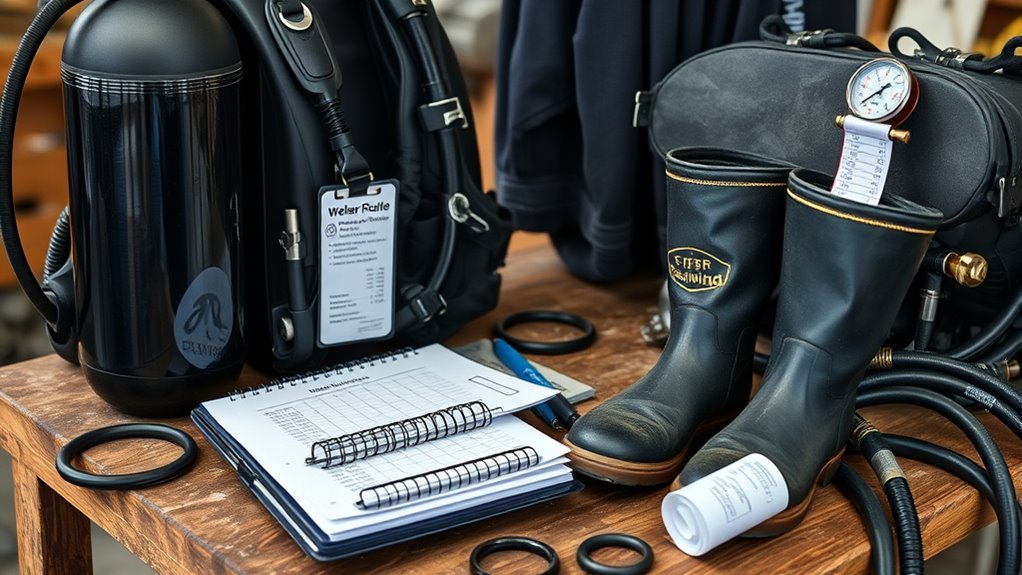
Tuition rarely shows the complete price. Your final budget may include school charges, equipment bought from outside vendors, medical costs, travel, and normal living expenses.
True-cost formula: tuition and mandatory fees + required gear + medical and credential costs + housing and food + transportation and open-water travel + financing costs + income lost during full-time training. Use the same formula for every school so a low tuition quote does not hide a higher total cost.
Products Worth Considering

Comprehensive Welding Protection Package: this welding protection gear set, with a color of yellow, is a handy kit that includes a welding apron, a pair of welding gloves, a pair of welding sleeves, a welding hood and boot covers; This all encompassing package is designed to meet your safety needs and provide full coverage, safeguarding you from welding splashes and intense heat

Multi Use- They can darken to between level #3 and #11. This means that the T TOVIA Auto Darkening Welding Helmet are ideal for all sorts of welding applications including gas welding, plasma, MIG, TIG, and more. They provide a high degree of protection.
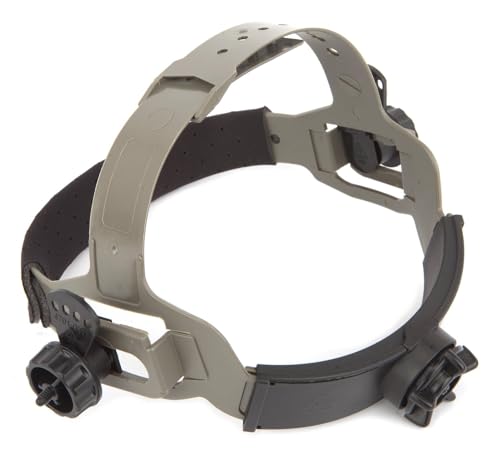
Replacement ratcheting type headgear for Forney 55666, 55673, 55697
Direct Training Costs
- Dive physical: A commercial-diving medical examination may be required before training begins. The price depends on the clinic, tests, and school form. DIT currently says the physical it arranges for students costs $850.
- Personal dive equipment: A school may require a wetsuit or dry suit, mask, fins, boots, hood, gloves, knife, harness, weight belt, and other personal items.
- Work clothing and PPE: Steel-toed boots, rain gear, coveralls, safety glasses, gloves, welding cap, and hearing protection may be separate purchases.
- Books and course materials: Some schools include them; others list a separate amount.
- Consumables: Welding electrodes, cutting supplies, gases, and practice materials may be included in tuition or charged separately.
- Credential and card fees: Ask which commercial-diver, first-aid, CPR, safety, equipment, or welding credentials are included and which require separate payment.
- Retests and make-up training: Ask whether failed tests, missed dives, repeated modules, or extended enrollment create additional charges.
Note: A “certification fee” is not one standard national exam charge. Programs issue or prepare students for different cards and qualifications. Request a written list showing the issuing organization, eligibility requirements, expiration rules, and fee for every credential advertised.
Living and Relocation Costs
Private commercial-diving schools often use full-time schedules that make outside work difficult. If you must relocate, add the following to your estimate:
- Application fees and enrollment deposits
- Housing deposits, rent, utilities, and renter’s insurance
- Food and household supplies
- Local transportation, fuel, parking, or vehicle repairs
- Travel to open-water training locations
- Trips home during the program
- Health insurance and personal medical expenses
- Loan origination fees and interest
- Emergency savings for delayed graduation or an unexpected move
The Ocean Corporation’s disclosure, for example, separates tuition from estimated off-campus room and board, personal expenses, transportation, and loan fees. DIT similarly publishes a cost-of-attendance budget that is much higher than tuition alone.
Pro Tip: Ask each school for the same five figures: tuition and mandatory fees, required equipment, medical and credential costs, estimated living expenses, and the average amount borrowed by recent graduates. Comparing identical categories prevents a low sticker price from hiding a higher final bill.
Program Length and Curriculum
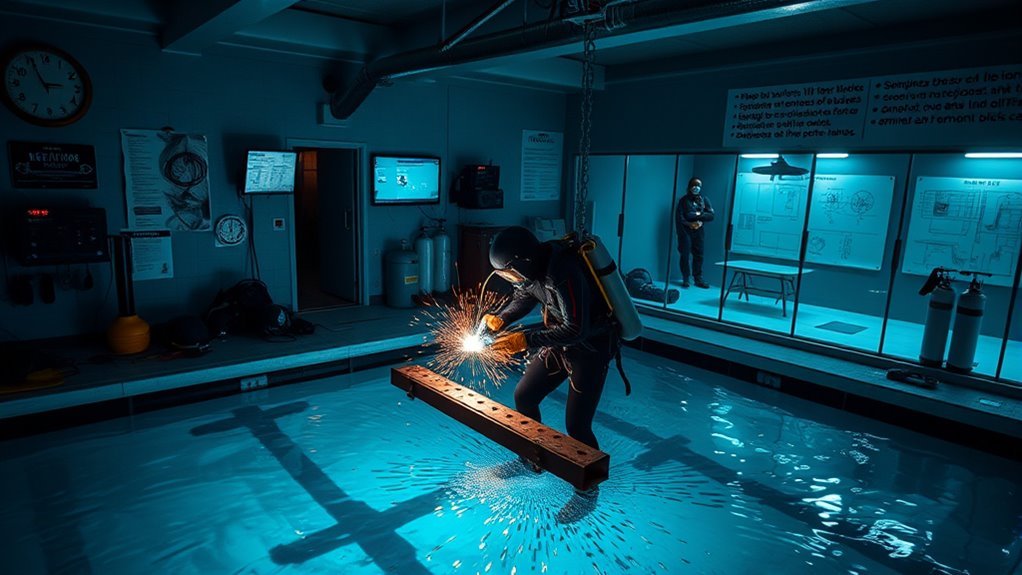
Current career-entry programs do not all follow one schedule. The private examples reviewed here run about 15 to 30 weeks, while SBCC’s certificate follows a two-semester academic schedule. A longer associate-degree route may add general education and technical courses beyond the commercial-diving certificate.
Program Durations Overview
- Accelerated private program: Professional Diver Training Center lists 700 hours over approximately 15 weeks.
- Another published private example: Florida Commercial Diving Institute lists 625 hours over about 16–17 weeks for its NSSD program; confirm enrollment availability because its current veterans guide says approval is still being finalized.
- Thirty-week program: The Ocean Corporation lists a 30-week commercial-diver certificate.
- Twenty-eight-week program: DIT’s current cost page lists a 28-week intended completion time.
- Academic-semester program: SBCC’s Marine Diving Technology certificate takes two semesters, with additional coursework available for an associate degree.
Do not judge a program only by calendar length. Compare documented clock hours, time in the water, class size, instructor-to-student ratios, open-water operations, equipment used, and the skills students must demonstrate before graduation.
Core Curriculum Modules
A complete commercial-diver program may cover:
- Diving physics and physiology: pressure, gas behavior, decompression, thermal stress, and medical risks
- Surface-supplied diving: helmets, air systems, communications, umbilicals, and topside support
- Emergency procedures: loss of gas, loss of communication, entanglement, injured-diver recovery, and chamber procedures
- First aid and CPR: required safety training for dive-team members under OSHA rules
- Rigging and seamanship: knots, lifting, load control, vessel work, and marine operations
- Inspection and testing: visual inspection, documentation, measurement, and introductory nondestructive testing
- Underwater cutting and welding: equipment setup, electrical safety, electrode handling, wet welding, cutting, and quality control
- Equipment maintenance: helmets, compressors, pneumatics, hydraulics, tools, and life-support systems
- Professional practices: dive logs, job planning, communication, teamwork, and employer expectations
The AWS D3.6M Underwater Welding Code covers welding of structures or components below the water’s surface and addresses both wet and dry underwater welding. A school may teach code concepts, but graduation does not automatically qualify a student for every employer, procedure, or project.
Hands-On Training Balance
Classroom instruction should come before and alongside supervised practical work. Students need to understand the equipment, hazards, emergency procedures, and dive plan before performing tasks under pressure.
When comparing schools, ask for measurable answers:
- How many total clock hours does the program contain?
- How many hours are classroom, confined-water, open-water, and topside training?
- How often does each student perform welding and cutting tasks?
- What depth, visibility, current, and water-temperature conditions are used?
- How are failed skill checks handled?
- What is the maximum number of students assigned to one instructor or dive station?
- Does the school document each student’s dives and completed competencies?
Credentials, Medical Exams, and Qualification Costs
There is no single nationwide license called an “underwater welding license.” Several separate documents may affect whether you can enter a jobsite or perform a task.
Commercial-Diver Credentials
A school may award a diploma or certificate and may prepare graduates for cards issued by industry organizations. The Association of Diving Contractors International, for example, operates a certification-card program for commercial-diving personnel. ADCI also states that recreational diving cards alone do not satisfy commercial-diver training requirements; entry-level training and later field experience serve different purposes.
Ask the school to identify:
- The exact name of each credential
- The organization that issues it
- Whether the fee is included
- Whether graduation guarantees the card or only makes the student eligible to apply
- Any required logged dives, work experience, medical approval, or employer verification
- Expiration, renewal, and continuing-education rules
Welding Qualification
A commercial-diver certificate is not the same as a welding qualification. An employer or project may require a diver to pass a procedure-specific performance test under the code and conditions used for that work. A school’s welding module builds skill, but it does not guarantee qualification for every weld class, material, depth, position, or employer procedure. For the separate costs of common welding credentials, see the welding certification cost guide.
Medical Fitness and Other Documents
Programs commonly require a commercial-diving physical. Medical approval is based on the applicable form, the individual’s condition, and the examining physician’s findings. Do not assume that a recreational scuba medical form will satisfy a commercial program.
Depending on the school and career path, students may also need or pursue:
- CPR and first-aid certification
- OSHA safety training
- A Transportation Worker Identification Credential, or TWIC
- Equipment-manufacturer training
- Rigging or forklift training
- Dive-medic or hyperbaric credentials
- Updated medical examinations
Each item has its own issuing authority and rules. Confirm current fees directly rather than relying on a generic renewal estimate.
Living Expenses and Travel Considerations
Commercial-diving schools are often located near ports, lakes, training tanks, or coastal work areas. A student who cannot commute may spend thousands of dollars beyond the school’s direct charges.
Create a budget for the program’s actual length rather than using a vague annual estimate. A 15-week accelerated program and a two-semester college program create different housing, food, transportation, and lost-income costs.
Living-Cost Checklist
- Number of months you will need housing
- Deposit, application fee, and first month’s rent
- Utilities, internet, laundry, and furnishings
- Food and household supplies
- Parking, public transportation, fuel, and insurance
- Open-water training travel
- Trips home and relocation after graduation
- Income you may lose while attending a full-time program
- An emergency reserve for medical delays, failed modules, or schedule changes
Ask whether the school owns housing, refers students to private landlords, or merely publishes a general allowance. A cost-of-attendance budget is an estimate, not a promise that suitable housing will be available at that price.
Admission Requirements and Prerequisites
Admission rules differ by school. Many private programs accept students without prior commercial-diving or underwater-welding experience, but applicants may still need to meet education, age, swimming, medical, and documentation requirements.
For example, DIT’s published requirements include a high school diploma or GED, English proficiency, an ADCI dive physical, the ability to swim 400 meters unassisted, and the ability to obtain a TWIC card. Students must be 18 by graduation, and DIT currently lists $850 for the physical it arranges.
SBCC follows a different model. Its application instructions require students entering diving classes to complete a recognized open-water scuba certification and submit the required commercial-diving physical documentation before the program begins.
Common Prerequisite Checklist
- Minimum age or requirement to be 18 by graduation
- High school diploma, transcript, or recognized equivalent
- Swimming test or documented comfort in the water
- Commercial-diving medical examination
- Drug-screening or background requirements, where applicable
- Ability to obtain a TWIC or other site-access credential
- Driver’s license or reliable transportation
- Prior scuba certification, if required by that program
- Physical ability to lift equipment and work in demanding conditions
Note: Passing a school’s admission process does not guarantee that you will meet every future employer’s medical, security, travel, or project requirements.
Financing Options: Aid, Loans, Payment Plans, and Benefits
Funding depends on the institution and the student. A program’s use of the words “accredited” or “financial aid available” does not automatically mean every student or course qualifies for every federal program.
Products Worth Considering

201 STAINLESS STEEL - Made of Premium Type 201 stainless steel with excellent corrosion and heat resistance. Ideal for consistent practice across MIG, TIG, Stick, and wire-feed welding applications.

🎲Superior Processing: Our steel plates are all laser-cut, providing edge and overall flatness that is unmatched by other stamped and sheared components.

Quantity and size:Welding Practice Kit, With 8 Of 3x5”, 8 Of 2x4”, 4 Of 3x3” And 4 Of 2x2” 24 pieces in total.
Possible Funding Sources
- Federal student aid: Submit the FAFSA only after confirming that the institution and program participate in the applicable federal aid programs. You can review school participation information through Federal Student Aid.
- School payment plans: Compare deposit requirements, payment dates, late fees, interest, and what happens if you withdraw.
- Private education loans: Review the interest rate, origination fee, variable-rate risk, cosigner terms, and repayment start date.
- Veterans’ education benefits: Confirm the exact program approval and remaining benefit eligibility before enrollment.
- Workforce funding: State or local workforce agencies may fund approved occupational training for eligible applicants.
- Scholarships and grants: Ask schools, trade organizations, foundations, and local workforce programs about current awards.
- Employer or union programs: Apprenticeships, reimbursement, or sponsored training may exist in some markets, but they are not guaranteed.
Borrow the smallest amount that reasonably covers the program. A lender may approve more than you need, but repayment will continue even if you leave the industry, fail the medical examination later, or do not secure the job you expected.
Pro Tip: Before signing a loan, ask the school for its current completion rate, placement disclosure, median graduate debt, refund schedule, and written total-cost estimate. Compare the monthly loan payment with a conservative entry-level income, not an exceptional offshore salary.
Comparing Public, Private, and Specialized Programs
The cheapest school is not automatically the best value, and the most expensive program is not automatically the strongest. Compare what each school delivers and what employers in your target market recognize.
Public College Programs
A public college can offer low resident tuition, transferable general education, and access to a broader campus system. The trade-offs may include an academic calendar, residency rules, prerequisite courses, limited annual admission, and a longer route if you pursue an associate degree.
Private Career Schools
A private school may offer frequent start dates, a compressed full-time schedule, specialized facilities, and career-services staff. The total price can be much higher, and clock-hour credits may not transfer easily to another college.
School Comparison Checklist
- Institutional status: Who accredits and authorizes the school, and is the specific program approved?
- Industry alignment: Which commercial-diving standards, credentials, and employer requirements does the curriculum address?
- Clock hours: How many documented hours are required, and how are they divided?
- Practical access: How much individual time does each student receive on helmets, tools, welding stations, chambers, and open-water projects?
- Equipment: What is supplied, what must you buy, and what do you keep after graduation?
- Medical policy: What physical is required, who may perform it, and what happens if you do not pass?
- Credentials: Which cards are included, optional, or dependent on additional experience?
- Outcomes: What completion and placement rates are reported, for which cohort, and under which formula?
- Career services: Does the school provide job leads, résumé help, interviews, or guaranteed placement? Treat any guarantee with caution.
- Refund rules: How much is refundable after the deposit, equipment purchase, first day, or withdrawal?
- Transferability: Will another institution accept the credits? Obtain an answer from the receiving institution in writing.
- Total price: What is the full estimated cost through graduation, including living expenses and loan fees?
Career Earnings, Job Placement, and Return on Investment
Underwater welding is a skill used within the broader commercial-diving occupation. Commercial divers may also inspect structures, perform maintenance, install equipment, recover objects, cut materials, rig loads, and support marine construction.
The U.S. Bureau of Labor Statistics May 2025 estimates report about 3,450 commercial-diver jobs, a mean annual wage of $88,320, and a median hourly wage of $35.09. Multiplying that median hourly rate by 2,080 hours gives about $72,990 for a full-time year. These figures cover the broader commercial-diver occupation, not only underwater welders, and they do not promise what a new graduate will earn.
Actual income can change with:
- Experience and documented dive time
- Inland, coastal, offshore, or international work
- Union status and employer
- Travel, overtime, weather delays, and project schedules
- Inspection, rigging, burning, welding, NDT, or supervisory skills
- Medical fitness and ability to maintain required credentials
- Willingness to relocate or accept irregular work
How to Read Placement Rates
A placement percentage is meaningful only when you know the reporting period and formula. Ask:
- Does the denominator include everyone who enrolled, everyone who graduated, or only graduates available for work?
- What counts as employment: any job, a related job, temporary work, or full-time work?
- How long after graduation was employment measured?
- How many graduates could not be verified?
- Is the rate calculated by the state, an accreditor, or the school?
- Can the school provide the latest written disclosure rather than a verbal sales claim?
One school can publish two valid but different percentages because the state and accreditor use different cohorts or formulas. Compare like with like.
Estimating Return on Investment
Use a conservative estimate rather than assuming immediate offshore work. Add tuition, mandatory fees, gear, medical costs, living expenses, transportation, interest, and income lost during training. Then compare that total with realistic local job opportunities and starting pay disclosed by employers.
A lower-cost public program may offer a faster financial return for a resident student, while a private school may be worth the higher price when its schedule, facilities, credentials, employer relationships, and location closely match the student’s goals. The answer depends on verified outcomes, not the school’s advertising alone.
What to Ask Before Enrolling
Request written answers and keep copies of every disclosure, catalog, email, and enrollment agreement.
- What are the current tuition and mandatory fees?
- Which books, consumables, tools, clothing, and dive equipment must I buy?
- How much does the required physical usually cost, and what form must the physician complete?
- Which credentials are included, and who issues them?
- Does graduation guarantee a credential, or are logged work hours or employer verification also required?
- How many total clock hours and individual in-water hours will I complete?
- How much wet and dry underwater welding practice is included?
- What are the class size and instructor-to-student ratio?
- Where does open-water training occur, and who pays for travel and lodging?
- What percentage of students complete the program on time?
- What is the latest placement rate, reporting period, denominator, and definition of a related job?
- Which employers hired recent graduates?
- What is the average or median debt of recent graduates?
- What happens financially if I fail the physical, withdraw, repeat a module, or cannot obtain a required access credential?
- Are credits transferable, and has the receiving school confirmed that in writing?
- Is the program eligible for the specific aid, veterans’ benefit, or workforce funding I plan to use?
Frequently Asked Questions
Do I need prior welding or diving experience to enroll?
Not always. Some private programs accept beginners and teach the diving and welding foundations during the course. Other schools have prerequisites. SBCC, for example, requires a recognized open-water scuba certification before students begin its diving classes. Check the exact admission rules rather than assuming every school follows the same policy.
Are there age or medical restrictions?
Programs commonly require students to be at least 18 by graduation and to pass a commercial-diving physical. Exact age, swimming, medical, and documentation rules vary. A qualified medical professional must decide whether an applicant meets the required medical standard; the school should provide the correct examination form.
What safety training is included beyond welding?
A sound commercial-diving program should cover equipment use, diving modes, emergency procedures, diving physics and physiology, first aid, CPR, communications, rigging, decompression awareness, and injured-diver response. Ask for the curriculum and documented practical hours rather than relying on a general promise of “hands-on” training.
Does tuition include the dive physical and equipment?
Sometimes, but not always. SBCC lists its physical and required equipment separately. DIT publishes a combined gear-and-physical estimate in addition to tuition. Ask for a current equipment list showing which items are supplied, rented, purchased, or retained after graduation.
Can I transfer credits to another school later?
Transfer is not automatic. The receiving institution decides whether it will accept the coursework, and private clock-hour programs may have limited academic transfer value. Send the catalog, course descriptions, clock hours, and accreditation information to the receiving school and obtain written approval before enrolling.
Do employers sponsor tuition or offer apprenticeships?
Some employers, unions, veterans’ programs, and workforce agencies may help eligible applicants, but sponsorship is not standard and should not be assumed. Confirm eligibility, service commitments, repayment clauses, approved schools, and covered expenses in writing.
Does graduating from underwater welding school guarantee a job?
No. Graduation can provide entry-level training and credentials, but employment depends on medical fitness, location, employer demand, travel flexibility, practical ability, safety performance, and the qualifications required for each project. Review placement disclosures carefully and avoid relying on an exceptional graduate salary.
How long does underwater welding school take?
The current private career-entry examples reviewed here run about 15 to 30 weeks. SBCC’s Marine Diving Technology certificate follows a two-semester academic schedule. A short specialty course may take only days, but that is not the same as a full entry-level commercial-diver program.
Is a short underwater welding course the same as commercial diving school?
No. Entry-level commercial-diver programs cover diving systems, safety, emergency procedures, rigging, cutting, inspection, and other job skills in addition to welding. A short specialty course can be designed for people who already have commercial-diving training; Florida Commercial Diving Institute, for example, lists a separate five-day underwater burning course for experienced commercial-diving personnel.
Conclusion
For entry-level programs reviewed in August 2026, current private tuition examples run about $22,000 to $29,000. FCDI separately publishes a $21,000 NSSD price, but its current veterans guide says that program is still finalizing approval and is not yet accepting enrollments. SBCC’s latest dedicated 2025–26 program estimate is much lower for an eligible California resident at $1,793 in enrollment and institutional fees, but the full budget can rise sharply after the physical, personal equipment, housing, food, transportation, and financing expenses are included.
Shortlist at least three programs and ask each for the same written figures: tuition and mandatory fees, required gear, medical and credential costs, living and travel costs, and the refund policy. Then compare documented training hours, safety standards, credentials, equipment access, completion data, placement definitions, and employer recognition. Treat high salary claims as possibilities rather than promises, and make sure the program prepares you first to work safely as a commercial diver—not simply to perform a weld underwater.
Sources
- Santa Barbara City College Marine Diving Technology 2025–26 Tuition Estimate — program-specific resident and nonresident estimates, physical, and equipment
- Santa Barbara City College 2026–27 Fees — current enrollment and nonresident fee schedule
- Santa Barbara City College Marine Diving Technology Application — Fall 2026 prerequisites, physical timing, drug testing, and equipment-grant information
- Florida Commercial Diving Institute National Standard Surface Supplied Diver Program — published tuition, hours, duration, exclusions, and underwater-welding curriculum
- Florida Commercial Diving Institute Veterans Enrollment Guide — current NSSD approval and enrollment-availability status
- Florida Commercial Diving Institute Underwater Burning Course — specialty-course price, length, and intended audience
- Professional Diver Training Center Commercial Diver Course — program price, clock hours, duration, class size, and credentials
- The Ocean Corporation Financial Aid — current published tuition figure
- The Ocean Corporation Consumer Disclosures — alternate tuition disclosure, books, living-cost estimates, completion data, and placement disclosures
- Divers Institute of Technology Cost of Attendance — tuition, gear, physical, 28-week intended completion, housing, travel, and total cost of attendance
- Divers Institute of Technology Admissions Requirements — age, education, swim, medical, TWIC, and current physical-cost information
- OSHA 29 CFR 1910.410: Qualifications of Dive Team — task training, emergency procedures, CPR, first aid, physics, and physiology requirements
- U.S. Bureau of Labor Statistics Occupational Employment and Wages, May 2025 — commercial-diver employment, mean wage, and median wage benchmark
- Association of Diving Contractors International Certifications — commercial-diver certification classifications and training requirements
- American Welding Society D3.6M Underwater Welding Code — scope of wet and dry underwater welding requirements
