

Welding school can be a relatively affordable route into skilled work, but the advertised tuition rarely tells the whole story. Current published examples show direct program costs ranging from about $7,400 at a public technical college to more than $26,000 at a specialized private welding school. Your actual total depends on residency, program length, equipment, certification testing, transportation, housing, and financial aid.
Quick Answer
Plan on roughly $7,000–$12,000 in direct costs for many public welding certificate or diploma programs. Specialized private programs may cost about $16,800–$26,500 or more. Housing, transportation, tools, supplies, and certification testing can push your total higher, so compare each school’s full written cost—not tuition alone.
Key Takeaways
- Current public-school examples reviewed for this guide list about $7,400–$11,600 in direct costs for career-focused welding programs.
- Specialized private programs may exceed $16,000 and can reach about $26,500 before housing and other indirect expenses.
- Ask whether tools, uniforms, consumables, testing, books, and protective equipment are included.
- Federal aid and VA benefits apply only when the student and specific program meet the relevant requirements.
- Compare net price, completion, local wages, employer demand, and debt—not just the school’s advertised salary claims.
Typical Welding School Costs by Program Type
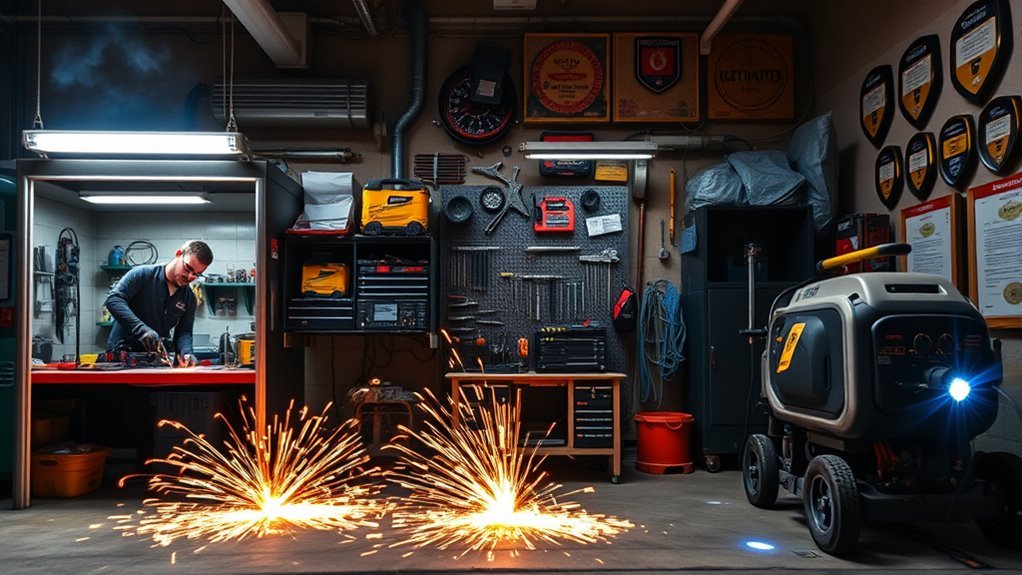
There is no single national price for welding school. Schools use different calendars, include different supplies, and may quote tuition without showing tools, uniforms, testing, or living expenses.
The most reliable approach is to compare current, itemized prices from programs similar to the ones you are considering. These published examples show how wide the range can be:
Welding Program Costs at a Glance
| Noncredit hobby class | Usually hours or days rather than a full career program. Local prices vary widely, and the course may not lead to an industry credential. |
| Public technical program | Emerald Coast Technical College lists $7,433.20 in estimated direct costs for its 36-week, 1,050-hour 2026–27 welding program for an in-state student. |
| Community-college diploma | Kirkwood Community College lists $11,587 in estimated 2026–27 costs for its 38-credit entry-level welder diploma for an in-state student. |
| Associate degree | Kirkwood lists $22,601.05 in estimated costs for its 73-credit Advanced Welding Technologies associate program for 2026–27. |
| Specialized private school | Hobart Institute of Welding Technology lists $16,828 for its 24-week structural program and $26,485 for its 40-week pathways program. |
| Bachelor’s degree | A welding engineering bachelor’s degree is a separate four-year engineering path. Its cost depends on the university, residency, housing, and aid rather than a standard welding-school price. |
These figures are examples, not national averages. Prices can change each academic year, and out-of-state students may pay more. Always request a written cost sheet for your intended start date.
Note: Welding engineering is not simply a more advanced welder-training certificate. Ohio State University describes its program as a four-year engineering degree rather than a technical welding program. It includes advanced mathematics, science, design, metallurgy, and engineering coursework.
Products Worth Considering

Used Book in Good Condition
Additional Costs: Gear, Materials, and Living Expenses
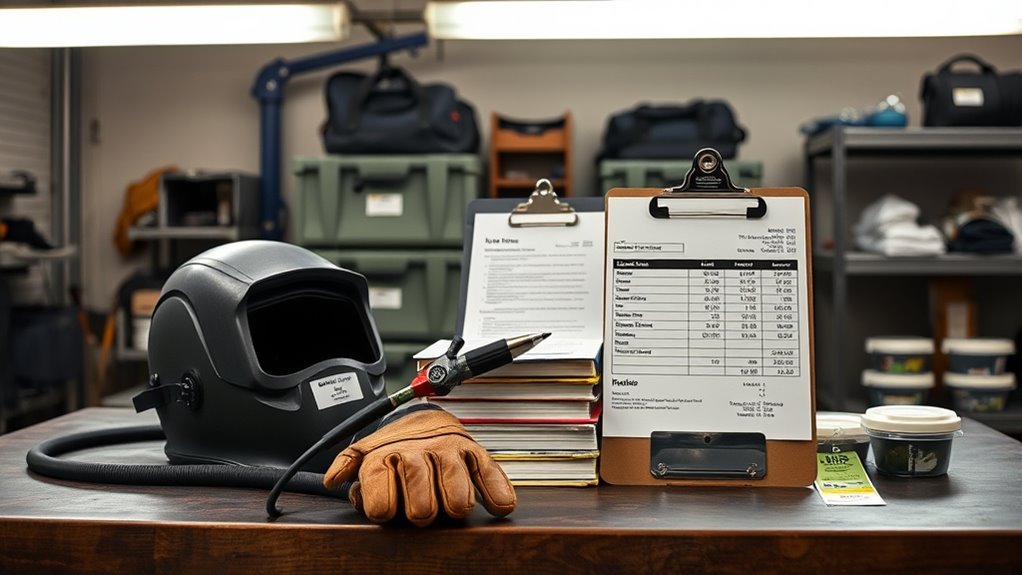
Tuition is only one part of the bill. Some schools bundle equipment and supplies into the program price, while others require students to buy them separately.
| Cost category | What to verify |
| Protective equipment | Helmet, safety glasses, gloves, flame-resistant clothing, boots, hearing protection, and any school-specific PPE. |
| Tools and uniforms | Ask for the required tool list and whether used tools are allowed. Kirkwood’s published diploma estimate includes $1,500 for tools and $558 for uniforms. |
| Books and course resources | Confirm whether textbooks, online access codes, blueprint materials, and consumables are included or billed separately. |
| Certification and qualification tests | Ask which tests are included, which code or process is tested, whether retests cost extra, and whether the credential must be maintained. |
| Transportation and parking | Daily travel can become a major expense because welding labs must usually be completed in person. |
| Housing, food, and personal expenses | These indirect costs may not appear on the program’s tuition page but can be included in its official cost-of-attendance estimate. |
You normally do not need to purchase a full welding machine just to attend school. Career programs generally provide shop machines for lab instruction. Buy a personal machine only when the school requires one or when you have a safe, properly powered, well-ventilated place to practice.
Pro Tip: Ask the admissions office for an itemized list showing tuition, fees, PPE, tools, uniforms, consumables, credentials, retests, graduation charges, and estimated transportation. Get the refund and withdrawal policy in writing at the same time.
Products Worth Considering

Crafted with precision, our steel plates are laser-cut, offering unparalleled edge smoothness and dimensional accuracy compared to stamped and sheared parts.

Comprehensive Welding Protection Package: this welding protection gear set, with a color of yellow, is a handy kit that includes a welding apron, a pair of welding gloves, a pair of welding sleeves, a welding hood and boot covers; This all encompassing package is designed to meet your safety needs and provide full coverage, safeguarding you from welding splashes and intense heat
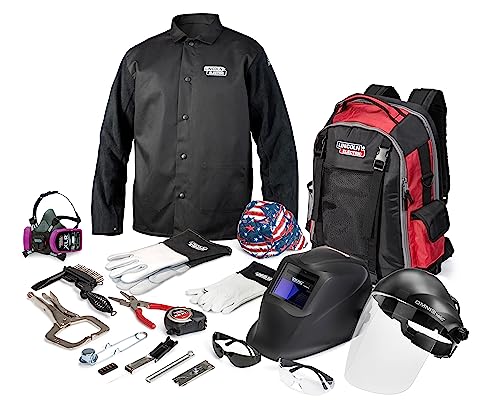
What is a Ready-Pak? – A product assortment that contains personal protective equipment (PPE) and hand tools used for welding, cutting, and metal-working applications.
Understanding Welding Certification Costs
A school certificate, a welder qualification test, and a professional certification are not the same thing. Completing a school program proves that you met the school’s graduation requirements. An employer or testing facility may still require you to pass a performance test for a particular process, material, position, thickness, or welding code.
The American Welding Society’s price list effective January 1, 2026 shows why one flat testing estimate is misleading:
- The AWS Certified Welder application fee is $70.
- The Accredited Test Facility sets the price of the practical Certified Welder exam.
- AWS lists yearly Certified Welder maintenance at $105.
- Initial Certified Welding Inspector exams cost $1,255 for members and $1,520 for nonmembers.
Before enrolling, ask the school to identify every included test by its full name. Also ask whether testing is performed by an AWS Accredited Test Facility, whether retests are included, and whether the resulting qualification is portable to other employers.
Note: An OSHA 10-hour or 30-hour course may provide a Department of Labor outreach training card, but it is not a professional welding certification and does not replace an employer’s required safety training.
Products Worth Considering

REPLACEMENT WELDING HELMET HEADGEAR - Jackson Safety's Premium 370 Speed Dial Replacement Headgear offers a perfect fit and secure hold for your welding hood

Functional FR MATRIALS:Water & Oil Repellent Finish.7.5OZ Mid-weight Cotton Twill Flame Resistant Treated,FR Buttons,FR Sewing Threads!Clear FR Tag on front.UL NFPA2112 Classifeid,More FR info On Wash Tag About UL Certification.We Attached A Small Sample Inside Package For Cunstomers Simple FR Try

FR MATRIALS:5.5OZ Cotton Knit FR Treated,FR Buttons,FR Sewing Threads!Clear FR Tag on arms and bottom front.More FR info On Neck Tag About UL Certification.We Attached A Small Sample Inside Package For Cunstomers Simple FR Try
Financial Aid, Scholarships, and Payment Options

Grants, scholarships, VA education benefits, employer assistance, and payment plans may reduce what you pay upfront. Eligibility is not automatic, however, and not every short course participates in every aid program.
- FAFSA and federal aid: Complete the FAFSA and confirm that the specific school and program are eligible for federal student aid. Review the requirements on the Federal Student Aid eligibility page.
- Pell Grants: Eligible undergraduate students may receive grant aid that generally does not need to be repaid. Award amounts depend on federal rules and the student’s circumstances.
- Federal student loans: Compare the amount borrowed with your likely local starting wage. Loans must be repaid even if you leave the program or do not obtain the expected job.
- VA education benefits: Eligible veterans, service members, and qualified dependents may use benefits for approved non-college-degree programs. Verify the exact school and program through the Department of Veterans Affairs.
- Scholarships: Check the school, local foundations, unions, employers, workforce agencies, and the AWS Foundation. Read eligibility and renewal rules carefully.
- Payment plans: Ask about enrollment fees, missed-payment penalties, refund rules, and whether the balance must be paid before testing or graduation.
- Employer assistance: Some employers reimburse approved training or pay for qualification tests. Obtain the policy in writing before assuming the employer will cover the bill.
Compare the net amount you must pay after grants and scholarships—not just the published tuition or the maximum aid package.
Lower-Cost Alternatives to Full-Time Welding School
A full-time private program is not the only path into welding. Depending on local employers and your career goal, one of these options may reduce debt:
- Registered apprenticeship: Apprenticeships combine paid employment, classroom instruction, progressive wage increases, and an industry-recognized credential. Search current opportunities through Apprenticeship.gov.
- Employer-sponsored training: Manufacturers, fabrication shops, shipyards, contractors, and unions may hire entry-level workers and provide process-specific training.
- Community-college certificate: A shorter public program may offer the core shop skills needed for local entry-level work without the cost of a longer degree.
- High-school or dual-enrollment CTE: Eligible students may complete introductory welding courses while earning high-school or college credit.
- Individual process classes: An experienced worker may need only one course in GTAW, pipe welding, blueprint reading, or another specialty rather than a complete beginner program.
Lower cost does not always mean better value. Compare supervised booth time, instructor access, equipment condition, ventilation, employer relationships, and the exact skills taught.
Program Lengths and What You Get for the Price
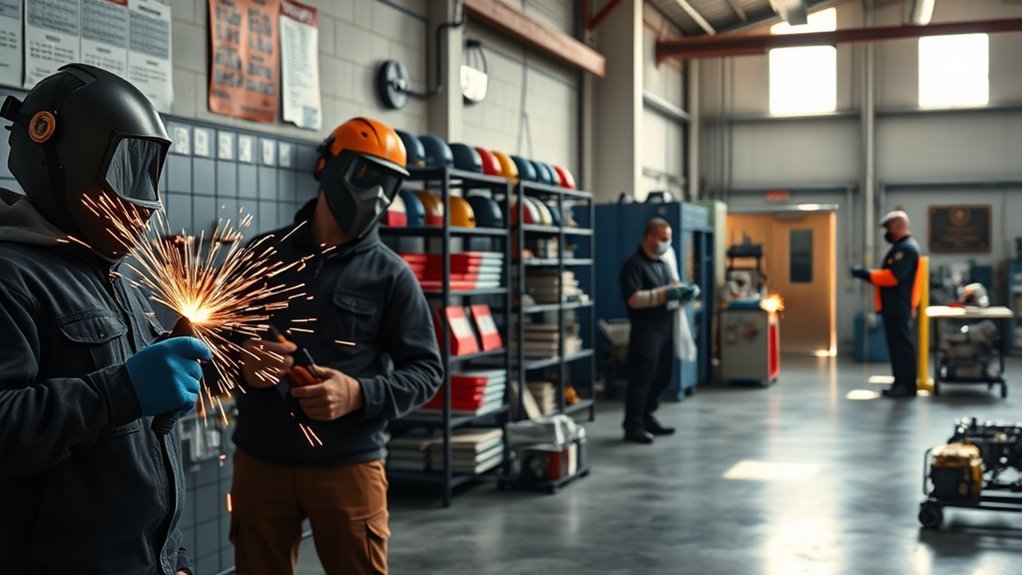
Program names are not standardized. One school’s certificate may contain more lab hours than another school’s diploma, so compare clock hours, credits, shop time, and curriculum rather than relying on the credential name alone.
Short Courses and Noncredit Classes
These may last a few hours, several weekends, or a few months. They work well for hobbyists, maintenance employees, or experienced welders learning one process. They may not qualify for federal aid or prepare a complete beginner for full-time employment.
Certificate and Diploma Programs
Career-focused programs commonly run several months to about one academic year. For example, ECTC lists 1,050 clock hours over 36 weeks, while Hobart lists 840 hours over 24 weeks for its structural program and 1,400 hours over 40 weeks for its pathways program.
A strong program should include substantial supervised practice along with safety, blueprint reading, measurement, joint preparation, inspection basics, cutting, and the welding processes relevant to local employers.
Associate Degrees
An associate degree usually combines welding labs with general education and broader technical coursework. It may be useful for students who want a college credential, intend to transfer, or plan to move toward inspection, supervision, automation, quality, or manufacturing technology.
Do not assume all certificate credits will transfer. Ask the receiving college for an official evaluation before enrolling.
Welding Engineering Degrees
A welding engineering degree prepares students for engineering work involving materials, design, automation, metallurgy, testing, manufacturing, and welded structures. It requires university-level mathematics and science and should be compared with other engineering degrees—not with a short welder-training certificate.
How to Compare Welding Schools Before Enrolling
Ask each school the same questions and keep the answers in a simple spreadsheet. This makes it easier to compare real value instead of reacting to a monthly payment or an advertised salary.
- What is the complete direct cost? Request tuition, mandatory fees, tools, PPE, uniforms, books, consumables, testing, retests, and graduation charges.
- What is the estimated cost of attendance? Include housing, food, transportation, child care, and lost work time where relevant.
- Is the institution accredited? Verify claims through the U.S. Department of Education’s Database of Accredited Postsecondary Institutions and Programs.
- Is the exact program eligible for aid? Institutional accreditation alone does not guarantee that every course qualifies for every benefit.
- How many supervised lab hours are included? Ask how many students share each booth and how much practice time is scheduled.
- Which processes and positions are taught? Look for a clear curriculum covering the processes used by employers in your area.
- Which credentials are included? Get the full credential names, testing codes, positions, materials, and extra retest costs.
- How are completion and placement rates calculated? Ask for the reporting period, number of students included, job definition, and whether temporary or unrelated jobs count.
- What is the refund policy? Learn what happens if you withdraw, fail a course, lose aid, or cannot complete required lab hours.
- Will credits transfer? Obtain written confirmation from the school that would receive the credits.
The U.S. Department of Education’s College Scorecard can help you compare available data on costs, completion, debt, and earnings. Federal data may not answer every program-level question, but it provides a useful check against marketing claims.
Welding School Safety and Lab Quality
A low price is not a bargain if the lab is poorly ventilated, overcrowded, or badly supervised. Tour the shop while classes are running and look at booth spacing, extraction systems, cylinder storage, electrical leads, housekeeping, fire controls, PPE enforcement, and instructor availability.
Warning: Welding can expose students to metal fumes, ultraviolet radiation, burns, eye injuries, electrical shock, noise, and fire hazards. OSHA emphasizes proper work practices, ventilation, and personal protective equipment. Do not choose a program that treats fume control or PPE as optional.
Ask how the school handles stainless steel, galvanized metal, painted surfaces, confined-space instruction, compressed-gas cylinders, respirator requirements, and students who repeatedly ignore safety procedures.
Evaluating Return on Investment and Career Outlook
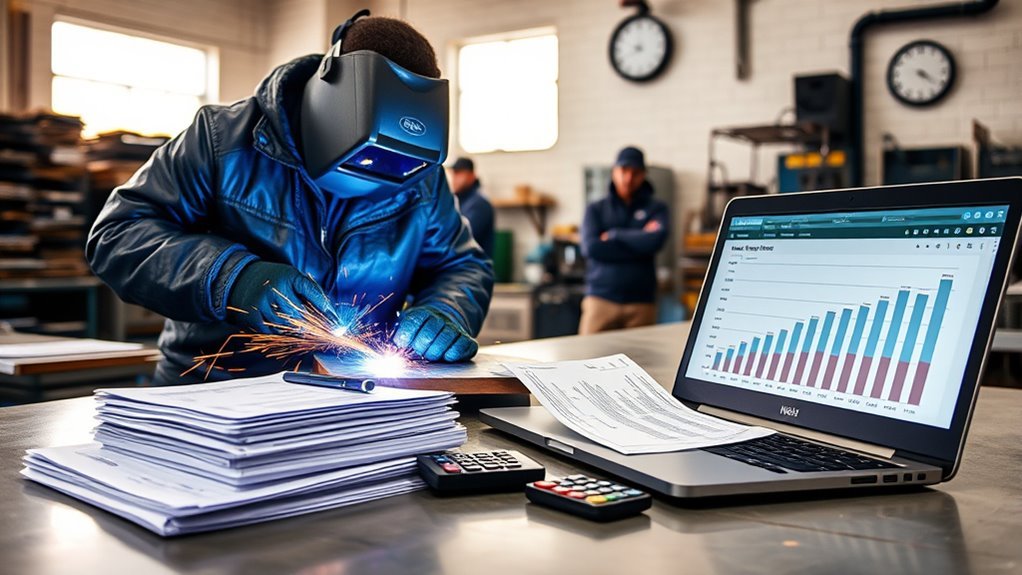
Welding training can provide good value, but the return is not automatic. Your result depends on program completion, debt, local wages, overtime, industry, location, experience, travel requirements, and the qualifications employers actually request.
According to O*NET’s wage page using BLS 2025 data, the national median annual wage for welders, cutters, solderers, and brazers was $53,750. The national 10th-to-90th-percentile range was $39,240 to $77,530. These figures describe workers across experience levels and should not be treated as guaranteed starting salaries.
The Bureau of Labor Statistics projects 2% employment growth from 2024 to 2034, slower than the average for all occupations. It also projects about 45,600 openings per year, mainly because workers will change occupations or leave the workforce.
The current national median is useful context, but your local entry-level wage and total debt are more important when judging whether a program is affordable.
Use a Simple Break-Even Calculation
Estimate your break-even period with this formula:
Total out-of-pocket training cost ÷ expected monthly increase in take-home pay = estimated break-even months
For example, suppose training costs you $10,000 after grants and you reasonably expect it to increase your take-home pay by $1,000 per month. The simple break-even estimate is 10 months. That estimate becomes longer when you include interest, transportation, tools, missed work, or a delay in finding employment.
Run at least three scenarios:
- Conservative: Lower local starting wage, no overtime, and several months to find work.
- Expected: Wage supported by current local job postings and normal work hours.
- Optimistic: Higher-paying employer, overtime, travel, or additional qualifications.
Warning: Do not borrow based on a school’s highest advertised salary, an unusual travel assignment, or an “underwater welder” income claim. Ask for typical local entry-level pay and verify it against current employer postings and government wage data.
Frequently Asked Questions
Do employers offer tuition reimbursement after welding training?
Some do, but reimbursement is not universal. An employer may limit assistance to approved schools, job-related courses, employees who have completed a waiting period, or workers who remain with the company for a set time. Ask for the written policy before enrolling or assuming that a payment will be reimbursed.
Can welding credits transfer toward an associate degree?
They may transfer, but the receiving college decides. Accreditation alone does not guarantee acceptance. Save the course descriptions and syllabi, then request an official transfer evaluation from the college where you expect to complete the degree.
Are night or weekend welding classes available?
Some schools offer evening, weekend, or part-time schedules, but availability changes by term. Confirm how often each required lab is offered and whether a missed course could delay graduation until the next semester.
What certifications may be included beyond entry-level AWS training?
Programs may prepare students for performance tests involving structural plate, pipe, SMAW, GMAW, GTAW, or FCAW. The useful question is not how many “certifications” are advertised, but which code, process, material, thickness, position, testing organization, and maintenance requirements apply.
Is tool maintenance training part of the curriculum?
It may be, but do not assume every program covers it in depth. Ask whether students learn routine inspection, cable and torch care, consumable replacement, safe cylinder handling, equipment setup, cleaning, storage, and basic troubleshooting.
Do I need welding school to become a welder?
Not always. BLS says workers typically enter with a high-school diploma or equivalent plus technical and on-the-job training. A school program can provide structured practice and employer connections, while apprenticeships and employer training offer other routes.
Will FAFSA pay for every welding class?
No. Federal aid depends on the student’s eligibility and whether the school and specific program participate in federal aid. A short hobby class or noncredit course may not qualify even when the institution offers aid for longer programs.
Should I buy my own welding machine before school?
Usually not. Confirm the school’s required equipment list first. Most career programs provide lab machines, and practicing at home requires suitable electrical service, ventilation, fire protection, PPE, safe material handling, and permission from the property owner where applicable.
Sources
- O*NET OnLine — Welders, Cutters, Solderers, and Brazers Wages — 2025 national wage data sourced from the Bureau of Labor Statistics.
- U.S. Bureau of Labor Statistics Occupational Outlook Handbook — education, pay, employment outlook, and projected annual openings.
- Federal Student Aid — Eligibility Requirements — federal grant and loan eligibility conditions.
- American Welding Society Certification and Education Price List — current certification application, examination, and maintenance charges.
- Occupational Safety and Health Administration — Welding Hazards and Solutions — welding fumes, radiation, burns, electrical hazards, work practices, and PPE.
- U.S. Department of Education College Scorecard — school cost, completion, debt, and earnings comparison data.
Conclusion
Welding school may cost less than a four-year degree, but it is still a major purchase. Current examples show direct costs of about $7,400–$11,600 for some public certificate and diploma programs, around $22,600 for one community-college associate program, and roughly $16,800–$26,500 for specialized private training.
Before enrolling, compare the complete cost, supervised shop hours, safety practices, included credentials, refund policy, aid eligibility, completion data, and local starting wages. The best program is not automatically the cheapest or the longest. It is the one that teaches the skills local employers need without requiring more debt than your realistic earnings can support.
