
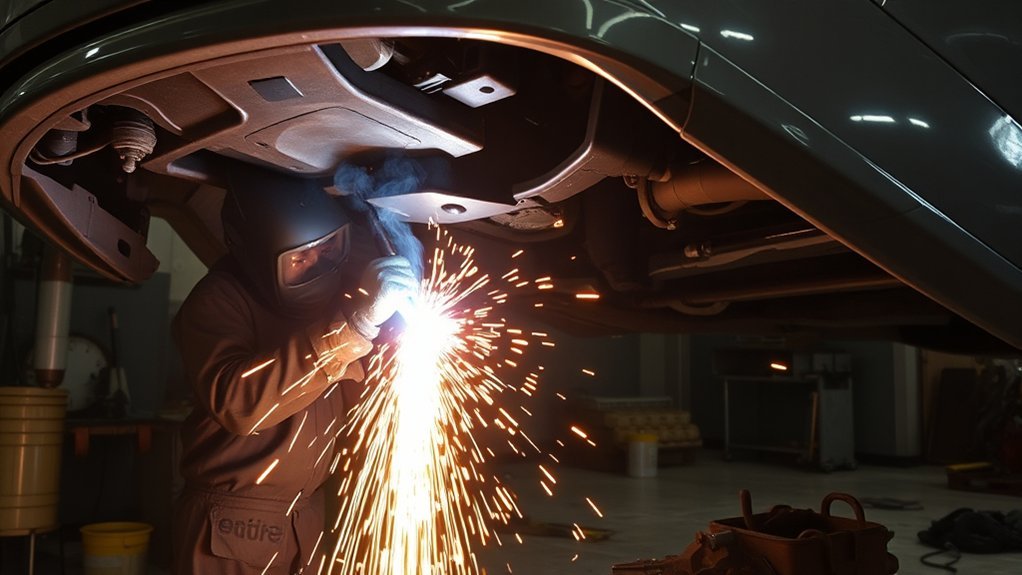
Car welding costs vary widely because a quick exhaust weld is not the same job as replacing a rusted rocker panel or repairing a structural rail. The final price depends on where the damage is, how much metal must be removed, the material used, repair access, required refinishing, and whether the vehicle manufacturer permits welding in that location.
Quick Answer
Car welding often costs about $100 to $600 for a small exhaust, bracket, or body repair. Rust patches, rocker panels, and structural work can cost $500 to several thousand dollars because cutting, fitting, corrosion protection, refinishing, and vehicle-specific procedures add labor. Get an in-person estimate before approving frame or unibody welding.
Key Takeaways
- Many small automotive welding jobs fall near $100 to $600, but extensive rust or structural damage can cost $1,000 to several thousand dollars.
- The visible crack or hole is only part of the job. Cutting, cleaning, fabrication, fitting, interior removal, corrosion protection, and paint can take longer than the weld itself.
- Structural repairs must follow the vehicle maker’s repair manual. Some high-strength steel parts cannot be sectioned, straightened with heat, or welded outside approved locations.
- Mobile welders may charge travel or minimum call-out fees, while a workshop may be more economical when the vehicle can be transported safely.
- Fuel, electrical, airbag, hybrid, and high-voltage hazards make professional service the safer choice for most vehicle welding.
At a Glance
| Time Required | About 1–3 hours for an accessible minor repair; one or more days for rust cutting, structural work, curing, and refinishing |
| Difficulty | Professional-level for structural, thin-sheet, aluminum, hybrid, EV, and safety-critical repairs |
| Tools Needed | Correct welder and filler, extraction, PPE, fire protection, measuring tools, vehicle protection equipment, and OEM repair information |
| Cost | Roughly $100–$600 for many small repairs; $500–$2,500 or more for extensive rust work; commonly $1,000+ for structural repairs |
Car Welding Cost by Repair Type
There is no single national price for welding a car. Current consumer cost guides place broad automotive welding near $100 to $600 and general welding service rates near $50 to $125 per hour. Those figures are useful for early budgeting, but a collision shop may estimate the work by repair operation rather than by the hour.
| Repair Type | Rough Planning Range | What Changes the Price |
| Exhaust hanger, bracket, or small exhaust weld | $100–$300 | Access, corrosion, pipe thickness, removal, and whether a section must be replaced |
| Small non-structural bracket or body patch | $100–$600 | Minimum labor charge, metal preparation, patch fabrication, and finishing |
| Rusted body panel or wheel-arch patch | $250–$1,200+ | Hidden rust, panel shape, paint blending, interior access, and corrosion treatment |
| Floor pan, rocker panel, or cab-corner repair | $500–$2,500+ | Extent of corrosion, reinforcement layers, trim removal, drainage, seam sealing, and refinishing |
| Frame, unibody rail, or other structural repair | Often $1,000 to several thousand dollars | OEM procedures, measuring, pulling, replacement parts, weld testing, scans, calibration, and refinishing |
These figures are planning ranges rather than guaranteed quotes. Angi’s current welding guide lists automotive repairs around $100 to $600, while HomeGuide lists exhaust welding around $100 to $300 and general welding service rates around $50 to $125 per hour. Your local labor market and the condition found after disassembly can move the total outside those ranges.
The visible weld is often the shortest part of the job. Safe preparation, cutting, fitting, corrosion protection, reassembly, and refinishing may account for most of the bill.
What Is Welding?
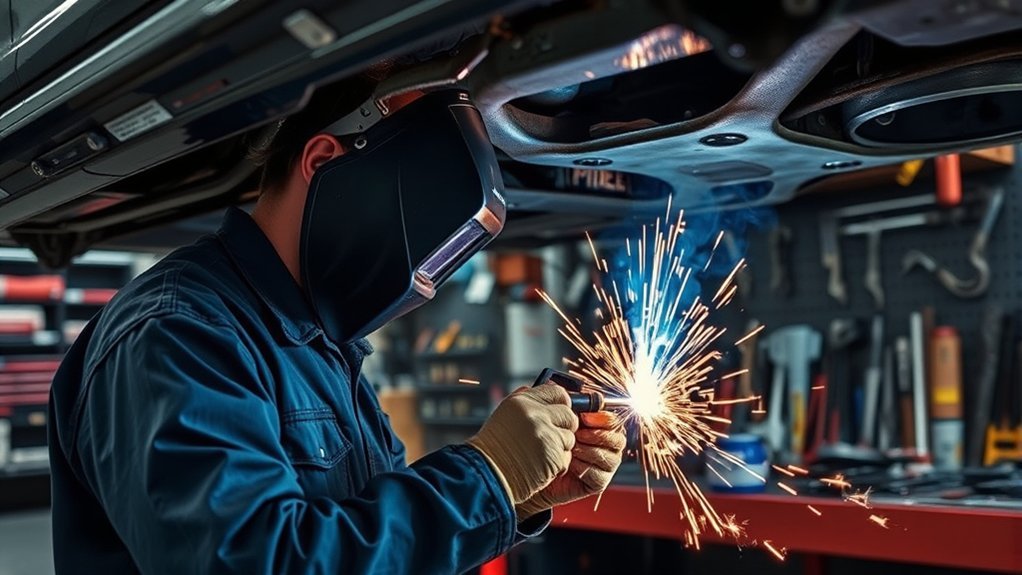
Welding joins metal by using heat, pressure, or both to create a permanent bond. In common automotive fusion welding, an electric arc melts the edges of the base metal and often a compatible filler wire or rod. The joint then solidifies as it cools.
Automotive repair requires more than making the metals stick together. The technician must control heat, penetration, distortion, weld spacing, corrosion protection, and the heat-affected area around the joint. An attractive weld can still be unsafe if the wrong process, filler metal, joint design, or attachment location was used.
Common Automotive Welding Processes
- GMAW, commonly called MIG welding: Uses a continuously fed wire electrode. It is widely used for mild-steel fabrication, body panels, plug welds, brackets, exhaust components, and some structural procedures.
- GTAW, commonly called TIG welding: Uses a non-consumable tungsten electrode and offers precise heat control. It may be selected for aluminum, stainless steel, custom fabrication, and thin or appearance-critical work.
- Squeeze-type resistance spot welding: Recreates factory-style spot welds on certain replacement panels when the vehicle maker specifies the process and the equipment can reach the joint.
- MIG brazing: Uses a silicon-bronze filler at a lower temperature than fusion welding. It is appropriate only where the vehicle manufacturer specifies or permits it.
- Shielded metal arc or stick welding: Useful for heavier fabrication but generally less suitable for thin modern body panels because heat and distortion are harder to control.
The correct process is determined by the vehicle, metal grade, part thickness, joint location, and manufacturer procedure—not simply by which welder is available.
Note: “MIG” and “TIG” are familiar shop terms. Their standard U.S. process names are gas metal arc welding (GMAW) and gas tungsten arc welding (GTAW).
Structural vs. Non-Structural Car Welding
A non-structural repair may involve an exhaust bracket, outer body skin, cosmetic patch, or removable accessory. Structural welding involves parts that help manage suspension loads or crash energy, such as rails, pillars, rockers, crossmembers, and reinforced floor sections.
Structural repairs require vehicle-specific measurements and OEM repair information. Late-model vehicles can contain several grades of high-strength steel, ultra-high-strength steel, aluminum, and mixed materials in one body. Applying heat or placing a weld in the wrong location can change the metal’s properties or interfere with how the structure performs in another collision.
I-CAR advises following vehicle-maker instructions first. As a general best practice, steel above 600 MPa should not be sectioned outside factory seams unless the manufacturer specifically permits it. Some damaged parts must be replaced rather than straightened or patched.
Warning: Do not approve frame, unibody, pillar, rocker-reinforcement, suspension-mount, seat-belt-anchor, or battery-enclosure welding without confirmation that the proposed procedure is permitted by the vehicle manufacturer. A low quote is not a bargain if the repair changes the vehicle’s crash structure.
Products Worth Considering

These Service Caster Series #20 Semi Steel Cast Iron casters offer various wheel sizes and mounting heights: 3” Wheel: 4-1/8” mounting height; 4” Wheel: 5-1/8” mounting height; 5” Wheel: 6-1/8” mounting height.

These Service Caster Series #20 Stainless Steel Polyurethane casters offer various wheel sizes and mounting heights: 3” Wheel: 4-1/8” mounting height; 3-1/2” wheel: 4-5/8” mounting height; 4” wheel: 5-1/8” mounting height; 5” wheel: 6-1/8” mounting height. Wheels are offered in five different colors – Gray, Blue, Black, Maroon, and Red.

These Service Caster Series #20 Hard Rubber casters offer various wheel sizes and mounting heights: 3” Wheel: 4-1/8” mounting height; 3-1/2” wheel: 4-5/8” mounting height; 4” wheel: 5-1/8” mounting height; 5” wheel: 6-1/8” mounting height.
Can a Rusted Car Be Welded?
Some rust damage can be repaired by cutting away the weakened metal and welding in a correctly shaped patch or replacement section. Welding directly over flaky, thin, or perforated rust does not restore the original strength. The technician must continue cutting until the remaining metal is sound enough for the approved joint.
Rust also spreads farther than the visible hole. Paint, seam sealer, undercoating, carpet, insulation, and overlapping panels can hide additional corrosion. A small opening may become a much larger repair after the area is cleaned and disassembled.
Products Worth Considering

VERSATILE ALL-METAL REPAIR: Perfectly bonds and repairs a wide range of metals including steel, cast iron, copper, brass, stainless steel, and more. Tackle common household, automotive, or plumbing fixes with confidence.

Comprehensive Welding Package: our package comes with 24 low temperature universal welding rods available to meet your welding requirements; Whether you are a novice or an experienced welder, this kit of welding rods ensures you have things you need for your welding projects; Material is relatively brittle, received with breakage is a normal phenomenon, does not affect the use

When Replacement May Be Safer
Replacement may be the better choice when:
- Corrosion extends through several layers or reinforcement panels.
- The remaining metal is too thin to support a sound weld.
- A suspension, steering, seat, seat-belt, or drivetrain mounting point is affected.
- The OEM procedure prohibits sectioning or heat in that location.
- The repair cost approaches the value of the vehicle.
- A replacement exhaust, bracket, panel, or structural component costs less than extensive fabrication.
A shop may need to remove trim, undercoating, interior panels, or adjacent parts before it can determine whether welding is practical.
How Long Does Welding Take?
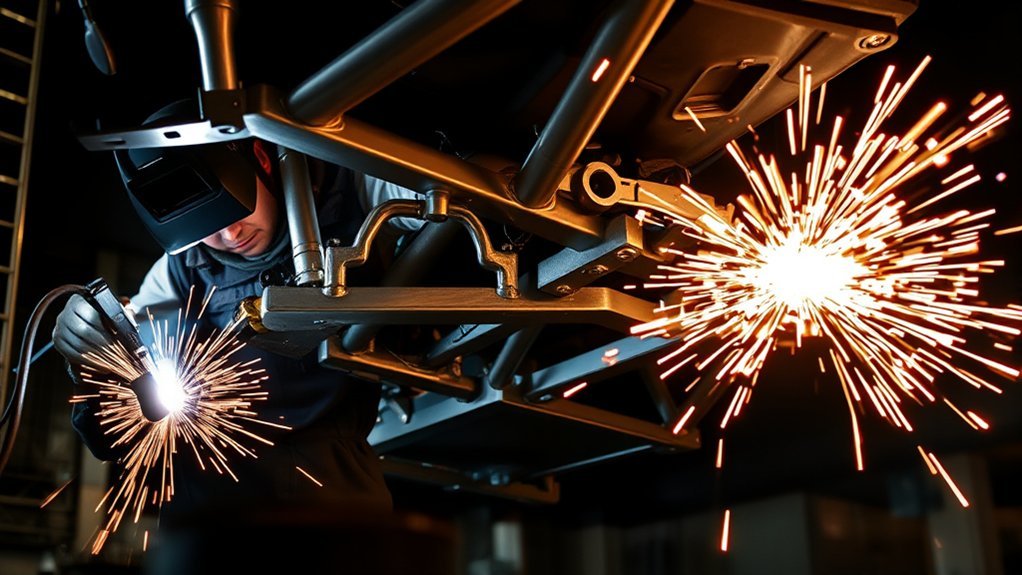
An accessible bracket or exhaust repair may take one to three hours, including setup. A body patch can occupy most of a day once cutting, shaping, tack welding, cooling, grinding, sealing, and refinishing are included. Structural or widespread rust repairs may keep the car in the shop for several days.
Products Worth Considering
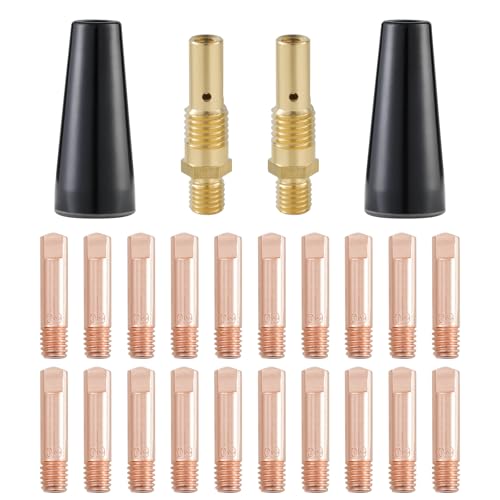
Package Including 20 x .035" (0.9mm) contact tips, 2 x flux core gasless nozzles, 2 x gas diffusers

Spiral design: Features a durable spiral design specifically engineered for effective residue removal, ensuring thorough cleaning and superior welding performance.

COMPATIBILITY: Designed for 14AK welding torches, this kit is a direct fit for YESWELDER FLUX-135PRO/FLUX-135MINI models. It’s also compatible with any other welder that uses a 14AK gun. Ideal for gasless welding and general metal fabrication in workshops, construction sites, and automotive repair applications.
Factors Influencing Time
- Inspection and disassembly: Trim, carpet, fuel lines, wiring, modules, glass, or mechanical parts may need protection or removal.
- Rust removal: The opening can grow as weak metal is cut back to a solid edge.
- Patch fabrication: Curved panels, stamped shapes, and multi-layer structures take longer to reproduce and fit.
- Repair access: Tight locations may require component removal or specialized equipment.
- Welding procedure: Thin sheet metal often requires a series of controlled tack welds and cooling periods to limit distortion.
- Finishing: Grinding, seam sealer, cavity wax, primer, undercoating, paint, reassembly, scanning, and calibration can add substantial time.
Average Repair Duration
| Job | Typical Shop Time |
| Accessible exhaust or bracket weld | About 1–3 hours |
| Small body patch without extensive paintwork | Several hours to one day |
| Rocker, floor, wheel-arch, or cab-corner repair | One to several days |
| Structural collision repair | Several days or longer, depending on parts and required procedures |
Complexity of Repairs
The length of the visible seam does not reliably predict the repair time. A two-inch rust hole may require a much larger patch, while a longer clean crack in an accessible exhaust section may be straightforward. Ask whether the estimated time includes preparation, disassembly, finishing, corrosion protection, paint, scans, and reassembly.
Mobile Welding Cost

A mobile welder brings equipment to the vehicle. This can be useful when the car is immobile, the repair is on a removable heavy component, or transporting the project would cost more than the call-out fee.
Service Pricing Factors
Mobile pricing may include:
- A one- or two-hour minimum charge
- Travel time, mileage, fuel, and tolls
- Generator or power requirements
- Emergency, evening, or weekend surcharges
- Weather protection and safe-work-area setup
- Materials, shielding gas, grinding discs, and replacement metal
- Extra time when the vehicle is not prepared or the area is difficult to reach
General U.S. welding service rates commonly fall near $50 to $125 per hour, but a mobile contractor may use a higher minimum to cover travel and setup. Get a written total or a clearly stated hourly rate, minimum, and travel charge before the visit.
Call-Out Charges Explained
There is no fixed nationwide mobile-welding call-out price. A contractor may charge a minimum even when the actual weld takes only a few minutes because the service also requires loading equipment, traveling, setting up, making the area safe, and packing up afterward.
In the United Kingdom, quotes are commonly provided in pounds and may also combine a call-out minimum with hourly labor. Do not assume that a £200 minimum or £300 urgent-service charge applies nationwide; rates vary by region, travel distance, schedule, and repair type.
Pro Tip: Send the welder clear close-up and wide-angle photos, the vehicle year and model, the damaged part, and a description of any rust before requesting a call-out. Better information reduces the chance of an unproductive visit.
How Much Does Metal Welding Cost?

General welding projects commonly cost about $50 to $125 per hour, with minimum charges often applied to small jobs. Current broad consumer estimates place many automotive welding repairs near $100 to $600, but that range should not be mistaken for a guaranteed national average.
The shop’s hourly charge is not the same as the welder’s wage. It also supports equipment, extraction, utilities, insurance, training, administration, facility costs, consumables, and profit. Collision repairs may be quoted by labor operation, while fabrication shops may quote by time and materials.
What Is Included in a Car Welding Quote?
A complete estimate may include:
- Inspection, measuring, and damage analysis
- Access to vehicle-specific repair information
- Vehicle disassembly and protection
- Removal of rust, coatings, or the damaged component
- Replacement panels or fabricated patch metal
- Filler wire, shielding gas, abrasives, and shop supplies
- Welding, brazing, or resistance-spot-welding labor
- Grinding, metal finishing, and weld inspection
- Primer, seam sealer, cavity wax, undercoating, and paint
- Reassembly, diagnostic scans, wheel alignment, or ADAS calibration when required
- Mobile travel or towing
- Taxes and disposal fees
What Affects the Cost to Weld Metal?

The cost of automotive welding depends on the complete repair process, not just the number of inches welded.
Extent and Location of Damage
An exposed exhaust bracket is usually cheaper to repair than corrosion hidden behind carpet, insulation, trim, or several layers of sheet metal. Work near a fuel system, airbag component, wiring harness, control module, glass panel, battery, or high-voltage cable requires additional protection and preparation.
Metal Type and Thickness
Mild steel is generally easier and less expensive to work with than aluminum, stainless steel, or specialty alloys. Aluminum requires strict contamination control and suitable equipment. Very thin sheet metal needs careful heat control to prevent burn-through and warping, while thick material may require more preparation, filler, power, and weld passes.
Welding Process and OEM Procedure
GMAW/MIG is common for many steel repairs, while GTAW/TIG may be selected for precise fabrication and certain aluminum or stainless-steel work. Late-model collision repair may instead require squeeze-type resistance spot welding, MIG brazing, rivet bonding, adhesive bonding, or part replacement. Using a cheaper unapproved process can make the repair unacceptable.
Rust and Contamination
Paint, rust, galvanized coatings, seam sealer, oil, road debris, and undercoating must be handled correctly. Heavily corroded metal often expands the repair once the surface is cleaned.
Finish and Corrosion Protection
Welding removes or damages protective coatings near the joint. The repaired area may require primer, seam sealer, cavity wax, paint, or undercoating to help prevent corrosion from returning. Skipping these steps can turn an inexpensive repair into another rust problem.
Location and Shop Overhead
Labor rates vary with local wages, rent, insurance, technician availability, training, and equipment. A qualified collision facility with measuring systems, resistance welders, aluminum separation, scanning tools, and OEM certifications may charge more than a general fabrication shop because the required capabilities are different.
Car Welding Safety
Welding creates intense light, heat, sparks, hot metal, electric current, and fumes. OSHA identifies burns, eye damage, electric shock, UV exposure, and metal fumes among the main hazards. Suitable PPE and ventilation are essential, but vehicle welding also requires protection of combustible materials and electronic systems.
- Inspect the work area for fuel, oil, vapors, undercoating, carpet, insulation, and other combustibles.
- Keep suitable fire-extinguishing equipment ready and use a fire watch when conditions require one.
- Protect nearby glass, paint, hoses, wiring, sensors, modules, and interior materials from sparks and heat.
- Follow the OEM procedure for disconnecting the 12-volt battery, backup batteries, and sensitive electronics.
- Use the specified grounding location and keep the welding-current path away from bearings, modules, and wiring.
- Remove coatings safely and provide effective fume extraction.
- Follow manufacturer shutdown and verification procedures on hybrid and electric vehicles.
Warning: Never weld a fuel tank or work near fuel vapors without specialized hot-work procedures, testing, and professional controls. An apparently empty tank can contain explosive vapor. Vehicle fuel, battery, airbag, and high-voltage hazards make improvised driveway welding especially dangerous.
Hybrid and Electric Vehicle Precautions
Disconnecting the ordinary 12-volt battery does not automatically make a hybrid or EV safe. High-voltage batteries, capacitors, orange cables, electric compressors, backup power supplies, and battery enclosures require model-specific procedures and trained personnel. Welding near a high-voltage battery or enclosure may be restricted or prohibited.
A qualified shop should identify the propulsion system, obtain the OEM repair procedure, disable the system when required, observe the specified waiting period, verify the zero-energy state where applicable, and protect or remove components listed by the manufacturer.
Things to Consider
Mobile Welder or Repair Shop?
A mobile welder can be convenient for a disabled vehicle or a simple accessible component. A workshop is usually better when the job needs a lift, frame measuring, extensive disassembly, fume extraction, weather control, paintwork, scanning, calibration, or structural collision equipment.
Repair or Replace?
Ask for both options when practical. Replacing a rusted exhaust section, bracket, bolt-on panel, or prohibited structural component may cost less and produce a more predictable result than fabricating a patch. Consider the vehicle’s value, future use, remaining corrosion, parts availability, and repair warranty.
How to Choose a Welding Service
For cosmetic fabrication, look for a welder with experience in the relevant metal and thickness. For collision or structural work, look for a repair facility that can access OEM procedures and document the proposed attachment method.
Useful qualifications may include relevant I-CAR welding training, I-CAR Gold Class recognition, ASE collision-repair credentials, or certification from the vehicle manufacturer. Credentials do not guarantee perfection, but they help show that the shop invests in current repair knowledge and skills.
Ask the shop:
- Is this part structural or non-structural?
- Does the manufacturer permit welding or sectioning here?
- Which welding or joining process will you use?
- Does the estimate include cutting, fabrication, disassembly, paint, and corrosion protection?
- Could hidden rust increase the price after teardown?
- Will diagnostic scans, alignment, or ADAS calibration be needed?
- What workmanship and corrosion warranty is included?
- Will you provide photos or documentation of the completed repair?
Pro Tip: Compare estimates by scope rather than total price alone. One quote may cover only cutting and welding, while another includes replacement metal, interior removal, seam sealing, corrosion protection, paint, scans, and reassembly.
Before You Approve the Repair
A small car-welding job may cost only a few hundred dollars and take several hours. Extensive rust, difficult access, aluminum, structural damage, or vehicle-specific procedures can push the price above $1,000 and extend the repair over several days.
Request a written estimate that identifies the damaged part, repair method, labor, materials, finishing work, possible supplements, and warranty. For frame or unibody repairs, confirm that the shop has checked the manufacturer’s procedure rather than relying on a one-size-fits-all welding method.
Frequently Asked Questions
Can I weld my car myself, or should I hire a professional?
A trained hobbyist may be able to complete non-structural fabrication on a properly prepared project. Most vehicle repairs are safer in professional hands because thin sheet metal, hidden combustibles, electronics, fuel systems, structural materials, and corrosion protection require specialized knowledge. Do not attempt structural, airbag-area, fuel-system, hybrid, EV, or high-voltage welding without the required training and manufacturer procedure.
What types of welding are commonly used on cars?
Common processes include GMAW/MIG, GTAW/TIG, squeeze-type resistance spot welding, and MIG brazing. The correct process depends on the metal, thickness, joint, component, and OEM repair procedure. Stick welding is more common in heavy fabrication than in thin late-model body repair.
Are there safety concerns when welding on a car?
Yes. Major hazards include fire, fuel vapors, hot metal, UV radiation, fumes, electric shock, combustible trim, airbags, electronic modules, batteries, and high-voltage systems. PPE is only one part of the job; the vehicle and work area must also be inspected, isolated, protected, and ventilated correctly.
How do I choose a reliable welding service?
Choose a provider with experience in the same repair type and metal. For structural work, ask whether the shop uses OEM repair information and whether its technicians hold relevant I-CAR, ASE, or manufacturer training. Review the written scope, warranty, corrosion-protection steps, and examples of comparable work.
What materials can be welded on a car?
Automotive components may use mild steel, high-strength steel, ultra-high-strength steel, stainless steel, aluminum, cast iron, and specialty alloys. Weldability does not mean the part is repairable. The manufacturer may restrict heat, straightening, sectioning, filler metal, or attachment methods for a particular component.
Can a welder repair rust without cutting it out?
Not reliably. Flaky or perforated rust must normally be removed until sound metal remains. Welding over weakened corrosion can produce poor fusion and leave the surrounding area too thin to carry the required load.
Is a welded car safe to drive?
It can be safe when the repair is permitted by the manufacturer and completed with the correct process, joint, materials, measurements, corrosion protection, and inspection. A welded structural repair performed without OEM guidance may alter crash performance, alignment, or load paths.
Does car insurance cover welding repairs?
Coverage depends on the cause of damage and the policy. Welding required after a covered collision may be included in the claim, subject to the deductible and approved repair plan. Corrosion, age, wear, previous poor repairs, and routine deterioration are commonly excluded. Confirm coverage with the insurer before authorizing work.
Conclusion
Car welding commonly costs a few hundred dollars for a small, accessible repair, but extensive rust and structural work can exceed $1,000 and may reach several thousand dollars. The most important question is not simply how long the weld will take. It is whether the damaged part can be repaired safely, which procedure the vehicle maker requires, and what preparation and finishing are included.
Get a written, itemized estimate and treat unusually cheap structural work cautiously. A proper repair should address sound base metal, approved attachment methods, electronics and fire protection, corrosion prevention, inspection, and any required post-repair scans or calibration.
Sources
- Angi — Welding Cost Guide — current general and automotive welding price ranges and cost factors
- HomeGuide — Welding Cost Guide — hourly service rates, minimum labor charges, exhaust repair estimates, and welding-process pricing
- Occupational Safety and Health Administration — Welding Hazards and Solutions — fumes, UV radiation, burns, eye injury, and electrical hazards
- OSHA Standard 1910.252 — combustible-material controls, fire-watch requirements, extinguishing equipment, and hot-work precautions
- I-CAR — Vehicle Protection When Welding — battery disconnection, electronics protection, and use of vehicle-maker procedures
- I-CAR — Ultra-High-Strength Steel Sectioning Guidance — OEM-first repair requirements and limits on sectioning advanced steels
