
Lincoln Electric Welding School costs range from $1,000 for several current 30-hour classes to $9,965 in posted school charges for the 16-week Comprehensive Program in 2026. API Pipe is $3,870 plus a mandatory $125 registration fee ($3,995 total), while the current ASME Pipe listing shows $3,870 and does not display a separate additional fee. Travel, lodging, meals, and required gear can raise your total cost.
Last updated: August 10, 2026. Prices and schedules were checked against current Lincoln Electric course listings.
Quick Answer
Lincoln Electric Welding School’s 2026 posted prices start at $1,000 for several current 30-hour classes. API Pipe is $3,870 plus a mandatory $125 registration fee, ASME Pipe is currently listed at $3,870 with no separate additional fee displayed, and the 16-week Comprehensive Program is $9,840 plus a $125 registration fee. Travel, lodging, steel-toe boots, and course-specific PPE can raise your total.
Key Takeaways
- Current 30-hour Introduction, GMAW (MIG), GTAW (TIG), and SAW sections are listed at $1,000; the standalone SMAW and FCAW pages are not currently open for enrollment and do not display a current section price.
- API Pipe costs $3,870 plus a mandatory $125 registration fee ($3,995 total). The current ASME Pipe listing shows $3,870 and does not display a separate additional fee.
- The 16-week, 480-hour Comprehensive Program costs $9,840 plus a $125 registration fee and includes most training gear and materials.
- Lincoln Electric still says it cannot accept federal financial aid. That remains true even after Workforce Pell took effect July 1, 2026 unless an institution and program receive the required approvals; other payment plans, veterans’ benefits, scholarships, and educator discounts may apply.
- Your full budget should also cover travel, lodging, meals, required clothing, steel-toe boots, and income lost while attending class.
At a Glance
| One-Week Classes | Usually 30 contact hours; many current classes cost $1,000. |
| Pipe Programs | Six weeks and 180 contact hours. API: $3,870 + $125 mandatory fee. ASME: $3,870 currently displayed, with no separate additional fee shown. |
| Comprehensive Program | 16 weeks and 480 hours; $9,840 tuition plus a $125 registration fee. |
| Federal Financial Aid | Not accepted by the school; other payment and funding options may be available. |
How Much Does Lincoln Electric Welding School Cost in 2026?

Lincoln Electric’s current welding-school choices fall into four main groups: short introductory classes, process-specific classes, advanced specialty training, and longer career or pipe programs. The best choice depends on whether you want basic exposure, one new process, pipe experience, or a broader entry-level foundation.
Current pages for standalone SMAW101 and FCAW101 say those courses are not open for enrollment and do not display a current section price. For that reason, this guide does not assign them the $1,000 price shown for currently scheduled Introduction, GMAW, GTAW, and SAW sections. Lincoln Electric can change prices, dates, fees, and availability.
| 2026 Program Example | Length | Posted Price | Best Fit |
|---|---|---|---|
| Introduction to Welding | 30 hours over one week | $1,000 | Beginners exploring several processes |
| Introduction, GMAW, GTAW, or SAW classes | Current examples are 30 hours over one week | $1,000 for current listed sections | Focused process training or skill refreshers |
| API or ASME Pipe | 180 hours over six weeks | API: $3,870 + $125; ASME: $3,870 currently displayed | Experienced welders pursuing pipe skills |
| Comprehensive Program | 480 hours over 16 weeks | $9,840 plus $125 | Beginners seeking broad career preparation |
Check the official Lincoln Electric Welding School course directory before paying. A general price range is useful for planning, but the live course page is the controlling source for tuition and dates.
What Is the Approximate School Cost per Contact Hour?
Dividing current posted school charges by contact hours gives a simple way to compare training intensity. This is not a measure of teaching quality, and it excludes travel, lodging, meals, lost income, and personal gear.
| Program | School Charge Used | Approx. Cost per Contact Hour |
|---|---|---|
| Introduction to Welding | $1,000 / 30 hours | $33.33 |
| API Pipe | $3,995 / 180 hours | $22.19 |
| ASME Pipe | $3,870 / 180 hours | $21.50 |
| Comprehensive Program | $9,965 / 480 hours | $20.76 |
Which Program Fits Your Goal?
Choose the shortest course that provides the training you actually need. A one-week class may be enough for a hobbyist, maintenance worker, educator, or welder adding one process. It is not a substitute for a 480-hour program when you need broad practice across Stick, MIG, Flux-Cored, and TIG welding.
- Complete beginner: Start with Introduction to Welding or consider the Comprehensive Program if you are preparing for a career change.
- Working welder: Select a process-specific class that matches the equipment and metal used by your employer.
- Pipe-welding goal: Review the API or ASME prerequisite before enrolling. These programs are not designed as first exposure to welding.
- Inspector goal: Do not confuse Lincoln’s CWI Prep Course with the separate American Welding Society CWI seminar and examination.
- Automation goal: Compare robotic or cobot classes separately because their fees and schedules differ from standard welding classes.
Pro Tip: Ask an employer, union, apprenticeship coordinator, or hiring manager which process, position, code, and test they require before choosing a class. Paying for a respected course is still wasteful if it does not match the qualification used in your target job.
How Much Do Lincoln Electric Weekend and Short Courses Cost?
Lincoln Electric’s short-course catalog includes a two-day Weekend with Metal class and many one-week process classes. These are useful for basic exposure, continuing education, focused practice, or employer-sponsored training.
The official Weekend with Metal page currently says enrollment is closed and does not display a current tuition amount. The course runs Saturday and Sunday from 8:00 a.m. to 3:00 p.m., requires participants to be at least 18, and supplies safety glasses, a welding jacket, gloves, and a helmet. Students must bring steel-toe boots and wear suitable cotton clothing.
For a currently priced beginner option, Introduction to Welding costs $1,000 for 30 hours. The current fee detail breaks that total into a $950 course fee and a $50 registration fee. It introduces safety, Stick, MIG, TIG, and plasma cutting over one week.
| Course Type | Duration | 2026 Price Status |
|---|---|---|
| Weekend with Metal | Two days | Not currently posted; request information |
| Introduction to Welding | 30 hours over one week | $1,000 |
| GMAW, GTAW, or SAW | Typically 30 hours over one week | $1,000 for current listed sections |
| CWI Prep Course | 37.5 hours over one week | $650 total ($600 course + $50 registration); AWS exam and books are separate |
Note: A course that is not open for enrollment may have no visible price. Do not rely on an older blog post or cached amount; request a current written quote from the school.
Products Worth Considering

What Do 30-Hour and Specialty Welding Classes Cost?
Many standard process courses follow the same 30-hour format. Classes generally meet from 8:00 a.m. to 3:00 p.m. Monday through Thursday and from 8:00 a.m. to noon Friday. Current Introduction, GMAW, GTAW, and Submerged Arc listings are priced at $1,000.
Specialty and technical classes do not all use that price. Examples from the current catalog include:
- Maintenance Alloys: $1,050 for the listed course.
- GMAW and Introduction to Cobots: $2,000 for 30 contact hours.
- In-Person Cooper Welding Cobot Course: $1,600 for 20 contact hours.
- CWI Prep Course: $650 for 37.5 contact hours.
- FANUC301 Advanced Robotic Programming: $3,500 for 32.5 contact hours in the Cleveland/Euclid area; FANUC101 is a prerequisite.
- ABB201 Advanced Robotic Programming: $3,250 for 28 contact hours in Fort Collins, Colorado; prior ABB basic programming and GMAW experience are prerequisites.
The fee reflects more than class length. Equipment, software, instructor specialization, course materials, and the type of training all affect the price. Compare the curriculum rather than assuming that every 30-hour class should cost the same.
Products Worth Considering

Crafted with precision, our steel plates are laser-cut, offering unparalleled edge smoothness and dimensional accuracy compared to stamped and sheared parts.

Premium welding kit training steel, makes 1 dice and 1 Cube

Quantity and size:Welding Practice Kit, With 8 Of 3x5”, 8 Of 2x4”, 4 Of 3x3” And 4 Of 2x2” 24 pieces in total.
How Much Do Lincoln Electric Pipe Welding Courses Cost?
Lincoln Electric lists separate API and ASME Pipe programs. Each current course runs for six weeks and provides 180 contact hours. API Pipe is $3,870 plus a mandatory $125 welding-school registration fee, for a posted school total of $3,995. The current ASME Pipe listing shows $3,870 and does not display a separate additional fee. Personal equipment, lodging, food, transportation, and lost income are extra.
The API Pipe course focuses on vertical-down pipe welding associated with API 1104. The ASME Pipe course focuses on vertical-up techniques and GTAW root and hot passes followed by suitable fill and cap methods.
Warning: Pipe training is not automatically suitable for a beginner. Both current API and ASME course pages require prior welding experience and passing welds on a sample plate in vertical and overhead positions using E6010 and E7018 electrodes. Review the prerequisite before paying or arranging travel.
Products Worth Considering

Package Including: 2×nozzles , 2×gas diffusers, 2×tip holders ,10×0.045" contact tips.

79pieces TIG Torch Accessories (consumables).

Set includes:3pcs Back cup, 20 collets, 8pcs collet body, 25pcs Alumina gas cup/ nozzle, 2 gasket
Tuition and Fees
The current posted pipe-course charges are straightforward:
- API Pipe course fee: $3,870
- API mandatory registration fee: $125
- API posted school total: $3,995
- ASME Pipe posted course fee: $3,870; the current listing does not display a separate additional fee.
- Contact time: 180 hours for each program
- Schedule: Monday through Friday, generally 8:00 a.m. to 2:30 p.m.
Lincoln currently reports a 100% graduation rate and a 90% job-placement rate for both API and ASME Pipe for 2025/26. The school says the reporting cycle was not complete as of June 25, 2026, and the placement percentage reflects students with reported data who were seeking employment. Treat these figures as preliminary outcomes, not a job guarantee.
Tuition for an individual welding class generally includes instruction, course handouts, common welding consumables, and practice coupons for the metals used in that class. The school can require a student to supply material for work outside the standard curriculum.
Certification and Qualification Costs
Do not add a generic $300–$500 exam fee to every Lincoln course. The school does not publish one universal certification charge for the programs covered here.
The Comprehensive Program includes a final qualification-testing week in which students can prepare for and take one Lincoln Electric welding qualification in a process of their choice. Its current course listing shows no separate fee for that bundled testing component.
A course certificate or Lincoln qualification is not the same as every certification an employer may require. AWS Certified Welding Inspector testing, code-specific employer tests, union qualifications, drug screening, site safety credentials, and retests can create separate costs. Confirm the exact credential with the issuing organization before budgeting.
Materials, Tools, and Consumables
Pipe students should expect to supply the PPE and hand tools listed on the course page. Required items commonly include:
- Welding helmet or hood and suitable lenses
- Leather welding gloves and a welding jacket
- Safety glasses with side shields
- Wire brush, pliers, and related hand tools
- Long-sleeve cotton shirts and full-length pants
- Ankle-high steel-toe safety boots
Current API and ASME course pages also state that pancake-style hoods or helmets are not permitted in the welding school.
Standard practice pipe and welding consumables are part of the course setup. A student who wants to practice different materials, joint designs, or projects may need to supply the extra material.
How Much Is the 16-Week Comprehensive Program?
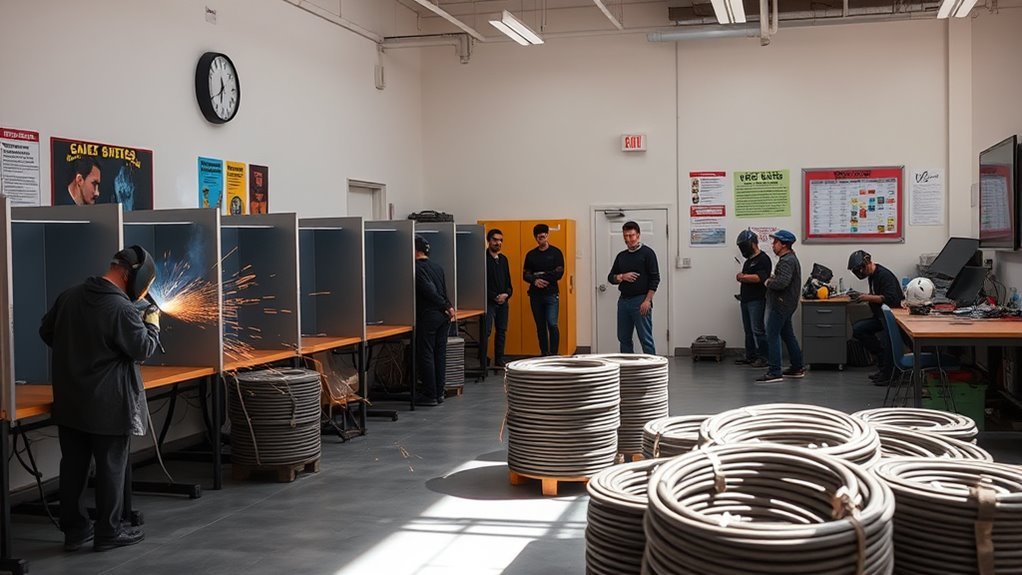
Lincoln Electric’s main career-oriented option for 2026 is the 16-week Comprehensive Program. It provides 480 contact hours and costs $9,840 plus a $125 registration fee, bringing the posted school total to $9,965.
No prior welding experience is required. The curriculum includes:
- Print reading and safety in welding and cutting
- Oxyfuel cutting, plasma cutting, and brazing
- Five weeks of Shielded Metal Arc Welding
- Three weeks of Gas Metal Arc Welding
- Two weeks of Flux-Cored Arc Welding
- Three weeks of Gas Tungsten Arc Welding
- One week of qualification preparation and testing
The program includes a PPE and tool pack, textbooks, handouts, base metals, and normal consumables. Students must provide their own ankle-high steel-toe safety shoes.
Lincoln currently reports a 92% graduation rate and a preliminary 90% job-placement rate for the 2025/26 Comprehensive Program. The school says the reporting cycle was not complete as of June 25, 2026, and the placement percentage reflects students with reported data who were seeking employment.
For the 2026 Comprehensive Program, the posted school charge is $9,965—not $13,000—but your true cost also includes living and travel expenses during 16 weeks of weekday training.
What Extra Costs Should You Budget For?

Tuition is only one part of the cost. Your extra expenses depend heavily on the course. The Comprehensive Program includes more gear and materials than a standard one-week or pipe class.
Budget for the following categories:
- Registration fees: API Pipe and the Comprehensive Program list a separate $125 fee. The current ASME Pipe listing shows $3,870 and does not display a separate additional fee.
- Steel-toe boots: Required for shop access and not included in the Comprehensive Program.
- PPE and hand tools: Required for many individual courses unless the course page says Lincoln supplies them.
- Travel: Fuel, airfare, airport transfers, parking, or local transportation.
- Lodging: Hotel or other off-campus accommodation near Cleveland.
- Meals: Daily food costs during training.
- Lost income: Weekday classes may prevent you from working normal hours.
- External credentials: Employer tests, AWS exams, books, endorsements, or retests that are not part of the Lincoln course.
How Do You Calculate Your Total Attendance Cost?
Use this formula before deciding whether a course fits your budget:
Total attendance cost = tuition + registration fees + required gear + travel + lodging + meals + credential fees + lost income.
| School charges | Use the live course price plus every mandatory registration fee. |
| Required equipment | List only items the course page says you must bring. |
| Living expenses | Multiply nightly lodging and daily food costs by the full attendance period. |
| Income impact | Estimate wages or paid leave used while attending weekday classes. |
| Contingency | Keep a reserve for schedule changes, extra nights, replacement gear, or retesting. |
This calculation can change which program is cheapest. A nearby program with higher tuition may cost less overall than a lower-priced course that requires several weeks of hotel stays.
Does Lincoln Electric Welding School Offer Financial Aid?

Warning: Lincoln Electric states that it cannot accept federal financial aid. Do not assume that FAFSA grants or federal student loans can be applied to the program.
Workforce Pell update: Federal Workforce Pell provisions took effect July 1, 2026, but schools and programs must complete required state and U.S. Department of Education approval steps before students can receive Pell Grants for an eligible workforce program. Lincoln Electric’s current training FAQ and Comprehensive Program page still state that the school cannot accept federal financial aid, so do not assume Workforce Pell applies here. See the Federal Student Aid effective-date guidance.
The Comprehensive Program uses a published four-payment schedule. For the August 2026 cohort, the enrollment page lists a $2,585 initial payment followed by three installments. Payments are tied to registration and progress through the 480-hour program.
Other possible funding routes include:
- Veterans’ education benefits: Lincoln’s 2026 catalog says qualifying students may use benefits for the Comprehensive, API Pipe, and ASME Pipe programs. Confirm eligibility through the U.S. Department of Veterans Affairs and Lincoln Electric before enrolling.
- AWS Welder Training Scholarship: The AWS Foundation says it can award up to 800 scholarships of $1,000 annually for eligible welder-training certificate programs under two years. Applications are accepted December 1 through November 30, with selections made on a rolling basis.
- Welding educator discount: Qualified instructors can apply through Lincoln Electric’s Welding Educator Skills Advancement program for discounted one-week classes.
- Employer sponsorship: Ask whether your employer will pay tuition, travel, or wages for job-related training.
- Workforce programs: State or local workforce agencies may have separate eligibility rules. Approval should be obtained in writing before enrollment.
A scholarship or benefit is not guaranteed merely because the course is welding-related. Verify that the funding organization approves the exact Lincoln Electric course and attendance dates.
How Should You Compare Lincoln Electric With Other Welding Schools?

Lincoln Electric can be less expensive than some long residential trade-school programs, but headline tuition alone does not prove better value. Program length, included equipment, housing, financial-aid access, credentials, and local hiring relationships can differ sharply. For a broader benchmark, compare this page with our guide to welding school costs in 2026.
Use the same questions for every school:
- How many clock hours are included? Compare hands-on lab time and classroom time separately.
- Which processes and positions are taught? MIG-only training is not equivalent to a multi-process program with pipe or qualification testing.
- What must you buy? Include registration fees, boots, PPE, books, consumables, testing, and retests.
- Is housing included? Lincoln’s tuition does not include hotel stays or meals.
- Is the program credit or non-credit? Lincoln courses generally award continuing education units rather than college credit.
- Which funding can be used? A school eligible for federal aid may produce a different out-of-pocket cost even when its listed tuition is higher.
- What qualification will you hold? Separate a completion certificate from an employer, union, code, state, or AWS credential.
- Are placement figures current? Ask for the reporting period, sample size, definition of placement, and whether only job-seeking graduates are counted.
Lincoln Electric’s 16-week program provides 480 hours for a posted school charge of $9,965. That is a useful comparison point, but your final decision should use total attendance cost and verified career requirements.
What Does Lincoln Electric Include for the Price?
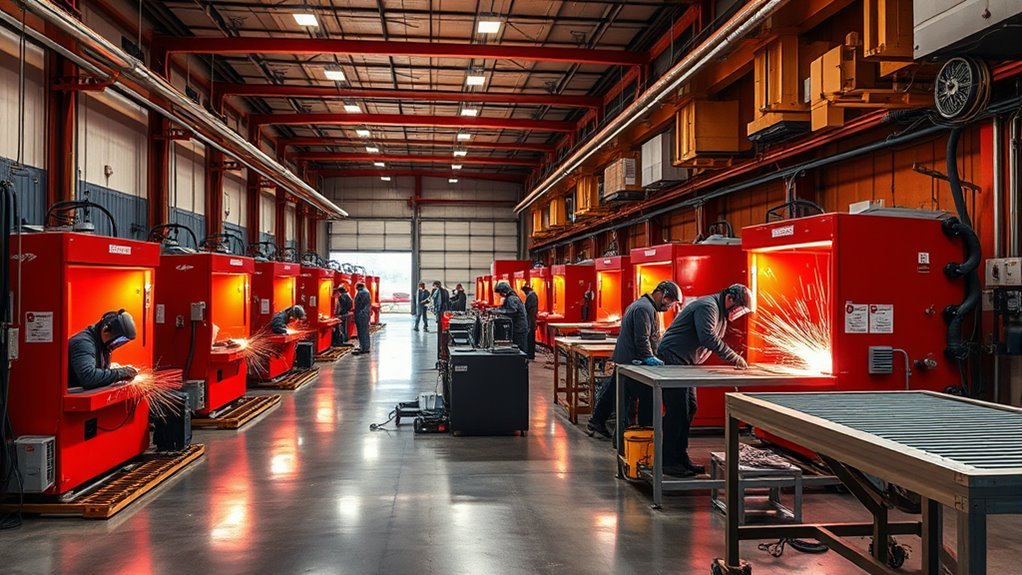
Training takes place at Lincoln Electric’s 130,000-square-foot Welding Technology and Training Center in the Cleveland area. Lincoln’s current sustainability information describes 155 welding and cutting booths, a virtual reality training lab, a 100-seat auditorium, and classroom and seminar space.
The center supports beginner instruction, advanced process training, educator development, automation courses, and industry-focused technical programs. The value comes from access to dedicated equipment, structured exercises, and instructors familiar with Lincoln Electric systems and welding procedures.
Training Facility
The facility opened in 2018 as a major investment in welding education. Its layout provides separate areas for welding and cutting practice, classroom instruction, simulated training, and technical presentations.
- 130,000 square feet of training and education space
- 155 welding and cutting booths in Lincoln’s current facility description
- Virtual reality welding training equipment
- A 100-seat auditorium
- Classroom and seminar areas
- Equipment for manual welding, cutting, automation, and technical instruction
An older 2018 announcement listed 166 booths. The newer Lincoln Electric facility description lists 155, so the current figure is used here.
Hands-On Welding Practice
Course pages separate contact hours into lecture, discussion, and lab time. Introduction to Welding, for example, lists 25 lab hours and five classroom hours. Pipe programs provide 180 total hours, while the Comprehensive Program provides 480 hours across seven course components.
Hands-on time is valuable only when it matches your goal. Before enrolling, review:
- The welding processes taught
- Metals and material thicknesses used
- Welding positions practiced
- Whether pipe, plate, or sheet is included
- Qualification preparation and testing
- Prerequisite skills
- Required PPE and tools
| Resource | Practical Benefit |
|---|---|
| 130,000-square-foot center | Dedicated space for welding, cutting, classroom, and technical training |
| 155 welding and cutting booths | Capacity for structured individual and group practice |
| Virtual reality lab | Simulated practice and technique feedback |
| Process-specific equipment | Training that can be matched to Stick, MIG, TIG, Flux-Cored, pipe, or automation goals |
| Qualification exercises | Practice for defined welding procedures and test conditions |
Warning: Welding can expose students to fumes, ultraviolet radiation, burns, eye injuries, sparks, electrical hazards, and hot metal. Follow the school’s PPE rules and all instructor safety directions. OSHA provides additional information on welding, cutting, and brazing hazards.
What Is the Current 2026 Schedule and Availability?
Lincoln Electric’s 2026 welding-school classes discussed in this guide are held at the Welding Technology and Training Center at 22800 St. Clair Avenue in Cleveland, Ohio.
As of August 10, 2026, published upcoming examples include:
- Comprehensive Program: An August 24–December 18, 2026 cohort, Monday through Friday from 8:00 a.m. to 2:30 p.m.
- Introduction to Welding: Sections beginning September 14, October 19, and November 30, 2026.
- GMAW: Sections beginning August 31 and November 9, 2026.
- GTAW: Upcoming sections beginning October 12 and December 14, 2026.
- SAW: A late-August section is listed on wait list status, with another section beginning December 7, 2026.
- API and ASME Pipe: Sections scheduled from October 12 through November 20, 2026.
- CWI Prep: A listed October 26–30, 2026 section.
Seat counts can change at any time. Lincoln also states that minimum enrollment must be met. A class with insufficient enrollment may be canceled or rescheduled, with enrollees contacted no less than 14 working days before the scheduled start date.
Note: Do not purchase nonrefundable airfare or lodging solely from a date shown in an older article. Confirm that your section will run and review the school’s cancellation terms first.
How Do You Register for Lincoln Electric Welding School?
Use Lincoln Electric’s official course search to find a current section. Open the individual page and read the description, prerequisite, contact hours, price, fees, dates, PPE list, and section notes.
- Choose the exact course that matches your skill and career goal.
- Check prerequisites, especially for pipe and advanced specialty training.
- Confirm tuition, registration fees, and included materials.
- List every item you must bring to the welding floor.
- Check the dates, daily hours, location, and current availability.
- Read the payment, withdrawal, refund, and cancellation terms.
- Apply first when the program requires an application, as the Comprehensive Program does.
- Keep your enrollment confirmation and payment receipt.
For enrollment questions, email weldtraining@lincolnelectric.com or call 844-818-6038. Ask for written confirmation when your decision depends on a prerequisite, funding source, included item, refund rule, or qualification test.
Frequently Asked Questions
How much does Lincoln Electric Welding School cost in 2026?
Several current 30-hour classes cost $1,000. API Pipe costs $3,870 plus a mandatory $125 registration fee, while the current ASME Pipe listing shows $3,870 with no separate additional fee displayed. The 16-week Comprehensive Program costs $9,840 plus a $125 registration fee, or $9,965 in posted school charges.
Do employers accept qualifications from Lincoln Electric Welding School?
Lincoln Electric is a well-known welding manufacturer and training provider, but employer acceptance is not automatic. Employers, unions, contractors, and code authorities may require their own procedure-specific test. Ask the organization hiring you which process, position, material, code, and testing body it accepts.
Can I transfer Lincoln Electric course credits to a college?
Do not assume that you can. Lincoln’s welding classes generally award continuing education units for non-credit education. A college or trade school decides whether it will recognize prior training. Obtain written approval from the receiving institution before enrolling if transfer is important.
Are there age or physical requirements?
Requirements vary by course. Weekend with Metal requires participants to be at least 18. Other classes may use different admissions or prerequisite rules. Students must also be able to follow shop-safety instructions, wear required PPE, stand for practical work, handle tools, and perform the course exercises safely.
Does Lincoln Electric provide student housing?
The welding-school pages direct out-of-town students to visitor and hotel information rather than advertising on-campus dormitories. Plan for off-campus lodging and include the full stay in your budget. Ask whether a current hotel rate or room block is available for your class.
Does the school offer job-placement help?
Lincoln publishes placement data for some longer programs, but that does not guarantee a job or prove that every short course includes resume help, interviews, or employer referrals. Ask admissions what career services are included with your exact program and request the latest placement definition and reporting period.
Can I use federal financial aid?
Lincoln Electric currently states that it cannot accept federal financial aid. Workforce Pell took effect July 1, 2026, but eligible institutions and programs must receive required approvals; Lincoln’s current pages still say federal aid is not accepted. The Comprehensive Program has a payment schedule, and qualifying students may be able to use VA education benefits, AWS scholarships, employer sponsorship, or approved workforce funding.
What is included in the Comprehensive Program price?
The program price includes a PPE and tool pack, textbooks, handouts, base metals, and standard consumables. Students must provide ankle-high steel-toe safety shoes. Tuition does not include travel, lodging, meals, or personal living expenses.
Conclusion
Lincoln Electric Welding School’s current 2026 pricing spans several $1,000 30-hour classes, a $3,995 posted school total for API Pipe, a currently displayed $3,870 price for ASME Pipe, and $9,965 in posted school charges for the 16-week Comprehensive Program. Travel, lodging, meals, and required gear can increase the real attendance cost.
Choose by curriculum, prerequisites, contact hours, and the qualification required for your target job—not by tuition alone. Confirm the live course price, included materials, funding approval, cancellation terms, and required PPE in writing before paying or booking travel.
Sources
- Lincoln Electric Welding School course directory — current course selection and enrollment pages.
- Lincoln Electric Comprehensive Program — 2026 tuition, schedule, curriculum, materials, installments, and federal-aid limitation.
- Lincoln Electric API Pipe and Lincoln Electric ASME Pipe — pipe-course prices, contact hours, prerequisites, schedules, and PPE.
- Lincoln Electric Welding School FAQs — federal financial-aid and enrollment information.
- Lincoln Electric training and education overview — current facility size, booth count, VR lab, auditorium, and classroom information.
- Occupational Safety and Health Administration: Welding, Cutting, and Brazing — welding hazards, safety standards, PPE, and ventilation resources.
- AWS Welder Training Scholarship — current award amount, application window, and eligibility overview.
- Federal Student Aid: Workforce Pell effective dates — July 1, 2026 effective date and program-approval timing.
