
When you’re picking a welding program, you’ll weigh tuition, time, and outcomes. Cost isn’t just a number. Certificates usually run $3,000 to $10,000, diplomas up to $15,000, and associate degrees often fall between $10,000 and $25,000. Add another $1,000 to $2,500 for gear and materials. Compare program length, school type, and aid options to see the real value for your career goals.
Quick Answer
Welding school typically costs $5,000 to $15,000 for most programs, with advanced tracks sometimes topping $20,000. Here’s the quick breakdown:
- Certificate programs: $3,000–$10,000 and finish in weeks to months
- Diploma programs: $5,000–$15,000 and take about one year
- Associate degrees: $10,000–$25,000 over roughly two years
- Plus $1,000–$2,500 extra for tools, safety gear, and materials
- Community colleges, grants, and apprenticeships can cut your real cost a lot
Typical Price Ranges for Welding Programs
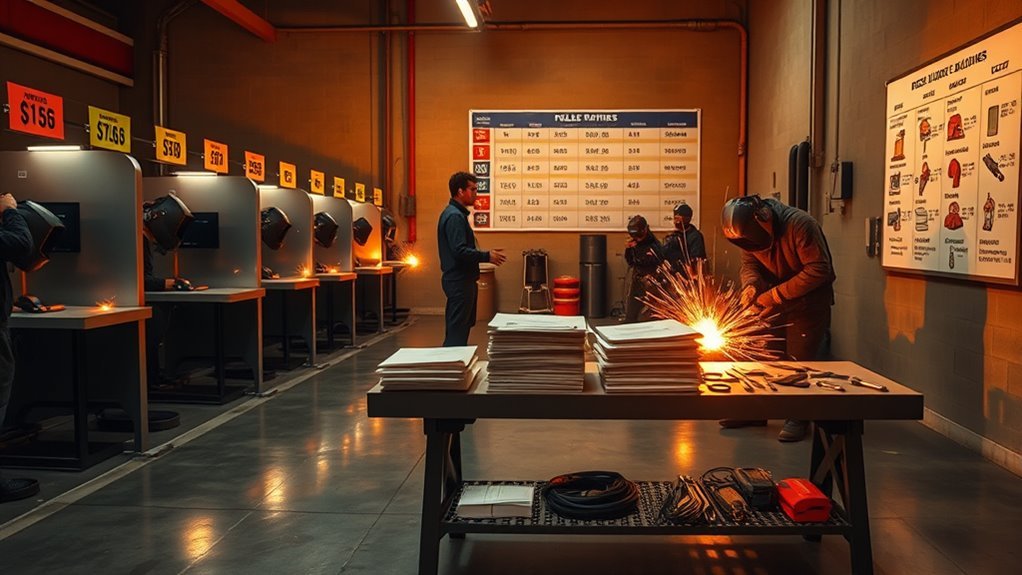
If you’re budgeting for welding school, expect to pay roughly $5,000 to $15,000 for most programs. Advanced tracks sometimes top $20,000.
Certificate programs cost $3,000–$10,000 and wrap up in weeks to months. Diploma tracks run $5,000–$15,000 and last about a year.
Associate degrees take roughly two years and often fall between $10,000 and $25,000.
Factor in gear and materials. Safety equipment typically adds $100–$500, and a basic welding machine can be $500–$2,000.
Community college routes often lower overall welding program costs. They sometimes average about $5,000 for a two-year plan that includes general education.
Community college welding programs often cost less, around $5,000 for a two-year plan that includes general education
If the up-front price looks steep, look into tuition assistance, grants, and employer-sponsored options. They can cut your outlay.
Compare total costs, program length, and included materials. Choose the most cost-effective path to the skills and certifications you need.
Types of Schools and How They Affect Cost
The type of school you choose shapes both what you learn and what you pay. Compare trade schools, community colleges, certificate, and diploma programs carefully before you enroll.
When you do a welding school cost comparison, trade schools often run $5,000–$20,000. They emphasize intensive hands-on training geared for immediate job entry. Community colleges are usually the most affordable route for an associate degree. They average around $5,000 and include general education that can widen career options.
Certificate programs cost $3,000–$10,000 and compress training into weeks or months. You get into the workforce faster with lower upfront expense. Diploma programs, about a year long, cost $5,000–$15,000 and balance practical skills with some theory.
Don’t forget additional costs common to all types: materials and safety gear ($100–$500), welding machines ($500–$2,000), and books ($100–$500). Use these figures to match budget, timeline, and career goals.
Program Lengths and What You Get for Your Money
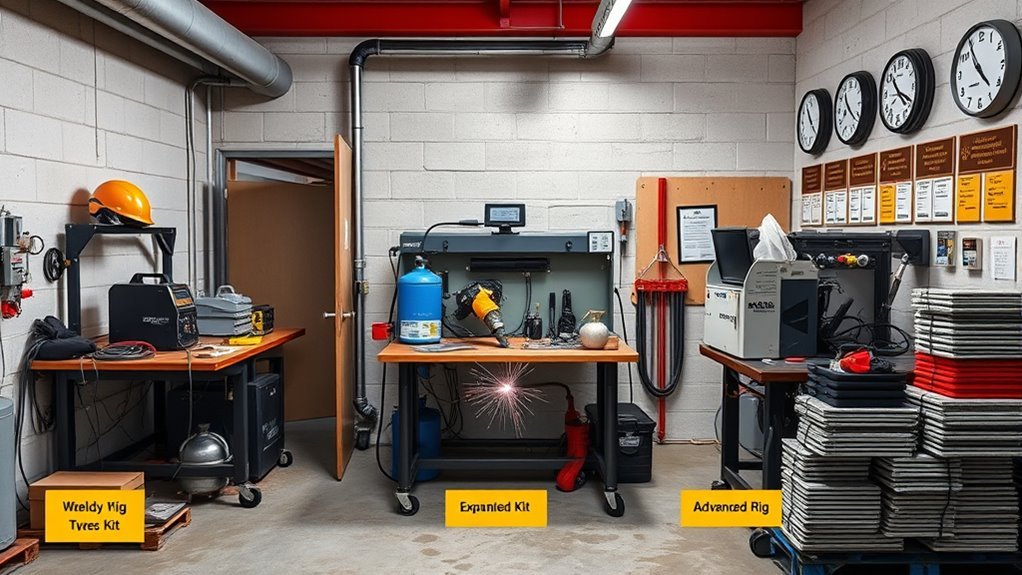
When you compare program lengths, consider how time and cost trade off against the skills and credentials you’ll walk away with.
Certificate programs run weeks to months and are the quickest. They let you learn core welding techniques and enter the workforce fast.
Certificate programs take weeks to months — the fastest route to learn core welding skills and start working.
Diploma programs, typically one year and costing roughly $5,000–$15,000, offer more shop hours, instruction in weld inspection and safety, and stronger portfolios for employers.
Associate degrees take up to two years, often costing $10,000–$25,000. They add general education, deeper theory, and sometimes internship opportunities that can accelerate career advancement.
Across program types, expect hands-on practice and practical skills that matter on the job.
Think about whether you need fast entry or broader credentials that support long-term growth.
Compare curricula for specific processes you’ll train on, the amount of supervised welding time, and industry alignment. That way your investment maps to marketable skills and future certification-ready pathways.
Common Additional Expenses to Budget For

Beyond tuition, you need to account for essential tools and safety gear (often $100–$500) and larger equipment like personal welding machines, which can run $500–$2,000.
Factor in textbooks and course supplies, typically $100–$500, plus any certification fees your program requires.
If you’ll be living away or commuting, budget $5,000–$15,000 per year for room, board, and travel.
Tools and Gear
Expect to spend roughly $1,100 to $2,000 extra on tools and gear when you enroll in welding school. Plan carefully so those costs don’t derail your budget.
You’ll buy items that support learning welding techniques and enforce safety protocols. That way you can work confidently and comply with shop rules.
- Welding hood and respirator (essential for fumes and eye protection)
- Protective gloves, sleeves, and jacket (durable, heat-resistant)
- Safety glasses and ear protection (for grinders and cutting)
- Portable welding machine or access fees (MIG/TIG/Stick options)
- Basic hand tools and clamps (chipping hammer, wire brush, welding pliers)
Expect safety gear alone to run $100–$500. Machines cost $500–$2,000.
Balance quality with program requirements.
Books and Supplies
Budget $100–$500 for books and course supplies. Your program will require textbooks, welding manuals, and consumables like electrodes, filler wire, and grinding discs.
You’ll pick titles based on required reading and skill level. Good book selection speeds learning and avoids repeat purchases. Factor in replacement consumables and small tools. Those additional material costs often add a few hundred dollars.
Prioritize supply quality for safety and consistent practice. Cheap filler or worn grinding discs will cost you time and may create hazards. If your school doesn’t provide consumables, you’ll buy them yourself or share with classmates.
Compare required lists before enrolling. That way you can budget, buy high-quality essentials first, and defer noncritical items until later.
Living and Travel
After you’ve accounted for books and consumables, plan for living and travel costs. They often make up a large portion of what it really costs to attend welding school.
You should budget living expenses between $5,000 and $15,000 per academic year depending on location and lifestyle. Room and board, food, and personal expenses vary, so research local prices and affordable housing options like shared rentals or dorms.
Don’t forget travel costs. Commuting, fuel, parking, or trips for practical training add up quickly. Consider proximity to campus when choosing housing to cut expenses.
- Room and board estimates
- Food and personal spending
- Commuting fuel and maintenance
- Parking and transit fares
- Short training trip expenses
Financial Aid, Scholarships, and Payment Options

While you’re weighing the price of welding school, look into federal grants, low-interest loans, and GI Bill® benefits first. They can greatly lower what you’ll owe.
Also search school-specific scholarships (many community colleges and trade schools, including MTI, offer awards for welding students) and consider payment plans that let you spread tuition over several weeks.
You should compare financial aid options early. Fill out the FAFSA and contact your school’s financial aid office to learn what’s available.
Seek scholarship opportunities aimed at welding students, veterans, and high school seniors. Stack scholarships with grants before borrowing.
Ask schools about tuition payment plans to smooth cash flow and avoid high interim costs.
Remember to budget for materials and equipment, typically $100–$2,500 depending on program requirements. Factor that into aid applications or emergency funds.
Research multiple aid sources, combine awards strategically, and document deadlines. That maximizes assistance and minimizes out-of-pocket spending.
Comparing Trade School, Community College, and Apprenticeship Costs

When you compare routes into welding—trade school, community college, or an apprenticeship—you’ll find distinct cost profiles and tradeoffs. Trade schools charge roughly $5,000–$20,000 for focused, hands-on programs that wrap up in months to a couple of years. Community colleges average about $5,000 for a two-year program that bundles technical training with general education. Apprenticeships usually have little to no upfront tuition while you earn wages on the job, making them the most cost-effective option for many students.
Choose based on learning style and budget.
Trade school benefits include intensive shop time and faster entry to work. Community college advantages cover lower tuition, broader coursework, and transferable credits. Apprenticeships reduce upfront costs while you gain paid experience.
Remember to budget for gear and materials ($100–$2,500) and regional cost differences. They can push total program costs from about $5,000 to over $30,000.
- Fast, focused training (trade school benefits)
- Lower overall tuition (community college advantages)
- Earn while you learn (apprenticeship)
- Gear and materials costs
- Program length and location considerations
Expected Earnings and Return on Investment

Costs are only part of the picture. You want to know what welding school returns in pay and opportunity. On average, welding salaries show a solid ROI: the median annual wage for welders was $51,000 in May 2024, according to the U.S. Bureau of Labor Statistics, so short training often pays off quickly.
Costs matter, but welding school often pays off quickly. Median wage $51,000 (May 2024) and rising with experience
Entry-level roles typically start between $39,201 and $53,410 depending on location and specialization. That makes tuition and short-term lost earnings manageable.
As you gain experience and certifications, expect wages to rise into the $60,000–$70,000 range. Pursuing niche skills can push you higher. Specialized careers like dive welding can approach $100,000 annually.
The industry’s high demand across construction, manufacturing, and energy sectors means ample job openings and stable employment prospects.
That combination of attainable entry pay, clear salary progression, and strong demand supports meaningful career advancement. It makes welding school a pragmatic investment if you want a trade with predictable returns.
Steps to Choose the Right Program for Your Budget

Start by comparing program lengths. Short certificate courses can get you into the field faster and cheaper, while two-year associate degrees cost more but include broader training.
Add up total costs beyond tuition, including gear, materials, and a starter welding machine. That way you don’t get surprised.
Then weigh that total against financial aid options and expected earnings. Pick the program that fits your budget and career goals.
Compare Program Lengths
Program length directly affects both how soon you can work and how much you’ll pay. Weigh certificate, diploma, and associate options against your budget and timelines.
You’ll get certificate benefits like rapid entry and lower upfront costs (typically $3,000–$10,000, weeks to months). Diploma advantages include deeper training in about a year ($5,000–$15,000).
Associate degrees take two years, costing $10,000–$25,000. They often add general education that can boost long-term earnings.
- Certificate: fastest route, hands-on focus
- Diploma: balanced depth, career-ready skills
- Associate: broader education, higher credential
- Trade school: variable length, practical training
- Timeline vs. skill depth: match to goals
Compare program length to your timeline, earning needs, and commitment level.
Evaluate Total Costs
When you total tuition, supplies, and living expenses, the sticker price for welding school can vary widely. Map out every likely expense before you commit.
You’ll compare average program costs ($5,000–$15,000, with some over $20,000) and weigh certificate versus associate timelines. Community colleges often cost near $5,000 for two years, while certificates run $3,000–$10,000 and associate degrees $10,000–$25,000.
Add gear ($100–$500), machines ($500–$2,000), and books ($100–$500). Use budget planning to project total outlays and monthly needs. Then research tuition assistance, scholarships, grants, and federal loans to shrink your net cost.
Choose a program whose length, quality, and net price fit your finances and career timeline.
Frequently Asked Questions
Will Welding School Prepare Me for AWS Certification Exams?
Yes — welding school usually prepares you for AWS certification exams. Their welding school curriculum covers techniques, codes, and hands-on practice, so you’ll gain AWS certification benefits like credentialing, improved skills, and job competitiveness. For more details, visit the American Welding Society.
Can I Work Part-Time While Enrolled in Welding School?
Yes — you can usually work part-time while enrolled. You’ll need to balance part-time jobs with welding schedules. Plan shifts around labs, prioritize hands-on classes, and communicate with employers to avoid conflicts and fatigue.
Are Online Welding Theory Courses Accepted by Employers?
Yes — employers often accept online welding theory if you pair it with hands-on training or certifications. Online course advantages include flexible study and strong fundamentals, but employer perceptions favor verified credentials and demonstrable practical welding skills.
Do I Need Prior Metalworking Experience to Apply?
You don’t need prior metalworking experience. Schools usually teach metalworking basics, but check specific application requirements. Some prefer basics or pretests, while others accept complete beginners with enthusiasm.
How Transferable Are Welding Credits Between Schools?
You’ll often find credits somewhat transferable. It depends on welding accreditation policies and specific school transfer agreements. You’ll need transcripts, competency proofs, and sometimes testing to secure acceptance and credit recognition at the new program.
Conclusion
You can expect certificate, diploma, or degree costs to vary. You’ll plan, compare, and choose to fit your budget. You’ll account for tuition, gear, and books. You’ll weigh program length, school type, and credential value. You’ll pursue financial aid, scholarships, or apprenticeships to lower costs. You’ll balance upfront expense with expected earnings and career goals. Decide deliberately, invest wisely, and train where costs match the return you want.