

The cost of a welding course depends more on the school, program length, and training format than on the word “welding.” Current published examples range from a few thousand dollars at a public technical college to more than $25,000 at a specialized private welding school. Your true cost may also include protective gear, testing, transportation, housing, and time away from work.
Quick Answer
A welding course can cost from a few thousand dollars at a public technical college to more than $25,000 at a private welding school. Current published examples list about $2,774 for one public program and projected totals of $16,828 to $26,485 for specialized private programs. Living costs and travel can raise the total.
Key Takeaways
- There is no reliable single national average for welding-school tuition. Compare current, school-specific cost sheets.
- Public technical colleges can cost much less than private trade schools, but residency, fees, and included materials matter.
- Most students use school lab equipment, so do not assume you must buy a welding machine unless the program requires one.
- Federal aid is available only at eligible schools and programs, and your aid offer comes from the school after you file the FAFSA.
- Welding can provide a solid career path, but wages and hiring conditions vary by location, industry, skill, and certification.
Overview of Welding School Costs
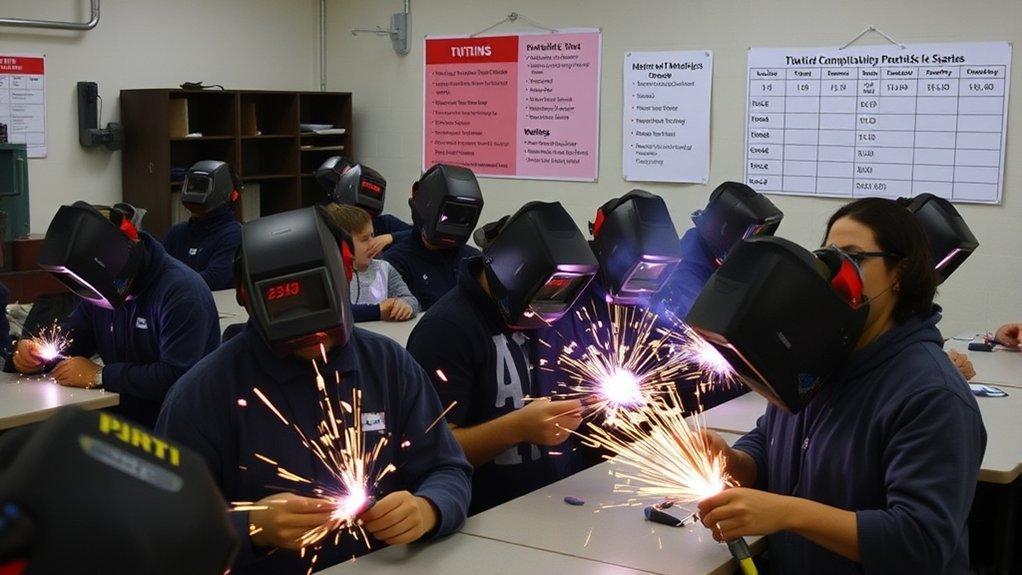
Welding-school costs vary widely because programs are not standardized. A short course in one welding process is different from a full-time program that covers blueprint reading, cutting, fabrication, multiple welding processes, and certification preparation.
As of July 2026, Davis Technical College lists an estimated adult-student cost of $2,774 for its 24-credit Welding Technology program, including tuition, fees, and course materials. By comparison, Hobart Institute of Welding Technology lists a projected total of $16,828 for its 24-week Structural Welding Program and $26,485 for its 40-week Pathways Welding Program. These are examples, not national averages.
| Training Path | Typical Structure | Cost Considerations |
| Single course | Days to several weeks; one process or skill | May be priced per course or clock hour; ask whether metal, gas, and PPE are included. |
| Certificate or diploma | Several months to about one year | Usually focused on hands-on job preparation; public and private prices can differ sharply. |
| Associate degree | About two years, including general education | Compare in-district, in-state, and out-of-state tuition plus college fees and living costs. |
| Apprenticeship or employer training | Paid work combined with technical instruction | Often lowers upfront tuition, but entry can be competitive and the training may be tied to a specific trade or employer. |
Note: Tuition is not the same as total cost. Ask every school for a written cost of attendance showing mandatory fees, gear, books, supplies, testing, transportation, and housing.
Products Worth Considering

ANSI Z87.1 CERTIFIED EYE PROTECTION: Meets the ANSI Z87.1 impact standard to help shield eyes from dust, debris, and flying particles. Clear polycarbonate lenses give sharp visibility for workshops, warehouses, labs, garages, and job sites.

Reinforced Stitching: Features double stitching with flame-resistant thread and rivet design for enhanced durability and longevity under heavy-duty use.

Function: Genuine leather welding hoods are heat and fire resistant and protect your head, face and neck from shooting sparks, debris, sawdust and welding slag.
Types of Welding Institutions
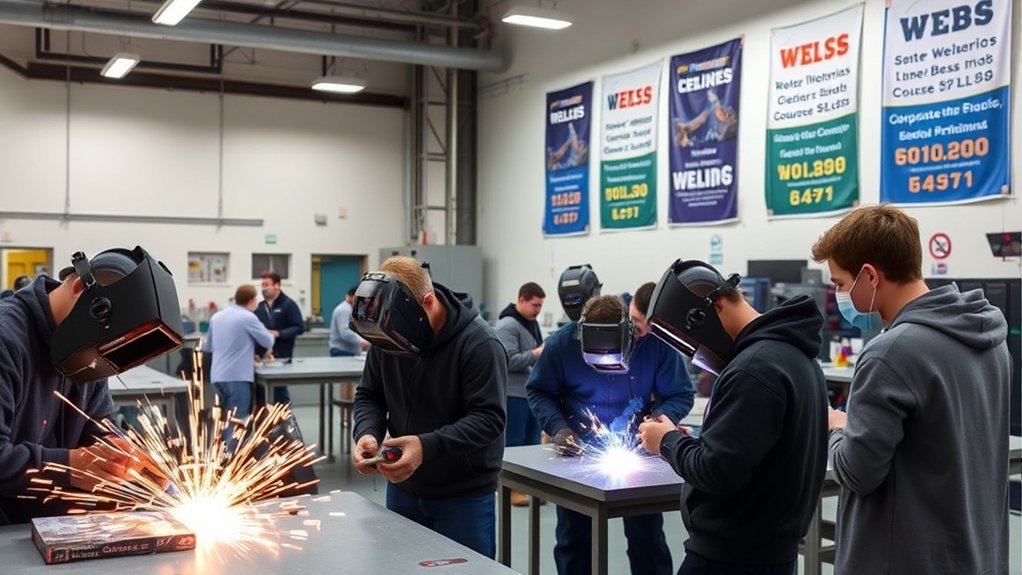
You can learn welding through several types of institutions. The right choice depends on your career goal, budget, schedule, and how much hands-on practice you need.
- Public technical colleges and community colleges: These schools may offer lower in-district or in-state tuition. Programs can lead to a certificate, diploma, or associate degree.
- Private trade schools: These programs often provide intensive lab training and shorter schedules, but the total price may be higher.
- High school career and technical education: Some students can begin welding at little or no tuition cost while earning high school or dual-enrollment credit.
- Registered apprenticeships and employer programs: These combine paid work with classroom or technical instruction. The U.S. Bureau of Labor Statistics notes that some workers enter welding through employer-based apprenticeships or on-the-job training.
- Four-year colleges: Bachelor’s programs are more likely to focus on welding engineering, welding technology, manufacturing, or management than on basic entry-level welder training.
The school type does not determine value by itself. Compare total cost, supervised lab hours, instructor access, included certifications, completion data, and employer connections.
Products Worth Considering

Crafted with precision, our steel plates are laser-cut, offering unparalleled edge smoothness and dimensional accuracy compared to stamped and sheared parts.

Premium welding kit training steel, makes 1 dice and 1 Cube

Father's Day Gift: If your father is an excellent welder, you can give this as a gift to him. He will be very happy.
Program Length and Structure
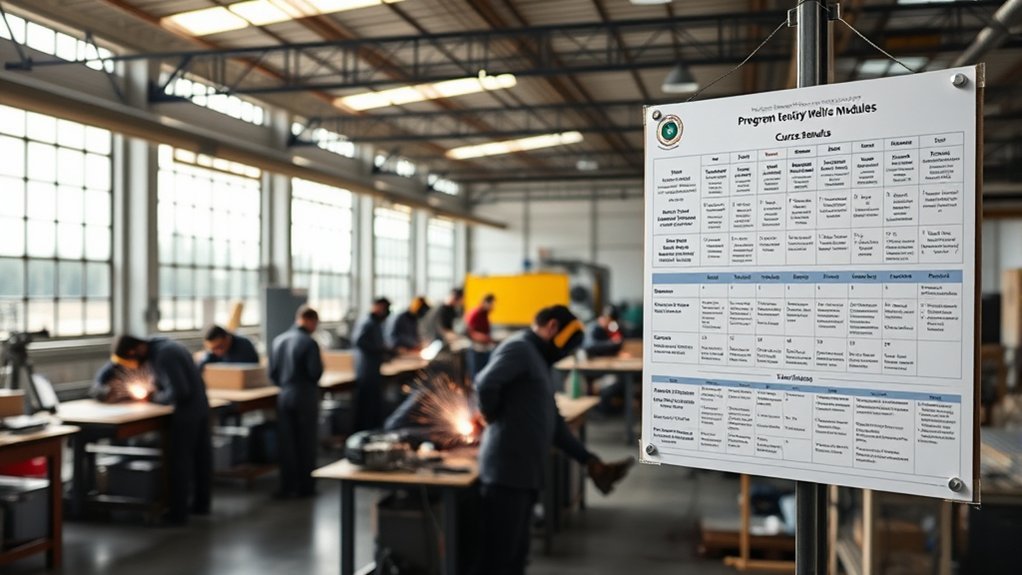
Program length affects both tuition and the amount of work you may miss while training. A shorter program can help you enter the workforce sooner, but it may cover fewer processes, positions, metals, and code requirements.
- Short courses: Best for hobbyists, working welders adding one process, or students testing their interest. They may cover safety, machine setup, or one process such as MIG, TIG, or stick welding.
- Certificate and diploma programs: Often last several months to about a year and focus on practical employment skills.
- Associate degrees: Usually take about two years and may add general education, technical math, communication, fabrication, business, or inspection courses.
- Bachelor’s programs: Usually take four years and may prepare students for engineering, management, education, or advanced technical roles. A bachelor’s degree is not normally required for entry-level production welding.
- Apprenticeships: Often last multiple years because they combine paid job experience with related instruction. They can be a strong route for construction and industrial trades that include welding.
What a Strong Welding Curriculum Should Cover
A complete entry-level program should include welding safety, blueprint reading, welding symbols, measurement, joint design, metal preparation, cutting, fit-up, quality inspection, and substantial supervised practice. Depending on the program, students may train in shielded metal arc welding, gas metal arc welding, flux-cored arc welding, gas tungsten arc welding, oxyfuel cutting, plasma cutting, plate welding, or pipe welding.
Can Welding Training Be Completed Online?
Online classes can teach theory, terminology, blueprint reading, safety concepts, and welding fundamentals. However, they cannot replace supervised practice with real equipment, metal, heat, fumes, and position work. A career program should include in-person lab training or a clearly defined local hands-on component.
Warning: Be cautious with any program that promises job-ready welding skills through videos or virtual labs alone. Employers usually evaluate practical ability, and certification tests require an actual weld to meet a specified procedure.
Additional Costs for Equipment and Supplies

Tuition is only one part of a welding-school budget. Request a written list of required and optional expenses before you enroll.
- Protective equipment: A welding helmet, safety glasses, hearing protection, gloves, flame-resistant clothing, and suitable boots may be required. The Occupational Safety and Health Administration identifies hazards that include metal fumes, ultraviolet radiation, burns, eye damage, electrical shock, and fire-related risks.
- Hand tools and consumables: Schools may require pliers, a chipping hammer, wire brushes, soapstone, a tape measure, electrodes, wire, gas, coupons, or replacement lenses.
- Books and digital materials: Blueprint-reading texts, code books, online learning systems, and testing materials may be separate charges.
- Lab and testing fees: Certification preparation, destructive tests, bend tests, retests, and third-party qualification tests may not be included in tuition.
- Transportation and housing: Daily travel, parking, relocation, food, and housing can exceed tuition for students who move or attend full time.
- Lost income and childcare: Daytime programs can reduce working hours and create family-care expenses.
- Post-graduation tools: You may eventually buy personal tools or a machine, but many schools provide welding machines in the lab. Do not buy one unless the school or your practice plan truly requires it.
Pro Tip: Ask the school to mark every item as included, required, refundable, reusable after graduation, or optional. This makes two programs much easier to compare.
Products Worth Considering

FR MATERIALS:Made from 5.5oz lightweight 100% cotton flame-resistant fabric in both paisley print and solid styles,this balaclava delivers a soft,breathable feel for long-hour comfort.One size fits all,the stretchable knit adapts to any head shape,ensuring a universal fit.Multiple wearing methods allow you to pull the face mask down when full coverage is not needed.


Funding Options for Welding School
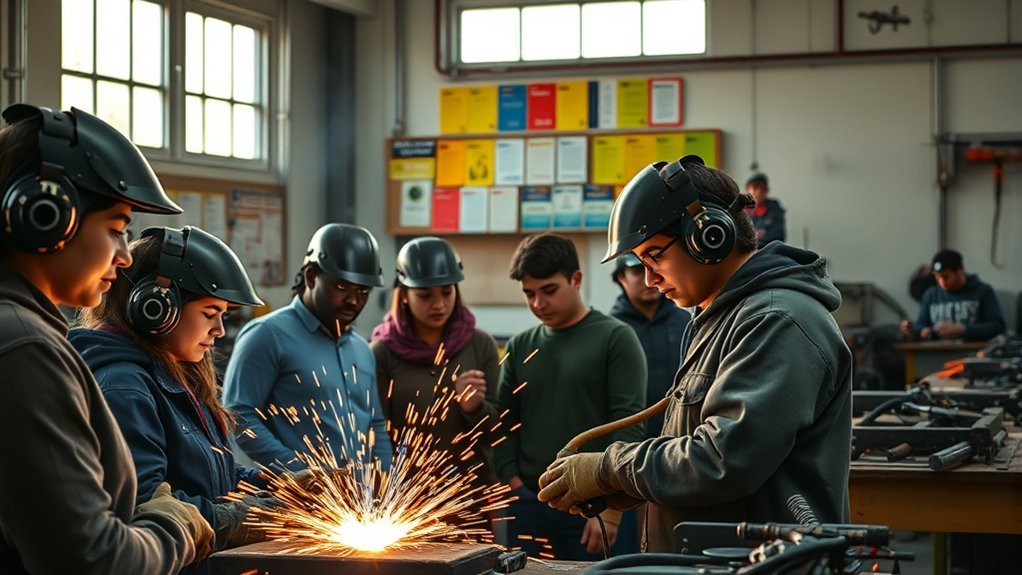
Financial aid can lower your out-of-pocket cost, but eligibility depends on the student, school, and program. A low advertised monthly payment does not necessarily mean a low total price.
Scholarships and Grants
Scholarships may come from the school, employers, unions, community foundations, workforce agencies, and industry organizations. Grants generally do not require repayment if you continue to meet the program’s rules. Apply early, read the eligibility terms, and confirm whether the award can be combined with other aid.
Submitting the Free Application for Federal Student Aid can open access to federal grants, work-study, and federal student loans for eligible college, career-school, and trade-school programs. Filing the FAFSA does not guarantee aid. The school provides the final financial aid offer after admission.
Veterans, service members, and some qualified dependents may be able to use GI Bill benefits for an approved degree or non-college program. Verify the exact school and program before enrolling because approval and benefit amounts depend on eligibility and program status.
Federal Student Loans
Federal Direct Subsidized and Unsubsidized Loans can help cover eligible education costs. For these loan types, repayment generally begins after you graduate, leave school, or drop below half-time enrollment, followed by a six-month grace period. Borrow only after comparing grants, scholarships, payment plans, employer support, and lower-cost programs.
Note: Financial aid, loan, and veterans-benefit rules can change. Confirm current terms with the official agency and the school’s financial aid office before signing an enrollment agreement.
Scholarships and Competitions
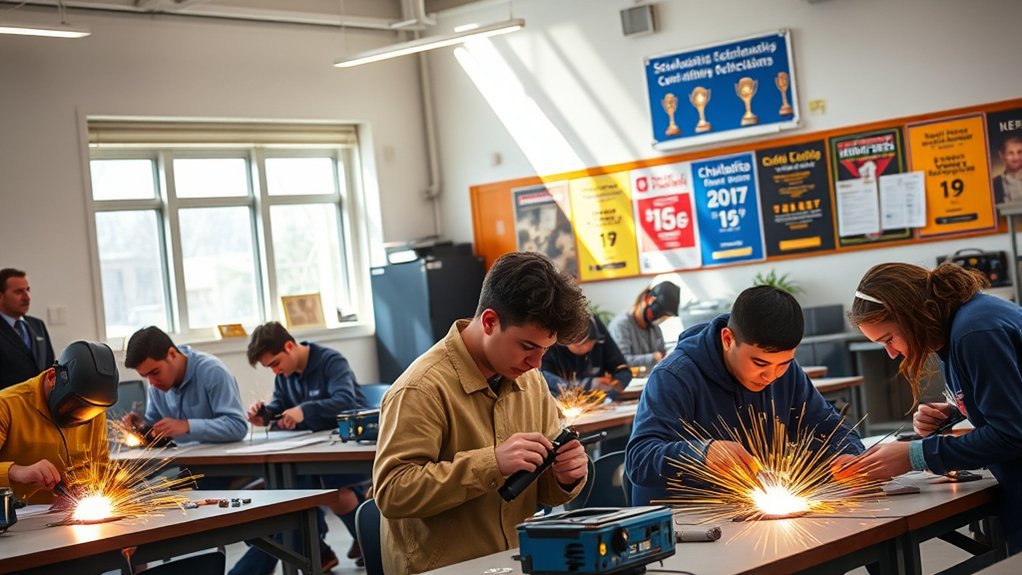
Welding competitions can help students demonstrate skill, meet instructors, tour a campus, and compete for school-specific scholarships. Midwest Technical Institute, often shortened to MTI, is one example of a school that promotes high-school scholarship and welding-competition opportunities.
Read the restrictions carefully. A competition award may be usable only at the sponsoring school, may not be exchangeable for cash, and may require enrollment by a deadline. Also check whether accepting one award changes your eligibility for another scholarship or grant.
Do not limit your search to welding-only awards. General career and technical education scholarships, local workforce grants, employer tuition assistance, union programs, state aid, and community-foundation awards may also apply.
Licensing and Certification Information
Licensing, certification, and qualification are related but different:
- License: A legal authorization required by some states or localities for certain work. Requirements vary, so check the location where you plan to work.
- Certification: A credential from an organization showing that you met its requirements. The AWS Certified Welder program is performance-based and does not require a specific course, prior certification, or minimum experience before testing.
- Welder qualification: Proof that you passed a test for a particular process, material, thickness range, position, procedure, or code. An employer or project may require a new test even if you already hold another credential.
Certification can improve your ability to document skills, but it does not guarantee a job or a specific wage. Ask whether the school’s advertised “certifications” are AWS credentials, school certificates of completion, SENSE credentials, employer qualifications, or preparation for a separate test.
Testing costs vary by facility and procedure. Budget for the test, application or maintenance charges, travel, practice materials, and possible retesting. Also ask how long a qualification remains current and what continuity records are required.
Career Prospects After Attending Welding School
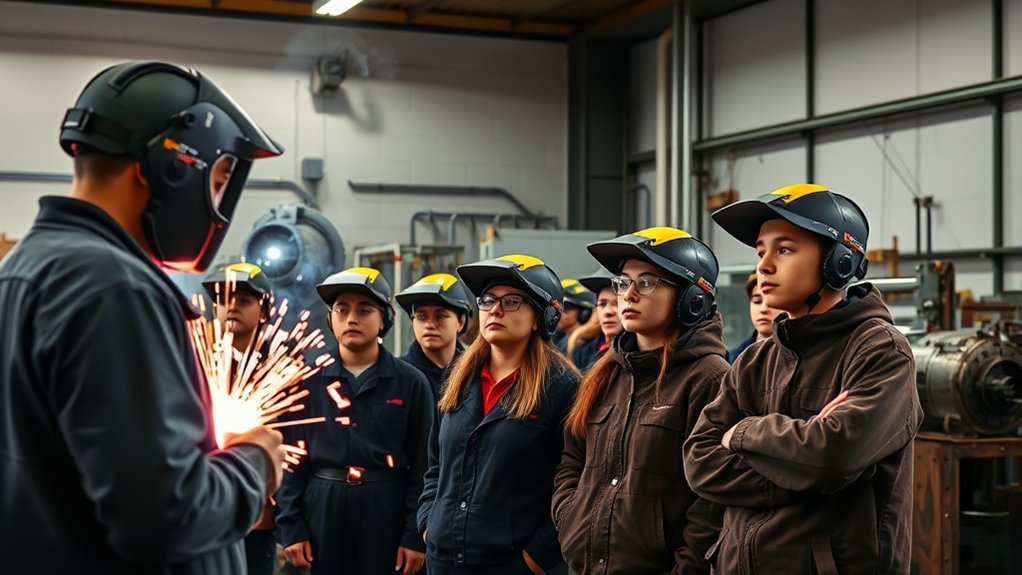
Welding education can lead to work in manufacturing, construction, repair, fabrication, transportation equipment, and related industries. Training may also support advancement into fitting, inspection, supervision, automation, quality control, or specialized welding after additional experience and credentials.
The latest national data published by the U.S. Bureau of Labor Statistics report a median annual wage of $51,000 in May 2024 for welders, cutters, solderers, and brazers. The lowest 10% earned less than $38,130, while the highest 10% earned more than $75,850. Median pay is not a starting salary, and local wages may be higher or lower.
Employment is projected to grow 2% from 2024 to 2034, which is slower than the average for all occupations. Even so, BLS projects about 45,600 openings per year, mainly because workers leave the occupation or retire. This is more accurate than describing demand as uniformly “strong” in every market.
BLS reports $51,000 median annual pay and about 45,600 projected openings per year for welders, cutters, solderers, and brazers, but only 2% employment growth from 2024 to 2034.
How to Judge the Return on Investment
Compare the program’s total cost with realistic wages in the city and industry where you expect to work. Include loan interest, living expenses, lost earnings during school, and the time needed to find a job. A lower-cost program with strong lab training and clear employer connections may provide a better return than a more expensive school with similar outcomes.
Factors Influencing the Cost of Welding Programs
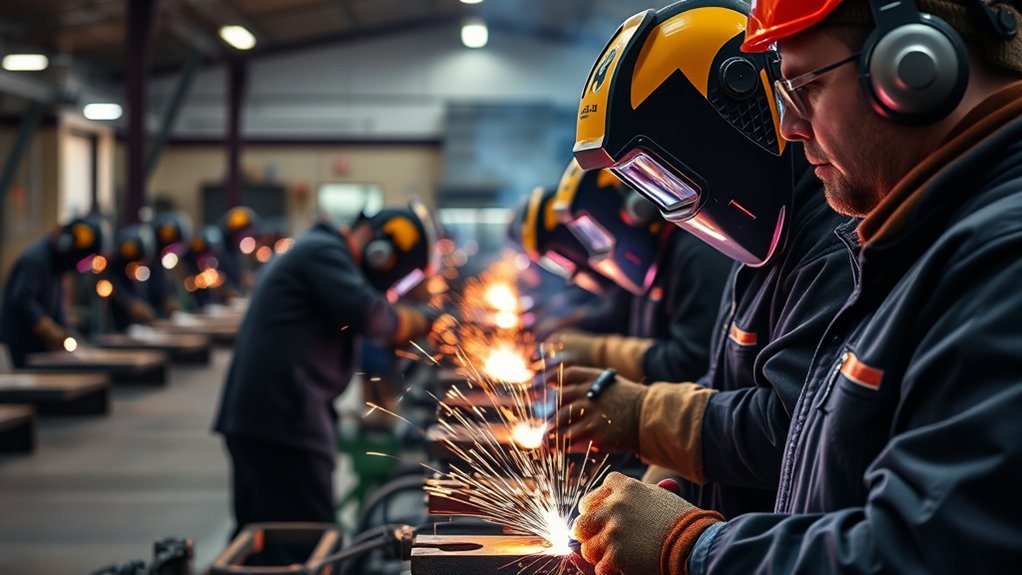
Program Type and Length
Longer programs usually cost more because they include additional clock hours, materials, processes, and general education. However, price alone does not show quality. Compare how much of the schedule is supervised lab work, how many students share each booth, and whether the program teaches the processes used by local employers.
A short certificate may be enough for an entry-level production role. An associate degree may make more sense if you want broader technical education, transferable college credit, or a future path into inspection, supervision, or management. A bachelor’s program is usually unnecessary for someone whose immediate goal is entry-level welding.
Location and Institution Factors
Public institutions may charge different rates for in-district, in-state, and out-of-state students. Private schools often use one tuition rate but may charge more for intensive scheduling, equipment, and career services. Urban housing and transportation can raise the total cost even when tuition is reasonable.
Other cost drivers include class size, lab access, new-student fees, consumables, testing, accreditation, financial-aid eligibility, evening or weekend scheduling, and whether tools and protective gear are included.
How to Compare Welding Programs Before You Enroll
Ask each school for the same information in writing:
- Total tuition and every mandatory fee.
- Estimated books, PPE, tools, consumables, testing, travel, and housing.
- Program length, weekly schedule, attendance rules, and expected completion date.
- Number of supervised hands-on lab hours and average student-to-instructor ratio.
- Welding processes, positions, materials, and thicknesses taught.
- Exact credentials included and separate testing costs.
- Completion, withdrawal, refund, and credit-transfer policies.
- Job-placement definition, reporting period, and whether the school can show recent outcome data.
- Employer partnerships, internship or apprenticeship access, and local hiring requirements.
- Whether the program and school qualify for the financial aid you plan to use.
Is Welding School Worth the Investment?

Welding school can be worth the investment when the program provides substantial hands-on training, teaches skills used by local employers, keeps debt manageable, and has transparent outcomes. It is not automatically worth any price.
A program may be a good fit when you need structured practice, access to equipment, instructor feedback, safety training, and preparation for a specific job or qualification test. An apprenticeship, employer training, or lower-cost public program may be better when available.
Be cautious when a school cannot explain its full cost, uses vague job-placement claims, treats a certificate of completion as an industry certification, relies heavily on online-only training, or pressures you to sign before you can compare aid and refund terms.
Pro Tip: Before borrowing, speak with at least two local employers or union apprenticeship offices. Ask which processes, positions, and credentials they require from entry-level applicants.
Frequently Asked Questions
Are there prerequisites to enroll in a welding course?
Requirements vary. Many career programs prefer or require a high school diploma or equivalent, while some adult, continuing-education, and introductory courses have fewer requirements. Basic math, measurement, reading, physical stamina, and the ability to follow safety rules are helpful. Check the school’s age, education, placement-test, and physical requirements.
What welding skills will I learn?
A strong program may cover safety, cutting, joint preparation, fit-up, blueprint reading, welding symbols, inspection, and processes such as MIG, TIG, stick, and flux-cored welding. The exact processes, materials, positions, and pipe or plate work vary by program.
Can I take welding classes online?
You can study welding theory, safety concepts, terminology, and blueprint reading online. Job-ready welding ability requires supervised hands-on practice with real equipment and materials. Look for a hybrid program with a clear in-person lab component rather than an online-only promise.
How do I choose the right welding program?
Start with the jobs you want. Compare total cost, lab hours, class size, instructor experience, equipment access, processes taught, included credentials, schedule, refund rules, completion data, and employer relationships. Tour the lab and speak with recent students when possible.
What career support services may be available after graduation?
Services may include resume help, interview practice, job leads, employer events, apprenticeship referrals, and practice for employer weld tests. Ask what is guaranteed, how long support lasts, and how the school calculates any placement rate it advertises.
How much does a welding course cost?
Current published examples range from about $2,774 for a public technical-college program to $16,828 or $26,485 for specialized private programs. Short courses may cost less, while degrees and living expenses can cost more. Use these as examples only and request the current total from each school.
Do I need to buy a welding machine for school?
Usually not. Most hands-on programs provide lab machines, booths, and major equipment. You may need PPE and small hand tools. Buy a personal machine only when the school requires it or you have a safe, properly powered, and ventilated place to practice.
Does graduating from welding school make me AWS certified?
Not automatically. A school certificate shows that you completed its program. AWS certification requires a qualifying performance test through an AWS Accredited Test Facility. Ask the school to identify every credential by its exact name and explain whether testing is included.
Can FAFSA aid pay for welding school?
It can help at eligible schools and programs. Filing the FAFSA may make you eligible for federal grants, work-study, or loans, but the school decides your actual aid offer. Confirm the exact program’s eligibility before enrolling.
Conclusion
A welding course can cost a few thousand dollars at a public technical college or more than $25,000 at a private welding school. The best value is not always the cheapest or the most expensive option. Compare total cost, hands-on lab time, credentials, safety training, local employer needs, and realistic career outcomes before enrolling. Keep debt manageable and choose the training path that matches the work you actually want to do.
Sources
- Davis Technical College Welding Technology — current public technical-college program length and estimated student cost.
- Hobart Institute of Welding Technology Programs — 2026 private welding-program tuition, equipment, materials, and projected totals.
- U.S. Bureau of Labor Statistics Occupational Outlook Handbook — training pathways, licensing variability, wages, and 2024–2034 employment projections.
- Federal Student Aid: FAFSA Steps — federal aid access for eligible colleges, career schools, and trade schools.
- American Welding Society Certified Welder Program — performance-based certification requirements and testing process.
- OSHA Welding, Cutting, and Brazing Hazards — welding hazards, protective equipment, and safety controls.
