
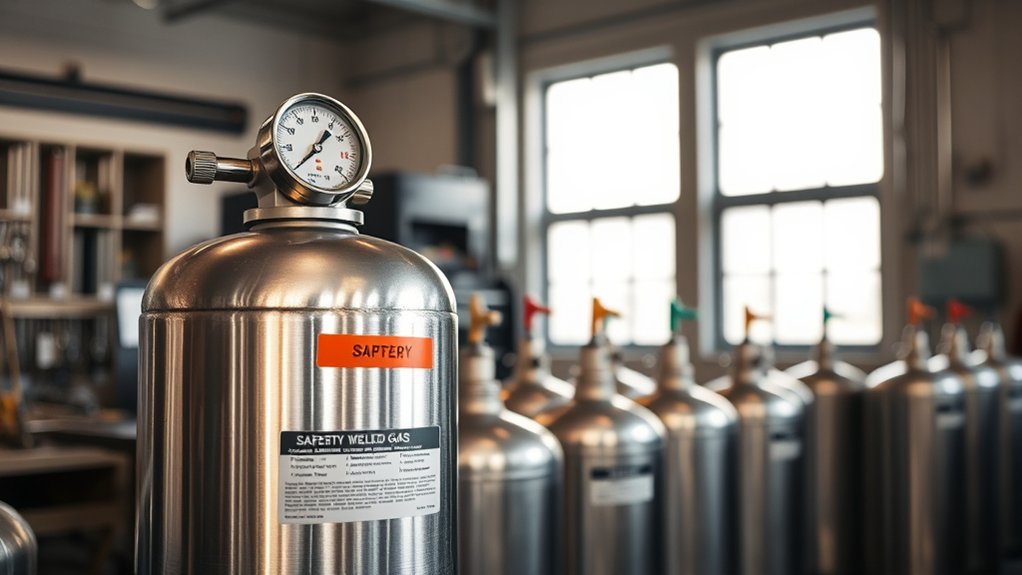
Welding gas tank cost typically runs about $110–$500 for the cylinder alone for common hobby-shop sizes, while current public argon fill/exchange examples are about $58 for 40 CF, $68 for 80 CF, and $78 for 125 CF. The total depends on cylinder size, gas, whether the bottle is empty or filled, ownership or exchange terms, freight, local supplier acceptance, and fees.
Last updated: August 10, 2026. Public price examples and cited safety references were rechecked; local prices and availability can change.
Quick Answer
A welding gas tank typically costs about $110–$500 for the cylinder, depending on size, seller, and whether gas is included. In public listings rechecked August 10, 2026, argon fill/exchange examples are $57.99 for 40 CF, $67.99 for 80 CF, and $77.99 for 125 CF. Local taxes, handling, freight, and exchange rules can change the total.
Key Takeaways
- Public cylinder prices vary widely because some listings are empty, some include gas, and some include a supplier exchange program.
- Larger cylinders usually cost less per cubic foot to refill, but they are heavier and harder to transport.
- Pure argon is the standard all-around TIG gas; mild-steel MIG commonly uses 75% argon/25% CO2 or straight CO2.
- Store cylinders upright, secured, capped when disconnected, and in a dry, ventilated area.
- Check the supplier’s ownership, exchange, valve, and hydro-test rules before buying a cylinder online or secondhand.
Common Welding Gases and Their Uses
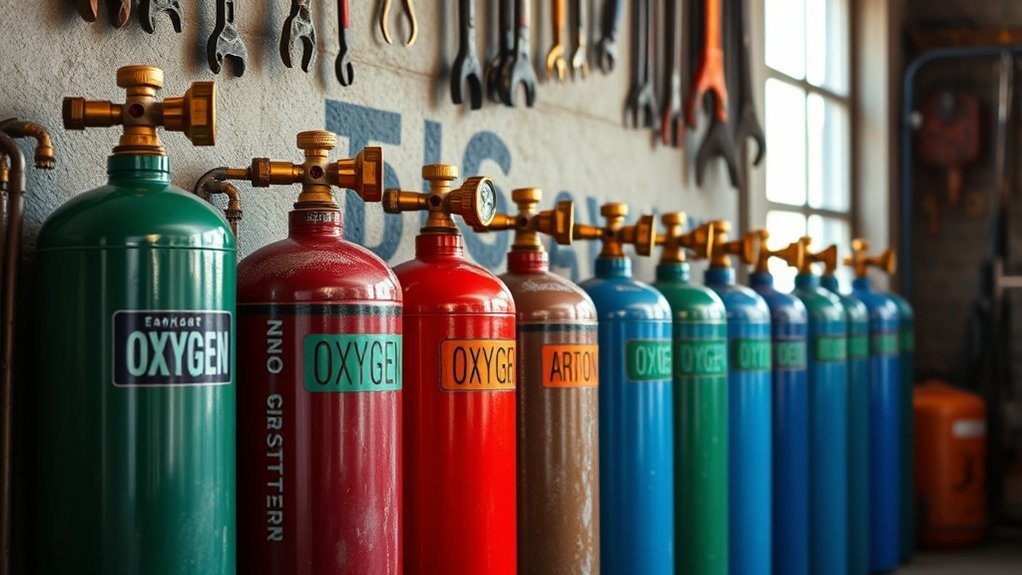
The right gas depends on the welding process, base metal, transfer mode, and wire. Do not choose a cylinder by price alone; the wrong gas can cause an unstable arc, excess spatter, porosity, poor penetration, or reduced corrosion resistance.
| Process or Material | Common Gas Choice | Why It Is Used |
|---|---|---|
| TIG on steel, stainless, or aluminum | 100% argon | Reliable arc starting and stable shielding across common TIG applications. |
| TIG on thick or highly conductive metal | Argon/helium blend | Helium raises heat input and can improve travel speed and penetration. |
| MIG on mild steel | 75% argon/25% CO2 or 100% CO2 | C25 gives a smooth short-circuit arc with less spatter than straight CO2; straight CO2 is often cheaper and penetrates more. |
| MIG on aluminum | 100% argon | Provides inert shielding suited to aluminum wire and spray transfer. |
| MIG on stainless steel | Application-specific argon-rich or helium/argon/CO2 blend | Low active-gas content helps protect corrosion resistance; follow the wire and machine recommendations. |
| Oxy-fuel cutting, heating, or brazing | Oxygen plus acetylene or another approved fuel gas | Creates a high-temperature flame for cutting and heating rather than arc shielding. |
Miller’s TIG shielding-gas guidance identifies 100% argon as the best all-around TIG choice and explains when helium blends help. Stainless MIG is more process-specific; Miller lists argon/CO2, argon/oxygen, and tri-mix options, usually with a high argon or helium percentage.
Note: Oxygen in a shielding-gas blend is not the same as the oxygen used with acetylene. It is added only in small, controlled percentages for specific MIG applications. Use the welder and filler-wire manufacturer’s gas recommendation.
How Much Does a Welding Gas Tank Cost?
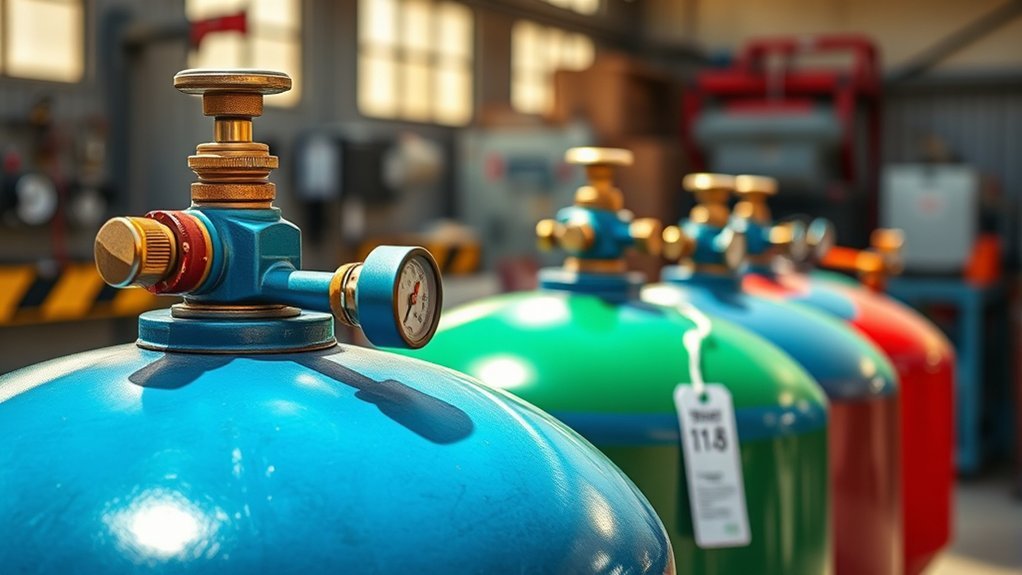
The purchase price changes sharply depending on what the listing includes. An inexpensive online cylinder may ship empty and need freight plus a local fill. A higher-priced local listing may include a recognized exchange program, a current test date, or gas.
Current Cylinder Price Examples
The following public listings were rechecked on August 10, 2026. They are examples, not national averages.
| Cylinder Listing | Listed Price | Important Detail |
|---|---|---|
| 40 CF steel argon cylinder | $112.60 | Ships empty; shipping and first fill are extra. |
| 80 CF steel argon cylinder | $149.80 | Ships empty; local acceptance should be confirmed before purchase. |
| 125 CF steel argon cylinder | $178.40 | Ships empty; listed with a CGA-580 valve, 2,265 PSI service pressure, and certification or hydro-test within 12 months. |
| 125 CF argon cylinder from a national retailer | $454.99 | Gas sold separately; compatible with the retailer’s fill/exchange program. |
These examples show why a single claim such as “a 125 CF tank costs $400” is too rigid. The public cylinder examples above span about $113–$455 before taxes, freight, the first fill, or supplier fees. A practical shopping range of roughly $110–$500 still captures the variation among common customer-owned hobby-shop cylinders.
Own, Rent, or Exchange?
- Own: Higher upfront cost, no recurring cylinder rental, and more freedom to compare refill shops. Confirm that local suppliers accept the brand, size, valve, and test stamp.
- Rent or lease: Lower upfront cylinder cost and less concern about requalification, but rental, demurrage, delivery, or account fees can add up.
- Exchange: Fastest option at many stores. You trade the empty cylinder for a filled cylinder of the same program and size, so you may not receive the same bottle back.
Which Welding Gas Tank Size Should You Choose?
For a home welder, cylinder size is a trade-off between portability, refill frequency, and cost per cubic foot. Using the same 15–20 CFH comparison applied later in this guide, these three common sizes work out as follows:
| Cylinder Size | Practical Fit | Continuous Flow at 15–20 CFH | Main Trade-Off |
|---|---|---|---|
| 40 CF | Occasional or mobile work | About 2.0–2.7 hours | Easier to handle, but the current argon example has the highest refill cost per cubic foot. |
| 80 CF | General home or hobby use | About 4.0–5.3 hours | A middle ground between portability and refill frequency. |
| 125 CF | Frequent home or small-shop use when storage and transport are suitable | About 6.25–8.3 hours | Fewer refill trips and lower cost per cubic foot in the current argon examples, but harder to move. |
For a purchase-only comparison, see our welding gas cylinder cost guide.
Pro Tip: Call two local gas suppliers before ordering a cylinder. Ask whether they accept customer-owned cylinders, which sizes they exchange, whether proof of ownership is required, and what fees apply to an out-of-date test stamp.
How Much Does a Welding Gas Refill Cost?
Refill and exchange prices depend on cylinder size, gas purity, blend, region, and supplier program. Delivery, hazardous-material handling, environmental, account, and test fees may appear separately.
For a refill-only breakdown, see our welding tank refill cost guide.
Products Worth Considering


Compatible Fit: Designed for Oxy-Mapp and for Oxy-Propane cylinder systems, providing a secure and stable mounting solution for compatible fuel tanks.

Strong Weight Capacity: Our dual welding cylinder cart supports up to 440 lbs of static weight and 350 lbs of dynamic weight with ease. Whether transporting gas cylinders around the worksite or storing them, it provides stable support, suitable for home garages, workshops, repair shops, etc.
Current Refill and Exchange Examples
These public Northern Tool listings were rechecked on August 10, 2026 and are limited to participating stores.
| Gas and Size | Listed Fill/Exchange Price | Approximate Cost per CF |
|---|---|---|
| 100% argon, 40 CF | $57.99 | $1.45 |
| 75/25 argon/CO2, 40 CF | $62.99 | $1.57 |
| 100% argon, 80 CF | $67.99 | $0.85 |
| 75/25 argon/CO2, 125 CF | $69.99 | $0.56 |
| 100% argon, 125 CF | $77.99 | $0.62 |
In these public examples, moving from a 40 CF argon fill to a 125 CF argon fill cuts the listed gas cost from about $1.45 to $0.62 per cubic foot.
Local prices can be higher or lower. Use the table as a comparison method, not a promise of what your nearest supplier will charge.
Calculating the Real Cost of Welding Gas
The real cost includes the cylinder, gas, travel, fees, and how quickly you use the contents.
Products Worth Considering

ITEMS INCLUDED – Refillable Empty 1LB Propane Tank, Cap, and 2mm (5/64") Allen Key

HIGH QUALITY: Standard Propane with purity > 95%;

High-grade steel-welded construction; premium OPD (overfilling protection device) valve assembly
First-Year Cost Formula
First-year cost = cylinder purchase or annual rental + all fills/exchanges + delivery or travel + supplier fees + any required requalification.
For a fair size comparison, calculate the cost per cubic foot:
Cost per cubic foot = refill price ÷ cylinder capacity.
Example Cost Comparison
Using the public prices above, an empty 80 CF cylinder at $149.80 plus six $67.99 argon fills would total about $557.74 before shipping, tax, and local fees. That supplies 480 CF of gas.
An empty 125 CF cylinder at $178.40 plus four $77.99 argon fills would total about $490.36 before shipping, tax, and local fees. That supplies 500 CF of gas.
The larger cylinder is cheaper in this example, but the result changes if your local supplier rejects an online cylinder, charges higher fees, or offers a better rental plan.
Hidden Costs to Include
- Hazardous-material, delivery, fuel, or account fees
- Sales tax and online freight
- Rental, lease, or demurrage charges
- Hydrostatic requalification when the cylinder is out of test
- Travel time and fuel for refill trips
- A regulator or flowmeter with the correct valve connection
- A cylinder cart, chain, or secure wall bracket
How Long Does a Welding Gas Tank Last?
Estimate continuous gas-flow time with this formula:
Runtime in hours = cylinder capacity in CF ÷ flow rate in CFH.
Miller lists a typical TIG range of 10–35 CFH, with the correct setting depending on cup size, joint, drafts, and consumables. Many shop estimates use 15–20 CFH for a simple comparison.
| Cylinder Size | At 15 CFH | At 20 CFH |
|---|---|---|
| 40 CF | About 2.7 hours | About 2 hours |
| 80 CF | About 5.3 hours | About 4 hours |
| 125 CF | About 8.3 hours | About 6.25 hours |
This is valve-open time, not total time in the shop. Tack-up, fitting, cleaning, grinding, and repositioning do not use shielding gas when the torch valve is closed. Leaks, long pre-flow or post-flow settings, purging, and wind can shorten runtime.
Pro Tip: If gas use suddenly rises, check the regulator connection, hose, torch fittings, and solenoid for leaks before buying a larger cylinder. More flow does not always improve shielding; excess flow can pull room air into the gas stream.
How to Know When You Need More Gas
Check the high-pressure gauge before each job and compare it with the cylinder’s marked service pressure and your normal full-cylinder reading. A universal “full at 2,015 psi” or “refill below 1,000 psi” rule is not reliable. For example, one current 125 CF cylinder listing is marked for 2,265 psi service pressure, and cylinder pressure also changes with temperature.
Use three checks:
- Pressure trend: Record the gauge reading after each work session at a similar room temperature.
- Expected runtime: Divide the remaining estimated capacity by your flow setting and compare it with the job ahead.
- Weld symptoms: Porosity or discoloration can indicate lost shielding, but also check for drafts, blocked gas passages, leaks, wrong polarity, dirty metal, or an unsuitable gas before blaming an empty cylinder.
Note: Keep a backup cylinder when running out would stop paid work. Do not wait for poor weld quality to tell you the cylinder is empty.
Do Welding Gases Expire?
Pure argon is chemically stable under normal storage conditions, so the gas does not spoil like a liquid product. The practical limits are cylinder condition, valve integrity, contamination, labeling, and the required requalification date.
Do not store a welding cylinder on its side or roll it to “remix” the gas. For construction workplaces covered by OSHA 29 CFR 1926.350, compressed-gas cylinders must be secured upright except for short periods while they are actually being hoisted or carried. For home shops and other settings, follow the cylinder supplier’s instructions and the rules that apply to your location. If a supplier or gas label gives special conditioning instructions for a certified specialty mixture, follow those instructions rather than a general internet tip.
Safe Storage Checklist
| Condition | Correct Action | Why It Matters |
|---|---|---|
| Cylinder in storage or use | Keep upright and secure with a chain, strap, rack, or approved cart. | Prevents a fall and valve damage. |
| Regulator disconnected | Close the valve and install the valve-protection cap when the cylinder accepts one. | Protects the valve during storage and movement. |
| Indoor storage | Use a dry, protected, well-ventilated location away from heat, sparks, and traffic. | Reduces damage, heat exposure, and gas accumulation. |
| Oxygen and fuel-gas storage | Separate oxygen from fuel gas or combustibles by 20 feet or an approved fire barrier where OSHA rules apply. | Limits fire spread and oxygen enrichment risk. |
| Cylinder appears empty or damaged | Close the valve, label its status, and have the supplier inspect it. | Avoids contamination and unsafe refilling. |
Warning: Argon and argon-rich mixtures can displace oxygen without color or odor. Never release shielding gas in an unventilated room, vehicle, locker, or confined space.
Cylinder Test Date and Service Pressure
Before buying used, inspect the permanent shoulder or collar markings. A qualified gas supplier should confirm the DOT specification, service pressure, ownership status, valve, and latest requalification mark. Under 49 CFR 180.209, qualifying DOT 3A and 3AA cylinders may be requalified every 10 years instead of every five years when the rule’s conditions are met; other cylinder specifications and services can have different intervals.
Where to Buy or Refill Your Gas
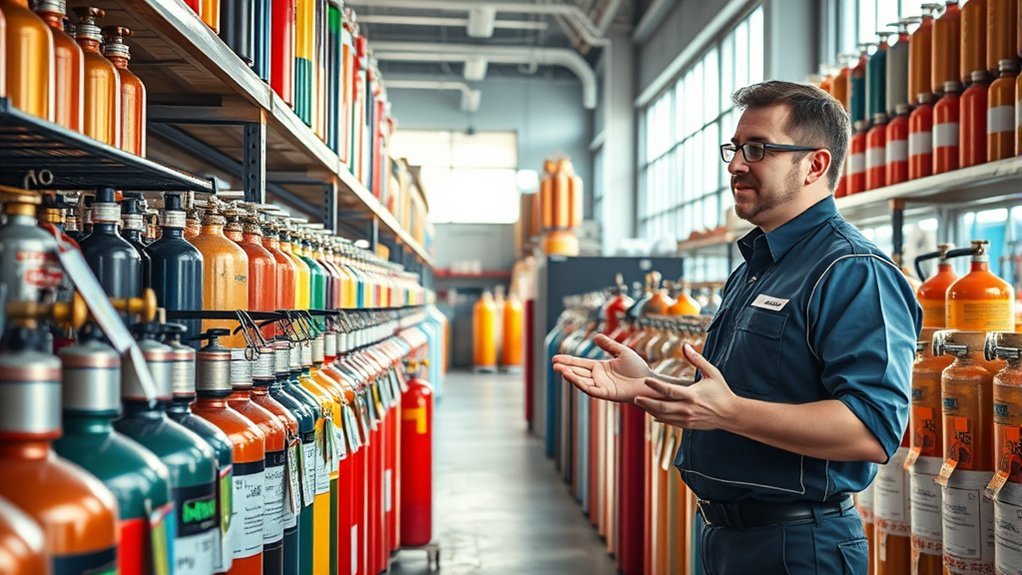
Common options include independent welding-supply stores, national gas distributors, farm and industrial stores, and online cylinder sellers. The cheapest cylinder online is not always the cheapest usable setup if local shops will not fill or exchange it.
Questions to Ask Before Buying
- Do you fill customer-owned cylinders, or do you exchange only?
- Which cylinder sizes and brands do you accept?
- Do you require a receipt or proof of ownership?
- What is the total price after gas, handling, environmental, delivery, and account fees?
- Will you accept a cylinder with a CGA-580 valve for argon or argon/CO2 service?
- What happens if the hydrostatic requalification date has passed?
- Can I exchange for a larger or smaller size, and what upgrade fee applies?
Larger 250–330 CF cylinders can reduce cost per cubic foot but may be restricted to commercial accounts, difficult to move safely, or unavailable in a local exchange program. Confirm the full dimensions and filled weight before choosing a cart or vehicle.
Transporting a Cylinder Safely
Close the valve, remove the regulator unless the cylinder is secured on a carrier designed for it, install the protection cap where provided, and secure the cylinder against movement. For construction workplaces covered by OSHA 29 CFR 1926.350, cylinders transported by powered vehicles must be secured in a vertical position. In other settings, follow the supplier’s transport instructions and all rules that apply to the gas, cylinder, vehicle, and location.
Warning: Avoid carrying a compressed-gas cylinder in an enclosed passenger compartment. Use an appropriate vehicle and ventilation, unload promptly, and follow the supplier’s instructions plus all federal, state, and local transport rules.
Alternatives to Shielding Gas
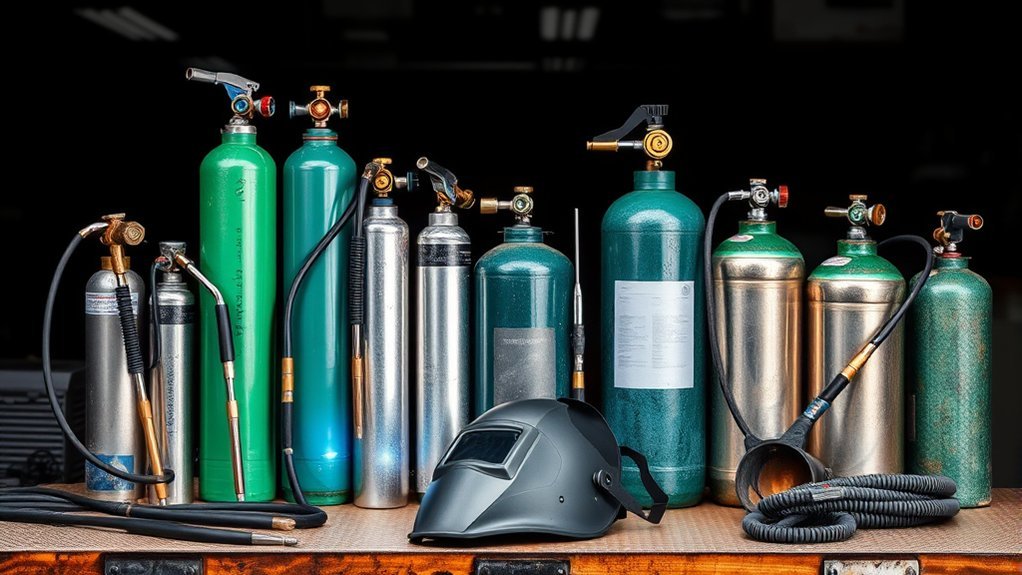
You can avoid a shielding-gas cylinder for some jobs, but each alternative changes weld appearance, cleanup, indoor fume control, and material compatibility.
- Self-shielded flux-cored wire: Works outdoors better than gas-shielded MIG and needs no cylinder, but it creates slag and more smoke and spatter.
- Stick welding: Uses flux-coated electrodes and no external shielding gas. It suits repair, outdoor, and thicker-steel work but requires slag removal and more practice on thin sheet.
- Gasless-capable wire feeder: A machine labeled “gasless MIG” normally runs self-shielded flux-cored wire; it is not conventional solid-wire MIG without gas.
- Plasma cutting with compressed air: Many air-plasma cutters use a clean, dry shop-air supply instead of bottled shielding gas. Follow the cutter’s pressure and air-quality specifications.
These options can lower cylinder costs, but they do not replace argon TIG or every MIG application. Choose based on the metal, thickness, work location, finish requirements, and welder capability.
Products Worth Considering

ITEMS INCLUDED – (2) Refillable Empty 1LB Propane Tanks, (2) Caps, and (2) Allen Keys - 2mm (5/64") in size

Brand new industrial-grade welding cylinder has never been filled

Propane Fuel Cylinders, 4 pk./16 oz.
Frequently Asked Questions
How often should I check my welding gas tank pressure?
Check it before each work session and again before a long job. Record readings at a similar temperature so you can spot unusual gas loss. Also inspect the hose, regulator, flowmeter, and fittings if the pressure drops faster than expected.
Can I transport a welding gas tank in a car?
A compressed-gas cylinder must be closed, capped where applicable, and secured against movement. An open truck bed, ventilated service body, or other suitable vehicle is safer than an enclosed passenger compartment. Follow the supplier’s instructions and all transport laws that apply to the gas and cylinder.
What are the basic rules for storing welding gas cylinders?
Store cylinders upright and secured in a dry, protected, well-ventilated area. Close the valve when not in use, install the protection cap when the regulator is removed, and keep cylinders away from heat, sparks, traffic, and combustible material. Apply the stricter oxygen and fuel-gas separation rules when those gases are present.
What makes welding gas prices change?
Price changes come from gas type and purity, cylinder size, supplier program, local competition, delivery distance, energy and production costs, account fees, taxes, and cylinder testing. Compare the full out-the-door price rather than the advertised gas charge alone.
Can I exchange my tank for a different size?
Sometimes. Exchange programs commonly require the same gas family and cylinder program, and a size change may require an upgrade fee or a new ownership agreement. Ask the supplier before bringing the cylinder in.
Is an 80 CF or 125 CF tank better for a home welder?
An 80 CF cylinder is easier to move and gives about four to five hours of continuous flow near 15–20 CFH. A 125 CF cylinder gives roughly six to eight hours and usually lowers refill cost per cubic foot. Choose the 125 CF size when you have secure storage and a safe way to move it.
Does argon expire in a welding cylinder?
Pure argon is stable under normal storage conditions. The cylinder still needs an intact valve, readable label, safe condition, and a current requalification mark. Ask the supplier about any stated shelf life for a certified specialty mixture.
Conclusion
A welding gas tank can cost from roughly $110 for a small empty online cylinder to about $500 for a customer-owned cylinder in a retail exchange program. Public argon refill examples rechecked August 10, 2026 run about $58–$78 for 40–125 CF sizes. Compare cost per cubic foot, supplier rules, cylinder handling, and refill travel before choosing. Before buying, call two local suppliers and compare the total out-the-door cost plus their customer-owned-cylinder and exchange rules.
Sources
- Northern Tool — Thoroughbred gas cylinder listings — current public cylinder and fill/exchange prices.
- Miller Electric — TIG shielding-gas best practices — argon, helium blends, and flow-rate guidance.
- Miller Electric — stainless steel MIG gas options — argon-rich, oxygen, CO2, and tri-mix guidance.
- OSHA 1926.350 — gas welding and cutting — upright securing, valve closure, and cylinder handling.
- OSHA 1910.253 — oxygen-fuel gas welding and cutting — ventilation, valve caps, and oxygen/fuel-gas separation.
- 49 CFR 180.209 — cylinder requalification — federal requalification requirements for specification cylinders.
