

A resistance seam welding machine can cost anywhere from several thousand dollars for an older used unit to six figures for a new, application-specific automated system. The machine price alone is not the full budget. Tooling, electrical service, cooling, controls, guarding, freight, installation, training, and process validation can materially change the total.
Quick Answer
Public U.S. listings reviewed in July 2026 show used resistance seam welders around $6,950 to $15,000, while a rebuilt longitudinal machine was listed near $59,900. New industrial machines are commonly quote-only. For planning, expect a complete new or custom system to run from tens of thousands of dollars into six figures, depending on tooling and automation.
Key Takeaways
- There is no dependable universal list price because most new industrial seam welders are configured for a specific part, material, seam, and production rate.
- Used-machine asking prices can start below $10,000, but rebuilding, retooling, freight, rigging, and controls can quickly raise the installed cost.
- The most important buying specifications are secondary current, duty-cycle basis, electrode force, throat depth, wheel configuration, weld speed, cooling, and control type.
- Compare suppliers using total installed cost and a written acceptance test, not the base machine price alone.
Cost at a Glance
| Used, As-Is Machine | Public listing examples reviewed in July 2026 were about $6,950 to $15,000; condition and included tooling vary. |
| Rebuilt or Remanufactured | Usually quote-based. A public rebuilt longitudinal seam-welder listing reviewed in July 2026 was $59,900. |
| New Industrial Machine | Commonly sold by application quote rather than a posted list price; plan for tens of thousands of dollars before major automation. |
| Custom Automated System | Can move into six figures when it includes custom tooling, servo motion, part handling, monitoring, guarding, and line integration. |
Note: These are planning ranges and public asking-price examples, not an appraisal or a guaranteed purchase price. Quotes can change with machine condition, tariffs, freight, utilities, specifications, and acceptance requirements.
Overview of Resistance Seam Welding Machines
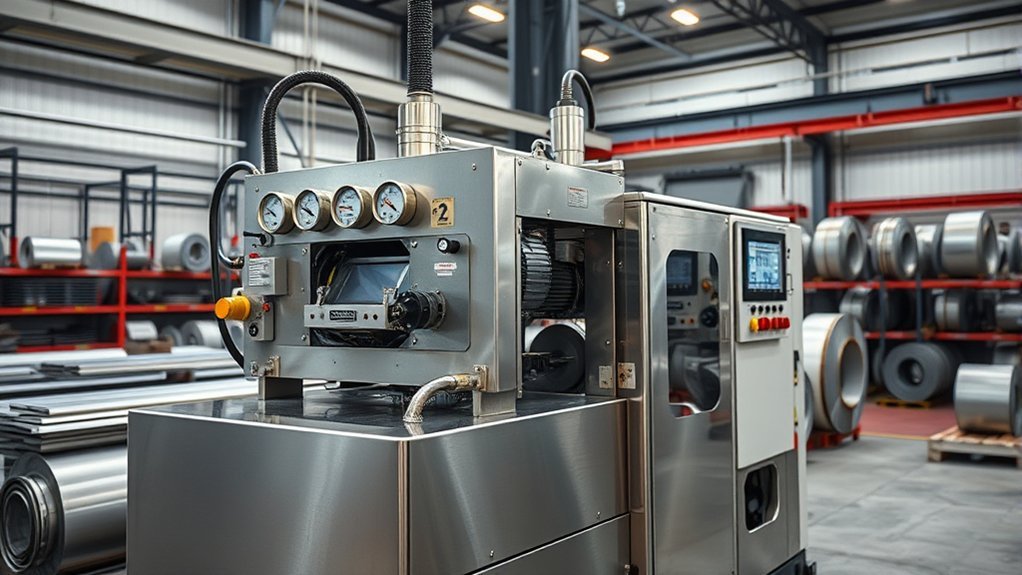
Resistance seam welding is a form of resistance welding that uses rotating electrode wheels instead of stationary spot-welding tips. Electrical current, electrode force, wheel speed, and weld time work together to create a continuous seam, overlapping weld nuggets, or spaced roll-spot welds.
Industrial seam welders are commonly arranged for longitudinal seams, such as a straight seam along a tank or shell, or circumferential seams, which run around a round part. Applications include metal containers, tanks, catalytic-converter shells, aerospace parts, and other sheet-metal assemblies.
A seam welder should be sized for the part and weld schedule—not selected by kVA or sticker price alone.
Resistance Seam Welder vs. Arc Seam Welder
Do not compare every machine labeled “seam welder” as though it uses the same process. Some listings describe longitudinal or circumferential fixtures for MIG, TIG, submerged-arc, or laser welding. A true resistance seam welder passes current through the work between wheel electrodes. The power supply, tooling, utilities, weld speed, and price structure can be very different.
Common Machine Configurations
- Press-type or pedestal machines: Standard frames with wheel electrodes for manual or semi-automatic loading.
- Longitudinal machines: Designed for straight seams on cylinders, cans, ducts, or formed sheet.
- Circumferential machines: Rotate or feed round parts through the electrode wheels.
- AC systems: Traditional single-phase power supplies that remain common in production.
- MFDC systems: Three-phase medium-frequency direct-current systems that can offer better control, a balanced facility load, and lower primary current for some applications.
- Custom cells: Systems with servo motion, automatic loading, vision, leak testing, data collection, or integration with a production line.
Factors Influencing the Cost of Seam Welders

The base price changes with the machine’s electrical, mechanical, and control requirements. The following factors usually have the largest effect:
- Part size and seam geometry: Throat depth, working height, seam length, part diameter, and access around flanges determine the frame and wheel-head design.
- Material and thickness stack: Mild steel, stainless steel, coated steel, nickel alloys, aluminum, and dissimilar metals require different current, force, electrode materials, and process control.
- Power supply and duty cycle: AC and MFDC systems have different equipment and facility requirements. Always compare kVA on the same duty-cycle basis and ask for expected secondary current at the required throat depth.
- Electrode force and motion: Larger pneumatic cylinders, hydraulic systems, or electric servo actuators add cost but may be required for repeatability or a wide force range.
- Weld control and monitoring: Programmable controls, current feedback, force measurement, speed control, data logging, and weld monitoring raise the purchase price but can reduce process variation.
- Tooling and part handling: Custom wheels, mandrels, nests, guides, clamps, fixtures, seam tracking, and automatic loading can cost as much as a basic used machine.
- Safety and compliance: Guarding, light curtains, two-hand controls, interlocks, emergency stops, fume or splash shielding, and a lockable disconnect must be included in the scope.
- Supplier support: Application testing, installation, commissioning, training, spare parts, and response time affect both price and long-term uptime.
Pro Tip: Send suppliers sample parts and a written production specification. A quote based only on “50 kVA seam welder” is unlikely to include the correct tooling, current capacity, force, cooling, and acceptance testing.
Price Range for Standard Seam Welding Machines
There is no authoritative industry average for a “standard” resistance seam welder. Major industrial suppliers commonly use a request-a-quote model because the frame, transformer, wheel heads, controls, tooling, and utilities are selected around the application.
Public used-equipment listings are useful as market examples, but they are not directly comparable. In July 2026, one 50 kVA press-type resistance seam welder was listed at $6,950, while a sold 200 kVA resistance seam welder had been listed at $15,000. Those prices do not establish a market average, and they may exclude freight, rigging, retooling, repairs, and commissioning.
For a new industrial system, use tens of thousands of dollars as a preliminary budget rather than a promised price. A large transformer, deep throat, MFDC power supply, custom wheel heads, and automated part handling can push the project into six figures.
Products Worth Considering

【2-in-1 Welding & Seam Cleaning】 Laser Welding machine Integrated 0.75kg head switches instantly between welding and cleaning modes, reducing downtime by 70% (vs. traditional shutdowns). Eliminate oxidation without tool changes.
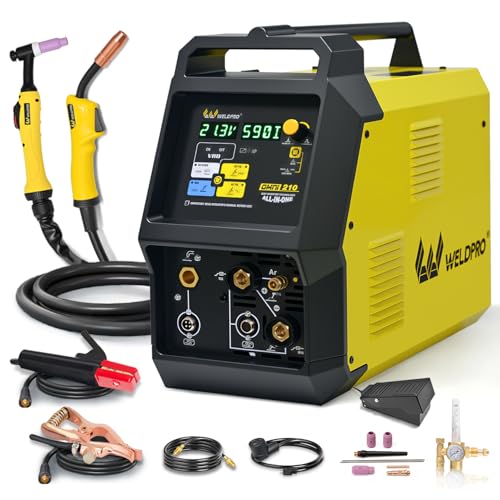
6-IN-1 VERSATILE WELDING SOLUTIONS: The MIG TIG welding machine combo provides a versatile selection of welding techniques such as MIG, Stick, AC/DC TIG, Spool Gun, and flux core welding, making it the perfect multi-process welder for a wide range of tasks, from aluminum work to heavy-duty jobs.
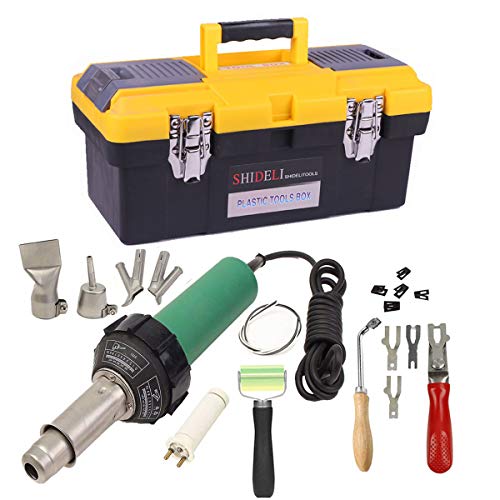
This plastic welding gun is sturdy and very durable, less than 3 lbs, very lightweight and compact.
Why Low-Price Listings Need Careful Review
A low asking price can be reasonable for an older machine, but it may not include the correct wheels, control, transformer, safety devices, or electrical configuration. Before buying, confirm:
- Actual secondary-current output and the duty-cycle basis of the kVA rating
- Primary voltage, phase, frequency, full-load current, and required disconnect
- Throat depth, wheel diameter, weld-head condition, force range, and seam-speed range
- Water-cooling condition, flow requirements, and evidence of internal corrosion or leaks
- Control model, software support, spare-parts availability, and documentation
- Whether the machine can be demonstrated under load and tested on your parts
- Freight weight, loading method, rigging access, and foundation requirements
Custom Seam Welding Machines and Their Pricing
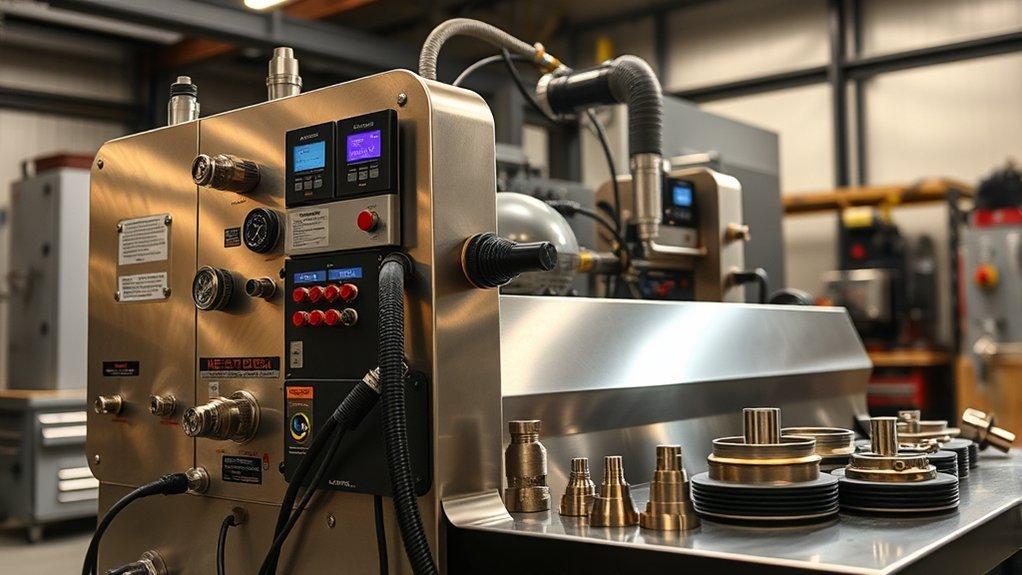
A custom resistance seam welding machine is built around a defined part family and production target. The price can rise sharply when the project includes engineering, special tooling, automation, controls, and line integration.
Common custom-cost drivers include:
- Application engineering: Weld trials, material evaluation, joint redesign, process-window development, and sample approval.
- Specialized mechanics: Servo-driven wheel heads, adjustable mandrels, retractable tooling, multi-axis motion, seam tracking, or multiple weld heads.
- Automation: Feeders, robots, conveyors, turntables, part detection, reject handling, automatic wheel dressing, and downstream leak testing.
- Quality controls: Weld-current monitoring, force and displacement measurement, speed verification, recipe management, traceability, and plant-network integration.
- Validation: Factory acceptance testing, site acceptance testing, destructive testing, leak testing, gauge studies, and customer-specific documentation.
Request an itemized quote that separates the base machine, tooling, controls, utilities, guarding, engineering, testing, installation, training, travel, taxes, and freight. This makes competing proposals easier to compare and helps prevent scope gaps.
Products Worth Considering

【Technical Parameters】Laser Brand: Raycus/MAX; Laser Wavelength: 1080±10nm; Gun Head Model: Relfar; 7 welding modes, 10 cleaning modes; Welding Width: 0.1-5mm (Continuous/Modulation Dual Modes); Cleaning Scanning Width: 100mm; Cable Length: Standard 10m; Voltage Requirement: 220~242V Single Phase; Cooling System: S&A/Hanli; Cooling Method: Water Cooling; Water Tank Capacity: 16L.

INCLUDING CUSTOMS DUTIES [ 3000W DOUBLE WOBBLE LASER WELDER MACHINE ] Equipped with dedicated welding / cutting / cleaning / weld seam cleaning nozzles. 7 Welding modes with welding width up to 8 mm; 10 Cleaning modes with cleaning width up to 100 mm; Laser cutting thickness up to 6 mm; Laser weld seam cleaning width up to 12mm
【Technical Parameters】Laser Brand: Raycus/MAX; Laser Wavelength: 1080±10nm; Gun Head Model: Relfar; 7 welding modes, 9 cleaning modes; Welding Width: 0.1-8mm (Continuous/Modulation Dual Modes); Cleaning Scanning Width: 100mm; Cable Length: Standard 10m; Voltage Requirement: 380V 3-Phase; Cooling System: S&A/Hanli; Cooling Method: Water Cooling; Water Tank Capacity: 16L.
Additional Costs Associated With Seam Welders
The installed cost can be much higher than the purchase order for the machine. Build the budget with the following formula:
Total installed cost = machine + tooling + utilities + safety + freight and rigging + installation + validation and training + first-year spares and maintenance.
| Cost Category | What to Include |
|---|---|
| Electrical | Qualified electrician, transformer or service upgrades, breaker, conduit, lockable disconnect, grounding, and power-quality review |
| Cooling | Chiller or plant water, pumps, filters, flow indicators, hoses, manifolds, water treatment, and condensation control |
| Air and Exhaust | Compressed-air capacity, filtration and regulation, piping, and any application-specific ventilation or splash control |
| Tooling and Consumables | Electrode wheels, shafts, bearings, knurls, mandrels, guides, nests, clamps, dressers, and setup gauges |
| Logistics | Crating, insurance, freight, customs or duties, unloading, forklift or crane rental, rigging, and floor preparation |
| Launch and Support | Installation, commissioning, operator and maintenance training, acceptance testing, documentation, travel, warranty, and spare-parts package |
Warning: Resistance seam welders combine high electrical current, moving wheel electrodes, pinch and crush points, hot metal, pneumatic force, and cooling water. OSHA requires qualified installation, competent operators, guarding, and periodic inspection by qualified maintenance personnel. Follow the machine manual and your facility’s lockout/tagout program during service.
Comparison of New vs. Remanufactured Machines

New, used, rebuilt, and remanufactured machines can all be valid choices. The correct option depends on the required process, available capital, launch schedule, in-house maintenance skill, and tolerance for downtime.
Products Worth Considering
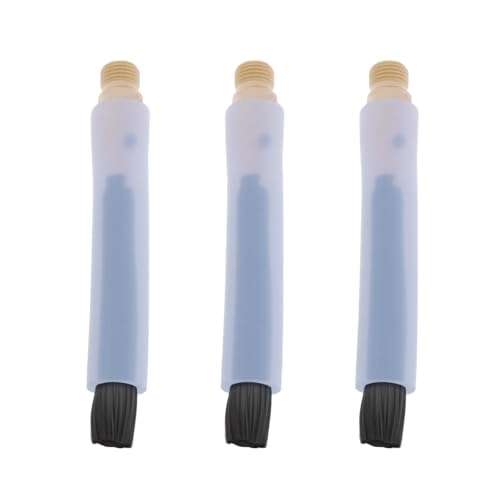
Product dimensions: The product has a total length of 93mm, a brush length of 60mm, and a thread of M10. Manual measurements, please allow slight errors.

FR welding Cap:Updated New Functin on Surface(Water Repellent and Oil Resistant) we use the 10oz heavy weight flame resistant cotton duck(canvas) outside and inner material Flame Resistant cotton. More heat and arc resistant ATPV 14 Calories/cm2+8.2 Calories/cm2

Product dimensions: The product has a total length of 93mm, a brush length of 60mm, and a thread of M8. Manual measurements, please allow slight errors.
Initial Investment Differences
A used machine sold as-is usually has the lowest purchase price. A properly remanufactured machine costs more because it may be stripped, inspected, remachined, rewired, fitted with a new control, and rebuilt across its mechanical, electrical, air, and water systems. A new machine typically costs the most, especially when it includes custom tooling and automation.
Do not use a fixed “30% to 70% cheaper” rule. Two machines with the same kVA can have very different values because of throat depth, current output, wheel heads, control age, tooling, condition, and included support.
Maintenance and Support Costs
A new machine often includes a current control platform, documentation, warranty, and clearer parts support. A remanufactured machine can also provide reliable service when the rebuild scope is documented and critical components have been tested or replaced.
Ask the seller to list exactly what “used,” “rebuilt,” “reconditioned,” or “remanufactured” means. At minimum, review the transformer, copper secondary connections, wheel heads, bearings, shafts, force system, water circuits, air system, wiring, control, safety devices, and calibration results.
Longevity and Performance Factors
There is no credible universal 10- or 15-year lifespan for a resistance seam welder. Heavy industrial frames and transformers may remain serviceable for decades, while controls, bearings, seals, hoses, wheels, and wiring may need repair or modernization sooner. Duty cycle, cooling quality, contamination, maintenance, and parts availability matter more than calendar age alone.
For either a new or remanufactured unit, require a demonstration or factory acceptance test that checks weld current, force, speed, repeatability, cooling, safety functions, and weld quality on representative parts.
The Role of Specifications and Capabilities in Pricing
Specifications determine whether a machine can make the required weld at the required production rate. They also explain why two seam welders can have very different prices.
| Specification | Why It Matters | Cost Effect |
|---|---|---|
| Secondary Current | Provides the current that forms the weld | Higher output may require a larger transformer, secondary conductors, and cooling |
| Duty Cycle | Shows the thermal basis of the kVA rating | Higher sustained production can require heavier electrical and cooling components |
| Throat Depth | Controls part reach and affects secondary-loop losses | Deeper throats need a larger frame and may need more transformer capacity |
| Electrode Force | Affects contact resistance, expulsion, and weld formation | Larger cylinders or servo actuators increase cost |
| Wheel and Drive Design | Controls traction, surface marking, seam speed, and access | Custom shafts, wheels, knurl drives, gear drives, and dressers add engineering and tooling |
| Control and Monitoring | Manages current, time, force, speed, recipes, and process records | Closed-loop control, data logging, and traceability increase upfront cost |
Current industrial examples show how broad the specification range can be. T. J. Snow lists standard seam-welder configurations from 35 to 500 kVA, with different throat depths, voltages, AC or MFDC power, force ranges, and wheel-head designs. Those are product-family specifications, not universal requirements.
Note: Ask for the available secondary current at your required throat depth and duty cycle. A larger kVA number is not automatically a better or more capable machine.
Requesting Quotes From Manufacturers and Distributors
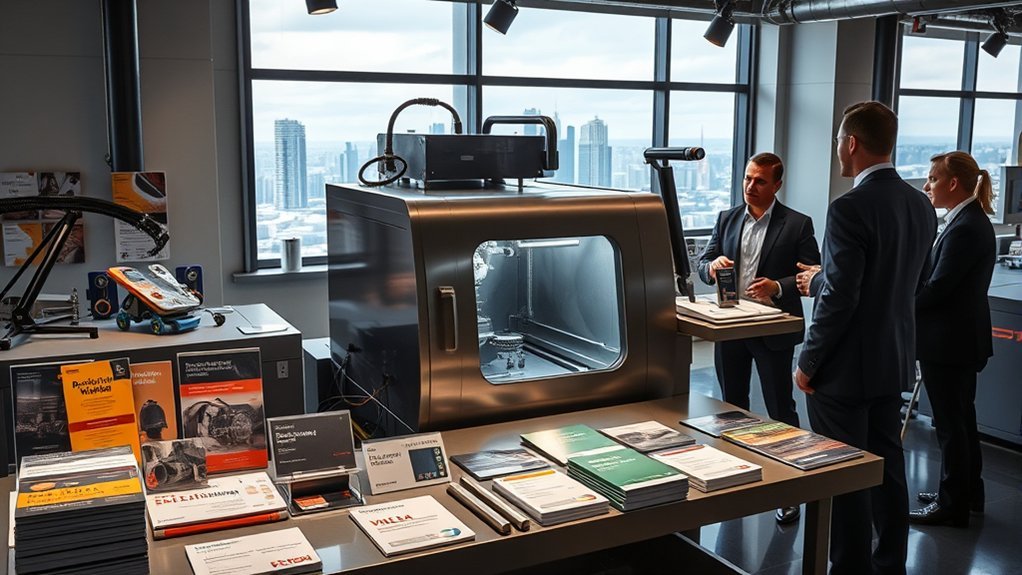
A detailed request for quotation gives suppliers enough information to size the process and quote the same scope. Include:
- Parts: Drawings, photos, material grade, coatings, thickness stack, tolerances, and representative samples.
- Joint: Lap width, seam orientation, seam length or diameter, access limits, appearance requirements, and whether the seam must be leak-tight or hermetic.
- Production: Parts per hour, shifts, target seam speed, changeover needs, expected duty cycle, and future volume.
- Quality: Required weld strength, leak-test limit, inspection method, traceability, applicable customer or industry specification, and acceptance sample size.
- Facility: Available voltage, phase, frequency, compressed air, cooling-water capacity, ambient conditions, floor space, loading access, and network requirements.
- Automation: Manual loading, fixtures, robots, conveyors, sensors, vision, recipe control, reject handling, and communication with other equipment.
- Commercial scope: Freight terms, installation, commissioning, training, warranty, service response, spare parts, documentation, and payment milestones.
How to Compare Seam Welder Quotes
Place each proposal into the same comparison sheet. Separate the base machine, options, tooling, utilities, safety, engineering, testing, travel, freight, taxes, and ongoing support. Then compare:
- Total installed cost rather than base price
- Guaranteed capacity and cycle rate
- Factory and site acceptance criteria
- Warranty start date and exclusions
- Lead time and price-validity period
- Recommended spare-parts package
- Parts availability and technical-support response
- Training and documentation included
Pro Tip: Make the final payment milestone depend on a written acceptance test. The test should use representative parts and verify current, force, speed, safety functions, weld appearance, strength, and leak performance where required.
Importance of Considering Support Services and Repairs
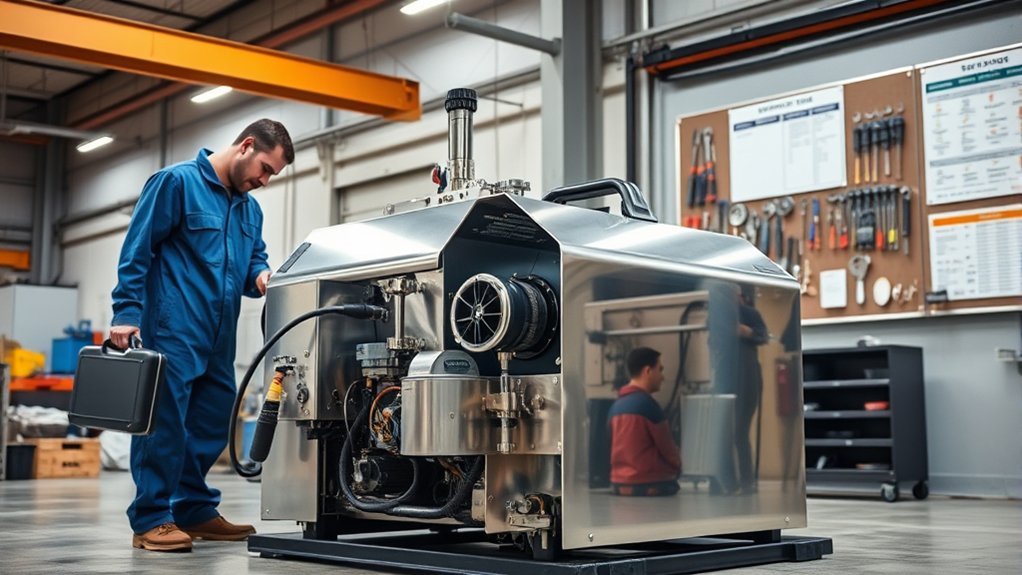
Support quality affects uptime and total ownership cost. A supplier that can develop weld schedules, calibrate force and current, repair wheel heads, stock controls, and provide on-site service may offer better long-term value than a lower-priced seller with no technical support.
| Support Item | What to Verify |
|---|---|
| Spare Parts | Stock for wheels, bearings, seals, controls, transformers, switches, valves, and sensors |
| Operator Training | Safe loading, recipes, wheel care, defect reporting, daily checks, and response to abnormal welds |
| Maintenance Training | Electrical isolation, cooling circuits, force checks, current checks, alignment, lubrication, and control backups |
| Calibration | Force, current, time, speed, pressure, flow, and any quality-monitoring sensors |
| Service Response | Remote support hours, field-service coverage, travel rates, emergency response, and escalation path |
Common Maintenance Requirements
Maintenance intervals must follow the manufacturer’s manual and your operating conditions. Typical tasks include:
- Inspecting and dressing electrode wheels before wear changes the contact area or seam quality
- Checking wheel alignment, shaft runout, bearings, drive components, and contact pressure
- Verifying cooling-water flow, temperature, cleanliness, hoses, filters, manifolds, and leaks
- Inspecting secondary connections for looseness, heat, oxidation, or damage
- Checking air filters, regulators, lubricators where fitted, cylinders, seals, and pressure
- Backing up control recipes and testing emergency stops, guards, interlocks, and initiation devices
- Measuring weld current and electrode force with calibrated equipment
- Documenting periodic safety inspections and removing defective equipment from service until repaired
OSHA’s resistance-welding standard requires periodic inspection by qualified maintenance personnel and a certification record that identifies the inspection date, inspector, and machine. Servicing must also follow applicable hazardous-energy control requirements.
Sources
- AMADA WELD TECH: Resistance Seam Welding — process definition and wheel-electrode operation
- T. J. Snow: Resistance Seam Welding Machines — configurations, specifications, wheel drives, cooling, and quote-based sales
- T. J. Snow: Remanufactured and Reconditioned Welders — documented rebuild scope for mechanical, electrical, air, and water systems
- OSHA 29 CFR 1910.255: Resistance Welding — installation, operator, guarding, and periodic-inspection requirements
- Surplus Record: 50 kVA H&H Resistance Seam Welder Listing — public used-equipment price example reviewed July 2026
- Surplus Record: Rebuilt Pandjiris Seam Welder Listing — public rebuilt-equipment price example reviewed July 2026
Frequently Asked Questions
How much does a resistance seam welding machine cost?
Used public listings can start below $10,000, while rebuilt machines may be listed around $60,000. New industrial machines are often quote-only, and a complete custom or automated system can reach six figures. The final amount depends on the part, power, force, tooling, controls, utilities, freight, installation, and validation.
What is the average lifespan of a resistance seam welding machine?
There is no reliable universal lifespan. A heavy industrial frame and transformer may remain useful for decades, while controls, wheels, bearings, seals, hoses, and wiring may need repair or modernization sooner. Maintenance, duty cycle, cooling, contamination, and parts support matter more than age alone.
Can I finance a seam welding machine?
Yes. Some equipment dealers, manufacturers, banks, and equipment-finance companies offer loans or leases, subject to credit approval. Compare the APR, down payment, fees, term, insurance requirements, security interest, early-payoff terms, and whether tooling, freight, and installation can be included.
What are common maintenance requirements for seam welders?
Common work includes dressing and aligning electrode wheels, checking bearings and drives, verifying water flow, inspecting secondary electrical connections, servicing air components, testing guards and interlocks, backing up control recipes, and measuring weld current and electrode force. Follow the manufacturer’s schedule and document required safety inspections.
Are warranty options available for seam welding machines?
Warranty coverage varies by supplier and machine condition. A new system may cover specified parts and labor, while a used machine may be sold as-is. Ask for the warranty start date, duration, covered components, labor and travel terms, exclusions, response time, and the process for approving repairs.
Is a remanufactured resistance seam welder worth buying?
It can be a strong value when the frame and transformer suit the application and the rebuild scope is documented. Verify the control, wiring, force system, wheel heads, cooling, safety devices, calibration, warranty, and parts support. Require a demonstration or acceptance test on representative parts.
How do I choose the right seam welder for my needs?
Start with the material, thickness, joint, seam length or diameter, leak requirement, weld appearance, production rate, and facility utilities. Then have suppliers prove the process with sample parts and quote the total installed scope. Compare secondary current, duty cycle, force, throat depth, wheel design, controls, support, and acceptance criteria.
Conclusion
The cost of a resistance seam welding machine cannot be judged by one broad price range. Used listings may look inexpensive, but retooling, controls, utilities, safety upgrades, installation, and testing can change the economics. Define the part and production requirement first, obtain itemized quotes, and compare total installed cost. A well-matched new or remanufactured machine with dependable support will usually deliver more value than the lowest initial price.
