
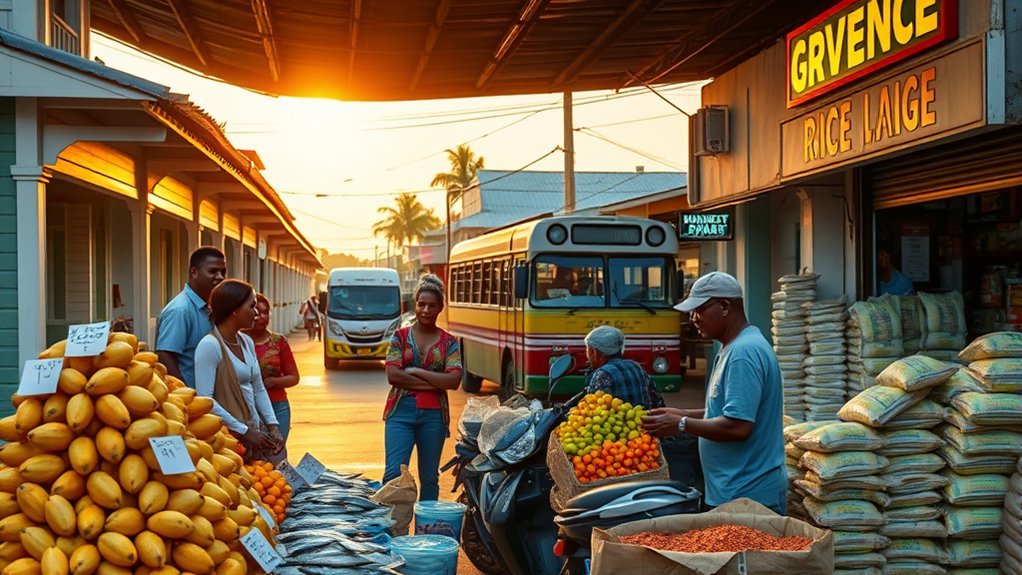
The cost of living in Suriname is lower than in the United States on broad 2026 cost indexes, but a realistic monthly budget depends heavily on rent, food choices, transport, healthcare, and imported purchases. A stripped-down essentials model can fall below $1,000, while broader current single-person estimates are higher.
Quick Answer
For one adult renting a one-bedroom in Suriname, a lean essentials model is about $613–$915 per month depending on location and whether you use Numbeo’s lower Asian-food-type or higher Western-food-type minimum basket. Broader 2026 estimates are higher: Expatistan estimates about $1,120 per month for one person, while Wise reports about $1,291. For general relocation planning, roughly $900–$1,300 per month is a safer starting range before healthcare, unusual travel, major setup costs, or a higher-spending lifestyle.
Key Takeaways
- A one-bedroom apartment averages about SRD 10,012 outside central areas and SRD 18,273 in the center, or about $265 and $483 at the conversion rate used in this guide.
- Numbeo’s minimum monthly food model is about SRD 8,653 for its Asian-food-type basket and SRD 11,797 for its Western-food-type basket.
- The resulting lean essentials subtotal is about $613–$697 outside the center or $832–$915 in the center before healthcare, clothing, entertainment, furnishings, and emergencies.
- Broader 2026 single-person estimates from Expatistan and Wise are about $1,120 and $1,291 per month, showing how strongly methodology and lifestyle affect the headline number.
- Reported average local pay is low relative to rent, so employment income and housing choices require careful comparison.
- Prices converted to U.S. dollars can change quickly because both inflation and the USD/SRD exchange rate move.
- Entry permission, residence permission, insurance, and tax obligations should be verified through official agencies before relocating.
Last updated: August 10, 2026. The core price examples use Numbeo’s Suriname data last updated April 27, 2026. USD conversions use the Central Bank of Suriname’s July 15, 2026 weighted-average electronic USD selling rate of SRD 37.832 per $1. The same date’s banknote selling rate was different, so treat every USD conversion as a dated planning estimate rather than a guaranteed exchange quote.
How Much Is the Cost of Living in Suriname Per Month?

Numbeo’s 2026 country index puts Suriname below the United States for overall cost of living, but that does not mean every product or service is cheaper. Rent and basic utilities can be relatively affordable, while imported groceries, fuel, electronics, taxis, private services, and international schooling can take a larger share of your budget.
The table below is a lean essentials scenario, not an official average cost of living. It combines reported one-bedroom rent, a modeled minimum food basket, utilities, internet, mobile service, and 44 one-way public-transport fares. It deliberately excludes several normal expenses listed below the table.
| Monthly category | Outside central areas | City-center plan |
|---|---|---|
| One-bedroom rent | SRD 10,012 / about $265 | SRD 18,273 / about $483 |
| Minimum food model: Asian food types | SRD 8,653 / about $229 | SRD 8,653 / about $229 |
| Minimum food model: Western food types | SRD 11,797 / about $312 | SRD 11,797 / about $312 |
| Basic utilities | SRD 1,416 / about $37 | SRD 1,416 / about $37 |
| Home internet | SRD 1,144 / about $30 | SRD 1,144 / about $30 |
| Mobile plan | SRD 953 / about $25 | SRD 953 / about $25 |
| 44 local one-way fares | SRD 1,031 / about $27 | SRD 1,031 / about $27 |
| Lean subtotal using Asian food model | SRD 23,209 / about $613 | SRD 31,471 / about $832 |
| Lean subtotal using Western food model | SRD 26,352 / about $697 | SRD 34,614 / about $915 |
Neither subtotal includes healthcare, insurance, household supplies, clothing, entertainment, furnishings, visa or residence costs, emergencies, travel, restaurant meals, or vehicle ownership. That is why the modeled essentials totals should not be presented as a universal monthly cost.

This daily devotional helps parents pray purposefully for their children through a full year of Scripture readings, reflections, and guided prayer prompts. Written to encourage faithful family discipleship, it offers practical, biblically grounded support for parents who want to shape their prayers around God's Word. A foreword by Sinclair B. Ferguson adds trusted theological insight and encouragement.

This compact Bible study guide helps readers explore Scripture with clarity and confidence. Written by Matt Whitman, it offers a fast, approachable companion for understanding key themes, context, and practical insights from the Bible. Its paperback format makes it easy to carry, reference, and use for personal study or group discussion.

This hardcover edition by Eric Metaxas offers a compelling look at the origins of the United States during the Colonial Period. It blends historical narrative with engaging storytelling, making it appealing for readers interested in American history, early nation-building, and the ideas that shaped the country. A strong choice for history enthusiasts, students, and anyone exploring the foundations of the nation.
Why Do Suriname Cost-of-Living Estimates Differ?
Different sources use different baskets and assumptions. Numbeo’s component prices can be used to build a lean renter scenario, while other services publish broader estimates intended to capture more normal personal spending. Current figures therefore span a wide range rather than producing one authoritative monthly number.
| 2026 estimate | Approximate monthly amount | How to read it |
|---|---|---|
| This guide: outside-center lean essentials | $613–$697 | One-bedroom plus minimum food model, utilities, internet, mobile, and 44 fares |
| This guide: city-center lean essentials | $832–$915 | Same model with city-center one-bedroom rent |
| Expatistan single-person estimate | About $1,120 | Broader estimate; Expatistan warns that it is based on only a few data points |
| Wise one-person estimate | About $1,291 | Broader common living-cost estimate including categories such as housing, food, and transport |
Warning: Suriname’s crowdsourced price sample is limited. Numbeo reported only 61 entries from five contributors during the 12 months behind its April 27, 2026 country data. Treat individual averages as reference points, collect current local quotes, and reconvert SRD prices before signing a lease or moving money.
Housing and Rental Prices in Paramaribo and Beyond
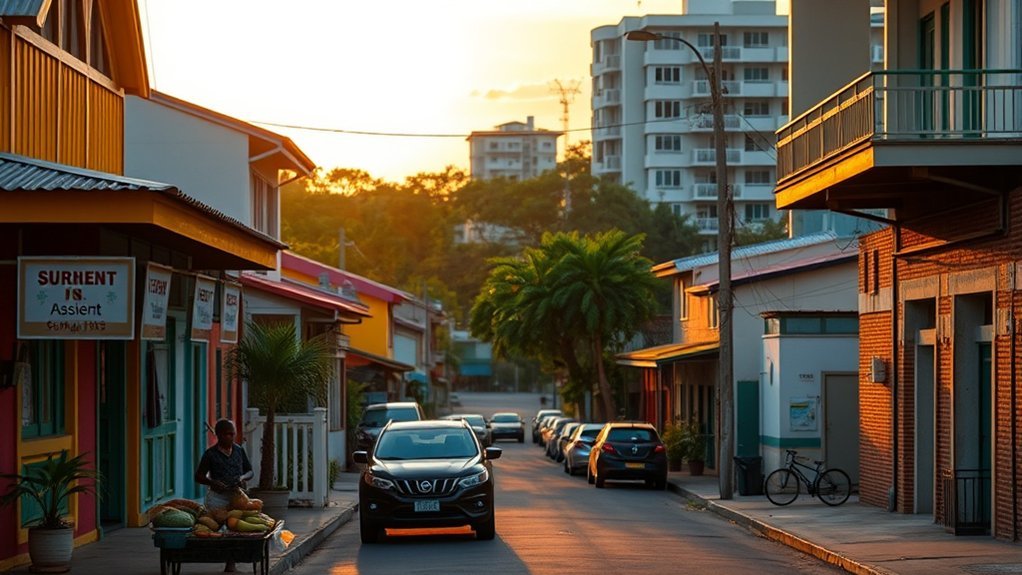
Housing is likely to be your largest monthly expense. Reported rents differ sharply by location, property condition, furnishings, security, and whether electricity, water, internet, or maintenance is included. For a more rent-focused breakdown, see our guide to average rent in Suriname.
| Property type | Average in SRD | Approximate USD | Reported range |
|---|---|---|---|
| One bedroom, city center | SRD 18,273 | $483 | SRD 10,500–28,132 |
| One bedroom, outside center | SRD 10,012 | $265 | SRD 7,502–13,000 |
| Three bedrooms, city center | SRD 43,257 | $1,143 | SRD 26,257–93,774 |
| Three bedrooms, outside center | SRD 18,853 | $498 | SRD 15,004–32,000 |
A lower average does not guarantee that a suitable home will be available at that price. Before signing, ask whether the rent includes utilities, appliances, air-conditioning, internet, parking, maintenance, security, and any association fees. Inspect the property and test water, electricity, locks, cooling equipment, and internet availability.
Pro Tip: Ask the landlord for recent utility bills and a written list of everything included in the rent. A cheaper apartment can become expensive if it has inefficient air-conditioning, unreliable equipment, or separately billed services.
Your initial housing cost may also include a security deposit, advance rent, temporary lodging, furniture, kitchen equipment, bedding, and connection fees. These are setup expenses rather than normal monthly costs.
The reported average rent for a one-bedroom outside central areas is almost equal to the reported average monthly net salary, which shows why housing choice matters so much for locally paid workers.
Food, Groceries, and Dining Out Costs
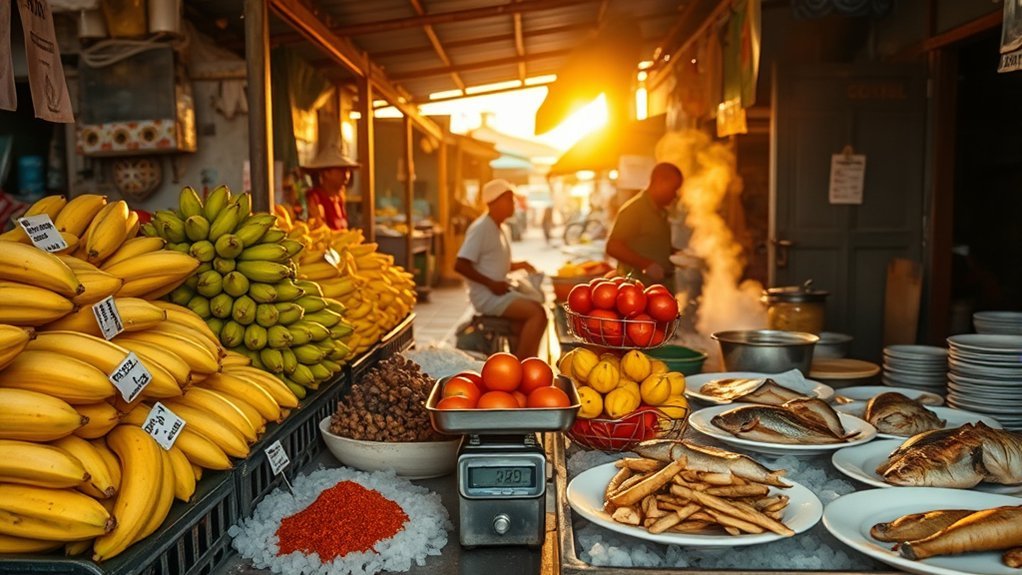
Food costs depend heavily on whether you cook with local ingredients or rely on imported brands. Numbeo publishes two modeled minimum 2,400-calorie food baskets. Its Asian-food-type basket is approximately SRD 8,653, or $229 per person per month, while its Western-food-type model is approximately SRD 11,797, or $312. These are nutritional spending models, not comfortable grocery allowances, and they exclude restaurant meals, household supplies, and personal preferences.
| Item | Average SRD price | Approximate USD |
|---|---|---|
| Inexpensive restaurant meal | SRD 375 | $9.91 |
| Three-course meal for two | SRD 2,000 | $52.87 |
| Milk, 1 liter | SRD 68.55 | $1.81 |
| Fresh white bread, 500 g | SRD 51.84 | $1.37 |
| White rice, 1 kg | SRD 52.51 | $1.39 |
| Eggs, 12 | SRD 113.17 | $2.99 |
| Chicken fillets, 1 kg | SRD 235.04 | $6.21 |
| Bananas, 1 kg | SRD 76.05 | $2.01 |
To control spending, compare local markets and supermarkets, plan meals before shopping, and check the price per kilogram rather than the package price. Imported foods can be more exposed to freight costs, exchange-rate changes, and supply shortages.
Transportation, Fuel, and Local Travel Expenses

Single public-transport fares are inexpensive in the reported data, but the reported monthly pass is comparatively costly. Your best option depends on route availability, commute frequency, and whether a pass is accepted on the services you use.
| Transport item | Average SRD price | Approximate USD |
|---|---|---|
| One-way local fare | SRD 23.44 | $0.62 |
| Monthly public-transport pass | SRD 3,375.86 | $89.23 |
| Taxi starting fare | SRD 112.53 | $2.97 |
| Taxi per kilometer | SRD 75.02 | $1.98 |
| Gasoline, 1 liter | SRD 42.93 | $1.13 |
At the reported prices, a monthly pass costs about the same as 144 individual one-way fares. Someone making roughly two trips per workday may spend less by paying per ride, although routes, transfers, operator rules, and actual pass availability must be checked locally.
Car ownership adds fuel, insurance, repairs, registration, parking, and depreciation. Taxi use can also become expensive when longer trips are charged by distance.
Utilities, Internet, and Mobile Phone Prices
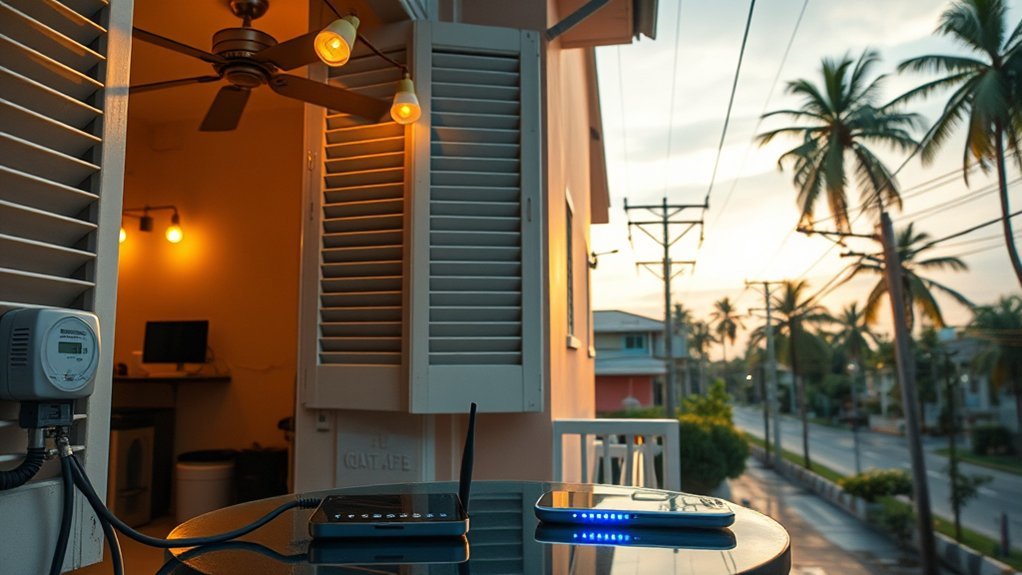
Utilities and connectivity are moderate in the reported data, but your actual bills will depend on household size, property efficiency, air-conditioning use, equipment, and service availability.
Typical Monthly Utility Bills
Basic electricity, cooling, water, and garbage service for an 85 m² apartment averages approximately SRD 1,416, or $37.42. The reported range is SRD 800–2,000, showing that usage and property differences matter.
Ask which services are metered separately and whether any utility is included in the rent. Request recent bills when possible instead of relying only on a national average.
Internet Plans and Speeds
Unlimited broadband advertised at 60 Mbps or more averages approximately SRD 1,144, or $30.24 per month. Confirm the available provider, installation cost, actual speed, contract length, equipment charge, and service reliability at the exact property.
Mobile Plans and Costs
A mobile plan with calls and at least 10 GB of data averages approximately SRD 953, or $25.20 monthly. Prepaid service may suit short stays, while residents with regular usage may prefer a contract. Compare coverage where you live and work rather than choosing by data allowance alone.
| Service | Typical SRD cost | Approximate USD |
|---|---|---|
| Basic utilities for 85 m² | SRD 1,415.68 | $37.42 |
| Unlimited broadband, 60 Mbps+ | SRD 1,143.91 | $30.24 |
| Mobile plan with calls and 10 GB+ | SRD 953.30 | $25.20 |
How Much Should You Budget for Healthcare in Suriname?
Healthcare costs cannot be reduced to one reliable national price for a doctor visit or private insurance plan. Your expense will depend on residency status, provider, treatment, medication, insurer, deductible, and whether care is received through a public, subsidized, or private arrangement.
The Pan American Health Organization’s Suriname profile describes a fragmented health system and notes inequalities in access, particularly between urban and coastal areas and the rural interior. Location therefore matters for anyone who needs regular treatment or specialist care.
The Suriname government’s basic healthcare insurance information says all residents, including foreigners who live in Suriname, have rights connected to the basic package. The government page lists minimum premium categories including SRD 165 for ages 21–59. Confirm the current premium, insurer, registration process, covered services, waiting periods, employer contribution, and reimbursement rules before relying on that figure for your personal budget.
Note: Obtain written insurance and provider quotes before relocating. Budget separately for medication, dental care, vision care, emergency treatment, travel for specialist services, and expenses not covered by your plan.
Childcare and School Costs
Families should research childcare and school fees separately because averages can hide large differences in schedule, language, curriculum, meals, transport, and registration charges.
Crowdsourced data reports approximately SRD 2,363, or $62 per month, for private full-day preschool or kindergarten. International primary-school tuition averages approximately SRD 66,084, or $1,747 per year, with a very wide reported range.
These figures should be treated cautiously. Contact schools directly for current tuition, application fees, uniforms, books, meals, transportation, deposits, and waiting-list information.

This hardcover book celebrates the art of gathering with inspiring table settings, thoughtful traditions, and practical ideas for hosting memorable meals. Written by Shea McGee, it offers beautiful design inspiration alongside approachable guidance for creating warm, welcoming spaces for family and friends. It's a charming resource for anyone who loves entertaining, home styling, and making everyday moments feel special.

This heartfelt memoir blends laugh-out-loud honesty with tender reflections on love, loneliness, and the unexpected healing power of rescue dogs. Isabel Klee shares her journey fostering pups in the city while navigating dating and self-discovery, offering an intimate, relatable story for readers who enjoy emotional, character-driven narratives. It is a warm, engaging read about opening your heart and finding connection in surprising places.

This compact electric kettle quickly boils up to 1 liter of water with 1500 watts, making it ideal for tea, French press coffee, and fast hot water needs. The BPA-free glass carafe features easy-to-read markings, a wide opening for simple cleaning, and a built-in mesh filter to help keep mineral scale out of your cup. With auto shutoff, boil-dry protection, and cordless serving, it offers a convenient and stylish way to heat water for smaller kitchens, dorms, and apartments.
Salaries, Employment Market, and Purchasing Power

Numbeo reports an average monthly net salary of approximately SRD 10,648, or $281 at the July 15 conversion rate used in this guide. This is a crowdsourced figure rather than an official national wage statistic, so it should not be used as a guaranteed salary expectation.
The reported average rent for a one-bedroom outside central areas equals about 94% of that salary. The reported city-center rent is approximately 172% of it. A person earning near the reported average may therefore need shared housing, family support, a lower-cost arrangement, or income above the average.
Pay can vary widely by industry, employer, qualifications, language ability, and work authorization. Before accepting a job, compare the net salary with rent, commuting, healthcare, and any obligations paid in foreign currency.
Foreign or remote income may provide more purchasing power, but it does not automatically grant permission to work, remove tax obligations, or establish legal residence. Verify those matters with the appropriate government offices and qualified tax advisers.
Practical Tips for Managing Money and Currency Exchange

On July 15, 2026 at 15:00, the Central Bank of Suriname published a weighted-average electronic USD selling rate of SRD 37.832 and a banknote selling rate of SRD 37.414. This guide uses the electronic selling rate for consistent USD comparisons. Exchange rates change, so every conversion should include its date and rate type.
Inflation also matters. In its February 11, 2026 Article IV consultation, the International Monetary Fund projected average consumer-price inflation of 12.3% for 2026. The General Bureau of Statistics also publishes monthly consumer-price updates; its site listed the June 2026 CPI sheet on July 22, 2026. A budget that works today may therefore need adjustment later in the year.
Build the working budget in SRD, date every exchange-rate conversion, and review recurring expenses whenever rent, utilities, food prices, or the currency moves.
- List expenses in SRD: Record rent, food, utilities, transport, insurance, debt payments, and savings in the currency in which each bill is paid.
- Use a dated conversion rate: Convert the total to USD or another currency for comparison, but keep the SRD amount as your operating budget.
- Separate fixed and flexible costs: Rent and insurance are harder to reduce quickly than dining, entertainment, or taxi use.
- Keep an emergency reserve: Set aside enough to cover essential expenses, medical needs, urgent travel, and exchange-rate changes.
- Review the budget monthly: Compare your actual spending with the plan and update prices rather than relying on old averages.
Moving, Entry, and Residence Costs
A visitor’s entry permission is not the same as permission to live or work in Suriname. Requirements depend on nationality, purpose of travel, length of stay, family status, and other circumstances.
The officially authorized Suriname eVisa and Entry Fee portal provides current entry information. The government’s residence-permit page explains that residence applications are handled through immigration authorities and lists the documents required for the procedures it describes.
For the residence-permit application procedure described on that government page, the required documentation includes proof of a US$150 payment, or the SRD equivalent at the Central Bank’s applicable daily rate. Your exact entry, MKV, residence, registration, and work requirements can differ by nationality and status, so confirm which procedure applies before paying.
Before moving, budget for expenses that are not included in normal cost-of-living averages:
- Visa, entry-fee, permit, registration, and document-processing charges
- Passport photos, certified copies, translations, and legalizations
- Flights, baggage, airport transportation, and temporary lodging
- Security deposit and advance rent
- Furniture, appliances, kitchen equipment, and bedding
- Internet installation, SIM cards, and utility connections
- Insurance premiums and initial medical needs
- School registration, uniforms, books, and transportation
Warning: Immigration, work-permit, tax, registration, and entry rules can change. Confirm your requirements through official Suriname authorities before buying nonrefundable travel or signing a long lease.
How to Create a Personal Suriname Budget
National averages are most useful as a starting point. A personal budget should reflect the exact home, neighborhood, household, food pattern, and lifestyle you expect to have.
- Get three current housing quotes. Record rent, deposit, included services, furnishings, and transportation distance.
- Price your normal food basket. Do not treat a modeled minimum food basket as your actual grocery budget. Include the brands, dietary needs, and imported items you really buy.
- Map your weekly travel. Compare individual fares, passes, taxis, and vehicle costs.
- Request healthcare and insurance quotes. Confirm whether the basic-care rules apply to you and add any private coverage or out-of-pocket spending you expect.
- Add setup and annual expenses. Include permits, renewals, school charges, travel, repairs, and replacement purchases.
- Add an emergency reserve. Keep enough flexibility for inflation, currency changes, and unexpected bills.
- Compare against broader benchmarks. If your plan is far below current one-person estimates, identify exactly which categories you are spending less on rather than assuming the difference will disappear.
- Recalculate in SRD. Update the exchange rate immediately before making a financial commitment.
Frequently Asked Questions
Is Suriname expensive to live in?
Suriname has a lower 2026 Numbeo cost-of-living index than the United States, especially when rent is considered. However, affordability depends on income and lifestyle. Imported goods, taxis, fuel, private services, healthcare choices, and currency changes can make a broad country comparison misleading for an individual household.
How much does it cost to live in Suriname per month?
A lean one-bedroom essentials model in this guide is about $613–$697 outside central areas or $832–$915 in the center, depending on which Numbeo minimum food model is used. Broader 2026 single-person estimates are about $1,120 from Expatistan and $1,291 from Wise. For general renter planning, about $900–$1,300 per month is a safer starting range, then adjust it to your actual lifestyle.
How much is rent in Suriname in 2026?
Numbeo’s April 2026 Suriname data reports average one-bedroom rent of about SRD 10,012 outside the city center and SRD 18,273 in the center. At the July 15 electronic selling rate used in this guide, those figures are approximately $265 and $483 per month.
What is the average monthly income in Suriname?
Crowdsourced April 2026 data reports an average monthly net salary of about SRD 10,648, equivalent to roughly $281 at the July 15, 2026 exchange rate used in this guide. It is not an official wage guarantee, and actual salaries differ by employer, field, qualifications, and work authorization.
Can a foreigner move to Suriname?
A foreigner may be able to move to Suriname after meeting the applicable entry, residence, registration, and work requirements. The process depends on nationality and purpose of stay. Check the officially authorized eVisa portal and government residence-permit instructions before making commitments.
Should I budget in U.S. dollars or Surinamese dollars?
Build the working budget in SRD because most local expenses are paid in that currency. Convert the total to USD only for comparison, record both the exchange-rate date and rate type, and recalculate before paying deposits, tuition, insurance, or other large expenses.
Is $500 per month enough to live in Suriname?
For most one-bedroom renters, $500 is below the lean essentials models in this guide. It may be possible only with unusually cheap or shared housing, very controlled food spending, limited transportation, and few additional expenses. Even outside-center rent plus Numbeo’s lower minimum food model is about $493 before utilities, internet, mobile service, healthcare, or emergencies.
Is $1,000 per month enough to live in Suriname?
It can be enough for a modest renter, especially outside the center, but it is not a universal comfortable-living figure. The lean essentials models in this guide range from about $613 to $915, while broader current one-person estimates exceed $1,100. Healthcare, dining, taxis, imported goods, travel, and setup costs can push a $1,000 budget higher.
Conclusion
Suriname can be relatively affordable for people who choose lower-cost housing, cook regularly, limit imported purchases, and avoid excessive taxi use. However, there is no single trustworthy monthly figure for every resident. A lean one-bedroom essentials calculation ranges from about $613 to $915 in this guide, while broader current one-person estimates are about $1,120–$1,291.
For general 2026 relocation planning, roughly $900–$1,300 per month is a more defensible starting range for one renter, with additional money needed for higher-cost housing, healthcare, frequent dining or taxis, imported goods, travel, and setup expenses. Build the working budget in SRD, collect current housing and insurance quotes, add relocation and emergency costs, and update the exchange rate before making a commitment.
Sources
- Numbeo: Cost of Living in Suriname — crowdsourced April 2026 rent, food-item, transport, utility, education, and salary estimates.
- Numbeo: Food Prices in Suriname — Asian-food-type and Western-food-type modeled minimum monthly food baskets.
- Central Bank of Suriname: Daily Exchange Rates — official USD/SRD rate data used for dated conversions.
- General Bureau of Statistics Suriname: Consumer Prices and Inflation — official monthly CPI publications.
- International Monetary Fund: 2025 Article IV Consultation — 2026 inflation and macroeconomic projections.
- Government of Suriname: Basic Healthcare Insurance — resident eligibility and listed minimum-premium information.
- Government of Suriname: Residence Permits — official residence-application guidance and documentation.
- Suriname eVisa / Entry Fee Portal — officially authorized VFS portal for current entry applications and information.
- Pan American Health Organization: Suriname Country Profile — healthcare-system structure and access context.
- Expatistan: Cost of Living in Suriname — broader current single-person budget benchmark with a limited-data warning.
- Wise: Cost of Living in Suriname — broader 2026 one-person living-cost benchmark and category breakdown.

Colgate Wisp Portable Mini-Brush Optic White delivers a quick, convenient clean and freshens breath without needing water or rinsing. Its dissolving freshening bead and Coolmint flavor help leave your mouth feeling refreshed while also removing surface stains for a brighter smile. The compact 24-count pouch is ideal for use at home, at work, or on the go.

This queen size 4 piece sheet set delivers a soft, breathable, and cooling sleep experience with a fitted sheet, flat sheet, and two pillowcases. Made from double brushed microfiber, it offers a silky feel, easy fit deep pockets, and comfort that works well for bedrooms, guest rooms, RVs, and vacation homes.

The Vornado 630 uses signature Vortex air circulation to move air throughout the room for more effective cooling and improved comfort. With three-speed manual controls and an adjustable tilt head, it lets you direct airflow and fine-tune performance for bedrooms, living rooms, or home offices. Built for whole-room circulation with efficient, high-velocity airflow, it also includes support backed by a multi-year replacement promise.
