
The cost to plug a tire is typically $20 to $50 at a shop, and some retailers, including Discount Tire, repair a repairable flat at no charge. A plug on its own is not an accepted permanent repair, though: the U.S. Tire Manufacturers Association (USTMA) says a plug alone is unacceptable and that the tire should be removed from the wheel and repaired with both a patch and a rubber stem or plug. DIY plug kits cost much less, but they are best treated as a short-term fix to get you to a shop.
Last updated: October 24, 2026. Shop prices vary by location and tire, so confirm the price before you hand over the keys.
Quick Answer
- Professional patch or plug repair: typically $20 to $50 (Lemonade, updated June 2026).
- Some retailers repair repairable flats for free; Discount Tire says it does, even if you did not buy the tire there.
- Specialized repairs can run $100 or more.
- Plug-only is not an accepted permanent repair; a patch plus a stem or plug, installed from inside the tire, is the standard.
- Damage to the sidewall or shoulder, or a puncture larger than 1/4 inch, generally means the tire cannot be repaired.
How Much Does It Cost to Plug a Tire?
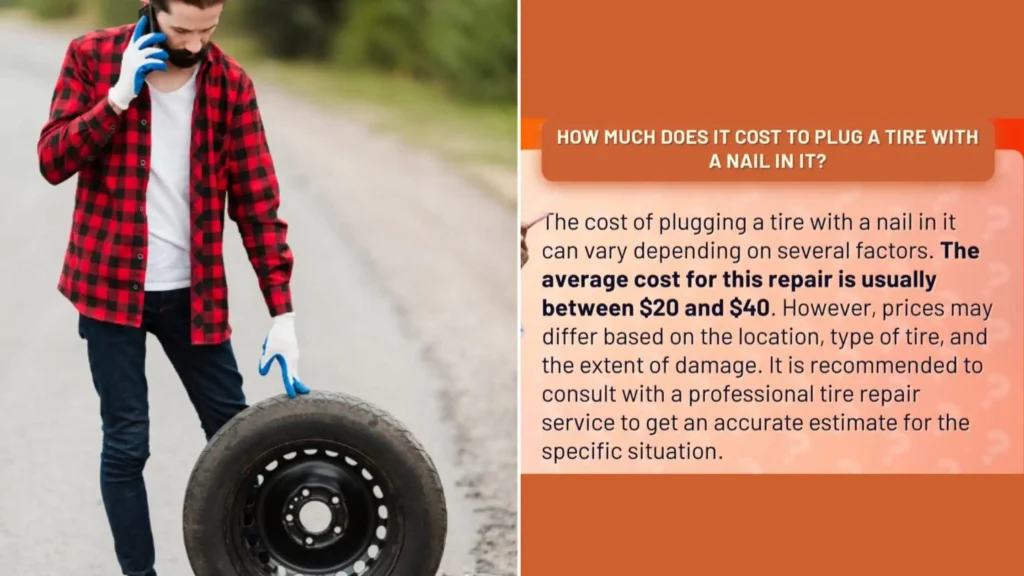
Most drivers pay between $20 and $50 for a professional repair, and the price is usually for one tire including labor and materials. Where you go matters: some tire retailers fix flats for nothing, while a dealership or a mobile service may charge more than the typical range.
| Repair option | Typical cost |
|---|---|
| Professional patch or plug repair | $20 to $50 (Lemonade) |
| Free flat repair at some retailers | $0 for a repairable puncture (for example Discount Tire) |
| Specialized repair | $100 or more (Lemonade) |
| DIY plug kit | Inexpensive; prices vary by brand and store |
What Changes the Price
- Type of shop: Chains, independent shops, dealerships, and mobile services price differently.
- Type and size of tire: Specialty and oversized tires can cost more to handle.
- Location: Labor rates differ between cities and regions.
- Extras: Balancing, a new valve stem, or a tire-pressure sensor service can be added to the bill.
DIY vs Professional Repair
| DIY plug kit | Professional repair | |
|---|---|---|
| Cost | Low; the kit is the main expense | $20 to $50 typical; free at some retailers |
| Method | Plug inserted from outside, tire stays on the wheel | Tire removed from the wheel, inspected inside, then patched and plugged |
| Result | Short-term fix, not an accepted permanent repair | Industry-accepted repair |
| Skill needed | Some mechanical skill and a jack, plus an air source | None |
Can a Punctured Tire Be Plugged or Repaired?
Not every puncture is repairable. USTMA guidance, which Discount Tire also cites, limits repairs to small injuries in the tread.
| Damage | Repairable? |
|---|---|
| Tread puncture 1/4 inch (6 mm) or smaller | Usually yes, if the tire passes an inside inspection |
| Puncture larger than 1/4 inch | No |
| Sidewall or shoulder damage | No |
| Damage that overlaps a previous repair | No |
| Internal damage from driving flat | No, the tire usually needs replacing |
Bead leaks, where air escapes between the tire and the rim, are a different problem. They are fixed by reseating or cleaning the bead and rim rather than by plugging the tread. If your wheel itself is damaged, see our guide to fixing a bent rim.
Plug vs Patch vs Patch-Plug
- Plug only: A rubber plug pushed into the hole from outside. USTMA calls a plug alone an unacceptable repair because it does not seal the inner liner.
- Patch only: Seals the inner liner but does not fill the puncture channel.
- Patch plus plug: A stem or plug fills the hole and a patch seals the inner liner. This combined repair is what USTMA describes as correct, and what Discount Tire calls the industry-approved way to return a repairable tire to service.

DIY Tire Plugging as a Temporary Fix
If you are stuck with a nail in the tread, a plug kit can seal the hole well enough to reach a shop. Treat it as temporary and drive gently until a professional inspects and repairs the tire from the inside.
Tools and Materials
- Tire plug kit with plugs, a reamer, and an insertion tool
- Rubber cement, if your kit includes it
- Pliers to remove the object
- Jack and lug wrench
- Air compressor or pump, and a tire-pressure gauge
Step-by-Step
- Find the puncture and make sure it is in the tread, not the shoulder or sidewall.
- Pull the object straight out with pliers.
- Push the reamer in and out to clean and shape the hole.
- Thread a plug through the insertion tool and coat it with cement if your kit calls for it.
- Push the tool in firmly until only a short piece of the plug is left outside, then pull the tool straight out.
- Trim the plug close to the tread following the kit instructions.
- Inflate to the pressure on the driver’s door jamb sticker.
- Brush soapy water over the area and watch for bubbles.
- Book a professional inspection and a proper patch-plug repair.
Professional Tire Repair Services
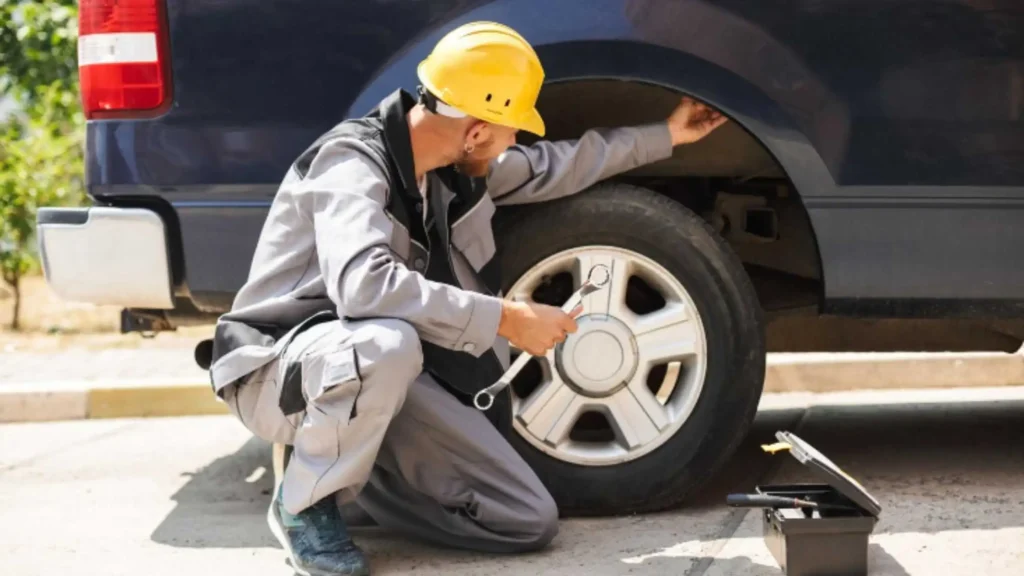
A shop removes the tire from the rim, checks the inner liner for hidden damage, then installs a patch with a stem or plug. That inspection is the main reason professional repair is worth the money, because a nail can cause internal damage you cannot see from outside.
How to Choose a Repair Provider
| Factor | What to ask |
|---|---|
| Method | Will the tire be dismounted and repaired with a patch plus plug from the inside? |
| Price | Is the repair free or a flat fee, and are balancing or valve work extra? |
| Warranty | Is the repair guaranteed, and for how long? |
| Convenience | Do hours and location fit your schedule? |
When to Repair or Replace a Tire
Repair when the damage is a small tread puncture and the tire passes inspection. Replace when the damage is in the sidewall or shoulder, the hole is over 1/4 inch, the tire has been driven flat, or an earlier repair would overlap the new one. Also replace tires that are worn to 2/32 inch of tread or less, the minimum legal depth in most U.S. states, since repairing a worn-out tire does not make it safe. If you are unsure, USTMA’s advice is to take the tire out of service.
A flat can also come from something other than a puncture. For general flat-tire costs, including replacement, see how much it costs to fix a flat tire.
Additional Costs to Consider
Wheel Balancing
Some shops balance the wheel after a repair, and some charge for it. Ask whether it is included before you approve the work.
Tire Disposal Fees
If the tire cannot be repaired and you buy a new one, a state waste-tire fee may apply. One state-by-state summary lists $2.50 per tire in New York and $1.75 per tire in California. Fees change, so ask the shop for the exact amount on your quote.
How to Avoid Punctures
- Check pressure monthly with a reliable gauge when the tires are cold, and inflate to the figure on the door jamb sticker.
- Look over each tire for cracks, bulges, and embedded objects, and check tread depth.
- Rotate tires on the schedule in your owner’s manual.
- Do not forget the spare.
- Steer around debris and avoid potholes where you can.
More vehicle repair costs: flat tire repair costs, bent rim repair costs, bumper repair costs.
Frequently Asked Questions of How Much Does It Cost to Plug a Tire?
How Much Should a Tire Plug Cost?
A professional patch or plug repair typically costs $20 to $50, according to Lemonade. Some retailers, such as Discount Tire, repair repairable flats for free.
Is a Tire Plug a Permanent Repair?
No. USTMA says a plug alone is an unacceptable repair. A permanent repair means dismounting the tire and fixing it from the inside with a patch plus a stem or plug.
How Big a Puncture Can Be Repaired?
USTMA and Discount Tire both say a puncture can be no more than 1/4 inch (6 mm) across, and it must be in the tread rather than the shoulder or sidewall.
Does Discount Tire Plug Tires for Free?
Discount Tire says it offers free flat repair for repairable punctures, even if you did not buy the tire there. Damage in the shoulder or sidewall is not repairable, so confirm details with your local store.
Can I Drive on a Plugged Tire?
A DIY plug is meant to get you to a shop, so drive gently and have the tire inspected soon. A tire that has been properly patched and plugged from the inside can return to normal service.
Should I Plug a Tire Myself?
Only as an emergency measure. A plug kit costs little, but it skips the inside inspection that catches hidden damage, so follow it with a professional repair.
Conclusion
Expect to pay about $20 to $50 to have a punctured tire repaired, or nothing at a retailer that fixes flats for free. Skip the plug-only shortcut for anything beyond a short drive to the shop, and replace the tire if the damage is in the sidewall or shoulder or the hole is too large.
Sources: USTMA tire repair basics; Discount Tire flat repair guide; Lemonade tire repair cost; a state-by-state summary of waste tire fees.


1 thought on “How Much Does It Cost to Plug a Tire? (2026 Prices)”
Pingback: How Much Does Mobile Tire Repair Cost?