
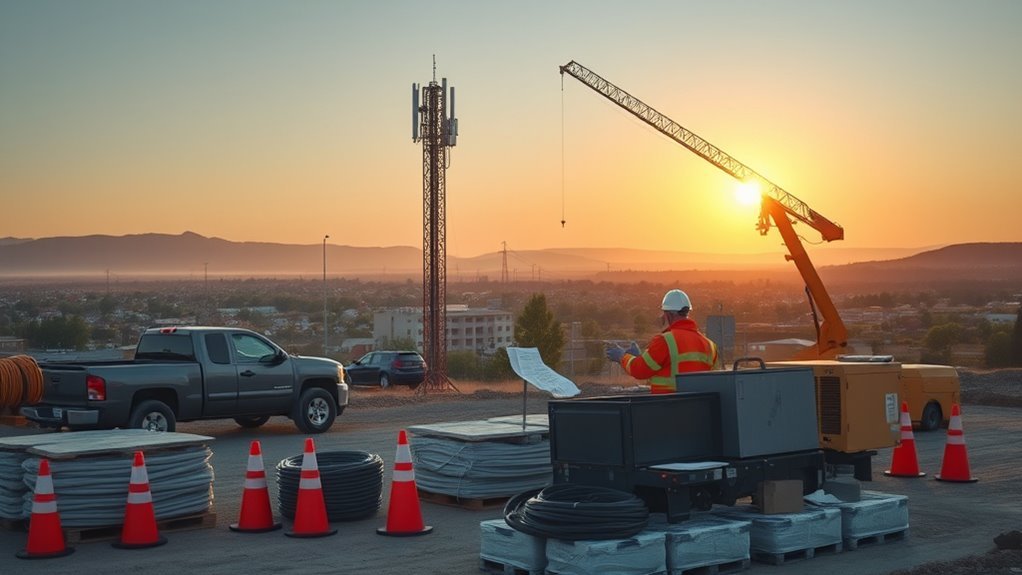
How Much Does a Cell Tower Cost?
A cell tower can look like one structure, but the real cost sits in the site work, permits, engineering, utilities, and lease terms behind it. You’ll usually spend about $250,000 to build a new cell tower, but total cost can range from roughly $150,000 to more than $1 million. The final number depends on tower type, site conditions, access, zoning, and equipment needs.
Quick Answer
- A new U.S. cell tower typically costs $150,000 to more than $1,000,000, with many projects planned around $250,000.
- Pre-development often runs about $40,000 to $60,000, and site construction can take a large share of the total budget.
- Guyed towers usually cost less than monopoles, lattice towers, and stealth towers.
- 5G upgrades and new 5G builds can cost much more when they need stronger structures, more equipment, and extra engineering.
- Land leases can generate monthly income, but rates depend heavily on carrier demand, location, and contract terms.
Key Takeaways
- Budget for more than the tower steel because site work and permits can change the final cost fast.
- Choose the tower type early because guyed, monopole, lattice, and stealth designs have very different cost ranges.
- Review zoning, environmental, and Federal Communications Commission rules before you commit to a site.
- Model lease income with conservative terms because carrier demand and contract rights drive long-term value.
- Add contingency funds for utilities, access roads, soil issues, structural upgrades, and approval delays.

This hardcover cookbook offers fast, approachable recipes designed for busy days and low-energy nights. Caroline Chambers focuses on simple, flavorful meals that help you get dinner on the table without overthinking it. It's a practical pick for home cooks who want quick weeknight inspiration and minimal-fuss cooking.

This daily devotional helps parents pray purposefully for their children through a full year of Scripture readings, reflections, and guided prayer prompts. Written to encourage faithful family discipleship, it offers practical, biblically grounded support for parents who want to shape their prayers around God's Word. A foreword by Sinclair B. Ferguson adds trusted theological insight and encouragement.

This heartfelt memoir blends laugh-out-loud honesty with tender reflections on love, loneliness, and the unexpected healing power of rescue dogs. Isabel Klee shares her journey fostering pups in the city while navigating dating and self-discovery, offering an intimate, relatable story for readers who enjoy emotional, character-driven narratives. It is a warm, engaging read about opening your heart and finding connection in surprising places.
How Much Does a Cell Tower Cost?
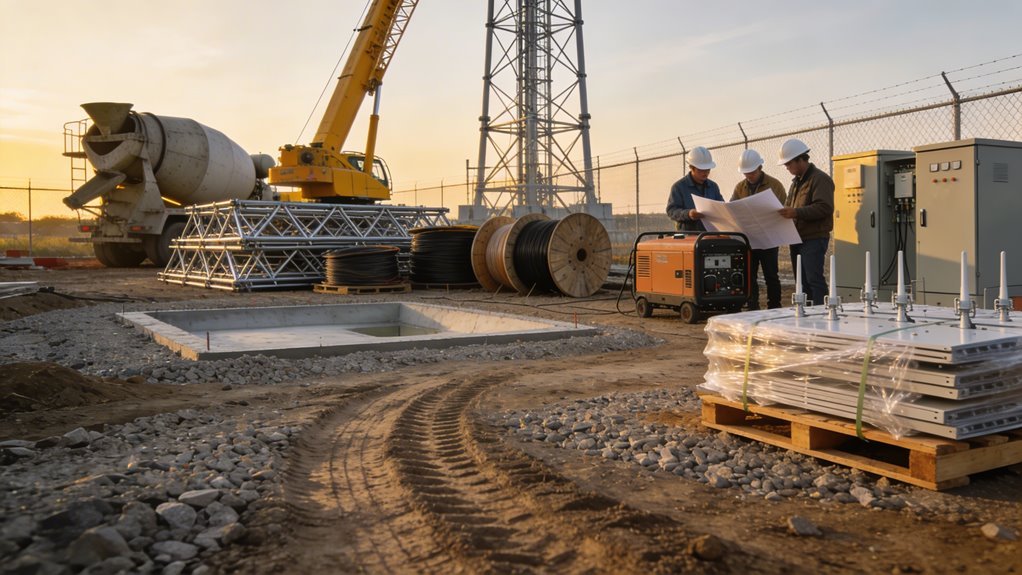
A new cell tower in the U.S. often costs about $250,000, with many real-world projects ranging from roughly $150,000 to more than $1,000,000. That range gives you a practical starting point for early planning.
Pre-development can consume about 20% of the budget, or about $40,000 to $60,000. This stage covers site checks, design work, legal review, zoning filings, and early approvals.
Direct construction materials often add another $50,000 to $75,000. The largest outlay usually comes from site construction, which can take a major share of total spending.
Site construction may include grading, foundations, access roads, fencing, utilities, grounding, and equipment pads. If you need the lowest-cost structure, guyed towers usually offer the most economical build. At the higher end, stealth towers cost more because they need custom concealment work.
Comparable builds in lower-cost international markets may cost far less than U.S. projects. Treat those figures as broad context, not a direct benchmark for a U.S. tower budget.
What Affects Cell Tower Cost Most?
Total budgets can range from about $150,000 to more than $1,000,000. Your biggest cost drivers are usually tower type, site construction scope, utilities, access, and regulatory complexity.
Pre-development alone can take about 20% of your budget before crews start work. This phase matters because poor site selection can create expensive design changes later.
The largest line item often comes from site construction. This includes grading, foundations, access roads, utility connections, fencing, grounding, and other ground work.
Regulatory compliance can expand both cost and timeline through zoning hearings, permits, and Federal Communications Commission (FCC) requirements. Delays can raise carrying costs and affect your financing plan.
Pro tip: Price the site before you price the tower because poor access, weak soil, and utility gaps can change the budget more than the structure itself.
Realistic contingency planning, faster approvals, and a site strategy that limits civil work can protect your capital from day one.
Which Cell Tower Type Costs More?
Which tower type costs more depends mostly on structure, height, land needs, concealment, and equipment loading. Each design solves a different coverage problem.
If you want the cheapest path to coverage, guyed towers often cost less than other tall tower types. They need more land for guy wires, so they work best on open rural sites.
Monopoles usually sit in the middle because they need less land and fit tighter locations. They commonly serve highways, commercial areas, and suburban corridors.
Lattice towers often cost more because they use more steel and support heavier equipment loads. Stealth towers can cost the most because custom concealment adds design, fabrication, and installation work.
- Guyed towers: lower cost, strong height potential, best suited for open rural land
- Monopoles: moderate cost, compact footprint, and common along highways
- Lattice towers: higher capacity and height, but also a heavier investment
- Stealth towers: disguised as trees, flagpoles, or other structures, with a premium for custom work
If you’re deploying 5G, plan for higher structural review costs than a simple equipment swap. New antennas, radios, cabling, power needs, and backhaul can raise the total.
Which Permits Increase Cell Tower Costs?
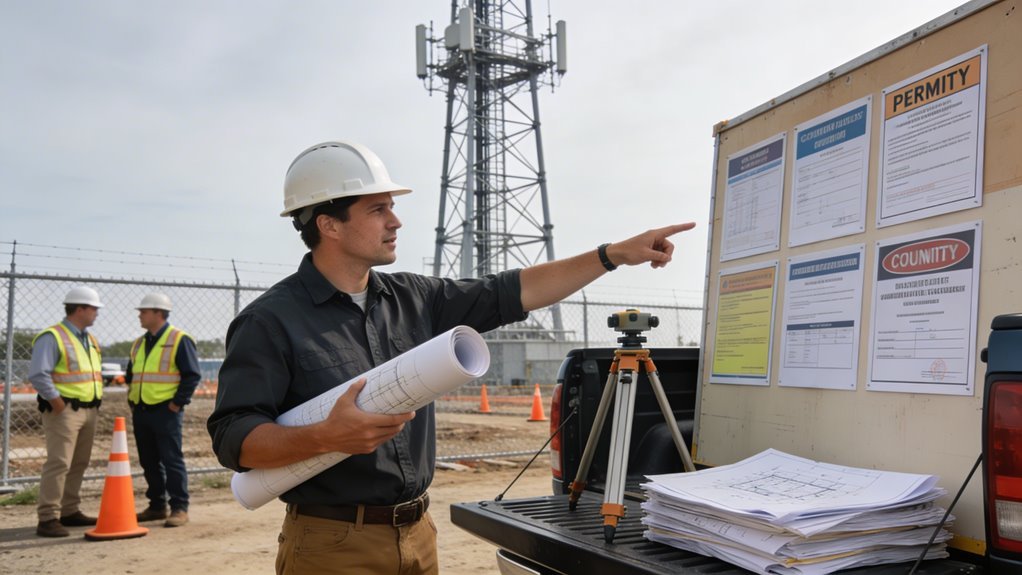
Permit costs move a lot from one tower project to the next. You’re often dealing with local land use rules, building permits, environmental review, FCC filings, and community notice requirements.
Local zoning rules usually affect the project first. A city or county may require hearings, setback reviews, design documents, public notices, and special-use approval.
If your parcel triggers environmental review, expect more cost and time. Sensitive terrain, protected habitat, wetlands, flood zones, or nearby historic sites can add review steps.
| Permit category | Typical cost effect |
|---|---|
| Zoning and land use | Often adds thousands |
| Environmental assessments | Several thousand more |
| FCC compliance | Extra permit and review costs |
FCC compliance can add engineering support, administrative work, and review costs. Building and safety permits may range from a few hundred dollars to several thousand dollars, based on tower height, loading, and local code.
Warning: Don’t assume a buildable parcel qualifies for a tower because zoning, setbacks, aviation review, and environmental rules can still block or delay approval.
A site near a historic property can drive costs higher through specialized reviews and stricter land use scrutiny. Map permit risk early so you can protect your budget.
How Long Does a Cell Tower Take to Build?
After the building permit is issued, physical construction often takes one to two months. Your total schedule usually runs longer because zoning reviews and approvals happen before crews arrive.
You also need to account for site prep. Grading, access work, utility coordination, and foundation construction can change labor hours, equipment use, and timeline risk.
Once construction starts, activation timing depends on tower type, height, equipment, power, backhaul, and local code requirements. Some small-cell projects can move faster because they need less civil work.

Post-it Super Sticky Easel Pads are designed to keep ideas visible and organized during meetings, training sessions, brainstorming, and project planning. The large premium paper resists marker bleed-through and sticks securely to many surfaces, then repositions without surface damage. A sturdy backcard and portable handle make them easy to move between rooms and use with most easel stands.

Die With Zero offers a fresh perspective on personal finance by encouraging readers to use money intentionally to create memorable life experiences instead of simply accumulating wealth. Written by Bill Perkins, this book combines practical guidance with a motivating philosophy to help readers align spending, saving, and life goals for a more fulfilling future.

The Honeywell QuietSet Whole Room Tower Fan delivers quiet, customizable cooling for bedrooms, living rooms, offices, and other medium to large spaces. With eight speed settings, oscillation, a remote control, and an auto shut-off timer, it helps improve air circulation and comfort without taking up much floor space. Its convenient carrying handle and remote storage make it easy to move and use throughout the home.
Permitting And Approvals
Before crews mobilize, permitting and approvals usually determine the real schedule and cost. You can’t compress this phase until you clear zoning challenges and regulatory compliance.
Local zoning approval drives feasibility. FCC and American National Standards Institute (ANSI) radio-frequency exposure rules also shape filings and compliance work.
Setback requirements from homes can depend on tower height, site layout, and local code. Once permits are issued, the operational build window often takes one to two months.
Construction And Activation
Once permits are in hand, the project shifts from entitlement risk to field execution. The build schedule often compresses to one to two months, with many construction phases finishing in under three months.
Plan for a small specialized crew, with site preparation, foundation work, and tower erection driving labor and equipment costs. Tower height, setbacks, and distance from homes can extend sequencing and affect material needs.
FCC and ANSI radio-frequency exposure compliance should be confirmed before activation. Power, grounding, backhaul, and equipment testing also need final checks.
| Phase | Duration | Cost driver |
|---|---|---|
| Site preparation | 1 to 2 weeks | Grading, access |
| Foundation | 1 to 2 weeks | Concrete, rebar |
| Erection | About 1 week | Crane, steel |
| Compliance | Ongoing | Testing, documentation |
| Activation | Days | Power, backhaul |
How Do Land, Utilities, And Site Access Change The Budget?
Land, utilities, and access can change your cost before you order tower materials. A remote parcel may need a road, clearing, drainage work, power extension, and backhaul access.
Soil conditions also matter. Weak soil, rock, slopes, or drainage problems can require a different foundation design and more engineering time.
Urban sites can cut road costs but raise other expenses. Tight staging areas, traffic control, crane limits, rooftop structural checks, and neighborhood review can increase the total.
Note: A low land cost does not always mean a low project cost if the site needs major access, power, or foundation work.
Can a Cell Tower Lease Make Money?
If you control the right site, your monthly income can range from modest rent to several thousand dollars. The final amount depends on traffic density, zoning limits, carrier demand, and nearby coverage gaps.
Some leases may generate $100 to $5,000+ per month, but strong sites can command better terms. Don’t treat broad averages as a guarantee for your property.
Careful lease negotiation can improve revenue potential over time. Review escalation clauses, renewal options, easements, access rights, equipment limits, and co-location rights before signing.
When carriers upgrade equipment, your site’s revenue potential may increase if the lease allows more antennas, radios, or tenants. A long-term contract can last 25 to 30 years, so small terms can create large financial differences.
What Should You Budget Before You Build?
Before you build, create a budget that separates pre-development, construction, equipment, utilities, and contingency. This makes it easier to compare sites and avoid false savings.
You should also budget for legal review and engineering review. Lease rights, easements, title issues, access rights, and structural capacity can affect the project for decades.
- Pre-development: site checks, drawings, zoning, permits, and legal review
- Construction: grading, foundations, tower erection, fencing, and equipment pads
- Utilities: power, grounding, backhaul, meters, and trenching
- Compliance: FCC-related review, documentation, safety checks, and testing
- Contingency: soil issues, delays, design changes, and added civil work
Frequently Asked Questions
How Much Does It Cost to Build a 5G Tower?
A 5G tower project can exceed $1 million when it needs heavier equipment, stronger structural support, new utilities, and complex permitting. Small cells and upgrades may cost less because they often use existing poles, buildings, or shorter structures.
How Much Does AT&T Pay to Put a Cell Tower on Your Property?
AT&T lease payments can vary widely by site value, market demand, lease length, access rights, and local coverage needs. Some property owners may see monthly offers in the low hundreds, while stronger sites can reach several thousand dollars per month.
Can You Legally Build Your Own Cell Tower?
Yes, you can legally build your own cell tower if you meet zoning rules, secure construction permits, address site safety, and follow FCC-related requirements. You also need carrier interest, compliant siting, utility access, and a realistic maintenance plan.
Do You Get Paid for Having a 5G Cell Tower on Your Property?
Yes, you can get paid through a tower lease agreement if a carrier or tower company wants your site. Your payment depends on location, demand, lease terms, upgrade rights, and how many tenants the structure can support.
Is A Cell Tower A Good Investment For A Landowner?
A cell tower lease can be a strong income source if your site fills a real coverage need. Review the long-term contract carefully because easements, renewals, rent increases, and access rights can affect your property value.
Conclusion
A cell tower budget depends on far more than the tower itself. Tower type, site work, permitting, utilities, and schedule risk can push the final cost well above the early estimate.
Start with a site study, zoning review, utility check, and conservative cost model before you commit capital. If you’re a landowner, compare lease income against long-term property rights before you sign. A careful plan helps you control capex, reduce delays, and judge whether the project can pay off over time.
References
- Tower Construction and Placement — Federal Communications Commission

This compact Bible study guide helps readers explore Scripture with clarity and confidence. Written by Matt Whitman, it offers a fast, approachable companion for understanding key themes, context, and practical insights from the Bible. Its paperback format makes it easy to carry, reference, and use for personal study or group discussion.

This silky, lightweight K-beauty face primer visibly smooths skin and minimizes the appearance of pores for a refined, velvety look. Its soft-matte finish helps reduce shine and creates a smooth base that supports longer-lasting makeup wear without feeling heavy. Suitable for all skin types, it works well under powder, liquid, or cream foundation and is designed to glide on evenly for a flawless finish.

M. Asam Magic Finish Make-up Mousse delivers a silky, lightweight finish that helps conceal uneven skin tone for a natural matte look. Its buildable coverage can be layered from light to medium, while the mousse formula blends easily with a brush, sponge, or fingers. Designed for all skin types, it adapts to different tones and is formulated as a vegan, cruelty-free clean beauty foundation.
