
Booking one hotel room for three adults does not always mean paying an extra-person fee. Some room rates include every guest up to the room’s stated occupancy, while other rates are based on one or two adults and charge more for a third. The exact cost depends on the property, room type, bedding, rate plan, and guest ages.
Quick Answer
A hotel room for three adults may cost the same as a room for two, or the hotel may add a nightly third-person charge. There is no standard U.S. fee. Enter all three adults when searching, confirm the room’s maximum occupancy and bedding, and compare the complete stay total before paying.
Key Takeaways
- A third-adult fee is property-specific. It may be $0 or a separate nightly charge.
- A room’s maximum occupancy does not guarantee that the listed rate includes every adult.
- Rollaway beds, breakfast packages, parking, and optional services can increase the total.
- Enter the correct guest count before comparing hotels or vacation rentals.
- The final booking page and confirmation should identify the selected occupancy and the amount due.
What to Expect When Booking Hotel Rooms for Groups

Hotel pricing for groups depends on more than the number of beds. A room with two queen beds may physically sleep four people, but the rate may still be based on one or two adults. Another hotel may include all registered guests up to the room’s limit without adding an extra-person fee.
Always enter the correct number of adults and children in the booking form. The search results should then show rooms that permit your party size and rates calculated for that guest count.
For a larger group, do not assume that ten travelers automatically need four or five rooms. Divide the group according to the maximum occupancy of each available room, then check whether each rate includes every adult assigned to it.
For example, a hotel with four-person rooms may be able to accommodate ten guests in three rooms. A property that limits each selected room to two guests would require five rooms. Bedding preferences, privacy, accessibility, and whether people are willing to share beds can also change the number of rooms needed.
Pro Tip: Run the search twice—once for two adults and once for three adults in the same room. The difference between the final totals will show whether that property is applying an occupancy-related price increase.
Comparing Costs: Hotels vs. Vacation Rentals for Groups
A hotel is not automatically more expensive than a vacation rental, and a vacation rental does not always have one flat price. The better option depends on the total cost for the same dates, number of guests, cancellation terms, and needed amenities.
Vacation-rental platforms may allow hosts to charge an extra fee after a selected number of guests. A rental can also include cleaning fees, platform fees, pet fees, deposits, and taxes. Hotels may have extra-person, parking, resort, destination, or rollaway-bed charges.
Cost Efficiency Analysis
Compare the complete stay total rather than the first nightly rate shown. Use the same guest count, dates, and cancellation flexibility for every option.
| Cost to Compare | What to Check |
| Guest pricing | Whether the rate changes when the third adult is entered |
| Mandatory charges | Resort, destination, cleaning, service, or other required fees |
| Optional costs | Parking, breakfast, rollaway bed, pet charges, or trip protection |
| Cancellation terms | Refund deadline, deposit requirements, and change restrictions |
| Cost per traveler | Complete stay total divided by the number of paying guests |
A rental may provide better value when a group will use the kitchen, laundry, living room, or several bedrooms. A hotel may be the better deal when breakfast, housekeeping, loyalty benefits, flexible cancellation, or a central location is included.
Space and Amenities Comparison
Space matters, but compare usable sleeping arrangements rather than only the listed guest limit. A hotel room advertised for four guests may contain two shared beds and no sofa bed. A rental listed for six may use a pullout sofa or bunk beds for part of that capacity.
Review the exact bed configuration and ask whether an extra bed is permitted. Some rooms cannot accept a rollaway because of their size or local safety requirements. Other hotels allow a rollaway but charge a separate nightly amount.
Also compare amenities that affect the trip budget:
- Kitchen or kitchenette
- Complimentary breakfast and the number of guests covered
- Parking
- Laundry access
- Housekeeping frequency
- Common living space
- Resort or destination amenities
- Public transportation access
Identifying Hidden Fees When Booking Extra Guests in Hotels
The best time to identify an extra-person charge is before completing the reservation. Search with three adults entered, select the exact room, and read the rate details and price breakdown on the review page.
Since May 12, 2025, the Federal Trade Commission’s Rule on Unfair or Deceptive Fees has required covered short-term-lodging sellers to display the total price including mandatory fees they know and can calculate upfront. The rule covers hotels, vacation rentals, travel platforms, and travel agents.
Note: The FTC rule does not make hotel fees illegal. It regulates how covered prices and charges are presented. Taxes, optional services, and costs caused by choices made later in the transaction may initially be shown separately, but the final amount must be displayed before payment.
Extra Guest Fees Explained
An extra-guest fee is a charge tied to the number or age of the people occupying a room. A property may base its advertised rate on single or double occupancy even when the room’s physical occupancy limit is higher.
There is no standard nationwide amount. For example, one current Hyatt property lists a $10 nightly charge for each person after the first two, while another lists a $30 charge for each additional adult. These are property examples, not national averages.
Walt Disney World currently states that additional per-adult charges may apply when more than two adults occupy certain Disney Resort rooms. Travelers should check the price shown for their specific resort, dates, room, and package.
Booking Policies Overview
Before booking, review five separate details:
- Maximum occupancy: The greatest number of people permitted in that room.
- Rate occupancy: The number of adults included in the quoted price.
- Bed configuration: The beds already provided in the room.
- Extra bedding: Whether a rollaway, cot, or sofa bed is available and whether it costs more.
- Guest-age rules: The age at which the property treats a guest as an adult for pricing.
Adult-age definitions vary. One hotel policy treats guests age 12 and older as adults, while Choice Hotels describes different child and bedding rules at participating properties. Never assume that an airline, attraction, or restaurant age category also applies to the hotel.
Hidden Charges Awareness
Mandatory charges that are known and calculable should appear in the displayed lodging total under the FTC rule. However, the bill can still change when you add a guest after booking, request optional bedding, park a vehicle, damage the room, use paid amenities, or make other choices that were not part of the original reservation.
Check for the following before paying:
- Correct number of adults and children
- Extra-person charge
- Rollaway, cot, or crib charge
- Resort or destination fee
- Parking fee
- Breakfast coverage
- Pet fee
- Deposit or authorization hold
- Taxes
- Cancellation and change restrictions
Understanding Extra Guest Fees in Hotels
An extra-person charge does not necessarily pay for an extra bed. It may reflect the property’s rate structure, breakfast entitlement, all-inclusive food and drinks, additional linens, amenity access, or other occupancy-related costs.
This distinction matters when a room is sold as suitable for three adults but contains only one king bed. The hotel might allow three registered adults while providing no additional sleeping surface. A rollaway may be unavailable, restricted to certain room categories, or priced separately.
Packages can also change the calculation. A standard room-only rate may include the third adult without a surcharge, while a breakfast or all-inclusive package may cost more because another person receives meals or activities.
Use this formula when reviewing a stay:
Three-adult stay cost = final displayed lodging total for three guests + selected optional services + charges incurred during the stay.
Do not add a mandatory resort, destination, or cleaning fee a second time if it is already included in the displayed total.
Illustrative Cost Examples
The following examples show how the arithmetic works. They are not national averages or quotes from a specific hotel.
- No extra-person charge: A $180 nightly room remains $180 before taxes and selected extras.
- $25 third-adult charge: $180 + $25 = $205 per night. Over three nights, the occupancy charge adds $75.
- $30 third-adult charge plus a $20 rollaway: $180 + $30 + $20 = $230 per night before taxes and other selected services.
Compare the final stay total, not only the base nightly rate. A lower advertised rate can become the more expensive option after the guest count, bedding, parking, and cancellation terms are selected.
Avoiding Unexpected Hotel Charges
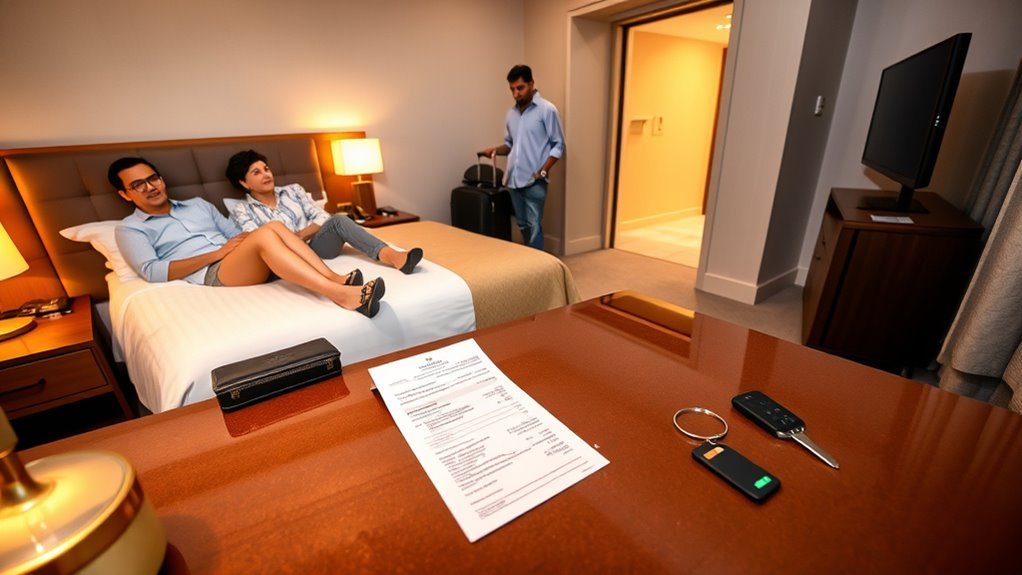
You can reduce booking surprises by following a consistent review process:
- Search for the correct destination and dates.
- Enter all three adults before viewing room prices.
- Choose a room whose listed maximum occupancy permits three adults.
- Confirm the number and type of beds.
- Read the rate rules and price breakdown.
- Check whether breakfast or package benefits cover two guests or all three.
- Review optional rollaway, parking, and pet charges.
- Save the confirmation email and a copy of the final price breakdown.
Warning: Do not book a room with a maximum occupancy of two and plan to add a third overnight guest secretly. The hotel may require a different room, an additional room, guest registration, or payment under its property policy. Occupancy limits may also restrict whether extra bedding can be placed in the room.
If the rate shown by a third-party booking site differs from the hotel’s own site, compare the same room type, guest count, dates, cancellation terms, and included benefits. A rate for two adults is not equivalent to a rate for three adults.
Planning Ahead to Avoid Hotel Fees for Group Travel
Planning ahead gives you more room types and pricing options. Rooms with two beds, sofa beds, or larger occupancy limits may sell out before standard rooms.
Always verify the room’s guest limit, bed setup, and final price for the full travel party before booking.
If the number of guests changes after booking, update the reservation before arrival. Adding another person can change the price, room eligibility, package benefits, or bedding needs. Disney, for example, recommends modifying the travel party in advance and notes that eligibility and additional charges may apply.
For several rooms, compare regular online rates with a quote from the hotel’s group-sales department. Ask whether the proposed rate includes:
- Every adult assigned to each room
- Breakfast or meal packages
- Parking
- Resort or destination fees
- Meeting or common space
- Deposits and cancellation penalties
- Complimentary rooms or upgrades tied to the block
Family-friendly and extended-stay hotels may reduce the total cost through kitchenettes, included breakfast, laundry access, or rooms designed for more occupants. However, those features should be compared against the complete price rather than assumed to be free.
Frequently Asked Questions
What happens if three people stay in a two-person hotel room?
First check what “two-person” means. If two is the room’s strict maximum occupancy, the hotel may require a different room or another reservation. If the room permits three guests but the price is based on two adults, the hotel may register the third adult and adjust the rate. Contact the property rather than exceeding the listed limit.
Why did a $150 hotel room cost more at checkout?
The first rate may have been for fewer guests, a different room, or a less flexible rate. Taxes and selected optional services may also change the final payment. Under the FTC lodging-fee rule, known mandatory charges should be included in the prominently displayed total, while taxes and optional additions must be disclosed before payment.
Do hotels know if you have an extra person?
Hotels commonly require overnight guests to be registered. Guest registration affects occupancy, room access, package benefits, safety information, and pricing. Do not rely on an unregistered guest going unnoticed; update the reservation or contact the front desk.
Do hotels allow five people in a room listed for two?
Usually not when two is the stated maximum occupancy. Five guests may require a larger suite, a room specifically rated for five, or multiple rooms. The hotel’s booking page and property policy should show which room types can legally and safely accommodate the group.
Does a third-adult fee include an extra bed?
Not necessarily. The extra-person fee and the rollaway-bed fee may be separate. Confirm the existing beds, whether a rollaway is permitted, its nightly charge, and whether it is guaranteed or only available on request.
Is a vacation rental always cheaper for three adults?
No. A rental may offer more space and a kitchen, but it can also include cleaning, service, extra-guest, parking, or pet charges. Compare the complete stay total, sleeping setup, cancellation terms, and included amenities with the hotel’s final price.
Conclusion
A hotel room for three adults can cost the same as a room for two, but some properties apply an extra-person charge or require a different rate. The only dependable price is the total shown after all three adults, the exact room, and the desired rate plan have been selected.
Confirm the maximum occupancy, included beds, rollaway availability, adult-age policy, package benefits, optional costs, and cancellation terms. Use the same process when comparing a hotel with a vacation rental, since either option can charge more for additional guests.
Sources
- Federal Trade Commission — Rule on Unfair or Deceptive Fees FAQ — requirements for displaying short-term-lodging prices and mandatory fees.
- Federal Trade Commission Consumer Advice — consumer explanation of the lodging-fee disclosure rule.
- Walt Disney World — Adding an Overnight Guest — current guidance on modifying a party and possible additional per-adult charges.
- Airbnb Help Center — Extra Guest Fees — confirms that vacation-rental hosts can charge after a selected guest count.
- Park South Hotel by Hyatt — Hotel Policies — property example covering occupancy, registration, extra-adult pricing, and bedding restrictions.
- Choice Hotels — Guest and Reservation FAQs — information about occupancy-based rates, child policies, extra bedding, and reservation review.