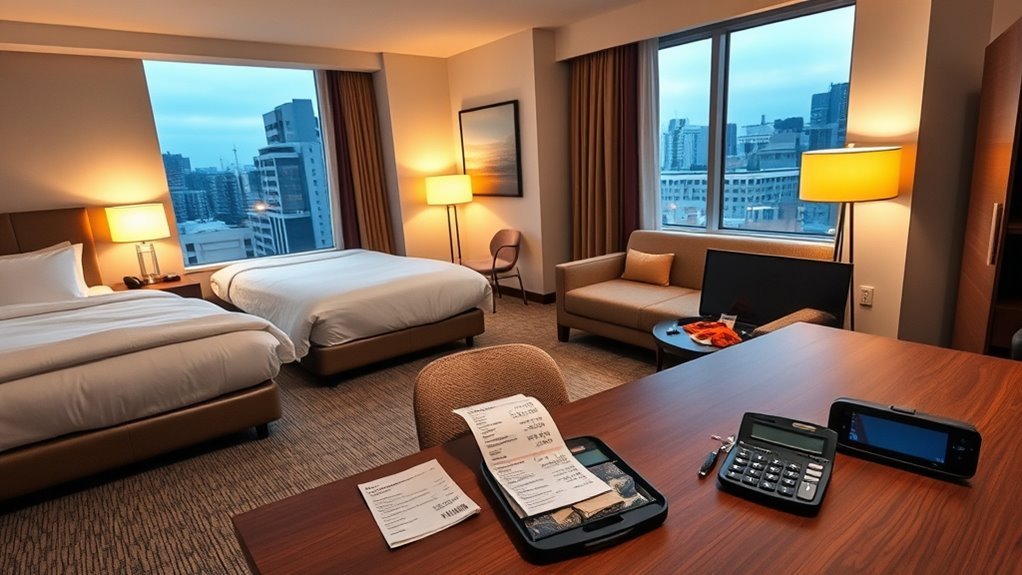
Hotel costs for a family of four in the United States can vary from a basic roadside room to a high-priced city hotel or resort suite. The biggest cost drivers are destination, travel dates, room occupancy limits, bed setup, taxes, parking, and whether your family needs one room or two. Use the ranges below as planning guides, then compare the final total for your exact dates.
Quick Answer
For a family of four, budget about $150–$300 per night before taxes for one standard U.S. hotel room in 2026. Basic properties can fall near $90–$160, while suites, resorts, and high-demand cities often run $250–$500+. Always compare the final total, occupancy limit, parking, breakfast, and cancellation terms.
Key Takeaways
- There is no single national “family of four” hotel rate. Most published hotel averages cover one occupied room, not a specific family size.
- A practical planning range is roughly $90–$160 for basic lodging, $150–$280 for many mid-range stays, and $250–$500+ for suites, resorts, or expensive destinations.
- Confirm that the room legally accommodates four guests and has enough beds. A low rate is not useful if you must book a second room.
- Compare the full stay total, including taxes, parking, pet charges, optional breakfast, and any incidental deposit or card hold.
- Flexible dates, refundable reservations, free breakfast, a kitchenette, and free parking can reduce the total family trip cost.
What Hotel Costs Should Families Expect in 2026?

A family of four may find a room below $100 in a lower-cost market or on a quiet date, but that price is not available everywhere. In a major city, beach destination, theme-park area, holiday week, or large event period, one suitable room can cost several hundred dollars per night.
The latest complete annual industry figure available before the end of 2026 is the 2025 U.S. hotel average daily rate. CoStar reported an average of $160.54 per occupied room in 2025. That figure includes many hotel types and travelers, so it is a market benchmark rather than a guaranteed family rate.
Prices also continued to move in 2026. The U.S. Bureau of Labor Statistics reported that the “lodging away from home” index was 4.9% higher in June 2026 than in June 2025. Hotel prices remain volatile, so current quotes for your destination matter more than a single national number.
| Accommodation type | 2026 planning range | What a family may get |
|---|---|---|
| Basic hotel or motel | About $90–$160 per night | One room, limited space, basic Wi-Fi and toiletries, and few included extras. |
| Mid-range family hotel | About $150–$280 per night | Two queen beds or a sofa bed, more floor space, and possible breakfast, parking, pool, or laundry access. |
| Suite, resort, or high-demand city hotel | About $250–$500+ per night | Separate sleeping space, a kitchenette, resort facilities, or a central location where standard rooms are expensive. |
| Vacation rental | Varies widely | More bedrooms and a kitchen, but cleaning charges, service fees, parking, and minimum stays can change the value. |
Note: These are planning bands, not official national averages. Your actual total may be lower or higher based on the property, guest ages, occupancy limit, taxes, and travel dates.
Average Nightly Rates: What to Expect
Average hotel rates are useful for setting a starting budget, but families should not treat them as a quote. A published average may include single travelers, corporate bookings, small rooms, luxury properties, discounted groups, and nights when demand is unusually high or low.
National and Government Benchmarks
CoStar’s $160.54 national average daily rate for 2025 is a strong industry benchmark, but it does not include a family-specific occupancy requirement. The federal government provides another useful reference: the GSA standard lodging reimbursement rate for fiscal year 2026 is $110, excluding taxes.
GSA rates are reimbursement limits for federal travel, not promises that a family can book a room at that amount. However, they show why a single nationwide rate can be misleading: GSA publishes higher location-specific limits for many cities and changes some limits by month.
Regional Price Variations
Large urban markets and popular leisure destinations can cost much more than the national average. New York City Tourism + Conventions reported a 2025 citywide hotel average daily rate of about $334. A room suitable for four people may cost more if it has two beds, a sofa bed, extra floor space, or a desirable location.
Federal lodging benchmarks also show major regional differences. For fiscal year 2026, GSA lists Orlando at $140 in many months and $169 from January through March, excluding taxes. In the same Florida schedule, Key West reaches $436 in some winter and spring months. Again, these are federal reimbursement limits, but they illustrate how destination and season can change the planning number.
The room rate is only the starting point. For a family, the better comparison is the final price for a room that legally sleeps everyone and includes the amenities you would otherwise buy separately.
Seasonal Rate Fluctuations
Hotel prices can change sharply around school vacations, holidays, festivals, conventions, sports events, and local peak seasons. There is no reliable national rule that every hotel rises by the same percentage. Orlando may be more expensive during winter and spring breaks, while beach destinations can peak in summer and ski areas can peak in winter.
Instead of assuming that January, February, or any shoulder-season month is always cheaper, search several date combinations. Compare weekdays with weekends and move the trip by one or two days when possible. A major event can make a normally quiet week more expensive than a typical holiday period.
Pro Tip: Price the same property for two or three nearby date ranges. Also compare a refundable rate now with the same stay again later; you may be able to rebook if the price falls, subject to the cancellation terms.
Budget-Friendly Hotel Options for Families
A low nightly rate does not always produce the lowest trip cost. A family-friendly property that includes breakfast, parking, a refrigerator, or laundry access may cost more per night but less overall.
Budget Hotels Overview
Basic hotels and motels can be practical for one-night stops, road trips, or families that will spend little time in the room. Planning rates near $90–$160 may be realistic in lower-cost areas, but the room may feel tight with luggage, a crib, or four full-size travelers.
Before booking, check the exact bed configuration. “Sleeps four” may mean two double beds, one bed plus a sofa bed, or a room where a rollaway is not allowed. Confirm whether breakfast, parking, Wi-Fi, a refrigerator, and late arrival are included.
Mid-Range Family Accommodations
Mid-range family hotels often offer the best balance of price and comfort. A typical planning range of $150–$280 may include two queen beds, free breakfast, a pool, parking, or a small refrigerator. These features are not guaranteed, so compare the property details rather than relying on the hotel category alone.
Free breakfast can be valuable for four guests, especially when it includes hot food rather than only coffee and packaged snacks. Free parking can also make a suburban hotel cheaper than a lower-priced downtown room with a daily garage charge.
Suites, Resorts, and Vacation Rentals
Suites and family resorts can cost $250–$500+ per night, but they may provide separate sleeping areas, a kitchenette, on-site activities, and enough space for a longer stay. A suite can be better value than two standard rooms when it includes breakfast or cooking facilities.
Vacation rentals may offer bedrooms, laundry, and a full kitchen. Compare the total price for the entire stay because cleaning charges, service fees, parking, and minimum-night rules can make a low advertised nightly rate misleading.
When Two Rooms May Cost Less Than One Suite
For older children, teenagers, or longer trips, two connecting or nearby rooms can provide more beds and two bathrooms. Compare the cost of one suite with the cost of two standard rooms, then ask whether connecting rooms are guaranteed or only requested. A request is not the same as a confirmed connection.
How to Choose Between Budget, Mid-Range, and Luxury Hotels

Start with the number of beds and rooms your family actually needs. Then compare the features that affect the full trip cost, not just comfort.
| Choose this option | Best for | Check before booking |
|---|---|---|
| Budget hotel | Short stays, road trips, and families comfortable sharing one small room. | Bed sizes, maximum occupancy, breakfast, parking, refrigerator, and recent cleanliness reviews. |
| Mid-range hotel | Most family vacations where comfort and included amenities matter. | Whether breakfast and parking are truly free, pool hours, laundry access, and cancellation rules. |
| Suite or resort | Larger families, longer stays, separate sleeping areas, or on-site entertainment. | Mandatory total price, resort inclusions, parking, kitchenette equipment, and sofa-bed comfort. |
| Vacation rental | Families wanting bedrooms, laundry, and a kitchen. | Cleaning and service charges, host rules, cancellation policy, location, and total price. |
Hidden Fees and Extra Costs to Watch For
Since May 12, 2025, the Federal Trade Commission’s pricing rule has required businesses advertising short-term lodging to show the total price upfront, including mandatory charges such as resort fees. Government taxes and optional add-ons may still appear separately, but they must be disclosed before payment.
That change makes comparison easier, but families should still review the final checkout screen and property rules. Common extra costs include:
- Lodging and sales taxes: Government charges vary by state, city, county, and special tourism district.
- Parking: Valet or self-parking may be optional but expensive, especially in downtown or resort areas.
- Pet charges: A property may charge per night, per stay, or per animal, and may also require a refundable deposit.
- Breakfast: “Breakfast available” does not mean breakfast is included in the room rate.
- Rollaway beds or cribs: Availability, safety rules, room size, and charges vary by property.
- Early check-in or late checkout: These may be optional paid services and are often subject to availability.
- Incidental deposit or card hold: A hotel may temporarily reduce your available credit or debit balance at check-in.
- Tips: Housekeeping, bell service, valet service, and other gratuities are separate personal choices based on the service and local custom, not a fixed percentage of the room bill.
- Airline baggage: Checked-bag charges are not hotel fees, but they belong in the full family travel budget. The U.S. Department of Transportation advises travelers to review the airline’s baggage-fee information before purchase.
Warning: Do not compare only the first nightly figure you see. Compare the final amount for the same room type, same number and ages of guests, same cancellation terms, and same included services.
How to Calculate the Real Hotel Cost
Use this formula before you book:
Room subtotal + mandatory charges + taxes + selected extras + parking − included-value savings = estimated hotel cost.
For example, a five-night stay at $190 per night has a $950 room subtotal. If an illustrative 12% lodging tax adds $114 and parking costs $30 per night, the hotel portion becomes $1,214 before optional meals, pet charges, tips, or transportation. Use the actual tax and parking amounts shown for your booking rather than the example percentages.
Then compare that total with another property. A $210 room with free breakfast and parking may cost less overall than a $175 room that charges for both.
Maximizing Comfort on a Budget
You can lower the total without choosing an uncomfortable room. Focus on benefits that replace expenses your family would otherwise pay.
- Search flexible dates: Move the stay by one or two days and compare weekday and weekend pricing.
- Book a refundable rate when practical: Recheck the same stay later and rebook only when the savings exceed any change in terms.
- Compare direct and third-party totals: Use the same room, guest count, cancellation policy, taxes, and included benefits.
- Look outside the busiest district: A nearby hotel may have lower rates and free parking, but calculate transportation time and cost.
- Use included breakfast wisely: Confirm the hours, menu, and number of guests covered.
- Choose a refrigerator or kitchenette: Simple breakfasts, snacks, and reheated meals can reduce dining costs.
- Check laundry access: On a long trip, laundry may let the family pack less and avoid airline baggage charges.
- Read the bed description: A sofa bed, double bed, and queen bed provide different comfort for older children and adults.
For many families, a mid-range hotel between $150 and $280 offers the strongest balance of space, breakfast, parking, and comfort. Budget hotels can still work well for short stops, while a suite or vacation rental may become better value when separate sleeping areas and a kitchen replace the need for two rooms and frequent restaurant meals.
Frequently Asked Questions
What is the average cost of a vacation for a family of four?
There is no single official U.S. average that fits every family. A trip total depends on nights, destination, transportation, meals, activities, and room needs. For lodging, multiply the final nightly price by the number of nights, then add taxes, parking, selected extras, and any second room.
What is the cost of living for a family of four in the United States?
Cost of living is different from vacation lodging. It includes ongoing housing, food, transportation, healthcare, taxes, childcare, and other expenses. The amount varies widely by location and household needs, so hotel prices should not be used as a cost-of-living estimate.
Is a hotel room priced per person or per room?
Most U.S. hotels display a price for the room, but the quote can change after you enter the number and ages of guests. Some properties charge for extra adults, breakfast, rollaway beds, or added occupancy. Always search for all four guests from the start.
Can a family of four stay in one hotel room?
Often yes, especially in a room with two queen beds, but occupancy limits and bed layouts vary. Enter every guest during the search and confirm the room’s maximum occupancy. Larger families or families with older children may be more comfortable in a suite or two rooms.
Are resort fees included in the advertised hotel price?
Mandatory resort fees should be included in the upfront total price under the FTC rule effective May 12, 2025. Taxes and optional extras may be shown separately, but the final amount must be disclosed before payment.
When should a family book a hotel?
Book earlier for school holidays, major events, resorts, national parks, and rooms with two beds or connecting-room needs. For flexible trips, a refundable reservation lets you secure a suitable room and continue checking prices without relying on a last-minute opening.
Conclusion
A family of four should treat $150–$300 per night before taxes as a useful starting budget for one standard U.S. hotel room in 2026, not a guarantee. Lower-cost properties may fall near $90–$160, while suites, resorts, and expensive cities can reach $250–$500+.
The best value is the room that safely accommodates everyone and delivers the lowest final trip cost. Compare the total price, beds, occupancy, taxes, parking, breakfast, cancellation rules, and location before deciding. A comfortable mid-range hotel, a practical suite, or a well-priced vacation rental can all be the right choice when the numbers work for your family.
Sources
- CoStar: 2025 U.S. hotel performance — national hotel average daily rate and New York market data.
- New York City Tourism + Conventions: 2025 tourism results — New York City hotel average daily rate.
- U.S. General Services Administration: FY 2026 CONUS per diem bulletin — federal standard lodging benchmark and rate period.
- Federal Trade Commission: Rule on Unfair or Deceptive Fees FAQs — upfront total-price requirements for short-term lodging.
- U.S. Bureau of Labor Statistics: June 2026 Consumer Price Index — 2026 lodging-away-from-home price movement.
- U.S. Department of Transportation: Buying a Ticket — airline baggage-fee disclosure guidance.