

Missouri gives older residents a valuable fishing-permit break, but the rule is narrower than many anglers expect. Residents age 65 or older do not need the basic Missouri fishing permit, yet trout permits, trout-park daily tags, border-water permits, and area-specific rules may still apply. The right choice depends on your age, residency, and where you plan to fish.
Quick Answer
Missouri residents age 65 or older can fish without a basic fishing permit. They still need a trout permit or daily trout tag when required. Residents age 60 or older may buy a $40.50 Lifetime Fishing Permit, which includes regular fishing and trout-permit privileges, but not trout-park daily tags.
Key Takeaways
- The age-65 exemption applies only to Missouri residents and does not erase every trout or special-area requirement.
- For 2026, a resident annual fishing permit is $14, a daily permit is $9, and a resident trout permit is $12.
- The $40.50 Lifetime Fishing Permit is available to Missouri residents age 60 or older and includes trout-permit privileges.
- Lifetime permits must be ordered directly from the Missouri Department of Conservation; they are not sold online or by regular permit vendors.
- Carry photo identification or the required exemption document while fishing, and always check the rules for the exact water you plan to visit.
At a Glance
| Time Required | About 5–15 minutes for a standard online permit; allow about 10 days for a lifetime permit application to be processed and delivered |
| Difficulty | Easy, once you confirm your age, residency, and trout or special-area needs |
| Tools Needed | Photo ID, Conservation Number if available, payment method, and any required exemption or residency documents |
| Cost | $0 for the basic age-65 resident exemption; $9 daily; $14 annual resident; $12 resident trout; $40.50 lifetime fishing for residents age 60 or older |
Who Qualifies for Missouri Senior Fishing Benefits?

The main Missouri senior benefit is an exemption from the basic fishing permit for Missouri residents age 65 or older. The exemption does not apply to nonresident seniors simply because they are 65 or older. Nonresidents generally need the appropriate nonresident permit unless they qualify under a different exemption.
The Missouri Department of Conservation permit-exemption rules also cover certain landowners, youth age 15 or younger, qualifying veterans, and Missouri residents with specific disabilities. These are separate legal exemptions, not general senior discounts.
Turning 65 removes the basic fishing-permit requirement for a Missouri resident, but it does not automatically remove trout permits, trout-park tags, or special-water rules.
Carry a government-issued photo ID that shows your date of birth and Missouri address. Conservation agents may ask you to prove that you meet the age and residency requirements.
Note: Missouri generally treats you as a resident for permit purposes when your actual residence and legal permanent home have both been in Missouri for at least 30 days and you do not claim resident privileges elsewhere. Special rules also cover military members, students, and resident aliens.
Products Worth Considering


Senior Lifetime Permits and 2026 Prices
Missouri does not offer a separate product called a “senior lifetime trout permit.” Instead, the Resident Lifetime Fishing Permit includes the same privileges as both the Resident Fishing Permit and the Trout Permit. A resident age 65 or older may buy it mainly to obtain lifetime trout-permit coverage, because the basic fishing privilege is already exempt.
Lifetime Permit Pricing
| Permit | Age | 2026 Price | Main Privileges |
|---|---|---|---|
| Resident Lifetime Fishing Permit | 60 or older | $40.50 | Resident fishing and trout-permit privileges |
| Resident Lifetime Conservation Partner Permit | 60 or older | $81.50 | Fishing, trout, small-game hunting, migratory-bird, and Conservation Order privileges; major big-game permits are not included |
These prices come from the 2026 Summary of Missouri Fishing Regulations. Lifetime permits are available only to Missouri residents, require proof of residency, and must be ordered through the MDC lifetime-permit process.
Age-Tier Value for Anglers 60 and Older
For a resident age 60–64, the $40.50 lifetime option can be attractive because a regular annual fishing permit costs $14 and a separate trout permit costs $12. For someone who fishes and keeps trout each year, the lifetime permit can recover its cost quickly.
For a resident age 65 or older, the value calculation is different. The basic fishing permit is already free through the age exemption, so the lifetime permit is most useful for someone who regularly needs trout-permit privileges. At $12 per annual resident trout permit, the $40.50 lifetime permit costs less than four annual trout permits.
Pro Tip: A lifetime fishing permit does not replace a daily trout tag at a trout park. Include those daily-tag costs when deciding whether a lifetime permit is worthwhile.
Annual, Daily, and Other Permit Options
Missouri does not list a separate reduced-price annual or daily fishing permit just for seniors. Residents age 60–64 pay the standard annual or daily rate unless they choose a lifetime permit or qualify for another exemption. Residents age 65 or older pay $0 for the basic fishing privilege but may still need another permit or tag.
| Permit or Privilege | Who Uses It | 2026 Cost |
|---|---|---|
| Daily Fishing Permit | Residents or nonresidents who need short-term basic fishing privileges | $9 per day |
| Resident Fishing Permit | Missouri residents ages 16–64 who do not qualify for another exemption | $14 |
| Resident Trout Permit | Residents who possess trout or fish where a trout permit is required | $12 |
| Daily Trout Tag | Anglers age 16 or older fishing during the regular season at a Missouri trout park | $5 per day |
| White River Border Lakes Permit | Eligible Missouri and Arkansas residents fishing specified border waters | $10 |
| Age-65 Basic Fishing Exemption | Missouri residents age 65 or older | $0 |
Is There a Senior Annual Fishing Permit?
No special senior annual fishing permit is listed for Missouri. A resident age 60–64 may buy the regular $14 annual permit or the $40.50 lifetime fishing permit. A resident age 65 or older normally relies on the basic fishing exemption and carries proof of age and residency.
When a Daily Permit Makes Sense
The $9 daily permit can make sense for a resident age 60–64 who fishes only once or twice during the permit year. Three daily permits would cost $27, so the $14 annual permit is usually cheaper once you expect to fish on two or more days. A resident age 65 or older does not need a daily basic fishing permit.
Eligibility and Proof
Bring the document that supports your status:
- Age-65 resident exemption: a government-issued photo ID showing your birth date and Missouri residence.
- Lifetime permit: proof of Missouri residency, such as a valid Missouri driver’s license, with the application.
- Veteran exemption: a certified statement from the U.S. Department of Veterans Affairs or other required military documentation.
- Disability exemption: the completed MDC statement of eligibility signed by the appropriate licensed medical professional.
Missouri does not publish a broad low-income fishing discount. Do not assume that age, disability, or income alone qualifies you unless the status matches an exemption in the current Wildlife Code or MDC regulations.
How to Apply for or Purchase a Permit
Start by checking whether the age-65 resident exemption already covers your basic fishing. Then identify any trout, border-water, or special-area requirement for the water you plan to fish.
- Confirm residency and age. Review the MDC resident permit qualifications and gather photo identification.
- Choose the permit. Select a daily, annual, trout, White River Border Lakes, Lifetime Fishing, or Lifetime Conservation Partner permit based on your activities.
- Buy a standard permit. Standard permits are available through the MDC online system, MO Fishing app, MDC offices, permit vendors, or by telephone. Telephone orders carry a surcharge and require delivery time.
- Apply separately for a lifetime permit. Download the lifetime permit form or request it from MDC Permit Services. Lifetime permits are not sold online, by telephone, or through regular vendors.
- Carry proof while fishing. Use the MO Fishing app, a printed permit, a Conservation Permit Card, or the document that proves your exemption.
Warning: Do not buy a lifetime permit from an unofficial seller. Missouri lifetime permits must be obtained directly through MDC’s lifetime-permit application process.
Products Worth Considering

Enough to Use: you will receive 6 pieces of fishing license holders, and 6 pieces of safety pins, abundant in quantity, enough for you to choose and replace, can meet your different needs; You can also share them with your friends

Enough to Use: you will receive 6 pieces of fishing license holders, and 6 pieces of safety pins, abundant in quantity, enough for you to choose and replace, can meet your different needs; You can also share them with your friends

FISHING LICENSE HOLDER W/ZIP CLOSURE
Senior Trout Permits and Area Rules

Trout rules are the most common source of confusion for older Missouri anglers. The basic age-65 exemption does not remove the trout permit or daily trout tag when one is required.
- Possessing trout outside trout parks: You generally need a trout permit, even when exempt from the basic fishing permit.
- Regular trout-park season: At Maramec Spring Park, Bennett Spring State Park, Montauk State Park, and Roaring River State Park, anglers need a daily trout tag. In 2026, the regular season runs March 1 through October 31.
- Daily trout-tag price: The 2026 tag is $5 for anglers age 16 or older and $3 for anglers age 15 or younger.
- Winter trout-park fishing: A trout permit is required during the winter catch-and-release season, along with a basic fishing permit unless the angler qualifies for an exemption.
- Lake Taneycomo: A trout permit is required for all fishing year-round upstream from the U.S. Highway 65 bridge.
A Resident Lifetime Fishing Permit includes trout-permit privileges but does not include a trout-park daily tag. The current MDC trout permit page explains where each permit or tag applies.
Note: Area rules can change by season, zone, species, and fishing method. Check posted signs and the current regulation page for the exact water before fishing.
Residency, Veteran, and Disability Exemptions

Residency Rules
Owning Missouri property does not automatically make you a resident for permit purposes. In general, your actual residence and legal permanent home must have been in Missouri for at least 30 days before you apply, and you must not claim resident privileges in another state or country.
Missouri resident landowners and members of their immediate household may qualify for limited exemptions when fishing on qualifying land or waters they own. Those exemptions do not create access to someone else’s private property and may not remove trout requirements.
Veterans and Military Patients
An honorably discharged resident or nonresident veteran may fish without the basic permit if the veteran has a service-related disability of at least 60% or was a prisoner of war. The angler must carry a certified statement of eligibility from the U.S. Department of Veterans Affairs.
Current military members assigned as patients to a Warrior Transition Brigade, Warrior Transition Unit, or military medical center may also qualify and must carry the required orders or admission verification. These exemptions do not automatically remove trout permits or tags where required.
Medical and Disability Exemptions
Missouri’s disability exemptions are specific. They include qualifying Missouri residents who are legally blind, residents who are permanently unable to move freely without a wheelchair, and residents with cerebral palsy or a qualifying mental disorder or illness who are so severely disabled that they cannot fish alone. The last group must fish with a licensed adult angler.
Eligible anglers must carry the official Fishing Permit Exemption Statement of Eligibility completed by the proper medical professional. A general diagnosis or disability card may not be enough.
Renewal, Replacement, and Validity Periods
Missouri’s 2026 annual fishing permits are valid from the purchase date through the last day of February 2027 unless the permit itself states otherwise. Daily permits cover the purchased day or days. Lifetime permits do not require annual renewal.
If you lose a current permit, log in to the MO Fishing app to display the electronic version or reprint an active permit at home for free. The 2026 fishing regulation summary lists a $3 charge for a replacement purchased from a permit vendor.
- Check the expiration date shown on the permit.
- Renew annual fishing and trout permits before fishing after the last day of February.
- Confirm that the latest permits appear in the MO Fishing app before leaving home.
- Keep exemption documents and lifetime-permit records in a safe place.
Free Fishing Days and Group Exemptions

Missouri holds Free Fishing Days on the Saturday and Sunday after the first Monday in June. During the event, anyone may fish state waters without an MDC fishing permit, trout permit, or prescribed-area daily tag. Missouri’s 2026 Free Fishing Days were June 6 and 7.
All other fishing rules remain in force, including seasons, length limits, daily limits, methods, and private-property restrictions. Other agencies or local governments may still charge entrance, parking, or facility fees.
MDC also accepts requests for a Group Fishing Permit Exemption for students participating in a qualifying educational program or patients and clients participating in a qualifying therapeutic program. Participants must be supervised by an employee of the requesting institution.
The group exemption does not automatically cover teachers, aides, parents, guardians, caretakers, or supervisors who fish or help by casting, reeling, or holding a participant’s rod. Those adults need their own permit or personal exemption. Family reunions, ordinary school field days, picnics, and fishing competitions are not standard qualifying uses.
Conservation Benefits and Where Permit Fees Go
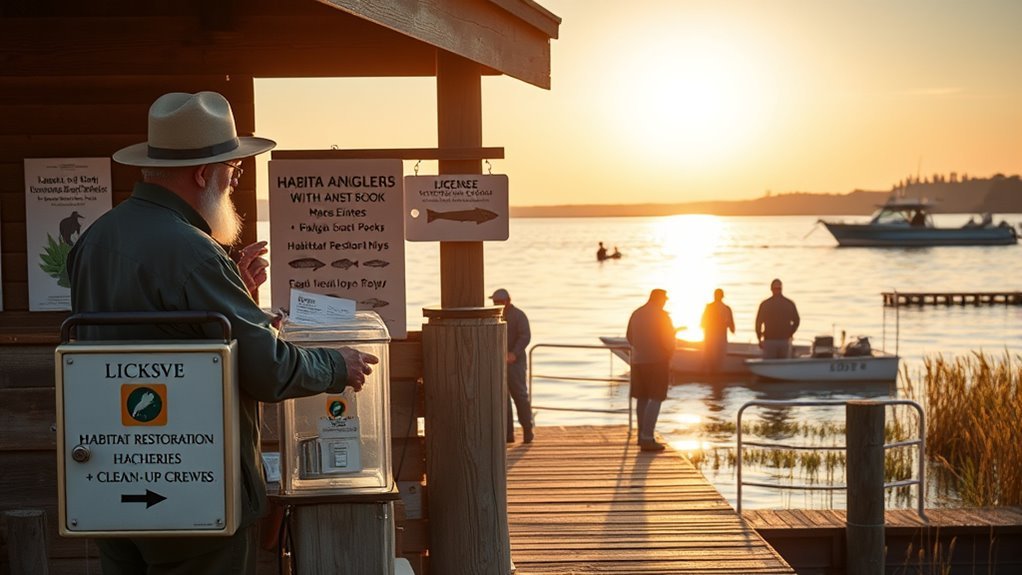
Fishing permit revenue helps state fish and wildlife agencies manage fisheries, restore habitat, stock fish, provide aquatic education, and maintain public access. Federal Sport Fish Restoration funding works alongside state license revenue and comes from excise taxes on fishing equipment, import duties, and a portion of motorboat-fuel taxes.
The U.S. Fish and Wildlife Service reported in June 2026 that more than $20 billion in Sport Fish Restoration funds had been apportioned to state agencies since 1952. Senior exemptions lower the direct cost for eligible anglers, while permit purchases by others remain part of the broader conservation funding system.
Frequently Asked Questions
Are Missouri senior fishing benefits transferable to family members or caregivers?
No. An age exemption or permit belongs to the person who qualifies for it. A family member or caregiver must have a separate permit or personal exemption if that person fishes or assists in fishing in a way that requires a permit.
Can a Missouri lifetime fishing permit be used in another state?
No. It provides Missouri privileges only. You must follow the other state’s licensing rules. The $10 White River Border Lakes Permit is a narrow exception that gives eligible Missouri and Arkansas residents reciprocal privileges on specified portions of Bull Shoals, Norfork, and Table Rock lakes; it does not cover trout.
Do discounted or exempt fishing privileges include access to private fishing leases?
No. A fishing permit or exemption does not grant access to private land or a private fishing lease. You still need the landowner’s permission and must follow any lease, access, and water-specific rules.
Are there automatic permit discounts for seniors taking fishing education classes?
Missouri does not publish a general senior discount for enrolling in a fishing class. A class may provide equipment or occur during Free Fishing Days, and a qualifying educational institution may request a group exemption, but participants should confirm the event’s permit rules before attending.
Can a senior donate or transfer a lifetime permit?
No. Lifetime permits are issued to a named individual and cannot be loaned or transferred. A senior who wants to support conservation can make a separate donation or volunteer without attempting to transfer the permit.
Do nonresident seniors get Missouri’s age-65 fishing exemption?
No. The age-65 exemption is for Missouri residents. A nonresident senior normally needs a nonresident fishing permit unless another exemption, such as a qualifying veteran exemption, applies.
Do Missouri residents age 65 or older need a trout permit?
Yes, when a trout permit or daily trout tag is required. The age exemption removes the basic fishing permit, not the separate trout requirement. A $40.50 Resident Lifetime Fishing Permit can provide lifetime trout-permit privileges, but daily trout-park tags remain separate.
What should a senior carry while fishing without a basic permit?
A Missouri resident using the age-65 exemption should carry government-issued photo identification showing age and residency. Anyone using a veteran or disability exemption should carry the certified statement, medical form, orders, or other document required for that exemption.
Conclusion
Missouri residents age 65 or older can fish without buying the basic fishing permit, but that benefit does not erase trout permits, daily trout tags, border-water permits, or special-area rules. Residents age 60 or older can choose the $40.50 Lifetime Fishing Permit when long-term fishing and trout privileges make financial sense. Check the current MDC rules, carry proof of eligibility, and confirm the requirements for the exact water before you cast.
Sources
- Missouri Department of Conservation — 2026 Summary of Missouri Fishing Regulations — permit prices, exemptions, purchasing, replacement, trout rules, and Free Fishing Days
- Missouri Department of Conservation — Fishing Permits — current permit products, costs, trout requirements, and group exemptions
- Missouri Department of Conservation — Permit Exemptions — age, veteran, disability, youth, and landowner exemptions
- Missouri Department of Conservation — Resident Permit Qualifications — Missouri residency standards
- U.S. Fish and Wildlife Service — Purchase a Fishing License — how license revenue and Sport Fish Restoration funding support conservation
