
You’ll need a non‑resident sport fishing license to fish in California waters if you’re 16 or older (public ocean piers are exempt). Annual non‑resident cost is $169.82; short‑term visitor options are One‑Day $20.52, Two‑Day $31.58, Ten‑Day $62.90 (short‑term licenses don’t require Ocean Enhancement Validation). Some fisheries need extra report cards or validations and military discounts apply when eligible. Keep your license on you and follow reporting rules — continue for purchase, validation, and enforcement details.
Who Needs a Non‑Resident Fishing License in California
Who must buy a non‑resident fishing license in California? You must purchase a non‑resident fishing license if you’re 16 or older and not a California resident, per codified non resident requirements.
If you’re 16 or older and not a California resident, you must buy a non‑resident fishing license.
From a policy perspective, that threshold is binary: age ≥16 triggers licensing obligations; residency status determines classification.
You’ll still need to follow all fishing regulations and reporting requirements while on California waters, regardless of license duration.
Exemptions are narrow and operationally significant: you don’t need a license when fishing from public ocean piers, a clear statutory carve‑out that alters enforcement patterns and compliance rates in coastal zones.
Administratively, the state provides both annual and ten‑day product lines to match visitor behavior, but your obligation to hold an appropriately issued non‑resident license remains when shore or vessel fishing outside the pier exemption.
For compliance planning, treat age, residence, and location as primary variables driving whether you must obtain a license before fishing.
Products Worth Considering

USA, License, plate, Vintage, tag, lot, set, plates, number, wall, decor, art, bar, restaurant, design, gift, cool, nice, american, america, hawaii, alaska, california, texas
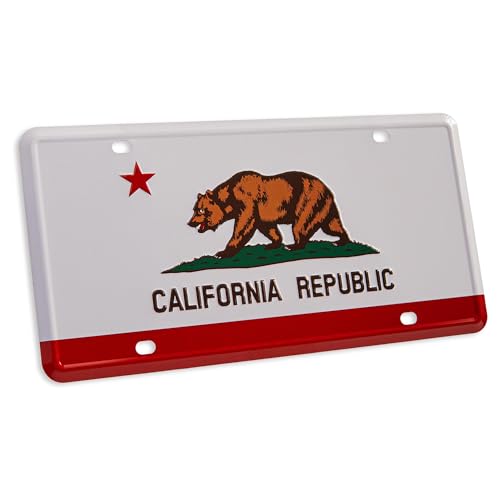
CALIFORNIA STATE FLAG DESIGN: Features a textured, raised California flag design for an authentic, high-end look and feel.

FISHING LICENSE HOLDER W/ZIP CLOSURE
Non‑Resident Sport Fishing License Fees and Short‑Term Options
Several clear fee tiers define nonresident sport fishing access in California, reflecting policy choices that balance revenue and visitor flexibility.
You’ll see a full Nonresident Sport Fishing License at $169.82 for ages 16+, but the state also offers short-term permits: One-Day $20.52, Two-Day $31.58, and Ten-Day $62.90. These short-term licenses cover specified fishing duration windows and are exempt from the Ocean Enhancement Validation.
From a cost comparison standpoint, you can calculate per-day costs: One-Day $20.52/day, Two-Day $15.79/day, Ten-Day $6.29/day, versus the annual effective daily cost that depends on how many days you fish.
If you plan limited trips, short-term options reduce upfront cost and administrative burden. If you’ll fish repeatedly, the annual license spreads revenue into conservation funding more efficiently.
You should match choice to projected fishing duration, balancing immediate expense against long-term access and contribution to local fishery management.
Products Worth Considering
Personalized Custom Text: Add your name, message, or any custom text! Each magnet is fully customizable, making it a unique and thoughtful addition to your home, office, or a special gift.

PREMIUM QUALITY: Crafted from high-grade materials, our License Plate is built to withstand the elements and maintain its vibrant appearance over time. It is resistant to fading, cracking, and peeling, ensuring long-lasting performance.

【Material】Our License Plate Frame Is Made Of Stainless Steel, Strong And Durable.
Additional Visitor Validations and Report Cards Required

When budgeting your trip, you’ll need to account for specific validations beyond the base non‑resident license, like the Ocean Enhancement Validation ($7.05) for ocean fishing south of Point Arguello.
You must also obtain required report cards for targeted species—examples include the North Coast Salmon Report Card ($8.90) and Sturgeon Fishing Report Cards (no fee for catch‑and‑release).
Additionally, specialty validations such as the Second Rod ($19.70 inland) and Recreational Crab Trap ($2.98) can affect allowable gear and legal reporting requirements.
Ocean Enhancement Validation
Because non-resident anglers fishing ocean waters south of Point Arguello must purchase the Ocean Enhancement Validation, you should budget an additional $7.05 on top of your non-resident license fee and verify whether species-specific report cards apply.
You’ll comply with ocean fishing regulations and align with targeted fishing species requirements when you add this validation. The $7.05 validation legally authorizes ocean fishing under California policy and reduces penalty risk.
- Review target species to determine required report cards.
- Add $7.05 for the Ocean Enhancement Validation to your cost projection.
- Account for species-specific fees (e.g., North Coast Salmon $8.90); sturgeon report card free if catch-and-release.
- Confirm documentation before fishing to guarantee regulatory compliance and avoid citations.
Required Report Cards
If you’re planning to target specific species while fishing in California, you must obtain the applicable report cards and validations to stay compliant and avoid fines.
You’ll face explicit report card requirements: North Coast Salmon Report Card ($8.90), mandatory Sturgeon Fishing Report Card (no fee for catch-and-release only), and species-specific cards for Spiny Lobster that carry non-return penalties if not submitted.
Policy also mandates Ocean Enhancement Validation ($7.05) for ocean fishing south of Point Arguello. Children under 16 must purchase required report cards for designated species even without a general license.
Review fishing regulations before you go: non-resident compliance hinges on holding the correct cards and validations, submitting returns on time, and understanding fee versus no-fee conditions to avoid penalties.
Reduced‑Fee and Special‑Status Options for Non‑Residents
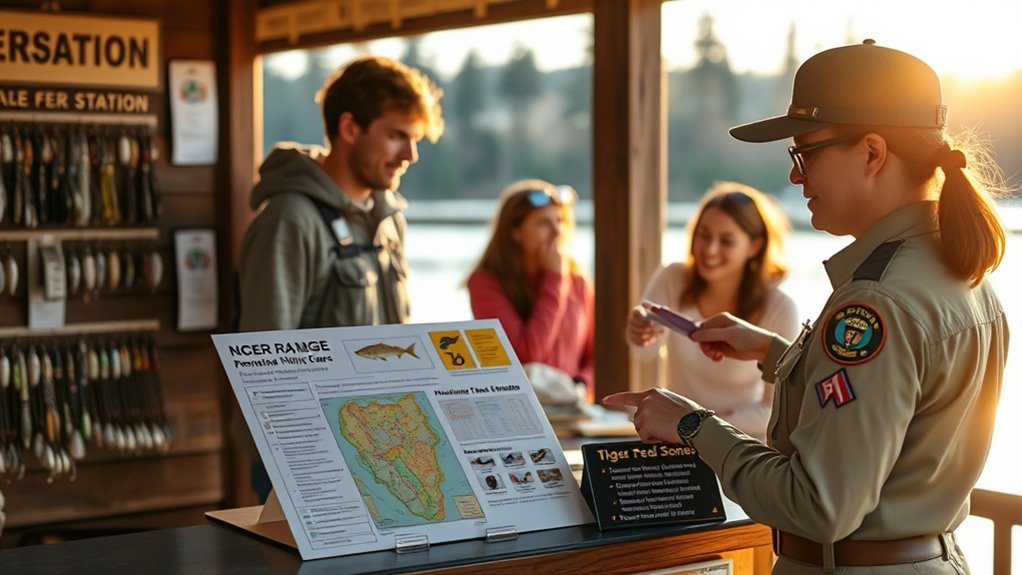
When evaluating reduced‑fee and special‑status options, you should note that non‑residents pay set rates (365‑day at $169.82, ten‑day at $62.90) plus a 5% handling fee and 3% nonrefundable application fee.
Policywise, military and veteran discounts and resident disability/low‑income waivers are largely resident‑exclusive, so non‑residents don’t qualify for those reduced or free licenses.
You’ll need to assess whether targeted exceptions or reciprocal agreements could be justified by cost, equity, and administrative impact.
Products Worth Considering
Durability & Weather Resistance: Crafted from aluminum, our UEQIKI vanity plates for front of car are lightweight and colorful, ensuring long-lasting durability in any weather conditions. The sturdy construction and durable materials provide reliable protection while maintaining a sleek appearance, making this front license plate designs a practical choice for daily use

Product design: Features the humorous phrase Weekend Hooker printed smoothly flat on a durable background tailored for fishermen who love outdoor sports

PREMIUM 3D SERIES CRAFTSMANSHIP: Unlike flat, printed vanity plates, our 3D Series features a precision laser-cut mirror acrylic Christian Fish (Ichthys) emblem. The raised graphic creates a stunning dimensional effect that catches the light and stands out on any vehicle.
Military and Veteran Discounts
Though non-resident general fishing licenses cost $169.82 for anglers 16 and older, California offers targeted reduced-fee and special-status options that cut costs to $10.29 for eligible honorably discharged veterans and recovering service members.
These programs require documented proof—such as a VA letter for disabled veterans or verification from a commanding officer or physician for recovering personnel—and special-status licenses remain valid for the duration of recovery to minimize administrative burden.
You should evaluate military eligibility requirements and veteran documentation needs before applying, since agencies verify status.
Key implementation points:
- Eligibility: honorably discharged veterans and recovering service members qualify.
- Cost: reduced fee is $10.29 through CDFW or agents.
- Documentation: VA letter or commanding officer/physician verification required.
- Validity: special-status licenses cover the recovery period, reducing reapplication.
Disability and Low‑Income Waivers
Because California provides targeted reduced-fee and free options, non-resident anglers with qualifying disabilities or low incomes can cut or eliminate the $169.82 general license cost—eligible honorably discharged veterans and recovering service members may get a $10.29 Reduced-Fee Sport Fishing License with documented verification (VA rating ≥50% or medical/command verification), while low-income Native Americans and individuals with severe physical disabilities may qualify for free sport fishing licenses under specific criteria.
Note that non-residents rarely qualify for resident-only waivers unless they meet those narrow, documented requirements. You should document eligibility with verification letters; the state requires VA ratings or medical/command letters to access disability waivers.
Analyze eligibility against statutory definitions, confirm status before applying, and prioritize low income options only when criteria explicitly match your documentation.
Where and How to Purchase a Visitor Fishing Permit
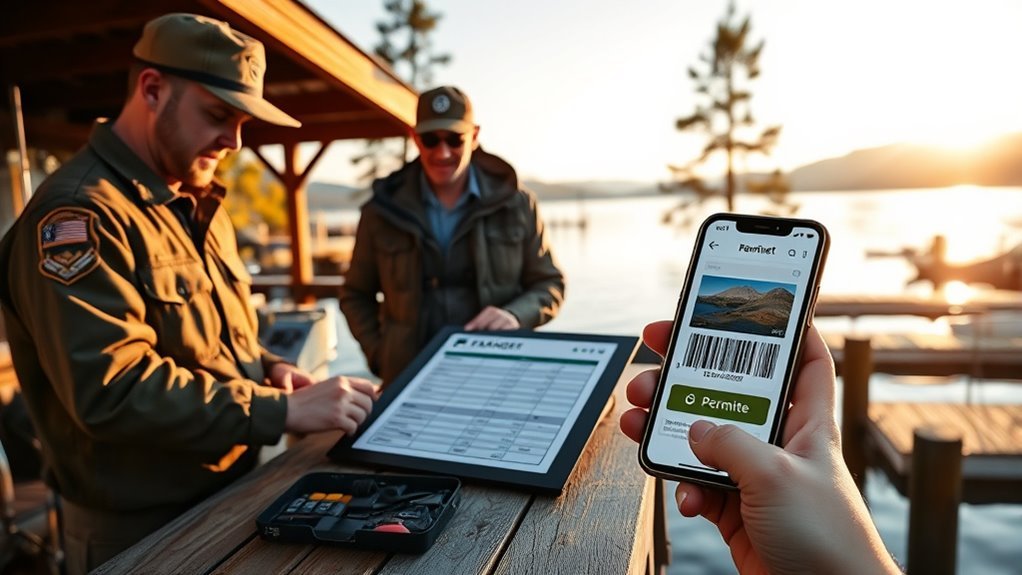
Where can you buy a non-resident fishing permit in California and what’re the practical payment and possession requirements?
You can buy a permit online via the California Department of Fish and Wildlife (CDFW) website or at licensed agents—sporting goods stores, bait shops—or CDFW sales offices.
Policy requires you carry the license on you while fishing, and local regulations mean you should match permit duration to your trip and fishing gear needs.
Policy requires you carry your license while fishing; pick a permit duration and gear coverage that fits your trip.
- Online (CDFW): immediate issuance; ideal if you need a one-day ($20.52), two-day ($31.58), ten-day ($62.90) or annual ($169.82) permit.
- License agents: common retail points; accept card/cash depending on vendor.
- CDFW offices: accept checks, money orders, debit/credit; don’t accept cash.
- Compliance: have license in immediate possession; choose term based on trip length to minimize cost and regulatory risk.
Online Harvest Reporting and License Management
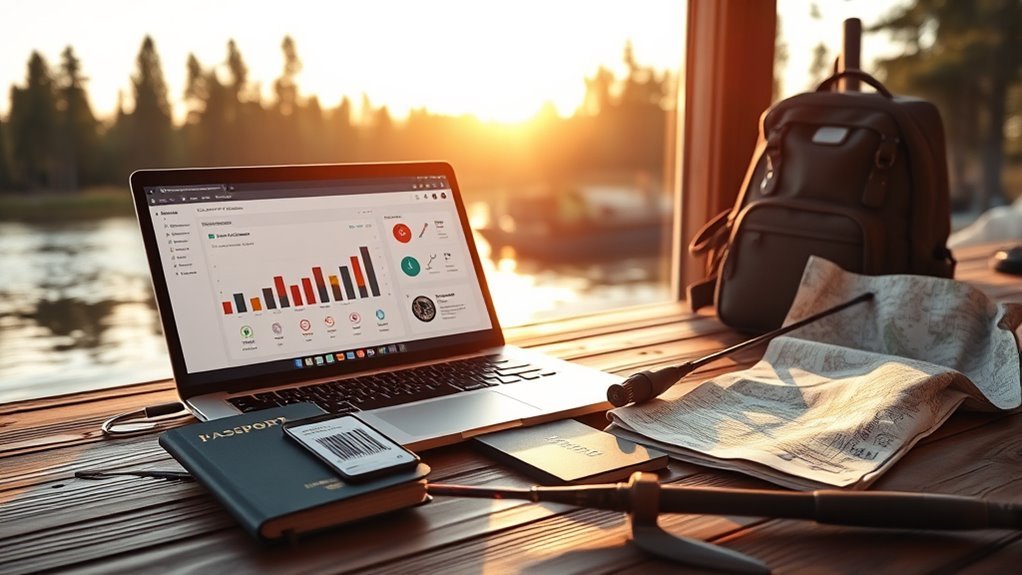
After you purchase and carry the appropriate non‑resident permit, you’ll use the CDFW Online License Service to submit required harvest reports and manage licenses; the system records electronic submissions immediately and supports duplicate or renewal requests.
You’ll log in for online reporting to meet species-specific deadlines—data show timely submissions reduce enforcement actions and improve stock assessments. Note that late Spiny Lobster Report Card entries incur a fee, so calendar integration and automated reminders are prudent risk-mitigation tools.
For license management, you can apply for duplicates or renewals instantly, and print proof immediately after purchase; this minimizes administrative delay and noncompliance risk. The platform’s audit trail timestamps each report, creating verifiable records for policy analysis and quota monitoring.
Operationally, you should track deadlines by species, confirm successful electronic receipt, and retain printed licenses while fishing to align practice with statutory possession requirements. These procedures streamline compliance and support evidence-based management.
License Possession, Use Rules, and Public Pier Exceptions
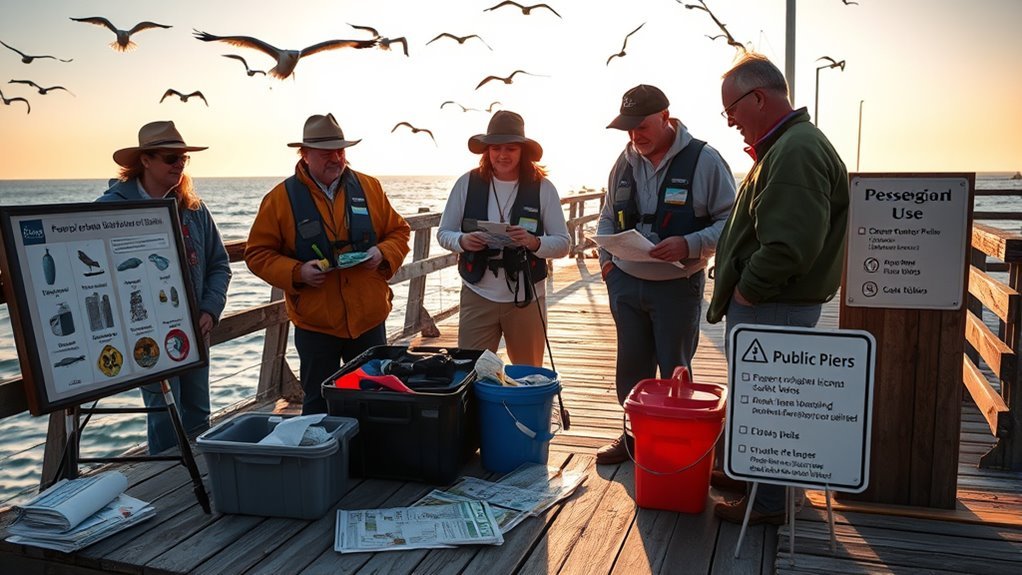
If you’re 16 or older and fishing in California as a non‑resident, you’re legally required to carry the appropriate sport fishing license—an annual nonresident license costs $169.82, while one‑ and two‑day options run $20.52 and $31.58 respectively—and you must have it in immediate possession while fishing (except when diving).
You’ll need to prioritize license compliance to avoid citations; enforcement focuses on visible possession during inspections.
Note pier fishing exceptions: public ocean piers don’t require the license, but species-specific validations or report cards (e.g., sturgeon) may still apply and must be carried.
Public ocean piers don’t need a general fishing license, but required species validations or report cards (e.g., sturgeon) must be carried.
- Carry the purchased license on your person while actively fishing (diving exempt).
- Recognize public pier exemption for basic access, but verify required validations per species.
- Maintain supporting report cards or permits when targeting regulated species from piers.
- Expect enforcement checks; noncompliance can yield fines or confiscation.
This policy-oriented summary emphasizes data-driven decision points for visitors balancing cost, access, and legal obligations.
Replacing Lost Licenses and Duplicate Copies
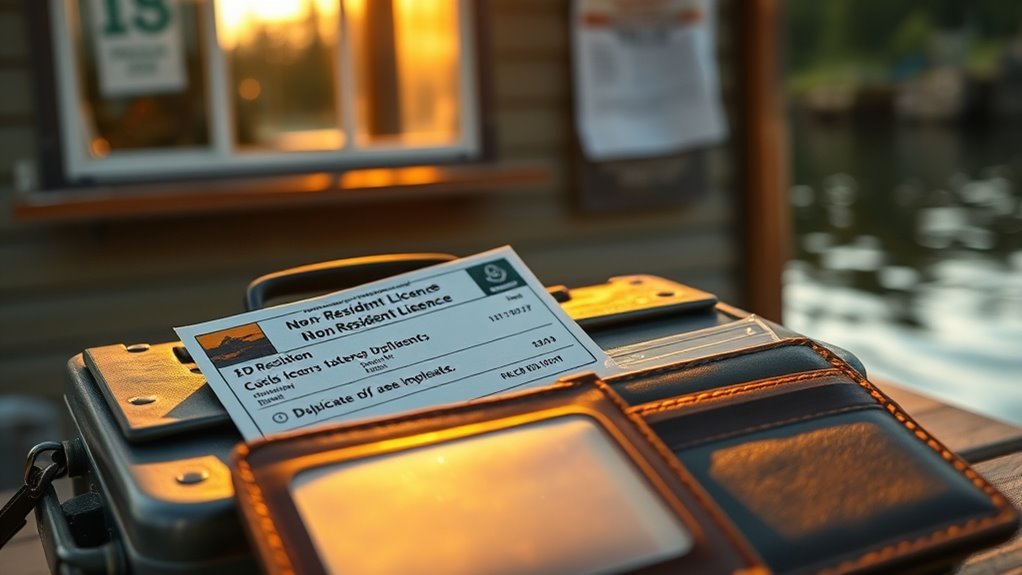
Having your license on hand during inspections is one thing; replacing a lost card or obtaining a duplicate is another operational detail you’ll want to plan for. You can purchase duplicate licenses online or at CDFW offices; expect a small fee for license replacement.
Policy specifies that Sturgeon Fishing Report Card duplicates are restricted to CDFW offices only, so factor office hours and travel into compliance planning. Keep the original readable: discolored cards remain valid provided text and signature are legible, but heat lamination can damage cards and render them invalid — avoid it.
Operationally, maintain a documented process: secure a digital receipt or confirmation after online duplicate licenses purchases and carry the physical duplicate while fishing. Enforcement protocols require immediate possession of a license during fishing; failure to present a valid card, or presenting a heat-damaged one, can trigger citations.
Track replacement costs and turnaround times in your contingency planning to minimize regulatory exposure.
Frequently Asked Questions
Can I Fish in Neighboring States With a California Non‑Resident License?
Generally no — you’ll need to check out of state regulations and fishing reciprocity agreements before assuming coverage. States vary; consult official wildlife agency resources and reciprocal license databases to confirm legal privileges and required permits.
Are Boat-Based Charters Covered by My Visitor Permit?
Yes — you can usually fish aboard permitted boat charters, but you’ll need to verify boat charter regulations and visitor permit limitations: operators must hold appropriate vessel licenses and you must comply with jurisdictional bag, season, and reporting rules.
Do Park Entrance Fees Include Fishing Privileges?
No — park fees typically cover site access and amenities, not fishing access; you’ll need separate fishing permits or licenses. Review agency fee schedules and regulations to confirm specific jurisdictions, seasonal restrictions, and applicable exemptions.
Is Bait or Tackle Regulation Different for Non‑Residents?
Yes — you’ll follow the same bait restrictions and tackle regulations as residents in most jurisdictions; agencies publish statutes and data-driven policy summaries, so check local rules and compliance reports for specific permitted bait types and allowable gear.
Can I Get a Refund if I Cancel My Trip Early?
You can sometimes get a refund if you cancel your trip early; refund policies vary by vendor and timeframe, so analyze cancellation windows, fees, and documentation requirements, compare percentages refunded, and follow formal trip cancellation procedures to maximize return.
Conclusion
You’ll want the right permit before you cast — think of California’s visitor licenses as keys: one short‑term validation opens a season, another report card closes it. Data show non‑resident fees range widely, so plan: many anglers buy online and file harvest reports to avoid fines. I once watched a tourist trade a crumpled receipt for a ticket at a pier — a clear reminder that proper documentation isn’t paperwork, it’s your legal lifeline.
