
Most non-residents age 16 or older need an Illinois non-resident fishing license before fishing. For 2026, IDNR lists $10.50 for a 24-hour license, $15.50 for a 3-day license, and $31.50 for an annual license. Licensed anglers taking inland trout need a $6.50 Inland Trout Stamp, while licensed anglers taking salmon or trout in the Illinois portion of Lake Michigan need a $6.50 Lake Michigan Salmon Stamp. This guide explains which license fits your trip, the exemptions that may apply, where to buy, and the boundary-water rules that can change what license you need.
Last Updated: August 11, 2026
Quick Answer
Most non-residents age 16 and older need an Illinois sport fishing license. For 2026, the annual license is $31.50, the 3-day license is $15.50, and the 24-hour license is $10.50. A $6.50 trout or salmon stamp may also be required. Narrow exemptions apply to anglers under 16, qualifying disabled veterans, certain fee-fishing or private-property situations, and specified boundary rivers. Illinois Free Fishing Days for 2026 were June 19–22 and have already passed.
Key Takeaways
- Illinois offers non-residents an annual license for $31.50, a 3-day license for $15.50, and a 24-hour license for $10.50.
- Non-resident anglers under 16 generally do not need a sport fishing license.
- Licensed anglers taking inland trout need an Inland Trout Stamp; salmon or trout fishing in Lake Michigan requires a Lake Michigan Salmon Stamp.
- A 2026 annual license purchased on or after March 1, 2026, expires March 31, 2027.
- A fishing license does not replace season, size, harvest-limit, equipment, access, or site-specific rules.
Who Needs an Illinois Non-Resident Fishing License?
Under the Illinois Fish and Aquatic Life Code, a person taking or attempting to take fish in waters under Illinois jurisdiction generally must first obtain the proper license. For visitors, that means most non-residents age 16 or older need a non-resident sport fishing license.
The license requirement applies to public lakes, reservoirs, rivers, streams, and the Illinois portion of Lake Michigan. It also applies when you are actively helping another person fish by casting, baiting a hook, setting a line, or reeling in a fish.
- Age 16 or older: A non-resident license is generally required.
- Under age 16: A resident or non-resident child may fish without a sport fishing license.
- Helping a child: An adult who only watches may not need a license, but an adult who handles fishing equipment or helps catch fish is participating and should be properly licensed.
- Fishing under an exemption: Carry any document needed to prove that the exemption applies.
Illinois lists the controlling exemptions in 515 ILCS 5/20-5. Because eligibility can depend on the angler, waterbody, and activity, review the current rule before relying on an exemption.
Note: A parent or grandparent does not automatically receive an exemption simply because the child is under 16. Casting, baiting, setting a hook, or helping reel in a fish counts as participating.
Illinois Non-Resident Fishing License Costs for 2026
The Illinois Department of Natural Resources license page lists three standard sport fishing options for non-residents. The 2026 fishing guide labels its fee table as current fees that include agent fees and also notes that an additional transaction fee may apply, so review the final checkout total before paying.
| License | 2026 Price | Best For | Validity |
|---|---|---|---|
| Annual non-resident sport fishing | $31.50 | Several trips or an extended stay | A 2026 license purchased on or after March 1, 2026, expires March 31, 2027 |
| 3-day non-resident sport fishing | $15.50 | A weekend or short fishing trip | Three-day privilege selected through the licensing system |
| 24-hour non-resident sport fishing | $10.50 | One brief outing | 24 hours |
Possible Trout and Salmon Stamp Costs
A basic sport fishing license may not be the only purchase you need. Licensed resident and non-resident anglers must have the appropriate stamp when taking trout or salmon in covered waters.
| Stamp | Price | When It Is Required |
|---|---|---|
| Inland Trout Stamp | $6.50 | For licensed anglers taking trout in Illinois waters other than Lake Michigan |
| Lake Michigan Salmon Stamp | $6.50 | For licensed anglers taking salmon or trout in the Illinois portion of Lake Michigan |
Warning: Buying a sport fishing license alone does not authorize every type of fishing. Confirm whether your target species, waterbody, or access area requires a stamp, site permit, user permit, or other privilege.
Which Non-Resident Fishing License Should You Buy?

Choose your license according to the length of your trip, the chance that you will fish again during the license year, and any species stamps you need.
Products Worth Considering

Decorative Item Only: This product is a vintage-style decorative license plate, crafted as a replica/artifact. It is NOT a real license plate and cannot be used as such. Please comply with all applicable laws—it must NOT be mounted on any vehicle to replace, cover, or imitate an official license plate. Use only for indoor or outdoor decoration where legally permitted.

Collectible Tag

Team colored license plate measures 6-inches by 11.5-inches
Annual Non-Resident Fishing License
The $31.50 annual license is usually the best value for anglers who expect to fish on more than one trip. Compared with purchasing three separate 24-hour licenses, the annual option costs the same amount and provides much more flexibility.
A 2026 annual license purchased on or after March 1, 2026, expires March 31, 2027. It does not provide a rolling 12 months from your purchase date.
3-Day Non-Resident Fishing License
The $15.50 3-day license fits a weekend getaway, family visit, tournament trip, or short vacation. It costs only $5 more than the 24-hour license, so it can be a better choice when weather or travel plans may shift your fishing schedule.
24-Hour Non-Resident Fishing License
The $10.50 24-hour license is the lowest-cost listed option for one short outing. It does not waive trout or salmon stamp requirements, site-specific rules, seasons, size limits, or harvest limits.
Do Non-Residents Get Lifetime or Combination Licenses?
Illinois lifetime sport fishing licenses are resident products. The non-resident license list provides annual, 3-day, and 24-hour sport fishing options rather than a non-resident lifetime fishing license or a general non-resident sportsman’s combination license.
Pro Tip: For a two- or three-day visit, the 3-day license is only $5 more than the 24-hour license. It can protect your plans if poor weather forces you to move the outing to another day.
How to Purchase an Illinois Non-Resident Fishing License
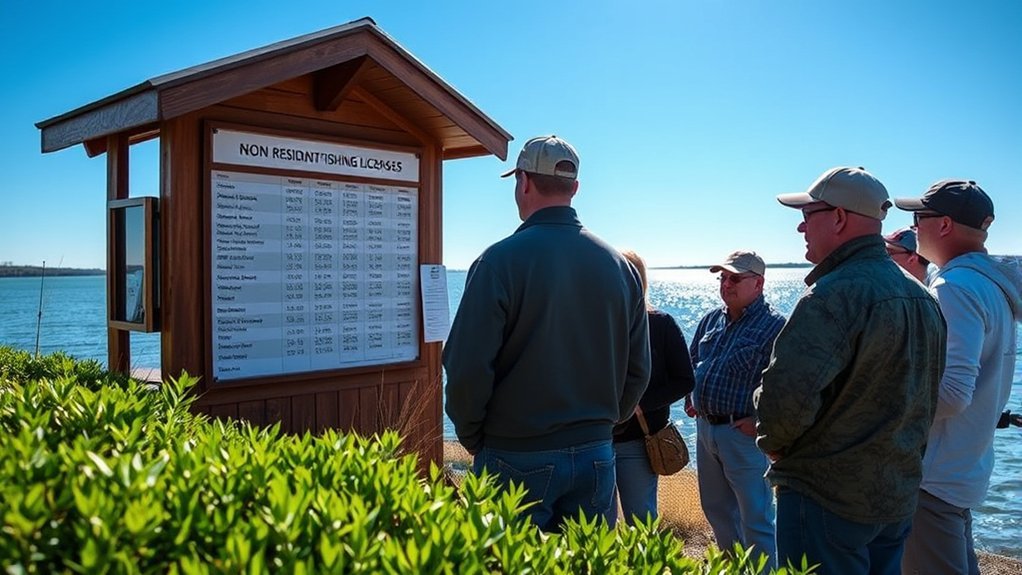
You can buy an Illinois non-resident fishing license through the official ExploreMoreIL licensing system, an authorized license vendor, or IDNR customer service.
- Choose the correct duration. Select the annual, 3-day, or 24-hour non-resident sport fishing license.
- Check your target species and water. Add an Inland Trout Stamp or Lake Michigan Salmon Stamp when required.
- Create or retrieve your customer account. IDNR states that a valid Social Security number is required for a license purchase. Contact IDNR before the trip if you cannot complete the standard account process.
- Confirm the dates and license year. Pay close attention when purchasing around March 1 so you do not select a license that expires sooner than expected.
- Review the total. A transaction charge may be added depending on the sales channel.
- Save your license. Download the license document to your phone or print a copy before traveling to an area with weak service.
- Carry it while fishing. Keep the digital or printed license, required stamps, and any exemption documentation available for inspection.
The official IDNR License Sales, Vendors and Information page provides the current purchase links and vendor resources.
Pro Tip: Save the license PDF to your phone rather than relying on an email link or live account login. An electronic copy is accepted, and a saved file remains available when cellular service is poor.
Products Worth Considering


Perfect Dimensions: This decorative license plate measures 6 inches by 12 inches, designed specifically to fit the front of your vehicle as a vanity plate that adds personality and style to your car's appearance

Material :High-Quality Metal Aluminum With High Gloss Stamped Metal License Plate.Lightweight, Waterproof,Anti-Rust And Very Durable.
When Does a 2026 Illinois Annual Fishing License Expire?
Illinois annual fishing licenses do not automatically renew. When a new license year begins, you purchase the new annual product through your account, a vendor, or customer service.
When the 2026 License Became Available
The 2026 Illinois license year began March 1, 2026. An annual fishing license purchased on or after that date expires March 31, 2027. The current fishing-regulation guide covers rules effective April 1, 2026, through March 31, 2027.
This creates an important buying window in late February. A license bought before March 1 may be assigned to the previous license year and expire on March 31 of that same calendar year.
What You Need to Buy the New License
Use your existing ExploreMoreIL customer profile when possible. Confirm that your name, date of birth, identification information, and contact details are correct before checkout. IDNR’s licensing page states that a valid Social Security number is required for a license purchase.
A non-resident does not generally “renew residency” with a utility bill or bank statement. Special military, disability, or other exemptions have their own documentation rules.
Warning: Licenses are non-refundable. When buying near March 1, verify the displayed license year and expiration date before completing payment.
Who Can Fish Without an Illinois Non-Resident License?
Most non-residents age 16 or older need a license, but Illinois law and IDNR regulations provide several limited exceptions. Do not assume an exemption applies without checking its exact conditions.
- Anglers under 16: Resident and non-resident anglers under 16 may fish without a sport fishing license.
- Qualifying disabled veterans: Resident and non-resident veterans who are certified as having at least a 10% service-connected disability or who receive a total disability pension may fish without a license, provided the disability does not prevent safe fishing. Proof should be carried.
- Free Fishing Days: Illinois held its 2026 Free Fishing Days from June 19 through June 22. Those dates have passed. During that designated period, a fishing license, Inland Trout Stamp, and Lake Michigan Salmon Stamp were not required, although all other regulations still applied.
- IDNR-licensed daily fee fishing areas: Anglers fishing at qualifying fee fishing areas licensed by IDNR do not need a sport fishing license or Inland Trout Stamp for that activity.
- Special therapeutic or group permits: IDNR may issue no-cost permits for certain supervised group events or therapeutic fishing programs.
Disabled Non-Residents Who Are Not Qualifying Veterans
Illinois’s general disability exemption for a state Class 2 disability identification card applies to Illinois residents. A non-resident with a disability does not automatically receive that exemption. The separate disabled-veteran provision can apply to both residents and non-residents when its requirements are met.
Active-Duty Military Members
Active-duty military or veteran status is not a blanket no-license rule for every non-resident. The leave exemption applies to a person who entered the Armed Forces from Illinois, remains an Illinois resident, and is on ordinary or emergency leave. Separate resident military and veteran fee programs have their own residency and service requirements. A different rule applies to qualifying disabled veterans: under 515 ILCS 5/20-5, a veteran with at least a 10% service-connected disability or a total disability pension may fish without a sport fishing license when the statutory safety condition is met.
Private Property
An owner or qualifying tenant who resides on the land may fish without a license in waters wholly contained on the property or flowing over the property within its boundaries. This exemption does not apply to club lakes, organizational lakes, subdivision lakes, or lake developments. Guests normally need a license unless another exemption applies.
Boundary Rivers and Neighboring-State Licenses
A non-resident who holds a valid sport fishing license from a state bordering Illinois may receive limited license recognition on specified boundary rivers adjoining that state. This is reciprocal river recognition, not a statewide Illinois fishing privilege.
- Iowa: Illinois and Iowa recognize either state’s sport fishing license for hook-and-line fishing on the Mississippi River proper forming the common boundary, including backwater lakes and sloughs contiguous with the main channel. The agreement does not authorize fishing in opposite-state tributaries or attaching gear to the opposite state’s main bank when you are not licensed there.
- Missouri: Either state’s license is recognized on the Mississippi River and qualifying backwaters within the Illinois-Missouri boundary. Tributaries are excluded, while certain oxbow waters crossed by the boundary may be included.
- Kentucky: Illinois and Kentucky recognize either state’s sport fishing license on the main stem and from the banks of the Ohio River where it forms the boundary, excluding embayments and tributaries.
- Indiana: Either state’s sport fishing license is recognized on the Wabash River forming the common boundary, but the agreement does not authorize fishing from land, tributaries, bayous, or backwaters in the state where you are not licensed.
Boundary rules also control which state’s fishing regulations apply and can include additional restrictions. Check the boundary-river section of the 2026 Illinois Fishing Regulations for the exact river and location before relying on another state’s license.
Note: An exemption from the license requirement does not normally exempt an angler from seasons, legal fishing methods, site closures, size limits, or daily harvest limits.
What Documents Should a Non-Resident Carry?

Keep enough documentation with you to show that you are licensed or legally exempt. IDNR allows an electronic copy of a fishing license, so a saved PDF on your phone can be used instead of a paper copy.
| Situation | What to Have Available |
|---|---|
| Standard licensed angler | A valid digital or printed sport fishing license and any required stamp |
| Qualifying disabled veteran | Official documentation showing the qualifying service-connected disability or total disability pension |
| Boundary-river angler | The valid bordering-state license and knowledge of the exact waters where recognition applies |
| Private-property exemption | Information showing ownership or qualifying tenancy and residence on the land, if requested |
A government-issued photo ID is also useful for confirming your identity, resolving account problems, or supporting exemption documents. Present your license and related documentation to a conservation police officer when lawfully requested.
Where to Buy a Non-Resident Fishing License
Products Worth Considering

Magnet measures 3.50 inches wide by 1.75 tall
LPG Apparel Co. Big Game Sport Fishing Vanity Front License Plate Tag | Made in the USA. Our plates feature famous marine artists sublimated on premium metal plates! to last years in front of your vehicle
Official Online Purchase
The fastest option for many visitors is the official ExploreMoreIL website. The system allows you to create or retrieve an account, select the license and stamps, pay, and download the resulting documents.
Check that the site address is correct before entering personal or payment information. Avoid third-party websites that imitate a government licensing page or charge unnecessary service fees.
Authorized In-Person Vendors
Authorized sporting-goods retailers, bait shops, and other license agents may sell Illinois fishing licenses. Vendor participation can change, so use the official IDNR vendor list rather than assuming a particular chain or location currently sells licenses.
Bring the identification and customer information needed to locate or create your IDNR account. Ask the vendor to confirm the license year, duration, stamps, and final transaction total before payment.
Phone and IDNR Assistance
IDNR’s fishing FAQ lists customer service at 866-716-6550 for license purchases and assistance. The licensing division can also help with customer-account problems, special documentation, or uncertainty about the correct product.
Before traveling to an IDNR office or retail vendor, confirm its current hours and available services.
Additional Fees, Stamps, and Replacement Costs
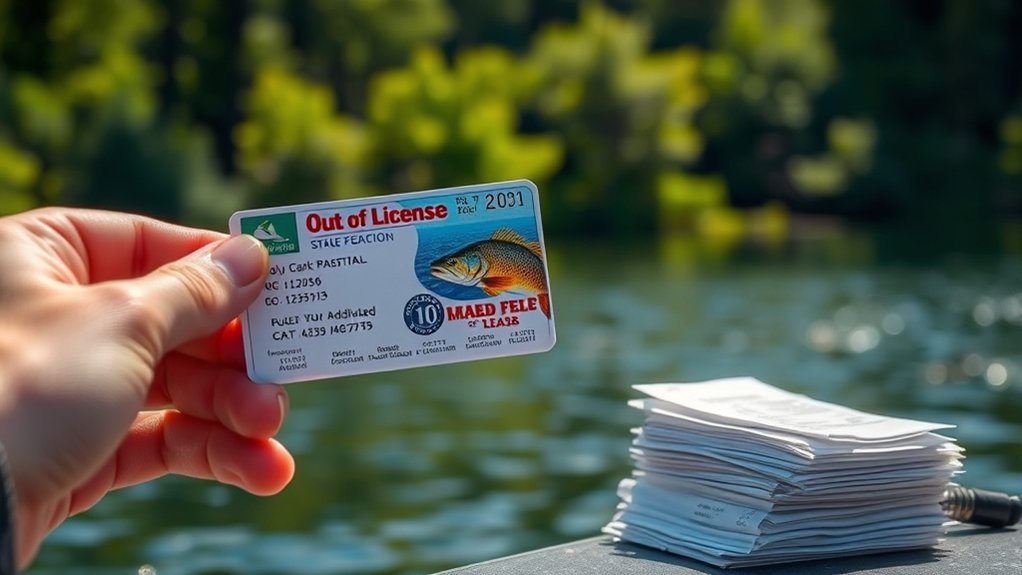
The published license price may not equal your final checkout total. Your total can include a species stamp and a transaction or replacement charge.
| Possible Cost | Amount or Treatment | What to Know |
|---|---|---|
| Annual license | $31.50 | Base non-resident annual sport fishing privilege |
| 3-day license | $15.50 | Base short-trip privilege |
| 24-hour license | $10.50 | Base single-outing privilege |
| Inland Trout Stamp | $6.50 | Required for licensed anglers taking trout outside Lake Michigan |
| Lake Michigan Salmon Stamp | $6.50 | Required for licensed anglers taking salmon or trout in Lake Michigan |
| Sales transaction charge | Varies | Review the current online checkout or vendor total |
| Online reprint | Generally free for an online-purchased license | Sign in and download the license document again |
| Vendor replacement | Official IDNR pages conflict | The 2026 fishing guide and iFish FAQ list $3 per item plus a small transaction fee, while IDNR’s separate reprint page says $5 for an OTC vendor reprint; confirm the current vendor total |
Online-purchased licenses can generally be reprinted without charge through the licensing account. For vendor reprints, current official IDNR sources are inconsistent: the 2026 fishing guide and iFish FAQ list a $3 replacement fee per item plus a small transaction fee, while the separate IDNR reprint page says an over-the-counter vendor reprint costs $5. Confirm the displayed or quoted amount before paying.
Note: Because IDNR’s own replacement guidance currently shows different vendor amounts, this guide does not present one fixed vendor-reprint price as universally correct.
Fishing Legally After You Buy the License
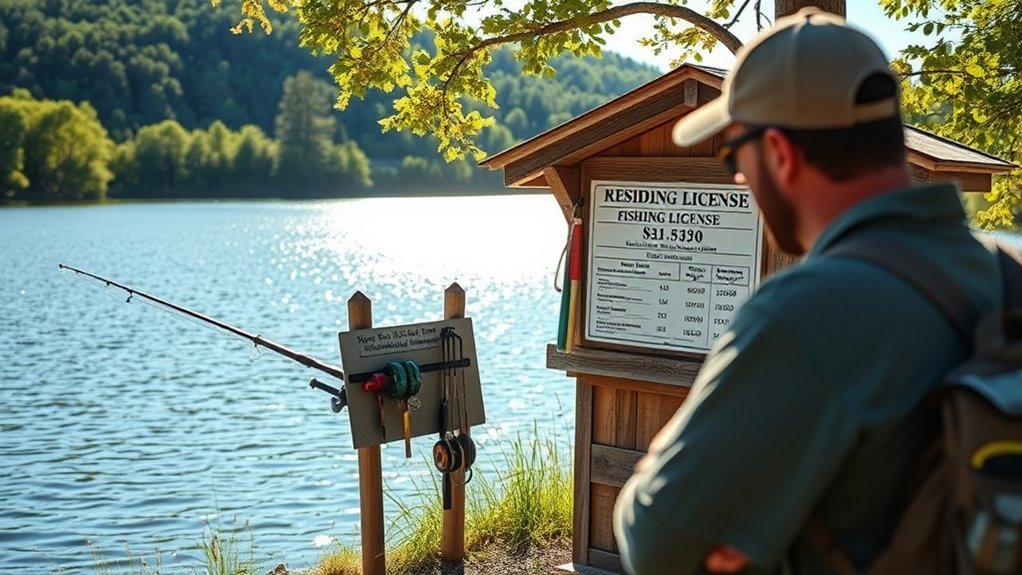
A valid fishing license is the starting point, not the complete set of rules. Illinois has statewide regulations and many site-specific rules that can change by waterbody, species, season, and fishing method.
Your license gives you the privilege to fish; the current regulations determine where, when, how, and what you may legally catch.
- Check open and closed seasons for the target species.
- Follow daily harvest, possession, and minimum- or maximum-length limits.
- Review site-specific restrictions for the exact lake, river, park, refuge, or access area.
- Confirm the number and type of poles, hooks, lines, or other devices allowed.
- Obtain any required trout or salmon stamp.
- Follow bait, invasive-species, fish-transport, and fish-disposal rules.
- Observe local boating, launch, parking, and user-permit requirements.
- Carry the license and supporting documents while fishing.
Do You Need a Separate License for Ice Fishing?
No. Illinois does not require a separate recreational ice-fishing license. A non-resident age 16 or older generally uses the same annual, 3-day, or 24-hour sport fishing license required for open-water fishing.
Ice anglers must still follow all applicable fishing regulations, site closures, equipment restrictions, and access rules. Always evaluate ice thickness and local conditions independently; a fishing license is not a statement that the ice is safe.
What Species Can a Non-Resident Catch?
A non-resident sport fishing license is not limited to one species. It can cover lawful sport fishing for species such as bass, bluegill, crappie, catfish, walleye, northern pike, trout, salmon, and others where seasons and local rules permit.
The species available and legal harvest limits vary by water. Trout and salmon may require the applicable stamp, and some waters use stricter site-specific limits than the statewide rules.
What Happens if You Fish Without a Required License?
Fishing without the required license or stamp can lead to a citation and other enforcement consequences. Violations involving unlawful equipment, closed areas, protected species, or excess harvest may create additional penalties.
Use the current IDNR fishing guide rather than relying only on an old license receipt, sign, social-media post, or general article.
Frequently Asked Questions
Can a non-resident fish in Illinois without a license?
Sometimes. Non-residents under 16 do not need a sport fishing license. Other limited exceptions include qualifying disabled veterans, designated Free Fishing Days, qualifying IDNR-licensed fee fishing areas, certain private-property situations, and limited boundary-river recognition. Most other non-residents age 16 or older need a license.
How much is an Illinois non-resident fishing license in 2026?
The annual non-resident license is $31.50, the 3-day license is $15.50, and the 24-hour license is $10.50. A $6.50 Inland Trout Stamp or $6.50 Lake Michigan Salmon Stamp may also be required, and a transaction charge may apply.
Do non-residents need a separate ice-fishing license?
No. The normal Illinois non-resident sport fishing license covers ice fishing. The angler must still follow the current equipment, access, season, species, and site-specific rules.
Do I need a trout or salmon stamp in addition to my license?
A licensed angler taking trout in Illinois waters other than Lake Michigan generally needs a $6.50 Inland Trout Stamp. A licensed angler taking salmon or trout in the Illinois portion of Lake Michigan generally needs a $6.50 Lake Michigan Salmon Stamp. Anglers who are exempt from the sport fishing license requirement are also exempt from those stamps under the current IDNR guide.
Can I use a neighboring state’s fishing license in Illinois?
Only in limited boundary-river situations. Illinois may recognize a valid license from an adjoining state on specified portions of the Mississippi, Ohio, or Wabash rivers. Recognition does not extend to all Illinois waters, tributaries, backwaters, embayments, or banks. Check the current boundary-river rules for your exact location.
Can I show my Illinois fishing license on my phone?
Yes. IDNR’s current fishing FAQ says an electronic copy is allowed. Save the license PDF directly to your device so it remains available without an internet connection.
Where can I buy an Illinois non-resident fishing license?
Buy through the official ExploreMoreIL system, a DNR Direct license and permit vendor, or IDNR customer service at 866-716-6550. Check the license year, duration, required stamps, and final total before paying.
Do I need a license if I only help my child or grandchild fish?
If you only watch and do not participate, you do not need a license just because the child is fishing. If you cast, bait the hook, set the line, or help reel in fish, Illinois treats that as participating in fishing and you should be properly licensed unless another exemption applies.
When does a 2026 Illinois annual fishing license expire?
A 2026 annual license purchased on or after March 1, 2026, expires March 31, 2027. Licenses do not provide a rolling 12 months from the purchase date.
Conclusion
For most visitors age 16 or older, fishing legally in Illinois starts with choosing the correct non-resident sport fishing license: $31.50 annually, $15.50 for three days, or $10.50 for 24 hours. Check whether you also need a trout or salmon stamp, save a digital copy of the license, and review the rules for the exact waterbody before fishing. When you are ready to buy, use the official ExploreMoreIL licensing system or an IDNR-authorized vendor.
Exemptions exist, but they are narrower than many anglers expect. Age, qualifying disabled-veteran status, private-property conditions, boundary-river agreements, and designated fishing events all have specific requirements. When in doubt, confirm the rule with IDNR before relying on an exemption.
Sources
- Illinois Department of Natural Resources — Fishing Licenses — current license products, prices, purchase availability, and license-year notice.
- 2026 Illinois Fishing Regulations — non-resident fees, stamps, exemptions, expiration rules, boundary waters, and statewide regulations.
- Illinois General Assembly — 515 ILCS 5/20-5 — statutory license requirement and major exemptions.
- IDNR License Sales, Vendors and Information — official purchase channels, vendor resources, and customer requirements.
- I Fish Illinois FAQ — digital licenses, age rules, private-water guidance, replacement information, and common licensing questions.
- IDNR Military Members and Veterans — military eligibility, residency conditions, documentation, and veteran benefits.
- IDNR Reprint an Online License — online reprint instructions and the separate OTC vendor-reprint fee statement.
