
You’ll usually pay less for a senior fishing license—many states cut fees for anglers about 60–65+ or waive them entirely, with Indiana offering reduced rates for residents 64+ and exemptions for those born before April 1, 1943. Expect lower annual fees, occasional free licenses at 65+, but still buy required stamps (trout, conservation, special waters) separately. Carry ID and your license while fishing to avoid fines, and continue for specifics on costs, stamps, and purchase options.
Understanding Senior Fishing License Eligibility
Although rules vary by state, you’ll generally need a senior fishing license once you reach the state’s specified age (for example, Indiana requires residents born after March 31, 1943, who are 64 or older to obtain one), and you’ll typically have to show proof of age when buying the permit.
You should verify eligibility against local fishing regulations and confirm required documentation before purchase. Data show senior licenses are commonly discounted versus standard adult permits, reducing financial barriers and encouraging continued participation in low-impact recreation.
When you apply, officials perform age verification—driver’s license, birth certificate, or state ID—to guarantee compliance and accurate recordkeeping. Some jurisdictions further lower fees or waive them entirely for the oldest cohorts, but you can’t assume uniformity; consult your state wildlife agency for exact pricing tiers and thresholds.
Following these protocols helps maintain sustainable harvest limits and supports conservation funding while keeping access affordable for aging anglers.
State-by-State Senior License Discounts
Now that you know who qualifies for a senior permit and what documentation states usually require, it helps to compare how much you’ll actually pay — because senior discounts vary widely.
You’ll find state regulations shape both eligibility and pricing, and those rules influence conservation funding and fishing benefits for communities. Many states offer significant reductions; a few waive fees entirely for residents over certain ages.
Check local wildlife agency guidelines for precise thresholds and required ID.
- Indiana: special senior license for residents 64+ with reduced fee.
- States with fee waivers: select jurisdictions eliminate costs for 65+ residents.
- Variable discounts: many states cut fees substantially to boost participation.
- Promotions: seasonal programs can further lower costs and increase access.
- Action step: consult your state agency site to confirm current rates, rules, and conservation impacts.
You’ll want to verify exact costs and program details regularly, since state regulations and promotions change and affect both your access and local conservation funding.
How Much Do Senior Fishing Licenses Cost?
You’ll find senior fishing licenses are generally priced below standard adult permits, with many states offering steep discounts or waivers for those 65 and older.
Eligibility rules vary — for example, Indiana requires residents aged 64+ born after March 31, 1943 to carry a senior license — so check your state’s specific age cutoffs and residency requirements.
These reduced fees help maintain access for older anglers while directing funds to habitat conservation and fishery management.
Products Worth Considering

Senior License Pricing
Many states cut fishing-license costs for older anglers, and in Indiana anglers born after March 31, 1943 who are 64 or older pay a reduced senior fee compared with the standard resident license.
You’ll find senior fishing trends show lower fees improve participation and stewardship while remaining aligned with conservation funding.
For clarity, consider these concise points:
- Senior licenses in Indiana cost less than regular resident licenses, increasing affordability.
- Several states offer steeper discounts or waive fees for residents 65+, varying by jurisdiction.
- Senior licenses generally grant the same access as adult licenses; trout/salmon may still need a stamp.
- Pricing differences appear in fishing license comparisons across states; policies reflect budget and conservation goals.
- Always verify current local agency rates and rules before you fish.
Eligibility and Discounts
Although rates vary by state, senior fishing licenses are typically priced below standard adult licenses to keep fishing affordable for anglers 64 and older. Indiana specifically requires a reduced-fee senior license for residents born after March 31, 1943.
You’ll find most states reduce fees for seniors and many waive them at 65+, but specifics differ. Check your state wildlife agency for eligibility windows, residency rules, and exact pricing. You’ll need ID proving age to claim discounts.
Tracking senior fishing trends shows increased participation when costs drop, supporting conservation funding while expanding access. Lower fees promote fishing health benefits — physical activity and mental wellbeing — and sustain license revenue streams that finance habitat protection and enforcement.
Special Senior Permit Types and Add‑Ons
One or two add‑ons can change your season: besides the reduced‑fee senior fishing license available to Indiana residents aged 64 and older (born after March 31, 1943), you’ll often need species‑specific permits like a Trout/Salmon stamp to legally take those fish.
You’ll also see optional items that protect populations and extend your opportunities.
- Trout/Salmon stamp: required for harvest of those species; supports hatchery programs.
- Waterbody‑specific permits: access to managed lakes or stocked streams.
- Conservation stamps: funding habitat restoration and monitoring.
- Multi‑year or discounted bundles: occasional senior promotions save money across seasons.
- Educational access: workshops teaching senior fishing techniques, increasing fishing community benefits.
Check state tables: Indiana ended lifetime licenses in 2005, so temporary add‑ons matter.
Use permit data to match your target species and location.
Prioritize stamps that fund habitat and population surveys; they maintain catch rates and sustainability.
Verify current offers with local regulations before planning trips.
How to Purchase a Senior Fishing License

You can buy a senior fishing license online through the Indiana wildlife agency’s website or in person at authorized retailers like sporting goods stores and bait shops.
Bring valid ID proving you’re over 64 to verify eligibility and guarantee compliance with state rules.
Ask about current reduced fees, discounts, or promotions at purchase to maximize savings and support sustainable fishing practices.
Products Worth Considering

Premium Finish: Matte black coating provides a sleek, modern appearance that resists fingerprints and complements any vehicle style
Premium Quality – Our high-quality license plate frames are crafted from durable zinc alloy metal, featuring a vibrant design on both the top and bottom. Each design is coated with a protective epoxy layer to shield it from weather, UV rays, and outdoor elements, ensuring long-lasting beauty and resilience for your vehicle’s license plate frame.
Where to Buy
Because buying a senior fishing license is straightforward, you can complete the purchase online via the Indiana wildlife agency’s website for the quickest access or visit one of more than 500 authorized in-person retailers statewide, including sporting goods stores and bait shops.
You’ll use online purchases for speed and records; in-person purchases let you ask about promotions and confirm eligibility. Expect to show age identification to meet state requirements.
- Use the agency website for instant issuance and payment records.
- Visit authorized retailers for face-to-face assistance and local discount info.
- Carry ID proving age to guarantee reduced-rate eligibility.
- Ask retailers about time-limited promotions to lower cost.
- Prefer online purchases for conservation reporting and reduced paperwork.
What to Bring
While purchasing a senior fishing license, bring a government photo ID that shows your birthdate, proof of residency if your state requires it, and a method of payment accepted by the agency or retailer (credit/debit card or cash), since these items verify eligibility, determine fee levels, and complete the transaction quickly.
You can buy online via your state wildlife agency or at authorized retailers like bait shops and sporting goods stores; online purchases often save time and may include discounts.
Meet identification requirements by presenting age documentation to qualify for reduced fees, typically available to those 65+.
Bring basic fishing gear receipts only if required for bundled offers.
Check your state’s site for exact eligibility, pricing, and retailer lists before you go.
Exemptions and Reduced Rates for Veterans and Disabled Seniors
Although Indiana requires most residents to hold a fishing license, the state provides clear exemptions and reduced-rate options to promote access for veterans, disabled anglers, and certain senior groups.
You’ll find targeted veteran benefits and disability exemptions that reduce cost barriers while supporting conservation goals.
- Disabled American veterans qualify for discounted resident licenses, improving access without compromising regulatory compliance.
- If you were born before April 1, 1943, you’re exempt from license requirements; this includes many seniors.
- Seniors 64+ born after March 31, 1943 must obtain a reduced-fee senior license to fish legally.
- Full-time military personnel on approved leave are exempt when carrying ID and leave orders.
- Residents of state mental rehabilitation facilities are exempt during supervised fishing activities.
These policies balance equitable access with harvest monitoring and habitat protection.
When you claim an exemption or reduced rate, carry documentation to guarantee compliance and help wildlife managers maintain accurate participation and conservation data.
One‑Day and Short‑Term Options for Senior Anglers
The exemptions and reduced-rate programs for veterans and disabled seniors often make annual licenses unnecessary, but if you fish only occasionally you can save money with Indiana’s one-day and short-term senior options.
You can buy a reduced-rate one-day license or a seven-day short-term license designed for intermittent anglers and vacationers, cutting cost without compromising legal participation. Check current fees with the Indiana DNR before you go; these options typically run substantially below annual rates and appear in agency price lists.
For conservation-minded anglers, short-term licenses still fund habitat work, stocking, and enforcement — your purchase contributes proportionally to resource management.
If you belong to senior groups that organize outings, recommend short-term licenses for infrequent participants to minimize barriers to access while maintaining compliance.
Also monitor seasonal promotions and local wildlife agency notices, since periodic discounts or additional short-term offers can further lower your per-trip cost and support continued, sustainable use of fisheries.
Saving Money: Bundles, Group Rates, and Promotions

If you join a local club or watch for retailer promotions, you can cut your per‑trip cost substantially by stacking group rates, gear discounts, and event freebies; many states waive or deeply reduce license fees for residents 65+, clubs often secure bulk pricing, and community tournaments frequently offer free one‑day permits that funnel participants into conservation funding.
You’ll save by combining: state senior fee waivers, club group licenses, retailer deals on fishing gear, and community events that subsidize access. Track dates, eligibility, and redemption rules; prioritize programs that channel revenue to habitat work so your savings support conservation outcomes.
Combine senior waivers, club licenses, retailer deals, and event permits—track rules and favor programs that fund habitat conservation.
- Join a local angler club to access bulk license pricing and age‑targeted workshops.
- Monitor retailer promotions for bundled discounts on fishing gear plus permit rebates.
- Attend community events that issue free one‑day permits tied to habitat funding.
- Use group rate purchases to lower per‑person license costs for trips.
- Verify state senior fee waivers before buying to avoid duplicate payments.
Products Worth Considering

FISHING LICENSE HOLDER W/ZIP CLOSURE

【MATERIAL】: oFloral License plate frame is made from premium quality aluminum, which can provide long-lasting protection from corroding, rusting and aging, durability for long lasting usage.Personalized Car Frame Can Perfect to Put on Your Front of Car or for Decorative Purposes Around the House Like in Your Bedroom, Garage, Basement, Ect.

【MATERIAL】: oFloral License plate frame is made from premium quality aluminum, which can provide long-lasting protection from corroding, rusting and aging, durability for long lasting usage.Personalized Car Frame Can Perfect to Put on Your Front of Car or for Decorative Purposes Around the House Like in Your Bedroom, Garage, Basement, Ect.
Required Stamps and Additional Fees for Seniors
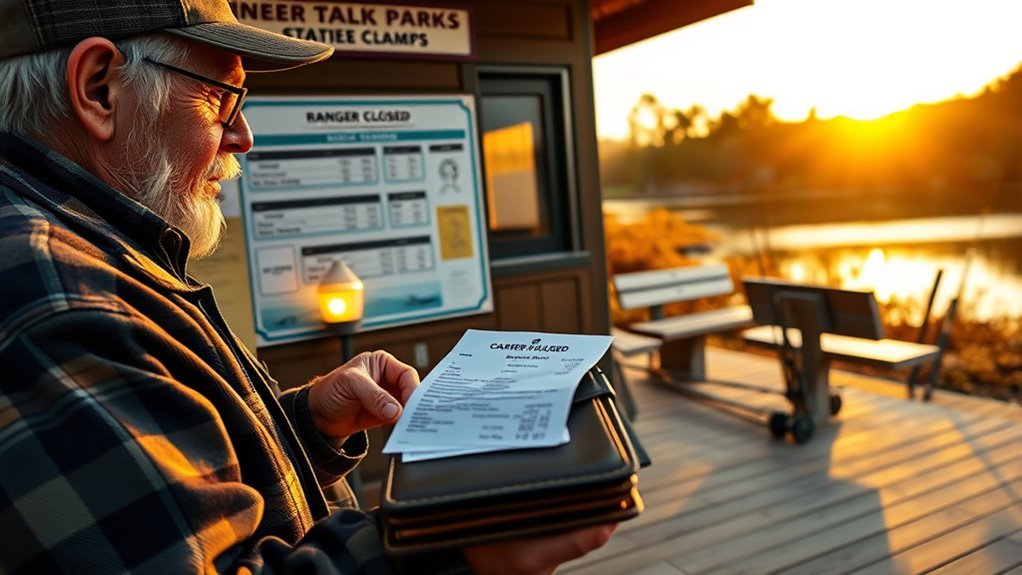
When you buy a reduced‑fee senior fishing license in Indiana (available to anglers 64 and older), know that it typically covers general freshwater fishing but doesn’t replace activity‑specific stamps: for example, a trout/salmon stamp is required if you plan to fish those species and is sold separately.
You should treat this as a stamps overview: the basic license grants broad privileges, while targeted stamps authorize take or access for specific species and fisheries.
Purchase options include online, authorized retailers, or phone, so you can obtain required stamps before you fish. Fees for stamps vary by state and by stamp type, so confirm current costs and age thresholds where you’ll fish.
Compliance aligns with fishing regulations and supports conservation programs that fund habitat and stocking.
Plan your budget to include any supplemental charges; failing to hold a necessary stamp can result in citations and undermines resource management efforts.
Verify stamps and fees before each trip to stay legal and conserve fisheries.
Rules, Penalties, and Carrying Proof of License

Having the correct stamps and fees is only part of compliance; you also need to carry and show proof of a valid senior license while fishing in Indiana. You’re required to have a signed ink or signed electronic copy on you; failure to present it when requested by law enforcement can trigger fines.
License enforcement targets both possession and adherence to fishing regulations; repeated or serious violations can lead to license revocation under state fish and wildlife rules.
- If you were born after March 31, 1943, obtain a senior fishing license before fishing.
- If you were born before April 1, 1943, you’re exempt and don’t need a license.
- Keep either a printed, ink-signed license or a signed electronic version accessible.
- Expect routine checks; present your license promptly to officers.
- Violating fishing regulations can result in fines or license revocation; compliance supports conservation and sustainable fisheries.
Frequently Asked Questions
Are Senior Licenses Valid in Multiple States or Only Residency-Based?
Only residency-based licenses generally apply; you’ll need nonresident permits for other states. Check interstate fishing regulations and a senior discounts comparison to find reciprocal agreements, rates, and conservation rules before you travel and fish.
Do Senior Fishing Licenses Cover Saltwater and Freshwater Fishing?
Yes — it depends: you’ll need state or federal endorsements for saltwater regulations and specific freshwater limits; some senior licenses cover both, but you should check jurisdictional rules, endorsements, bag limits, and seasonal closures before fishing.
Can Nonresident Seniors Get the Same Reduced Rates as Residents?
Usually no — nonresident eligibility for reduced senior rates varies by state, and you’ll typically pay full nonresident fees. Check local fishing regulations and agency data to confirm residency requirements, exemptions, and conservation fee allocations.
Are There Age Verification Requirements Beyond Driver’s License?
By and large, no — you’ll need age verification methods beyond a driver’s license in some states. Acceptable documents include birth certificates, passports, or state ID; agencies require certified copies to guarantee accurate, conservation‑focused eligibility.
Do Senior Licenses Include Ice-Fishing or Tournament Participation?
Yes — your senior license usually covers ice fishing regulations and permits tournament eligibility, but agencies vary; check state-specific rules for season dates, gear limits, and tournament registration to guarantee compliance and support conservation data goals.
Conclusion
You’ll save serious money and still protect fish populations — think hundreds of dollars over a decade, not pocket change — by grabbing the right senior license, stamps, and add‑ons for your state. Check eligibility, compare state discounts, and prefer bundles or short‑term permits when you only fish occasionally. Carry proof, follow rules, and report catches. These small, data‑backed steps cut costs and conserve fisheries so tomorrow’s anglers actually get a chance to catch something worth telling.
