
A California nonresident fishing license costs $174.14 in 2026 and remains valid for 365 days from the purchase date. Visitors can also buy a one-day license for $21.09, a two-day license for $32.40, or a ten-day license for $64.54. Your final cost may rise if your location, gear, or target species requires a validation or physical report card.
Last updated: July 28, 2026
Quick Answer
In 2026, a California 365-day nonresident sport fishing license costs $174.14. Short-term licenses cost $21.09 for one day, $32.40 for two consecutive days, or $64.54 for ten consecutive days. One-day and two-day licenses are exempt from the Ocean Enhancement Validation, but the ten-day license is not.
Key Takeaways
- The 2026 nonresident annual license is a 365-day license, not a calendar-year license.
- Only one-day and two-day licenses waive the Ocean Enhancement Validation; ten-day and annual licenses do not.
- Report cards may be required even for children, public-pier anglers, and people fishing on a Free Fishing Day.
- Most licenses and validations can be displayed in the official CDFW License App, but physical report cards must still be carried.
- Always check the current freshwater or ocean regulations before fishing because seasons and emergency restrictions can change.
Who Needs a Nonresident Sport Fishing License in California?
Anyone age 16 or older generally needs a valid California sport fishing license before attempting to take fish, mollusks, crustaceans, other invertebrates, amphibians, or reptiles in California’s inland or ocean waters. “Take” includes attempting to pursue, catch, capture, or kill an animal, so the rule can apply even when you do not catch anything.
California generally treats you as a resident for licensing purposes if you have lived continuously in the state for at least six months immediately before applying. Active-duty members of the U.S. Armed Forces and people enrolled in the Job Corps may also qualify as residents under state law. Everyone else normally purchases a nonresident license.
You can review the official requirements on the CDFW Sport Fishing Licenses and Report Cards page.
When Is a Fishing License Not Required?
A sport fishing license is generally not required in these situations:
- Anglers younger than 16: Children age 15 and younger may fish without a sport fishing license.
- Qualifying public ocean piers: Recreational anglers may fish without a license from a structure that meets California’s legal definition of a public pier.
- Free Fishing Days: California’s 2026 Free Fishing Days are July 4 and September 5.
Warning: A license exemption does not waive bag limits, size limits, seasons, gear restrictions, closures, or report-card requirements. A child, public-pier angler, or Free Fishing Day participant may still need a physical report card when fishing for a regulated species.
What Counts as a Public Pier?
The exemption does not apply to every dock, seawall, jetty, or marina. A qualifying public pier must generally be publicly owned, connected to the mainland or a named natural island, provide free and unrestricted public access, and have been built or currently function primarily for fishing access.
Certain publicly owned jetties and breakwaters also qualify when they form the most seaward protective boundary of an ocean harbor. Fishing from an adjacent beach, rock wall, private dock, boat, or nonqualifying structure usually requires a license. CDFW maintains a map and list of qualifying public piers, jetties, and breakwaters.
2026 California Nonresident Fishing License Fees
The official 2026 nonresident 365-day sport fishing license costs $174.14. It is valid for 365 consecutive days beginning on the purchase date.
| License | 2026 Fee | Validity | Approximate Cost Per Day |
|---|---|---|---|
| One-Day Sport Fishing License | $21.09 | One specified day | $21.09 |
| Two-Day Sport Fishing License | $32.40 | Two consecutive days | $16.20 |
| Ten-Day Nonresident Sport Fishing License | $64.54 | Ten consecutive days | $6.45 |
| 365-Day Nonresident Sport Fishing License | $174.14 | 365 days from purchase | About $0.48 if used all year |
Products Worth Considering

CUSTOMIZE NOW – Add your personalized text. (Not embossed or stamped). Printed with a subtle shadow effect to create a dimensional look.

PREMIUM QUALITY: Crafted from high-grade materials, our License Plate is built to withstand the elements and maintain its vibrant appearance over time. It is resistant to fading, cracking, and peeling, ensuring long-lasting performance.
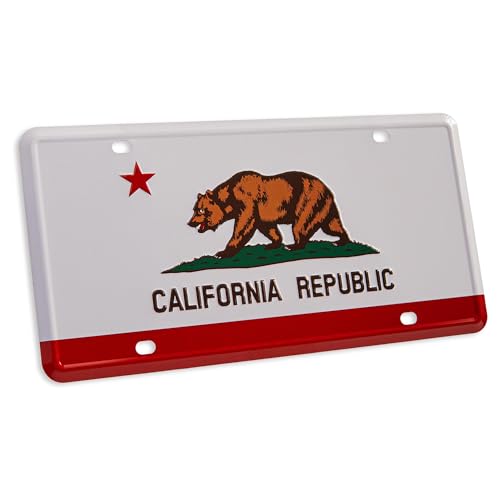
CALIFORNIA STATE FLAG DESIGN: Features a textured, raised California flag design for an authentic, high-end look and feel.
Does the Published Fee Include Handling and Application Charges?
CDFW states that most listed fees include a 5% license-agent handling fee and a 3% nonrefundable application fee. Therefore, you should use the published $174.14 figure as your starting budget rather than automatically adding another 8%.
Review the final checkout total before paying because optional shipping, duplicate documents, validations, and report cards can create additional charges. License, validation, and report-card purchases are generally nonrefundable.
What Does the Annual License Cover?
The annual nonresident license authorizes ordinary recreational fishing in California inland and ocean waters for 365 days, subject to seasons, closures, size limits, bag limits, and gear rules. It does not automatically include every validation or report card.
Validations are separate privileges tied to a location or fishing method. Report cards are separate documents used to record effort or catch for regulated species. Annual licenses and validations normally run for 365 days, but report cards follow their own species-specific seasons and deadlines.
What Do Fishing-License Fees Support?
Sport fishing license revenue helps fund California fishery management, conservation, hatchery, access, data, and enforcement activities. However, the exact allocation is determined through state law, appropriations, and program budgets rather than by dividing each individual license payment into a fixed set of percentages.
The annual license becomes less expensive than buying a third ten-day license: three ten-day licenses would cost $193.62 before any validations or report cards.
Short-Term Licenses: One-Day, Two-Day, and Ten-Day Options
Short-term licenses work well when your California trip is limited to a few specific fishing days. Choose the license that covers every day you may actively fish, including a partial arrival or departure day.
Products Worth Considering

【MATERIAL】: oFloral License plate frame is made from premium quality aluminum, which can provide long-lasting protection from corroding, rusting and aging, durability for long lasting usage.Personalized Car Frame Can Perfect to Put on Your Front of Car or for Decorative Purposes Around the House Like in Your Bedroom, Garage, Basement, Ect.

FISHING LICENSE HOLDER W/ZIP CLOSURE

Durable Material: Car license plate is crafted from high-quality ETP (electrolytic tinplate) with 2 layers of clear epoxy lacquer coating making the car tag water-proof, rust-proof, and weather-resistant
One-Day and Two-Day Pricing
The one-day license costs $21.09 and covers one specified calendar day. The two-day license costs $32.40 and covers two consecutive days.
Both options are exempt from the Ocean Enhancement Validation. That exemption can make them especially useful for short ocean trips south of Point Arguello.
- Choose one day for a single charter, guided trip, or brief outing.
- Choose two days for a consecutive weekend or two-day charter.
- Do not use a two-day license for two nonconsecutive dates.
Ten-Day Nonresident License Details
The ten-day nonresident license costs $64.54 and covers ten consecutive days. It offers the lowest daily cost among the temporary licenses, but unlike the one-day and two-day options, it is not exempt from the Ocean Enhancement Validation.
If you use a ten-day license to fish ocean waters south of Point Arguello, your base licensing cost is normally:
- Ten-day nonresident license: $64.54
- Ocean Enhancement Validation: $7.30
- Total before report cards or other privileges: $71.84
Pro Tip: The annual license starts to beat optimized combinations of temporary licenses at roughly 23 fishing days. It can make sense sooner when your dates are spread across several trips or you want flexibility to fish without buying another permit.
Required Validations and Report Cards for Visitors
Your base license may not be the only document you need. Match each validation and report card to your location, gear, and target species before leaving home.
| Validation or Report Card | 2026 Fee | When It Is Required |
|---|---|---|
| Ocean Enhancement Validation | $7.30 | Fishing in ocean waters south of Point Arguello when a license is required; not required with a one-day or two-day license. |
| Second Rod Validation | $20.26 | Using two rods or lines in eligible inland waters. It does not override artificial-lure, barbless-hook, or water-specific restrictions. |
| Recreational Crab Trap Validation | $2.98 | Taking crab with qualifying crab traps. It is not required for hoop nets or crab-loop traps. Beginning January 1, 2026, it is not required for anglers using crab traps from a commercial passenger fishing vessel. |
| North Coast Salmon Report Card | $9.21 | Fishing for salmon in the Smith River System or Klamath-Trinity River System. |
| Steelhead Report Card | $10.29 | Fishing for steelhead in inland waters. |
| Sturgeon Fishing Report Card | $8.13 | Fishing for white sturgeon during an open catch-and-release season. The 2026–2027 card becomes available August 15, 2026. |
| Spiny Lobster Report Card | $12.70 | Required for every person taking spiny lobster. |
Important 2026 Sturgeon Update
California shifted sturgeon report cards from a calendar-year schedule to a fishing-season schedule. The no-fee card applied to the transitional 2025–2026 season. The 2026–2027 card costs $8.13 and is scheduled to become available on August 15, 2026.
White sturgeon fishing is catch-and-release only. The season is closed from July 1 through September 30 and is scheduled to reopen October 1, subject to current regulations. Green sturgeon may not be taken.
Check the official CDFW Sturgeon Report Card page before planning a trip.
Note: The CDFW License App may show proof that you purchased a report card, but that electronic record is not the report card itself. You must carry the original physical report card while participating in the regulated activity.
Reduced-Fee and Free License Options
Some visitors may qualify for a reduced-fee or free sport fishing license, but eligibility depends on the exact statutory category. Being a veteran or having a disability does not automatically qualify an applicant.
Disabled Veteran Reduced-Fee License
A resident or nonresident may qualify when the person:
- Was honorably discharged from the U.S. Armed Forces; and
- Has a service-connected disability rating of at least 50%.
The 2026 fee is $10.04 when purchased through a CDFW office or $10.54 from a license agent. First-time applicants must prequalify with CDFW, normally by providing identification, a GO ID or customer record, and a VA Benefit Summary Letter documenting both discharge status and disability rating.
Recovering Service Member Reduced-Fee License
A qualifying recovering member of the U.S. Armed Forces, National Guard, or Reserve may receive the same reduced fee. CDFW requires a verification letter from a commanding officer or military medical doctor that includes the expected recovery date.
Free Licenses
California law also provides free sport fishing licenses for certain qualified applicants:
- A person who meets the state’s legal blindness criteria;
- A person with a qualifying developmental disability;
- A California resident with a severe permanent mobility impairment that requires a wheelchair, walker, forearm crutches, or a comparable device; or
- A low-income Native American who is a California resident and meets the documentation requirements.
Initial applications are reviewed before issuance, and CDFW advises allowing approximately 15 business days for processing. Validations and report cards are not automatically free and may still need to be purchased at their regular prices.
Where and How to Purchase Your License
You can purchase a California sport fishing license through several official channels:
- Online: Use the CDFW Online License Sales and Services system.
- Telephone: Call CDFW’s authorized telephone sales agent at (800) 565-1458.
- License agent: Buy from an authorized sporting-goods store, bait and tackle shop, or other independent agent.
- CDFW office: Purchase from a participating CDFW license sales office.
Online purchases generally require a Visa- or Mastercard-branded credit or debit card. CDFW license counters do not accept cash; they accept checks, money orders, and qualifying Visa or Mastercard credit or debit cards. Payment policies at independent agents may differ.
Products Worth Considering
PERSONALIZED WITH YOUR CUSTOM TEXT: Create a one of a kind license plate magnet with your name, nickname, favorite phrase, or special message. Add a personal touch to your refrigerator, locker, office, or workspace with a unique keepsake.

【Material】Our License Plate Frame Is Made Of Stainless Steel, Strong And Durable.

Standard Size: License plates for front of car measure 12" x 6", a standard size suitable for most vehicles. With four slotted mounting holes, installation is quick and easy, allowing you to easily attach to your vehicle without special tools
Using the CDFW License App
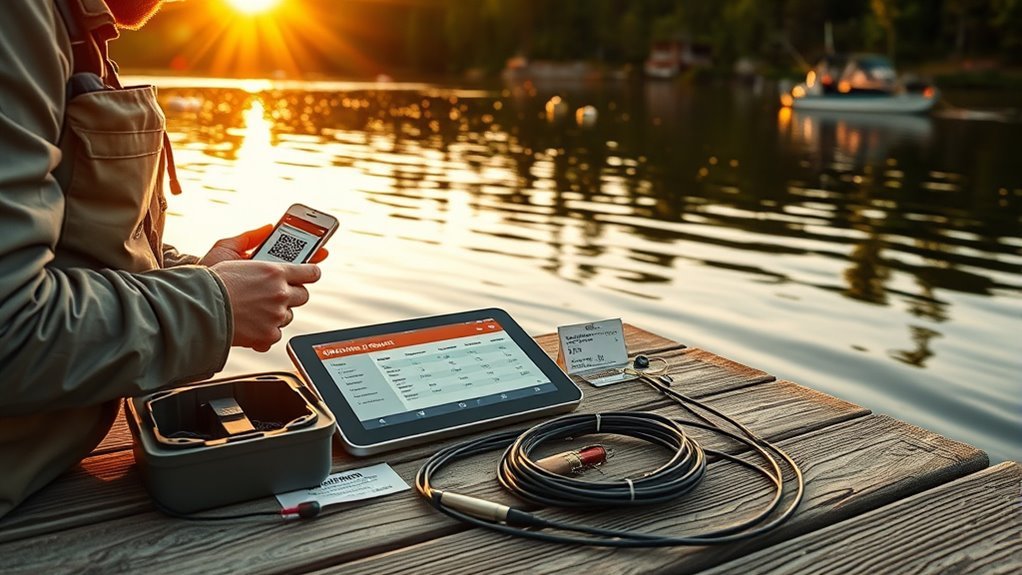
The official CDFW License App can display active annual and short-term sport fishing licenses, the Ocean Enhancement Validation, the Second Rod Validation, and the Recreational Crab Trap Validation.
You can display an eligible license in the app instead of carrying the physical license. The app can also save licenses for offline display when cellular service is unavailable.
Pro Tip: Open the app while you still have internet access and refresh your active licenses before leaving. A normal photo or screenshot of the license is not valid, and a dead phone can leave you unable to display the required document.
What to Check Before Completing the Purchase
- Confirm whether your dates are consecutive.
- Confirm whether you will fish north or south of Point Arguello.
- Ask whether your charter price includes only the boat trip or also helps arrange licenses and report cards.
- Identify every target species that requires a report card.
- Check whether you plan to use two rods in inland water.
- Verify your name, date of birth, and customer record before paying.
- Save your confirmation and make sure the license appears in the official app or on your printed document.
Reporting Harvests and Managing Your License Online
Report-card holders must report by the deadline even if they caught nothing. You can normally report through the CDFW Online License Service or mail the physical card to the address printed on it.
Common Reporting Deadlines
- North Coast salmon and steelhead: Report by January 31 of the following year.
- Spiny lobster: Report by April 30 after the season closes.
- Sturgeon: Follow the date printed on the seasonal card. For the 2025–2026 card, the reporting period ends July 31, 2026.
When you report online, save the confirmation number, write it in the space provided on the physical card when instructed, and retain the card for the required period. CDFW may request it.
A spiny lobster cardholder who fails to return the card or report online by April 30 is assessed a $21.60 non-return fee when purchasing a card for the following season.
Warning: Buying a new license does not erase an overdue report-card obligation. Report zero activity when required, keep your confirmation, and follow the deadline printed on the card.
Rules, Exemptions, and Penalties for Nonresident Anglers
Residents and nonresidents follow the same seasons, closures, bag limits, size limits, and gear restrictions. A nonresident license allows fishing from shore, private boats, and commercial passenger fishing vessels, but it does not replace any location-specific validation or species report card.
Fishing without a required license is an infraction under California Fish and Game Code §12002.2. For a first offense, the statutory fine range is $100 to $1,000. Additional assessments and the final amount can vary. A later offense within five years carries a statutory range of $250 to $1,000.
If you actually held a valid license at the time of the citation but could not display it, a court may reduce the fine to $25 when the fishing activity was otherwise lawful. That provision does not help someone who purchased the license only after being cited.
You can review the governing provisions in California Fish and Game Code Division 9.
Note: This guide provides general licensing information, not legal advice. Emergency closures, in-season actions, local rules, and species regulations can change. Check the current CDFW regulation page before every trip.
Sources
- California Department of Fish and Wildlife — Sport Fishing Licenses and Report Cards — 2026 license, validation, report-card, duplicate, and reduced-fee information.
- California Department of Fish and Wildlife — CDFW License App — electronic display, offline access, screenshot, and physical-report-card rules.
- California Department of Fish and Wildlife — Beach Fishing and Public Piers — public-pier definition, exemption limits, and qualifying locations.
- California Department of Fish and Wildlife — Free Fishing Days — 2026 dates and continuing regulatory obligations.
- California Department of Fish and Wildlife — Sturgeon Report Card — season, catch-and-release, card, and reporting information.
- California Legislative Information — Fish and Game Code Division 9 — statutory fishing-license penalties.
Frequently Asked Questions
Can I use a California nonresident license for saltwater fishing?
Yes. A California nonresident sport fishing license covers both inland and ocean recreational fishing. You may also need an Ocean Enhancement Validation when fishing south of Point Arguello and a physical report card for certain species.
Is the ten-day nonresident license exempt from the Ocean Enhancement Validation?
No. Only the one-day and two-day sport fishing licenses are exempt. A ten-day or 365-day license holder normally needs the $7.30 validation when fishing ocean waters south of Point Arguello.
Are fishing-guide services included with the license?
No. The license pays for your legal fishing privilege, not a guide, charter, boat fare, tip, equipment, bait, parking, or fish processing. Ask the operator which costs are included before booking.
Is fishing gear rental covered by the license fee?
No. Gear rental is a separate private transaction. Some guides and charter operators include rods, reels, tackle, or bait, while others charge separately.
Can I transfer my nonresident fishing license to another person?
No. California fishing licenses, validations, and report cards are issued to a specific person and may not be transferred, shared, altered, or used by someone else.
Can I fish from a private boat with a nonresident license?
Yes. A valid nonresident sport fishing license allows recreational fishing from a private boat, subject to all applicable seasons, marine protected areas, gear rules, bag limits, validations, and report-card requirements.
Can I show a screenshot of my license on my phone?
No. Electronic display must occur through the official CDFW License App. The app can store an eligible license for offline use, but an ordinary screenshot or photo is not valid.
Do I need a physical report card if my purchase appears in the CDFW app?
Yes. App-based proof of purchase does not replace a physical salmon, steelhead, sturgeon, or spiny lobster report card. Carry the original card and make required entries as you fish.
Conclusion
A California nonresident fishing license costs $174.14 for 365 days in 2026, while temporary licenses cost $21.09 for one day, $32.40 for two consecutive days, or $64.54 for ten consecutive days. The lowest advertised license price is not always your final cost, so check your fishing location, gear, target species, and reporting duties before paying.
For most visitors, the safest plan is simple: choose the correct duration, add every required validation, obtain physical report cards before the trip, load eligible licenses into the official CDFW app, and review current regulations immediately before fishing.
