Pennsylvania trout stamp cost is $14.97 for 2026, but anglers often search for a “Trout Habitat Stamp” and the state does not use that name. The required add-on is the Pennsylvania Trout Permit. It is generally required, along with a fishing license, for anglers age 16 and older who fish for trout. Separate voluntary permits support habitat and wild-trout projects but do not grant fishing privileges.
Quick Answer
Pennsylvania does not require a product officially called a Trout Habitat Stamp. For 2026, anglers age 16 and older generally need a fishing license plus a $14.97 Trout Permit to fish for trout. Optional Wild Trout/Enhanced Waters and Habitat/Waterways Conservation permits support conservation but do not replace the required Trout Permit.
Key Takeaways
- The official required add-on is the Trout Permit, not a Trout Habitat Stamp.
- The 2026 annual Trout Permit costs $14.97, including the listed issuing-agent and transaction fees.
- Most anglers age 16 and older need both a valid fishing license and the permit when Pennsylvania law defines them as fishing for trout.
- Voluntary habitat and wild-trout permits fund specific conservation work but provide no legal fishing privileges.
- Printed and digital license copies are accepted as proof of possession.
What Pennsylvania Actually Requires for Trout Fishing
The Pennsylvania Fish and Boat Commission does not list a mandatory product called a Trout Habitat Stamp. The legal requirement is a current Pennsylvania Trout Permit. Anglers who must have a fishing license generally need the permit when they fish for trout as defined by state law.
A Pennsylvania fishing license is required for most people age 16 and older. The Trout Permit is added to that license and appears on the same license document. It can be carried as a printed copy or a digital image on a phone.
The required 2026 Pennsylvania Trout Permit costs $14.97; a voluntary habitat permit cannot replace it.
At a Glance
| Time Required | No fixed processing time; the document can be printed immediately after a successful online purchase |
| Difficulty | Easy |
| Tools Needed | HuntFishPA account or an issuing agent, identification, required personal information, and payment |
| Cost | $14.97 for the 2026 annual Trout Permit, plus the cost of the required fishing license |
Pennsylvania Trout Stamp Cost in 2026: The $14.97 Trout Permit
The official 2026 Pennsylvania fee schedule lists the annual Trout Permit at $14.97 for anglers age 16 and older. The displayed price includes a $1 issuing-agent fee and a $0.97 transaction fee.
Current Permit Price
The Trout Permit is an add-on to a fishing license. Common 2026 totals are:
- Resident age 16–64: $27.97 annual license + $14.97 Trout Permit = $42.94
- Senior resident age 65 or older: $14.47 annual license + $14.97 Trout Permit = $29.44
- Non-resident: $60.97 annual license + $14.97 Trout Permit = $75.94
Multi-year Trout Permits are also available. The 2026 listed prices are $40.97 for three years, $66.97 for five years, and $131.97 for ten years.
Purchase Methods
You can buy a license and Trout Permit through the HuntFishPA online portal or from a Pennsylvania fishing-license issuing agent. County treasurer offices and Pennsylvania Fish and Boat Commission offices also sell licenses and permits.
You may buy the Trout Permit with a new license or add it later to an eligible current license. Online documents can be printed immediately or saved to a phone. In-person buyers receive a printed license document.
Pro Tip: Buy online before a busy spring weekend and save both a phone copy and a PDF backup. This reduces the risk of arriving at the water without usable proof.
License Term and Fees
Annual 2026 licenses and permits went on sale December 1, 2025, and remain valid through December 31, 2026. Pennsylvania also offers three-, five-, and ten-year options. The required Trout Permit is a regulatory fishing privilege; it should not be confused with the state’s voluntary conservation permits.
When and Where a Trout Permit Is Required
Under 58 Pa. Code § 63.20, a licensed angler is considered to be fishing for trout when any of these conditions applies:
- The angler fishes in special-regulation trout waters that require a permit.
- The angler fishes in a Wilderness Trout Stream, Class A Wild Trout Water, or a tributary of either.
- The angler fishes in a stocked trout stream or river, or its tributaries, from 12:01 a.m. on the third Monday in February through midnight May 31.
- The angler takes, kills, or possesses a trout or salmon while fishing in Pennsylvania or boundary waters.
For 2026, the third Monday in February is February 16. A permit may therefore be required even when you say you are targeting another species if you fish in a covered stocked stream, river, or tributary during the regulated period.
Warning: Do not assume the permit is needed only when you keep a trout. Location, water classification, date, and the act of fishing can trigger the requirement.
Note: Water classifications and fishing rules can change. Review the current Pennsylvania fishing regulations before each trip.
Important exceptions include people under age 16, people exempt from fishing-license requirements, qualifying institutional-license holders, anglers using a one-day tourist license, and anyone fishing on an official Fish-for-Free Day. Pennsylvania’s 2026 Fish-for-Free Days were May 24 and July 4; all other fishing rules still apply.
How Trout-Related License and Conservation Revenue Is Used
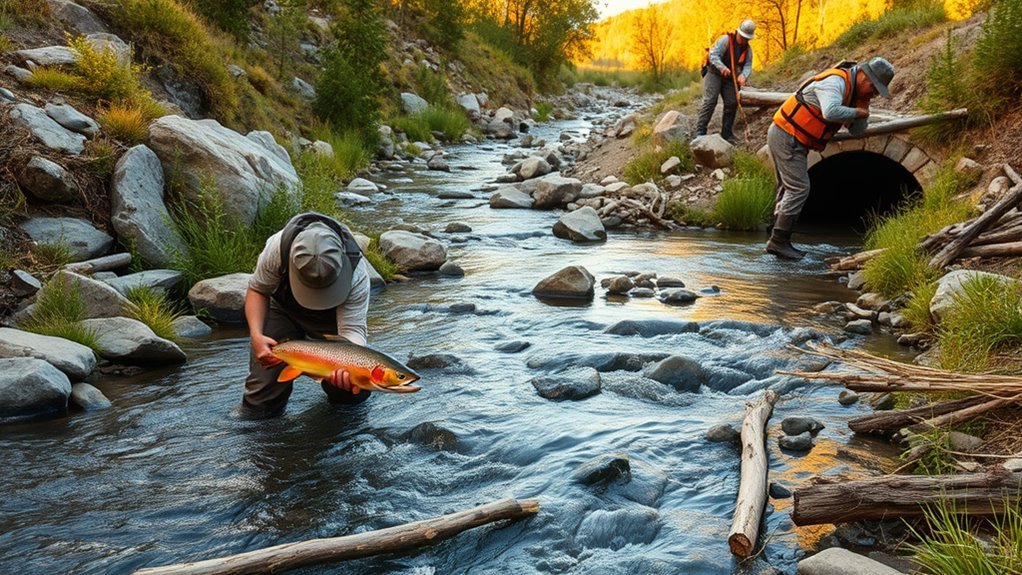
The original idea of a mandatory $10 habitat stamp creates a misleading funding picture. Pennsylvania’s required Trout Permit is part of the Fish and Boat Commission’s license-and-permit system. The agency states that it is primarily user-funded through fishing licenses, permits, boating registrations, and related fees.
Habitat-specific giving is handled more clearly through separate voluntary permits. Revenue from each voluntary permit is placed in an account used for the named program. These purchases are optional and do not create any additional fishing privilege.
Since 2019, Pennsylvania has invested more than $815,000 in special projects funded by voluntary permit sales.
Voluntary Permits That Support Habitat and Wild Trout

Anglers who want their extra payment directed toward conservation can choose from two relevant voluntary products:
Voluntary Wild Trout and Enhanced Waters Permit
This permit supports wild-trout fisheries, habitat improvement, research, and work intended to maintain or improve Pennsylvania’s recognized wild-trout waters. The Fish and Boat Commission says money from this permit is not used for trout stocking.
Voluntary Habitat/Waterways Conservation Permit
This broader permit supports waterways and aquatic habitat. Possible uses include lake habitat structures, riparian buffers, water-quality improvements, fish passage, and dam-removal efforts.
Note: Neither voluntary permit satisfies the legal requirement to fish for trout. You still need the required Trout Permit unless an exemption applies.
Exemptions, Discounts, and Special Eligibility Rules
Permit exemptions depend on the angler’s legal status and license type, not on a broad senior, tribal, or landowner discount rule. The main current rules are summarized below.
Senior and Veteran Rules
A senior resident lifetime fishing license does not usually include a lifetime Trout Permit. Most senior lifetime license holders who fish for trout must buy a current Trout Permit each year or choose a multi-year permit. A limited grandfathered exception applies to qualifying lifetime licenses and permits bought before January 1, 2015.
Qualifying Pennsylvania disabled veterans with a free fishing license receive a Trout/Lake Erie combination permit without charge. Veterans with a 60%–99% service-connected disability may qualify for a reduced-fee fishing license, but the Trout Permit itself is not reduced.
Youth and Other Exemptions
| Anglers under 16 | No fishing license or Trout Permit is required, although a youth permit or voluntary youth license is needed for Mentored Youth Trout Day. |
| One-day tourist license | Includes Trout and Lake Erie privileges, so no separate permit is required. It is not valid March 15 through April 30. |
| License-exempt anglers | People who are legally exempt from fishing-license requirements are also exempt from the Trout Permit requirement. |
| Fish-for-Free Days | No fishing license, Trout Permit, or Lake Erie Permit is required on the designated dates, but seasons, limits, and other rules remain in force. |
Active-duty military and landowner exemptions have specific eligibility tests. Confirm that you meet the official fishing-license exemption before relying on it for the Trout Permit.
Printing, Digital Proof, and Replacement Options

There is no separate adhesive stamp to wait for in the mail. The Trout Permit is printed on the fishing-license document. After an online purchase, you can print the document immediately or save it digitally to a smart device.
If you lose your license, you can reprint it online through HuntFishPA at no charge. A licensing agent can also issue a replacement, but an agent replacement may cost money.
- Immediate proof: Print the license or save the digital document after checkout.
- Phone copy: A clear digital image is accepted as proof of possession.
- Free online reprint: Log in to HuntFishPA and print another copy.
- Agent replacement: Available through issuing agents, with a replacement cost possible.
Trout Permit vs. Lake Erie and Voluntary Permits

Pennsylvania sells several products with similar names, but they serve different purposes:
| Trout Permit | Required to fish for trout when the legal conditions apply; $14.97 annually in 2026. |
| Lake Erie Permit | Required for Pennsylvania waters of Lake Erie, Presque Isle Bay, and covered tributaries; $9.97 annually in 2026. |
| Combination Permit | Provides both Trout and Lake Erie privileges; $20.97 annually in 2026. |
| Wild Trout/Enhanced Waters | Voluntary conservation purchase; provides no authority to fish for trout. |
| Habitat/Waterways Conservation | Voluntary conservation purchase supporting aquatic habitat and waterways; provides no fishing privilege. |
Anglers who need both Trout and Lake Erie privileges can save money by choosing the combination permit instead of buying the two annual permits separately.
Tips for Carrying and Managing Permit Documentation
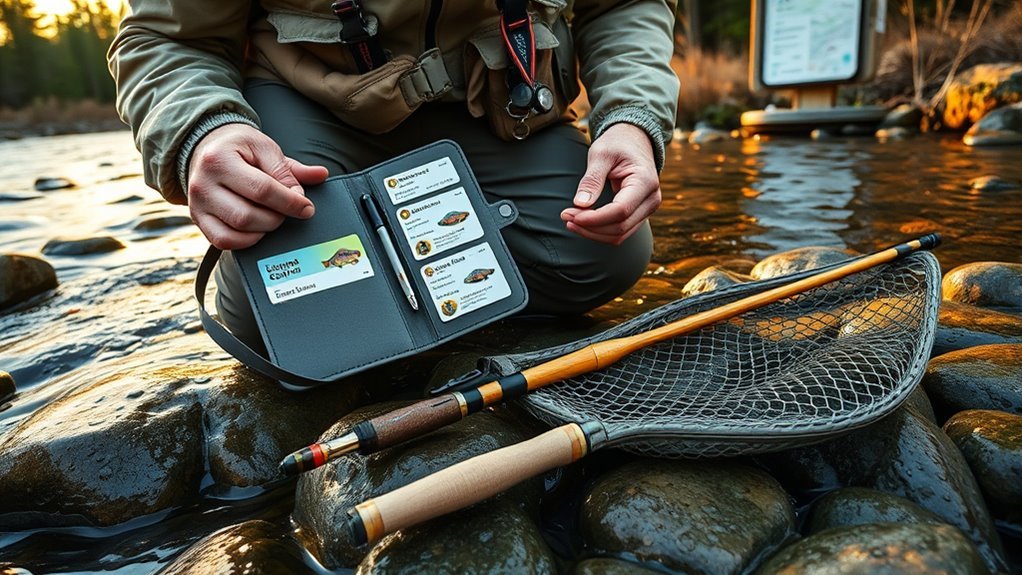
Pennsylvania anglers do not have to display a fishing license on their clothing. However, you must provide proof in print or on a digital device when an officer asks for it.
- Save the license PDF to your phone instead of relying only on an internet connection.
- Keep a screenshot or offline copy that clearly shows your name and current privileges.
- Store a printed copy in a waterproof pouch as a backup.
- Check the year and permit type before leaving for the water.
- If fishing near Lake Erie, confirm whether you need the Lake Erie Permit or the combination permit.
Related guides: Pennsylvania trout stamp requirements and how to buy, Pennsylvania annual fishing license cost and Pennsylvania 3-day fishing license cost.
Frequently Asked Questions
Can non-residents buy a Pennsylvania Trout Permit online before arrival?
Yes. Non-residents can buy a fishing license and Trout Permit through HuntFishPA before traveling. Save or print the license document after checkout so you have proof when you arrive.
Is digital proof accepted during a fishing inspection?
Yes. The Pennsylvania Fish and Boat Commission accepts a digital image of the license on a phone as proof of possession. A printed copy is also valid.
Does the Trout Permit fee vary by county or waterbody?
The Trout Permit price is statewide. However, the water you fish can determine whether you also need a Lake Erie Permit or a Trout/Lake Erie combination permit.
Can I add money specifically for trout habitat?
Yes. Pennsylvania offers optional Wild Trout/Enhanced Waters and Habitat/Waterways Conservation permits. They support designated conservation programs but do not replace the required Trout Permit.
Is a Trout Permit refundable if my plans change?
Do not assume a refund is available. The public PFBC FAQ expressly says gift vouchers are nonrefundable but does not publish a blanket refund promise for Trout Permits. For a purchase error, contact HuntFishPA licensing support promptly at 1-800-838-4431.
Do anglers under age 16 need a Trout Permit?
No. People under age 16 do not need a Pennsylvania fishing license or Trout Permit. A Mentored Youth Permit or Voluntary Youth Fishing License is required for participation in Mentored Youth Trout Day.
Does a senior lifetime fishing license include a lifetime Trout Permit?
Usually not. Most senior lifetime license holders must maintain a current Trout Permit. A limited exception applies to qualifying lifetime licenses and permits purchased before January 1, 2015.
Conclusion
Pennsylvania does not have a required $9 or $10 Trout Habitat Stamp. For 2026, the required product is the $14.97 Trout Permit, usually held with a valid fishing license by anglers age 16 and older. Check the water, date, and license exemption rules before fishing. Choose a voluntary habitat or wild-trout permit only when you want to make an additional conservation contribution.
Sources
- Pennsylvania Fish and Boat Commission: Buy a Fishing License/Permit — 2026 license, Trout Permit, Lake Erie Permit, and multi-year pricing.
- Commonwealth of Pennsylvania: Buy a Fishing Permit — permit requirements, covered waters, and listed exemptions.
- 58 Pa. Code § 63.20 — controlling legal definition of fishing for trout and statutory permit exceptions.
- Commonwealth of Pennsylvania: Buy a Voluntary Permit — habitat, waterways, and wild-trout program uses and limitations.
- Pennsylvania Fish and Boat Commission: Fishing Licenses and Regulations FAQs — digital proof, replacements, military rules, youth rules, and senior lifetime permit guidance.
- Commonwealth of Pennsylvania: Disabled Veteran Fishing Licenses — eligibility and Trout/Lake Erie permit treatment for free and reduced licenses.